




Omar is returning to the Arctic Circle next winter. © Omar di Felice
How was the Arctic?
It was a once-in-a-lifetime experience! The roads were treacherous with spots of ice and snow all the way. The longest stage was the third; 203 km with an average temperature of -18° C! Staying on my bike for 10 hours in those conditions required a huge a mental effort. I often said to myself, “Hey Omar, you worked hard to come here, so enjoy the ride, look at the beautiful landscapes, and don’t think about effort.” Ride and smile: that’s the secret!
Was it like being in a freezer?
Yes, it was - 10°C to -34°C! I wore a specific Arctic base layer of merino wool. Then I wore cycling clothes and, to keep my hands and feet warm, I wore winter cycling shoes and two pairs of gloves.
The way to pass over your limits is with mind power.

The bicycle had studded tires and disc brakes. © Omar di Felice
What attracts you to the Arctic Circle?
Cycling in the Arctic Circle is like a dream: the sound and the colour of the landscape are unreal! After one tough stage, I saw the magical northern lights.
What is ultracycling all about?
Ultracycling starts where standard cycling ends. During Tour de France you can rest and recover and usually you don’t face extreme weather conditions. I love to explore extreme environments and to stay on my bike for hours and hours.

The colors and quiet of the landscape is what attracts Omar to the Arctic Circle. © Omar di Felice
How did you get into it?
When I finished my ‘standard cycling’ career I tried to find something that would allow me to explore my limits. So I started cycling alone, for more than 10 hours at a time. I did my first extreme cycling race in 2011 and fell in love with it.
Why do you enjoy it?
I enjoy the ability to explore the world at the speed and in the manner I prefer. For example, in 2015, when I cycled from Paris to Rome (1600 km) nonstop, I passed by the Tyrrhenian Coast, through the Alps, and two countries in only 72 hours. Exploration is one of my considerations when I look for an extreme challenge.

Omar says cycling in the Arctic Circle is like a dream. © Omar di Felice
Do you prefer racing or your solo adventures?
I’ve won races like the Race Across Italy, Le Raid Provence Extreme, Ultracycling Dolomitica and Le Tour du Mont Blanc and enjoy the intensity. But my solo adventures are more fascinating: it’s a fight against myself! I decide on a route, and I try to reach the goal in a predetermined time.
Training keep you busy?
Depending on the time of the year I ride between 400-500 km to 600-700 km per week. I don’t like to spend all my energy during training. It’s important to train well but also to arrive at race day with full mental and physical energy.
Ride and smile: that’s the secret!

Due to the conditions Omar limited his speeed to 22-23 km/h. © Omar di Felice
How do you train?
Recently the level of competition has become very high. To win the Race Across Italy, for example, I rode for 29 hours at a high average speed. This means I have to train for both endurance and power. For Back to the Arctic, I trained during the night and in cold conditions, wearing summer apparel to acclimatise my body.
How does technology help you?
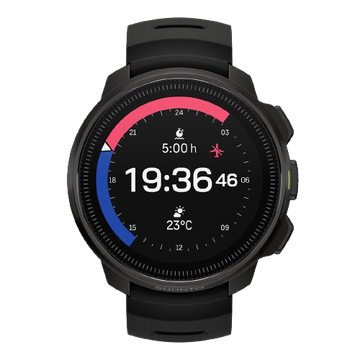
I’m very fascinated by the science of training. My Suunto Ambit3 Sport helps me monitor progress during and after training by analysing performance data. The watch is also useful for social media as one of the most important things for an athlete is telling the story of an adventure!

© Omar di Felice
What’s next for you?
Next winter I’ll do another Arctic cycling adventure, but this time Iceland’s 1358 km ring road. In September, I will attempt my longest ride yet – 2000 km from Pau in the French Pyrenees to the top of Stelvio Pass in northern Italy, crossing the Pyrenees, Mont Ventoux and the French, Italian and Swiss alps along the way.


