Training with TSS and hrTSS

SuuntoRide, SuuntoRunMarch 25 2020

One of the best ways runners and cyclists can constantly improve is by having a solid understanding of their training data. It’s trying to tell you something, but you can only understand if you speak its language.

Whether you are a triathlete, cyclist or a marathoner, TSS and hrTSS are two training languages well worth getting your head around. TSS is probably the most used training load algorithm amongst endurance athletes. It tells you how hard your training session was and the physical stress of your training over time. TSS is dependent on training with power, and ideal for cyclists, while hrTSS is an alternative for those training without power, and can be helpful for runners and other endurance athletes, such as cross-country skiers.

The partnership between Suunto and TrainingPeaks was formed to give you full command of your training data. You track your workouts with your Suunto watch and TrainingPeaks gives you in-depth analysis and planning tools to achieve your full potential. After each activity, you can analyze your heart rate, power, pace and other data to determine where you are at. (Read more about benefits you get with Suunto & TrainingPeaks.)

SuuntoPlus TrainingPeaks – Real-time hrTSS


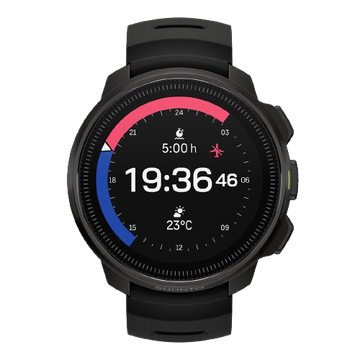
On Suunto 9 and Suunto 5 watches you are able to follow TSS and hrTSS in real-time. This lets you adjust the effort and duration of the exercise on the go, helping you reach your goal. TSS, hrTSS and other TrainingPeaks features can be accessed in the SuuntoPlus section of Suunto 9 and Suunto 5 watches.

You can have all the technology in the world, but to get the most of your training, your Suunto watch and TrainingPeaks, it’s worth the time getting a clear understanding of these two training metrics: TSS and hrTSS. So get yourself a coffee, sit back and read on.

Why bother with metric-based training?

The primary goal of a metrics-based approach to training is to understand what the body is undergoing from a physiological perspective, and how that ultimately influences training decisions. Understanding the stress that training puts on the body’s systems, and whether or not the desired response is being produced is integral to the modern training process. Understanding what both TSS and hrTSS are allows for a deeper discussion of the two and their merits.

What is TSS?

First things first, you need to understand TSS. Specially designed for cycling, the Training Stress Score metric tells you how much stress your body underwent on a ride. It’s a composite number that takes into account the duration and intensity of a workout to score the overall training load and physiological stress created by a training session.

By taking both intensity and duration into account, TSS allows for a better understanding of the “cost” of every individual effort and workout. TSS is calculated using the following formula:

TSS = (sec x NP x IF) / (FTP x 3600) x 100

Where “sec” is the duration of the workout in seconds, “NP” is Normalized Power, “IF” is Intensity Factor, “FTP” is Functional Threshold Power, and “3,600” is the number of seconds in an hour.

It’s worth defining and understanding this equation so you have an idea of why TSS is so accurate, and how the final score is derived. The components that comprise TSS are what make it so useful to athletes.

Normalized Power is calculated using an algorithm that is a little complex, but in a nutshell takes into account the variance between a steady workout and a fluctuating workout. It measures the true physiological demands of a training session. It considers both rapid changes in intensity, as well as critical responses in the body associated with those changes.

Unlike average power, Normalized Power is the power your body “thinks” it employed based on the variability of the workout. Intensity Factor (IF) is the ratio of Normalized Power to Functional Threshold Power (FTP). IF takes into account differences in fitness within or between individuals.

It’s a great way to track fitness over time for a given effort, for example the same ride with a lower IF indicates increased fitness. Using TSS provides a well-rounded look into both the physiological expenditure of an effort, as well as what that effort means for the fitness and progression of an athlete.

What is hrTSS?

More appropriate for those not training with power, the Heart Rate Training Stress Score (hrTSS) is based on time in heart rate training zones derived from an athlete’s lactate threshold heart rate. The calculation is made using an estimate of the amount of accumulated TSS in an hour given the level of exertion.

Suunto watches use intensity zones where HeartRate Zone 4 | Zone 5 limit equals the lactate threshold / an-aerobic threshold level. The hrTSS in Suunto watch uses this level to calculate the proper TSS value. You can find the heart rate zone setup on your watch settings: Training » Intensity zones.

It’s important to remember that Functional Threshold Power (FTP) is by definition 100 TSS per hour. This makes intense, or hypervariable efforts hard to account for given the limitations of the body’s cardiovascular system to respond rapidly enough to changes in intensity.

hrTSS is used as the default in TrainingPeaks when there is not enough data to calculate TSS, rTSS (Run Training Stress Score) or sTSS (Swim Training Stress Score). It can be accurate, depending on the effort, but doesn’t do as good of a job at incorporating intensity and duration into the equation.

Comparing the relative merits of TSS and hrTSS

If you’ve not yet taken the jump into training with power, there is some value in hrTSS. The best way to use hrTSS is with steady state efforts, such as long tempo and sub-threshold work.

These types of efforts suit the hrTSS formula because there are no abrupt changes in intensity. It’s easier to estimate hrTSS when the heart rate stays steady for longer periods of time. This metric begins to fall away when shorter and more intense efforts occur. The heart doesn’t respond rapidly enough to weight efforts above threshold.

This makes the “cost” of the workout seem much lower than it really is. While hrTSS may be recording a more moderate range, you’ll feel much more tired given that you’ve stressed systems in the body that hrTSS couldn’t pick up on.

TSS is the best way to ensure you have a good understanding of how taxing a particular effort or workout was. By incorporating Normalized Power into the equation, we get a much more accurate sense of the effort the body actually produced.

Picking up on these fluctuations in effort also allows for a much more accurate TSS reading. This not only is helpful in understanding a single workout, but influences core metrics such as Fitness, Form, Fatigue and ramp rate.

A more accurate Training Stress Score not only means you’ll have a better understanding of your workout, but you will likely also have a more productive approach to your planning, recovery, and execution.

The metrics that we have at our disposal help to inform our workouts, as well as help to execute them with a greater level of precision. Knowing how the metrics we rely on are calculated, and why it is we should trust one more than the other is important for any athlete.

TSS provides the most accurate picture of how both individual sessions and specific efforts impact the body. While hrTSS can help to quantify steady state efforts, it does not do a good job of highlighting the often stochastic nature of exercise. Using TSS will lead to more accurate planning and a better understanding of each workout.


READ MORE

View TSS and other power-based cycling metrics in real-time

3 TrainingPeaks training metrics to adjust your running on the go


Lead image: Kevin Scott Batchelor

おすすめのSuunto製品

あなたへのおすすめ

Suunto 90 Challenge

Suunto 90 Challenge

座標を見つけて、レースを開始せよ。 90年にわたり、Suuntoは、日常を超えて世界を探検する人々のためのツールを作り続けてきました。この節目を祝して、世界中の冒険者の皆さんをグローバルチャレンジへの参加にご招待します。 記念すべきこの一年を通して、私たちのエリートアスリートたちが、彼らの本来のフィールドを象徴する環境――アルプスの山々や北方の大自然、深い森、広大な水域、そして活気あふれる都...
Open SuuntoPlus: Built by the Community. Powered by Suunto.

Open SuuntoPlus:コミュニティが創り、Suunto が支える。

長年にわたり、Suuntoのアスリート、アドベンチャー愛好家、クリエイターたちは、私たちの製品を新しいフィールドへと押し広げてきました。限界に挑戦し、新たなアイデアを探求し、トレーニングや冒険のための新しいツールを想像してきたのです。そして今、そのツールをコミュニティに開放します。 Open SuuntoPlus™ の登場です。これは、開発者、アスリート、そしてより広い Suunto コミュ...
Chianti Ultra Trail by UTMB. Where the season awakens among the vines

Chianti Ultra Trail by UTMB ブドウ畑の丘陵で、トレイルシーズンが目覚める場所

Chianti Ultra Trail by UTMB ブドウ畑の丘陵で、トレイルシーズンが目覚める場所 Chianti Ultra Trail by UTMB は単なるレースではありません。それは、トレイルランニングシーズンの正式な幕開けを告げるイベントです。 トスカーナを代表するワイン産地、なだらかな丘陵地帯を舞台に、冬のトレーニングの成果が初めて本格的に試される場所でもありま...
One Week. Unlimited Vertical.

一週間。無限のVertical。

ランニングシューズを履き、自転車に乗り、またはスキーにクライミングスキンを装着しましょう。アウトドアに出かけて、クライミングの時間です。 2月23日から3月1日まで私たちは、あなたに外に出て垂直メートルを集めることを挑戦します。自分のために、国のために、そしてアウトドアコミュニティのために登りましょう。どれだけの距離を行けるか試してみて、私たちの共通の目標であるProtect Our Win...