





SUUNTOブログ

Ueli Steck sets new speed record on Eiger
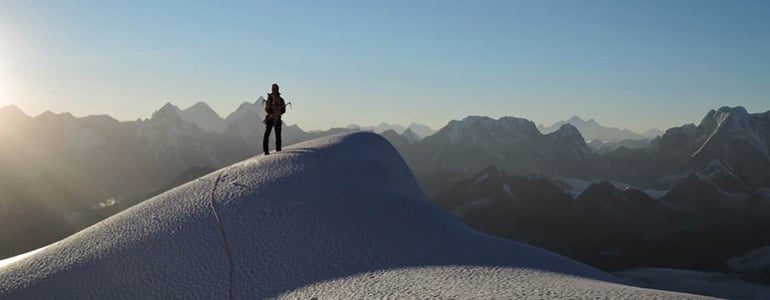
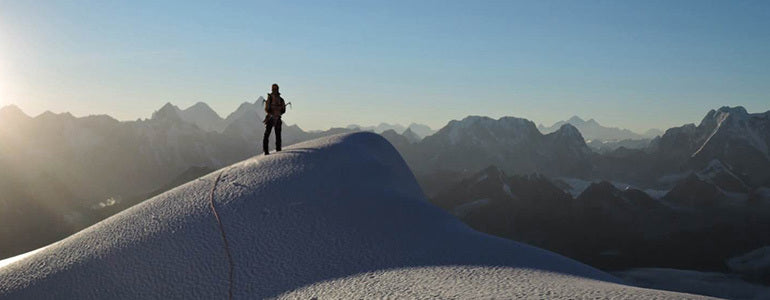
Suunto ambassador Ueli Steck has set a new speed record on Eiger for the third time, beating his previous record by 25 minutes and the 2011 record set by Daniel Arnold. Ueli Steck, the Swiss Machine, took advantage of good climbing conditions this week and clocked a lightning fast 2h22m summit of Eiger via the classic Heckmair Route.
The Eiger (3970 m), a mountain in Switzerland’s Bernese Alps, has long been an iconic testing ground for alpinists because of its severe north face and accessibility. The Heckmair Route boasts 1800 m of vertical gain. In 2008, Steck smashed his own record by over an hour, clocking an impressive 2h47m summit. This week he broke Daniel Arnold’s 2011 record of 2h28m.
“I didn’t push myself as hard as in 2008.”
“This time I had a good track, good conditions and I was pulling some gear that made it quite safe and I believe it makes much more sense this way,” Ueli says. “I didn‘t push myself as hard as in 2008 and I felt very comfortable. This made this ascent a beautiful experience and a great day.”
He adds: “We can never compare ascents on a face like the Eiger because the conditions and weather are always different. This is what makes alpinism interesting and unique. For me it’s the personal challenge and your own experience that really matter.”
The record breaking accent was a finale for Steck after spending the last few weeks taking advantage of good conditions to attemp a number of routes on the Eiger with fellow climbers and trail runners Nicolas Hojac and Killian Jornet.
More about legendary climber Ueli Steck

Bad weather ends Ueli Steck’s Nuptse climb
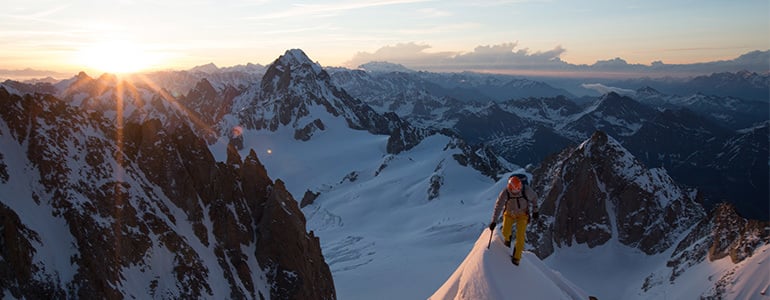
Freezing temperatures and strong winds scuttled the Swiss Machine’s attempt to climb 7861 m Nuptse in Nepal. Is he disappointed? No, he feels stronger than ever! Suunto ambassador Ueli Steck and climbing partner Colin Haley reached 6900 m on Nuptse before abandoning their attempt to reach its summit.
Nuptse. © Ueli SteckWhile a borderline weather window opened on October 23 and 24, conditions were poor with a temperature of -28°C and a 50 km/h winds at the summit. The weather report for the following days predicted worse; -35°C and 80 to 100 km/h winds. “We decided to give it a go on the south face anyway,” Ueli says. “We scooped a fast, less technical line and hoped to at least reach the top. But from the beginning the meteorological test wasn’t positive.” No one has successfully climbed Nuptse via its highly technical south face since Russian climbers Valeri Babanov and Yuri Koshelenko first did it in 2003.
Climbing the south face. © Ueli SteckUeli, Colin and two French climbers began the attempt from Chuckung valley at 04:30 and reached the base of the south face two hours later. After changing boots, they began the climb, which included sections of ice at 75° degrees, but mostly between 35° and 45° degrees. “It was beautiful climbing,” Ueli says. At around 14:00, they reached 6900 m and set up camp for the night. The following day they planned to summit and return to camp. But it wasn’t to be. Strong winds that night and in the morning made it too dangerous to continue so they packed up and returned to Chuckung. “It’s just impossible with 50 to 60 km/h winds to climb at that altitude without getting frostbite,” Ueli says. “There was also a significant amount of fresh snow so avalanche danger was also a factor.”
© Ueli SteckDespite not achieving his goal, Ueli says he learns and grows as a climber from every climb, whether successful or not. Another attempt on Nuptse is on the cards in the future. “It’s the perfect mountain to me,” Ueli says. It’s almost 8000 m, which is definitely another game than climbing 6000 or 7000 m peaks. “Also, it’s not a remote mountain that takes weeks to get to. I like the climbing, but I don’t like too much hiking.” Over the coming winter months, Ueli plans to work on and present slideshows of his big summer in the mountains. In spring next year, he and German alpinist David Goettler will attempt to climb 8027 m Shishapangma, the 14th highest mountain in the world, via its technically demanding south face.
© Ueli Steck
For now, he's back in Switzerland enjoying some well deserved rest time.
“I am super postive from the trip to Nuptse,” Ueli says. “I didn’t have many restdays and I climbed and ran a lot. I feel stronger then ever!”
Click the links for part one, part two and part three of our series on Ueli Steck’s Nuptse expedition.

Ueli Steck ready for Nuptse
Strong winds above 7000 m in the Himalaya have made things more difficult for Suunto ambassador Ueli Steck. But a good weather window might open just long enough for him to make a dash to the summit of 7861 m Nuptse. Here’s part three of our four part series. Swiss alpinist Ueli Steck is ready to make an attempt on Nuptse any day now. While he’s been enjoying good weather in Khumbu Valley, where he’s been acclimatizing since late September, strong winds above 7000 m have forced him and climbing partner Colin Haley to consider an easier line up the notoriously difficult south face of the mountain.
Ueli caught up with fellow Suunto ambassador Kilian Jornet. © Ueli Steck“We might start tomorrow or the day after tomorrow for an attempt,” Ueli says. “We decided to choose a different route because of the conditions and weather. “The weather window is quite short and the conditions are not great. But we will try!” No one has successfully climbed Nuptse via its highly technical south face since Valeri Babanov and Yuri Koshelenko first did it in 2003. However, whereas the two Russian climbers climbed it with fixed ropes, Ueli and Colin intend to climb it in the far more challenging alpine style, which means a one-time single push to the top.
Click for more about Nuptse
Kilian Jornet is training in Nepal. © Ueli Steck
Meanwhile, Ueli has been enjoying perfect weather up to about 6000 m. He’s been spending his days running and climbing smaller peaks. Suunto ambassador and mountain runner Kilian Jornet is also in the valley and the pair caught up and went climbing together. “Kilian, Helias Millerioux and myself did a little tour climbing today,” Ueli says. “It’s just great to hang out with these guys. It’s very inspiring for me. The hope for Nuptse is still alive!”
Tenji Sherpa on the summit ridge of Cholatse. © Ueli Steck
Ueli also teamed up with Tenji Sherpa, a Nepalese mountain guide, and together they climbed 6440 m Cholatse via its north face. In 2005, Ueli made the first solo ascent via the north face. “Tenji became the first Nepali to climb this difficult face,” Ueli says. “It’s so cool to see this new young generation of Sherpa that loves to climb and not only for business!” Stay tuned for the next report on Ueli’s attempt on Nuptse. Click the links for part one and part two of our four part series.


DREAM TRAVERSE VIDEO CONTEST FINALISTS: SNOWBOARDING IN JAPAN AND TRAIL RUNNING IN ICELAND
Here are the last two candidates in the Dream Traverse Video Contest final! Vote for your favorite to make its creator's dream come true. View all six videos and choose your winner at traversecollection
Three Suunto Traverse outdoor watches will be raffled among all voters.
SNOWBOARDING IN JAPAN
Candidate number five is Tom Harrison from London, UK. Or actually the whole Harrison family has a dream of snowboarding in Japan.
“As a family we enjoy adventure, and I helped my sons create the film for the competition about the familie's dream trip to Japan,” Tom says.
“Whether it’s camping, climbing, hiking or skiing, we can’t get enough of new challenges. Leaving London for a new adventure, even if it’s for only a couple days, is always a thrill.”
When asked what the outdoors mean to him, Tom turned to his 15-year-old son to get an answer.
“The outdoors is something that he can’t even begin to comprehend; a place that breeds adventure. Living in the city he feels contained, boxed in, always looking out the classroom window into the unknown, and all he wants to do is explore it.”
“Outdoors give you an overwhelming sense of achievement. Getting out of London and going on an adventure is an amazing feeling, and it’s addictive. You can really find yourself when you are lost in the outdoors.”
The Harrison family’s dream is to snowboard in Niseko, Japan.
“In Niseko both amateurs and professional shred the fresh snow of the mountain,” Tom explains.
Tom would take his sons also to Tokyo and Kyoto to explore the culture and beauty of their dream destination.
“I would love to see my boys’ faces as they watch the crowds at the famous Shibuya zebra crossing in Tokyo or marvel at the beauty of the bamboo forest in Kyoto. It would be an unforgettable experience.”
TRAIL RUNNING EP.5
Finalist number six is Björn Hunger, 17, from Windischgarsten, Austria. Björn enjoys trail running, mountain biking, ski mountaineering and shooting videos.
“For me outdoors mean freedom. It's the best thing in the world to be out in the mountains with my friends and family!” Björn says.
Björn’s dream traverse destination is Iceland.
“To go to Iceland is one of my biggest dreams and it would be so cool to realize this dream!”
“I would like to go to Iceland because the whole nature and the mountains there are so awesome.“
Get to know the other candidates:
DREAM TRAVERSE VIDEO CONTEST FINALISTS: KINGDOM TRAVERSE AND PATAGONIA DREAMING
DREAM TRAVERSE VIDEO CONTEST FINALISTS: DO THINGS ALWAYS AND WINTRY CHINA DREAM
Go to traversecollection, watch the videos and vote for your favorite. Three Suunto Traverse outdoor watches will be raffled among all voters.


Dream Traverse Video Contest Finalists: Kingdom Traverse and Patagonia Dreaming
Get to know the first two Dream Traverse Video Contest finalists and vote for your favorite to make its creator's dream come true! View all six videos and choose your winner at traversecollection
Three Suunto Traverse outdoor watches will be raffled among all voters.
KINGDOM TRAVERSE
The first candidate, Grobler Basson, comes from Cape Town, South Africa. Grobler and some of his friends actually had their adventure dream long before the contest.
“We have been planning our adventure for the better part of this year, we even called it the Kingdom Traverse long before we knew of Suunto's plans and the launch of your new Traverse watch,” Grobler says.
“We will traverse Lesotho from one side to the other. We will do this the only way we know possible – high altitude trail running, some off-the-grid mountain biking, cold water swimming and breath-taking kayaking coupled with some off-the-chart camping spots and difficult navigation!”
The Kingdom of Lesotho is a land locked mountain kingdom located inside South Africa. It is the country with the highest lowest point on Earth of 1400 m (4600 ft).
“The Kingdom Traverse would serve two goals; firstly to stimulate and temporarily satisfy our need for adventure and exploration, secondly, we see Lesotho as an amazing jewel yet to be discovered by international adventure tourism. We believe that the Kingdom Traverse would bring some amazing exposure to what Lesotho has to offer, and possible boost their tourism!”
PATAGONIA DREAMING
Candidate number two is Kellen Witschen from northern Minnesota in the United States.
“The outdoors is a place I can go to and feel free from a schedule and from responsibilities, even if it’s only a quick bike ride at the end of the day. It is a place to test your knowledge and skills, where the consequence of failure is very real and very apparent,” Kellen says.
Kellen’s Dream Traverse is far from an evening ride: he wants to ride the Carretera Austral, a 770 mile dirt road that runs from Puerto Montt to the start of the Patagonian ice cap.
“Ever since visiting Patagonia in 2012, I have dreamed about going back. While doing research there, I only got to see a small section of the area and the group traveled exclusively by motor vehicle. I want to go back and bike the entire 770 miles of the Carretera Austral.”
“The road travels through many different types of landscape and vegetation, ranging from closely woven coastal canals and Patagonian Steppe to high mountain peaks.”
Go to traversecollection, watch the six videos and vote for your favorite. Three Suunto Traverse outdoor watches will be raffled among all voters.


