




SUUNTOブログ


Get ready to race with our trail marathon training plan
Nicknamed the “marathon whisperer” Denise Sauriol knows the distance inside out. She should do after running more than 112 marathons in locations across all seven continents. She is one of our Suunto multisport team coaches and has designed this plan for trail runners.
Denise began running as a child and ran her first marathon in 1994. She continued advancing as a marathoner until August 2009. She was running to Central Park to race in the New York Half Marathon, but never made it to the start line. A car struck her, breaking five of her vertebrae, and temporarily ending her running career. To give back to the sport she loves dearly, she transitioned to coaching.
“I loved coaching so much that in 2016 I left my 26-year career to become a full-time running coach,” she says. “I have a lot of practice on what to do and what not to do with training and on race day. I coach runners of all abilities, ages and race goals. I have helped my clients run their first mile, all the way to helping some of them run a 100 mile ultra.”
Click here to access Denise’s 20 week trail marathon training plan!
Ready to train? Let coach Denise guide you! Denise has created a 20 week trail marathon training plan for beginners. Available for download on Training Peaks, it’s designed for runners who are already averaging between 32 and 40 km per week and can comfortably run a 12 to 16 km long run each week. It assumes people following it have a strong endurance base.
The plan has a four week cycle: In the first three weeks the volume and long run distance increase by 10% each week. Then both decrease on the fourth week. This ensures a balance of build up and recovery time. The training volume continues increasing up until two 32 km long runs. This gives athletes plenty of time on their feet and more confidence than if they only complete one 32 km long run. “The plan also allows for a three week taper,” Denise says. “During the taper the volume drastically decreases, allowing the body and mind to rest and reset for race day.”
Denise advises athletes following her plan to make sure they do their long runs on trail, not on roads or treadmills. She says this is one of the most common mistakes she sees trail runners make. “You have to train on trails to race trails,” she says. “Trail running is a different beast than road running. You can run some of your training miles on a treadmill or on the road, but I recommend a high percentage of your weekly miles, especially the long runs are run on trail.”
The plan is available for free as part of Suunto Value Pack via TrainingPeaks, one of Suunto’s key partners, and provides easy to understand, week-by-week, session-by-session, training guidance. Your end of the bargain is doing the work.
To download Denise’s 20 week training plan, login or sign up to TrainingPeaks and find the plan here.
LEARN MORE ABOUT SUUNTO VALUE PACK AND HOW TO GET THIS TRAINING PROGRAM FOR FREE

電動アドベンチャーこそ未来だと証明する
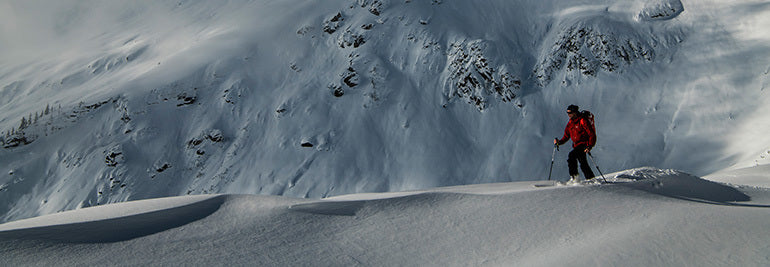
山へ向かう途中、電気自動車を充電する Greg。 © Greg Hill
記録を打ち立ててきたスキー登山家であり、Suunto アンバサダーでもある Greg Hill にとって、限界を押し広げること は特別なことではありません。2010年には1年間で 200万フィート(610,000m)を登り、2014年3月には標高差 100,000 フィートを滑走しました。そして今回、彼は化石燃料を一切使わずに 100 のピークを登り、山を愛する冒険者でありながら地球にも配慮できることを示しました。
「私は本当に環境を大切に思っていますし、言葉だけでなく行動でも示したいのです」と Greg は言います。「私たちは、自分たちが地球に与える影響にもっと意識的であるべきです。」
『Electric Greg』は今年の Banff Mountain Film Festival で初上映されました。ぜひ下の映像をご覧ください。街向けに設計された電気自動車で、Greg と仲間たちが険しいバックカントリーでその限界に挑む様子が描かれています。
Electric Greg は 12月3日 21:00 CET にオンライン公開されます。ぜひご注目ください。Greg と映画監督 Anthony Bonello によるライブチャットにも参加できます。
このプロジェクトのきっかけは何でしたか?
ずっと前から考えていたことでした。自然の中で活動する人間でありながら、そこへ行くために使っている乗り物が自然にとって良いものではない。その矛盾は、長いあいだずっと心の奥に引っかかっていました。
何が変わったのですか?
200万フィートプロジェクトを終えたとき、自分のカーボンフットプリントがとても大きかったことを痛感しました。大型トラックであちこち移動し、南米への旅もしていました。そこで 2012年4月に、その月はすべての冒険に自転車で向かい、ガソリンを一切使わないと決めました。とても楽しい1か月でした。11のピークを登り、素晴らしい旅になりました。ただ、かなり大変で、誰も一緒には来ませんでした。あまりに大変すぎて、簡単に賛同してもらえることではなかったのです。素晴らしい1か月でしたが、誰かに影響を与えることはできませんでした。
その後、2014年に雪崩で大けがをしました。何時間も、何日も、何か月もソファに座って回復しながら、自分に何ができるのか、どうすれば違いを生み出せるのかを考え続けました。そして 2016年、ついに電気自動車が市場に出始めました。技術がようやく整ったのです。私は 2016年にトラックを手放し、ヘリスキーもやめました。ようやく、トレイルヘッドまで移動し、少しでもより良い選択ができる技術が手に入ったのです。雪崩で大きな事故に遭ったことで、ようやく立ち止まり、子どもたちを見つめ、自分に何か影響力があるなら、もっと前向きな変化のために使うべきだと気づきました。
電動アドベンチャーは未来だと思いますか?
初登攀や縦走を追い求め、人間の限界に挑んできた探検者であることを誇りに思っていますが、それと同時に、このまったく新しい冒険のあり方を探る探検者でもあることが好きです。私はその可能性を押し広げていて、いつかそれが当たり前になってほしいと思っています。私は完璧ではありませんが、人間は進化する力を持っています。だからこそ、そこに知恵を使うべきです。そこには大きな感情的な報酬もあります。私たちは皆、強く立ち向かわなければなりません。
技術はとても速いペースで進化しています。バッテリーのリサイクル技術も、どんどん向上しています。これが未来です。来年3月には電動スノーモービルを手に入れる予定です。この小さな電気自動車で迎える冬は、これで3回目になりますが、さらに多くのトレイルヘッドへ向かえるのが本当に楽しみです。道路脇のトレイルヘッドだけを使う場合、アクセスできる範囲はどうしても限られます。スノーモービルがあればもっと奥まで入れますし、探検の楽しさも保てます。私の冒険の範囲はさらに広がっていくでしょう。もっと深く冒険する準備はできています。
あなたの電動シティカーについて教えてください。
航続距離はおよそ 150 km です。Jackson Hole まで運転したことがありますが、そこは 2,000 km 以上先ですし、カリフォルニアまで行ったこともあります。これまでの走行距離はもう 100,000 km 近くになります。これで旅に出ると、自然と少し笑顔になるんです。いわゆる “electric smile” と呼ばれるものですね。自分が少しでもより良い選択をし、カーボンフットプリントを減らすための方法を与えてくれました。
このプロジェクトで最も難しかったことは何ですか?
家族は、これによって自分たちの生活がどう変わるのかを心配していました。たとえば休暇で飛行機に乗らないことなどです。私はできるだけ家族の負担が少なくなるように努めていますが、家族もこの電動チャレンジに伴う課題を受け入れる必要がありました。スポンサーの中にも、当初は懐疑的な人たちがいました。変化には大きな不安がつきまとうものです。
世界を探検し、遠く離れた場所でスキーをしたりピークに立ったりする誘いも受けてきましたし、断らざるを得なかった旅も確かにたくさんありました。できるだけ良い選択をしようとはしていますが、時には飛行機に乗ることもあります。Utah のアスリートサミットに行ったときは、現地に着いてから電気自動車を借りました。少しでもより良い選択をするための方法は、いつでもあるのです。
メイン画像: © Bruno Long
関連記事:
北極で生まれた滑りへの情熱
暗い時間帯を走るための7つのヒント
冬のトレイルランニングのための7つのヒント
ランナーにとって冬が素晴らしい7つの理由


Jill Heinerth joins diving hall of fame
As a pioneering cave diver and explorer, documentary maker and author Jill Heinerth has educated and inspired people around the world about our incredible underwater world and the human impact on it. The International Scuba Diver Hall of Fame is an annual event that recognizes people who have significantly and positively impacted the industry through education, exploration, adventure and more. Founded by the Cayman Islands Ministry of Tourism in 2000, the award ceremony will take place in September 2020 in the Caymans.
During an announcement ceremony at DEMA Show, 2019, Jill spoke of what the award means to her.
“Such an amazing honor for a young woman who started her professional diving career in the Cayman Islands a long time ago. This is really fantastic at a time in my life that is very meaningful where I am just releasing my new book Into the Planet and a new documentary, Under Thin Ice. Thank you for this incredible honor! I look forward to visiting the Cayman Islands to accept it.”
There were three more nominees announced for the 2020 induction and they are Handicapped Scuba Association Founder Jim Gatacre, DEMA Executive Director Tom Ingram, and Undersea Hunter Group Founder Avi Klapfer.
Jill was at the Suunto booth this year signing copies of her incredible memoir, Into the Planet.
Released in August, Into the Planet is a thrilling insight into places inside the Earth you may not have imagined exist, but where Jill has dived. She bravely illustrates intense political issues and presents hard evidence about the impacted ice caps and beyond.
Her autobiography explores life-or-death decision-making in critical underwater situations, the pain and difficulty involved in recovering the dead bodies of her tragically lost friends from caves that no one else in the world has the ability, training, and mindset to access due to such extreme conditions.
Speaking at a Suunto function during DEMA Show, 2019, Jill talked about her memories, which are fascinating for both divers and non divers thanks to their important messages.

Welcome to Suunto Summit!
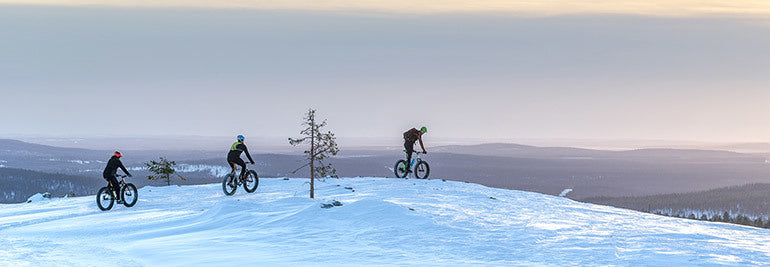
The fifth instalment of Suunto Summit, a celebration of our community and our collective passion for sport and the outdoors, will be held in January 2020 in Ylläs, in Finnish Lapland. We will start the weekend with a visit to Suunto factory and Suunto HQ in Vantaa and then travel by an overnight train to Ylläs, north of the Arctic Circle, to experience the beauty of northern Finland.
The participants for Suunto Summit 2020 are: Alberto from Spain, Alexandre from Brazil, Alpinefex from Germany, Dorn from USA, Lotta from Finland, Maja from Sweden, Majo from Philippines, Marie from UK, Matteo from Italy, Max from USA, Philipp from Germany, Sandra from Australia, Sawna from USA, Thumb K from Korea, and Xiaohua from China. Welcome to Suunto Summit!
Thank you to all who applied! We are humbled to have such a passionate community. It was very inspiring to hear your stories and to get to know you a little bit. Happy adventures and hope to meet you another time!Excitement at the 2018 Suunto Summit. Watch the event recap here

Born to shred in the Arctic
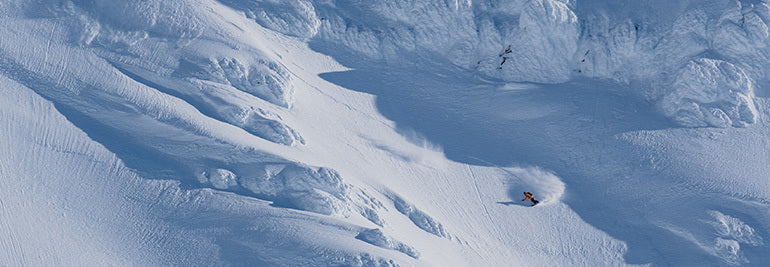
Making his adventures sustainable is a major focus for Antti now. © Jaakko PostiWinter has nearly arrived in Lapland, where Finnish splitboarder Antti Autti is preparing his body and mind for a year long adventure project – in collaboration with Suunto – that will test his limits.
In a week’s time, the long polar night will arrive, leaving only two hours of daylight every 24 hours. That’s not stopping the 34-year-old freerider and filmmaker from heading out into the inky blue night to do what he loves.
“The polar night is not dark in my opinion,” he says. “The Arctic has incredibly changing light; each season is different. The winter here is really magical.”Exploring remote areas of Lapland requires careful planning, Antti says. © Jaakko Posti
Antti has completed the first part of his new adventure film project, Roam, in which he and his friends explore new freeriding territory in Lapland in each season of the year. With the autumn adventure behind him, a 10-day winter trip comes next.
“It's a great challenge for me as a professional freerider and I could not be more excited about this collaborative journey I am about to share with Suunto,” Antti says. “No matter if I’m out running trails or searching new lines to ride over winter, Suunto helps me to reach my goals and to move safely and smartly through the wilderness.”
Antti was born and raised in Rovaniemi, the capital of Lapland, and his family home neighboured Ounasvaara ski resort. As a kid he tried team sports, but says he didn’t fit in. Out skiing one day when he was nine, he watched in awe as a snowboarder performed impressive tricks. When Antti tried snowboarding a year later, he was hooked. “I discovered I could explore anywhere I want if I had the speed,” he says.
When he was 13 Antti entered his first competition, and while still a rookie earned a place on the Finnish national snowboarding team. While on the team, he won the world championships, X Games and nearly all the biggest competitions world wide.
“In 2010 I felt like I needed to do more and not what everyone expected from me,” he says. “I wanted to ride powder and learn about mountains so I quit competing and began freeriding.”
Svalbard Unplugged from Antti Autti on Vimeo.
Antti lives only 200 m from his family home and continues to find new terrain to freeride. He and his friends, for example, rode new lines on remote Svalbard Island, located halfway between the top of Norway and the North Pole. He does epic tours through rugged terrain in northern Sweden, Finland and Norway. “The whole of Lapland is an amazing place for adventure,” he says.
His new adventure film project has an important difference to his previous projects; it will be conducted mostly under human powered steam. “The key point of the whole film is to spend the whole winter in the north, to throw ourselves out there, and hopefully to inspire people to leave motorised vehicles out, and to instead use human power,” Antti says. “I really want to focus on doing things in a way that respects nature.”
Getting physically and mentally ready for the coming winter adventure is Antti’s main focus now. Strength training, long aerobic zone one and two workouts and interval sessions help him maintain the base fitness that long distance tours through deep snow demand. This makes his adventures more enjoyable, and safer. “The best way is to stay safe in the north is to have a motor that keeps on going and doesn’t stop,” he says.
Lead images: © Jaakko Posti
Read more related articles:
7 tips to find a safe track up the mountain
8 avalanche safety checks to tick off before the ski season
Knowing the ropes – staying safe with creavsse rescue online

7 tips to find a safe track up the mountain
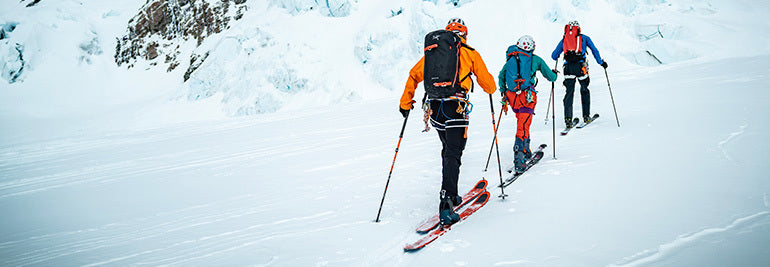
© Mark SmileySuunto ambassador, filmmaker, and alpine pro Mark Smiley is currently in New Zealand, and preparing to climb Mt Cook (3724 m), the country’s tallest mountain.
“My phone is downloading the topographical and satellite images for Mt Cook as we speak,” he says. “Having never been here before, I want to make sure I climb the right couloir.
“Selecting the right path up a mountain is a fun art to practice. The goal is to get to the top with as much go-juice in your legs as possible so you can slay the down like a boss.”
Mark is passionate about outdoor education and helping people to stay safe in the mountains. He has just released his latest online training course, perfectly timed to get skimo fans ready for the winter. The Ultimate Guide to Backcountry Skiing & Ski Mountaineering online course is a deep dive into all aspects of the sport.
The first 200 skiers to sign up for the course before November 25, and who use this coupon code: EARLYBIRD40, will receive a 40% discount on the original price. The first 50 students to sign up will also get Mark's Crevasse Rescue online course for free!
“Really I made this new course for my 26-year-old self,” Marks says. “Had I had this helpful resource 12 years ago, I would have been skiing bigger lines, more safely, in a fraction of the time.”
As a taster, here are Mark’s 7 tips to find a safe track up the mountain.
Pre trip
To make this article easier to digest, we’ve separated Mark’s tips into pre and in-trip groups. “The key is to do your homework,” he says. “That is the first priority.”
Signs of a good track
1. It doesn’t expose you to avalanche risk. 2. A gradual mellow slope, with a nice run out, where the avalanche debris would have plenty of space to fan out.3. Look for nice straight lines with a consistent incline. Eighteen degrees is a pretty good place to start. 4. Switchbacks that are in the best place possible, often that’s just downhill of trees (if you are below the treeline), or in any slightly less steep areas.5. Following a ridgeline or pushing up through dense forest is usually safer than ascending via a face and sparse forest.
Signs of a risky track
1. Unsupported convex rolls are a big avalanche risk. A convex roll is a part of the slope that bulges out. Imagine putting a salad bowl against a wall, then putting snow on the top. The snow would slide off because the bowl doesn't support it.2. Terrain traps: keep a lookout for things that could make a fall really bad, like being thrown into a creek, off a cliff, into a ravine, or into a crevasse.3. I like to look for a track that doesn't expose me to cornice, rock or icefall hazards.
Use your Suunto 9
You can download the track to your watch and then you can follow along. You can create routes in Suunto app with terrain maps, heat maps, as well as use existing activities to create routes. And you can use GPX files you have created in other services. ”I use this track as a "helpful suggestion" when navigating in whiteout conditions on a glacier, or in an area that I’ve never seen before."
Get techy
Download Gaia GPS, and get the subscription so you can take map files offline, and learn how to use it well. This app is seriously like cheating at navigation. You can download topo maps, satellite images, put a route line on the map where you want to go, and then navigate with ease.
If you want to learn more about how I use the map, check out my online course at www.mtnsense.com. In less than an hour you’ll be on your way with new-school navigation.
Click here for Mark's eight avalanche safety checks
© Mark Smiley
On the trip
Don’t be a sheep
Looking up and ahead is key to your ascent. Don't be a sheep by just walking up the skin track. Make decisions about where you are going. Most of the time that will be an existing skin track, but not always. Snow changes over time, and so too must the skin track.
Listen to you heart
The goal is to keep your heart rate at a consistent level most of the tour as opposed to revving it up and then dropping it down. Choose a track that keeps a constant slope angle, making it easier to get in the groove, keep your heart rate about the same the entire climb, and just enjoy the rhythm of movement.
Not too steep
Another skill is finding the perfect steepness that minimizes linear distance, without making it too steep. If you’re slipping out, you’re wasting energy.
Read more articles like this:
8 avalanche safety checks to tick off before the ski season
Knowing the ropes – staying safe with creavsse rescue online
Lead image: © Mark Smiley


