




SUUNTOブログ

Jakob Herrmann breaks the 24h skimo world record!
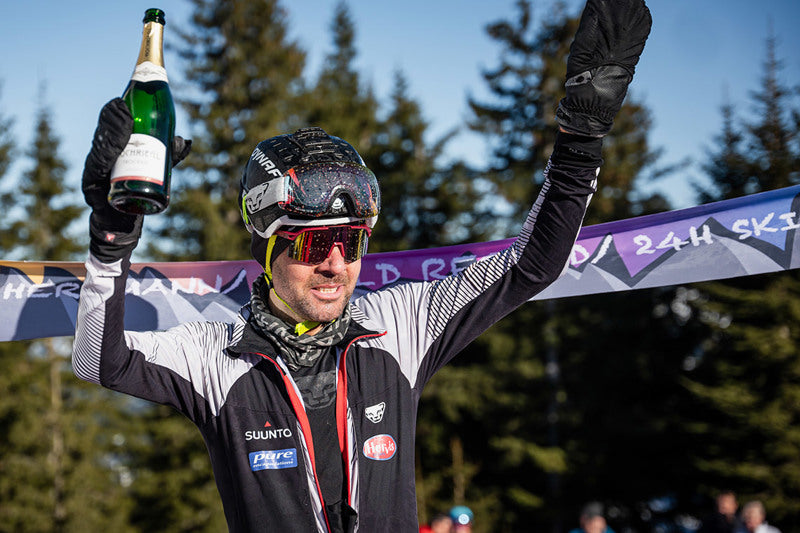
Last weekend Jakob Herrmann, Austrian ski mountaineer and Suunto ambassador broke the 24-hour skimo world record. He ascended 24.242 meters (79.534ft) in 24 hours in Radstadt, Austria. To put that into perspective, Jakob’s average hourly ascent was over 1.000 meters, and the total ascent was more than equal to six laps up to Mont Blanc, the tallest mountain in the Alps, from the valley floor in Chamonix.
The previous 24-hour world record was 23.486 meters set by Kilian Jornet. Jakob not only broke the record but was also the first person ever to climb over the 24.000-meter mark.
Jakob skied all together 34 laps up and down a ski slope that has 713 meters of ascent. A single lap was 2,55 km and in total he skied more than 170 kilometers. During one of his descents, he hit a max speed of 108 km/h!
We caught up with Jakob shortly after his record-breaking ski. Read on to learn more!
Suunto: When did you set the 24-hour record as your target?
Jakob: I just love to spend time on my skis for hours! It has always been a dream for me to go on touring skis for 24 hours to see how many meters in altitude I can manage. I just want to know what limits I can reach and how far beyond them I can go.
Did you do some specific training for it?
In November and December, I did a lot of long and easy sessions on my skis followed by short and hard interval sessions to get the speed and strength. In the last two weeks before my 24h I only did short, easy sessions and some short, but hard ones and one race to get used to the suffering!
Have you tried a personal 24h challenge before?
No, but I did one session with 10.000m of ascent in 9h30m in the middle of December. I felt super strong although I did it self-supported. I think with more long sessions my head and muscles would have gotten tired and the pace would have gone down. So, I did more split sessions with 5.000m+ in the morning and a second session in the evening.
How did you pace yourself?
For 90% I listened to my feelings. When I felt strong, I went faster and when I felt tired, I went a bit slower! My supporters always gave me the lap times. In addition, I observed the vertical speed per hour on my Suunto Race.
How did your pace change through the 24 hours?
I did the first loops very fast – my first uphill was in 30’. The first 10 loops were all between 30-36’. After that, I was between 37-40’. My slowest uphill was 42’ on the 24th loop when I had my lowest point. The hardest part for me was the early morning when I felt the freezing cold temperatures of around -8 degrees, especially during the downhills.
In the end, I was able to push again, and the last 7 loops were all between 38-40’. The average was 38’20”. So, I think the secret to my success was that I was able to keep the pace constant.
Did you have some surprises on the way?
I didn’t have any negative surprises – only positive ones! I was surprised that so many friends joined me on my way and so many people followed me on-site or in the live stream.
Did you have anyone keeping you company?
Yes! I was only 7 hours in total alone: 4 hours during the night and 3 hours during the day. I am super happy I had so many friends on my side, but I enjoyed also the loops when I was alone!
When did you realize that you would make it?
From the beginning… No joke! I had a strong day, and after some laps, I knew, that I could do it. After 18h I was 100% sure that I would make a new record, but I wasn’t sure if it would be more than 24.000m. After 21h I was sure I’d do the extra lap to climb more than 24.000 meters.
Which Suunto did you use?
I had the Suunto Race – and it worked perfectly. The battery lasted unbelievably well; I had more than 40% of the battery left in the end even though I had the GPS on the best settings, the light was always on and I used the SuuntoPlus Loop sport app.
What was your nutrition strategy?
100 grams of carbs per hour. I always had 300ml of Maurten Drink Mix320 with me. Every loop I had a Maurten gel and every 4th loop I ate a Moonvalley bar and no gel. After the 8th and 16th loops, I had warm salted potatoes and a warm soup on the top.
For the last 6 loops, I stopped with Maurten Drink Mix320 and Moonvalley bars and changed to Red Bull, water, and Pringles!
Did you have a big crew supporting you?
I had two supporters in the valley and two on the top. Philipp [Reiter] was everywhere taking pictures and pushing me! Also, my parents were nearly 24 hours on my side to give me a good feeling!
How do you feel now, one day after the enormous effort?
I feel super good. My energy and legs are strong – only my feet are swollen, and I have some blisters. I am surprised… but I think my nutrition strategy was really good. I never felt completely out of energy.
Check out Jakob’s record-breaking activity in Strava
Follow Jakob’s adventures on Instagram
All images by Philipp Reiter / The Adventure Bakery


Adventurous races in January
Rise&Fall
Mountain Attack
Rise & Fall Mayrhofen
Four people, one team, no mercy - on January 14th, everything will be demanded of the athletes. Each team consists of a ski mountaineer and mountain biker who will give their best in the uphill. A paraglider and skier cover the downhill and do complete the team and risk everything to be the first crossing the finish line.
Among the more than 300 participants this year are Johanna Hiemer on touring skis, Aaron Durogatti and Judith Rubner on paragliders and Marius Quast on skis. The special thing about it is that both Johanna Hiemer and Judith Rubner will be competing in a women's team.
"I'm looking forward to this unique event - 4 different sports combined in on event is unique. The atmosphere is amazing." - Johanna Hiemer
We asked Chris Ebenbichler, the organizer of the event, a few questions in advance:
What is important for the teams?
The teams must form a homogeneous unit. The handover in the individual disciplines is crucial and, of course, the spirit within the team is always better when the athletes know each other. It's great to see how the team members cheer each other on, motivate and support each other. At the end of the day, they win or lose together and create unforgettable moments and emotions.
What is the most challenging discipline?
It's difficult to define. It's a high-intensity event and the short duration of the individual disciplines means that the athletes are constantly pushing themselves to the limit and in the red zone. There is no time to catch your breath and you have to stay focussed. It's a sprint for touring and biking, the paragliders are challenged by the running course and the difficult start section and for the skiers, with a 3-minute giant slalom and the obstacles before the finish, the lactate level is almost unbearable
What is the discipline in which you can win everything and lose everything?
The two RISE disciplines of ski touring and mountain biking certainly offer the most time. Unfortunately, you can lose everything if you fall in the last discipline, skiing.
How do the teams prepare for this special event?
The teams and athletes prepare very individually. For some amateur athletes, having fun comes first. The professionals, on the other hand, take things very seriously. For the ski tourers, it's a kind of benchmark for the start of their season and the mountain bikers see it as the starting signal for preparation and the first training courses in warmer climes. However, the same applies to everyone: Without adequate preparation, it will be a knife-edge ride.
How many teams are competing? Men & women?
There will be 80 teams and 10 individual starters on the day of the event. We hope to welcome around 20 women's teams to Mayrhofen this year.
©Michael Werlberger
SATURDAY, 13.01.2024
Europahaus Mayrhofen
From 16.00 to 18.30: Bib-Collection & Pastaparty19.00: Welcoming and briefing
20.00: "RED BULL X-Alps 2023": Multimediashow with Christian "CHRIGEL" Maurer in the Europahaus - Ticketinfo
SUNDAY, 14.01.2024
Eventarea in front of Ahornbahn
11.00: Entrance - Warm up11.30: START - RISE&FALL KIDS-RACE 2024+ Prize ceremony: KIDS-RACE12.45: START - RISE&FALL SINGLE-RACE 202413.00: START - RISE&FALL TEAM-RACE 2024directly afterwards: Flower CeremonyFrom 16.00: Live music with the band "Jukebox Brothers"16.00: Prize ceremonyApprox. 17.00: RISE&FALL Afterparties in Mayrhofen
Mountain Attack
The 26th Mountain Attack will take place on 19th of January 2024 and athletes will give their best over 6 distances. In Saalbach-Hinterglemm, hundreds of athletes will once again give their all this year - the 3-person relay over the marathon distance is new. Suunto athlete Jakob Herrmann is not only last year's winner and therefore Mountain Man 2023 with a time of 2:22:14 but will also be on the starting line again this year. "The challenge is definitely the first mountain! You tend to go too fast or lose a lot of energy because it's so steep. In 2020, I was almost 1,5 minutes behind the leaders on the first climb and I finished 2' ahead with a new course record," says Jakob Herrmann. It remains to be seen whether a course record will be set this year in addition to his preparation for the 24h project, but we will certainly be there.
© Philipp Reiter
Roland Kurz and his team have been organizing the Mountain Attack for 26 years now and give us a closer look at the ski touring event of the year:
How did the Mountain Attack come about?
We started the first race in 1999. It was very well received internationally, the media reported on it and so the idea became a vision - the Mountain Attack. It has since become a touring ski cult event, the biggest and toughest night-time piste ski touring race in the world with participants from over 20 nations and numerous side events, a meeting point for the scene, business and sport.
What makes the Mountain Attack so special?
The Mountain Attack is a race over several distances (Schattberg Race - vertical, Tour and Marathon - individual) where it is possible for amateur and hobby athletes to compete with the best athletes in the world in a race at the same time, in the same weather conditions and with the same snow conditions. Thousands of spectators on the various peaks and in the valley are up close to the racing action and motivate all participants to achieve their personal best. A unique atmosphere for all enthusiastic ski mountaineers and fans. And: because the course has been the same for 25 years, everyone can compare their own performance with that of previous years.
What is the biggest challenge and who is the Mountain Attack for?
The route. The start on foot, running through the centre of Saalbach, with thousands of spectators, and especially the first steep climb up the Schattberg with over 1000 metres of altitude difference is a special challenge - affectionately called "Il Muro" (the wall) by the Italians. The steep climbs and the long and steep descents throughout the race are unique and very challenging.
Everyone is welcome, even without a national or international athlete's licence, who loves the sport and is an experienced ski tourer. Numerous athletes from summer sports, such as triathletes, trail runners and cyclists, like to use ski mountaineering in winter as optimal training preparation and are represented in large numbers at the start of the Mountain Attack.
© Philipp Reiter
PROGRAM FOR FANS AND SPECTATORS
FRIDAY, 19.01.2024
13:00: Start Junior-Sprint: Schattberg-Basisareal. Final 14:45 Uhr
ca. 15:00: Attack-Party: Mountain Attack-ARENA Schattberg with DJ Musik & Expo
16:00: Mountain Attack - START at thee Dorfplatz in Saalbach
16:40: First finisher Schattberg Race
16:50: First estimated arrivals Hinterglemm
17:15: Prize ceremony Junior-Sprint, Stage Attack-Arena
17:35 – 18:25: First finisher in Saalbach – Mountain Attack-ARENA, Schattberg
17:00 – 22:00: Athletes crossing the finish line - Moderation and Party
22:30: Prize ceremony on stage – Mountain Attack-ARENA, Schattberg
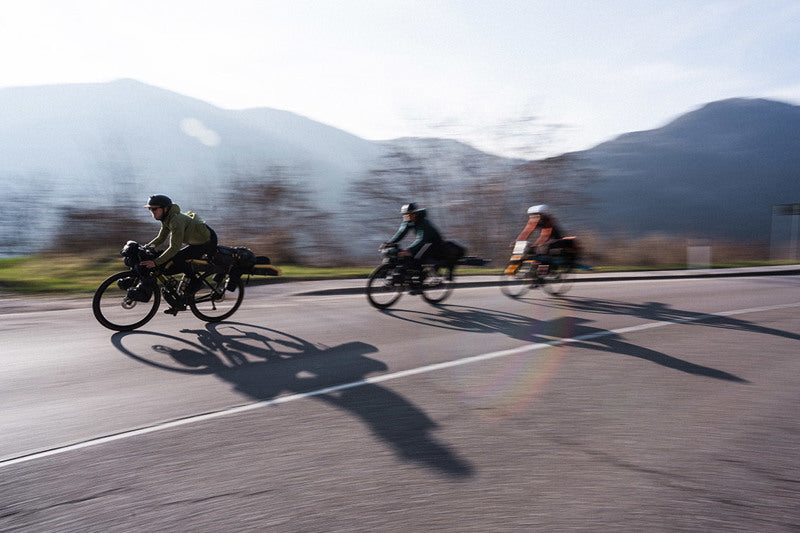

7 adventure films to watch during the holidays
Race to the Summit
Two years ago, Dani Arnold completed the biggest project of his life: climbing the six large Alpine north faces – alone and in record time. The project occupied, accompanied and shaped him over a period of 10 years. Now the Netflix is devoting a 90-minute report to three of these climbs.
Race to the Summit features the dizzying feats of Dani Arnold and the late Ueli Steck, two great Swiss alpinists and long-time Suunto ambassadors. Experienced mountaineers need a day or more to climb the infamous north faces of the Eiger or Matterhorn. But Dani and Ueli climbed them alone in less than three hours. The duel thrilled the climbing world and electrified the media.
Watch the trailer above and the full film on Netflix.
Lost Then Found
TDS winning athlete Christian Meier shares his inspiring story in Lost Then Found. Christian started his athletic career as a cyclist and has since made a transition from the pro peloton to the top of ultra-running.
”Life is a constant evolution of who you are as a person and Lost Then Found marks an important turning point in my life not only as an athlete but as an individual. From losing cycling to finding trail running this is a story of self-discovery and I am happy to be able to share that journey,” says Christian.
Arctic Lines – Sunny Car Center
In the Arctic Lines video series, backcountry snowboarder Antti Autti explores the vast wilderness of northern Finland, Sweden, and Norway. The series is now in its third season, and in the latest episode, 'Sunny Car Center,' Antti seeks—and finds—a new special zone in Northern Norway.
”Exploring expands your horizons and finding new locations is one of the most important aspects of freeriding,” says Antti.
Balkan Express
Ski mountaineers Jochen Mesle and Max Kroneck rode 2500 km from Greece to Germany – and stopped to ski along the way. Balkan Express, their film about the adventure, has won acclaim at international film festivals.
“We really wanted to experience some mountains, cultures, people we didn't know. We looked at a map of Europe and saw that the Balkans are pretty interesting. The sport side wasn’t the main focus of the project. It was about getting to know the culture and people,” says Max.
Nomadland – Bikepacking in Mongolia
Alba Xandri and Erreka Calmet found beautiful landscapes, friendly people and an epic adventure while bikepacking in in the Mongolian grasslands – and made a film about it.
”Mongolia far exceeded our expectations. It is a backcountry bikepacker’s paradise,” says Alba.
Ride to Ski – Bikepacking adventure through the Dolomites
Lack of snow forced Henna Palosaari to think outside the box and led her to invite two of her friends, Sami Sauri and Malva Björkman, on a bike & ski adventure. The 9-day journey that combined two of her favorite sports, turned out to be a beautiful mix of sweat, laughs, ice, snow, and friendship.
”It wasn’t a pure sufferfest,” Henna laughs.
Max Ammer, Raja Ampat and the richest reefs in the world
This is an oldie but goldie: Max Ammer, founder of Papua Diving and two Eco Resorts, Sorido Bay and Kri Eco Resort, shows us why these incredible projects are more than just places to stay, dive and enjoy the unique ecosystems.
Over the past 30 years, a remarkable conservation project has unfolded. The local team, with unwavering dedication, has prioritized the protection of the flourishing ecosystem. This strategic focus has proven to be wise, as the tangible outcomes of their hard work, long-term planning, and precise execution are evident in the thriving fish and coral counts. This stands as a rare case where the reefs are experiencing unprecedented richness – and gives hope for other areas as well.
Lead image by Richard Bucher / Ride to Ski


Ride to Ski – Bikepacking and Skiing in the Dolomites
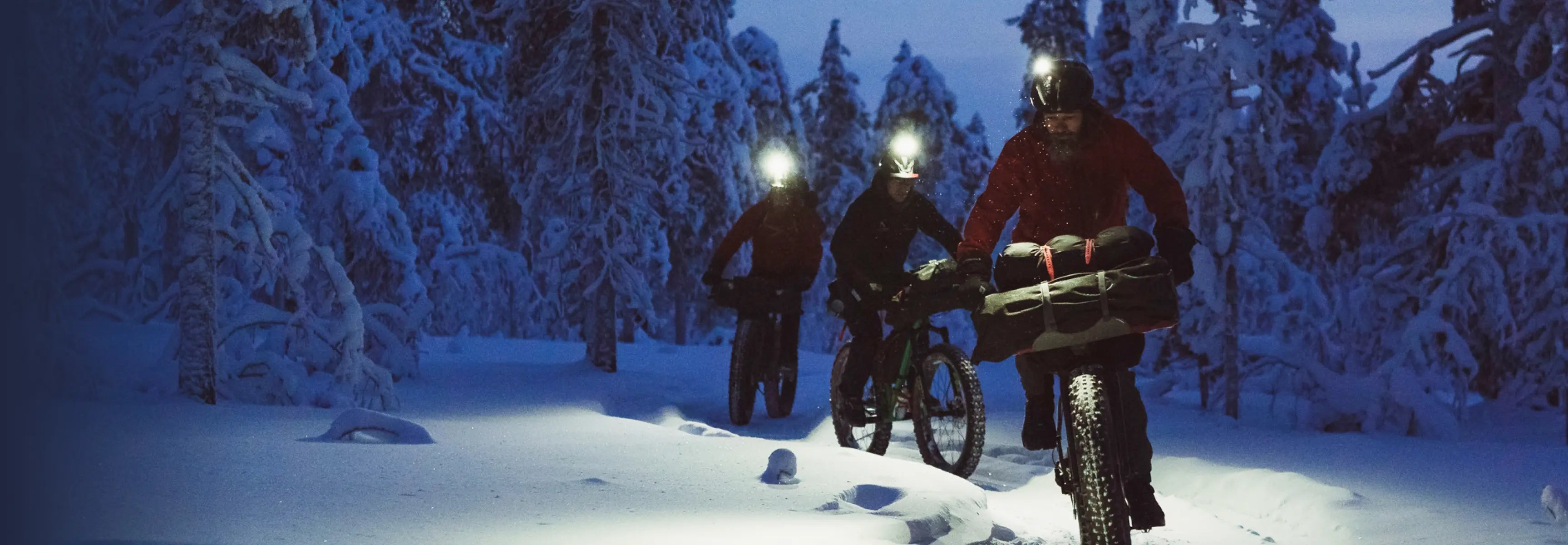
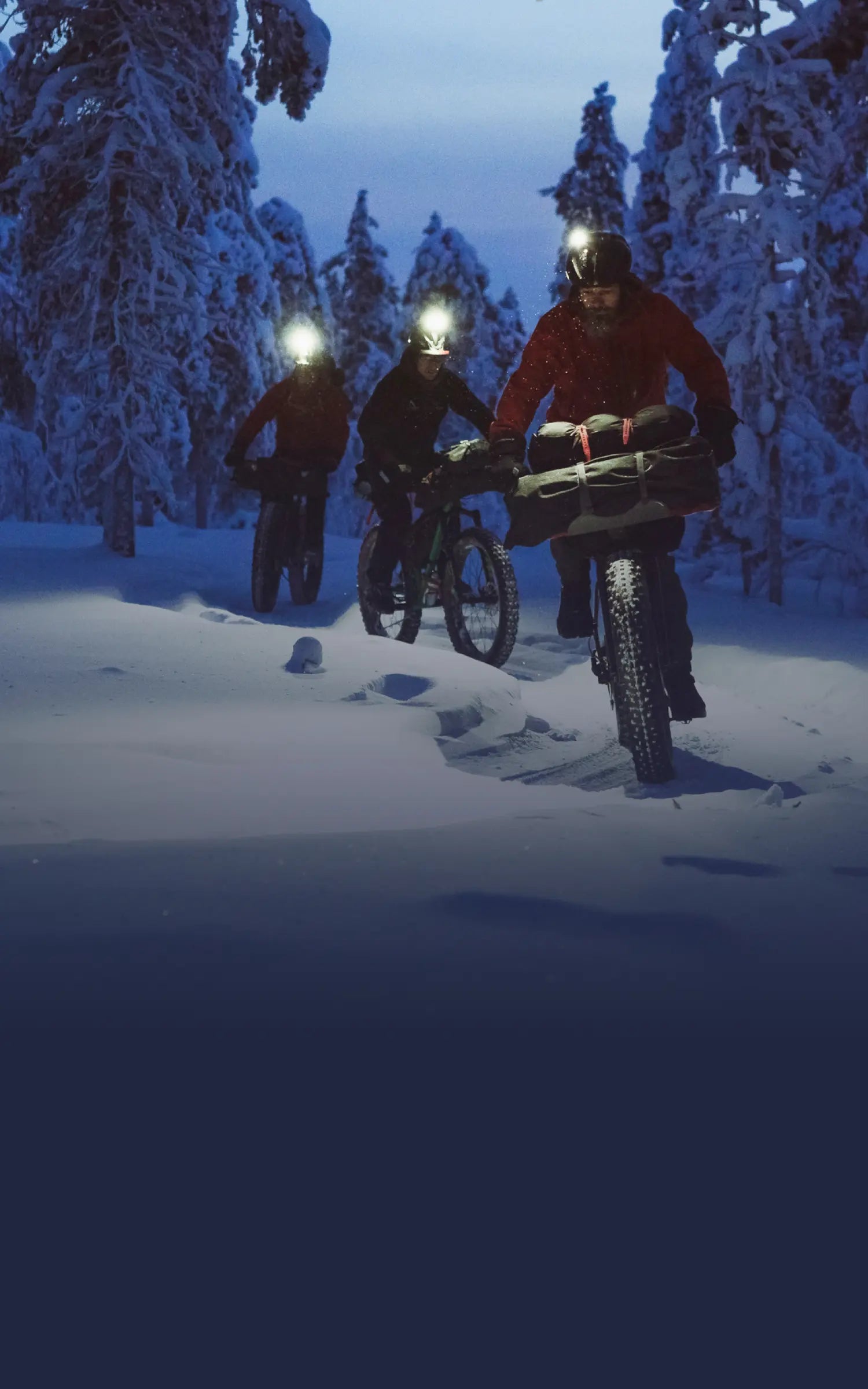
It was late February in Innsbruck. Henna sat at her desk, browsing the map to see what destinations were close by, destinations with great skiing opportunities that could be easily reached by bike. The winter in the Austrian Alps had been the worst in living memory. The usual endless fresh snow had been replaced by grass and mud. Normally, at this time of the year, we were too busy to enjoy the powder days in the snowy resorts to even think about wasting this precious time riding bikes that could do plenty over the summer months. This year was different; it was time to slow things down and finally see if combining two sports, bikepacking and snowboarding, could actually be truly enjoyable.
Malva, Sami and Henna.
"We're actually doing it!" Malva exclaimed as we hopped on our bikes in Innsbruck. "My bike shakes like crazy, is this normal?" Henna asked, seemingly nervous after the first 500 meters. Sami reassured her that she'll get used to it by the time we reached the Dolomites. Dolomites, a destination with iconic sharp-toothed, sheer-sided mountains that stand enormously tall as the background whether it’s summer or winter. And most importantly, only a couple of hundred kilometers away, making it reachable by bike. The only question was whether our plan of a 5-day cycling and 4-day skiing journey from Innsbruck to Lago di Garda actually was realistic without being only a sufferfest?
Snowflakes and sharks
“It’s definitely a first, biking up to go ski touring,” Henna gasped as we made our way up to our first skiing spot. This winter, the snow line had been even higher than normal, at around 1000 to 1500 meters. Normally, we would drive up to the snow line and start touring, but not this time. Now, it meant first climbing 600 meters from the village with bikes before changing into skis and tackling the rest of the 750 meters with skis and splitboards. Our bikes were loaded with skis/splitboards, ski/snowboard boots, backpacks, poles, skins, ski clothes, crampons, and sleeping bags, all secured with many, many straps. “At least the body is already warmed up by the time we start touring,” Malva smirked.
As we arrived at our accommodation the previous night, the snow had started to fall, giving hope for some fresh lines the next day. The trees and roofs were covered by a thin layer of snow, making the whole town glisten in the morning sun as we hopped on our bikes the next morning, excited for the first ski day. “Watch out for sharks,” Henna shouted as all three of us cruised down a fresh line from Vennspitze. That was the reality; there was still not enough snow to cover all the rocks, but it didn’t stop us from enjoying the first turns of the trip. “Shitty snow but so much fun to be riding!” Malva summed it up as we were riding the last meters down.
With smiles or without smiles, the reality was that we still needed to bike another 31 kilometers to our next accommodation. Exhausted, we crossed the border to Italy in the dark, dressed up in all the layers we had, and descended down towards Vipiteno. “I don’t think we can keep on doing this for 7 more days in a row,” Sami said, and we all nodded in silence. Lesson learned - while enjoying a hearty dinner, we decided to split the rest of the days between the two disciplines to make it a smoother and, most importantly, more enjoyable experience.
Ice and Dolomiti peaks
"No way, is that a ski slope?" Sami shouted after we had just managed to get through a closed trail with hundreds of fallen trees. Route planning on a winter bikepacking trip was a lot different from a normal bikepacking trip. The nice small gravel roads that were usually preferred might be covered by snow or turned into a nordic ski track that had melted into a shiny ice field. Both of these we had to learn the hard way on our trip. “No braking,” Henna screamed as she balanced on the ice field that previously served as a nordic ski track. We survived but decided to reroute the rest of our route to the bigger roads to avoid more such surprises.
We pushed our bikes across the ski slope while gazing at the first Dolomiti peak on the horizon. The 90-kilometer journey to Camping Sass Dlacia was a full day mission, but the sheer-sided mountain peaks colored in shades of pink and purple created a warm and unforgettable welcome into the Dolomites. The drumming of the raindrops the next morning not so much. The campsite was located at 1500 meters, but still, it was not enough to turn the rain into snow. “That is usually rideable,” Henna said, pointing out to a peak on our left side as we toured towards Lavarella hut. The lack of snow made it necessary for us to adjust the next day’s plan. There was simply not enough snow to ski the run we had planned to.
“The rest of the face is pure ice from here to the top,” Malva said. The snow that had started falling after our arrival at the hut had come with too much wind to stick on the icy slopes. Creativity had been the key this winter, finding a way to make the most out of the current conditions no matter how bad they were. After looking around, we found an interesting-looking small couloir and a snowy-looking bowl that we decided to ski. “Go girls,” Sami wrote on the snow as Malva and Henna hiked up to the couloir. The wind was chilly, but the sun was shining as we rode down. "Not perfect but way better than I expected," Henna said, content for the day. The setting sun colored the sharp-toothed mountains in warm tones, giving the final confirmation for a great day in the mountains.
Cheating to maximize the down time
“I’m not feeling that good,” Malva said as the highest massif of Dolomites, standing over 3000 meters above sea level, looked down at us. The climb was famous among road cyclists, now tackled by three girls with 40-kilogram bikes loaded with ski gear. “2 kilometers in an hour,” Sami laughed out loud as she looked down at her watch and saw the pace we were moving. “But look at that,” Henna pointed out in awe towards Marmolada as she saw the majestic peaks glowing in the evening light, covered in fresh snow. At that moment, everything made sense, even doing a 9-day ski trip by bike.
After seeing the fresh snow on the Dolomiti queen and knowing it was all accessible from the resort’s cable car, we decided to reward ourselves and maximize the time spent skiing down instead of spending it touring up. It was our last day of skiing on this trip after all. “This is why we do it,” Henna screamed out of joy. We found fresh lines between the cliffs, fun turns beside the already tracked ones, good snow and bad snow as we enjoyed the beaming sun and took in the magnificent views overlooking the Dolomites. Smiles bigger than any of the day, we packed the skis on the bike and started a short descent to the next accommodation, only to notice we had booked the wrong one from a village on the other side of Marmolada. Even that, could not ruin our mood that day, we kept riding to the next village and booked a new one from there.
The last majestic peaks of Dolomites on our sides and the warmth of the sun growing more intense as we headed towards our last destination, Lago di Garda. Soon the only evidence of the snow and winter was the melting nordic ski tracks. As we passed by the Italian Vineyards, we felt light and relaxed, shed some layers, and chatted with the local cyclists as they passed by us. We knew that we were getting closer to our end destination. Whether it was the tailwind or knowing we could soon pop the champagne bottle gifted to us by our last accommodation, the last kilometers to Riva del Garda flowed in ease. “We actually did it,” Sami shouted as she popped the champagne bottles and sprayed it on Henna and Malva. “And it wasn’t a pure sufferfest,” Henna said, the taste of champagne in her mouth. A 9-day journey combining two of our favorite sports turned out to be a beautiful mix of sweat, laughs, ice, snow, and friendship.
Ski to Ride: Watch the entire film here
Skiing and bikepacking isn’t something that usually goes hand-in-hand. Henna Palosaari, Malva Björkman and Sami Sauri thought differently. Ride to Ski film takes you through the iconic Dolomites on a 426 kilometer journey full of sweat, laughter, skiing, snowboarding, ice and snow, done solely by bike.
Riders - Henna Palosaari, Malva Björkman & Sami Sauri Cinematography & Editing - Mikko-Pekka Karlin Production - Henna Palosaari Photography - Richard Bucher Graphic Design - Henna Palosaari
More to watch: Bikepacking the Arctic Post Road


トレーニング後の回復を確認する4つの方法|HRV・睡眠・負荷・感覚をSuuntoでチェック
トレーニングを続けていると、「今日は頑張れる日なのか」「少し休んだ方がいいのか」がわかりにくいことがあります。
走行距離やペース、ワークアウトの回数を増やすことは、パフォーマンス向上につながります。一方で、回復が追いつかないまま負荷をかけ続けると、疲労が抜けにくくなったり、パフォーマンスが落ちたり、ケガのリスクが高まることもあります。
回復状態を確認するには、感覚だけでなく、HRV、睡眠、トレーニング負荷、運動後の主観的な感覚などを組み合わせて見ることが大切です。
この記事では、SuuntoウォッチとSuuntoアプリを使って、トレーニング後の回復を確認する4つの方法を紹介します。
目次
なぜトレーニング後の回復確認が大切なのか
回復状態を確認する4つのポイント
1. HRVで回復状態を確認する
2. 睡眠時間と睡眠の質を確認する
3. トレーニング負荷のバランスを見る
4. 運動後の主観的な感覚を記録する
回復状態をどうトレーニングに活かすか
SuuntoウォッチとSuuntoアプリで回復を管理する
回復を見るときに気をつけたいこと
ランニングウォッチで回復管理を始めたい方へ
まとめ|回復はHRV・睡眠・負荷・感覚を組み合わせて見る
なぜトレーニング後の回復確認が大切なのか
リカバリーは、トレーニングの一部です。
運動で身体に負荷をかけた後、休息や睡眠、栄養によって身体は回復し、次のトレーニングに適応していきます。しっかり回復できている状態でトレーニングを積み重ねることで、パフォーマンス向上につながりやすくなります。
一方で、疲労が残ったまま強度の高いトレーニングを続けると、身体がうまく適応できず、調子が上がらない、集中力が続かない、睡眠の質が落ちる、いつもより心拍数が高いといったサインが出ることがあります。
毎回のトレーニングを頑張ることと同じくらい、「どれくらい回復できているか」を確認することが大切です。
回復状態を知ることで、今日は予定通り走るのか、軽めのジョグにするのか、休息日にするのかを判断しやすくなります。
回復状態を確認する4つのポイント
回復状態を確認するときは、ひとつの数値だけで判断しないことが大切です。
睡眠は十分でも、トレーニング負荷が高すぎることがあります。HRVが低くても、仕事や移動、ストレスの影響を受けている場合もあります。数値と自分の感覚をあわせて見ることで、身体の状態をより理解しやすくなります。
SuuntoウォッチとSuuntoアプリで回復を確認するときは、次の4つを意識してみましょう。
指標
確認できること
HRV
自律神経の状態やストレスへの適応
睡眠
回復の土台となる休息時間と傾向
トレーニング負荷
直近と長期の負荷バランス
主観的な感覚
数値だけでは見えにくい疲労感や違和感
ここからは、それぞれの見方を紹介します。
1. HRVで回復状態を確認する
HRVとは、心拍変動のことです。心拍と心拍の間隔の変化をもとに、身体のストレス状態や回復傾向を確認するための指標として使われます。
HRVは、トレーニングだけでなく、睡眠不足、仕事のストレス、移動、体調不良、飲酒、暑さや寒さなど、さまざまな要因の影響を受けます。
対応するSuuntoウォッチでは、HRVを確認することで、自分の身体がどのような状態にあるかを把握しやすくなります。
例えば、いつもよりHRVが低い状態が続いている場合、身体がストレスを受けていたり、回復が追いついていなかったりする可能性があります。そのような日は、予定していた高強度トレーニングを軽めにする、休息を優先する、睡眠時間を確保するなどの判断につなげやすくなります。
ただし、HRVは1日の数値だけで判断するものではありません。大切なのは、自分の通常の傾向と比べてどう変化しているかを見ることです。
HRVを見るときのポイント
1日だけで判断しない
自分の通常値や傾向と比べる
睡眠、疲労感、トレーニング負荷とあわせて見る
数値が低い日は無理に追い込まない
体調不良やストレスのサインとしても参考にする
HRVについて詳しく知りたい方は、こちらの記事も参考にしてください。
▶︎関連記事:HRVとは?心拍変動を理解してトレーニングの回復を最適化する方法
2. 睡眠時間と睡眠の質を確認する
睡眠は、回復の土台です。
どれだけ良いトレーニングをしても、睡眠時間が短かったり、睡眠の質が低かったりすると、身体は十分に回復しにくくなります。特にランニング、サイクリング、トレイルランニングなど、継続的に負荷がかかるスポーツでは、睡眠を軽視しないことが大切です。
対応するSuuntoウォッチでは、睡眠時間、睡眠の傾向、睡眠中の身体の状態などを確認できます。日々の睡眠を記録することで、自分がどれくらい眠れているのか、トレーニング量が増えた時期に睡眠が乱れていないかを振り返りやすくなります。
睡眠を見るときのポイント
睡眠時間が十分か
寝つきや目覚めに違和感がないか
夜中に何度も起きていないか
トレーニング量が増えた週に睡眠が乱れていないか
朝起きたときに疲労感が残っていないか
睡眠が不足している日は、身体が回復しきっていない可能性があります。予定していたトレーニングをすべてこなすことよりも、軽めの運動や休息を選ぶ方が、長期的には良い結果につながることがあります。
3. トレーニング負荷のバランスを見る
回復状態を考えるときは、直近のトレーニング負荷も確認しておきましょう。
同じ「疲れている」という感覚でも、睡眠不足による疲労なのか、短期間で負荷が増えたことによる疲労なのかで、次に取るべき行動は変わります。
例えば、ここ数日で強度の高い練習が続いている場合、身体には普段より大きな負荷がかかっています。さらに睡眠不足や仕事のストレスが重なると、回復が追いつきにくくなることがあります。
Suuntoアプリでは、トレーニング負荷や進歩の傾向を確認できます。今週の負荷が普段より高すぎないか、長期的に負荷が積み上がっているか、レース前に負荷を調整できているかを見ることで、回復の必要性を判断しやすくなります。
トレーニング負荷を見るときのポイント
直近の負荷が急に増えていないか
強度の高い練習が連続していないか
疲労感があるのに負荷を増やし続けていないか
レース前に負荷を調整できているか
長期的に無理なく積み上げられているか
トレーニング負荷の詳しい見方や、Suuntoアプリで進歩を確認する方法は、こちらの記事で紹介しています。
▶︎関連記事:ランニングのトレーニング負荷を管理する方法|Suuntoアプリとウォッチで疲労・進歩をチェック
4. 運動後の主観的な感覚を記録する
回復状態を見るときは、数値だけでなく、自分の感覚も大切です。
HRVや睡眠、トレーニング負荷は役立つ指標ですが、身体の違和感、気分、疲労感、集中力、脚の重さなどは、数値だけではわかりにくいことがあります。
トレーニング後に「今日は余裕があった」「思ったよりきつかった」「脚が重かった」「呼吸が苦しかった」「気持ちよく動けた」などを記録しておくと、後から振り返ったときに、自分のコンディションの変化に気づきやすくなります。
対応するSuuntoアプリでは、運動後の感覚やメモを残すことで、数値と主観的なコンディションをあわせて確認できます。
記録しておきたい感覚
疲労感
脚の重さ
呼吸のしやすさ
気分や集中力
筋肉や関節の違和感
トレーニングのきつさ
翌日の疲れ具合
例えば、トレーニング負荷は高くないのに「いつもよりきつい」と感じる日が続く場合、睡眠不足やストレス、体調の変化が影響しているかもしれません。
逆に、負荷が高めでも睡眠が十分で、身体の感覚も良い場合は、トレーニングにうまく適応できている可能性があります。
数値と感覚を一緒に見ることで、より現実に近い回復状態を把握しやすくなります。
回復状態をどうトレーニングに活かすか
回復状態を確認する目的は、数値を眺めることではありません。大切なのは、その日の状態に合わせてトレーニングを調整することです。
回復状態が良いと感じる日
HRVや睡眠、主観的な感覚が良く、疲労感も少ない日は、予定していたトレーニングを行いやすい状態です。インターバル、テンポ走、ロング走など、負荷の高いメニューを入れる場合も、身体の反応を見ながら進めましょう。
疲労が残っている日
睡眠不足、HRVの低下、脚の重さ、集中力の低下などがある日は、無理に追い込まない選択も大切です。
その日のメニューを軽めのジョグやウォーキングに変更する、休息日にする、ストレッチやリカバリーを優先するなど、身体の状態に合わせて調整しましょう。
負荷が高い状態が続いているとき
数日から数週間にわたって負荷が高い状態が続いている場合は、意識的に回復日を入れることが大切です。
トレーニングは、負荷と回復のバランスで成り立ちます。頑張る日と休む日をうまく組み合わせることで、継続しやすくなり、パフォーマンス向上にもつながります。
SuuntoウォッチとSuuntoアプリで回復を管理する
SuuntoウォッチとSuuntoアプリを使うと、日々のトレーニングと回復状態をまとめて確認しやすくなります。
対応するSuuntoウォッチでは、心拍数、HRV、睡眠、トレーニング負荷、回復状態などを確認できます。Suuntoアプリでは、ワークアウトの記録やトレーニングの傾向を振り返ることで、自分の状態をより立体的に把握できます。
回復を管理するときは、以下のような流れで確認するとわかりやすくなります。
朝、睡眠とHRVの傾向を確認する
前日のトレーニング負荷を振り返る
脚の重さや疲労感など、自分の感覚を確認する
予定していたトレーニングをそのまま行うか調整する
トレーニング後に感覚を記録する
この流れを習慣にすると、「なんとなく疲れている」「なぜか調子が悪い」という状態を、少しずつ具体的に理解しやすくなります。
インターバルや高強度トレーニングを取り入れる場合は、回復状態を確認しながら行うことも大切です。
▶︎関連記事:インターバルトレーニングのやり方|ランニング向けワークアウトをSuuntoアプリで作成する方法
回復を見るときに気をつけたいこと
回復に関する数値は便利ですが、完璧な答えを出してくれるものではありません。
HRVや睡眠、トレーニング負荷は、身体の状態を理解するためのヒントです。数値が良いから必ず追い込んでよい、数値が悪いから必ず休まなければならない、というものではありません。
大切なのは、数値と自分の感覚をあわせて見ることです。
また、体調不良、痛み、強い疲労感がある場合は、ウォッチの数値に関係なく無理をしないことが大切です。必要に応じて休息を取り、症状が続く場合は専門家に相談しましょう。
ランニングウォッチで回復管理を始めたい方へ
回復状態を確認しながらトレーニングを続けたい方は、日々の記録を残せるランニングウォッチが役立ちます。
GPS、心拍数、睡眠、HRV、トレーニング負荷などを継続的に記録することで、自分に合った練習量や休息のタイミングを見つけやすくなります。
初めてランニングウォッチを選ぶ方は、こちらの記事も参考にしてください。
▶︎関連記事:初めてのランニングウォッチの選び方|初心者が失敗しないポイントを解説
Suuntoのランニングウォッチを比較したい方は、こちらの記事も参考にしてください。
▶︎関連記事:スントのランニングウォッチとは?Suunto Run・Race S・Race 2の選び方
まとめ|回復はHRV・睡眠・負荷・感覚を組み合わせて見る
トレーニング後の回復状態を確認するには、ひとつの数値だけではなく、複数のサインを組み合わせて見ることが大切です。
HRVは、身体のストレスや回復傾向を知るヒントになります。
睡眠は、回復の土台になります。
トレーニング負荷は、疲労がどれくらい積み重なっているかを考える材料になります。
運動後の主観的な感覚は、数値だけでは見えにくい身体の状態を教えてくれます。
SuuntoウォッチとSuuntoアプリを活用すれば、日々のトレーニングと回復状態を記録しながら、自分のコンディションを把握しやすくなります。
頑張る日と休む日をうまく組み合わせて、無理なく、長くトレーニングを続けていきましょう。
▶︎Suuntoのトレーニング回復が確認できるランニングウォッチを見る

Suunto 9 Peak Pro keeps evolving
Follow the latest updates and developments of your Suunto 9 Peak Pro GPS watch and enjoy it to its full potential.
On this page you can see in a timeline view how your Suunto 9 Peak Pro has evolved since it was launched in October 2022.
To always have the latest watch software, we recommend you enable automatic, over the air software updates in the watch settings. Also, make sure you are using the latest version of Suunto app for iOS or for Android.
You can find dozens of SuuntoPlus sports apps in Suunto mobile app’s SuuntoPlus Store and the ever-growing list of Suunto compatible partner services is here.
March 2024
The new Vertical Week sports app was published to SuuntoPlus Store. The SuuntoPlus Vertical Week sports app can be used to track the total elevation gain of multiple workouts during the week. Learn more about Suunto World Vertical Week 2024.
Pace your mountain races with SuuntoPlus Vertical Race sports app. The Vertical Race sports app is designed to be used on vertical races. Set you race distance, vertical meters and goal time and follow the pace data live on your Suunto.
Follow and improve your running technique with Stryd SuuntoPlus sports app. The Stryd sensor provides data such as ground contact time, vertical oscillation, leg stiffness and impact loading rate. Read more about improving your running technique with Suunto and Stryd here
For ultrarunners, there is now an Ultrarun& walk SuuntoPlus sports app that will track how much one runs, walks, or stays still on the race. The app helps you to pace & analyse long efforts. This sports app has been built by trailrunner Alessio Sclocco who is also part of Suunto fieldtest community.
A software update for Suunto Vertical, Suunto Race and Suunto 9 Peak Pro was released. The update delivered three new watch faces, better support for emojis in mobile notifications and a pause reminder.
The update also provided navigation enhancements with improved high contrast map style for use with always on display and a new ruler tool to measure distances on map to nearby locations.
Suunto app was updated with performance improvements to data sync between watch and Suunto app and a user interface change to how workout summary values are shown in the app.
New Suunto connected partner services include Base de Vitesse aimed for surfers and sailors, Be Number one sport for competing in your sports, MoveEffect aimed for corporate health and Mia Health to engage in your fitness journey.
You can find the latest list of partners from here
February 2024
New Winter maps map layer with downhill and cross-country skiing tracks came available in Suunto app to help you find the best places to ski.
Waypoint import was improved for GPX route import with better waypoint compatibility with route planning services.
Training Zone Summary now shows swim pace, average power and normalised power.
Performance improvements to data sync between watch and Suunto app
Suuntoplus Power Zones and Pace Zones sports apps were published for runners and riders. Now you can follow the cumulative time in each zone and see which zone you currently are working out.
Suunto is now compatible Xioami MiFitness. Xiaomi users can now connect their devices with Suunto via Mifitness app. This gives the possibility to use Suunto app tools as well as get conntected with Suunto ecosystem. Read more here.
January 2024
Race with the new SuuntoPlus Race Pacer sport app. Set your target distance and time with even or negative splits.
Now you can follow your Runna training plans in your Suunto watch
FIT-UP app is now suunto compatible, designed for fitness, nutrition and mindfulness
Suunto app calendar view now includes date numbers, offering a clearer overview of your training schedule.
New interactivity in Suunto app route planning: touch the altitude profile chart to see corresponding locations on the map.
Sleep analysis in Suunto app has been upgraded to support multiple naps within a single day, giving you a more comprehensive understanding of your rest patterns.
Switching between the data table and graph in Suunto app’s Training Zone Summary is now more intuitive and user-friendly.
Suunto app now remembers your last used settings for feed filtering (All/Me/Following) and your preferred Training Zone tab and graph types, making your experience more personalized and efficient.
In the Training Zone Summary, selecting categories like All running sports, All cycling sports, and All swimming sports is now simpler. You can choose these categories without having to select each sport individually.
We've fixed formatting issues in SuuntoPlus data, ensuring more accurate and readable information.
We have also made several other bug fixes and performance improvements to ensure a smoother and more reliable experience.
December 2023
Better Training analysis
Suunto app’s Lap Table now features color-coded columns. Variations from the median lap values are highlighted in shades of red and blue. This color-coding makes it easier to spot laps where your performance was significantly higher or lower than median.
We’ve introduced zone graphs for Pace and Power in the workout analysis. These graphs are complemented by a distribution view of pace and power zones, providing a more intuitive understanding of your workout intensities.
With Training Zone Summary you can now visualize your selected data through a graph. Summary also includes filters for both automatically and manually tagged workouts. For added convenience in filtering, options such as “All running” or “All cycling” are available, enabling you to select all activities under these categories effortlessly.
Plan your adventures with Suunto App
Suunto App Route planning has received new features: the ability to reverse planned routes and the addition of “Back to Start” and “Backtrack” options, enhancing your planning capabilities.
User experience enhanced.
New defaults Sport apps preinstalled to sport modes. When you, as an example, start your tennis workout, it already has tennis sport app, and weight training has Gym Timer.
Suunto App has now streamlined the recovery features by combining the Recovery and Sleep tabs into a single, unified Recovery tab, simplifying access to your recovery and sleep data
Celebrate the end of the year with your achievements with Annual report in Suunto app and share the updated yearly summary also in story format (9:16).
Get more out of your sports with new partners
RaceID miles partner app gets Suunto compatible
Runology running technique video analysis gets Suunto compatible
Runredeem is now Suunto compatible with their loyalty program customers
Surlo app for sailing and other water sports gets Suunto connected
Get more out of your Indoor cycling training with Suunto compatible ICTtrainer
Ride with BMC companion app which is now Suunto compatible
November 2023
Training, recovery and progress come to your watch, including Heart Rate Variability (HRV)
Follow training load and volume with training widgets in your watch.
Follow recovery status from training with TSB and feeling in your watch.
Measure Heart rate variability (HRV) to optimize your recovery.
Follow your progress with chronic training load (CTL) widget.
Get Suunto Coach comments in training widgets.
Exercise with new rope skipping activity type.
Read more:How to use HRV to optimize your recovery How to follow your progress with Suunto Training with TSS Follow Training load Must-read articles that guide you into Suunto’s world of training
The watch now fits better to your daily life
New UI structure with mini widgets
Customization of the widgets using Suunto app: Select the widgets you want to have on your watch and change the order they are shown.
Improved the watch user interface speed
‘Find my phone’ feature on your watch
Do not disturb mode
New media controls
Multiple alarms
New connections
KML file import in Suunto app
Suunto Vitality compatibility now includes AIA Malaysia
October 2023
Better Training analysis
Follow the training impacts of workouts in Suunto app
SuuntoPlus Vertical race segment guide available in SuuntoPlus Store for Malaysian Suunto fans.
Enhanced user experience
The Suunto App home screen can now be filtered with all, me or following.
New, colourful Suunto accessory straps
September 2023
New tools to understand you training impact and intensity
Training summary: A tool to analyse & find your key workouts in Suunto app. Go to Training Zone tab and check the Summary.
Movement: Track your movements with wrist acceleration to follow the overall workout intensity. Gets you the insights of rapid efforts.
Heart rate zones: Follow the cumulative time spent on different heart rate zones on one screen. Great to keep the intensity on target.
Fused zones: Shows which intensity zone you are currently in, looking at different intensity metrics and based on that evaluating the best matching as a result.
Peak Pace: Track the peak pace efforts on your run.
Peak power: Track the hard sprints and efforts on your wrist.
Plan better
Interval planner: Use the Interval planner in Suunto app now with all activity types.
Prepare for optimal race
Race nutrition: Plan your race nutrition and get reminders right on your Suunto.
Race companion: A simple, customizable tool that shows you the key information during a race.
Backyard ultra: Race companion for Backyard Ultra racers. Follow each 6.7km loop and keep track of the laps – and when to go next!
Get most out of your sport
Gym Timer: Follow the recovery time between the sets. Adjust as needed and then go again.
Score – Golf: Count each strike and measure the distance of the drives with the Golf Score sport app.
Score – Tennis: Keep count of the game score on your wrist.
Score – Soccer: Keep up with the game score and get alerted with the half time.
Score – Badminton: Keep up with the badminton game score.
Score counter: Counter for any game. Play with 1–4 players and keep the results on your wrist.
Learn more: Discover dozens of SuuntoPlus sport apps for your Suunto
July 2023
New sensor compatibility
Train.red: Connect your Suunto with a Train.red sensor to follow your muscle oxygen levels. The data will also be available in after analysis.
June 2023
Strava updates
In addition to syncing your activities to Strava and using Strava routes with your Suunto watch, you can now also race Strava Live Segments with your Suunto. Learn how to chase Strava segments with your Suunto
Get more out of your sports
Voice guidance gives you stats while running
Surfer: Count each wave surfed automatically. Each wave is also stored as laps in your surf session.
Running economy: Follow the running economy with heartrate vs. pace. Running economy is illustrated with a beats/km value.
Shoe Tester: Follow test protocol to test different shoes to see which are the fastest for you.
Disc Golf: Keep track of each disc golf throw and see the distance thrown.
Get ready for the outdoors
Weather forecast sports app: Keep the forecasted weather on our wrist while doing the long ride or hike.
ICE: Store your emergency information on your wrist. If you don’t move the watch, it will start an alert to draw attention to the info.
Relief Maps: Gets Suunto connected with 3d maps and live data sharing for outdoor enthusiast.
Join challenges with Uprace App
Race in Virtual Races Tackitup app
Suunto Weekend Adventure collections published in Komoot
SuuntoPlus experience gets better
Use two sport apps simultaneously during an activity.
Add up to 100 sports ready to go in your watch.
The sport modes now remember the previously used sport apps.
Sport apps can be selected also during an activity, not only before the start.
Sport apps can have settings that can be modified in Suunto app.
New tools for daily life
Flashlight function to help in the darkness.
Weather forecast widget gives you the forecasted weather.
May 2023
Train, recover and progress with Suunto app’s Training Zone
Training overview with weekly training load, volume and intensity distribution
Training impacts for cardio & muscle with training model
Recovery with Training stress balance, feeling and sleep stats
Progress with Chronic training load (CTL)
Read more: Manage your training with Suunto app’s Training zone
Get feedback from Suunto coach in Suunto App
New AI-based Suunto Coach in Suunto app. Learn more about the coach.
April 2023
Connect with new partner services
ALPI Training: Endurance sports application offering individualized training programs based on AI
Adae: A French workout community
SaanSook: A health application, that will assist you in living a holistically healthy life by tracking your eating, exercising, sleeping, and relaxing activities.
Sunday Fitness: The ultimate social fitness network for finding local exercise buddies.
MyCols: A free app with all the information of your favourite cycle climbs, hills, or cols worldwide. Discover new climbs around you and start collecting them to earn jerseys.
February 2023
New training tools to push you!
New SuuntoPlus sport apps to help you get most out of your next workout:
Hill repeats: Get live results from each hill repeat with manually controlled efforts.
Manual intervals: The manual interval sport app gives you a simple tool to follow your interval session on the fly.
Intervals for ride: Control your intervals with cycling power. See each the results of each rep during recovery and keep track of your rep volume.
Bleep test: Bleep test – or Beep test – is the most common fitness test used in the world especially popular in team sports to test your current fitness.
Swim timer: Swim timer is designed to provide swimmers with a better understanding of their interval sessions showing interval counts, rest time etc.
Race season is coming! Get most out of your race with these new sport apps for your Suunto watch:
Half Marathon: Half marathon estimator gives you an estimated finishing time based on your current pace, duration done and remaining distance.
Marathon: Marathon estimator gives you an estimated finishing time based on your current pace, duration done and remaining distance.
Ultra-race Time: When preparing for a long ultra race, it is motivating to see how this pace equals to the potential race time.
Duathlon: Duathlon sport app is designed to automatically switch between run and ride views in hectic race scenarios to give you the right data.
SwimRun: The swim run sport app gives you key stats for your swimrun race with automatic transitions from run to swim and back as many times as needed.
Sail Race: Enables you to synchronize your start time to the official start time of the race to get a countdown on your watch.
Enjoy the outdoors! These SuuntoPlus sport apps help you to get most out of your outdoor experience.
Sun: Provides you with information about the sunrise, sunset as well as time for dusk and dawn.
Moon: Provides you with information about the moon phases.
Co2e: Every step counts. Now you can follow how much Co2 you are saving by traveling by bike or on foot.
Last km: In trail running, the pace can change drastically between uphills and downhills in, the last KM/mile app give you the live rolling kilometer/mile pace to follow.
Big numbers: Shows you the key activity data using a larger font to make it more visible.


