




SUUNTOブログ

7 adventure films to watch over the holidays
Over the course of 2021 we’ve had the pleasure of being involved with some excellent adventure films. Now the holiday season is upon us, we decided to curate our favorite short films for you so when you have some downtime soon you can kick back and watch them. Scroll down for our seven favorites!
From Rails to Trails
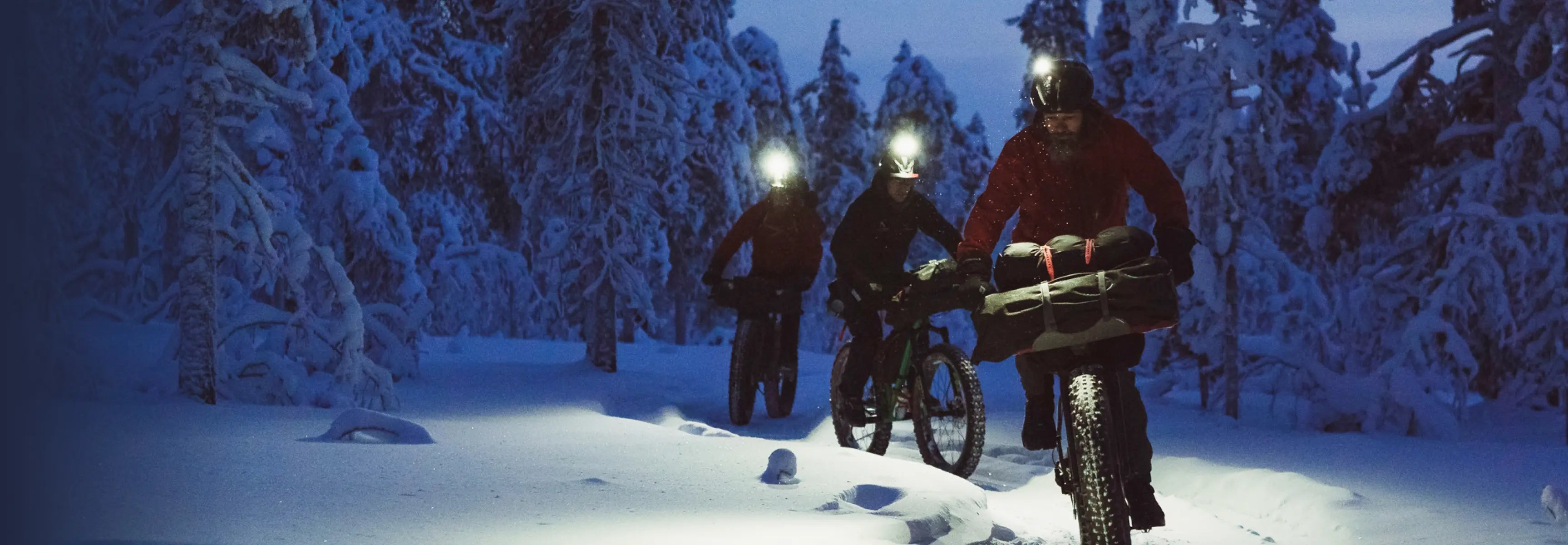
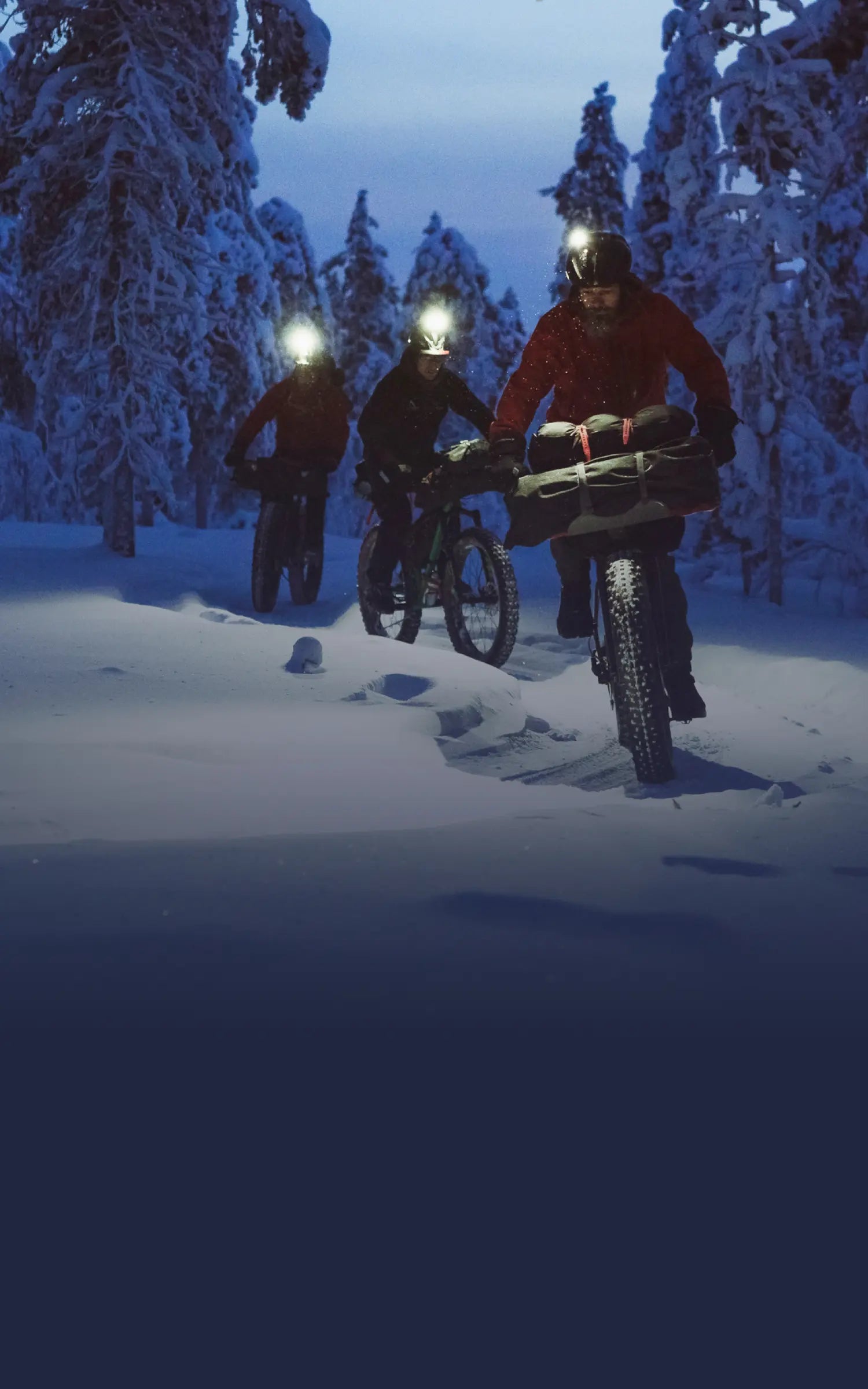
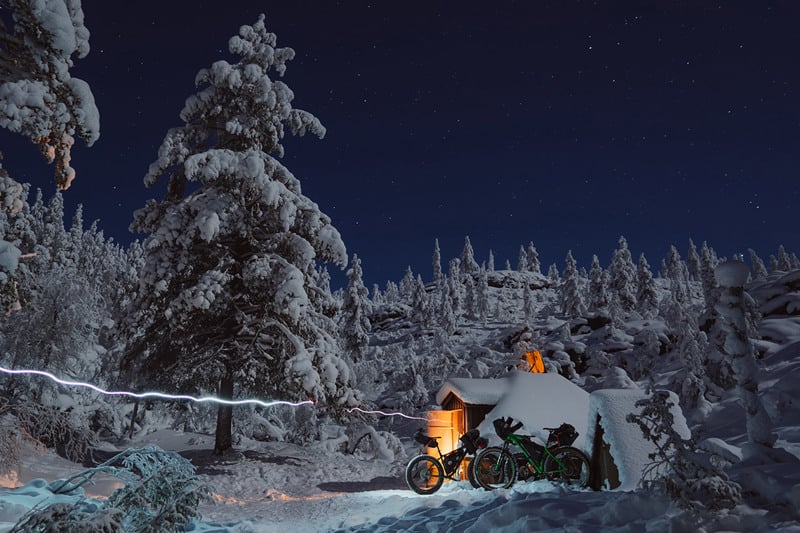
Just watching this will make you shiver. Our very own bike lover Antti Laiho and his buddies Timo Veijalainen and Erkki Punttila went on an overnight bikepacking tour in the Finnish Lapland in the middle of winter. The landscapes look like something from a fairytale. Truly magical.
Rails to Trails from Kona Bikes on Vimeo.
Peak creators
Since forever there’s been a connection between creativity and the great outdoors. In this series of films we talk to an artist, a photographer, an architect and a trail builder about their creative process and how the outdoors inspires them.
Canary in the coalmine
Decorated technical diver, explorer and filmmaker Jill Heinerth explores the veins of the Earth. She sees close up how the impacts of humanity are affecting our planet so considers herself a canary in the coalmine.
How fast can Kilian run a vertical k?
This film shows just how much the Kilian pushes himself during his lightning fast ascents. He might be the GOAT mountain athlete, but that doesn’t mean it’s a walk in the park for him. Watch him attempt to break the fastest vertical k record and push his lungs to their limit.
Immersed
Swedish slopestyle mountain biker Emil Johansson won the 2021 world championship and is now the most successive slopestyle rider in history. But it very nearly wasn’t to be. A mysterious autoimmune disease came close to derailing his dreams. This film is about his journey.
Finding myself
Suunto ambassador Sami Sauri fell in love with cycling as a teen and says it gave her a new purpose in life. Since then she has done epic bikepacking tours across the US, and elsewhere. When she’s not riding, she might be out surfing or trail running.
Arctic Lines season two
Finnish freerider Antti Autti has embarked on the second season of his Arctic Lines project, the goal of which is to ride 30 lines above the Arctic Circle. He and his team document each trip and release a film about the experience. Watch as they face brutal cold, the polar night and their physical limits in the pursuit of sweet, sweet rides.
Lead images by Jaakko Posti Photography

9 articles to catch up on this holiday
Another big year is coming to a close and if you are anything like us, it’s about time for some quality rest and relaxation. May we suggest you put your feet up and read about some of the awesome people we’ve spoken to this year.
We’ve covered sustainable living, mountain navigation, articles about our new ambassadors Anton Krupicka and Sami Sauri, hill training and much more. Don’t let it slide by - read on for some adventure goodness.
Sami regularly travels to the Canary Islands where she rides, runs and surfs. © Sergio Villalba
Meet the wild child who found her best self adventure cycling
Spanish cyclist, surfer and trail runner Sami Sauri ran away from home in her teens and fell in love with bikes when she encountered her first fixed gear. Read about Sami’s journey and her approach to adventure.
Emelie Forsberg’s principles for a sustainable lifestyle
With the climate crisis and biodiversity loss ever more pressing challenges, we all need to do our bit to live more harmoniously with the Earth, because there’s no planet b. Find out about the four Rs and the other sustainability principles Emelie lives by.
Susi provides an eight step process for planning out your training year. © Berghasen
6 keys to planning your training year
This is a relevant article to read now if you’re thinking about your sports goals for 2022. Sports scientist and coach Susi Kraft breaks down the process to create a smart training plan for the coming year.
Training stress score in Suunto app
Training load is an essential metric of goal-oriented training. Gradually increasing the load will improve fitness and performance. Suunto app quantifies training load using Training Peaks’ Training Stress Score, also known as TSS. Find out how it works.
Anton likes to mix his adventure sports - riding, running, climbing and skiing. Photo by Joey Schusler
Anton Krupicka - human powered doorstep to doorstep
He started out as an ultra runner and quickly rose through the ranks to become one of the world’s best. Then injury forced him to reassess his approach and now he is a passionate allround mountain sport athlete, from bikepacking, to trail running, climbing and skimo in the winter. Meet our new ambassador Anton Krupicka.
Don’t miss a turn!
Learn how to use your Suunto together with Komoot, one of the leading route planning tools out there. Komoot’s turn-by-turn navigation on your Suunto watch will keep your adventure on track.
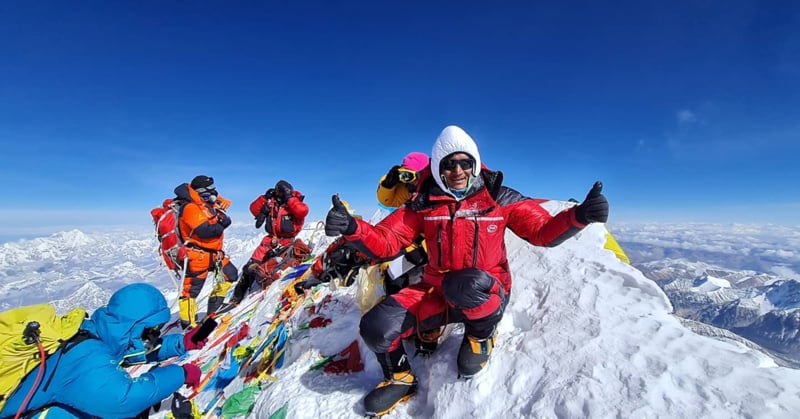
This photo of Tenji was taken while filming the Everest VR movie. © Jon Griffith
Turning ideas into action
Nepalese mountain guide Tenji Sherpa climbed with the late and great Ueli Steck and has blazed his own trail as a high alpinist. We talked to Tenji and learned about his humble beginnings and how he became a climber and he and Ueli’s respect for one another.
The importance of diversity in the outdoors
Ultra runner Ryan Montgomery explains why diversity in the outdoors is such an important topic and what we can do to create a more diverse and welcoming outdoor scene.
Susi trains in the mountains around Salzburg. © Berghasen
Get faster on those hills now
Sports scientist and coach Susi Kraft breaks down why improving our vertical speed is so hard and the necessary steps to do it. Fyi: some of her tips seem counterintuitive like “embrace running on the flat”.
Lead images:
© Tenji Sherpa
© Jon Griffith

The importance of diversity in the outdoors
Suunto athlete, ultra-runner and diversity champion Ryan Montgomery is set on waking up the outdoor scene to its ongoing failure to be an accessible and welcoming place to people from all walks of life and ethnic backgrounds. It’s not going to change by itself; only with awareness, validation and deliberate action can it be reversed. Read on for Ryan’s sage advice on diversity and how we can all contribute to a more open minded, welcoming outdoors.
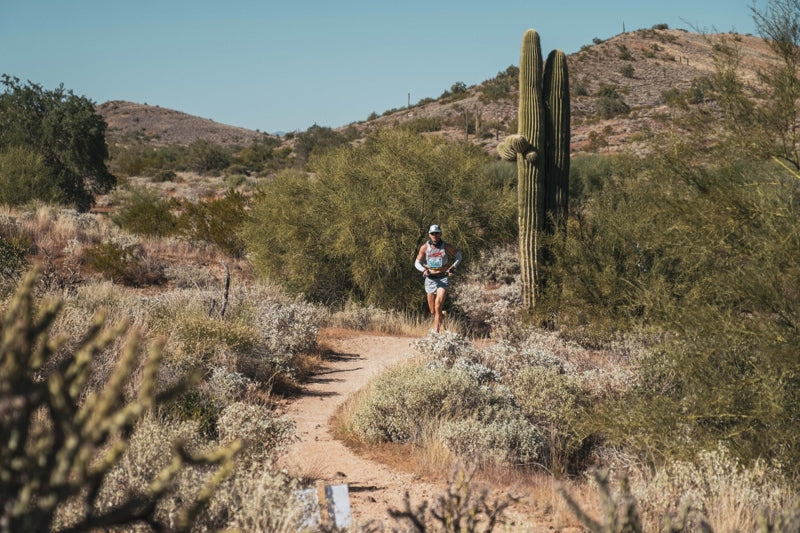
Ryan having a blast at the Javelina-Jundred 100-miler in Arizona.
By Ryan Montgomery
We all love being in the outdoors—with its multi-colored trees and endless plant and animal species—all thriving in uniquely different yet interconnected ecosystems. The existence of these different species and ecosystems tells us that the outdoors is inherently diverse—essentially diverse. I believe we can all agree that nature’s ecosystems thrive because of its inter-dependences across diverse plants, animals, and climates.
The outdoors teaches us that diversity is necessary for survival—to thrive. However, when I look at the people who are most often outdoors and adventuring in nature, they seem to be the least diverse and more binary compared to nature’s diversity standards, as mentioned above.
The outdoor diversity problem
For outdoor enthusiasts and adventurers, the outdoors provides a sense of belonging. We feel connected to the tree, the mountains. Nature is an integral part of all human experience, but a major gap today is that diverse communities across the world do not feel included in the outdoor spaces, let alone having access to these spaces.
In the United Kingdom, for example, racial minorities represent only about 1 % of visitors to national parks. In the United States, while people of color make up 40 % of the nation’s population, 70 % of visitors of National Parks and Forests are white, according to the National Health Foundation. Based on the past treatment and lack of inclusion of people of color (i.e. slavery), it is no wonder why people of color perhaps do not feel safe to travel outdoors, let alone be by themselves outdoors. LGBTQ communities have gathered in cities, farther away from the outdoors, to escape prejudices and to find community. Also, for women, the outdoors is often perceived (and unfortunately is) as a place where men can take advantage of them.
It makes sense why our outdoor spaces have become increasingly homogenous given our history and systemic problems in the past and present.
Ryan and his partner connect before the race kicks off.
Focusing on diversity - what can we do about it?
When I spoke to environmental US-based LGBTQ advocate Pattie Gonia about the importance of diversity, they say that “humanity is an ecosystem, and we need to support each other if we want it to survive.” And that’s all people—people of color, women, people with disabilities, and more. Until we can help marginalized communities realize that the outdoors is for them—and that it’s accessible too—all of humanity’s ecosystem cannot truly embrace what the outdoors has to offer.
Reframing what it means to be in the outdoors
One key to inclusive in the outdoors is to reframe what it means to be in outdoors and what it means to experience it. Oftentimes, the ‘outdoors’ is a man climbing a mountain, but that is a very narrow perspective. Pattie said that we can help others “redefine what outdoor experiences are, because we know we can’t get away all the time to be surrounded by a mountainous landscape. We can see so much beauty simply from the birds outside the window,” for example, or even in the small grass park within a city. Outdoors experiences can be had everywhere—not only in national parks, which are often 2- to 5-hour car or train rides from metropolitan areas where diverse communities typically reside.
Pattie Gonia and Ryan celebrate at the Javelina-Jundred 100-miler.
Show me the money
Money is a major concern for diverse communities to get in the outdoors, too.
Having the proper attire for snow or mountain climate, to simply having a vehicle that can get you into the forest or mountains, are barriers for many people of color (and others) to getting into mountain sports. We can support diverse communities by contributing to non-profit and programs that explicitly help diverse communities get outdoors. Some of my favorite organizations doing this work are Brave Trails, Harlem Run, and the following organizations on this website.
Celebrating diversity on the trail
As a queer, gay trail runner and outdoor lover, I have gained many micro experiences overtime that have helped me realized that the outdoors are for me and that there are other people like me out on the trails. That realization was a really empowering, life-changing moment. These experiences can easily be seen in my recent race, the Javelina Jundred 100-miler in Arizona, USA. The race is all about celebrating diversity and dressing up in costumes to express yourself however you want. I ran the race in a female-presenting crop top with rainbow tattoos on my arm. I felt fun, free, and excited. This type of expression at a race helped me, most likely mentally, in my performance because I was able to cross the finish line in 2nd place with a leg-crushing time of 13 hours 33 minutes. I held a rainbow Pride flag at the finish line next to my boyfriend. My performance earned a Golden Ticket to compete in the elite field at the US-based Western States Endurance Run in June 2022.
It’s clear: Inclusive outdoors experiences help diverse people show up as their best authentic selves in outdoor places and in sport.
It is my hope that we can provide that same inclusive, safe experiences to our diverse communities outside so that they too can experience the same love and belonging that you and I feel in the outdoors.
All images: Nick Danielson

How fast can Kilian Jornet run a Vertical Kilometer?
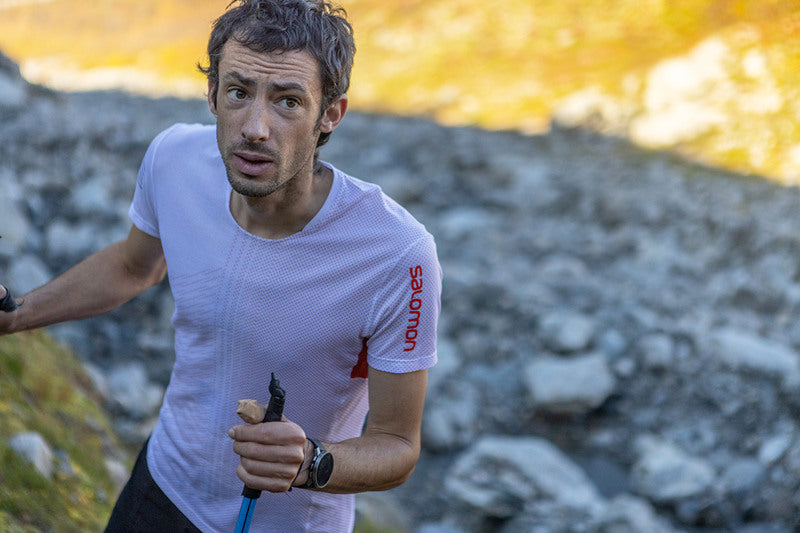
Watch as Kilian Jornet explores epic Norwegian landscapes to find the perfect spot to break the fastest known time – or "FKT" – of a Vertical Kilometer held by Philip Gotsch. Philip's time is under 29 minutes!
Images by Matti Bernitz

Emelie Forsberg’s principles for a sustainable lifestyle
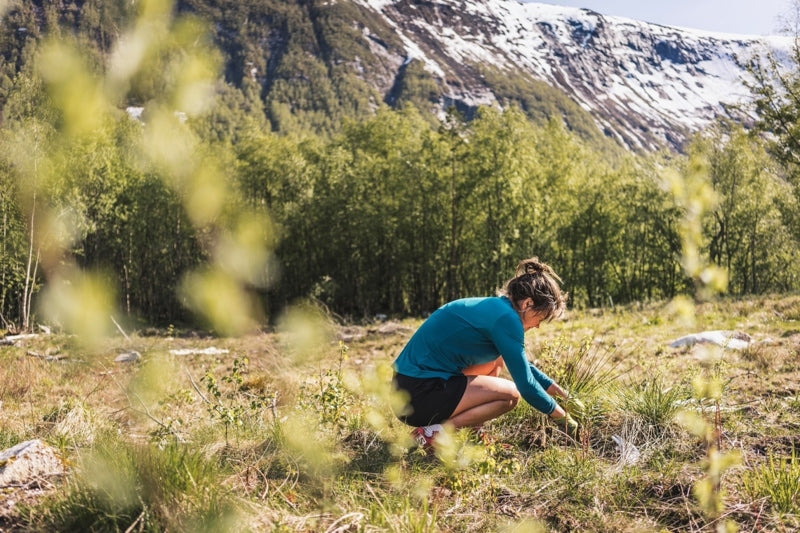
Growing up in the wild forests of north-east Sweden, Suunto ambassador and mountain runner Emelie Forsberg formed a deep, enduring relationship with natural places and a desire to explore and protect them.
After recently giving birth to her second daughter, she has gradually returned to running and training, and aims to race again soon. Her other great passion in life is working with the earth and understanding natural systems.
The former sky running world champion, mother of two and avid gardener is passionate about sustainable living and minimizes her household’s environmental impacts.
“The most important thing in life is to live sustainably in all ways, in relation to myself and the goals I have, with nature, and my children,” Emelie says. “I think everything is connected. Of course the biggest concern is to take care of the planet we live on.”
With sustainability and climate change urgent topics, with grave implications for humanity, we caught up with Emelie to talk about her approach to it. Read below for her principles.
Learn about Suunto's approach to sustainability
Emelie collecting berries for the freezer to last over winter.
Follow the four ‘R’s
Emelie first learned about these 30 years ago when she was in kindergarten. Now, they are more important than ever.
The four ‘R’s are: reuse, reduce, refuse and recycle.
With 7.5 billion people on the planet and growing we need to be careful how we manage the planet’s resources. Every year Earth Overshoot Day - which marks the date when humanity’s demand for ecological resources and services in a given year exceeds what the planet can regenerate in that year - arrives earlier and earlier. In 2021, it arrived on July 29. Reusing, reducing, refusing and recycling are essential components if we are to preserve, even restore, our planet’s natural systems.
Reuse
There are so many possibilities here. For example, there are the obvious ones like taking a reusable coffee cup with you and using that on the go, or getting reusable cloth shopping bags, rather than using plastic bags. You can also reuse clothing, kitchenware and furniture by buying second hand. Glass jars, plastic containers, milk cartons and so many other household items can be repurposed and reused.
“I often think about my grandparents when it comes to reusing things because for them, and their generation in general, this was very natural,” Emelie says. “I grew up with this principle so it feels very natural to me, and I implement this with my daughters as well.”
Repair
Ok, so we know we didn’t mention this one at the outset and that’s because it’s really just another aspect of reusing - repairing items rather than tossing them out because of damage. The less we put into landfill and reuse the better. Items like shoes, clothes, furniture, sports equipment and more can, with a little skill, be repaired. In cities around the world “upcycling” - the creative reuse of discarded items in such a way as to create a new item often of higher quality or value than the original - has become a popular activity with courses showing people how to approach it. Repairing can be fun!
Reduce
“In general, I try to reduce my impact by reducing unnecessary gear, clothes and other material things,” Emelie says. Reducing can also mean choosing to drive and fly less, and cycling or walking more. It can also mean reducing how much meat and dairy we eat, given methane emitted by livestock is a more powerful greenhouse gas than C02. We can also reduce how much electricity we use by turning unnecessary lights off and shutting down our devices rather than leaving them running. Reducing can also mean buying your vegetables from a local market rather than plastic wrapped items from the supermarket.
Refuse
This one might seem touchy. But if you accept what the vast majority of climate and environmental scientists are saying and the impending disaster human civilization might face as a result of our impacts, then saying no to certain things is a logical and necessary next step. Many people, for example, have decided to stop flying. While others have decided to say no to taking short haul flights. We can also refuse to invest money in organisations that support the fossil fuel industry. In terms of everyday life, we can refuse to buy single use plastics, cheap plastic items, or vegetables packaged in plastic. There are many possibilities.
“Say no to meat, fruit and vegetables produced with a lot of pesticides, non-seasonal food and so on,” Emelie says. “The list can be huge if we want!”
Recycle
This one doesn’t need much explanation and is really the very least we should be doing. But we can get creative about what we recycle. Glass, metal containers, paper and plastic, obviously, plus clothing, batteries, electronic equipment and so much more.
Planting trees helps to capture carbon.
Run a low energy home
Emelie recommends choosing an electricity company based on renewable energy.
At night, turn off heating, lighting and your devices.
Use energy efficient light bulbs.
Take only short showers.
When you use the oven, take the opportunity to cook many things at once rather than heating it multiple times over the week.
Only use the dishwasher or washing machine for full loads.
Eat plant based, or as much as possible
The UN and multiple studies have found one of the best things we can do to stop climate change is adopt a plant based diet. Less livestock animals belching and farting methane the better. It also means less land use for grazing, and more space for forests to regrow. If going full plant based doesn’t work for you, then like our other ambassador Greg Hill and many people try being a weekday vegetarian - only eat meat on the weekend.
Eat seasonally
Eating seasonally and eating locally are two sides of the same coin. “Locavores”, like Emelie, choose to eat what is grown nearby, season to season, keeping to a minimum their “food miles” - how far their food has had to travel to arrive on their dinner plate. This means less resources are required to transport and store food. Ask yourself whether you really need to eat those strawberries in the middle of winter or whether you can wait until early summer and buy them from local producers?
Eat organic
Scientists have sounded the alarm about what they call the insect apocalypse - steep bug population declines because of stresses caused by humans. Sure, bugs can be annoying, but they play crucial roles in our ecosystems. Bees and other pollinators, for example, pollinate nearly 75% of the world’s plants that produce 90% of the world’s food.
Yet their numbers have been decreasing, and one of the reasons is the use of insecticides; nasty chemicals designed to eliminate insects that threaten crops. The problem is they kill much more than the targeted pest.
“So important to support farmers who don’t use pesticides,” Emelie says. “Pesticides destroy the living ecosystem.”
Grow your own food
“For me this is a way to connect to nature and realise how important it is that we take care of it,” Emelie says. “It also gives me so much respect for the products of organic small scale farms and farmers and their work. I would never ever let any veggies I grow in my own garden go to waste, and I bring this awareness into how I respect veggies I buy as well. I know the process of growing the food!”
If you do start your own garden, Emelie encourages growing flowers in and around it to help the bees!
Small caveat:It’s also important to point out that while all of these measures can help reduce our individual emissions and other environmental impacts, the challenge of climate change is too big to be solved by individuals alone. System change is required.

Peak Creator Series – The Artist
A snowboard guide by winter, and a passionate artist inspired by nature Jessa Gilbert lives to be in the outdoors.
This is the fourth in our Peak Creator film series, which celebrates creative people inspired by the great outdoors. We talk to four creators and find out what inspires their creative work.
As a teen, Jessa learned to snowboard on the Catamount in the Catskills in upstate New York and before she knew it she was competing in freestyle. She racked up five knee surgeries by the time she was 27 and was eventually told she could never run or board again.
She thought packing her painting kit might force her to slow down - it didn’t - but it did result in her capturing the stunning landscapes she shreds in and has led to her creating graphics for brands.
“We are in a time where we are starting to remember that public art is important,” Jessa says. “The beauty of public artwork is that you are creating artistic environments.”
Click play below and watch Jessa share her creative inspiration.


