




SUUNTOブログ

A year in the life of Ueli Steck
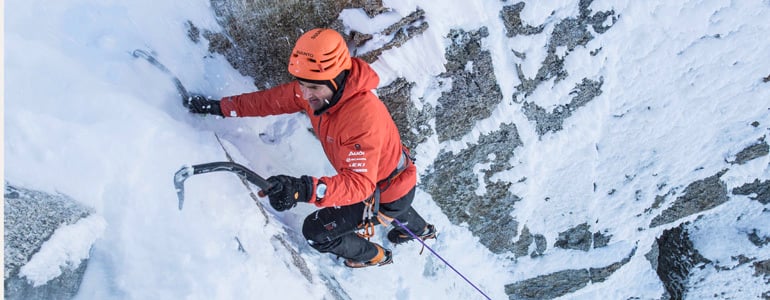
The greatest honor for an alpinist is to have the respect of one's peers – and Ueli Steck has that in abundance. When you look at what he gets up to, it's easy to see why. Last year was no exception for the Suunto ambassador – it proved to be another action-packed year of epic ascents and adventures. And it seems like he's got a monster project brewing for 2015...
A year in the life of Ueli Steck: it involved the whole spectrum of mountaineering activites from winter big wall rock climbs to Himalayan ascents with some Andean exploration thrown in for good measure. In March he teamed up with Michi Wohlleben and climbed the Tre Clime in the Dolomites in just one day. “It was a rather cold and steep adventure,” he writes in his latest newsletter. “These three walls have never been climbed in one day in winter before. We did it in a total of 15 hours and 42 minutes.”
In April he was awarded the prestigous Piolet d’Or for his ascent of the south face of Annapurna. “This was a great honor and sign of appreciation to me,” he says. “The Annapurna expedition merited further recognition; the nomination of Swiss Citizen of the Year in 2013 and the nomination by National Geographic in 2014 as Adventurer of the Year.”
Don't forget, you can still vote for Ueli to become National Geographic Adventurer of the Year here.
The spring was spent sport climbing in Spain and France followed by four weeks in Peru. In the fall Ueli then attempted to ski Shishapangma with his wife Nicole but the project was overshadowed by the tragic deaths of two other skiers caught in an avalanche.
“The harsh reality of this all forced me to sit down and contemplate yet again,” writes Ueli. He adds: “In summer, just before leaving for Tibet, Samuel Gyger, Robert Bösch and I were able to document the 2013 Peuterey traverse on Mont Blanc by way of film and photography. The film release is scheduled for the end of 2015.”
Plans for next year are still underway for Ueli. His original idea was to retry the Everest-Lhotse traverse but has abandoned this idea as it would involve exposing himself to the hazards of Everest politics.
“At the moment, I’m planning an alpine project for the summer of 2015 together with Michi Wohlleben. A project meaning commitment, sweat and strength – 1000 km and 100,000 m in altitude. Further details will follow soon. The coming winter and spring will be entirely focused on preparation for this project.”
We can't wait to find out...
All images ©Jon Griffith
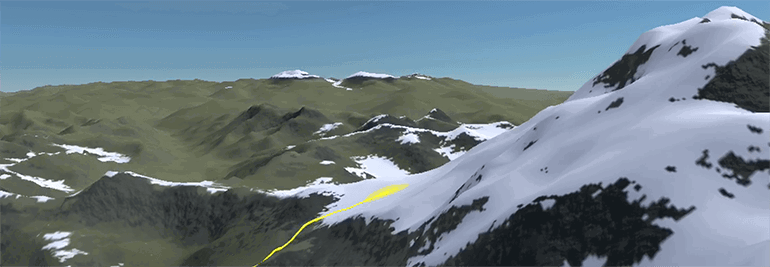

Relive Kilian Jornet’s Aconcagua record with a Suunto Movie
Kilian Jornet set a new ascent-descent record on Aconcagua, the highest mountain in the western hemisphere, on December 23rd. The speed record was part of Kilian’s Summits of My Life project.
Kilian started the ascent from the last inhabited place, the cabin of the park guards in Horcones at 2.900 meters. With the summit at 6,962 m the route included over 4,000 m of ascent and descent – and a distance of almost 60 km.
The new Aconcagua record now stands at 12 hours 49 minutes. That’s three hours faster than the previous official record and an hour faster than the unofficial one!
“I’m really happy to have completed this new challenge. It has been tough, especially at 6,500m altitude when I suffered altitude sickness. Anyway, these moments of suffering will always be remembered,” says Kilian.
Relive Kilian Jornet’s Aconcagua record with a Suunto Movie.
Read also Kilian’s blog post about the record.
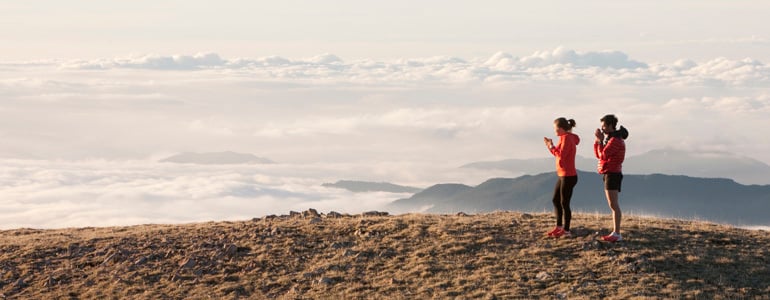

Aconcagua welcomes new visitors
As you read this, Kilian Jornet is attempting #6 on his Summits of My Life project, the mighty Aconcagua, 6,959 m, the highest mountain in the Americas. The goal is to set a new speed ascent record and follows his previous successes on Mt Blanc, the Matterhorn and Denali. “Everything is ready for the next dream!” he recently blogged.
Aconcagua, Argentina ©Daniel Peppes Gauer - Flickr
The goal is to break two records: Brunod, Pelissier and Meraldi's 3h 40 m record from the Plaza de Mulas (basecamp) in 2000 and Egocheaga's 14h 54m record from Horcones set in 2007. Kilian is typically modest when we speak to him: “The main goal is to make a fast time on Aconcagua,” he says.With him will be the film-maker Seb Montaz and guide Vivian Bruchez and one other person close to Kilian, his girlfriend Emelie Forsberg. This means he will not be the only champion ultra runner on the mountain.
Illustration courtesy of Suumits of my Life
It will be nice to support Kilian,” says Emelie “and if I am having a good day I will also try for the female record. It's not a goal for me but if I'm feeling good, I will try. It's a beautiful mountain.”Aconcagua is not as technically difficult as the Matterhorn and nor as wild and exposed as Denali but sitting just under 7,000 m it still poses a formidable challenge. Next up on Kilian's mountain schedule is the winter ski-mountaineering season and then Everest beckons in the spring. “It's too ambitious to say it will be a record attempt,” adds Kilian. “It will be an attempt!”We all wish Kilian (and Emelie) the best of luck!
Main image shows Emelie and Kilian in Spain: ©Jordi Canameras
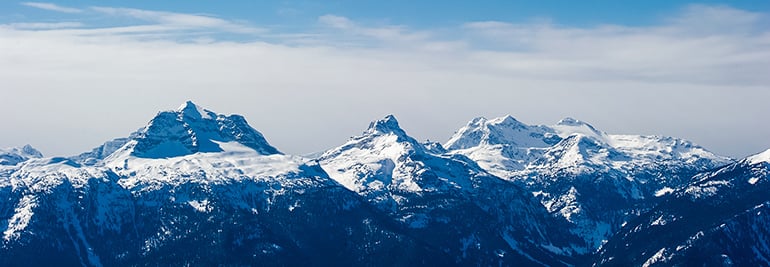

What's your adventure?
Adventures take us to new experiences and out of the everyday. Kilian Jornet says that exploring is human; Greg Hill that adventure is a mindset.
Watch the Suunto Adventure video and hear what Kilian Jornet, Greg Hill, Jill Heinerth and Conrad Stoltz think of adventure.
Top image: © Bruno Long
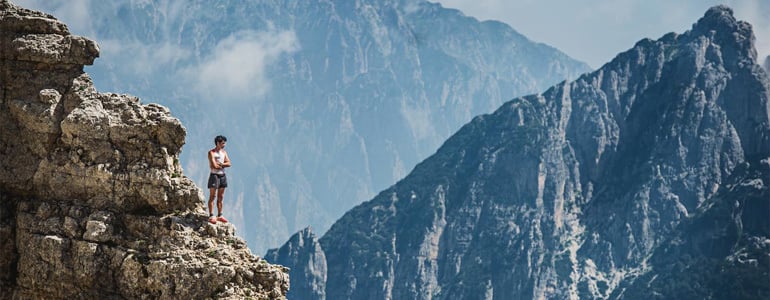

Awards for Kilian Jornet
Kilian Jornet is well known for his superhuman running and mountaineering achievements. From 100 milers to the vertical kilometer, from World Cup ski-mountaineering races to record ascents of alpine peaks, he blazes a trail wherever he goes. But the Suunto ambassador has just been recognized for something else – his writing skills. Kilian's book, Run or Die was shortlisted for the prestigious William Hill Sports Book of the Year literary prize in the UK. “I never expected this – I'm not a writer,” says Kilian. “I just wrote the book to share what I feel when I'm running but it's so nice to be recognized.”
In Run or Die Kilian describes his record-breaking runs at Lake Tahoe, Western States 100, Ultra-Trail du Mont-Blanc, and his record ascent of Kilimanjaro. It's not the only prize the athlete has scooped. Déjame Vivir, the film of his speed ascents on Mt Blanc and the Matterhorn has just won ‘Best Adventure & Exploration Film’ at the 2014 Kendal Mountain Festival. The film, which was made by renowned mountain film-maker Sébastien Montaz, follows Kilian during his Summits of My Life project.“I just had my part in that film but credit goes to all the people like Seb who made a really good job on this film. It's nice, the response of the public when we show the film,” he adds. “They are inspired and motivated and that's the most important thing.”Run or Die is available in English, French, Spanish and Catalan. Go to Kilian's website for more details.

Get more from your Ambit GPS watch.
Mountain guide Fabien Meyer offers some tips on how you can use the altimeter function to better understand the weather and how to use the compass to navigate. Don't become fixated by knowing your exact altitude and re-calibrating every ten minutes. “Don't be obsessed about it,” says Meyer. “It's more important to understand what's going on with the pressure.”“If you get an altimetric increase of altitude while you're at the same height, the atmospheric pressure is going down,” he says. “A big advantage is the new Fused Alti technology: it calibrates your altimeter with GPS, so you can follow the evolution of the pressure even as you move vertically, so long as the sky is clear,” he adds.
Click here to find out how the Track back feature can help you navigate safely
Understand how pressure works: “When you're at sea level a difference of 1hPa is equal to approximately 7m. At the summit of Everest it's about 10m. For example, say you calibrate at 2,000m and climb to a 4,000m peak but your Ambit says 4,200 m, you know there's been a drop of approx 20hPa. That's a big drop and you should turn around. Especially if you notice humidity in the air.”Use the compass“It's very important to have a compass especially when you still do not need it ;-).” says Meyer. “The Ambit compass is very accurate and you won't leave it at home because it is on your wrist. It's very quick to orientate yourself and gain the right direction. Check often “There are lots of different configurations, in all of them, I try to minimize my dependence on electronic gear. For me the safest when it is serious (no visibility and dangerous terrain) is to check my position every 1 to 30 minutes (depending how dangerous the terrain is) and to fix a bearing that I follow during each stage. “Even if your watch bearing is accurate and safe you don't need 100% accuracy with bearings. In bad weather, if you're glued to a screen you may end up in a crevasse! It's better to check your position often and do lots of little bearings rather than follow a straight line – you're not a sailor.” Use the bearing lockUsing this, you can take a bearing to the next waypoint and off you follow. The track back is also a very useful feature and when it is turning bad it gives you a solution in any circumstances, serious or not, but don’t forget it doesn't work on steep terrain.Want to go ice-climbing with Fabien Meyer? He will be one of several guides at the Cogne Ice Opening in December. Click here for more details.


