






SUUNTOブログ


3 Ways to Motivate Yourself to Train This Winter
On the whole we endurance athletes are a pretty self-motivated bunch. But even endurance athletes are only human, and as a result we suffer from the same fluctuations in “get up and go” as everyone else from time to time. These dips in motivation can range from the nagging desire to skip training for a day or two to full on slumps where you lose your workout mojo altogether for extended periods of time.
And this time of the year can be particularly challenging from a “mojo” point of view because, for the most part, the “A” races for the year have disappeared into the rear view mirror but next season is still a good way off over the horizon.
There are also dark mornings and evenings with often colder, wetter weather to contend with (for those of us in the Northern Hemisphere at least). At this time of the year it’s easier than ever to just skip training altogether.
Don’t get me wrong, I do believe in taking a decent end-of-year break if you’ve had a long, hard season. This is crucial for mental and physical recuperation. But, assuming that your planned downtime is coming to an end sometime in the near future, I thought it might be a good time to offer up a few tips gleaned from more than 20 years of tricking, cajoling and persuading myself to go out and train when frankly I’d much rather have hit the snooze button or spent more time working on the Homer Simpson-esque butt indentations in my sofa instead.
Set your next goal ASAP
Over the years I’ve learned that lining up your next significant goal is the best way to motivate you to train. It’s why I’ve tried to carry on doing a fairly big event each year even though I’m nowhere near as competitive as I used to be.
I simply find that without something fairly challenging in the diary in the not too distant future, I am far more likely to give in to the urge to skip a session when I just don’t feel like it. Without a significant goal on the horizon, I find that something of a downward spiral kicks in. Missed workouts lead to a significant drop in fitness levels followed by similar drop-offs in mood, self-confidence and overall productivity in life.
In contrast, when I have a decent high-level goal in place the opposite tends to happen. Aiming for the goal has a positive “double-whammy” effect on my motivation and willingness to put the work in. It gives me something very positive to visualize and strive toward when I’m feeling motivated and up for training anyway, acting as a kind of multiplier of effort and enjoyment on those days.
And even more importantly, it does a great job of mildly scaring and pressuring me into making that crucial first step out of the door on those days where I’m feeling less than up for it. That’s largely because I’m fearful of the consequences of not doing so; namely falling short of the goal in some way.
I’m actually going through the process of choosing a couple of goals for the year at the moment. If you’ve not set your mind to what you want to be doing this year yet, I’d definitely recommend doing so soon.
Plan to train with other people
Training with other people adds the pressure of not letting them down and this alone is a powerful motivator. Training with others can also be a lot of fun and it can help distract you a bit and give you another, more sociable reason to go training.
I’ve always found evening training to be the hardest to get motivated for. I’ve therefore taken to arranging to go training with other people on days where my work schedule dictates that I have to put sessions in after dinner rather than first thing in the morning (which I definitely prefer).
More often than not, the pressure of having to show up and not let someone else down is the deciding factor in getting me out and putting in the miles. And, somewhat unsurprisingly, I almost always find that I either enjoy the training once it’s underway or at the very least get a sense of satisfaction from it once it’s done.
Plan tomorrow, tonight.
Having the discipline to spend two minutes at the end of each day thinking about what training you’re going to do the next day can be hugely beneficial.
When you’re working to a set training plan this mental checklist is nothing more than a brief chance to think through what your program has in store; to make sure you feel like you’re up to it and to check you have everything you need ready (kit/equipment laid out or packed, alarm set for the right time, any foods and drinks prepared etc).
This reduces the chances of anything small or silly preventing you from getting the job done the next day and it allows you to adapt your plan if you feel you need to.
When you’re not working to a long-term structured plan (as can be the case at this more relaxed time of year), taking a couple of minutes to plan out what you intend to do tomorrow, and when you intend to do it, is even more important. It dramatically increases your chances of actually knuckling down and doing some productive training.
I’ve done a fair bit of reading on this subject (as well as thinking about my own tendencies) and I think this is largely because we have 3 different “selves”: our Past Selves, Present Selves and Future Selves. The implications of this theory go way beyond training, but here’s my extremely basic interpretation of how it applies to athletes:
Your Present Self almost always wants to do something that’s easy and rewarding right now e.g. hit snooze and stay in the warm bed, or stay parked in front of the TV. However, what your Future Self would actually benefit from most of all is doing something harder right now, i.e. getting your kit on and going training, as this will result in your Future Self being fitter in the long run.
In other words, your Future Self needs your Present Self to take some pain now for gain later on, whereas Present Self is far more interested in avoiding the pain in the immediate term. It’s as if you’re actually two different people with two different sets of goals.
So, when you sit down the night before the following day to mentally commit to what training you’ve got planned, what you’re actually doing is proactively putting your Future Self’s best interests to the fore whilst you’re not feeling the strong pull of Present Self’s desires.
When the alarm goes off the following morning, you wake up having effectively made a pact with your Past Self to get up and go to give your Future Self the best shot at hitting their goals. This makes it quite a bit harder for Present Self to take the reigns and simply turn off the alarm and roll over.
The psychology of human motivation is clearly more complicated than this simplification, but I do know from my own experience that thinking about things in this way (and pre-agreeing the following day’s training the night before with myself) is a very helpful tool for getting me up and out of the door.
Success with endurance training is largely a product of the consistency with which you can grind it out over many months, so I hope that these tips help you get out of the door just a little more regularly in the coming weeks and contribute to you starting the new year with the best possible chance of having a great season.
This article by Andy Blow, a coach and a triathlete, was originally published on trainingpeaks.com.
TrainingPeaks provides you in-depth analysis, planning tools and coaching services to help you reach your goal. Track your workouts with your Suunto watch. Afterwards analyze your heart rate, power, pace and other data with TrainingPeaks on web or in mobile and progress towards your goals.
READ ALSO
TAKE THE LONG LOOK: HOW TO PLAN (VERY) FAR AHEAD IN ORDER TO REACH YOUR GOALS
3 THINGS YOU NEED TO DO BEFORE SETTING YOUR NEXT RACE GOAL


Fuelling the engine: Talking nutrition with Ryan Sandes
Avocados are a staple in Sandes’s diet. © Craig Kolesky / Red Bull Content Pool
Back home in his native South Africa, ultra runner Ryan Sandes is partial to a good braai (the South African version of a barbeque). While he generally eats whole foods most of the time, Sandes avoids getting strict or uptight about his diet. He takes a pragmatic approach.
“I believe it's important to enjoy life as well,” he says. “I don’t weigh x amount of protein, and x of carbs, I just try to eat a balanced diet with as many whole foods as possible. I try to listen to what my body is craving.”
Despite being from meat loving South Africa, Sandes and his wife Vanessa have drastically reduced their meat consumption to only once or twice a week. Instead, they focus on eating unprocessed, natural food.
“As an athlete it’s very easy to slip into taking lots of recovery shakes to try to get the goodness back into your body,” Sandes says. “But I don’t think you can replace eating good whole foods.”
Sandes ran the Great Himalayan Trail this year. © Dean Leslie / Red Bull Content Pool
In busy times
Forward planning is essential for athletes. And having a good meal plan is just as important as having a clear training plan.
Sandes often makes a big dish, with multiple portions, at the beginning of the week so he has something easy available if it’s a busy week. It’s helpful doing this, he says, because of the tendency to get a little lazy, especially later in the week.
“I often eat quite a lot of eggs, and avocados and salad, things that are easy to put together,” he says.
Sandes (and his dog) remains partial to a braai (barbecue). © Ryan Sandes
Go to meals
Sandes enjoys pizza so, when he needs an easy meal, he buys locally made pizza bases, smothers them vegetables and salad, and bakes them. Burgers, smoothies, rye bread with honey, muesli and plenty of boiled eggs are all part of his regular diet, too.
And his secret supplement is bone broth.
“These days in first world countries people eat the best cuts of meat, whereas way back in the hunter-gatherer days, if they hunted a buck they would eat the entire animal, including boiling all the bones and drinking the broth,” Sandes explains. “A lot of the good meat cuts don’t have all the essential fats, but bone broth has that. It’s not my favourite thing, but it’s great for recovery.”
The Sandes superfood grain salad recipe
Grains:
1 cup of quinoa1 cup of sorghumHalf a cup of milletHalf a cup of buckwheat
Boil all the grains separately as they all have varying cooking times.Add a can of drained and rinsed chickpeas and a can of drained and rinsed lentils.Let the grains cool down and add some lemon juice and good quality olive oil. The above amounts make quite a big bowl but you can keep it in the fridge and decant from it all week for lunch and dinner!
Other ingredients:
Chopped up avocado pearRocket and other lettuce leaves Baby spinach leavesFeta cheesePitted olivesBaby tomatoes
Salad dressing:
1/4 cup of balsamic vinegar1/2 cup of good quality cold extracted olive oil1 teaspoon of honey1 teaspoon of whole-grain or Dijon mustardOne clove of crushed fresh garlicSalt & pepper to taste
Blend all the salad dressing ingredients and lightly drizzle onto your salad. For more of an animal protein punch, add slices of grilled chicken, beef or tuna. Optional extras: drained and rinsed can of corn, chopped up fresh basil, drained and rinsed butter or cannellini beans, cut up cucumber, half a hand-full of dried cranberries.
Lead image: Photo by Jaco Pretorius on Unsplash
Read more stories about nutrition:
Fuelling the engine: A common sense approach to nutrition
Fuelling the engine: Talking nutrition with Melissa Hauschildt
Fuelling the engine: Talking nutrition with Lucy Bartholomew


ランニングの目標設定方法|次のレースに向けて決めたい3つのこと
「次のレースに出てみたいけれど、何を目標にすればいい?」「目標タイムを決めても、練習が続かない」。ランニングの目標は、高ければよいわけでも、タイムだけで決めればよいわけでもありません。大切なのは、今の自分に合うゴールを選び、そこへ向かう行動まで具体的にすることです。
この記事では、スポーツ心理学の専門家キャリー・ジャクソン・チードルによる元記事のアドバイスをもとに、次のレースへ向けた目標設定を3つのステップで紹介します。5kmへの初挑戦からフルマラソン、トレイルランニングまで応用できます。
目次
目標を決める前に確認したいこと
1. ゴールと達成までの計画を具体化する
2. 目標を書き、周囲と共有する
3. 「なぜ挑戦するのか」を言葉にする
レース目標の設定例
Suuntoで進捗を振り返る
目標を見直してもよいタイミング
まとめ
目標を決める前に確認したいこと
レース名や目標タイムを決める前に、まず現在地を確認します。直近の走行距離、継続して走れる時間、ケガや体調、練習に使える曜日、仕事や家庭の予定を書き出してみましょう。
憧れだけでレースを選ぶと、準備期間や生活とのバランスが合わないことがあります。反対に、今の走力だけを基準にすると、挑戦する楽しさが小さくなるかもしれません。「少し背伸びすれば届く」と感じられ、準備する過程にも意味を見いだせる目標を選ぶことがポイントです。
レースまでに十分な準備期間があるか
距離、路面、累積標高、制限時間が今の経験に合うか
週に何日、どのくらい練習できるか
目標達成のために睡眠や回復を確保できるか
結果だけでなく、準備の過程にも取り組みたいと思えるか
1. ゴールと達成までの計画を具体化する
「マラソンを頑張る」だけでは、今日何をすればよいかが分かりません。元記事が勧める1つ目のポイントは、何を達成したいのか、そのためにどう行動するのかを具体的にすることです。
目標は、次の3層に分けると計画しやすくなります。
種類
役割
例
結果目標
レース当日に達成したいこと
初完走、自己ベスト更新、制限時間内完走
行動目標
自分で管理できる日々の行動
週3回走る、週1回ロング走を行う、休養日を守る
確認指標
計画が進んでいるかを見る材料
継続率、走行時間、ペース、心拍数、疲労感
レース当日の天候やコース状況、周囲の選手の動きは完全にはコントロールできません。結果目標だけでなく、自分で選べる行動目標を持つと、途中の手応えを確認しやすくなります。
2. 目標を書き、周囲と共有する
2つ目は、目標を頭の中だけに置かず、書き出すことです。レース名、開催日、目標、挑戦する理由、毎週の行動を、ノートやカレンダーに残します。曖昧だった部分が見え、予定を立てやすくなります。
必要に応じて、家族、ランニング仲間、コーチにも共有しましょう。宣言して自分を追い込むためではなく、長い練習時間や遠征予定への理解を得たり、状況が変わったときに相談したりするためです。
ただし、公開すること自体がプレッシャーになる人もいます。その場合は、信頼できる一人に伝える、あるいは自分だけが見る記録に残す方法でも構いません。続けやすい形を選びましょう。
3. 「なぜ挑戦するのか」を言葉にする
3つ目は、「なぜ、この目標なのか」を明確にすることです。準備期間には、悪天候、疲労、仕事の繁忙など、予定どおり走れない日が必ず出てきます。そのとき、目標の理由が、自分に合う判断へ戻る手がかりになります。
なぜ、このレースや距離に挑戦したいのか
なぜ、今のタイミングなのか
達成までの過程で何を身につけたいのか
結果にかかわらず、どんな経験を持ち帰りたいのか
「友人と一緒に初めての10kmを完走したい」「以前リタイアしたコースへ、無理のない準備で再挑戦したい」など、自分の言葉で十分です。他人からよく見える目標ではなく、自分が取り組む意味を感じられる目標にします。
レース目標の設定例
たとえば、初めてハーフマラソンに挑戦する場合は、次のようにまとめられます。
レース:12週間後のハーフマラソン
結果目標:最後まで安全に走り切る
行動目標:週3回のランニングを基本とし、週末に少しずつ走行時間を延ばす
確認方法:毎週末に実施回数、疲労、痛み、睡眠を振り返る
挑戦する理由:一度は諦めた距離を、無理のない準備で完走したい
目標タイムを設定する場合も、「A:理想」「B:現実的」「C:安全に完走」のように複数の目標を用意すると、当日の気象条件や体調に合わせて判断しやすくなります。初めての距離やケガからの復帰時は、タイムより安全な完走や継続を優先してください。
Suuntoで進捗を振り返る
計画を立てたら、定期的に記録を振り返ります。軽量なランニングウォッチSuunto Runや、トレーニングとレースに対応するSuunto Race 2で運動を記録し、Suuntoアプリで走行時間、距離、ペース、心拍数などの傾向を確認できます。
大切なのは、1回の良し悪しに反応しすぎないことです。週単位、月単位で記録を見て、行動目標をどの程度実行できたか、疲労と回復のバランスが崩れていないかを確認します。負荷の見方はランニングのトレーニング負荷を管理する方法、具体的なメニュー作成はSuuntoアプリでインターバルトレーニングを作成する方法も参考にしてください。
目標を見直してもよいタイミング
目標を変更することは、失敗ではありません。痛みや体調不良が続く、練習できる時間が大きく変わった、レース条件が想定と異なったときは、期限、距離、目標タイム、行動目標を見直します。痛みや不調がある場合は、無理に継続せず医療専門家へ相談してください。
予定が崩れた後に、遅れを取り戻そうとして練習量を急に増やすのは避けましょう。計画開始後の調整については、予定どおり走れないときのトレーニング調整法で詳しく解説しています。走る意欲そのものが下がったときは、ランニングのモチベーションを維持する10の方法も役立ちます。
まとめ
次のレース目標を決めるときは、ゴールだけでなく、達成までの行動と挑戦する理由まで言葉にします。計画を書き、必要な人と共有し、記録を定期的に振り返ることで、遠いゴールを今日の一歩へ変えられます。
完璧な計画を守ることが目的ではありません。現在地や生活の変化に合わせて調整しながら、自分にとって意味のあるスタートラインを選びましょう。
次の目標を、日々の記録につなげよう
ランニングの記録と振り返りに活用できるSuuntoのランニングウォッチをご覧ください。
ランニングウォッチを見る


Take the Long Look: How to Plan (Very) Far Ahead in Order to Reach Your Goals
Flying home from the World Masters Championships in Germany some years ago, trapped in a tight seat, surrounded by strangers, I began to think about my next important race—not my next race, but my next important race—one I hoped to win. It was the marathon at the next Worlds in New Zealand, which was still another year and a half away.
If you want to succeed as a long distance runner, you need to take the long look.
By any measure, I had achieved success in Germany, winning bronze and silver medals, but that was less than at the two previous Worlds, when I took home the gold. The bigger problem was that in New Zealand, because of my birthday, I would fall five months short of moving from the M45 age division into M50—which would presumably have easier competition. Almost all my rivals were younger than me—youngsters who had just moved into the division and were ready to take down the old coot. To match my previous record, I would need to train much harder and, more importantly, much smarter.
So I pulled out a sheet of paper and began to plot my training for the next 18 months.
Other than at the elite level where runners look from one Olympic Games to the next, I suspect this is something that few runners do—but maybe they should. Consider the following suggestions as you map your training for the coming year:
1. Plan Far, Far Ahead
Not far ahead, but far, far ahead. Not weeks ahead, or months ahead, but years ahead. What activities should you be doing now to enhance the quality of your life all the way to the end of that life? Today, running sits at the center of your universe, but look to the future. Running scores high when it comes to cardiovascular benefits. Our sport is also a great (not merely good) tool for maintaining weight and strengthening the lower body—but what else should you be doing?
While still in my 20s, I began supplementing my workouts by lifting free weights. Few runners strength-trained back then, but I was thinking ahead. Later, I added cross-country skiing, snowshoeing and even competed in triathlons, adding swimming and cycling to my workout routine. In planning far, far ahead, you should seek total fitness—not just running fitness.
2. Plan Far Ahead
The time for New Year’s resolutions slid past us, but you still can make a running resolution. What will be the theme of your running for the calendar year; not just which specific races, but the motivation leading to those races? Perhaps it is time to get serious about the sport and train extra hard, perhaps aiming for some PRs (Personal Records) or that coveted BQ (Boston Qualifying Time) that has eluded you during your running career.
Or, perhaps you are burned out from the training it took to reach previous goals. Don’t just stop running, but maybe realize that it’s time to cut back on both the quantity and quality of your workouts to refresh yourself psychologically for the next big push.
College-age students often do something similar which they refer to as a “gap year.” They get a job, earn some money, sometimes travel, and, after a break—return to college or to graduate school. After that Worlds in New Zealand, I not only grabbed gold in the marathon, but I also scored a bonus bronze medal in the 10,000 meters. Then, I returned home and did not run a step for two months (I cross-country skied instead).
3. Plan Ahead
Goal-setting (as suggested above in steps one and two) has provided you with a theme for the full year. What about the smaller increments of that year? Often a major race, such as a marathon, attracts our attention. But while having a single major goal for the year, you can also have interim goals. For example, a half marathon or two in the spring leading up to a full marathon in the fall. My half marathon training programs last 12 weeks; my marathon programs, 18 weeks. That allows for several training cycles.
Both my Novice Supreme and Personal Best training plans combine 12- and 18-week programs for a total of 30 weeks.This permits a gentler ramp-up in mileage and—although I can’t offer any research studies to prove it—decreases the risk of illness and injury that comes with overtraining.
When it comes time to achieve success as a runner, proper planning should rate high on your list. Plan ahead. In fact, plan very, very far ahead.
This article by Hal Higdon was originally published on trainingpeaks.com. TrainingPeaks provides you in-depth analysis, planning tools and coaching services to help you reach your goal. Track your workouts with your Suunto watch. Afterwards analyze your heart rate, power, pace and other data with TrainingPeaks on web or in mobile and progress towards your goals.
When you buy a new Suunto watch and connect it with TrainingPeaks via Suunto app you get 30 days of TrainingPeaks Premium and a Suunto training program for free! Learn more.

Calling all the sporty ladies! Emelie Forsberg smashes four records for women everywhere
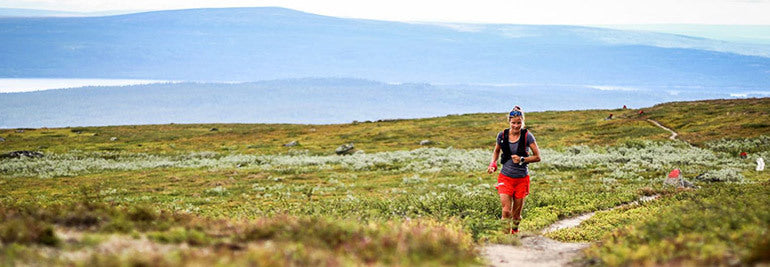
This year 32-year-old mountain running champion Emelie Forsberg has done things differently. Rather than focus solely on racing, she turned her attention to challenging personal projects, resulting in her smashing four fastest known time records (FKTs) in a row.
Emelie tracked her Kungsleden FKT with her Suunto 9: She ran about 90km per day for five days straight. (Image by Philipp Reiter)
It all started because Forsberg noticed a dearth of women’s names in the record books for FKTs, and decided to give her own effort to improve that, hoping to inspire other women everywhere to take on fun, personal challenges – big or small – and achieve their dreams. The results are impressive.
“There are very few women who are doing these kinds of things in the mountains, and if I can inspire more to do it, why not?!” she says.
Click play on the Four in a Row video below to watch the action from Emelie’s awesome four FKTs, including new fastest ascent times, and a new record on a long distance trail. Please then all you sporty ladies, head over to her Instagram feed and give her a shout out for her efforts!
Watch Emelie's "4 in a Row" mini-documentary now!
Images by Philipp Reiter


Rickey Gates runs #EverySingleStreet in San Francisco
Gates finished on a rainy day. He ran all the streets in the background. © Dean Leslie / Wandering Fever
After racing in some of the world’s toughest ultras, and running across the United States last year, Rickey Gates expected his #EverySingleStreet project to be long, but light work.
Turns out he hadn’t fully thought through all the vertical gain involved, which amounted to the equivalent of climbing Mount Everest five times. That combined with the distance and complex mapping logistics made it far tougher than he expected.
“It’s ironic, I grew up in the mountains, spent a lot of my life running in the mountains, but the greatest amount of vertical gain I’ve done for one thing has been here in San Francisco,” Gates says. “This project was truly something else!”
© Liz Thorp
Since he started his #EverySingleStreet project, and sent out an invitation on his Instagram feed for others to do the same, runners around the world have heard the call and followed suit. Runners in Germany, Canada, Alaska, Thailand, Finland and elsewhere are running all the streets in their cities, towns and villages.
“It’s really great to see other people take on the challenge,”Gates says. “It seems to offer a different element to some people’s training. For others, having a goal of seeing a map fill in and knowing that you ‘know’ a place on a certain level is empowering.”
In the coming days, Gates will be selecting one of the people running their local streets and giving them his Suunto 9 watch to reward their effort. There will be other giveaways from Salomon.
One of the things Gates enjoyed the most about the project was finding ways to keep himself entertained as he crisscrossed the city. Spotting cats, funny old cars, and graffitti kept him amused. “Doing this makes me more present,” Gates says. “It’s the city equivalent of noting tree or bird species when you’re out in the mountains.”
He also enjoyed connecting with some of the locals he passed each day. “It’s nice to say hi and smile at strangers and to see how far it gets you to know people,” he says.
Lead image: Photo by Gordon Mak on Unsplash


