




SUUNTOブログ
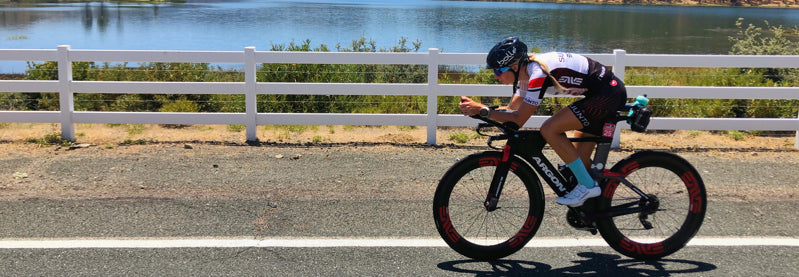

One triathlete’s journey through hell and back to the Kona start line
Doctors told her she would never run or race again. Kelsey, then 31, was lying in a hospital bed, her body battered and bruised after a truck hit her, and her vision for her life in ruins. She decided to prove the doctors wrong.
After recovering from the accident Kelsey drove herself hard. She refused to give up. While the determination was admirable, she now admits it bordered on reckless.
“I spent the next year trying to come back, but was plagued with more injuries and frustration,” Kelsey explains. “I gained a lot of weight and fell into a depression where I coped by going out at night, drinking way too much, and just not really living life as a pro athlete.”
Kelsey began swimming competitively when she was six years old. Later at college, she competed in Division 1 before moving to the Olympic Training Center in Colorado Springs as a member of the USA Triathlon National Team. She completed her first triathlon as a senior high school student in 2001, and was hooked.
With her life in tailspin after the accident, Kelsey got close to quitting triathlon. But then she met Mike, her now coach and boyfriend, who helped her turn everything around.
“The new path I chose to go down was life changing, but not easy,” she says. “Mike got me healthy for the first time years. But when I did decide to start racing again, I was in for a rude awakening. I moved up from ITU (International Triathlon Union races) to the 70.3 distance and finished dead last in most of those races.”
She was going in the right direction. But some old bad habits were holding her back. Eventually Mike gave her an ultimatum: get a job and make triathlon a hobby or commit 100% and make triathlon her job. “It took a good week for me to decide to go ‘all in’, but when I did, everything switched for me,” she says.
The decision empowered her; in 2017 she won her first Ironman 70.3 at Victoria, then backed that up with a win at Ironman 70.3 Manta the following weekend. She has been on the podium at almost every race since, securing her first Kona slot this year at age 36.
“This just goes to show you that if you work really hard and don’t give up, amazing things can happen!” she says.
Kelsey takes over our our Instagram stories this weekend. Follow along as she prepares for Kona!
READ ALSO
How (not) to qualify for Kona
Road to Kona: Cody Beals' clear race strategy
Road to Kona: 5 tips to train effectively as a couple


トライアスロン12週間トレーニングプラン|スイム・バイク・ランの組み方と回復週
トライアスロンのトレーニングは、スイム・バイク・ランを毎週ただ増やしていけばいいわけではありません。ロングディスタンスのレースに向けては、負荷を少しずつ高める期間と、しっかり回復する期間を組み合わせながら、12週間を通して無理なく積み上げることが重要です。
Suuntoマルチスポーツチームのアスリートであり、コーチでもあるTrista Francisは、長距離トライアスロンを目指すアスリート向けに12週間のトレーニングプランを作成しました。
このプランの特徴はシンプルです。
3週間かけてトレーニング負荷を徐々に上げ、4週目に負荷を落として回復する。
この4週間サイクルを3回繰り返しながら、スイム・バイク・ランの3種目をバランスよく積み上げていきます。
この記事ではTristaの考え方をもとに、ロングディスタンスのトライアスロンに向けた12週間のトレーニングプランの組み方を、日本のアスリートにも使いやすい形で解説します。
目次
この12週間プランはどんな人向け?
12週間は「3週間ビルド+1週間回復」で組む
週8時間を目安に3種目をどう配分する?
12週間トレーニングプラン全体像
1週間のトレーニング例
スイム|頻度を確保しながら技術と持久力を作る
バイク|最も長いトレーニング時間を確保する
ラン|走りすぎず、2時間までのロングランを積む
ブリックトレーニングも取り入れる
回復週では何を減らす?
疲れている日はインターバルを外してもいい
月曜日を回復日にする理由
12週目はレースへ向けてどう整える?
HRV・睡眠・負荷をどう確認する?
Suuntoで12週間を管理する
まとめ|12週間を完璧にこなすより、継続できることが大切
トライアスロン・回復関連記事
この12週間プランはどんな人向け?
まず大切なのは、このプランがトライアスロンをまったく初めて始める人向けではないということです。
Tristaの元プランは、ある程度のフィットネスベースがあり、ロングディスタンスのトライアスロンへ向けて体系的にトレーニングしたい人を対象にしています。
目安として、すでに、
スイムを継続している
数時間のサイクリング経験がある
1時間前後のランニングを無理なく行える
週に複数回トレーニングする習慣がある
といった基礎がある人に向いています。
まだ3種目を始めたばかりの場合は、12週間プランをそのまま使うより、まずはスイム・バイク・ランを安定して継続できる基礎期間を作る方がよいでしょう。
トライアスロンの基本的なトレーニング設計については、こちらの記事も参考になります。
▶︎ トライアスロンのトレーニング方法|スイム・バイク・ランの負荷と回復をどう組み立てる?
12週間は「3週間ビルド+1週間回復」で組む
この12週間プランの中心にあるのが、4週間単位のトレーニングサイクルです。
構造は次の通りです。
1週目:負荷を上げる
2週目:さらに積み上げる
3週目:そのブロックで最も高い負荷
4週目:負荷を下げて回復
この4週間を3回繰り返して12週間にします。
Tristaが重視しているのは、回復週を「トレーニングできなかった週」と考えないことです。
3週間のトレーニングで負荷を与えた後に、その負荷から回復する時間を確保する。
そして次の4週間ブロックへ進む。
負荷を上げ続けるのではなく、負荷と回復をセットで設計することがポイントです。
週8時間を目安に3種目をどう配分する?
Tristaの元プランでは、1週間の平均トレーニング時間は約8時間です。
最も負荷が高い週では約11時間まで増えます。
週平均の内訳はおよそ次の通りです。
種目
週平均の目安
スイム
約1時間30分
バイク
約3時間50分
ラン
約2時間40分
合計
約8時間
特徴的なのは、バイクのトレーニング時間が最も長いことです。
ロングディスタンスのトライアスロンでは、バイクパートの競技時間が長く、その後にランニングが続きます。
そのためバイクで長時間動き続ける能力を作りながら、ランニングの負荷を増やしすぎない設計になっています。
ただし、この時間配分を全員がそのまま再現する必要はありません。
自分の現在のトレーニング量、得意・不得意、生活時間に合わせて調整することが大切です。
12週間トレーニングプラン全体像
元プランの考え方を、日本版では次のように整理できます。
週
テーマ
トレーニングの考え方
1週目
Build 1
無理のないボリュームからスタート
2週目
Build 2
ロングセッションや時間を少し増やす
3週目
Build 3
ブロック内で最も高い負荷
4週目
Recovery
トレーニング量・強度を落として回復
5週目
Build 1
回復後、再びトレーニングを積み上げる
6週目
Build 2
バイク・ランの持久系セッションを伸ばす
7週目
Build 3
第2ブロックの高負荷週
8週目
Recovery
負荷を下げ、次のピークへ備える
9週目
Build 1
レースを意識したセッションを増やす
10週目
Build 2
ロングライド・ブリックなどを重視
11週目
Peak
12週間の中で最もレース特異的な週
12週目
Taper / Race
量を落としながらレースへ整える
※これは元プランの4週間サイクルをもとに、日本版として考え方を整理した例です。個々のセッションは現在の走力や目標レースに合わせて調整してください。
1週間のトレーニング例
12週間の中では負荷が変化しますが、基本的な1週間は次のように組むことができます。
曜日
トレーニング例
月
回復日|完全休養または軽いモビリティ
火
スイム+ランの高強度またはテンポ
水
低〜中強度バイク
木
スイム+低強度ラン
金
軽いセッションまたは休養
土
ロングライド+短いブリックラン
日
ロングランまたは低強度ラン
これはあくまで一例です。
仕事や家庭の予定によって、ロングセッションを日曜日にする人もいるでしょう。
重要なのは曜日そのものではなく、高負荷セッションが何日も連続しないように組むことです。
スイム|頻度を確保しながら技術と持久力を作る
元プランでは、スイムの週平均は約1時間30分です。
スイムはランやバイクと比べて関節への衝撃が小さい一方、水中でのフォームや呼吸など技術的な要素が大きい種目です。
そのため、1回だけ長時間泳ぐより、複数回に分けて継続する方法があります。
例えば、
フォームやドリルを意識する短めのセッション
一定ペースで泳ぐ持久系セッション
短いインターバルを入れるセッション
などを組み合わせます。
ロングディスタンスでは速さだけでなく、バイクへ余力を残して泳ぎ終える能力も重要です。
バイク|最も長いトレーニング時間を確保する
元プランで最もトレーニング時間が多いのがバイクです。
週平均で約3時間50分、最長ライドは4時間。
ロングライドでは、単に距離を増やすだけでなく、
長時間同じ姿勢で乗ること
補給を続けること
後半まで一定の出力を保つこと
バイク後に走れる余力を残すこと
を意識します。
アイアンマンをはじめとするロングディスタンスでは、バイクで頑張りすぎると、その後のランニングに影響します。
バイクを速く終えることではなく、ランニングまで含めてレースを組み立てることが重要です。
ラン|走りすぎず、2時間までのロングランを積む
元プランのランニングは週平均約2時間40分で、最長ランは2時間です。
ロングディスタンスのレースだからといって、毎週3時間、4時間と走る必要はありません。
ランニングは身体への衝撃が大きいため、トライアスロンではバイクで持久力を作りながら、ランニングの負荷を管理する方法があります。
普段のランでは、
低強度のイージーラン
ロングラン
必要に応じたテンポ・閾値トレーニング
を組み合わせます。
低強度トレーニングの考え方はこちら。
▶︎ ゾーン2ランニングとは?心拍数の目安・効果・やり方を解説
ブリックトレーニングも取り入れる
トライアスロン特有の練習が、バイクからそのままランニングへ移るブリックトレーニングです。
バイクを長時間行った後に走り始めると、通常のランニングとは脚の感覚が大きく違います。
レース前にこの感覚へ慣れておくことで、トランジション後に急にペースを上げすぎることを防ぎやすくなります。
例えば土曜日のロングライド後に、
10〜15分
20〜30分
程度の短い低強度ランを追加する方法があります。
目的は疲れた状態で限界まで走ることではありません。
バイクからランへ身体を切り替える経験を作ることです。
回復週では何を減らす?
4週目と8週目には、意図的にトレーニング負荷を落とします。
ここで大切なのは、回復週を完全な「何もしない週」にする必要はないということです。
例えば、
ロングライドを短くする
ロングランの時間を減らす
インターバルの本数を減らす
高強度セッションを低強度へ変更する
休養日を増やす
などで全体の負荷を下げます。
疲労を抜きながら、3種目の感覚は維持する。
そのくらいの位置づけが使いやすいでしょう。
回復をどう確認するかはこちら。
▶︎ トレーニング後の回復を確認する4つの方法|HRV・睡眠・負荷・感覚をチェック
疲れている日はインターバルを外してもいい
Tristaのアドバイスで実用的なのが、インターバルが負担になりすぎているなら、無理に予定通り行わなくてもいいという考え方です。
高強度トレーニングを完遂するために疲労を増やし、翌日のトレーニングまで崩してしまうなら、強度を落として予定した運動時間だけ確保するという選択肢があります。
例えば、
「今日は60分バイク+インターバル」
という予定だったとしても、強い疲労が残っているなら、
「60分の低強度バイク」
へ変更する。
1回のセッションを完璧にこなすことより、12週間の流れを崩さないことを優先する。
この考え方は、マルチスポーツでは特に重要です。
毎回中途半端に頑張り続けないための考え方はこちら。
▶︎ イージーランが速すぎる?トレーニング・ブラックホールとは
また、次のキーワークアウトのためにどう休むかはこちら。
▶︎ トレーニングの質を上げる回復方法|休養・補給・オフシーズンの考え方
月曜日を回復日にする理由
元プランでは、12週間を通して毎週月曜日が回復日に設定されています。
週末にロングライドやロングランを行うことが多いため、月曜日に負荷を下げて次の週へ備える設計です。
回復日には、
完全休養
睡眠時間を確保する
散歩程度の軽い活動
短いモビリティ
十分な食事と水分
などを優先します。
マッサージなどを取り入れる人もいますが、まずは睡眠・食事・水分・適切な休養という基本を整えることが大切です。
12週目はレースへ向けてどう整える?
12週目に入ったら、それまで積み上げたトレーニングをさらに増やすのではなく、レース当日に疲労を残さないことへ目的を変えます。
いわゆるテーパリングです。
テーパリングでは、
トレーニング時間を減らす
ロングセッションを短くする
短い刺激は適度に残す
睡眠と食事を優先する
レース用装備を確認する
などを行います。
完全に運動を止めるのではなく、疲労を抜きながらスイム・バイク・ランの感覚を維持するイメージです。
テーパリングの期間や負荷の下げ方は、目標レース、トレーニング歴、直前までの疲労によって変わります。
HRV・睡眠・負荷をどう確認する?
12週間のプランを進めるとき、予定表だけを見るのではなく、身体の回復状態も確認します。
例えば、
HRV
睡眠
トレーニング負荷
心拍
脚の疲労感
モチベーション
などです。
HRVが1日低かったから即座にトレーニングを中止する、という使い方ではありません。
自分自身の通常範囲と比べながら、睡眠や疲労感など他の情報と一緒に見ます。
▶︎ HRV(心拍変動)とは?正常値の見方と回復・トレーニングへの活かし方
プランは身体に合わせて調整するための土台であって、身体をプランに無理やり合わせるものではありません。
Suuntoで12週間を管理する
トライアスロンでは、スイム・バイク・ランを別々に見るだけでは、全体のトレーニング負荷を把握しにくくなります。
SuuntoウォッチとSuuntoアプリでは、3種目のトレーニングをまとめて記録し、長期的に振り返ることができます。
例えば、
スイムの距離と時間
バイクの時間・心拍
ランニングのペース・心拍
週間のトレーニング負荷
睡眠
HRV
などを確認できます。
12週間プランでは特に、ビルド週で負荷が上がっているか、回復週でしっかり下げられているかを長期的に見ることが役立ちます。
トライアスロンのトレーニングとレースにSuunto Race 2
Suunto Race 2は、スイム・バイク・ランを含むマルチスポーツのトレーニングを記録しながら、トレーニング負荷や回復を長期的に振り返りたいアスリート向けの選択肢です。
大切なのは、12週間のすべてのセッションを予定通り完了したかではありません。
負荷をかける週。
回復する週。
そしてレースへ向けて整える週。
その流れを把握しながら、自分の身体に合わせて計画を調整していきましょう。
Suunto Race 2を見る
まとめ|12週間を完璧にこなすより、継続できることが大切
Trista Francisの12週間トライアスロンプランで最も重要なのは、個々のメニューそのものより、負荷と回復をどう組み合わせるかという考え方です。
3週間かけて負荷を徐々に上げる
4週目に負荷を下げて回復する
この4週間サイクルを繰り返す
スイム・バイク・ランを毎週継続する
バイクでは長時間の持久力を作る
ランニングは走りすぎない
疲労しているならインターバルを外す
月曜日など定期的な回復日を確保する
12週目は量を落としてレースへ整える
12週間の間には、仕事が忙しい日も、睡眠不足の日も、予定通りトレーニングできない週もあるでしょう。
そんなとき、1回のメニューを逃したからといって、翌日に詰め込む必要はありません。
完璧な12週間より、継続できる12週間。
そして、必要なときに負荷を下げられること。
それが、ロングディスタンスのトライアスロンへ向けたトレーニングを最後まで積み上げるための重要な考え方です。
トライアスロン・回復関連記事
トライアスロンのトレーニング方法|スイム・バイク・ランの負荷と回復をどう組み立てる?
ゾーン2ランニングとは?|心拍数の目安・効果・やり方を解説
イージーランが速すぎる?|トレーニング・ブラックホールとは
トレーニングの質を上げる回復方法|休養・補給・オフシーズンの考え方
HRV(心拍変動)とは?|回復・トレーニングへの活かし方
トレーニング後の回復を確認する4つの方法|HRV・睡眠・負荷・感覚をチェック
冬のランニングトレーニング12選|オフシーズンに筋力・フォーム・持久力を鍛える方法

Introducing Alex Kydd
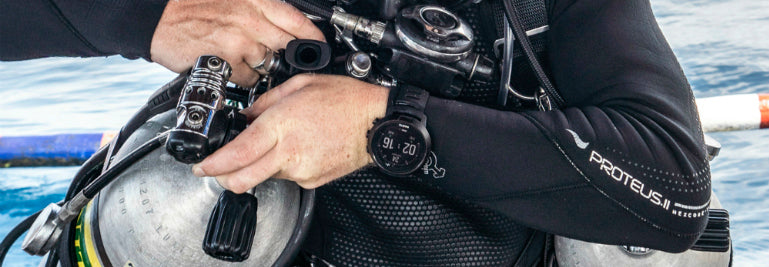
Suunto Dive are super excited to announce Alex Kydd is joining the Suunto Ambassador family. Photographer, marine biologist and diver originally from Melbourne, Australia, Alex now proclaims to being “based on” Ningaloo Reef Western Australia honoring the number of hours that he spends exploring underwater capturing his breath-taking images.
A rare shot of Alex Kydd in front of the camera taken photographer Alfred Minnaarr. ©
Alex trains like an athlete in his discipline. Practising every day, editing all the time and descending beneath the surface has led him to achieve artistry in his images. Alex's photos stand out above the rest with his dedication and passion aiding his continued development as a photographer enabling him to produce his unique shots.
“The ocean is my happy place. Every time you enter the water you never know what you might see and it's such a misunderstood ecosystem. Everything is connected and the more time you spend in it, the more you appreciate.”
Alex Kydd by photographer Alfred Minnaarr ©
Beginning his diving journey with snorkelling at 16 in the cool waters off Melbourne where he grew up, he later began scuba diving on a trip to Thailand in 2009 where he firmly solidified his love and respect for the ocean. Exploring his passion further Alex studied Marine Biology at university and four years ago he started his journey into the world of underwater photography and has had not had a chance to look back.
“At age 16 I first started taking photos. I had a very basic 2m waterproof camera for snorkelling in Melbourne. I progressed slowly to more upgraded cameras over the next few years. Eventually I had enough savings and I got myself a DSLR and housing. I was going out taking 500-1000 photos per day and editing them every night. This I believe, fast tracked me to learn. The best advice I can give for underwater photography is to find a mentor or like-minded people to learn from.”
Alex’s next stops on his extensive adventuring are Raja Ampat, West Papua, French Polynesia and Fiji where he will be exploring with his new dive computers including the Suunto EON Core, Suunto D5 and Suunto Tank POD. Alex’s favourite device at the moment is the Suunto D5. He also represents Fourth Element and Ocean Positive as a team diver.
Alex Kydd:
Instagram

How (not) to qualify for Kona
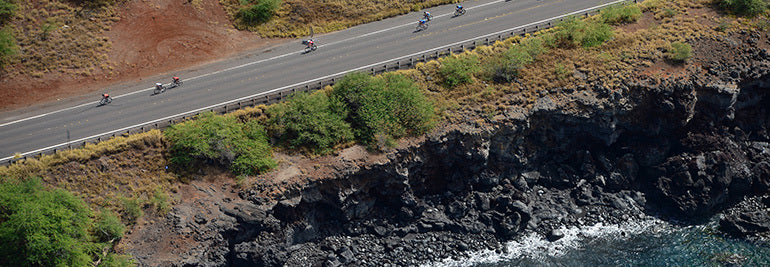
The good news for Janne Kallio is it’s going to get easier. Now 44, it’s his last year in his age group, and qualifying for Kona gets easier in the one above. “That’s because the competition is older and I’m getting faster,” he says, laughing.
One thing Janne definitely can’t say about the last few years of racing is that it’s been easy. In May, Suunto HQ threw a surprise party for him to congratulate him on finally, after years of irritating setbacks and disappointment, earning a spot on the Kona startline.
“Even though I’ve had disasters, it’s all a learning curve,” he says. “Even though it’s been frustrating, I always felt positive because I was progressing in my training, and felt I was reaching a higher level. The race should be the goal, not just to qualify.”
Janne has been competing in tri for almost 30 years, and wrote a book about training for triathlon with the help of technology. He started racing full distance Ironman in 2010, and began trying to qualify in the last few years. “You can’t really ‘qualify’,” he says. “All you can do is train as best as you can and then the qualification will come.”
Janne’s 12 lessons from his long road to Kona
Slippery when wet
Frankfurt, July 8, 2012
Janne was feeling good, racing well, and pushing it on the ride. Maybe a little too much. It was raining hard, and he slipped and crashed resulting in a broken hip, and a loss of training time.
Lesson: Be careful in wet weather. It’s not worth risking injury.
Be grateful
Arizona, November 17, 2013
Hamstring surgery in fall 2012 meant Janne was out for the rest of that year. He wasn’t ready to race again until nearly one year later. It wasn’t pretty, he hobbled through the marathon, but made the finish line.
Lesson: Be grateful to be on the start line. It’s already a great achievement to start an Ironman race.
It’s all learning
Mallorca, September 27, 2014
Despite not qualifying, Janne was happy with this race. He says it was the first time he felt he was really able to run well during an Ironman marathon. The competition was faster. The feeling of having mastered the full distance compensated for not qualifying.
Lesson: Be patient with long distance Ironman. Each race is a learning experience. The next one will be easier.
DIY doesn’t work
Vichy, August 30, 2015
This race hurt. Janne felt confident he could qualify for Kona. To compensate for a loss of run training in previous months, due to injuries, he “smashed the bike like a lunatic”. He had the second fastest bike time, but destroyed himself in the process and ended up walking the marathon. “All the confidence of mastering the Ironman I’d gained in the previous year was lost,” Janne says. “I decided to get a coach; it’s better to have someone to look from the outside into your training.”
Lesson: Get help – find a coach.
Adapt quickly
Cape Town, April 10, 2016
With a new coach on his team Janne felt ready to rock this race. But alas, after a good swim, a bumpy road meant he lost his drink bottles on the ride. The liquid at the aid stations wasn’t enough to compete with the intense African sun. He bombed on the marathon, and missed qualifying for Kona by 40 infuriating seconds.
Lesson: Learn to handle surprises – they are bound to happen. Never neglect proper fueling or hydration.
Keep your distance
Florida, November 5, 2016
Janne finished seventh and missed a slot at Kona by 90 miserable seconds. All because he was given a five minute penalty for drafting. “This was the only time that has ever happened to me,” he says. “When the guy passed me, I kept riding with him. I kept the legal distance, but from the referees perspective it wasn’t long enough.”
Lesson: Your perception of distance might differ from the referee. Penalties hurt; be extra sure and keep your distance.
Shit happens
Cape Town, April 2, 2017
He’d put in the training, was feeling strong and ready, and then caught a cold a few days before race day. “I was shivering on the start line and when I was cycling and running I couldn’t push,” he says. “Shit happens.”
Lesson: Things happen you have no control over. Don’t let it phase you – that’s life.
Stick to the plan
Florida, November 4, 2017
Janne arrived two weeks before the race to adapt to the heat. He was in good shape, had a great swim and a good ride. On the run he was in third place and feeling good. Except, for some inexplicable reason, he felt the urge to consume more liquid and gels than he’d planned. “My stomach shut down,” he says. “I was putting too much in. Somehow at 20 km I was sitting on a toilet and flushed out everything I’d consumed.” His energy crashed, and didn’t recover. He missed qualifying for Kona by a few disgusting minutes.
Lesson: Have a clear nutrition plan for the race and stick to it.
Know the route
Tallinn, August 4, 2018
This is one race where Janne muttered a very long list of expletives. The first two stages went well. He started the run in second place in his age group. Then he came to a corner and wasn’t sure which direction to run in. He asked an official who pointed, but Janne misunderstood, and took a wrong turn. It was over: DNF.
Lesson: Study the course in advance and add a route to your watch. It’s the athlete’s responsibility to know the route.
Easy does it
Copenhagen, August 19, 2018
Still feeling disappointed the day after Tallinn, Janne wasn’t ready to give up. He discovered the Ironman Copenhagen was two weeks away and jumped at it. Because he was in good shape and didn’t run the marathon in Tallinn, he thought he would be fine. Not so. “On the bike, I couldn’t keep the power where it should have been. When I started running, I ran really fast and my pace started to plummet. “My legs were fine, but I was mentally tired. I felt unfocused and totally deflated.” He withdrew on the run.
Lesson: Be prepared and focused. If you aren’t, you won’t get the result you are after.
It’s only a sport
Florida, November, 2018
After a string of disappointments Janne was psyched and ready for this race. But then Hurricane Michael swept across the Florida Panhandle leaving a trail of destruction in his path. It was the first Category 5 hurricane on record to hit the region, and the third most intense Atlantic originating hurricane in history to make landfall. The race was cancelled.
Lesson: “You can’t control everything,” Janne says. “And it’s only a sport; a race doesn’t matter when people have lost their homes and even their lives.”
You never know
Texas, April 27, 2019
After a year of racing absurdity, Janne hoped things would turn around in 2019. Then he got the flu 10 days before the Ironman Texas. “I was out of training completely, especially swimming,” he says. “I was close to not even flying there.” After everything, Janne roused his inner tri warrior and decided to go. On race day, his symptoms were gone, but his heart rate and power numbers until then had been rubbish. And sure enough, he couldn’t push as much as he would have if fully fit. There were seven Kona slots available in his age group. Incredibly, Janne finished sixth, and finally qualified!
Lesson: Never give up.

Tested by Real World Divers
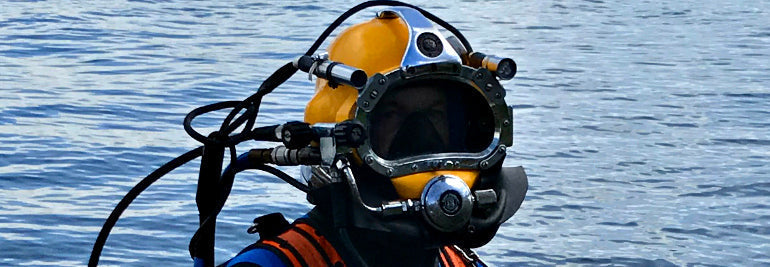
Well known now for his higher-level training of professional and technical divers, along with a wealth of experience Johan began life in Netherlands and completed his first dive in Tunisia with CMAS in 1996.
Immediately impressed he purchased all his own equipment and rose to instructor level in a short time. He concentrated on specialising so he could broaden his knowledge which is where Johan developed his passion. After divng on the wrecks in the North Sea he found his calling and continued training in wreck diving and Trimix so he could explore deeper sites that hadn’t had their treasures pillaged like the wrecks at shallower depths.
“At greater depths I found the wrecks were more intact. I am talking about wrecks 80 meters and these wrecks are less exposed and also in better condition because they are not so exposed as those at shallower depths.”
Johan de With selfie.
To help him explore even more depth, his dive training led him onto rebreathers. He realised the limitation of many of his open circuit dives was the number of cylinders he could carry it seemed only natural for him to transition from open circuit.
“In 2015, together with Markku Diedrich, I dived a world record mixed team in Lake Thun, Switzerland (fresh, cold water) I was on OC and Markku on CCR where we travelled to a depth of 166.5m.”
Recording of the team’s deepest dive in a book of records.
Johan’s deep accolades do not end there.
“On the rebreather I dived into caves to a depth of 14m.
On open system in the caves up to 103m.
On the rebreather in open water up to 183m.
Open water on open system 166.4m.”
Johan now works as commercial diver and an instructor at the only private institute of commercial professional diving in the Netherlands. He also teaches deep technical diving and has his own gas filling station, Techduikschool Nederlands.
An important part of his diving is communicating information to the dedicated team of Dive Engineers at Suunto HQ as he puts computers to the test in the field and ensures they meet strict performance targets.
The infomation Johan feeds back allows the engineers to improve and fine tune devices allowing for the best user experience and in turn lets divers focus on the action and rely on their robust companions in the toughest conditions.
In action training professional divers in the Netherlands.
“I dive and test a lot for Suunto and share as much information as possible and give feedback about these computers both positively and negatively. I currently dive with the EON Steel and the EON Core and with the also since its release, the Suunto D5.
I use this during all my dives both OC in open water and caves and CCR in open water and in caves. As a backup I have my bottom timers with wet-note, and a spare computer in my pocket.
Everywhere and always, even with commercial diving I take the Suunto D5 into the water. I do this so that I also have a digital log of all my commercial dives.”
Suunto Dive computers stand the test of these extreme adventures alongside Johan.
Johan is not just an Ambassador for Suunto Dive, he represents brands including Ursuit and Bare drysuits, Tecline, Ammonite for lighting and Paralenz to capture the action on camera also with great satisfaction and pride.
"Regardless of environment depth or length of the dive or type of dive OC or CCR, technical diving must be feasible for everyone regardless of their financial status. These are brands that certainly think of the customer with price quality. I notice these companies listen and do a lot with the feedback given by us as Brand Ambassadors and testers of these materials.”
Jyri Vehmaskoski, Suunto EON Steel product team: "You don't dive if you don't trust your equipment. Everything we build is tested by real-world divers like us. Our gear is functional, accurate, and built to take a beating – and has hundreds of test dives to prove it."
Learn more about Suunto Dive products at suunto.com

Road to Kona: 5 Tips to Train Effectively as a Couple
Ryan entered his first triathlon when a college roommate challenged him to a race in 2006. He was the last one out of the water and says he was instantly hooked. In his junior year, he found himself enjoying triathlon so much he couldn’t pull himself away from it.
Jacqui got her start in triathlon while training for the Chicago Marathon. Ryan was coaching her at the time, and would add cycling and swimming workouts to her training to reduce the running volume. In 2010, he suggested Jacqui come with him to race the Buffalo Springs 70.3 triathlon. Jacqui finished nine seconds away from qualifying for the Ironman World Championships, yet despite an awesome result she wasn't hooked.
It wasn't until their wedding day in 2012 that Jacqui decided to get serious about tri. On that special day, Ryan shared his dream with her. "Today's the day of the Ironman World Championships," he said to her. "We should be there next year." They made their wedding vows, and an ambitious sport vow.
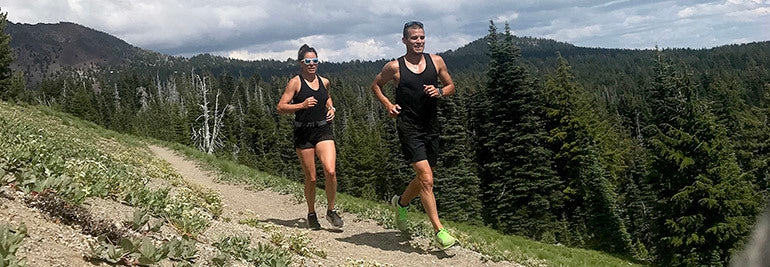
Both Jacqui and Ryan are getting ready to race Kona Ironman this October.
Here are their top 5 tips to train effectively as a couple:
1. Set up a workout room
We train a lot indoors as it's time efficient, safe, and allows us to train together when our schedules align.
2. Plan ahead
We always know what we have going on and when we will be doing our longer sessions as those sometimes can take the entire day. Planning ahead keeps us accountable to those times and aware of when we will be free together.
3. Meal prep
Having meals planned out for the entire week gives some flexibility in the evenings when we are a little more time crunched and trying to get workouts in.
4. Understand this sport can sometimes require you (or your partner) to be selfish
There's often times that you might miss out on time spent together. Things come up every week where workouts get moved for whatever reason, and it takes away time being spent together, which leads to the next tip.
5. Set up dates
Our favorite is having brunch or ice cream together. In the past, we have even set up having brunch together once per week to try out new restaurants and wouldn't let any workout get in the way of that.
Bonus Tip: Be your partner's biggest cheerleader
Even if/when your training/racing isn't going as well as you'd like, it is so important to be there for your partner and support them through their highs and lows as well.
Look for the Giulianos at the IRONMAN Kona World Championships in a few weeks!
READ ALSO:
Road to Kona: Cody Beals’ clear Kona strategy


