




SUUNTOブログ

The Baltic Unveils Treasured Secrets with The Help of Suunto Divers
Bow of Vrouw Maria with divers. In the early stages of the work, investigations of Vrouw Maria were also illustrated by artwork. Drawing by Tiina Miettinen, Finnish Heritage Agency.
Suunto’s Dive Engineer Pasi Lammi and his dive team, the Badewanne, were invited by the National Board of Antiquities in Finland to join the expedition to create a 3D model of the underwater site. This was not the first time the Bedawanne had experienced the wreck, they were amongst a team of divers in 2007 that got to explore her pristinely preserved wooden structure. Diving access on previous archaeological expeditions have been limited on the wreck due to the increased risk of disturbing the sea floor and concealing the wreck further or risking damage to the delicate structure.
The atmosphere after the expedition dive in 2007. Roope Flinkman (left), Pasi Raasakka, Petri Puromies, Jussi Kaasinen, and Minna Koivikko. Photo by Ulla Klemelä, Finnish Heritage Agency.
Down with the ship
The Vrouw Maria is a Dutch two mast merchant ship that set sail from Amsterdam on 5th September 1771 destined for St Petersburg, Russia but it never arrived in port. During late September the Vrouw Maria entered into the Danish Straights and the cargo was last recorded at the Elsevier (Øresund) toll before she sank. It was reported that after some navigational errors through the stormy Archipelago Sea the ship lost its course and ran aground. Obtaining only slight damage to the hull, the vessel fell foul of another grounding shortly afterwards this time losing the rudder when a large wave freed the ship from the sea bed and the crew could not control the water coming.
On October 4th 1771 the crew finally abandoned ship and made it to safely to nearby rocks after saving only a portion of cargo during the short window of opportunity they had as the water flooded in. There was some effort to stabilize the ship but the pumps were clogged with coffee beans leaked from cargo in the hold and finally, on 9th October 1771 the Vrouw Maria sank beneath the waves taking most of the cargo and revered luxuries down with ship.
Onboard the Vrouw Maria when it sank were bags of coffee, sugar and fabric dyes. The most precious items in the hold were artworks purchased by Catherine the Great at auction that year in Amsterdam on their way to her residence. Other luxuries including mirrors, ivory eggs, and flower bulbs headed for Russian nobility that still lay in the sea bed today. Little was saved during the rescue and even less has been salvaged off the wreck since it was discovered.
The positioning of the wreck on the sea bed had remained a mystery and regard was lost in the wreck for over 200 years. However, interests peaked in the 70’s when Dr Christian Ahlström discovered documentation of the incident in the Finnish National Archives that he then published. His findings in 1979 sparked an exciting search mission that was to last twenty more years.
A wreck was discovered in 1999 by the Pro Vrouw Maria society using a side scanner under Rauno Koivusaari’s leadership, and was positively identified as the Vrouw Maria.
Now twenty years later on the anniversary Suunto’s very own Dive Engineer Pasi Lammi has been invited to dive the wreck and take part in the 3D modelling project. Pasi and his dive team, the Badewanne Team are committed to working alongside the Finnish Board of Antiquities, Military Museum of Finland and collaborators from around the world in a bid to preserve the Baltic history.
Pasi’s office location
2012 Virtual Simulation
During 2012, at an exhibition called ‘Lost at sea, rediscovered’ there was a virtual simulation of the wreck that visitors of the Finnish National Maritime Museum could visit. This impressive footage was honoured with an award at the Europa Nostra Awards 2015 competition of the European Union.
“Through a simulation constructed by Aalto University and the Finnish Heritage Agency, the general audience could examine in detail the treasure ship, which in reality is difficult to access. At the time, the Vrouw Maria simulation was a totally novel way of visualising the underwater world and making it accessible.”
The virtual simulation of the Vrouw Maria wreck received a special nomination in the research and digitalisation class of the Europa Nostra Awards 2015 competition of the European Union. Image by the Finnish Heritage Agency.
The Revisit - 3D model of Vrouw Maria
Now with team of volunteer divers who are revisiting the wreck and taking the latest in photo 3D modelling technology underwater to create an ultra-realistic interactive map of the wreck site people will be able to appreciate the ship in all its glory from above the water. The divers use a mix of videos, photos and photogrammetry to create the final product that will illustrate how far technology has come since the 2012 simulation and give a more in depth look at the wreck.
“Today was the first day and our initial mission was set up for the modelling to begin. We experimented moving the camera into different locations to get the best views of the wreck and setting up attachments to secure cameras. After this the team and I then test documented two locations so we could present the findings for the Finnish National Heritage agency. The project has just begun and the results will be released soon, and we certainly are excited to see the results.” Pasi comments.
Pasi shared his dive profile from his Eon Steel paired with his Suunto App we can re live his dive with him.
The completed project will go on display at the new Stockholm Treasures of the Baltic that is scheduled to open its doors in 2020.
Before the final model opens at the museum you will be able to view the first version of the project on the twentieth anniversary of the discovery of Vrouw Maria, 28th June 2019, on the online 3D modelling platform, Sketchfab.com.
About Pasi Lammi
Pasi Lammi lives in the city of Espoo, Finland. He started diving in 2007 and had his first dives on a rebreather in 2009, after which he made the switch to JJ-CCR in 2014. His diving certifications include IANTD, NSS-CDS, PADI, NAUI and CMAS accolades and instructor level for both NAUI & CMAS training agencies where he teaches diving both in Finland and Estonia.
He is an active instructor and teaches both recreational level divers and technical but his heart lies in the technical side of diving. Pasi is also a very active dive club member and joins in activities with a number of local dive clubs.
When he is not training you will find him diving wrecks in Baltic Sea or mines in the Nordic countries. For Pasi diving is not only about seeking experiences of his own but also working as part of a team and sharing the experiences with others by the means of documentation of historical interests. He enjoys taking underwater images, videos and now working on 3D modelling projects has brought a whole joy to his diving. He takes great pleasure in contributing to the discoveries of new historical facts and building up the bigger picture of his cultural heritage.
Filling cylinders on location in preparation to explore the Vrouw Maria on the anniversary dive, 2019.

Underwater videographer Patrick Dykstra is taking over @suuntodive Instagram for a week
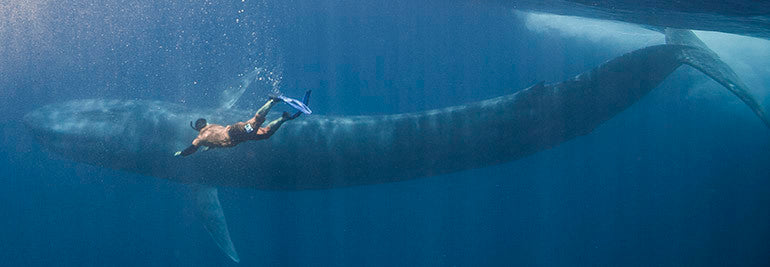
Underwater videographer Patrick Dykstra is taking over @suuntodive Instagram (Image by Chris Michel).
Who are you and where you from?
My name is Patrick Dykstra and I'm from Denver, Colorado, USA, but have been based in Dubai for the past 10 years.
Where do you dive?
I dive anywhere that has whales and other megafauna. The more remote, the better!
What inspires you in the underwater world?
There is so much that we don't know about the animals that inhabit our ocean. I'm inspired by the pursuit of the unknown and driven to help others learn more about our oceans, and the threats they are facing.
How would you describe your photography style?
I actually am doing a lot more videography these days, but I do still love taking still images now and then. That said, I don't think I have a particular style.
Is there a story you wish to tell with your images?
I hope to bring the mega fauna of our oceans to people's attention. In Dominica, we know most of the sperm whales by name as they are individuals. The whales have calves that they struggle to raise, they need find enough food to eat daily and sustain life while avoiding getting entangled in fishing gear. Introducing them to people as their individual self is important and we hope to inspire people to conserve their habit and respect their home.
What have you been working on recently?
I filmed for the BBC's Blue Planet II ending in 2018 (for which I won a BAFTA), then for National Geographic's Hostile Planet and BBC's Wild Shetland - Scotland's Wild Frontier.
Next year sees a big change as I move in front of the camera to host a multi-part series on Animal Planet coming out in 2020 that explores new discoveries in the world's oceans which is very exciting.
Where can we follow your adventures?
Follow me here:
Website: www.pictureadventure.com
Instagram: @pictureadventure1
FB: Facebook.com/PictureAdventureExpeditions
FOLLOW @SUUNTODIVE INSTAGRAM TO SEE PATRICK'S WORK AND MORE!


ランニングと睡眠の関係|パフォーマンスと回復を高める6つの習慣
「練習量は増やしているのに、思うように走れない」「朝から疲れていて、ポイント練習に集中できない」。そんなとき、見直したいのが睡眠です。ランニングでは走る時間だけでなく、身体を休ませる時間まで含めてトレーニング。睡眠を削って練習を増やしても、十分に回復できなければ、狙った練習効果を得にくくなります。
この記事では、フィンランドの睡眠医ヘンリ・トゥオミレートのアドバイスをもとに、ランナーが睡眠を大切にしたい理由と、今日から取り入れられる6つの習慣を紹介します。
目次
ランニングに睡眠が欠かせない理由
ランナーに必要な睡眠時間の目安
睡眠と回復を整える6つの習慣
Suuntoで睡眠を記録する方法
睡眠データを練習に生かす
眠れない状態が続くときは
まとめ
ランニングに睡眠が欠かせない理由
ランニングで身体に負荷をかけると、筋肉や神経系には疲労が生じます。身体がその刺激に適応していくためには、食事と休息が必要です。つまり、睡眠は「何もしない時間」ではなく、次のトレーニングへ向けてコンディションを整える時間です。
睡眠不足は、身体の疲れだけでなく、集中力、判断力、気分にも影響します。ペース配分や足元への注意が必要なランニングでは、眠気や集中力の低下を軽視できません。強い眠気や体調不良を感じる日は、予定したメニューをこなすことより、安全を優先しましょう。
睡眠医のヘンリ・トゥオミレートは、仕事やスポーツの負荷が高いときほど、休息と回復を尊重する必要があると話します。忙しい時期に最初に睡眠を削るのではなく、負荷が増えたからこそ睡眠を確保する。この考え方が、無理なく走り続ける土台になります。
ランナーに必要な睡眠時間の目安
必要な睡眠時間には個人差があり、年齢、生活リズム、日中の活動量、トレーニング負荷によっても変わります。厚生労働省の「健康づくりのための睡眠ガイド2023」では、成人は6時間以上を目安に必要な睡眠時間を確保し、睡眠で休めた感覚である「睡眠休養感」を高めることが勧められています。
大切なのは、誰かの理想時間をそのまま当てはめることではありません。次のような状態が続いていないかを振り返り、自分に必要な睡眠を探しましょう。
朝、なかなか起きられない
日中に強い眠気がある
休日だけ睡眠時間が大幅に長くなる
同じペースでも普段よりきつく感じる
気分や集中力が安定しない
睡眠が足りていないと感じるなら、元記事でヘンリが勧めるように、まず就寝時刻を30分早めてみるのも一つの方法です。翌朝の感覚やランニング中の調子を観察しながら、自分に合う時間へ少しずつ調整してください。
睡眠と回復を整える6つの習慣
1. 睡眠をトレーニング計画に入れる
週間メニューを考えるときは、走る時間だけでなく、就寝時刻と起床時刻も確認します。仕事や家庭の予定で睡眠が短くなる日には、高強度トレーニングを置かないなど、生活全体で計画すると無理が減ります。
2. 起床時刻をできるだけ一定にする
平日と休日で生活リズムが大きく変わると、月曜日の朝に起きづらくなることがあります。毎日まったく同じにする必要はありませんが、起床時刻のずれを小さくし、朝は光を浴びて生活リズムを整えましょう。
3. 就寝前に心身を落ち着かせる
寝る直前まで仕事やスマートフォンを続けるのではなく、照明を落とす、入浴する、軽くストレッチするなど、自分なりの切り替えをつくります。夜の高強度トレーニングで寝つきにくいと感じる人は、実施時間や強度を調整してみてください。
4. カフェインとアルコールの取り方を見直す
カフェインへの反応には個人差があります。午後や夜のコーヒー、エナジードリンクが眠りに影響していないか確認しましょう。また、アルコールは寝つきをよく感じさせることがあっても、睡眠の質を損なう場合があります。夜の習慣を一つずつ見直すことが大切です。
5. 睡眠環境を整える
光、音、室温、寝具の快適さは、睡眠に影響します。夏は寝室が暑すぎないか、冬は乾燥していないかを確認し、通知音や明るい画面を遠ざけます。ウォッチの自動おやすみモードを使えば、設定した睡眠時間帯の通知を抑えられるモデルもあります。
6. 回復していない日は練習を変える
睡眠不足の朝に、予定どおりのインターバル走を無理に行う必要はありません。休養、短いイージーラン、ウォーキングなどへ変更する判断もトレーニングの一部です。睡眠だけでなく、安静時心拍、HRV、筋肉の張り、気分、主観的な疲労を合わせて判断しましょう。
覚えておきたいこと
一晩の数値だけで「好調」「不調」と決めつける必要はありません。同じ条件で記録を続け、自分の通常範囲と数日から数週間の傾向を見ることが大切です。
Suuntoで睡眠を記録する方法
睡眠を感覚だけでなく傾向として振り返りたいときは、スポーツウォッチが役立ちます。ランニング向けの軽量モデルSuunto Runや、トレーニングとレースに対応するSuunto Race 2では、睡眠時間や直近の睡眠傾向を確認できます。対応モデルでは、設定を有効にして夜間も装着すると、睡眠中の心拍数やHRVなども記録できます。
ウォッチの睡眠ウィジェットを開く
睡眠トラッキングをオンにする
普段の就寝・起床時刻と睡眠目標を設定する
必要に応じて、夜間のHRVや血中酸素測定を有効にする
朝に睡眠サマリーを確認し、Suuntoアプリと同期する
操作名や表示項目は、モデルやソフトウェアのバージョンによって異なる場合があります。また、ウォッチの睡眠計測は主に身体の動きなどから推定した値であり、医療機器による診断ではありません。数値は日々のコンディションを振り返る参考として使いましょう。
睡眠データを練習に生かす
記録するだけで終わらせず、朝の判断に結びつけると睡眠データが役立ちます。おすすめは、次の3段階で確認することです。
睡眠を確認:睡眠時間、直近の傾向、目覚めたときの休養感を見る
回復を確認:HRVや安静時心拍の傾向、筋肉の張り、気分を確認する
練習を決める:予定どおり行う、強度を下げる、休むのいずれかを選ぶ
たとえば、睡眠時間が短く、HRVも自分の通常範囲より低く、脚が重いなら、高強度メニューを軽いジョグへ変更する余地があります。反対に、一つの数値が普段と違っても体調がよく、長期的な傾向に問題がなければ、過度に不安になる必要はありません。
HRVの意味や見方を詳しく知りたい方は、HRVとトレーニング回復の解説をご覧ください。週単位で負荷を調整したい場合は、Suuntoアプリとウォッチでトレーニング負荷を管理する方法も参考になります。
眠れない状態が続くときは
生活リズムや睡眠環境を整えても、寝つけない、夜中に何度も目が覚める、十分寝ても強い眠気があるといった状態が続く場合は、睡眠の問題や別の体調不良が隠れていることがあります。ウォッチの数値だけで自己判断せず、医療機関や睡眠の専門家へ相談してください。
睡眠については、厚生労働省の睡眠対策・Good Sleepガイドでも、年代別の目安と生活習慣を確認できます。
まとめ|よく眠ることもランニングの一部
ランニングのパフォーマンスを高めたいとき、練習を増やすことだけが答えではありません。必要な睡眠時間を確保し、起床時刻や就寝前の習慣を整え、回復していない日は練習を調整することが、長く走り続けるための土台になります。
まずは今夜、いつもより30分早く休むことから始めてみましょう。睡眠時間、朝の感覚、走ったときの調子を記録すると、自分に合った回復のリズムが見つかります。
睡眠・回復・トレーニングを一つの流れで記録
Suuntoのスポーツウォッチで、日々のランニングと睡眠の傾向を振り返り、自分に合ったトレーニングリズムを見つけましょう。
Suuntoスポーツウォッチを見る

7 principles to help you find the flow
If there’s one way to get athletes talking, it’s to ask them about their flow experiences. They sit up, smile, and recall incredibly vivid experiences they will cherish for the rest of the lives. In many ways, flow states are the big reward that keep us going. Kind of like the panoramic view at the top of a mountain that makes the arduous climb worthwhile.
Flow states are a basic human potential. They are available to all of us, not only elite athletes, musicians and artists. With a little knowledge, dedication and practice, we can increase the likelihood of having a flow state experience.
According to mental coach Markus Arvaja, flow states are thoroughly immersive experiences. In his work with top ice hockey, football and tennis players, he tries to put in place the conditions that make flow states, when performance becomes almost effortless, more likely. Markus is a certified sports psychology consultant and senior lecturer in coaching at Finland’s Haaga-Helia University of Applied Sciences.
Click here to read our article explaining the science flow states!
No challenge, no flow
“First,” Markus says, “you need to have a feeling of being challenged, but that you have the competency and self confidence to handle it.” It’s a delicate balance. If the challenge is too great, and you feel out of your depth, lacking the skills for an activity, then it’s unlikely you will experience a flow state. There’s simply too much mental activity happening.
On the other hand, if the task is too easy, and the challenge is too low, then you are likely to be bored, also making flow state unlikely. The sweet spot is somewhere in the middle. So consider what might be a reasonable challenge for you, one that you feel confident in your skills and ability to take on.
Feel positive
The next essential condition for flow state experiences is motivation. “It helps if you can achieve your optimal arousal,” Markus explains. “You need to feel that you are really into the activity.” There’s another balance here. One extreme is boredom, the other is being too excited, almost nervous with anticipation. In the middle is relaxed enthusiasm. One way to achieve this is to remember the reasons you love your sport, what it gives you, a few minutes before you perform. Or maybe listening to music motivates you.
Automate the skill set
The reason top athletes and musicians experience flow is because they have put in the countless hours necessary to master their chosen activities. Whatever your sport, you need to have automated the skills required to experience flow. The action should come naturally from the body without any need for thinking or assesment. “If you don’t trust your technique, it’s hard to achieve the flow,” Markus says. “It’s important you train so much that you are well prepared and can get let go and let it happen. The moment you start to think too much, it’s hard to be in the flow.”
One thought at a time
Did we mention that thinking too much might obstruct a flow state? In the mindfulness movement, teachers talk about the “monkey mind”. Like we often jump from one thought to another, a monkey jumps from branch to branch incessantly. Constant thinking is tiring and distracting. “One good thing to do is to shift your focus to the activity at hand,” Markus says. “For example, if you are a tennis player, you could totally concentrate on moving your feet. It helps to concentrate on one or two things only. If you can do that, you might start to notice the flow. Just play the game and enjoy!”
Have a plan
Having a plan is very helpful, Markus says. For example, if you’re going to run a trail race, the plan might include having your own guidelines for pace, fuelling and heart rate. Well before the race, you might study the course, even train on it to get familiar, so on race day you know when to push and when to take it easy. “Make a plan at home,” Markus says. “That’s what we do in team sports. The less you think on the day, the better you perform.”
Practice mindfulness
“Mindfulness certainly helps,” Markus says. “If your mind is free of worry, and unnecessary thoughts, you can stay in the present moment. It’s good to learn to quiet the mind, to turn off the inner critic. Learn to simplify and focus on one thing.”
Play!
Yes, it’s important to have goals, to have a plan, to automate skills, and to be motivated. But if we get too serious, we risk getting too severe with ourselves and then the sport we once loved can feel like a strain. “Just play!” Markus always tells his clients. “It helps when you are positive and having fun. You can’t force the flow!”


The sheer audacity of Red Bull X-Alps
Race organizer Ulrich Grill explains the 2019 route at a press conference. © zooom.at / Red Bull Content Pool
When the race organizers of Red Bull X-Alps announced the 1138 km route for the ninth edition of the race, many athletes felt it is the most challenging yet. Race veteran Paul Guschlbauer, for example, said crossing the Alps from Germany to Italy, while facing strong winds, will demand every bit of his skill and strength.
“We still have so much snow in the Alps and there’s only four weeks to go,” Paul says. “It was snowing down in the city a couple of days ago, and we have to go up to 2500 m, crossing it by foot if we can’t fly. When there is so much snow in the high mountains the thermal uplifts we need to fly don’t develop. It could be tricky up there!”
Click here to read about Paul and his quest to catch the Eagle!
There are only 1138 Suunto 9 Baro Red Bull X-Alps Limited Edition pieces. One for every kilometer of the race!
The Red Bull X-Alps is an adventure race unlike any other. In the 2019 edition of the race, starting June 16, 32 athletes from 20 nations around the world will attempt to hike and fly across the length and breadth of the Alps, checking in at 13 turnpoints along the way. If the weather doesn’t play ball, they must hike insane daily distances with massive vertical gain.
With nearly double the number of turnpoints than in previous editions, and five zigzag crossings of the Alps, the athletes are going to be pushed to their ultimate potential. And fans are in for a treat.
For adventure sports fans, this race is almost addictive to follow. The live tracking system allows fans to follow their favourite athletes in real time. The race crosses through five alpine nations – Austria, Germany, Italy, Switzerland and France – and whole villages come out and cheer the athletes as soon as they see via live tracking they are passing through.
To give you a sense of the sheer audacity and scale of this race, here’s a preview of the route!
Salzburg to Gaisberg
Distance covered: 5 km
It’s race tradition to start in Mozartplatz in Salzburg, Austria, surrounded by the classical and natural beauty of this historic alpine city. The first turnpoint is only five kilometers away, but don’t let that fool you. Athletes must race up Gaisberg (1288 m) carrying their paragliding packs. It’s important athletes pace themselves well here, and catch a good thermal to carry them onwards. Every race, fans assemble at the top of Gaisberg and wait for the athletes to cheer them on.
Gaisberg to Wagrain-Kleinarl
Distance covered: 59 km
It might not seem like a long way, but remember the numbers alone don’t show the skill and precision this race demands. In this section, the athletes must navigate through a small flight path across a mountain range, while avoiding the Salzburg airport restricted airzone. At most turnpoints, athletes must sign their names on a signboard. The second turnpoint signboard is located right in town.
Wagrain-Kleinarl to Aschau
Distance covered: 148 km
One a clear day some of the best competitors might reach this third turnpoint in Aschau (615 m), Germany on the first day. Most will reach it on the second, after crossing the Hochkonig mountain group. Consider this leg the quiet before the storm; next they must make their first crossing of the Alps, from Germany south to Italy.
Aschau to Kronplatz
Distance covered: 268 km
Snow covered peaks, glaciers, the Italian Dolomites, fierce winds all put the pressure on in this leg. The fourth turnpoint is located at the top of Kronplatz, a 2275 m mountain, making careful flying incredibly important. Misjudge, and the athletes might land in a valley, and have to slog up to the top.
Land in the wrong place, and athletes have to hike to a launch spot. © Felix Woelk / Red Bull Content Pool
Kronplatz to Lermoos-Tiroler Zugspitz Arena
Distance covered: 381 km
After one epic crossing of the Alps, athletes must turn back, and cross north again. Strong northern winds are common, making for challenging flying. Adding to the challenge is the restricted airspace zone around Innsbruck, Austria, requiring a diversion north into Germany. The fifth turnpoint is reachable only after circumnavigating Zugspitze (2962 m), Germany’s highest peak!
Lermoos-Tiroler Zugspitz Arena to Davos
Distance covered: 483 km
The meeting place of the world’s tremendously wealthy, Davos, Switzerland, gets tremendously exciting as the athletes fly through, landing by the lake to sign the sixth turnpoint signboard. From this point on, the weather begins to play an even bigger role.
Red Bull X-Alps demands precision piloting. © Felix Woelk / Red Bull Content Pool
Davos to Titlis
Distance covered: 592 km
Bad weather is every athlete’s worst nightmare in this leg. Unflyable, and they have to hike to the top of Titlis mountain (3238 km) to sign the board at the seventh turnpoint. Restrictions put in place by the race organizers make accessing the top even more challenging. There is only one village that athletes are permitted to climb to the summit by foot from. And that village is way off course from the most efficient flight path.
Titlis to Eiger
Distance covered: 630 km
Famous for its intimidating north faces, Eiger (3970 m) is an icon of European alpinism. The good news for the athletes is there is no turnpoint to sign in at on the summit! Instead, they must prove they passed within a 1500 m radius of the virtual cylinder.
Eiger to Mont Blanc
Distance covered: 751 km
In this leg, athletes must travel north from Switzerland into France, past Europe’s highest peak, Mont Blanc (4810 m). Like the previous leg, there is no signboard at the summit. Instead, they must traverse the northern side, keeping the mountain at their left.
Mont Blanc to St. Hilaire
Distance covered: 847 km
One of the paragliding meccas of Europe, St. Hilaire in France offers easy take off conditions. The athletes can sail in quickly and sign the board at turnpoint 10, before launching again and setting off to cross the Alps again!
Paul Guschlbauer power hikes to his next take off spot during Red Bull X-Alps 2017. © Sebastian Marko / Red Bull Content Pool
St. Hilaire to Monte Viso
Distance covered: 965 km
Crossing from the north to the south-east, athletes head to Italy’s Monte Viso (3841 m), where they must again prove by GPS tracking that they passed through a 2250 m virtual cylinder. While not as famous as previous peaks, race organizers say turnpoint 11 might be the toughest because of the mountains and valleys athletes must navigate through to get there.
Monte Viso to Cheval Blanc
Distance covered: 1045 km
This is a new, unexplored area to Red Bull X-Alps. By this point, the remaining athletes that haven’t dropped out will be exhausted. Cheval Blanc, a 2323 m peak in the French Alps, will be one of their last obstacles to navigate past. This time, they are required to pass on the west, either by foot or wing.
Cheval Blanc to Peille
Distance covered: 1136 km
Here, at last, the clock stops. The ceremonial end is 2 km below on a float on the shore of Monaco. The Peille turnpoint (13) is located at a mere 709 m, a pimp squeak compared to the massive peaks the athletes have already endured. However, it’s small size is deceiving; because of the many hills preceding it, it’s all too easy to pick a bad thermal and wind up landing, and being forced to continue on by foot, losing precious time.
Peille to Monaco
Distance covered: 1138 km
The landing float in the glistening Mediterranean Sea will be sight for the tired eyes of the courageous athletes that made it through the gauntlet. It’s time to pop the champagne!
Red Bull X-Alps 2019 begins on June 16. Stay tuned for more of the action!
Lead image: © Felix Woelk / Red Bull Content Pool


