




SUUNTOブログ

Changing the World from Behind the Camera
Steve Woods has amassed stacks of content illustrating his experiences underwater including thousands of photos that represent the true devastation of the human impact on our natural world. Through his photographic artistry he has successfully utilized his talent to tell the world this sad story that everything is not OK and we need to initiate change.
The Driving Force
Steve’s dedicated parents drove for hours across the UK so that they would be able to make their son’s dreams come true, they would take him to any shark exhibition they could locate until one day, there was to be a real shark on display. He was on the edge of his seat, apprehensive, and excited about what he was going to see. On arrival Steve rushed to find the shark only to be confronted with a papier maché model instead.
Unperturbed by the severe disappointment, the young wildlife enthusiast did not give up his quest to see a real shark.
© Steve Woods Photography
Steve began diving at nine years old and with his family and qualified alongside his parents and two sisters in Turkey when he was twelve.
“When I was a kid I used to watch old VHS documentaries, I had three or four of them that I collected over the years, relics from birthday and Christmas celebrations gone by I would view them over and over until they tapes wore too thin to play. At any chance I could I would beg my parents to take me down the local garden centre that had an aquarium inside to see the ragged tooth and the grey nurse sharks. I would sit there for hours just watching it slowly doing laps around and around the tank,” reminisces Steve.
Fifteen years later he saw the shark he had been dreaming of.
The Journey
Steve spent his early career working in journalism in the UK driven by a deep seated desire to change the world and make it a better place. Steve grasps the importance of illustrating the issues we face as a community and wants to reach people who perhaps have a lesser understanding of the impact of their everyday actions. During his journalist years he committed a lot of time uncovering the detrimental aspects of fish farming and fisheries and spent time underwater to see how the problems could be managed and minimised.
The 2008 shark experience Steve had in Indonesia stayed with him and he soon found himself burning his savings on new camera equipment, securing a one way ticket to Indonesia and leaving the world of British journalism far behind for a life of adventure and to use his photography skills to help protect the oceans.
Once he arrived in Lombok he took up work with local dive centres and photographed guests on their diving adventures so they could take home cool memories from their dive trips. The experience was valuable as it gave him a deeper understanding of how to capture light in water and the technicalities of shooting stills under the sea in order to capture the powerful and clear images he does today.
Soon he found himself involved in setting up a shark conservation foundation alongside a team of local groups and conservation projects called the Gili Shark Foundation.
© Steve Woods Photography
Gili Shark Foundation
“We began photographing sharks, we thought they were all the same as did the community. When we started identifying them we noticed there were many more than we initially thought there were. Gili Shark Foundation was a great way to get the whole island working together. Everyone was involved in shark counts, events and data collecting.” Steve had achieved what he set out to do by using his passion to highlight nature and the human impact.
After a successful time in the Gili islands he moved to Raja Ampat to continue working in conservation. Plastic is prevalent in remote areas, as well as most other environments and Raja is experiencing the same issues. Steve worked with the local communities to show them how to start and maintain effective conservation efforts in areas that have potential. The key to successful conservation projects is longevity with a clear plan for the future.
“The only way to change the human habits it by educating an involving the local communities. If you go in and rule over a population then it is an imperialistic act. When we came to Raja, the locals were well aware the plastic waste was increasing and that fish stocks were decreasing. We worked together to come up with a plan that would enhance their lives and make them more money.” Steve says.
Looking back on his career so far, he talks of many memorable moments working underwater including humpback whale, shark, manta encounters but he considers the smaller experiences that really stick with you as a photographer and as a human.
“Originally when we set up the shark foundation we were rescuing sharks from fisherman in Bali and then we got permission from the government to release them into a fishing projected area in Lombok. First time I had ever done anything like this. We completed research, spoke to people and made plans. Collected the animals and sent them off on a fast boat to be released into water. Who knows if they were going to survive, but we had given them a chance.” Steve says.
Three months later they identified that same shark by the dot pattern in the skin. Steve acknowledges this is a small achievement while 200-400 million sharks slaughtered every year, but this moment struck a chord and the feeling has stayed with him.
More and more he uses his photography working alongside marine conservationists to support their work and he hopes to grow this reach and increase the impact.
© Steve Woods Photography
The Future
“Visual language is so important nowadays, if people know they can change their minds.” Ask Steve how he will change the world in the future, he will tell you “one step at a time”.
© Steve Woods Photography
Suunto took five lucky competition winners of the trip to Raja Ampat on the Suunto D5 photo shoot, they were dive instructor Rosie Sheb'a from Australia, student Niko Lekhraj from Singapore, outdoor guide Anders Vestergård from Denmark, designer Xiaomo "Momo" Wang from China and nature activist Lilian Ellevog from Norway. See them diving in Suunto D5 images and videos.

Fuelling the engine: talking nutrition with Greg Hill
Record-breaking ski mountaineer, adventurer and Suunto ambassador Greg Hill has always been a foodie. Eating well is about enjoyment, which also serves his nutritional needs. He approaches it in that order, not vice versa.
“Nutrition has always been important but more so because I really enjoy eating great food,” he explains. “Yet I also understand that the fuel we put in our bodies determines how well it runs. Much like an engine, if you put bad gas into it, it will run poorly.”
Photo by Angela Percival/ Arcteryx
Fresh colors
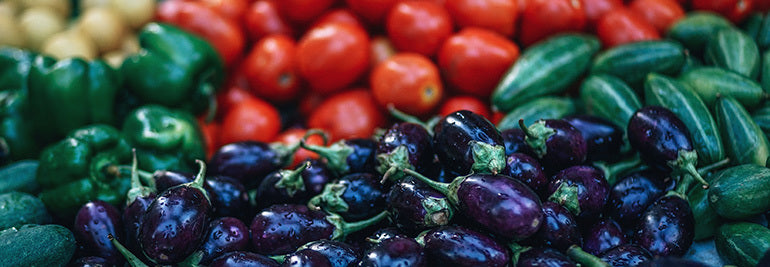
Greg tries to eat fresh vegetables with a variety of colors, which he says indicates nutritional richness. Whenever possible, he also cooks with food from local sources. “I do grow a small garden every year, with tomatoes, potatoes, garlic, carrots, broccoli, beets, just your basics,” he says. “It’s so nice to go and grab them directly from my yard.”
Week day diet
Greg and his family are following the “week day vegetarian diet”, meaning they only meat on the weekends. This contributes to personal health and reduces their impact on the planet. “The personal health side is pretty clear, there are so many articles about reducing red meat in your diet and the benefits involved, from a reduced potential for cancer to lower cholesterol, to living longer,” he says.
“One of the simplest way to decrease my family’s carbon footprint was to decrease our meat intake; livestock farming is responsible for 20-50 per cent of the greenhouse gases, so this was an easy way to become better earth dwellers. If you ever look into livestock it is amazing the deforestation involved, the extreme water usage and over un-sustainability of it.
Photo by Angela Percival/ Arcteryx
Healthy balance
While the Hills like to keep it fresh, they also allow themselves to indulge in a fast food meal once a week, like ordering a pizza on Friday movie night. Perfection is not the goal, Greg says, just as long as the the bulk of their diet is fresh, healthy food.
“Like every family we have certain meals that are staples, enchiladas, lasagna, salad rolls, pad thai, pizza on friday nights, and my favourite – the glory bowl,” he says.
Tofu glory bowl
In the bowl
2 cups cooked brown rice1/2 cup grated beetroot1/2 cup grated carrots1/2 cups almonds, toasted1/2 cups spinach leaves1 cup tofu, cubed
Dressing
1/4 cup tahini1/4 cup apple cider vinegar1/2 cup nutritional yeast flakes2 gloves garlic3 tablespoons tamari1 tablespoon maple syrup1/4 cup olive oil1/4 cup water
Instructions
Prepare the brown rice and set aside.Fry tofu cubes in a pan.Add dressing ingredients into a blender to prepare the dressing. Add oil in a steady stream. Taste, and thin with water if required.Assemble the bowls by placing cooked brown rice into two bowls, top with beets, carrots, spinach leaves, almonds and fried tofu cubes.Drizzle bowls with dressing.
Lead image: Photo by Fancycrave on Unsplash.
Click below to read articles in our Fuelling the Engine series:
Fuelling the engine: talking nutrition with Lucy Bartholomew
Fuelling the engine: talking nutrition with Emelie Forsberg
Fuelling the engine: a commonsense approach to nutrition
Fuelling the engine: talking nutrition with Ryan Sandes
Fuelling the engine: talking nutrition with Ultracycling Man
Fuelling the engine: talking nutrition with Mel Hauschildt
D.I.E.T (disaster imminent every time), and three unchanging principles of nutrition for athletes

ラジャアンパットのダイビング|豊かなサンゴ礁を守るマックス・アマーの挑戦
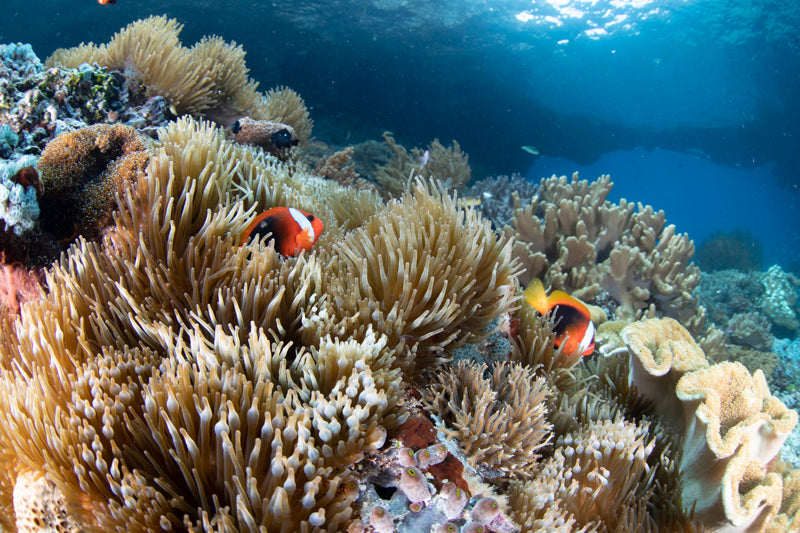
インドネシア・西パプアのラジャアンパットは、色鮮やかなサンゴ礁と多様な海洋生物で知られる、世界有数のダイビングエリアです。
しかし、この海の豊かさは偶然に守られてきたわけではありません。ラジャアンパットのクリ島でダイビングリゾートを築いたマックス・アマーは、地域の人々の仕事と自然保護を結び付け、サンゴ礁を未来へ残す仕組みづくりに取り組んできました。
この記事では、沈没した戦時車両を探して島へ渡ったマックスが、なぜエコリゾートをつくり、地域の仲間と海を守るようになったのか、その歩みを紹介します。
映像:Janne Kasperi Suhonen
© Steve Woods Photography
目次
ラジャアンパットとは
マックス・アマーと海との出会い
2匹のウミガメから始まった物語
まだ存在しないリゾートを売る
地域の仕事が海を守る力になる
豊かなサンゴ礁を未来へ残す
ダイバーができること
Suuntoでダイビングを記録する
まとめ
ラジャアンパットとは
ラジャアンパットは、インドネシア東部の西パプアに広がる島々です。暖かい海、複雑な島の地形、マングローブや海草藻場、栄養豊富な潮流などが、多様な海洋生物を支えています。
サンゴ礁、マンタ、ウミガメ、魚の群れなどを目当てに世界中からダイバーが訪れますが、豊かな自然ほど繊細です。ダイビング観光、廃棄物、プラスチック、沿岸開発などの影響を抑えながら、地域の暮らしと自然保護を両立させることが重要になります。
ラジャアンパットは2023年にユネスコ世界ジオパークへ認定されました。これは美しい景観だけでなく、地域の地質、生態系、文化を守りながら持続可能な発展を目指す場所であることも示しています。
マックス・アマーと海との出会い
マックス・アマーは、動物の保護に取り組む両親のもと、ナイジェリアで自然に囲まれて育ちました。家族は傷ついた鳥、ワニ、チンパンジーなどを保護し、可能であれば野生へ戻していたといいます。
1982年、マックスは軍でダイビングを学びました。当時の訓練は楽しい経験ではありませんでしたが、そこで「諦めないこと」を学んだと振り返っています。
その後、第二次世界大戦後に海へ廃棄された航空機や車両の情報を手掛かりにインドネシアへ渡り、沈没物を探すようになりました。島々を訪ねるうちに、マックスは海だけでなく、地域の人々の温かさにも引かれていきます。
マックス・アマー。© Steve Woods Photography
2匹のウミガメから始まった物語
元記事には、マックスの考え方を象徴するエピソードが紹介されています。
ある日、海辺に立つ若い漁師のカヌーには、捕まえた2匹のウミガメが載っていました。マックスは漁師と話し、代金を支払うと、2匹を海へ逃がしました。驚く漁師へ伝えたのは、シンプルな言葉でした。
「私はウミガメが好きなんだ」
やがて、その漁師はマックスが運営するリゾートで最初のダイブガイドになりました。自然を守ることと、地域で安定した仕事をつくることがつながった瞬間です。
まだ存在しないリゾートを売る
マックスが考えたのは、地域の人々と働きながら、海を守ることを事業の中心に置くダイビングリゾートでした。
彼はまだ建物が完成していない段階でダイビングショーへ出展し、植物や地域の品々を使ったブースで構想を紹介しました。「3組の予約が入れば計画を進めよう」と考えていたところ、結果は2年分に相当する予約だったといいます。
マックスは急いで島へ戻り、地域の仲間へ建設を始める必要があると伝えました。最初のゲストが到着したとき、建設チームが裏口から出るのと入れ替わるほど、完成は直前だったそうです。
© Steve Woods Photography
地域の仕事が海を守る力になる
リゾートで働くようになった人々の中には、かつて伐採、漁業、サメのひれを目的とした漁、密猟などに関わっていた人もいました。教育や安定した仕事へアクセスしにくい、遠隔地ならではの事情が背景にありました。
ダイブガイド、ボートスタッフ、リゾート運営などの仕事が生まれることで、自然を消費する以外の収入が得られ、家族の生活と教育を支えられるようになります。そして、海の状態が地域の仕事へ直接つながるため、サンゴ礁や魚を守ることが自分たちの未来を守ることになります。
自然保護を外部から押し付けるのではなく、地域の人々が中心となって続けられる仕組みにする。この考え方が、マックスのプロジェクトを支えてきました。
© Steve Woods Photography
豊かなサンゴ礁を未来へ残す
マックスとチームは、事業の初期からサンゴ礁の保護を優先してきました。元記事では、研究者による調査でハウスリーフの魚種が記録され、その後の再調査で同じ海域の確認種数が増えていたことが紹介されています。
ただし、1回のダイビングで確認できる魚の数は、季節、潮流、観察方法、調査範囲などにも左右されます。重要なのは「世界一」という称号だけではなく、長期的な観察を続け、保護の結果を確かめながら管理を改善することです。
島の自然を守りながら観光を続けるには、廃棄物の管理、再生可能エネルギーの活用、自然への負荷を抑えた施設計画、地域や行政との協力、ゲストへの教育が欠かせません。
マックスは、環境への影響を完全にゼロにはできないからこそ、その影響を把握し、できることを積み重ねる姿勢が大切だと語っています。
ラジャアンパットの海を守るためにダイバーができること
遠くの海を訪れるダイバーも、その場所の未来に関わる一人です。ラジャアンパットに限らず、自然豊かなダイビングエリアでは次の行動を意識しましょう。
サンゴへ触れたり、フィンで蹴ったりしないよう中性浮力を整える
野生生物を追い回さず、餌付けや接触をしない
地域のルール、海洋保護区、ダイビング事業者の指示を守る
使い捨てプラスチックを減らし、ごみを適切に持ち帰る
日焼け止めを含め、海へ持ち込む製品の成分と使用方法に配慮する
地域雇用と自然保護に取り組む事業者を選ぶ
自分の経験と体調に合わない海況では無理に潜らない
写真を撮ることやログを残すことも、その海への関心を長く保つきっかけになります。ただし、撮影や機器の操作へ集中しすぎず、浮力、残圧、深度、潜水時間、バディの状態を優先してください。
© Steve Woods Photography
Suuntoでダイビングを記録する
Suunto Oceanは、ダイビングと日常のスポーツを1台で記録したい人のためのダイブコンピュータ&GPSスポーツウォッチです。
Suunto Nauticは、大きなAMOLEDディスプレイと長時間のダイビングを重視する人に向けたダイブコンピュータです。
Suunto Nautic Sは、コンパクトなサイズで、ダイビングから日常まで使いたい人の選択肢です。
ダイブコンピュータは、安全なダイビングを支える重要な道具ですが、認定講習、適切な潜水計画、バディとの確認、現地ガイドの指示に代わるものではありません。使用前に対応するユーザーガイドを読み、表示と操作を理解してください。
▶︎関連記事:「初心者ダイバーが安全に上達するための7つのポイント」
まとめ|豊かな海は、地域とダイバーが一緒に守る
ラジャアンパットの魅力は、魚やサンゴの多さだけではありません。自然を守ることが地域の仕事と教育につながり、海の豊かさが次の世代の暮らしを支える。その循環こそ、マックス・アマーと仲間たちが築いてきた価値です。
ダイバーは海を訪れるゲストです。美しい景色を記録するだけでなく、現地のルールを守り、自然への負荷を減らし、保全へ取り組む地域や事業者を選ぶことが、海を未来へ残す力になります。
海で過ごした時間を、次のダイビングへつなげる
Suuntoのダイブコンピュータで潜水データを記録し、一つひとつのダイビングを振り返りましょう。
Suuntoのダイビング製品を見る

The Lowdown: CMAS 4th Outdoor Freediving World Championships 2019
On the white sun drenched shores of Roatan Island the gentle sound of the Caribbean Sea’s crystal clear water tentatively exploring the sand is lost behind the dissonance of diving activity coming from a dive platform located not far from the beach.
Divers are descending, safety protocols are being fine tuned, Alex St-Jean the official event photographer is testing his underwater camera equipment while the final training rehearsals are being observed in preparation for the CMAS World Championships that fin-kick off with an almighty duck dive on 6thAugust 2019 lasting five days. The event has been organized by Esteban Darhanpé at the Roatan Freediving School and Training Centre.
Chilling in the warm waters of the Caribbean Sea, Roatan Island is situated alongside a part of the 1000km of Mesoamerica Barrier Reef, the second largest reef system in the world.
The best of the best from around the globe are gathered to compete at the event. They compete not only to win but to be to a part of the freediving community.
A common misapprehension of freediving is that it is all about gaining the depth and in competitions this may be the case. Competition diving and its many disciplines are only one aspect of the sport. For most freedivers, the sport is just about hanging out with friends and exploring the underwater world.
“To the observer, freediving is all about serenity and calmness – a peaceful interaction with the underwater world. It is exactly all these things, which is why competition freediving presents such a unique challenge.” says Will Trubridge, Suunto Ambassador and World Champion.
“The conditions of a competition are slightly different to a world record attempt. In a competition you have an official pre-set time and there's a lot more people around – spectators and media. It's not as controllable as with a world record attempt,” says Will.
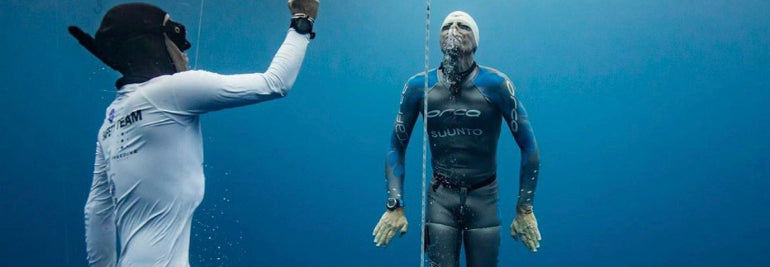
William Trubridge captured by photographer and freediver Alex St-Jean ©
Organizations
CMAS- The World Underwater Federation/Confédération Mondiale des Activités Subaquatiques founded in 1959 and is an international federation that organises underwater activities and events and is amongst the leaders in the scientific and technical research and development. It also acts as a training standards agency in snorkel and scuba training.
AIDA- International Association for the development of Apnea was created in 1992 after the film release for Big Blue. The rise in training freedivers and record breakers was developing at a vast rate and the AIDA was founded to keep track on the growing interests. The largest organization world wide of freediving event organizers, it also actively participates in scientific and technical research and development to help the world see freediving not as a thrill seekers sport, AIDA wants the recognition that “freediving is safe, fun, challenging and a fantastic blend of inner peace, concentration, technique, training, friends and team work”.
Disciplines
CNF- constant weight no fins is often talked about as being the purest form of freediving unassisted
CWT- Constant Weight with Fins discipline means the diver can wear fins, however they are only allowed to touch the rope to stop their descent and start their ascent. This discipline tends to give the deepest performances.
CWB- Constant Weight with Bi Fins. More monofins than you can shake a pair of bi fins at.
FIM- Free Immersion is a more relaxed dive where the diver can use the rope to pull themselves along using the rope, the diver is not allowed to wear fins on the dive.
Competition Terms
Safety Teams/Safety Diver- the Dive Safety Team is headed up by Italian Freediver Marco Cosentino and is currently holding the position of Chief of AIDA Safety Committee. He has a team of twelve safety divers there for support including Suunto Ambassador Sofia Gomez’s coach, freediver Johnathan Sunnex aka Johnny Deep.
Announced Dive Time- the official target time the diver will take to complete the dive, must be announced pre-dive. “You announce your dive on that day. If something goes wrong, then you don't have a second chance. It creates more of an element of chance. There is also a lot of sleuthing and spying to find out what other freedivers have done in their training to gauge how they're performing, and using that information to make pronouncements.” Says William Trubridge.
Official TOP- Time of Performance, as during the competition the organisers will be sticking to strict scheduling and the divers are assigned a time the dive must commence so all pre-dive preparation must be completed by the official TOP.
Duck Dive- the way a free diver ‘enters’ the water is by this type of dive as it gets the diver in a good position for descending and helps them along to few meters deep very quickly.
Freefall- once the diver reaches the point of negative buoyancy on their descent and begins to sink in a state of complete relaxation without finning down. This year we have spotted the athletes with strings tied around their thighs, Will Trubridge uses his to slide his thumbs in place so his arms stay positioned during freefall in order to conserve every bit of energy. It is this part of the dive that can induce the most pleasant feelings. Many freedivers feel euphoric as they enter an almost trance-like state.
Tag- a marker the diver must grab and bring back up to the surface when competing in depth competitions.
PB- personal best is the athletes, longest or deepest dive they have achieved. Can also be measured by distance.
Surface Protocol- the sequence a freediver must completion upon reaching the surface after a dive in a competition to convince the judges that the diver is lucid and not unconscious. The diver must face the judge’s direction remove googles and nose clip, give the OK signal and say in English “I am OK”/I’m OK” with a 15 second time limit.
Hypoxic- where the body is in a state of inadequate oxygen at tissue level. If the diver doesn’t get to the surface with enough oxygen to be lucid enough to complete the surface protocol they will be disqualified.
Cards- white, yellow or red. The judges will show a card at the end of each competition dive to signal whether the diver has had a fine performance with no penalties, yellow means the dive was completed with penalties and red signals disqualification from the dive.
World Championships Schedule
AUGUST 6th OPENING CEREMONY
Much like the opening ceremony of the Olympics we hope to see the atheletes parading around Roatan wielding flags, looking strong and generally building the hype, however it may be more of a technical meeting!
AUGUST 7th CNF COMPETITION DAY
Suunto Ambassador William Trubridge holds the world record in this natural discipline. Will set a new world record in freediving by diving to 101m with no fins in Dean's Blue Hole in the Bahamas. The new world record was set mere three days after he established an astounding new world record dive of one hectometre. Will's record-setting and mind-boggling constant no fins dive to 101 meters took 4 minutes and :08 seconds to complete.
Watch it here:
AUGUST 8th CWT COMPETITION DAY
Constant weight APNEA. This discipline means the diver can wear fins, however they are only allowed to touch the rope to stop their descent and start their ascent.
AUGUST 9th REST DAY
Rest day for re-ups on oxygen and rest.
AUGUST 10th CWB COMPETITION DAY
More monofins than you can shake a pair of bi fins at.
AUGUST 11th FIM COMPETITION DAY / AWARD CEREMONY / CLOSING PARTY
The winners get to take home a magnificent Suunto D5 dive computer and also collect a cash prize.
Sofía Gómez Uribe taken by freediver Johnny Sunnex @johnnydeep110 ©
Follow on Instagram @Suunto Dive to keep up with Sofía Gomez Uribe as she takes over for all latest news from the dvie platform.
Click here to see the offical Facebook page for the comptition.

Becoming a mother and staying in love with the mountains
New roles for everyone: As Emelie heads out training, Kilian stays home with Maj.
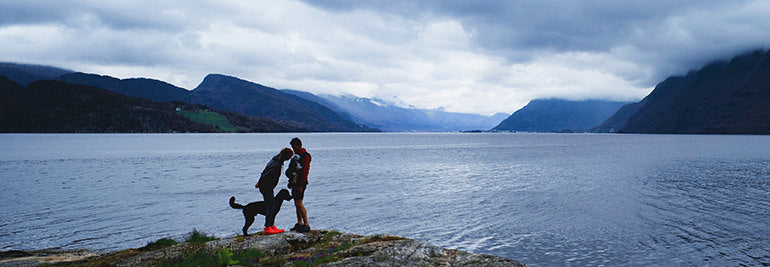
After nine months of pregnancy, resting and recovering after birth, Suunto ambassador Emelie Forsberg is training again in the mountains and fjords of Norway where she and her partner Kilian Jornet live a life filled with adventure.
True to her background in seasonal farming, gardening and eating, Emelie understands well there is a season for everything, and is taking her time to come back to elite mountain running and skiing form.
“I don’t push my boundaries because I prefer to take small steps and to do it really healthy and slow,” she says. “That might mean my way back will be longer, but that’s who I am. I would regret it so much if I took too big a step and got injured. I want to take things slow.”
Watch below and see how Emelie is balancing the joy of being a new mum with finding her legs again as one of the best mountain athletes on the planet.
WATCH "BEING AN ATHLETE AND A NEW MUM"
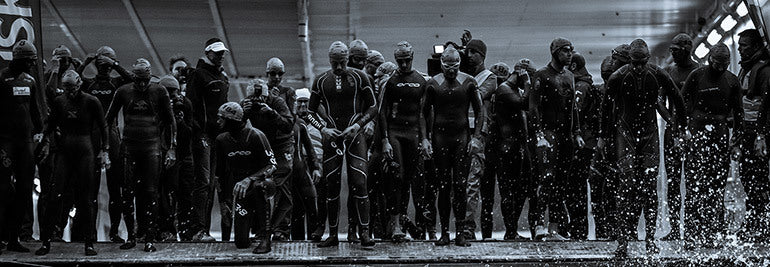

Watch Norseman extreme triathlon live!
Tune into watch one of the world's toughest long-distance triathlons – the notorious Isklar Norseman – live this Saturday. The race will be split into five live episodes, capturing key sections where the action is at it's most intense.
Competing in Norseman requires maxiumum mental toughness and takes human physiology to it's limits. When competitors cross the finish line on Gaustatoppen's summit, they will have completed a 3,8km swim, 180km bike ride and a marathon – and climbed 5000 m of altitude along the way!
Unlike traditional triathlons, Norseman is a point-to-point competition. From Eidfjord on the west coast to the finish on Gaustatoppen in the east, Norseman takes competitors through some of the most amazing landscapes Norway has to offer.
Click to read about the origins of the extreme Norseman!
Watch Norseman live on Saturday, August 3. The race starts at 5am (CET).
The Norseman live broadcast is split into five major episodes:Episode 1: 06:30 to 07:30 Live from T1 and recap from the swim.Episode 2: 08:30 to 09:30 Live from Dyranut and recap from the swim and the first ascent.Episode 3: 12:00 to 13:00 Live from T2 and recap from the swim and the bike.Episode 4: 15:00 to 16:00 Live from the mountain climb and recap from the the race so far.Episode 5: 17:00 to 18:30 Live from the mountain top. Looking at the winners, talking to them. More finishers.
Main image © Snorre Veggan / nxtri.com


