The sheer audacity of Red Bull X-Alps

SuuntoClimb, SuuntoRunMay 16 2019


Race organizer Ulrich Grill explains the 2019 route at a press conference. © zooom.at / Red Bull Content Pool

When the race organizers of Red Bull X-Alps announced the 1138 km route for the ninth edition of the race, many athletes felt it is the most challenging yet. Race veteran Paul Guschlbauer, for example, said crossing the Alps from Germany to Italy, while facing strong winds, will demand every bit of his skill and strength.

“We still have so much snow in the Alps and there’s only four weeks to go,” Paul says. “It was snowing down in the city a couple of days ago, and we have to go up to 2500 m, crossing it by foot if we can’t fly. When there is so much snow in the high mountains the thermal uplifts we need to fly don’t develop. It could be tricky up there!”

Click here to read about Paul and his quest to catch the Eagle!


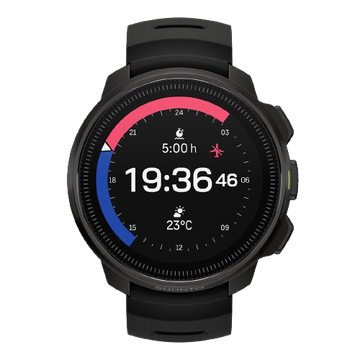
There are only 1138 Suunto 9 Baro Red Bull X-Alps Limited Edition pieces. One for every kilometer of the race!   

The Red Bull X-Alps is an adventure race unlike any other. In the 2019 edition of the race, starting June 16, 32 athletes from 20 nations around the world will attempt to hike and fly across the length and breadth of the Alps, checking in at 13 turnpoints along the way. If the weather doesn’t play ball, they must hike insane daily distances with massive vertical gain.  

With nearly double the number of turnpoints than in previous editions, and five zigzag crossings of the Alps, the athletes are going to be pushed to their ultimate potential. And fans are in for a treat.

For adventure sports fans, this race is almost addictive to follow. The live tracking system allows fans to follow their favourite athletes in real time. The race crosses through five alpine nations – Austria, Germany, Italy, Switzerland and France – and whole villages come out and cheer the athletes as soon as they see via live tracking they are passing through.

To give you a sense of the sheer audacity and scale of this race, here’s a preview of the route!

Salzburg to Gaisberg

Distance covered: 5 km

It’s race tradition to start in Mozartplatz in Salzburg, Austria, surrounded by the classical and natural beauty of this historic alpine city. The first turnpoint is only five kilometers away, but don’t let that fool you. Athletes must race up Gaisberg (1288 m) carrying their paragliding packs. It’s important athletes pace themselves well here, and catch a good thermal to carry them onwards. Every race, fans assemble at the top of Gaisberg and wait for the athletes to cheer them on.

Gaisberg to Wagrain-Kleinarl

Distance covered: 59 km

It might not seem like a long way, but remember the numbers alone don’t show the skill and precision this race demands. In this section, the athletes must navigate through a small flight path across a mountain range, while avoiding the Salzburg airport restricted airzone. At most turnpoints, athletes must sign their names on a signboard. The second turnpoint signboard is located right in town.

Wagrain-Kleinarl to Aschau

Distance covered: 148 km

One a clear day some of the best competitors might reach this third turnpoint in Aschau (615 m), Germany on the first day. Most will reach it on the second, after crossing the Hochkonig mountain group. Consider this leg the quiet before the storm; next they must make their first crossing of the Alps, from Germany south to Italy.

Aschau to Kronplatz

Distance covered: 268 km

Snow covered peaks, glaciers, the Italian Dolomites, fierce winds all put the pressure on in this leg. The fourth turnpoint is located at the top of Kronplatz, a 2275 m mountain, making careful flying incredibly important. Misjudge, and the athletes might land in a valley, and have to slog up to the top.


Land in the wrong place, and athletes have to hike to a launch spot. © Felix Woelk / Red Bull Content Pool

Kronplatz to Lermoos-Tiroler Zugspitz Arena

Distance covered: 381 km

After one epic crossing of the Alps, athletes must turn back, and cross north again. Strong northern winds are common, making for challenging flying. Adding to the challenge is the restricted airspace zone around Innsbruck, Austria, requiring a diversion north into Germany. The fifth turnpoint is reachable only after circumnavigating Zugspitze (2962 m), Germany’s highest peak!

Lermoos-Tiroler Zugspitz Arena to Davos

Distance covered: 483 km

The meeting place of the world’s tremendously wealthy, Davos, Switzerland, gets tremendously exciting as the athletes fly through, landing by the lake to sign the sixth turnpoint signboard. From this point on, the weather begins to play an even bigger role.


Red Bull X-Alps demands precision piloting. © Felix Woelk / Red Bull Content Pool

Davos to Titlis

Distance covered: 592 km

Bad weather is every athlete’s worst nightmare in this leg. Unflyable, and they have to hike to the top of Titlis mountain (3238 km) to sign the board at the seventh turnpoint. Restrictions put in place by the race organizers make accessing the top even more challenging. There is only one village that athletes are permitted to climb to the summit by foot from. And that village is way off course from the most efficient flight path.

Titlis to Eiger

Distance covered: 630 km

Famous for its intimidating north faces, Eiger (3970 m) is an icon of European alpinism. The good news for the athletes is there is no turnpoint to sign in at on the summit! Instead, they must prove they passed within a 1500 m radius of the virtual cylinder.

Eiger to Mont Blanc

Distance covered: 751 km

In this leg, athletes must travel north from Switzerland into France, past Europe’s highest peak, Mont Blanc (4810 m). Like the previous leg, there is no signboard at the summit. Instead, they must traverse the northern side, keeping the mountain at their left.

Mont Blanc to St. Hilaire

Distance covered: 847 km

One of the paragliding meccas of Europe, St. Hilaire in France offers easy take off conditions. The athletes can sail in quickly and sign the board at turnpoint 10, before launching again and setting off to cross the Alps again!


Paul Guschlbauer power hikes to his next take off spot during Red Bull X-Alps 2017. © Sebastian Marko / Red Bull Content Pool

St. Hilaire to Monte Viso

Distance covered: 965 km

Crossing from the north to the south-east, athletes head to Italy’s Monte Viso (3841 m), where they must again prove by GPS tracking that they passed through a 2250 m virtual cylinder. While not as famous as previous peaks, race organizers say turnpoint 11 might be the toughest because of the mountains and valleys athletes must navigate through to get there.

Monte Viso to Cheval Blanc

Distance covered: 1045 km

This is a new, unexplored area to Red Bull X-Alps. By this point, the remaining athletes that haven’t dropped out will be exhausted. Cheval Blanc, a 2323 m peak in the French Alps, will be one of their last obstacles to navigate past. This time, they are required to pass on the west, either by foot or wing.

Cheval Blanc to Peille

Distance covered: 1136 km

Here, at last, the clock stops. The ceremonial end is 2 km below on a float on the shore of Monaco. The Peille turnpoint (13) is located at a mere 709 m, a pimp squeak compared to the massive peaks the athletes have already endured. However, it’s small size is deceiving; because of the many hills preceding it, it’s all too easy to pick a bad thermal and wind up landing, and being forced to continue on by foot, losing precious time.

Peille to Monaco

Distance covered: 1138 km

The landing float in the glistening Mediterranean Sea will be sight for the tired eyes of the courageous athletes that made it through the gauntlet. It’s time to pop the champagne!

Red Bull X-Alps 2019 begins on June 16. Stay tuned for more of the action!

Lead image: © Felix Woelk / Red Bull Content Pool

おすすめのSuunto製品

あなたへのおすすめ

Suunto Race S vs Race 2: Size, Weight, and Battery Life Compared

Suunto Race SとRace 2を比較。サイズ・重さ・バッテリーで選ぶならどっち?

Suuntoのスポーツウォッチを検討している人にとって、迷いやすいのが「Suunto Race S」と「Suunto Race 2」の違いです。 どちらもAMOLEDディスプレイ、オフラインマップ、115以上のスポーツモード、トレーニング分析機能を備えた、ランニングやトレイルランニング、レース、日々のトレーニングに活用できる高性能モデルです。Suunto Race Sは「小さく、軽く、日常に...
Suunto Vertical vs. Vertical 2: Key Differences Explained

Suunto Vertical vs Vertical 2|どちらを選ぶべき?5つの違いを徹底比較

「Suunto Verticalを買おうと思っていたら、Vertical 2が出ていた」「初代とどこが変わったのか、値段差に見合う進化があるのか知りたい」——そんな疑問を持つ方に向けて、この記事では2モデルの違いを5つのポイントに絞って整理します。 どちらを選ぶべきかの判断基準も最後に明確にまとめていますので、ぜひ最後まで読んでみてください。 Suunto Vertical と Vertic...
How to play music on a running watch | Run without your phone with Suunto Run × Spark

ランニングウォッチで音楽再生する方法|スマホなしで走れるSuunto Run × Sparkの使い方

ランニング中に音楽を聴きたいけれど、スマートフォンを持って走るのは重い。ポケットやランニングポーチの中で揺れるのが気になる。そんな悩みを感じたことはありませんか? 音楽再生に対応したランニングウォッチを使えば、スマートフォンを持たずに、より身軽に走ることができます。 Suunto Runは、ウォッチ本体に音楽を保存できるオフライン音楽機能を搭載したランニングウォッチです。Suunto ...
How to use HRV to optimize your recovery

HRVとは?心拍変動を理解してトレーニングの回復を最適化する方法

「練習しているのになかなか記録が伸びない」「疲れが取れない」と感じたことはありませんか?その原因は、回復の質にあるかもしれません。近年、アスリートから健康意識の高いビジネスパーソンまで幅広い層で注目されているのが HRV(心拍変動) という指標です。 この記事では、HRVとは何か、正常値の考え方、HRVが低いときに体に何が起きているのか、そしてSUUNTOのスマートウォッチを使ってHRVを日...