




SUUNTOブログ


Join Suunto World Vertical Week 2023 and reach new heights!
Together, we can inspire and motivate each other to climb higher and reach new heights. So let's lace up our boots, grab our Suunto watch, and get ready to conquer the vertical world! Run, ride, ski, walk, climb – all human-powered activities between February 27 and March 5 count.
#verticalweek is also an opportunity for nations to go head to head to see who climbs the most. Since 2016 nations have battled for the top spot, as well as sports, to see who can accumulate the most vertical meters.
To participate in Suunto World Vertical Week, open Suunto app and click the Vertical Week card in your inbox (the bell symbol on the top of your screen takes you there).
Share your #verticalweek experience and win!
Run, hike, walk, ski or ride a quad-busting route and then share the workout from Suunto app as an image with the data overlay in Instagram, tagging @suunto and #verticalweek, and we’ll select three of the most inspiring shares and those users will win a Suunto 9 Peak Pro GPS watch.
Click here to learn how to share your activities with Suunto app.
Terms and conditions apply. Check them here.
Data from the previous years
Check out which sports and nations have captured the podium places during the past years. Will this year bring changes to the top places? Now is your chance to affect on this year's results by collecting as many vertical meters as possible.
2022 - Summer 2021 - Winter 2021 - 2020 - 2019 - 2018 - 2017 - 2016

Be my adventure valentine: what you need to know to be the ultimate support person
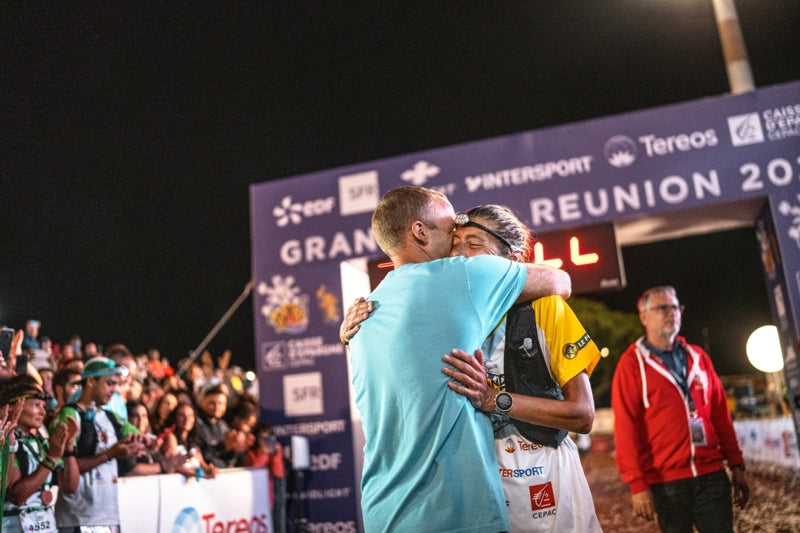
Suunto ambassador Courtney Dauwalter and her husband slash race support person Kevin Schmidt share their insights on the crucial role.
Unconditional love. That’s what we all want on Valentine’s Day and every other day of the year. To be loved thoroughly even if we’re far from perfect. Or a bit of a mess. Or falling apart physically and psychologically during an ultra marathon we’re having serious regrets about entering. Those are the moments you need someone there you can really lean on, even lose it in front of and not worry about them walking away from you forever. Inviting someone to be your support person isn’t great for a first date. You need someone you know you can count on in the trenches.
That’s exactly what Kevin Schmidt is for decorated ultra running champion Courtney Dauwalter. He’s her pillar out there. No matter how wild things get, she knows he’s got her back. And that allows her to run hard, to push herself. She’s not out there alone, but held by a loving support system.
Courtney and Kevin are currently preparing for the Trans Gran Canaria coming at the end of February. We caught up with the couple and talked to them about the support person role and what it takes. Read on to get the goodness.
Courtney’s insights
How does Kevin make racing easier for you?
How doesn’t Kevin make racing easier for me?! He is a huge part of the team and I am so thankful that he loves this sport just as much as I do. Before races I can always count on Kevin to help me think through some of the race logistics and we talk through all the aid stations. During the race, he is incredibly organized and efficient, he is calm no matter what is happening, and he knows what to say to give me a boost (usually it’s a bad joke).
What do you see as the essential skills a support person needs to have?
It’s important that they like it! Knowing that Kevin is having a blast spending his day crewing me at a race makes me smile while I’m out on course. I think it’s also important that a support person is ready to help you get to that finish line no matter what. There is always another solution to try, another way to encourage, another type of food to offer. The finish line is something achieved by the entire team, so it’s important for a support person to be positive and prepared to solve all types of problems on the way towards that finish line.
Does having your partner as your support person make it easier?
It is probably different for different couples. For Kevin and I, yes it makes it easier. Doing this sport together allows us to share so many moments that we will hold onto forever and will smile about when we’re 90 years old. It also helps because we know each other very well, so in the toughest moments we know how to help each other.
Kevin’s insights
What do you enjoy about supporting your partner on these big days?
Crewing for a big race or adventure is a cool shared experience between Court and I. She’s out there pushing herself and doing what she loves, and it makes me happy to be able to support her and do my best to help her succeed. I love the preparation before, the problem solving during, and all of the stories we share about our days after. The whole experience is so much fun!
What’s the most challenging thing about it?
The most challenging is seeing her in her darkest moments, knowing the pain she’s working through. It’s hard seeing your partner suffer, but I know how much she loves these challenges so I’ve learned to embrace it and help out as best I can.
What do you see as your role as a support person?
If I’m well prepared, Court can be confident that all of the food and gear she needs will be ready at the next aid location and she can just focus on getting there. I think it’s also important to have good energy, be ready with questionable jokes, and to be a teammate in problem-solving with anything that comes up during the race.
What are the key jobs a good support person must do well? Both the practical side, food etc, and also the mental side, encouragement etc?
Being fully organized before the race is the most important thing for me. During an event it can feel crazy sometimes, and having a clear plan to work from helps reduce mistakes at aid stations. Knowing what might go wrong and preparing a variety of gear, food, or jokes to help your runner is also highly recommended.
How do you train or prepare for the big day? What sort of work is involved?
I do a lot of research on the course we’re going to, both the running course and the crewing course. It’s helpful to have rough splits for the runner so you know when to expect them at aid stations, but also to know how long it takes to drive there, where to park, if you need to hike in, etc.
Running training can also be helpful in case, hypothetically, you blow tires on two different vehicles en route to an aid station and need to run a little yourself. This happened at the Moab 240 in 2017! I ran two miles into the aid station with armfuls of gear after both our crew vehicles got flat tires. Court was almost to the aid station so I took off running while our other crew person fixed the tires.
Do you have any little secrets or tips you’d like to share with others in terms of ways to succeed as a support person?
Know your runner, and what will help them when they hit a low patch. Do they need tough love or dad jokes? Pancakes or pizza? And always always, have their favorite beverage ready at that finish line.
All images by Jordi Saragossa.


8 quick reads to inspire a winter of training and adventure
It’s easy to make excuses why to slack off from training and stop heading out on adventures over the cold season. Those excuses can sound so rational, but deep down, in your heart of hearts you know, we all know, they are total BS.
Winter presents challenges, yes. But also opportunities. You just need the right gear, the right intention and attitude. So before you slip into hibernation mode, scroll through these quick reads and ingest the motivation that lies within. You’ll find tips from elite athletes, coaches, a meteorologist and cloud watcher, a British adventurer who has a perverse passion for going on adventures in the filthiest weather, and much more.
3 ways to motivate yourself to train this winter
The fact you are reading this article is already a sign you are fighting off the urge to hibernate the winter away. TrainingPeaks coach and triathlete Andy Blow outlines three more ways you can keep your motivation high no matter how gray, short and cold the days get.
Photo by Goh Rhy Yan on Unsplash
12 ways to change up your training over winter
Maybe you’ve had a big summer of training and competition and you don’t feel like maintaining the same regimen over winter. That’s perfectly understandable. But rather than slack off, find ways to mix it up instead. These 12 ideas will ensure when spring rolls round you’ll be pumped for your next big training block.
How to stay warm this winter
Knowing how to layer well and what to wear and when are essential skills for outdoor adventure during winter. This article boils it down to the essential things you can do to stay warm when it’s frosty out there.
7 tips for running in the dark
Shorter, darker days means most of us who enjoy running outdoors have to head out once the sun has set. Running in low light presents opportunities and also challenges. Click through for tips on how to do it well.
8 tools for tracking the weather with Suunto
Keep abreast of the latest weather developments with these eight tools. That way you will know when your window of opportunity is to get out and enjoy before the weather folds.
6 tips for cross-country skiing with your Suunto
This article offers six simple tips to help you more easily find nice tracks to explore and to train more effectively.
Alexander Koerner/nxtri.com
What you need to know about cold water swimming
Want a massive energy boost this winter? Try cold water swimming. It will rev your engine like nothing else. But to do it well and safely there’s some essential things you have to know and follow. Norseman Xtreme Triathlon’s chief medical and safety officer Jørgen Melau breaks it down.
7 tips for running in the rain
British adventurer Ben James inexplicably seeks out miserable conditions because it allows him to test his mettle. For him, running in the rain is a badge of honor. Who better to ask for tips for running in the rain?
Lead image: © Photo by Vlad Tchompalov on Unsplash
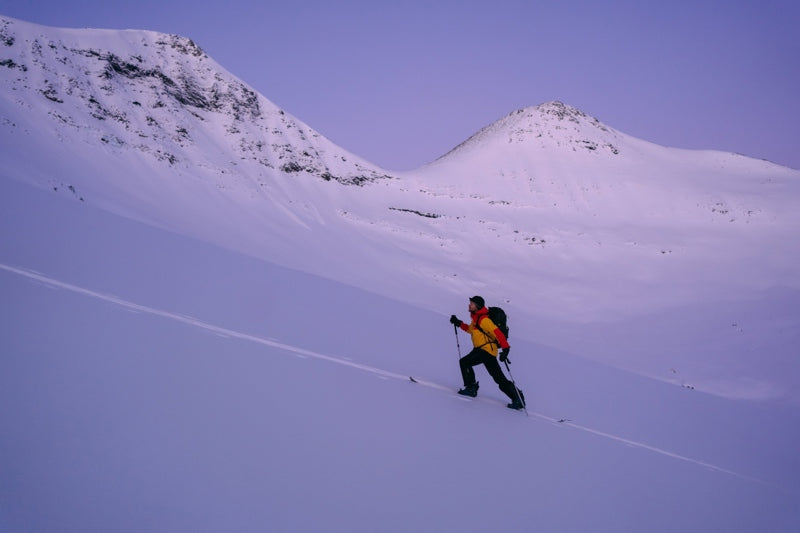

6 must-read skimo articles to get set for winter adventure
A little knowledge goes a long way, and when it comes to the fitness level and safety skills required for skimo this is even more so the case. So to help you prepare and get pumped for this pow season, we put together six of our most important and helpful articles with tips galore about how to train, follow a safe track and deal with avalanche danger.
Scroll down now and soak up the know-how.
© Mark Smiley
8 avalanche safety checks to tick off before the ski season
In this article, pro mountain guide and outdoor educator Mark Smiley lays out all small tasks you need to do before commencing your skimo season. Once you’ve read it, check out Mark’s Mountain Sense online courses, including his Comprehensive Guide to Avalanche Safety.
14 tips for backcountry skiing this winter
In this one, Mark Smiley continues dispensing oodles of backcountry wisdom. Having awesome skimo adventures is all about preparation and being open to learning how to improve. Small things, like finding the right adventure buddy, managing your pack weight and more, are the building blocks to rewarding and safe days in the mountains.
© www.berhasen.com
6 tips for faster skimo
It’s not speed for speed’s sake. Getting faster in the mountains isn’t about chasing adrenalin; when you’re fitter, and faster it’s easier to enjoy trips that take less time and therefore safer. In this article, sports scientist and skimo coach Susi Kraft lays out a training plan to help you improve your pace out there.
8 tools for tracking the weather with Suunto
Up above the treeline and exposed to cold and weather, you need to keep a close eye on the weather. This article shares eight ways your Suunto watch can help you track it, from storm, sunset and sunrise alarms through to awesome partners like MyRadar.
© Mark Smiley
7 tips to find a safe track up the mountain
What are the signs of a good track up a mountain, and what are the warning signs to watch out for that signal to stay clear of a particular line? Mark Smiley explains what to look out for and how to use your Suunto watch and other tech to find and follow a safe track.
6 tips for mountain navigation
Freerider and the man behind the Arctic Lines project, Suunto ambassador Antti Autti explains how he navigates in the mountains when he is out on one of his epic adventures above the Arctic Circle. Safety is a key value in everything he does so he has an established process to keep his trips safe for him and his team.
Lead image by Jaakko Posti

Five adventure films to watch
Lost then found
When you lose a part of yourself you begin to question why you were holding onto it so much, to begin with, in a life where change is the only constant, how do we let go and focus on the things that bring us joy?
Lost then found is the introductory episode of Suunto ambassador Christian Meier’s year-long project exploring the transition from a professional cyclist to an ultra trail runner.
”This project is about stepping back to gain a better perspective on life’s highs, lows, and challenges, which make it beautifully complex,” says Christian.
Caught in an avalanche. Is freeriding worth the risk?
Suunto ambassador Antti Autti has just started his 20th season as a professional snowboarder and kicks it off with a new Arctic Lines episode called “Twenty”. Twenty is actually split in chapters one and two so there’s plenty to watch!
“I’m not going to say I want to celebrate the anniversary but I want to have a season where I am really going for it!” Antti says.
In Twenty Chapter 2, Antti gets in trouble and is taken down by an avalanche. He is forced to think hard about his approach to risk-taking while exploring.
”No matter what we do, accidents can happen. And when that happens, our greatest responsibility is to share the experiences honestly, even if it’s painful. That way, others can learn from our mistakes and make better decisions in the backcountry.”
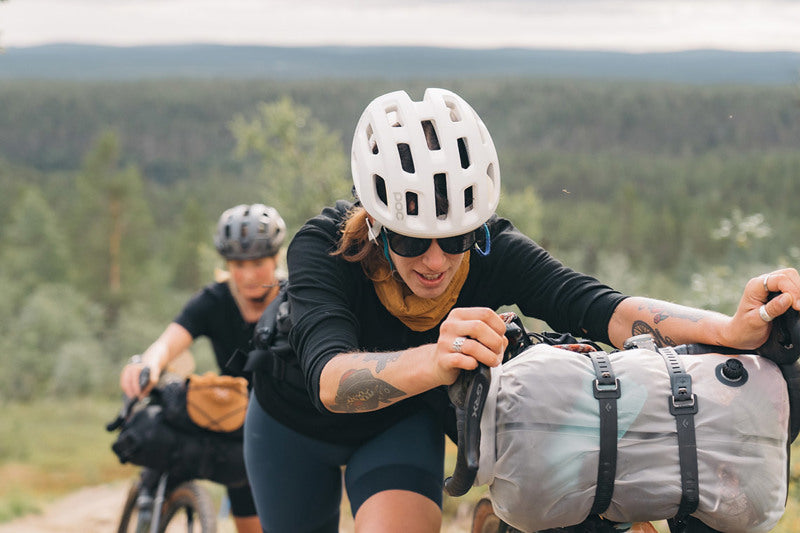
Bikepacking the Arctic Post Road
Adventure buddies and Suunto ambassadors Sami Sauri and Henna Palosaari went on a bikepacking trip way up above the Artic Circle over summer. Wild, vast open spaces, reindeer, kindly locals - they had a blast.
“Experiencing the simplicity of life up north and the local culture combined with the tranquility of the long wilderness sections creates a bikepacking experience that takes you miles away from the city hustle,” says Henna about the 430 km trip from Ylläs in Finnish Lapland to Alta, on the fjords at the top of Norway.
Read more about the Arctic Post Road
Turn it all off and come back to the present moment
"Present" follows Suunto ambassador Freya Orban and her friend and photographer Lukas Dürnegger as they go on a fast packing hut to hut trip in the mountains of Jämtland in central Sweden to rediscovering presence and the joy of running. Freya and Lukas left their smartphones at home and really tuned into the living world around them. Along the way they took time to stop a lot – and ate handfuls of juicy blueberries and cloudberries.
Read Freya’s 3 tips to find presence
So far… we have made it this far
Was this MTB adventure actually a MTB adventure? Sure, they had their mountain bikes with them. But with terrain so tough it’s hard to even hike it, what to speak of riding it, the question of what to call this madcap adventure arises.
The ragtag group of riding buddies consisting of Kevin Landry, JF Newton, Margus Riga, Kenny Smith, andPeter Wojnar set off on a freeriding adventure deep into British Columbia’s wild and rugged Chilcotin mountain range in search of new freeride lines.
The word expedition suits it better than adventure and 'challenge' doesn’t really do it justice. Watch the video above and read the report from the film crew and maybe you’ll reach a satisfying way to define it.

5 popular blog articles and 5 must-read tutorials of 2022
How to mix it up when you love too many outdoor sports
Allround mountain sport athlete Anton Krupicka shares how he strikes a balance with the four sports he loves.
”Embracing a variety of mountain sports has made me a more well-rounded athlete. It’s also extended my running career - there’s no way that I could only run now and stay healthy enough to race and have it be sustainable. That’s the main benefit,” Anton says.
Read more
Who’s having the most fun?
Feeling is an excellent metric for recovery. If your feelings after exercise start to trend downwards, something is not right. You may be pushing too hard, not recovering well enough or might be getting sick. Consider taking a break or doing something different for a change.
But in addition to helping you track your recovery, feeling data reveals more. Here are six interesting findings about Suunto community, based on the data from Suunto app database.
Read more
5 reasons why endurance athletes should do high-intensity strength training
To improve vertical speed and endurance, high-intensity resistance training should be an essential component of your training plan, says sports scientist, coach and athlete Susi Kraft. She is concerned many endurance athletes, whether trail runners, mountaineers or cyclists, believe they can skip the gym altogether or just do a little bodyweight training and that will suffice.
“One of the most common myths in the endurance world is that athletes should avoid lifting heavy weights, as they don’t need that for endurance, or that it will cause them weight gain and may slow them down,” Susi says. “This is just a myth. Actually, HIRT will make you faster, stronger and less prone to injury.”
Read more
Allyship in the outdoors: what is it and how to be a good ally for others?
Strong allies make for safer, more welcoming outdoor spaces. In this article by Suunto athlete, ultra-runner and diversity champion Ryan Montgomery, he explains allyship and how we can all be good allies in the outdoors.
“Not everyone feels welcome, nor safe, in the outdoors. Diverse communities – our queer, LGBT, people of color, and peers with disabilities – often experience limitations that prevent them from getting outdoors. Each of us plays a role in eliminating barriers to outdoor spaces for others; being an ally is what will make outdoor recreation safe and accessible for all people,” writes Ryan.
Read more
15 tips for beginners to fall in love with snorkeling
Dipping beneath the surface of the ocean opens up an incredible new world. It can expand our minds and bring us closer to our blue planet. With snorkeling, there’s no need for dive training or to carry heavy dive equipment. All you need is a good mask and snorkel, fins, a rash guard, reef-safe sunscreen, basic knowledge, and the new Suunto 9 Peak Pro so you can use the “snorkeling mode”.
Read more
And there’s always something to learn!
In addition to inspiring and insightful stories, several how to articles were frequently read. Check these out, for example.
Living peak adventure – How to navigate with Suunto
With a GPS watch from Suunto, a world of adventure is at your fingertips. Learn how to find, create and navigate routes that’ll keep you stoked. Read the five-part article series
How to use Karoo 2 bike computer with Suunto
Hammerhead Karoo 2 is a Suunto compatible cycling computer that brings advanced navigation features, Suunto heatmaps and intuitive software to your handlebars. But there’s more to it than that! Read more
Suunto app goes big
On a big screen device like an iPad or an Android tablet you can experience richer texture and detail while planning routes and analyzing your training data. Learn more
Track your human powered commutes with Suunto
Living a more sustainable life starts with small, everyday choices. And, when done often enough and by enough people, these small changes will add up and start to have an impact. To support you in this, we have added the ability to track your human-powered commutes with Suunto app. Learn more
Plan your interval workouts with Suunto app
Build a workout in Suunto app and let your watch guide you through your session! This is especially useful with complex sessions, like intervals. Use Suunto app to build the workout step by step from warm-up to cool-down. Learn more


