




SUUNTOブログ

Congratulations to the Suunto Summit 2018 selections!
The 2018 Suunto Summiteers are:
Aniol, Spain
Daniel, Switzerland / Spain
Dmytro, Ukraine
Julia, Finland
Leonardo, Italy
Maggie, UK
Patrick, France
Patrik, Slovakia
Sherry, USA
Tara, USA
Teoh, Malaysia
Valentin, Romania
Verónica, Ecuador
(All participants have been individually contacted by Suunto.)
Welcome to #suuntosummit, everyone!
***** 5 February 2018 *****
Suunto Summit 2018
Do you want to be a part of a weekend full of trail running in the Finnish forest, workshops on Suunto products, and a little sauna too? If you can get to Helsinki for 4-6.5, we’ll do the rest!If this sounds like your kind of weekend, fill in the application below and tell us why you’re passionate about sports and Suunto, and share your story with #suuntosummit
Applications are due by 22.2.2018. (Amer Sports employees are not eligible for this Suunto Summit)
APPLY NOW
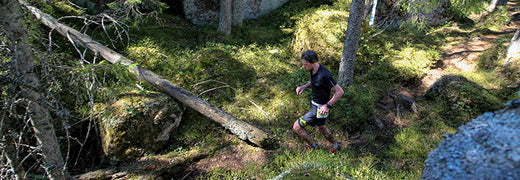
Here's what the Summit looks like in action!
In 2017 we hosted an inspiring group of 16 Suunto fans from around the world for a weekend of sharing experiences – and some muddy Finnish trails.
Summit team gearing up for the start of the trail race
Serene moment for Sante in the forest
Ready for orienteering?
Summiteers celebrating at the finish of Bodom Trail
All images by Philipp Reiter
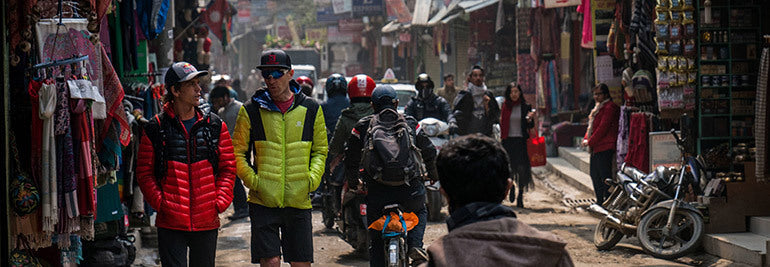

Where is Ryan Sandes right now? Far, far away in the Himalayas and hopefully moving very fast
They’ve estimated the trip at 1400km, with over 70,000 height meters gained and lost. The current FKT? 28d 13h 56m – set by fellow South African Andrew Porter in October 2016. It’s an obscure, difficult and unique challenge – one that Ryan and Ryno are among the best-suited in the world to take on.
The adventure is not only an immense physical challenge, but also a logistical one – they’ve probably already spent more time planning and researching than they will running.
Planning and researching were big part of Ryan and Ryno’s preparation for the epic run. (©Dean Leslie, Red Bull Content Pool)
The route has 12 checkpoints including start and finish. And guess what? There’s no easing into it. “The highest point will be just over 5500m,” says Ryan, “and that comes pretty early on in the Jumla region. Towards the end we’ll drop into the jungles where it will get quite warm and quite muggy, with plenty of leeches!” The speed at which they travel will largely depend on the terrain and of course, the weather. “I’ve never done anything like this with so much mileage on so many consecutive days.” So how big are those days? “We're hoping to average been 55–65 km per day.”
They’ll be somewhat unsupported – crews will place drop bags along the way at planned intervals with fresh clothes, energy bars, and other equipment like fresh shoes, socks, and replacement items like sunglasses and back-up backpacks and trekking poles – but they’ll spend most of their nights in local teahouses, eating local food. All in all, Ryan and Ryno will each have about 8kg on their back including 1.5 liters of water and a few food bars – light enough to move fast, heavy enough to make a difference. All of this was serious enough that Ryan decided to make some serious adjustments in his training. What did that mean? Get ready for this – less running.
Final preparations and logistics. (©Dean Leslie, Red Bull Content Pool)
“I spent a lot of time hiking – often with a decent load on my back, like my son Max,” says Ryan. “The goal was to really get used to spending a lot of consecutive time on my feet.” He also augmented that with plenty of strength training and alternative workouts – the nature of the adventure will require well-rounded fitness and strength to stay healthy, instead of pure speed. Some of the toughest bits will be the ups and down – as previously mentioned, 70,000 height meters of them, including some pretty big climbs – 2,000 in one single push – and one massive 4,000m descent in a single straight shot – enough to turn any trail runner’s legs to jelly.
Will they survive? Will they finish?
Good luck, Ryan, from everyone at Suunto!
All images © Dean Leslie // Red Bull Content Pool
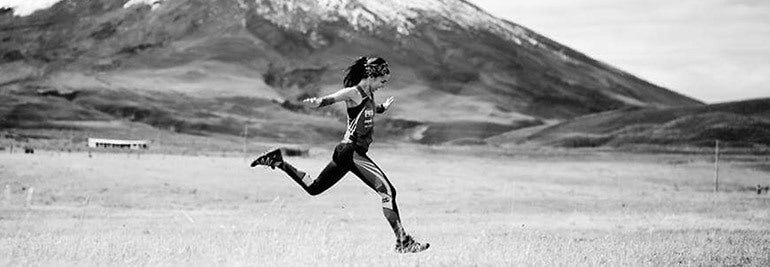

How three particular ultra marathons helped Dani Sandoval break the Aconcagua record
Records are made to be broken, and over the past few years, Aconcagua has seen quite a few of them. At 6,691 m, it’s the highest point in both the western and southern hemispheres but offers a (relatively) non-technical route to the summit – meaning it’s a favorite of trail runners who like to pack light and move fast. First, Kilian Jornet set a round-trip record in December of 2014, Swiss-Ecuadorian Karl Egloff followed just two months later cutting an hour off Kilian’s time. In 2016, Brazilian Fernanda Maciel put up a new women’s record, and now, at 20 hours and 17 minutes, we’re happy to announce the new record holder: 26-year-old Dani Sandoval from Quito, Ecuador. The young talent from South America has burst onto the scene – while ultrarunning typically takes years of training, she's ascended to elite level quickly, taking first place over 80 km at the La Misíon race in Argentina in 2016. She won two more 80 km ultras in South and Central America. But eventually, altitude called to her – and we shouldn’t be surprised – her parents were both enthusiastic mountaineers. We called her up to find out how she went from going ultra-far to ultra-high.
When, precisely, was the moment you decided to do this? It was more than a year ago when Nicolás Miranda, a fellow athlete, and I went to our first peak, Cayembe, at 5,790m. There Nico noted my body responded to altitude in a different way than most athletes. It was right then when he suggested I should try to break Aconcagua’s FKT.
How did you feel the moment you started? Mixed emotions. At the moment, the greatest was fear. Fear of failing, but the mountain was perfect, full moon, no wind, and clear skies. Suddenly fear became hope and I simply enjoyed each stage of what was the best experience of my life.
What was the most challenging part in your training?
Spending full days in the mountains, weekends at high altitudes at the end of the year, precisely during Christmas and New Year’s Eve, which are days I spend with my family. But for this project I had to say no to spending time with family, so I could train and work towards being ready for January!
Does your job as a physio help your training?
Yes, it really is an advantage. During my training in Aconcagua I suffered a second-degree sprain. I was able to recover in only 2 days and be ready for the record. I was scared, I thought the sprint would be an obstacle; but thanks to my knowledge I was able to fully recover.
You’ve done some incredibly hard races – was this harder?
Actually, it was the result of my three 80k races. The time I spent in La Misión was about approximately 20 hours, the technical difficulty of Petzl Trail Plus at Banos, Ecuador, and cold from Patagonia 80k at Torres del Paine. These three races made the Aconcagua for me.
Do you think you can better your own record more in the future? It was a big gap, but I didn’t have many recovery days between the first and the second try; so I felt my body wasn’t at 100%. I think I might be able to break my own record, but I also believe those 10h17m are for me perseverance, and fight to achieve something I dreamed despite two previous failures.
The hardest part of the run?
The last 400 m. I felt I had no air, tiredness made me feel dizzy, when I knew I was about to finish my body started to respond extremely slow. I had to sit down and take deep breaths to get strength to continue.
What was the most enjoyable, comfortable, peaceful moment during that run?
The most enjoyable time was when I happened to be in the same spot where days before we had winds of 75 km/h. It just as I was getting to Colera, one of the camps. Whereas days before I suffered pain and difficulty, this time when I arrived the sun was rising, warming me, and the scenery was amazing. The mountain was offering the best weather, and it was there I felt I could make it.
What’s up next? More mountains, or more ultras?
Both! I want to keep my projects and be able to make a 170k. I will prepare for one ultramarathon per year. For instance, in 2018 I want to make my first 100k, then go for 120k and eventually 170k. I also want to do speed climbing in Ecuador in order to gain experience and, why not, try mountains outside of Ecuador. In my mind I have the goal of reaching 8000 meters. All step by step so I arrive at each goal with great joy!
Images by Matthieu Perrault


