




SUUNTOブログ

Make everything count: 7 tips for office workers to get moving
At Suunto headquarters in Finland we try to practice what we preach. Which is why we have an in-house personal trainer to motivate us all to stay fit and healthy.
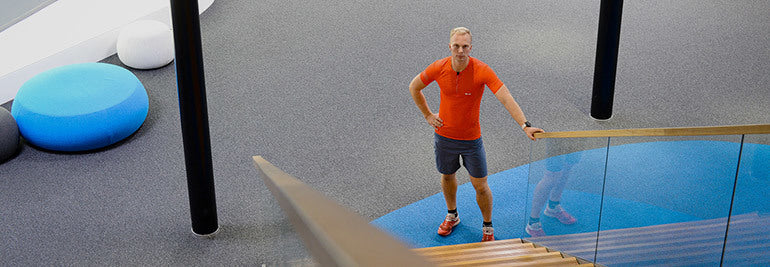
Matias Anthoni, 26, roams the offices, dropping by rooms, calling on us to get up and to join him for short exercise breaks on the spot. Resistance is futile!
Matias sees stairs as an opportunity to stay active.
“My job is to maintain the health and wellbeing of everyone at Suunto,” the former footballer turned trail runner says. “Everyone who works for the company can use me free of charge. I offer group exercise classes, personal sessions, nutritional advice, and random exercise breaks. Everyone understands it’s a great opportunity.”
Matias has a Bachelor in Sports and Health Promotion, and believes there are many opportunities throughout the day for office workers to take care of their bodies and minds. Here are his tips:
1. Everything counts
Remember this phrase and make it your mantra. It cuts through all the excuses about not having time. Sometimes we get stuck in an “all or nothing” mindset; if we can’t, for example, go for an hour long run or a full gym workout, we don’t do anything at all, failing to see the possibilities that are often right in front of our faces, and don’t take much time. Matias says it’s about thinking laterally, and making everything count.
2. Three x three minutes
Take three, three-minute exercise breaks a day. Set a timer on your phone, and do it. Invite your colleagues to join you. To get you started, here’s a short video of Matias demonstrating a few simple movements – try them! “Getting the blood flowing is good for the brain,” Matias says.
3. Go out of your way
When you need to go to the bathroom or get water or coffee, rather than going to the closest option, get in some extra movement and take an extra flight of stairs to do what you need on a floor above or below. Go out of your way for the sake of a little extra movement. It all counts.
4. Have walking meetings
When you have a simple catch up meeting that doesn’t require technology, why not make it a walk and talk? Aside from the movement, people are generally less distracted and more engaged at a walking meeting. You’ll breathe better, and will feel more energized.
5. Use your lunch breaks wisely
Have a 25 or 30-minute workout before you have lunch and you’ll have more energy for the rest of your day. It could even be 15 minutes. Remember, everything counts. Do what you can, rather than getting stuck in what you can’t. “Studies show a small amount of exercise goes a long way,” Matias says.
6. Create team challenges
Try to create a culture where you encourage one another to stay active. Create a challenge to see which department or team can do the most pull-ups in a month, or can walk the most steps in a month.
7. Plan your day
When you plan your day in advance you will know when you have windows for exercise or movement breaks. Planning means you are more likely to take advantage of these. Lock them in, and make them count.


1,504kmのヒマラヤ横断から学んだ5つのこと|ウルトラランナーの挑戦
目標が大きいほど、ゴールばかりを見てしまい、目の前の一歩が重くなることがあります。南アフリカのウルトラランナー、ライアン・サンデスも、ヒマラヤを横断する途方もない挑戦のなかで、同じことに気づきました。
2018年3月、サンデスとライノ・グリーゼルは、ネパールを東西に貫くグレート・ヒマラヤ・トレイル(GHT)の一部を走破。1,504kmを25日4時間24分で進み、当時のFKT(Fastest Known Time=確認されている最速記録)を打ち立てました。
雪に覆われた山岳地帯、厳しい寒さ、体調不良、予定どおりに進まない毎日。その経験は、サンデスに「結果だけを追うのではなく、過程を味わう」という新しい視点をもたらしました。ここでは、彼がヒマラヤで学んだ5つのことを紹介します。
Photo: Dean Leslie / Red Bull Content Pool
目次
1,504kmのヒマラヤ横断が変えたもの
グレート・ヒマラヤ・トレイルから学んだ5つのこと
大きな挑戦ほど、過程を楽しむ
まとめ
1,504kmのヒマラヤ横断が変えたもの
Photo: Dean Leslie / Red Bull Content Pool
サンデスとグリーゼルが進んだのは、グレート・ヒマラヤ・トレイルの高所ルートと文化ルートを組み合わせた区間です。距離は1,504km。25日以上にわたり、走り、登り、歩きながらネパールを横断しました。
周到に準備しても、山では計画どおりにいかないことがあります。2人は深い雪や厳しい天候に阻まれ、凍傷や体調不良にも苦しみました。地図に記された宿泊予定の村が無人だったこともあり、その場で判断を変えながら前へ進む必要がありました。
この挑戦の後、サンデスはレースの結果やタイムに過度な重圧を感じていた自分を振り返りました。力を尽くすことは大切です。しかし、結果だけにとらわれて体験そのものを楽しめなくなれば、たとえ目標を達成しても大切なものを見落としてしまいます。
ヒマラヤで得たのは、もっと強く自分を追い込む方法ではありませんでした。大きすぎる目標との向き合い方、予定外の出来事を受け入れる力、そして自分を支えてくれる人や日常を大切にする視点でした。
グレート・ヒマラヤ・トレイルから学んだ5つのこと
Photo: Dean Leslie / Red Bull Content Pool
1.大きな目標を、目の前の区間まで小さくする
1,500km以上という距離を常に意識していたら、その大きさに圧倒されてしまいます。サンデスは、先のすべてを考えるのではなく、一日ずつ、目の前の区間ずつ進むことに集中しました。
ウルトラレースなら「次のエイドまで」、日常の仕事なら「今日終える一つの作業まで」と考えられます。遠いゴールを持ちながら、行動できる大きさまで目標を分ける。そうすれば、まだ起きていない問題に心を奪われず、今できることへ注意を戻せます。
普段のランニングで小さな目標をつくる方法は、「ランニングのモチベーションを維持する10の方法」でも紹介しています。
2.小さな親切を惜しまない
山間部で出会ったネパールの人々は、2人を温かく迎え、必要な場面で手を差し伸べてくれました。サンデスは、わずかな気遣いでも、受け取る人にとっては大きな支えになると実感します。
速さや効率が優先されがちな日常では、家族や周囲の人への小さな配慮を後回しにしてしまうことがあります。困っている人に声をかける、時間を分け合う、相手の話を聞く。大きなことをしなくても、思いやりは人の一日を変えられます。
3.小さな喜びを見落とさない
高い目標へ向かう姿勢は、成長するための力になります。その一方で、結果を追うことに夢中になりすぎると、家族との時間や日々の楽しさが見えなくなることもあります。
サンデスがヒマラヤで再確認したのは、目標と日常のどちらかを選ぶのではなく、両方のバランスを取ることでした。美しい景色、温かい食事、誰かとの会話、身体を動かせること。遠いゴールへ進む途中にも、味わうべき時間があります。
4.考えすぎず、変化に対応する
ヒマラヤでは、詳細に立てた計画が毎日のように崩れました。天候、積雪、道の状態、体調など、自分では制御できない要素が多かったからです。
計画は必要ですが、計画を守ること自体が目的ではありません。状況が変わったら、事実を確認し、その時点で取れる最善の行動を選び直す。山でも日常でも、柔軟に対応する力は、最初から完璧な答えを用意すること以上に重要です。
登山やトレイルランニングでは、GPSウォッチだけに頼らず、紙地図、現地の標識、天候情報も併用し、安全を優先してください。Suuntoウォッチの表示を準備しておく場合は、「SUUNTOの地図・ナビゲーション画面の見方」も参考になります。
5.困難なときこそ、今あるものに目を向ける
行程中、サンデスは家族が恋しくなり、精神的にも身体的にも特につらい2日間を経験しました。そこで彼は、自分でこの挑戦を選んだこと、一度きりかもしれない機会の中にいることを思い出しました。さらに、周囲の景色や現地の人々との交流へ意識を向けることで、気持ちを立て直していきます。
前向きでいることは、苦しさや危険を無視することではありません。変えられない状況を認めたうえで、今も残っている選択肢や支えを探すことです。疲労や痛み、体調異常がある場合は、気持ちだけで押し切らず、休止や撤退も含めて判断する必要があります。
長時間のレースで心が折れそうなときの具体的な対処法は、「コートニー・ドウォルターの6つのメンタル術」で詳しく解説しています。
大きな挑戦ほど、過程を楽しむ
グレート・ヒマラヤ・トレイルを走った後、サンデスの目標に対する姿勢は変化しました。結果を求めながらも、それだけに自分の価値や体験の意味を預けない。ゴールは、準備し、判断し、一歩ずつ進んだ時間の先に生まれるものだと捉えるようになりました。
これは、ヒマラヤを横断するアスリートだけの教訓ではありません。初めての大会、長期的なトレーニング、仕事や生活の大きな計画にも共通します。
遠いゴールを、今日できる行動まで分ける
計画と同じくらい、状況に応じた判断を大切にする
結果だけでなく、周囲の人や途中の経験にも目を向ける
記録を振り返り、積み重ねてきた過程を確かめる
挑戦の記録は、他人と比べるためだけの数字ではありません。距離、時間、標高、ルート、身体の反応を残しておけば、自分がどのように進み、何を学んだかを振り返る手がかりになります。
まとめ
1,504kmのヒマラヤ横断からサンデスが持ち帰ったのは、限界まで耐えるための精神論ではありませんでした。目標を小さく分けること、人とのつながりを大切にすること、変化に柔軟に対応すること、そして過程を味わうことです。
大きな挑戦では、先を見通す準備と、目の前の状況に合わせる判断の両方が必要です。Suunto Vertical 2は、長時間バッテリー、オフラインマップ、ルートナビゲーション、トレーニング記録を備え、日々の一歩から長距離のアウトドアアドベンチャーまで支えます。
次の一歩を記録しよう
登山、トレイルランニング、長距離のアウトドア活動を支えるSuunto Vertical 2の機能をご覧ください。
Suunto Vertical 2を見る
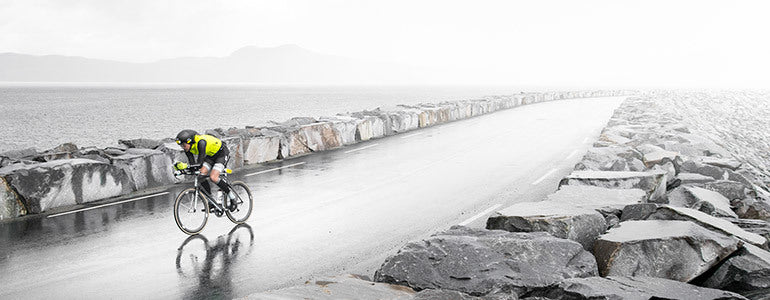

Testing human physiology at the Norseman Xtreme Triathlon
© Kyle Meyr/nxtri.com
Ask Jonny Hisdal about the 226 km Isklar Norseman Xtreme Triathlon and you’ll get the honest truth. He should know afterall – not only has he completed the race course 12 times, as a physiologist he’s also researching what it does to the human body.
“Most of your biomarkers (chemicals, molecules, and hormones present in the blood indicating different forms of illness) are sky high when you reach the finish line,” he says. “If a doctor tested your blood immediately afterwards it would look like you are really sick, or having heart and kidney failure.”
© Kyle Meyr/nxtri.com
The good news is this alarming biomarker profile only lasts a short time. A day after the race the biomarkers are already on the way back down. Whereas, if you were really sick, the biomarkers would remain at the same level.
Hisdal is currently preparing to sample the blood of more than 40 finishers immediately after the end of the race, which starts on August 4. The goal is to understand what the normal blood levels are after such an extreme race. He’s also participated in a study looking at the possibilities and limitations of cold water swimming – the race includes a 3.8 km swim in a fjord with water temperature ranging between 13 and 15.5 °C.
To reach the finish line of the Norseman demands more than endurance fitness. “Yes, it requires really good base fitness, and a high level of endurance,” Hisdal says, “but also a lot of mental strength to compete for so many hours. The average athlete needs about fourteen fifteen hours.”
© Kyle Meyr/nxtri.com
Hisdal is also on the safety team for the race, and recently completed the course along with the rest of the crew, making it his 12th time. He first competed in the race as an athlete in 2005, and did so the following five years. Since then, he has been on the race organising team.
“The swimming is the easiest part, something that everyone should be able to do,” he says. “Average athletes are in the water for one and a half hours – that’s a long time if you are not used to it.”
“After that you jump on the bike and cycle for 180 km, including 3000 m elevation gain. If you are not used to cycling uphill it's impossible to do it. Then you are running 25 km on the flat, and the remaining 20 km uphill for 2000 m of ascent. It's brutal.”
© Kyle Meyr/nxtri.com
Some people, he says, quit before the race has even started. Others pull out 1000 m into the swim, and some on the bike during the climb. But the majority make the finish line, after giving their blood, sweat and tears to the terrain. “The biggest problem is people train too much so they get injured,” he says. “Almost everyone overtrains.”
Click here to see Suunto's range of triathlon watches!
The race has played a central role in popularising triathlon in Norway. Before it began in 2003, triathletes were hard to find in the country, whereas since the inaugural race triathlon clubs have been growing in membership. Only about 20 athletes signed up for the first race in 2003. Now, 4000 people from all over the world apply, vying for only 280 start positions.
“The reason why I do it is because it's an incredible experience, and it keeps me motivated to train and stay in shape,” Hisdal says. “It's not really like a normal competition; it's more like adventure or travelling. It's travelling through breathtaking geography, and also mentally; you travel through really deep lows and up to some really big highs.”
© Kyle Meyr/nxtri.com
Here are Hisdal’s five tips for the Isklar Norseman Xtreme Triathlon:
1. Train uphill
“It's essential to train uphill, both bike and running, because the race includes 5000 m of it.”
2. Get used to cold water
“It’s a necessity to train your swimming in cold water. It should not be the first time when you start the race because it will give you problems.”
3. Train longer sessions
“It’s important to have some long training sessions of at least six or seven hours so you know what you will experience during the race.”
4. Know your fuel
“You need to be able to eat and drink for the race length. What you should eat, when and how much, is something you need to practice well in advance. It's very individual. You need to learn what your body can tolerate.”
5. Race smart with a sports watch
“Learn to control your intensity with a sports watch like the new Suunto 9. The most important thing is not to start too hard. If you are too high in intensity in the first few hours you will suffer for the rest of the race.
“I have used sport watches and a heart rate monitor to make sure I'm not too high in intensity. I have a max heart rate I can tolerate, and if I reach that I slow down a little. It's very easy to be too eager in the beginning, when people are passing you. You are blinded by adrenaline at the start and cannot trust your feelings. You will feel very strong, but suddenly the hammer comes down and you're finished. Sport watches help manage this – just make sure your one has enough battery life.”


How a UTMB winner lives, trains and runs
Francois D’Haene is simply put, one of the best distance runners around. He’s competed in almost every major ultra on the planet, and took home first place in plenty of them – including three wins and a course record on the UTMB, a FKT on the GR20, and lately, a FKT on the ultra-gnarly John Muir Trail in the western United States. His latest run was an incredible achievement – and the story is very well told in the mini-doc below. Have a look – then read on to get Francois D’Haene’s tips for really, really long runs.
Do it for the adventure
For me ultra trail is an adventure and an experience. I want to discover myself, some new mountains, a new place and a new landscape. The competition between the runners is important for me and I play a lot with that during the race but it 's not my priority when choosing a race. When I choose an ultra trail I choose it because of the challenge that it is for me. It must be something really challenging to excite me and motivate me during many months and many training days.
For me this is the main difference between ultra trail and a classic trail race around 50-60k. On the ultra trail if you focus on the competition, and not on yourself and the adventure, it will be difficult to finish the race. On a 60k race I think that the motivation can be more based on the competitive aspect and less on the challenge of the race.
Listen to your body
Try to learn how your body works. Learn what it’s telling you. What are the signs that you are tired, hungry? Know them.
Keep your feet healthy and happy
I have my preferred shoes and I'm really confident in them – I feel really comfortable and protected inside. Then I have some socks. I always use them many times before the race day so I know exactly how they work. And of course, anti-chafing crème!
Eat the same thing, all the time
In training I try to use exactly the same food as in the race. You have to experience it and to prepare your body to use it. For me, that’s Nutrisens energy drink – about 800 ml an hour. And then each hour I eat a small energy bar. It's not a lot of variety, but it works for me and I have to be confident in that before a long race so I'm happy with that. During the race in the aid station, I’ll sometimes drink a hot bouillon or soup.
Always have a goal… or three or four
For me it's important. It cuts down pressure at the start line. You can always say to yourself: “I will try to do my best, but no matter what happens, I have some amazing projects later. So anything is possible today, and I'm happy with all the possibilities.” If you have only one goal... you put a lot of pressure on achieving that one goal.
Go slowly
If you’re new to trail or new to ultra distances, take your time. It's two different worlds. Your body needs to adapt itself. It must take some time. You have to understand how it could possible for your body.
Make it a team sport
When you, as a racer, are lucky enough to have an entertaining assistance crew around you, you really feel like you're running for a team.
And preparing for an ultra takes a long time – a really long time. You have to program it in your social life and you have to find your personal balance with training, your job, your family, your friends. If you plan it well, people around you can – and will – help a lot. So when you run your adventure, you will think about all those moments, all those people behind and around you, and you will have the sensation that you've run it all together.
Know your numbers
I have my personal screen that always has five pieces of data: time/altitude/ascent/distance/duration. During a race, I put the GPX in the map to make sure I can find the way when I’m not feeling confident.
Save your battery
On the John Muir Trail, I put the watch settings on ultra mode: less GPS precision, no automatic lap, no heart rate. I look at the watch every 15 minutes or so to just check the time and see how I’m feeling.
Recover later, enjoy the moment first
Recovery depends on your personal habits. After a race for me it's more important to have a moment with family, friends, and enjoy a party. So I don't take time for massage, relaxing and different things like that...
If you have small children you understand that it's important to take care of them and give some free time to your partner. Because it was hard time for them too during your race!!
Again, go slow
Take the time to plan your race, and be happy with that. With the right balance, everything will be easier. You will train and race with pleasure, good motivation and good health.
All images © Damien Rosso / DROZ Photo
Want to get a little better insight into Francois’s life of running, making wine, and more running? Follow him on Instagram.


