




SUUNTOブログ


ユコラリレーとは?世界最大級のオリエンテーリング大会とフィンランドの森を走るコツ
地図とコンパスを手に、道のない森を走りながら次のポイントを探す——。フィンランドで毎年開催されるユコラリレー(Jukola Relay)は、世界最大級のリレーオリエンテーリング大会です。
速く走るだけでは勝てません。地形を読み、進むルートを選び、現在地と方向を確認し続ける力が求められます。
この記事では、ユコラリレーの特徴と、2018年大会を前に世界選手権スプリント競技優勝者のマーテン・ボストロムが語った「フィンランドの窪地地形を攻略するコツ」を紹介します。オリエンテーリングだけでなく、地図とコンパスを使って森を進むときにも役立つ考え方です。
Photo: Petri Kovalainen / Suunto
目次
ユコラリレーとは?
フィンランド特有の窪地地形
窪地地形を攻略する3つのポイント
コンパスで方向を保つ
オリエンテーリングを始めるには
まとめ
ユコラリレーとは?
ユコラは、フィンランド各地で毎年開催されるオリエンテーリングのリレーイベントです。1949年に第1回大会が開催され、その後は開催地を変えながら歴史を重ねてきました。
Suuntoも、フィンランドのオリエンテーリング選手だったトゥオマス・ヴォフロネンが、より安定したコンパスを開発したことから始まったブランドです。その歩みは「スントはどこの国のブランド?フィンランド生まれの90年の歴史」で紹介しています。
イベントは、7区間をつなぐユコラリレーと、4区間をつなぐヴェンラリレーで構成されています。競技クラブだけでなく、一般のグループもチームを作って参加できます。トップチームが順位を争う一方で、多くの参加者にとっては、仲間とたすきをつなぎ、全員で完走することが大きな目標です。
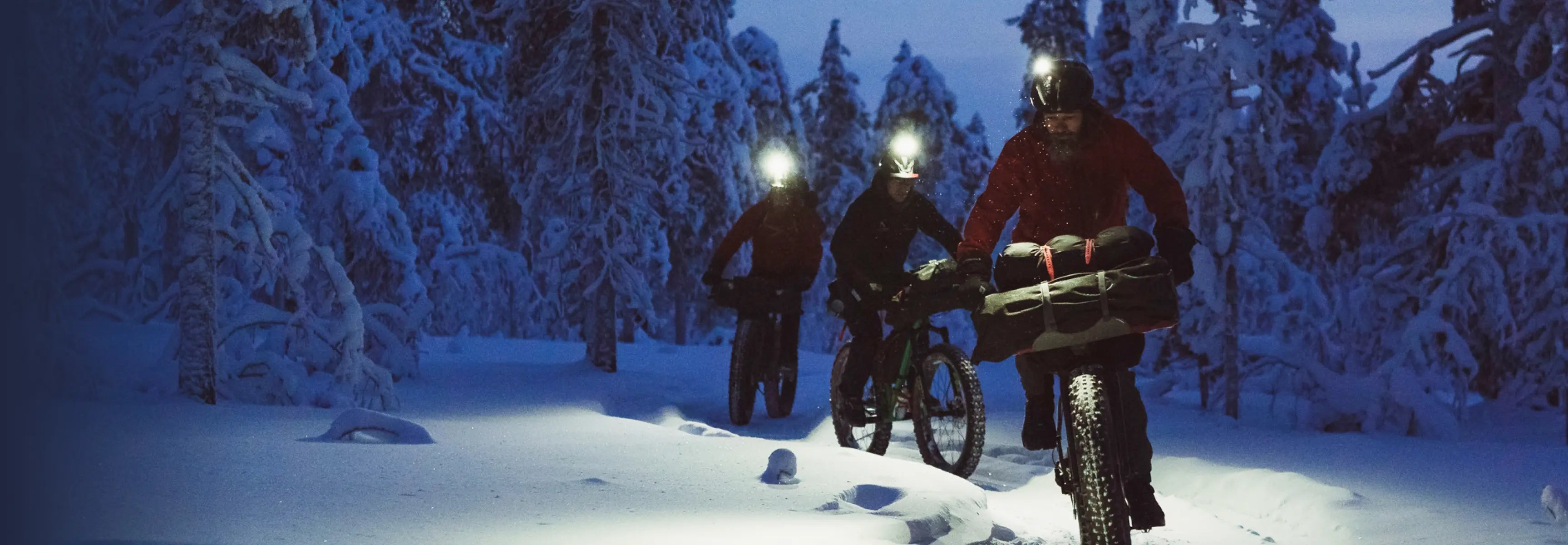
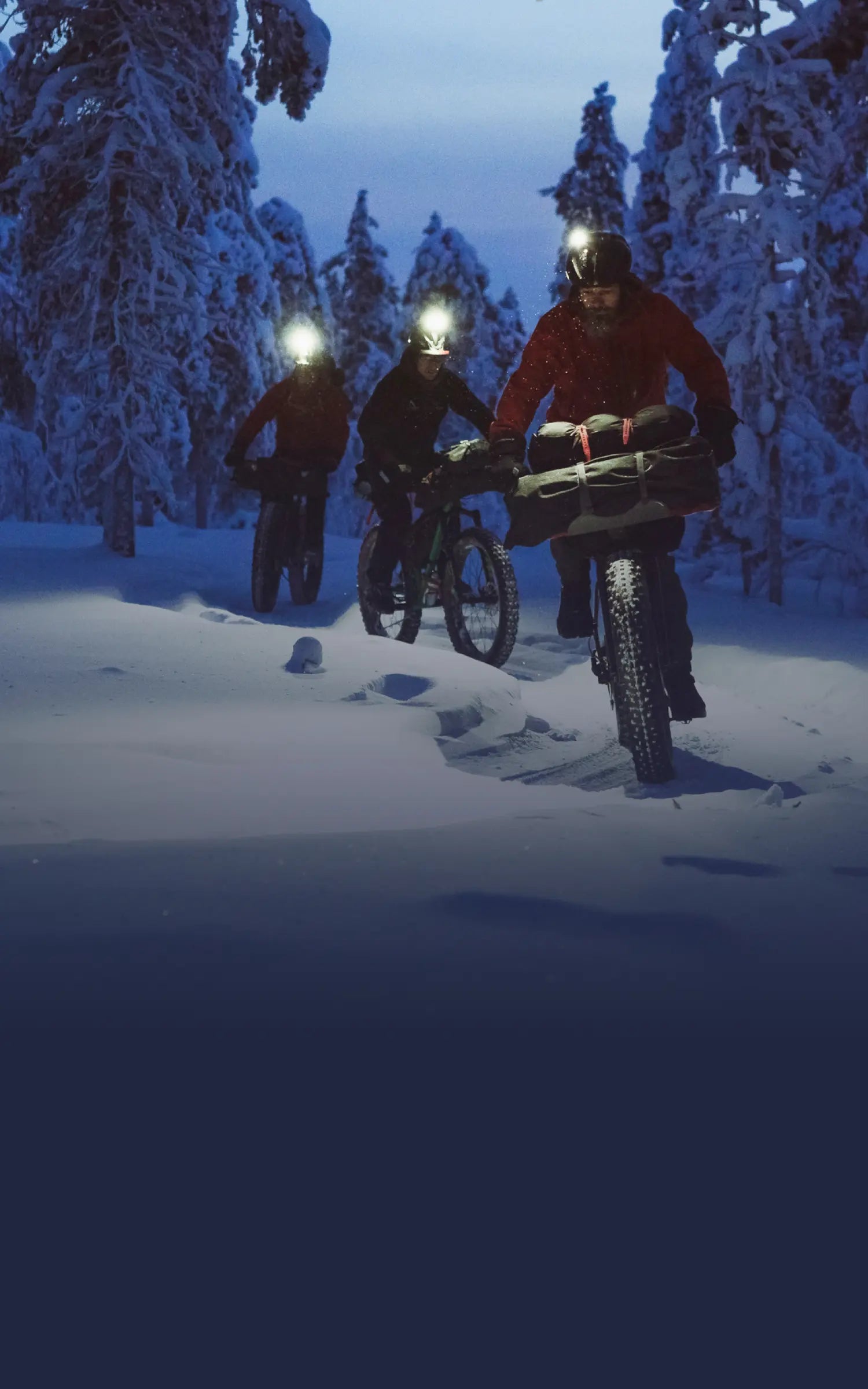
ユコラリレーは夜に一斉スタートし、選手たちはヘッドランプで森を照らしながら走ります。ルートは地面に表示されているわけではありません。選手は競技用地図に記されたコントロールを順番に回り、自分で走るラインを決めます。
速さ、持久力、読図、方向感覚、そしてミスをしたときに現在地を立て直す判断力。そのすべてが試されるのが、ユコラの魅力です。
フィンランド特有の窪地地形
2018年の第70回ユコラリレーと第41回ヴェンラリレーは、フィンランド南部のラハティとホッロラで開催されました。この地域の大きな特徴は、氷河期の作用によって形成された窪地が連続する地形です。
尾根や丘は周囲より高いため、進みながら目印として見つけやすい地形です。一方、窪地は周囲より低い場所にあり、森の中では遠くから輪郭を捉えにくいことがあります。地図上でも、等高線が上りを表しているのか、下りを表しているのかを慎重に判断しなければなりません。
ボストロムは当時のテレインについて、ナビゲーションに使う特徴の多くが、普段の走行面より上ではなく下にある点が難しいと説明しました。
窪地の大きさはさまざまで、深さが数十メートルに達する場所もあります。森自体は比較的走りやすく、小径も多いため、単純に最短距離を選ぶのではなく、地形と走りやすさを組み合わせてルートを判断する必要がありました。
窪地地形を攻略する3つのポイント
Photo: Petri Kovalainen / Suunto
1.すべての窪地を直進しない
地図上の直線距離が短くても、深い窪地を何度も上り下りすれば、時間と体力を失います。窪地の底が開けていて走りやすい場合を除き、必ずしも底を突っ切る必要はありません。
目的地までの距離だけでなく、下降と登り返し、植生、地面の状態、出口の見つけやすさまで考えてルートを比べます。
2.窪地の間にある尾根を利用する
窪地と窪地の間に延びる尾根は、余計な高低差を避けながら進めるルートになることがあります。動物の踏み跡や、先に走った選手のトレースも尾根沿いにできやすいため、走りやすいラインを見つけられる可能性があります。
ただし、ほかの選手の跡が自分と同じコントロールへ向かっているとは限りません。トレースだけを追わず、地図とコンパスで自分の進行方向を確認することが重要です。
3.窪地から出る角度を決めておく
窪地へ下ると、周囲の視界が限られ、現在地を正確に特定しにくくなります。入る前に、どちら側から抜けるのか、出口から次に何を目印にするのかを決めておきましょう。
窪地の中で方向がずれたまま登り返すと、尾根へ出た時点で予定とは違う場所にいることがあります。入る前にコンパスで方向を合わせ、底でもう一度確認し、正しい角度で退出することがポイントです。
コンパスで方向を保つ
輪郭がなだらかな地形では、目立つ岩や急な尾根のような明確な目印が少なく、地形だけで現在地を一点に絞るのが難しくなります。そこで重要になるのが、コンパスをこまめに確認し、進行方向のずれを小さいうちに修正することです。
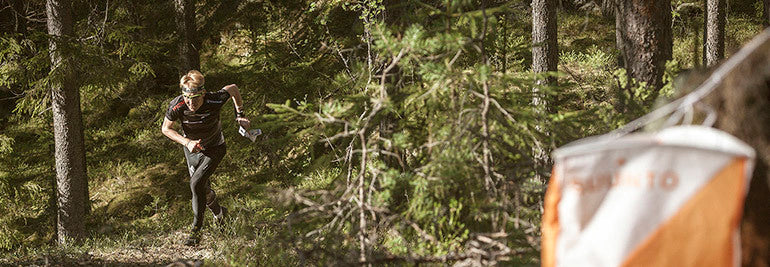
競技オリエンテーリングでは、地図を持った手の親指に装着するサムコンパスがよく使われます。地図とコンパスを同じ視野に入れやすく、走りながらでも方向を素早く確認できるためです。
Suunto AIM-6は、マーテン・ボストロムとの協力によって開発された競技向けサムコンパスです。針の安定性と視認性を重視し、方向を繰り返し確認するオリエンテーリングで使いやすい設計になっています。
ただし、コンパスを持つだけで正確に進めるわけではありません。地図の北とコンパスの針を合わせ、周囲の地形を照合しながら現在地を更新する練習が必要です。
オリエンテーリングを始めるには
オリエンテーリングは、競技経験がなくても始められます。日本各地には常設のパーマネントコースがあり、初心者向け講習会や体験クラスを用意する大会もあります。
初めて森へ入る場合は、いきなり速く走るのではなく、次の基本を一つずつ練習しましょう。
地図の縮尺、記号、等高線を確認する
地図を進行方向に合わせて持つ
道、尾根、沢、植生の境界など、見つけやすい特徴をつなぐ
現在地を見失う前に、短い間隔で地図と周囲を照合する
迷ったら最後に位置を確認できた場所へ安全に戻る
登山やハイキングでコンパスを使う場合は、競技とは目的や手順が異なります。「登山・ハイキングで迷わないための安全対策」も確認し、紙地図、行動計画、天候情報などと組み合わせてください。
まとめ
ユコラリレーは、森を速く走る能力だけでなく、地図から地形を想像し、その場でルートを選ぶ力が問われる大会です。
窪地が連続する地形では、すべてを直進せず、尾根を利用し、窪地から出る角度をコンパスで確認することが重要です。2018年大会に向けたボストロムの助言は、開催地が変わっても、地形を読みながら進む基本として活用できます。
競技用のサムコンパスから、ハイキングや登山に適したベースプレートコンパスまで、用途によって必要な構造や機能は異なります。活動に合ったSuuntoコンパスを選び、使い方を安全な場所で練習してからフィールドへ出かけましょう。
目的に合ったコンパスを見つける
オリエンテーリング、ハイキング、登山に対応するSuuntoコンパスをご覧ください。
Suuntoコンパスを見る

Three reasons to use a thumb compass
The key benefit of a thumb compass over a traditional baseplate compass can be summed to one sentence: It is faster. But what exactly makes an orienteer with a thumb compass go faster?
You can run faster
When using a thumb compass you hold the map and the compass in the same hand. This enables you to keep running while reading the map. “Using both hands for map work turns your running into penguin walk,” says Mårten.
You don't need to place the compass on the map again and again
No more holding your finger on the map to mark your current location and no more need to place the compass back on the map. The compass is already there and pointing to where you want to go.
“A lot of times people are taught to place their thumb on the map where they are. However, I find it more useful to know where I am going and thus want to know what is the next spot where I can get solid confirmation on my location.”
You can take a new direction quicker
There is no need to turn the compass capsule on the AIM-6 thumb compass. Simply see which sector on the compass capsule corresponds with your new direction and go. “I usually memorize the color first and then the shape. But you can create your own system for remembering the correct sector.”
All images: Petri Kovalainen / Suunto
READ MORE
LEARN MORE ABOUT SUUNTO AIM-6 THUMB COMPASS
HOW TO USE SUUNTO AIM-6 THUMB COMPASS
DEVELOPING A NEW ORIENTEERING COMPASS IS A TEAM EFFORT
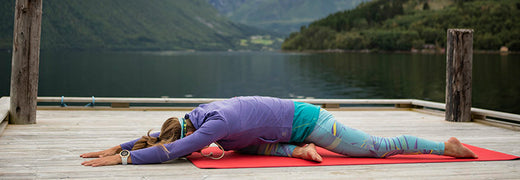

Emelie Forsberg's top 7 yoga poses for runners
There is no better way to start the day than by doing yoga. For champion mountain runner Emelie Forsberg, a regular morning yoga practice keeps her life in a balance.
A lot of people have the impression yoga takes an hour or 90 minutes. Not so – Emelie says a regular yoga practice can be short and sweet. A daily practice of 10 to 15 minutes is better than a once-in-a-while 90-minute class. Regular practice brings the results, she says.
Here are her 7 favorite poses. These can be done in a sequence in less than 20 minutes.
Easy seated: One to three minutes
"It’s nice to sit for a few moments before beginning moving just to feel the breath and the body. Simply cross your legs in front of you, and tune into your belly moving in and out with the breath."
Downward Dog: Five to 20 breaths
"I often come into this position even if I don´t do the sun salutations because it’s great for the hamstrings, calf muscles, and the upper back. It also works as a stretch for tight underarms."
"It’s like creating the shape of the letter “A” with the body. Spread the fingers wide, actively push into the hands, breath in and lift your butt up high. Try to distribute weight down evenly through the arms and legs."
Warrior 2: Five to 10 breaths each side
"This pose is great for developing strength in the legs and finding stability by keeping the hips in a balanced position. Align your feet so the front foot’s heel is in line with the arch of the back foot. Keeps the arms out at shoulder height and gaze out over the front fingers. For a more demanding session I hold it for 10 breaths on each side. Keep the front knee above the ankle, the back leg straight and the torso upright."
Click here to read how yoga helps Emily’s life stay in balance
Triangle pose: Five to 10 breaths each side
"Nice stretch for the hamstrings and side body, and also works on balance."
Tree pose: Five breaths each side
"Here we test our balance, using the small muscles in the ankle and foot. Try also to keep a stable and long upper body, as well as ensuring relaxed shoulder blades while holding your arms above your head."
Boat pose: Five to 10 breaths
"Great for working on core strength. Sit on your butt, with the soles of your feet on the mat and your knees up. Sit upright, keeping your spine long. Then lift your feet off the mat, bringing them to knee height, while pointing the toes. Now, lean back carefully, keeping the spine long, and bring your arms forward so the hands are by the knees."
Pigeon pose: Three to 10 breaths
"Great for the glutes! If you’re feeling tired in the IT band, then this pose can really help. Stay here as long as comfortable and work with the breath to slowly (and carefully!) come lower down for deeper work. Be aware of any uncomfortable or painful compression sensations. It’s better to back off and approach this posture gradually over time."
All images by Matti Bernitz / Suunto
More related stories:
How yoga can make you a better mountain runner
How to bring mindfulness to the trail
Five yoga moves for runners

Finding the flow with yoga and running
Emelie Forsberg began practicing yoga when she was 15. Now, 31, it remains a staple in her life, one that keeps her grounded and calm. It’s so important to her in 2016 she traveled to India and completed a yoga teacher training course.
“When I’m in a good flow, when I’m in my routine, I practice daily,” she says. “I think it has always given me a calmness just to sit down to feel the body – it allows me to tune into how the muscles are feeling, where the tender spots are, what needs attention. It gives me the sensitivity to be able to listen to the body.”
Listening to the body is central to the training philosophy of her and her partner Kilian Jornet. Rather than complex tables and stats, they depend on a sensitive receptiveness to what the body is telling them on any given day. For Emelie, yoga helps this process.
“The whole philosophy of yoga, the mindfulness part, can really make me a better person and in that way it makes me a better athlete,” she says. It helps me focus and to accept the ups and downs.”
She likes to start her morning on her yoga mat so she can tune into whether her body is feeling tired, the level of stiffness, mental sharpness, or whether or not there are the subtle signs telling her an injury is forming. This awareness is essential, she says, to balancing her training and recovery time.
Click here for Emelie's top 7 yoga poses for runners
“When I make the time for yoga I really feel good. I’m in more of a flow. It’s really helped me stay in balance,” she says.
After a big training week or race, Emelie rolls out her yoga mat to begin the process of recovery. She begins with gentle movements that synchronize her breathing with gentle spinal movements, slowly warming the body and releasing some of the unnecessary stiffness.
“After a big race or week it’s nice to move my body in another way,” she says. “The stretching helps for sure, to feel a bit relaxed in the body after hard training. It helps me maintain my upper body flexibility, as I’m quite stiff in the upper body, around the shoulder blades. For some others, it might be hips and glutes.”
In the media and online yoga is often depicted as being the domain of thin, ultra-flexible women who look like elite gymnasts. For many people, especially athletes, this can be a turn-off. Strength, stability and stamina are prized, not the contortionism.
Emelie says this is not what yoga really is and not how she, as an athlete, approaches it. Having a good yoga teacher, who understands physiology and sports science, is important.
“It’s not important for me to be really flexible,” she says. “As athletes we use our muscles in a very different way. I have stiffness I need as a runner, for example a stiff lower back – I don’t want to work on that.
“I won’t do many of the back bending yoga poses because they are not good for running. It’s important to know your body and how yoga can affect your running.”
All images by Matti Bernitz / Suunto
More related stories:
How yoga can make you a better mountain runner
How to bring mindfulness to the trail
Five yoga moves for runners
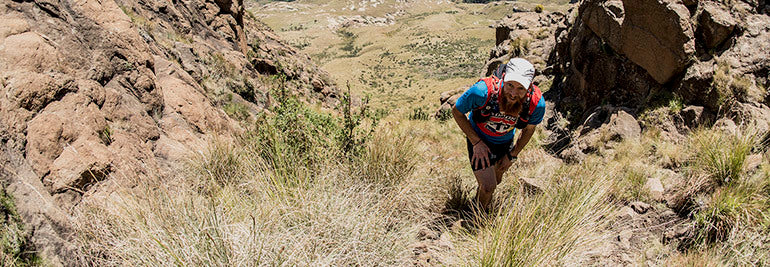

A long talk before a long run: Gary Robbins on his upcoming Barkley Marathons
For the truly competitive athlete, every loss or DNF is a tough one. But there have likely been very few losses tougher than Canadian ultra-runner Gary Robbins’ result 2017 Barkley Marathons. After nearly 60 hours of racing, a missed turn in the last moments took him off the course as he approached the finish. He crossed the finish line from the wrong direction, a few seconds after the 60-hour time limit. It was unequivocally a DNF – and probably the most heartbreaking DNF in the history of DNFs.
It’s the kind of result that has a less willful runner saying ‘never again’. Gary Robbins, of course, is not the kind of runner, and after a quick recovery – he ran the Nolan’s Fourteens just a few months later – he was back on the Barkley horse.
After last year’s dramatic non-finish, Gary hit his saturation point talking about the race – no, really, he even told us so – so we figured we’d better focus on this year’s race. Read on to find out how his training and preparation is going.
Third time training for the Barkley Marathon: What’s different?
Through the first two years, I was definitely on the starting line with the physical and mental capabilities to finish the race. My training has been successful. I don’t believe that there was anything in my training for the first few years that I had to alter.
But I did find that by focusing on this specific race for so long, that had me moving through difficult terrain at 2 miles per hour, I got really efficient at moving 2 miles per hour – so I haven’t done much run training for the last few years. So, when I got back into my training in November my focus was on more run training. I got back into more 100-mile distance weeks, rather than vertical-based weeks for a couple of months in the winter. It helped to increase my fitness level. Last month the focus has shifted to 100% vertical training. Initially 20,000ft of climbing, then 30,000ft, and last week 40,000ft of climbing.
So I did change my training a bit initially to gain some fitness that I felt I was lacking. But the actual training block leading into the last Barkley worked so well that I’m actually looking at replicating that again.
Ready to go from dawn till dusk – and much much longer. (©Ian Corless, iancorless.com)
Last year the race kicked your ass. How do you plan to deal with it on the course?
The race kicked my ass both years.
Last year, getting through the full 60 hours and the full five laps of the course was infinitely harder than even doing four laps. John Kelly even mentioned that there’s such a steep curve of fatigue and difficulty and pain threshold that it’s unfathomable how much more difficult doing the additional lap could be. I came out of that even more physically and mentally beat up. But – I recovered from the ass kicking very well in 2017. Well enough that only a few months later I went to Colorado and finished the Nolan 14’s, which is 14 consecutive 14,000 ft peaks in under 60 hours.
That was the big difference in 2017 – that I recovered well after the race. In 2016 I really struggled for 6 to 8 months afterwards because I had done so much before the 2016 race. For the better part of 10 months, I have been healthy fit, been a runner, and feeling good about things which set me up to be able to withstand that ass-kicking this time.
Any non-traditional training?
Nothing non-traditional. Definitely kept focusing on orienteering and cross-training with strength training, things that I feel that are big components for success at the race. There is a large element of core and upper body strength that comes into play with a race like this – and moving smarter allows you to move a little bit slower because every mistake that you make means you need to move faster to make up for it. So, the better you can be with navigation, the more luxury you can give yourself with time on course.
Do you feel like you’re in better physical shape?
I could be in the best shape that I’ve been in going into any of the Barkley’s. I had a couple of setbacks in training – getting sick, and we lost our dog which we had for 12 years so that set me back emotionally for a little bit. But outside of those setbacks, I feel like this is one of the best training blocks that I’ve had in many, many years. My fitness is reflecting that. If things continue to go well I could show up at the Barkley in the best shape I have been in.
How about mental fitness – how do you train for a rest like this mentally?
Every long-distance race gets to a point where the race is completely impossible if you’re not all in mentally.
For the Barkley it’s true, but it’s true much earlier. It’s impossible to complete even a single lap without it becoming mentally draining. I’ve proven to myself in the first two attempts that I have the mental wherewithal to push through. That gives me a level of comfort, beyond year one fear of the unknown and year two fear of what I did know, I feel like this year three I have a lot less worry at how that’s going to play out. I’m almost looking forward to the mental challenge because it is so unique for this race.
In training I try to replicate that challenge – I don’t train with a partner because you need to become self-sufficient and to learn how to motivate and rally yourself in the low times.
Who else has a strong chance of winning or finishing?
That’s an interesting question because they don’t release a starters list. So you don’t know who is in the race unless that person publicly proclaims that they are. There is a waitlist that they pull from and you do get to see the people that they select from the waitlist. In terms of the first 40 people selected, I only know about 4-5 people who may be doing the race. I know a few people who have had to pull out of the race for one reason or another.
The other thing to keep in mind is that it’s not within the rules to speak about someone else’s Barkley aspirations unless they have made it quite public.
So what I can say is that the race initially had a very high level of runner, and potentially the highest level of female runners they have ever seen with many recognized and hugely accomplished runners. The hope was that we were going to see a female fun runner (3 laps), a female onto the 4th lap or even finish all 5 laps this year. But a few have had to pull out for one reason or another.
There is one name that I can say because everyone knows that he is in the race because he qualified by winning one of race organizer Lance’s other races. That’s French runner Guillaume Calmettes. He is a good friend that I’ve known for many years. He’s a staunch competitor and a wonderful person who I’m looking forward to potentially spending some time with during the race. He’s never been to Frozen Head before (the location of Barkley Marathons) so he is a complete virgin.
Will this be Gary's final Barkley?
Your fans are asking and I’m sure your family as well, if you win is it the last one - or will you keep coming back?
The joke I made when during the “Where Dreams Go To Die” movie tour was that I hope you can tell that I love my wife and I want to stay married to her. So this is one and done.
Truly, I have a lot of other goals that I’d like to pursue that have been taking a back seat to completing the Barkley. Not only has this taken longer than anticipated, it’s taken more out of me. I don’t have a desire to be a multi-time finisher of the Barkley. I want to be a finisher above all else and when that does happen I would be very happy to return to the park, hang out in the campground and mock those who head out on to the course for the weekend.
We know that you use Suunto watches for training but can’t use a gps watch during the race. Anything change in your 2018 gear or kit?
Over the first two years, I’ve run in the Salomon Sense Pro, because that shoe was the best fit for me. I had some issues with traction, but my feet held out because it was the best fit for my foot. I really wanted a more aggressive tread on a shoe for this race. Along came the Sense Ride in Fall 2017, and I put it on my foot and it’s my dream shoe for trail running. It fits perfectly and the lug on it is so nice. So one of the few changes I’m making this year is going with the Sense Ride footwear from Salomon.
The only other change to really report is that through the first two years I only used music in the last lap when I knew I would run alone. But I love music and enjoy listening to music when I’m running, doing difficult things or lacking motivation. Over the last few months, I have been building out my music systems with different MP3 players and Bluetooth headphones. I intend to use music much more readily throughout the race to assist in keeping my mind in a positive state. I haven’t done that before and I’m curious to see the benefits.
Music assists Gary in keeping his mind in a positive state.
Sweet – so what's on your playlist for getting through Barkley 2018?
Old school Beastie Boys is right up there near that top of my list. Certainly some Tragically Hip. There will be some Rage Against the Machine and Audioslave mixed in there. I like a good 90s playlist – when George Michael “Freedom” comes on, for some reason, my step kicks up a notch. Probably some Beck.
‘Where Dreams Go To Die’ has been all over the ultra-running community. How has re-living one of your toughest life challenges been?
The film itself, though, I only watched for the first time two days before the first showing. I didn’t realize how deeply seeded the scaring actually was. I believed before going on tour that I would watch it two or three times and rationalize it and be fine. But that wasn’t the case. I never got the point where I was able to watch it without becoming upset.
In hindsight, looking back at that film tour, that was such an incredibly unique and special experience that I’m so thankful for. It was a huge commitment, tens of thousands of dollars, and we took a real calculated risk in the belief that it would work. And it did. The experience itself was exceptional and I would do it ten times out of ten.
The further we got into the showings, we were more and more sleep deprived, which leaves you more emotionally raw. There were some really rough nights, where I was doing everything in my power not to become upset again for the seventh time. It was unexpected. It provided valuable insight into what my family went through in camp while I was on the course. That more than anything gave me more fuel to know that we are all in as a family. They are so invested in every moment of that race with me. It’s not just me out there. It’s me, my wife and my child that are trying to get this done.
Stay tuned for a follow-up report after Gary’s third (and hopefully final!) Barkley Marathons. In the meantime you can watch Where Dreams Go To Die here.
Main image © Ian Corless, iancorless.com


