




SUUNTOブログ

トレランの登りを速くするには?持久力・筋力・心拍を鍛えるトレーニング方法
トレイルランニングや登山で「登りをもっと速く、楽に進みたい」と思ったら、坂道を全力で登るトレーニングばかり繰り返すのは逆効果になることがあります。登りでは心拍数が上がりやすく、知らないうちに高強度トレーニングへ偏ってしまうからです。
登坂力を高めるために必要なのは、坂道ダッシュだけではありません。
低強度で有酸素持久力の土台を作ること、筋力を高めること、効率よく身体を動かすテクニックを身につけること。
これらをバランスよく組み合わせることで、長い登りでもペースを維持しやすくなります。
この記事では、スポーツ科学者でスキーマウンテニア、トレイルランナーでもあるSusi Kraftのアドバイスをもとに、トレランや登山の登りを速くするためのトレーニング方法と、レベル別の週間プランを紹介します。
目次
なぜ登りを速くするトレーニングは難しい?
1. まずは有酸素持久力の土台を作る
2. 登りを速くしたいなら平地も走る
3. 脚と体幹の筋力を鍛える
4. 疲れる前に登りのフォームを身につける
5. 登りではトレーニング強度を上げすぎない
6. 登坂力は短期間では完成しない
初心者・中級者・上級者向け週間トレーニング例
まとめ|速く登るためには、ゆっくり鍛える時間も必要
なぜ登りを速くするトレーニングは難しい?
坂道を登ると、平地を走っているときより心拍数が急激に上がります。
身体が持久運動に十分慣れていない場合、勾配が急になるだけで運動強度が大きく上がり、乳酸の蓄積も増えていきます。
すると呼吸が苦しくなり、脚も動かしにくくなります。
「登りを速くなりたいなら、毎回きつい坂を全力で登ればいい」と考えたくなりますが、これは注意が必要です。
高強度の坂道トレーニングは短期的には効果を感じやすいものの、そればかり続けると疲労が蓄積し、長期的なパフォーマンス向上を妨げることがあります。
登りを速くするためには、高強度トレーニングを増やす前に、それを支えられる有酸素持久力の土台を作る必要があります。
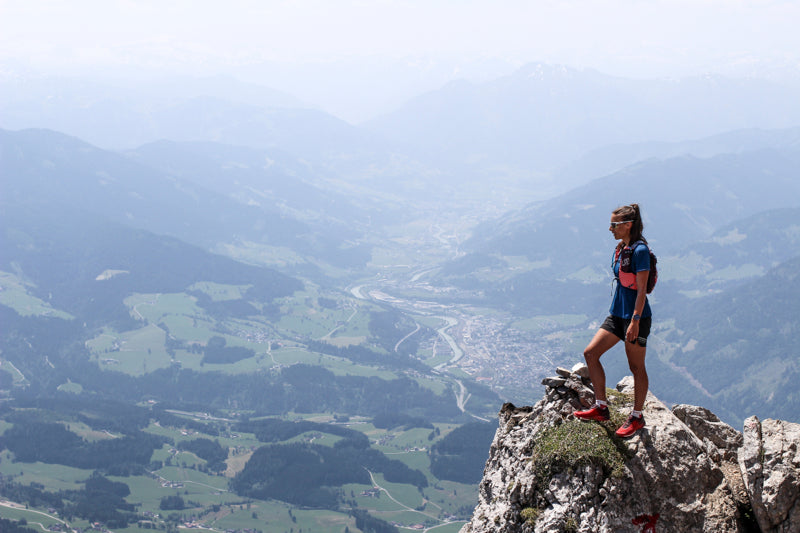
Susi trains in the mountains around Salzburg. © Berghasen
1. まずは有酸素持久力の土台を作る
速く登れるランナーを見ると、「もっと坂道インターバルを増やさなければ」と考えがちです。
しかしSusiが最も重視しているのは、低強度トレーニングによる有酸素持久力の向上です。
長い登りでは、数分だけ強いパワーを出せても十分ではありません。
30分、1時間、あるいはそれ以上、効率よく身体を動かし続ける必要があります。
低強度のランニング、サイクリング、ハイキングなどを継続すると、長時間運動するための基礎を作ることができます。
有酸素ベースが強くなるほど、同じ登りでも身体への負担を抑えながら進めるようになり、高強度トレーニングにも耐えやすくなります。
速く登るための第一歩は、必ずしも速く登ることではありません。
2. 登りを速くしたいなら平地も走る
「登りを速くしたいのに、なぜ平地を走るの?」と思うかもしれません。
しかし平地トレーニングには大きなメリットがあります。
運動強度を低く保ちやすいことです。
急な坂では、ゆっくり走っているつもりでも心拍数が上がり、低強度の範囲を維持するのが難しくなります。
平地ならペースを調整しやすいため、有酸素ベースを鍛えるトレーニングを行いやすくなります。
Susiは、平地と丘陵地を組み合わせることをすすめています。
世界トップレベルの持久系アスリートでも、基礎トレーニングをやめることはありません。
低強度の日と強度を上げる日を組み合わせながら、長期的に身体を作っています。
3. 脚と体幹の筋力を鍛える
登りを速くするには、心肺能力だけでなく筋力も重要です。
急な登りでは、平地よりも一歩ごとに大きな力が必要になります。
特に鍛えたいのは、脚だけではありません。
大腿四頭筋
ハムストリングス
臀筋
ふくらはぎ
体幹
上半身
体幹や上半身が安定すると、脚や腕をより効率よく使えるようになります。
トレイルランでは急勾配になるほど上半身も使いますし、登山やスキーモでポールを使う場合には、腕や背中の力も重要になります。
身体全体を安定させ、一歩ごとのエネルギーロスを減らすことが、長い登りでの効率につながります。
4. 疲れる前に登りのフォームを身につける
登りでは「もっと頑張る」ことだけに意識が向きがちですが、身体の動かし方も重要です。
Susiがすすめるのは、疲れていない状態でテクニックを練習することです。
すでに息が上がり、脚が疲れ切った状態では、フォームを細かく修正する余裕がありません。
まず平地や緩い登りで、効率的な身体の動かし方を確認します。
例えば、
上半身を必要以上に左右へ振らない
急な登りでは無理にストライドを伸ばさない
勾配に合わせて歩きと走りを使い分ける
体幹を安定させる
腕振りを登りの推進力として使う
といったポイントです。
少ないエネルギーで同じスピードを出せるフォームを身につけることが、長い登りでは大きな差になります。
5. 登りではトレーニング強度を上げすぎない
登りトレーニングで特に注意したいのが、予定より強度が高くなりやすいことです。
平地なら楽に走れるペースでも、急な坂に入るだけで心拍数は大きく上昇します。
そのため、低強度の日なのに毎回坂で頑張ってしまうと、「楽な日は少し速すぎ、ハードな日は疲れて十分追い込めない」という状態になりやすくなります。
▶︎ イージーランが速すぎる?ランニングの「トレーニング・ブラックホール」とは
低強度トレーニングでは、心拍数や呼吸の感覚を確認しながら、無理なく継続できる強度を維持しましょう。
心拍ベルトを使用している場合は、心拍ゾーンを確認する方法もあります。
さらにSuunto ZoneSenseを利用すれば、運動中の心拍変動から、その日の身体が有酸素・無酸素・VO2maxのどの強度領域にいるかを確認できます。
ただし、重要なのは特定の機能を使うことではありません。
「今日は低強度の日なのか、高強度の日なのか」というトレーニングの目的を明確にすることです。
6. 登坂力は短期間では完成しない
登りの強さは、数週間の坂道トレーニングだけで完成するものではありません。
Susiは、有酸素ベースを育てるには長い時間が必要だと話しています。
数か月だけでなく、1年、5年、それ以上。
長期間トレーニングを積み重ねることで、身体はより効率的にエネルギーを使えるようになります。
有酸素ベースが強くなると、高強度の坂道トレーニングにも耐えやすくなります。
そして回復も早くなり、次のトレーニングの質も上げやすくなります。
「今すぐ速くなりたい」と高強度を増やすより、長期的にトレーニングを継続できる身体を作ること。
それが結果として、登りを速くする近道になります。
初心者・中級者・上級者向け週間トレーニング例
ここからは、Susiが提案するトレーニングプランを、日本のランナーにも取り入れやすい形に整理して紹介します。
基本的には2週間続けたあと、3週目は休養日を1〜2日増やして負荷を落とします。
同じパターンを数週間続け、身体が慣れてきたらセッション時間を少しずつ伸ばしていきましょう。
初心者向け
曜日
トレーニング
月
休養
火
体幹・モビリティトレーニング
水
低強度ラン 30分
木
休養
金
脚+上半身の筋力トレーニング
土
低強度ラン 30分 またはサイクリング 40分
日
サイクリング90分 またはハイキング・スキーモ2時間を低強度で
初心者では、まず低強度の有酸素運動を継続することを優先します。
坂道トレーニングを急いで増やすより、ランニングやサイクリング、ハイキングを組み合わせて長時間動ける身体を作りましょう。
中級者向け
曜日
トレーニング
月
体幹+全身の筋力トレーニング+柔軟性
火
ファルトレク:低強度1km+高強度1kmを5セット、最後に10分のイージージョグ
水
低強度ラン 45分
木
休養
金
体幹+全身の筋力トレーニング+柔軟性
土
低強度ラン 60分 またはサイクリング2時間
日
サイクリング2時間30分 またはハイキング・スキーモ3時間を低強度で
中級者では、低強度トレーニングを中心にしながら、週1回程度の高強度セッションを加えます。
「高強度の日を増やす」のではなく、低強度と高強度の差をはっきりさせることがポイントです。
上級者向け
曜日
トレーニング
月
体幹+全身の筋力トレーニング+柔軟性
火
ファルトレク:低強度1km+高強度1kmを5セット、最後に10分のイージージョグ
水
低強度ラン 50分
木
休養
金
体幹+全身の筋力トレーニング+柔軟性
土
低強度ラン 80分 またはサイクリング2時間
日
サイクリング2時間30分 またはハイキング・スキーモ3時間+3分高強度×5本
上級者でも、トレーニングの大部分は低強度です。
長時間の有酸素運動に短い高強度区間を組み合わせることで、疲労した状態でも登りの出力を高める能力を鍛えます。
高強度区間の間には十分に強度を落とし、次のセットに備えましょう。
トレーニングプランは自分のレベルに合わせる
上のプランはあくまで一例です。
現在の運動習慣、年齢、トレーニング歴、回復状態によって適切な負荷は異なります。
特に、これまで週2〜3回しか運動していなかった人が、いきなり上級者プランを始めるのはおすすめできません。
トレーニング量は少しずつ増やし、疲労が強いときは休養を優先してください。
まとめ|速く登るためには、ゆっくり鍛える時間も必要
トレランや登山で登りを速くしたいとき、最初に思いつくのは坂道トレーニングかもしれません。
しかし、本当に登坂力を高めるためには、それだけでは不十分です。
低強度トレーニングで有酸素持久力を作る
平地も使って強度をコントロールする
脚・体幹・上半身の筋力を鍛える
疲れていない状態で効率的なフォームを練習する
低強度の日と高強度の日を明確に分ける
短期間の結果を求めず、長期的にトレーニングを続ける
速く登る能力は、坂を全力で登った回数だけで決まりません。
長時間効率よく動ける身体を作り、その土台の上に筋力と高強度トレーニングを積み重ねる。
そのバランスが整ってくると、以前は息を切らして登っていた坂でも、少しずつ余裕を持って進めるようになります。
次の坂道トレーニングで大切なのは、「今日はどこまで追い込めるか」だけではありません。
今日のトレーニングは何を鍛えるためなのか。
その目的を明確にすることが、長期的に登りを速くする第一歩です。
Image © Berghasen
登りのトレーニングをデータで振り返る
登りを速くするには、感覚だけでなく、心拍数、累積標高、運動時間、トレーニング負荷などを継続的に振り返ることも役立ちます。
Suuntoウォッチなら、登山やトレイルランニングのアクティビティを記録し、Suuntoアプリで距離、標高、心拍、トレーニング負荷などを確認できます。
山でのナビゲーションや長時間のアクティビティを重視するならSuunto Vertical 2、日々のトレーニングやレースパフォーマンスを重視するならSuunto Race 2という選び方もできます。
重要なのは、数字を増やすことではなく、「今日は何を鍛えるトレーニングだったのか」をデータと一緒に振り返ることです。
Suunto Vertical 2を見る Suunto Race 2を見る
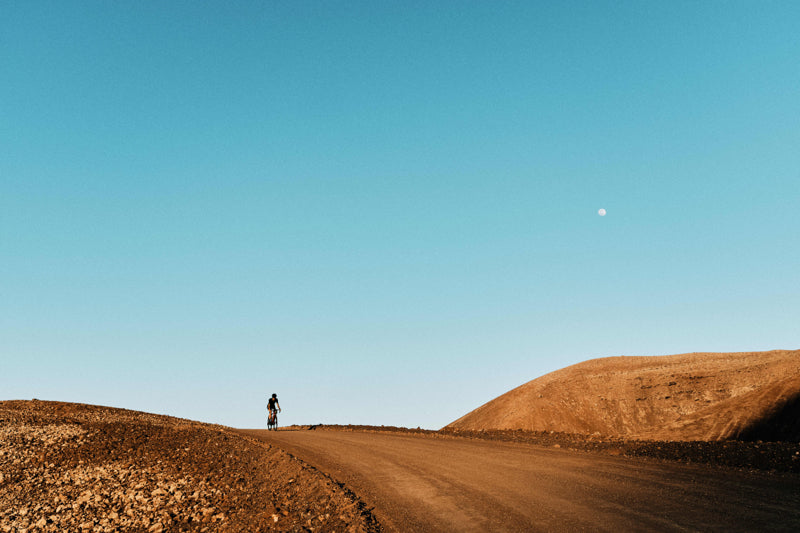

Meet the wild child who found her best self adventure cycling
Spending time on Fuerteventura in the Canary Islands for the last few months has given Sami Sauri the outlet she needs. Staying at a friend’s retreat centre, she’s been out surfing and cycling whenever she can. Life indoors doesn’t come easily to her.
“Normally I escape from thinking and being alone with myself and that’s why I do big trips because at least you’re sitting on a bike and not sitting in your apartment looking at the ceiling,” Sami says. “Stuck at home in Girona during the lockdown my head just exploded. So I took leave from work and escaped to the mountains in summer 2020. That didn’t make much difference so I went back to what I love most, the sea. So I’m travelling back and forward between Girona and Fuerteventura.”
The new Suunto ambassador is at her best on epic adventure rides, like the one she did with a crew of friends in 2018 across the US via Route 66, or, that same year, the 1500 km ride of the Trans Labrador Highway in Canada. The 29-year-old Spainard has adventure cycled all over the place, and has her sights set on riding in Kenya and France next – when life returns to normal.
“The trips I’ve been on have helped me a lot,” Sami says. “You’re sitting on a bike and seeing life go by and you have a lot of time to think about things. Sometimes it’s so monotonous that it’s harder mentally than physically. It taught me a lot about how to be and move forward in life.”
Sami is a self admitted “wild child” who skipped school whenever she could, and left home when she was 17 to lead her own life. She changed styles with the seasons, and landed her first job at a skate and surf shop. Things really changed for the better in 2010 when Sami laid her eyes upon a friend’s fixed gear bike. They were out in Barcelona, her hometown, meeting for a drink and her friend rolled up on the bike. Impressed that it didn’t have brakes, Sami had a try and instantly fell in love. She saved up and bought her own.
“It was the shittest bike ever, but I loved it,” she says. “Every single night after school I’d go out riding to learn how to skid, which is how to brake without brakes. I’d ride through the traffic like crazy. Thanks to that bike I discovered so many places in my city. I would have never seen them without a bike. It really opened my eyes.”
Now on Fuerteventura, waiting for the pandemic to pass, heading out surfing, trail running or cycling whenever she can, Sami tracks all her activities with her Suunto 9. “Suunto has every single sport mode you can imagine,” she says. “Now I take my bike and go to the beach, track my cycling, jump in the water, track my surfing, it’s perfect. For someone like me who combines sports, Suunto is the way to go. I have it with me all the time.”
All images: © Sergio Villalba
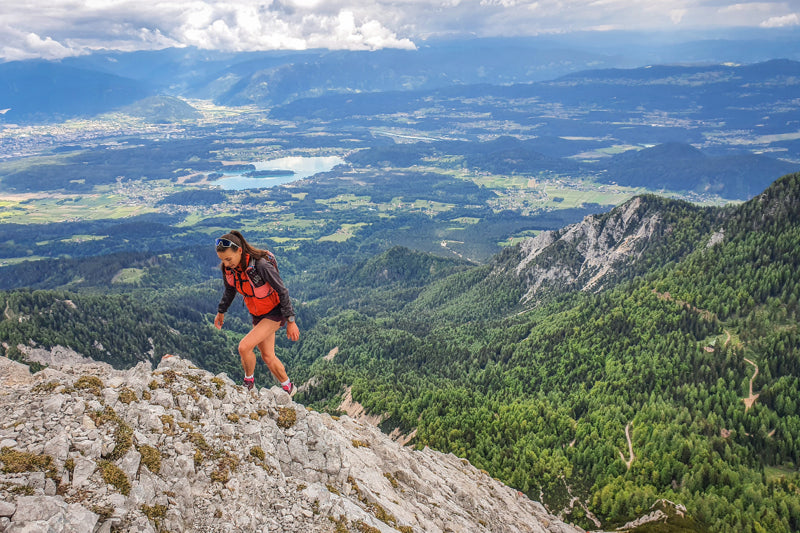

6 keys to planning your training year
The Austrian management guru Peter F. Drucker said it well: “Unless commitment is made, there are only promises and hopes; but no plans.”
Put another way, without a clear plan, there’s no real commitment. It’s the same with training. We need a goal and a plan to reach it. Otherwise, the risk is we keep on doing the same old thing. If we do aim to improve our performance, we must know where we’re going and how to get there.
“A training plan doesn’t have to start directly at the beginning of a year, but it’s a good time for making plans and setting new goals,” says Austrian sport scientist, coach and athlete Susi Kraft.
Susi is one half of the Berghasen, an awesome German-language blog covering everything you need to know about ski touring: training tips, tours, gear and so on. We caught up with the passionate mountain lover and asked what goes into a good training plan. Read on for Susi’s six tips.
Susi works and plays in the stunning mountains around Salzburg. © Berghasen
Take the long view
You might be wondering whether you really need to have a plan for the whole year. The answer is yes if you want to have an optimal training year and achieve your goals. Susi explains why:
“When designing a training plan you normally define one or two personal highlights in the training year,” she says. “At those events your physical performance should be at the highest level.”
Once the highlights are decided you then distribute every single workout/training session across your calendar. Sport scientists like Susi call this process training periodization, which has three phases:
1. Base period2. Pre-competition period3. Competition period
“A smart training periodization is only possible if you have an overview of the whole year and the athlete highlights factored in,” Susi says. “Besides that you also have to factor in your personal life, like family, holidays, work, weddings, kids and so on.”
Select your highlights
Without a goal, it’s easy to lose direction. When thinking about your next goal, use the acronym as a guide, SMART: specific, measurable, achievable, realistic and timely.
Specific: Well defined, clear, and unambiguousMeasurable: With specific criteria that measure your progress toward the accomplishment of the goalAchievable: Attainable and not impossible to achieveRealistic: Within reach, realistic, and relevant to your life purposeTimely: With a clearly defined timeline, including a starting date and a target date. The purpose is to create urgency.
“The training plan itself should always be orientated around a goal you want to achieve,” Susi says. “That goal could be a trail running competition, finishing your first triathlon, climbing Mont Blanc or losing weight. Setting new goals and working with a specific training plan keeps motivation high. That’s what I see when working with my athletes.”
Consider this
“The no pain, no gain approach to training is really outdated, “ Susi says. “30 years ago experts in sports science didn’t always know how to train right. What we know now is that the best endurance athletes don’t train so hard – most of their training is at low intensity.”
Take a moment to think about that before creating a plan to achieve your goal. This is especially important if you have a tendency to push yourself hard. A gentler approach may serve you better.
“A lot of people I see try to get better really fast,” Susi says. “They train really hard, really long distances. You may get better quickly, but in the long term that’s really bad for the body and for the training programme. Some people actually get worse, become overtrained or are prone to injuries.”
Don’t copy and paste
Oh, the internet. We can find countless training plans and make them our own. Thing is, cutting corners like that might not give you the results you wish for.
“If you just copy last year’s or someone else’s training plan it won’t account for possible improvements in your training status,” Susi says. “Your plan should always be built on your current endurance, strength and other skills. That’s why it is so important to do performance diagnostics regularly and before you start working with a new training plan or coach.”
Avoid these classic mistakes
Susi says people tend to fall into two camps. Those that go overboard and do too much high intensity training too soon, and those that like routine and do the same workouts every week.
“Really think about intensity distribution in your plan,” Susi says. “The risk is, that you do the same stuff every week. That mistake may lead to slower progress, monotony or even overtraining because you didn’t consider rest day and rest weeks. Most people tend to train too hard over several weeks or months. Over a whole year this may lead to chronic exhaustion.”
Don’t be that guy.
Follow this planning flow
Set goals / highlights
Analyze your current physical status – endurance, strength, stability, speed, balance – by doing physical performance tests. The outcome is influenced by your training history. Also consider how much experience a person has and determine your training age, meaning how many years of endurance training, strength training you’ve done and how many years of specific training in the sport you want to compete in.
How often and what exactly is your training programme (hours, km, what kind of sports etc.)
Which weaknesses do you have? What are the main factors we need to approve?
How much time do you have to achieve your goal?
Determine the training periodization over the time window you have available.
Carefully and realistically distribute the training intensity across the calendar
Plan single blocks or training sessions
Lead images: © Berghasen

Share your passion with Suunto app
KEEP UP WITH THE SUUNTO COMMUNITY
The app has many ways in which it keeps you and our community engaged, helps you connect with people with similar interests and allows you to create everlasting training memories and to share relevant content with your friends or on social media.
But, first things first:
We value your privacy
It's always up to you to decide how much you want to share. By default, after you have created your account in the app, your activities are private. Nevertheless, you can change that to any of the other two privacy options: show your activities to your followers or make them public for all the Suunto app users. Additionally, you can change that setting for every exercise individually.
In the app's privacy settings, you can also define if you want to approve people before they can start following you. Read more about adjusting privacy settings with iOS and Android.
Then:
Create long-lasting training memories
Edit your activities to make them memorable: write stories, add comments and comment on your friends' training, add photos and even videos taken during your activity. It matters even if you have a private account. This way, you create a visual diary for your activities and experiences.
Share a data overlay image of your training
After adding photos to your activities, you can share (or save) them with data overlays. You can add elements like altitude graph, total distance, the highest point and many more. You can also add a custom title text on top of the image. Share them with your friends, your social media, or save them for later in your files. Tap the "Share" button on your activity. Tap the information you have displayed to change it. Change the photo by choosing another one from your gallery.
You can even share your training week, month, or year
Want to show your friends your training days, duration per sports, distance, ascent and the active kcal? We have the best way for you to do that. On the app's main screen, tap the calendar or sports/h square and then choose what you want to share. You can send it directly to your friends, post it on your social media channels or save the image for later.
Connect with your friends even if they aren't using our app (yet)
You can sync your Suunto app account with our partner services, like Strava, Training Peaks, Relive and Fatmap, and reach your friends there, too. To connect your Suunto app with other services. Enable the automatic sync from under your Profile. Select the Partner services option and find the apps you want to connect your Suunto app to.
Happy training!

Data crunch: sports in 2020
South African ultra runner Ryan Sandes was right on the money when asked about races being cancelled in 2020: “Sure, it’s a little disappointing,” he said. “But at the end of the day it’s just a race. I’ve still got my health, I’ve still got my family. When you look at it more holistically like that it gives you peace of mind and you become a better athlete, a better human, you’re more relaxed. For running ultras you need this, you need to be calm and in a good headspace.”
Whatever your sport, having a positive, calm headspace is optimal. It hasn’t always been easy maintaining that this year. But the reverse is also true; training, pursuing the sports we love, helped to keep us on an even keel. Each reinforces the other.
The data we’ve collected and crunched from 2020 user activity shows staying active, finding ways to train, and even taking the opportunity to rest more, have been key in helping us ride out this crazy year. We’ve found ways to keep ourselves pumped. Let us walk you through the data.
Spain on top
The first wave of COVID-19 hit Spain hard. The lockdowns were strict, sudden and shocking. But that didn’t stop Spaniards from continuing to train and find ways to challenge themselves. Our data shows Suunto’s users in Spain clocked the highest total minutes per user, averaging 5,965 minutes on average.
Spanish Suunto athlete Joaquin Perez also looked out for community initiatives to help his community cope. Back in April he told us: “A good source of inspiration and motivation for the community are the multiple solidarity initiatives that exist, for example in Spain last Saturday there was an initiative to raise funds for COVID-19 research where more than 7,300 athletes ran in their homes and raised almost €83,000,” he says.
Click to read more about how Suunto athletes adapted to life in lockdown.
Go France!
Respect to Suunto users in France for having the highest total ascent numbers! They also had the highest total meters for all workouts combined in both running and cycling.
And, just like in 2019, the French had the highest "adventure running ratio": our French community ran 15 times more on the trails than on the treadmill!
We stayed upbeat
Even with tough times the average mood our users selected after each workout was "very good". This is slightly higher than the year before in spring 2019. By the time autumn arrived in the northern hemisphere it was about the same as 2019.
Check out our article about making your best workout playlist ever, and give your mood a boost on your next workout!
The most active countries were …
Take your hats off to Finland, South Africa, Sweden, Russian and Poland for having the most active Suunto users. It’s interesting South Africa is the only country in the southern hemisphere to make the list. It also went into lockdown early.
These places caught more Zs
Finland, New Zealand, Netherlands, Estonia, Belgium came out on tops for getting the most sleep. Respect to Finland for having the most active users and also the users that got the most sleep. The Finns were also the only ones sleeping more than seven hours a night on average. Impressive!
Learn how sleep can make you a better athlete!
You sport freaks mix it up
In 2020, the average number of different activity types per user was 4,2. This means an average Suunto user enjoys more than four different sports, with running the most popular.
On average, our users tracked 66.5 total workouts of any given type during 2020.
Click for 12 ways to change up your training over winter
Walking booms
When things get tough, conventional wisdom says to take a nice, long walk. Somehow Suunto users must have got the memo because there was a massive 70% increase in that activity among our users. What does this tell us? It could be that because so many of us were doing home office we found more time to take walks. Maybe with family at home, too, we took more walks together. Whatever the reasons, it can only be a good thing.
Read our articles on walking:
How to walk your way to good health
How to improve your walking technique
How to walk mindfully and its benefits
Other increases
Hiking amongst our users also had a big increase, by 37%. Mountain biking increased by nearly 20%. Unsurprisingly, there was a big increase in indoor cycling.
Swimming drops off
With pools closed, swimming dropped off with our users. Even with vaccinations available, this trend will probably continue into 2021. Our solution? We recommend you triathletes and swimmers pivot to open and cold water swimming. Read our articles on how to do them safely.
10 reasons to enjoy open water swimming with Suunto
What you need to know about cold water swimming
Diving booms!
Put your fins together for the divers! Landlocked lockdowns didn’t stop our community of explorers from venturing underwater with an average of 15.5 m depth for divers and 6 m for freedivers.
In a year of backyard adventures when divers explored what treasures their local sites have to offer, August was the busiest month on record.
Lead image: © Philipp Reiter
Read more articles
10 must-read Suunto articles from 2020
7 tips for running in the rain
14 tips for backcountry skiing this winter

Sustain your Ability
Suunto athlete Lucy Bartholomew has published a book of her favourite recipes. Called Sustain your Ability, available in print and as an ebook, the plant based cookbook is loaded with delicious meals and treats designed to keep active people fuelled and thriving.
“These are all recipes I’ve used to pursue my athletic pursuits from the age of 15 when I started, says Lucy, now 24. “I made the book for people who are trying to sustain an active lifestyle. I was going to call it ‘sustain’ which means to nourish, to thrive, to continue to live, and ‘sustainability’ is the ability to do that for yourself. So it’s for people who want to live a consistently sustainable life. This isn’t a book with some sort of dietary fad – like ‘follow this diet for one month and you'll reach peak fitness’ – it’s for those who are passionately dedicated to being active in the outdoors.”
Now available for download, the book was three years in the making. A self described foodie, Lucy initially posted her favourite recipes on her blog and shared them via social media. Then the COVID-19 pandemic hit and the Melbourne based runner suddenly found herself in lockdown, and prohibited from travelling more than five kilometers from her home.
“I was thinking I’ve got to have a goal during this time otherwise I will lose motivation,” Lucy says. “COVID gave me time at home with a kitchen, it gave me time because I wasn’t training as much which also gave me a lot of energy. It was a nice distraction. It kept my dad and I very full.”
While all the recipes are plant based or vegan, Lucy says they are easily adaptable for people who eat dairy products or meat. “The recipes have been inspired by my travels,” she says. “After Western States in 2018 I went to Mexico where I learned about the culture and the way they make things. Then I went to Nepal and that’s where the dal recipes came from. The meals these places produce are made with ingredients that aren’t super rare or expensive, they normally consist of rice and beans.
“They are all meals I enjoy before, during and after runs,” Lucy continues. “It really shows how after nine years in the sport and the fact I still love it is because I’m able to be sustainable in the way I approach it, just like the way I eat.”
Read more articles
9 bits of positivity from a crazy year
10 must-read Suunto articles from 2020
7 tips for running in the rain


