




SUUNTOブログ


XTERRAとは?世界選手権に挑むSuuntoアスリートのレース戦略
海を泳ぎ、マウンテンバイクで急坂を登り、最後はトレイルを走る——XTERRA(エクステラ)は、自然の地形を舞台に行われるオフロード・トライアスロンです。舗装路中心のトライアスロンとは異なり、路面や天候の変化に対応する技術と判断力が問われます。
2018年、カナダ出身のSuuntoアスリートでプロXTERRA選手のカーステン・マドセンは、ハワイ・マウイ島で開催される世界選手権への3度目の挑戦を前にしていました。過去2回はいずれもDNF(途中棄権)。それでも彼は、失敗を分析し、登坂力、補給、テーパリングを見直して再びスタートラインへ向かいます。本記事では、当時のインタビューをもとに、XTERRAの特徴とマドセンのレース戦略を紹介します。
目次
XTERRAとは?
2度のDNFから世界選手権へ再挑戦
急登に備えるパワーウェイトレシオ
オフロード・トライアスロンの補給戦略
レース前は「やりすぎない」
体調不良から立て直す力
まとめ:変化に対応する準備がレースを支える
XTERRAとは?
XTERRAは、スイム、マウンテンバイク(MTB)、トレイルランニングを連続して行うオフロード・トライアスロンです。湖や海でのスイムに続き、舗装されていないコースをMTBで走り、最後に自然の起伏を生かしたトレイルを走ります。
比較項目
XTERRA
舗装路中心のトライアスロン
バイク
MTBで未舗装路や急登・急下降を走る
ロードバイクで舗装路を走る
ラン
起伏や路面変化のあるトレイル
舗装路が中心
求められる力
持久力に加え、バイク操作、登坂力、路面判断
一定ペースを維持する持久力と空力効率
レース展開
天候や路面状況による変化が大きい
比較的ペースを計画しやすい
なかでもマウイ島で行われた当時のXTERRA世界選手権は、波のあるスイム、暑さのなかでの急なバイクコース、さらに起伏のあるランが続く過酷な舞台でした。2018年当時、マドセンは「一回のストローク、一回のペダリング、一歩一歩を自分で勝ち取るようなレース」と表現しています。
2度のDNFから世界選手権へ再挑戦
マドセンはロード・トライアスロンとクロスカントリーMTBを経験した後、オフロード・トライアスロンへ転向しました。2014年にプロとなり、2018年のインタビュー時点ではXTERRAの主要大会で4勝、カナダ国内選手権で3勝。2016年と2018年にはパンアメリカンツアーの総合3位に入っています。
しかし、マウイ島での世界選手権は別格でした。2016年と2017年に出場したものの、結果はいずれもDNF。原因は同じではなかったからこそ、彼は単に練習量を増やすのではなく、コースの要求に合うよう準備を変えました。再挑戦で重要だったのは、過去の結果を失敗のまま終わらせず、「次に変えるべき要素」へ分解することでした。
急登に備えるパワーウェイトレシオ
マウイ島のバイクコースに備え、マドセンが重視したのがパワーウェイトレシオです。これは、体重1kgあたりにどれだけのパワーを出せるかを示す考え方。急な登りでは、絶対的な出力だけでなく、自分の体重をどれだけ効率よく上へ運べるかが影響します。
彼は体重を落としながらバイクの出力を高め、さらに急登を想定したトレーニングに取り組みました。ポイントは、ただ軽くなることではありません。健康や回復を損なわず、必要な出力を維持・向上させることです。体重調整を行う場合は短期間で無理に減らさず、競技特性と体調を踏まえて専門家の助言を受けることも大切です。
オフロード・トライアスロンの補給戦略
2018年当時、マドセンはバイク用ボトルとジェルを組み合わせ、エイドステーションの手前でジェルを摂って水で流し込む計画を立てていました。同程度の時間のロード・トライアスロンより、XTERRAではジェルをひとつ多く用意するのが彼の基本だったといいます。
ただし、補給計画を最も左右するのは天候でした。暑さが厳しければ、発汗量や水分・電解質の必要量も変わります。原文のカロリー数や個数はマドセン個人の例であり、そのまま誰にでも当てはまる基準ではありません。レース本番で初めて試すのではなく、長時間の練習で飲みやすさ、胃腸との相性、携帯方法まで確認しておく必要があります。
レース前は「やりすぎない」
レースに向けて練習量を落とし、疲労を抜く期間をテーパリングと呼びます。マドセンは本番の約12日前から「少ないほうがよい」という側に立ち、トレーニングをするたびに「これはレースの助けになるのか、それとも妨げになるのか」と自分に問いかけていました。
世界選手権へ出場する一般選手にも、レース直前にフルコースを試走しないよう助言しています。会場入りが遅くなった場合、焦ってすべてを確認しようとすれば、積み重ねてきた練習の成果を疲労で失いかねません。レース週は水分補給、普段どおりの食事、ストレスを抑えること、休息を優先する——シンプルですが、長距離移動を伴う大会ほど重要な考え方です。
レース前の判断基準:不安を消すための練習ではなく、本番で力を出すための行動になっているかを考えましょう。
体調不良から立て直す力
このシーズン、マドセンにとって最大の後退は、ITUクロス・トライアスロン世界選手権後の細菌感染症でした。好調に仕上げたにもかかわらず、7月のほぼ1か月間、思うように動けない状態が続いたと振り返っています。
それでも、「健康に戻れば、自分の力を証明する機会はまだある」と考えました。前向きな視点に加え、両親や家族の支えが難しい時期を乗り越える助けになったといいます。計画どおりに進まないとき、焦って失った練習を取り戻すのではなく、まず回復し、次の機会へ目標を組み直すことも競技力の一部です。
マドセンは2018年を、それまでで最も多くレースに出場し、最も遠くまで旅したシーズンと表現しました。そのなかで掲げた目標は、「強度を持ってレースをすること」と「レースの喜びを見つけること」。順位だけではなく、自分がコントロールできる行動へ意識を戻すことが、安定したシーズンにつながりました。
まとめ:変化に対応する準備がレースを支える
XTERRAは、スイム、MTB、トレイルランニングの能力を単純に足し合わせるだけでは攻略できません。急登に合った出力、天候に応じた補給、レース直前に休む判断、そして予期せぬ体調不良から計画を立て直す力が必要です。マドセンの再挑戦が示すのは、過去の失敗を隠すのではなく、次の準備を具体化する材料として使う姿勢でした。
当時マドセンが使用していたのはSuunto 9です。現在は、スイム、サイクリング、ランニングなど複数種目の記録とトレーニング負荷の振り返りに対応するSuuntoのスポーツウォッチが、レースまでの積み重ねを一つの流れとして確認する助けになります。機能や対応するデータ項目はモデルやソフトウェアのバージョンによって異なるため、使用前に各製品ページやユーザーガイドをご確認ください。
マルチスポーツの挑戦を記録する
トライアスロンからトレイルランニングまで、目的に合ったSuuntoウォッチを見つけましょう。
Suuntoのスポーツウォッチを見る

Unfinished business at Kona
Australian triathlete Melissa Hauschildt exudes a quiet, determined confidence. Staying true to the “Aussie battler” mentality – an Australian colloquialism referring to ordinary people who tough out adversity to see through their commitments – she has persevered a series of mishaps and setbacks that have dashed her hopes at the Ironman World Championship at Kona, Hawaii over the last couple of years.
In 2017, Hauschildt underwent an operation – turned horror show – on one of her iliac arteries. The surgeon accidentally snipped a major artery and blood spurted everywhere. She lost a lot of blood, and had post-surgery complications that weakened her and caused her to struggle at that year’s Kona. In 2016 she had an injury that needed surgery. She had a broken rib in 2015, and a torn pectoral in 2014.
“The biggest race for Ironman is Kona and that’s the one I haven’t ticked off yet,” she says.
Endofibrosis struck again and forced Mel to pull out of Kona.
She hoped this year at Kona would be different. After that dramatic surgery only one year ago, recovery, and a plenty of patience, she has been having one of the best years of her triathlon career, setting the world record (8:31:04) at the Ironman North American Championships, Texas in April. Just as she thought she would be able to give her absolute best at Kona this year, the same physical condition as last year – endofibrosis – struck again.
“Two months ago I raced in the Ironman 70.3 Philippines in Cebu and my right leg shut down on the bike and I was forced to walk/jog/drag my leg across the line for third place,” Hauschildt says. “I got home and tried to get back into training but my leg would not cooperate. I had many tests done at home in Noosa and was told it was not endofibrosis so I continued on as best I could. But it got to the point that I could not even kick in the pool without my leg shutting down. I went back to my surgeon in Melbourne and unfortunately it is iliac artery endofibrosis and I need surgery.”
Disappointed as Hauschildt is, there is only one response befitting an athlete of her stature: keep training anyway possible. She has been swimming with a pull buoy, doing lots of strength work. Her plan is to come back stronger and faster than ever.
“The surgeon said it is most common for endofibrosis to come in both legs and that it comes on over years so this means I have been racing with restricted blood flow to this leg for quite a while now,” Hauschildt says. “If I can break a world record with only one healthy leg I can’t wait to see what I can do with two. I will be unstoppable!”
Mel set the Ironman world record (8:31:04) at the Ironman North American Championships in Texas in April.
Hauschildt has been ticking off all the other biggest triathlons in the world. She won the Ironman 70.3 European Championship in June, the Ironman 70.3 North American Championship in April, and the Ironman 70.3 Asia Pacific Championship in 2017, along with a string of other victories at less significant races. Kona, and the Ironman South American and African Championships remain in her sights.
Her operation is in October, and the whole Suunto team wishes her well and a speedy recovery.
READ MORE ABOUT MELISSA HAUSCHILDT:
Meet Mel Hauschildt: one of the world’s best triathletes
Elite runner to pro triathlete: how to make the transition

Out of the freezer into the pan: ultracycling man battles a heatwave
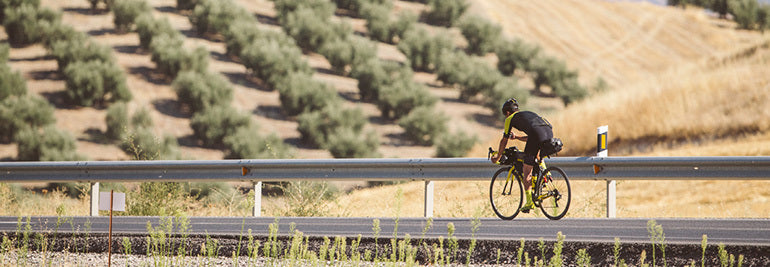
Ultra cyclist Omar Di Felice is back in Italy taking a well-earned break before he begins preparations for his annual journey into the icy reaches of the winter Arctic. He is conditioned to the cold, which is why the Transiberica Bike Race in Portugal and Spain gave him a run for his money.
What were the highlights of the race?
Riding for so long unsupported in this bike race without a mandatory route was a new challenge for me. I didn’t know Spain and Portugal, which is why I had to stay attentive to the way ahead instead of focusing on “eat, sleep and drink” as is usual in normal ultracycling races.
What were the toughest moments?
I really love winter and Arctic conditions: unfortunately in Spain I found completely opposite weather conditions! The toughest thing was to ride in such hot conditions (temperature from 30 to 41°C!). The toughest moment, for sure, was when I had to stop after intense heat and an allergic attack while passing through Andalucia region. When I was back on my bike I understood if I could push through that difficult moment I would be able to end the race.
Where were the nicest roads to ride?
The last 300 km was the nicest! Both because the end got closer and closer, and because the Asturias region was one of the best, with easy climbs, green hills and the perfect temperature to ride.
How many kilometers have you already ridden this year?
This year has had plenty of cycling! From my Arctic adventures in Iceland and Canada, to this last extreme challenge competing in ultracycling races all over Europe, I have clocked up 30,000 kilometers and 450.000 m of ascent. I have earned a deserved rest period before the start of my favorite season: the winter.
READ MORE ABOUT OMAR DI FELICE
During a 3,380km ride you don’t know what will hurt the most
Meet the Italian guy who cycles insane distances
What you really need to know about winter cycling adventures


Fuelling the engine: talking nutrition with Lucy Bartholomew
"I really try to use the time and an accessibility I have to create food that will bring out the best in me,” Lucy says.
Being an athlete is all about discipline and consistency. We usually think of these in terms of training – getting out the door, whether we feel like it or not, day after day, week after week.
How we eat is often religated to a secondary factor; nice, but not as valuable as the training part. Napolean Bonaparte's famous statement, "an army marches on its stomach", suggests otherwise – food is what carries us forward. And the more nutritious it is, the better we will perform.
In this series of posts we explore how Suunto ambassadors and athletes keep their tanks fuelled. First up, Australian ultra runner Lucy Bartholomew shares her passion for a plant-based diet.
Running on a plant-based diet
© Lucy Bartholomew
Lucy Bartholomew, 22, recently completed the 100-mile Western States Endurance Run, and she did it on a vegan diet. This means she gets to eat lots of fruit and vege, her favorite thing next to being on the trail.
“As an athlete I think that you are what you eat and the fuel you put into your engine is the performance you will receive so I really try to use the time and an accessibility I have to create food that will bring out the best in me,” Bartholomew says. “I love the way that different food and recipes work for different people, how you can share this form of culinary artwork and always give a unique twist with your own personality.”
Go to, easy meals
The green smoothie, or “Shrek poo”, is one of Bartholomew's staple meals. Photo by Kimber Pine on Unplash.
“My favorite thing to create for myself and others is a Buddha bowl. You have probably never heard of it and that's the best thing about; it isn't anything specific it's just a bowl filled with goodness and plants. I usually enjoy some baked sweet potato in there, a bean of some sort, a nut-based salad dressing and an abundance of raw and cooked vegetables.
“My morning go-to is a smoothie bowl that is a thick smoothie made with frozen bananas and is usually green because I add spinach and other vegetables to keep my body loaded with nutrients. I usually top this with more fruit, nuts and seeds.”
Having the essentials on hand
“I have learned about the importance of being organized and making time to prepare food,” Bartholomew says. “I always carry with me my ‘essentials’ that I can easily survive off on the go. These things include rolled oats, greens powder, nut butter and nutritional yeast. Along with these, I pick up and whatever fruit and vegetables I can get my hands on and then I'm a very happy little camper.”
Direct from the earth
“I really believe that 'you are what you eat' and the more you can eat directly from the earth, and without the packaging, the better the food will make you thrive.”
Lucy's Buddha bowl
One of Bartholomew's Buddha bowls. © Lucy Bartholomew
IngredientsSweet potato, chopped in chunksRed cabbage, roughly choppedCarrot, gratedBeetroot gratedChickpeas, drained and rinsedCooked rice/quinoaBroccoli, any veg!TurmericCayenne pepperSalt and pepperHummusTahini, miso, turmeric dressingYou could also add some boiled eggs, meat, tofu, fish
Method
Bake the sweet potato in the oven at 180° C for 30 minutes. I like to bake my potato without oil, but if you like it a bit moister then add some oil.
Place drained chickpeas onto a baking tray and sprinkle with some turmeric, cayenne pepper, salt or any spice you choose. Roll them around to pick up all the spice and flavors and also place in the oven with the sweet potato for 20 minutes or until crispy.
Steam any vegetables or prepare other veggies you have decided to use.
Place cabbage, beetroot, carrot and cooked grains, additional veg into a serving bowl. Add sweet potato and chickpeas when ready. Top with hummus, tahini dressing or your own versions! And enjoy!
Lead image: Photo by Dan Gold on Unsplash.

6 reality checks for XTERRA warriors from a champion
With the XTERRA World Championships rapidly approaching in just over a month many athletes are hoping to have their best race. They are looking at their training and performances to this point and deciding what it all will mean when they toe the line. Part of what makes XTERRA racing so exciting is that there are so many variables on race day.
This also makes it challenging to set goals and to compare performances from one year to the next.
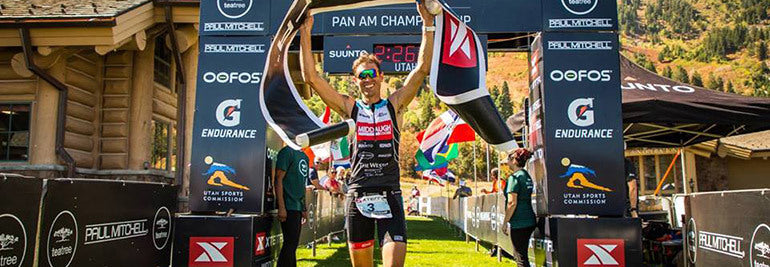
Josiah Middaugh is a champion and a certified trainer. (Image by XTERRA)
Races are not competed on paper
We often talk about training metrics and how to use them to guide your training. They can help define training targets, gauge progress, and give you confidence heading into races. However, races are not competed on paper. This is especially true in XTERRA where technical skills and grit can play major roles in the outcome. There is no resume submission and it doesn’t matter what your functional threshold power is if you don’t deliver on race day.
Nothing more, nothing less
One thing that separates many top performers from the rest is both the ability to put in the quality work and the discipline to hold back on easier or shorter days. Time and time again the athletes I coach who make the most progress are those that follow the workouts to the “T.”
This doesn’t mean blindly following the workouts, but also logging the training, giving feedback, and being engaged in the process. Key workouts are challenging and one way to tell if someone is overreaching is whether or not the workouts can be completed at the proper intensity. If you are always carrying around a hefty load of cumulative fatigue and the thought of a structured threshold makes you feel ill, then you might be overreaching with too much unnecessary volume or going to hard on your easy days.
The whole is greater than the sum of the parts
XTERRA is about more than simply swimming, biking, and running. It is not made up of stand-alone events, rather a series of consecutive tests of your speed, power, skill and endurance. Fatigue is cumulative and so is the brain strain. Staying in the moment and focused on the task at hand becomes increasingly difficult as the race progresses. It might help to compartmentalize each section of the race, but know that each leg of the race is not entirely independent.
We are what we repeatedly do
Key sessions around race intensity train the body and the mind. Do you consistently finish the hardest workouts on your schedule each week or do you cut them short when they get “hard”? Do you start out too hard in all of your interval sessions and end up cutting power by the end? Despite all of the angst leading up to a race, know that once the gun goes off, the body will respond in the way it has been taught through repetition. Don’t expect a race to feel easy, expect it to be your biggest physical and mental challenge. If you feel like you don’t have legs at the start of the bike, don’t throw in the towel. Dig deeper, narrow your focus, rise to the occasion and stay present. Draw strength from the sessions you have completed in training even when conditions were not ideal.
Racing is about the intangibles
As a coach, I really like using field tests and lab tests for many reasons, but racing ability moves beyond the objective data. The ability to rise to perform on race day is hard to predict. I bet if you took field test data from top 5 performers overall and the same goes for the podium in each age group, you still would have a hard time predicting finish order. Many triathletes find initial success by out-training others.
However, don’t leave your best performances in training, at the local track workout, or on a Strava segment. The goal is not to out-exercise your competition, but to perform when it counts. Be honest with yourself and don’t pad the training log with junk miles that are only serving up fatigue but not contributing to overall fitness, especially as your key competition nears. Out of insecurity, the tendency is to test yourself one final time before race day with what I term a self-sabotage workout. No pre-packaged excuses like “I’m training through this race” or “I put in 20 hours this week.” Fuel off others thrive on competition.
The evolution of a champion goes something like this:
● Train to train● Train to compete● Compete to win
Race to YOUR potential
A race decides who is the best on that one day. I used to think that I needed an extraordinary performance to reach my race goal, or I needed to go beyond my potential. If your expectations reside somewhere in reality, then you are actually just looking for a performance that you are already capable of. You want to get the most out of yourself on this one day. Nothing more, nothing less.
Josiah Middaugh is the reigning and two-time XTERRA Pan America Tour Champion, a 12x XTERRA US National Champ, and the 2015 XTERRA World Champion. He has a masters degree in kinesiology and has been a certified personal trainer for 18 years (NSCA-CSCS).This blog post was originally published on Middaugh Coaching Corner at xterraplanet.com.


