




SUUNTOブログ

Ryan Sandes: How to recover like a pro from an ultra race
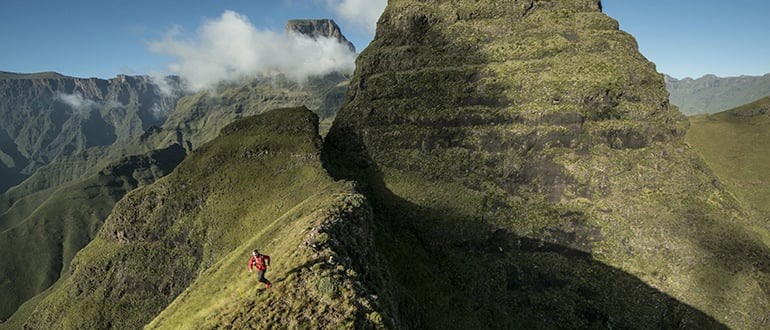
In this final installment of our three part series on running ultra mararthons, Suunto ambassador and champion ultra runner Ryan Sandes shares his tips for recovery.
Many ultra runners have got a personality-type that drives them to go from one race to the next, from one training cycle to another, but after two years they get completely burned out. Even if you feel on top of the world after finishing a big race, and want to get straight back into training, your body and legs need plenty of time to recover. Follow these post-race tips to ensure you have a full recovery.
Click here and here to read Ryan's other tips for going the ultra distance
Recovery tips for the day after the race
Drink plenty of water throughout the day and add some electrolytes to it. Eat lots of healthy whole foods – rich in protein and good fats – to help your body recover.
Go for any easy run to get your legs moving and to flush out the lactic acid.
Relax in a sauna or have a hot bath, as the heat will loosen up your tight muscles.
Most importantly, allow yourself to mentally switch off and celebrate your achievement. Have a few drinks and let it all go as this is important for recovery.
©Craig Kolesky/Red Bull Content Pool
Click here to find out about the features in Suunto's Ambit3 to help you recover
Recovery three days to a week after the race
I would suggest doing no running for the week after the race because your mind and body will need a break. If you start to feel edgy, go for a hike or cross train, but don't run.
Keep eating healthy as your body is still in recovery mode.
Get a massage or two and spend more time in the sauna or hot tub.
Do some mobility and stretching work.
Recovery a fortnight to a month after the race
After a week of no running, the second week you can start running again, but take it very easy. I would suggest not doing any hard sessions for at least three to four weeks after your race.
I find doing some barefoot running with a few drills and some plyometric exercises for 20 to 30 minutes on a grass field really helps my legs bounce back.
Pool running is a really gentle activity to aid recovery and help your body get moving again.
For three days to a week after the race you can eat as much as you want, but after that don't overeat as you don't want to put on unnecessary weight.
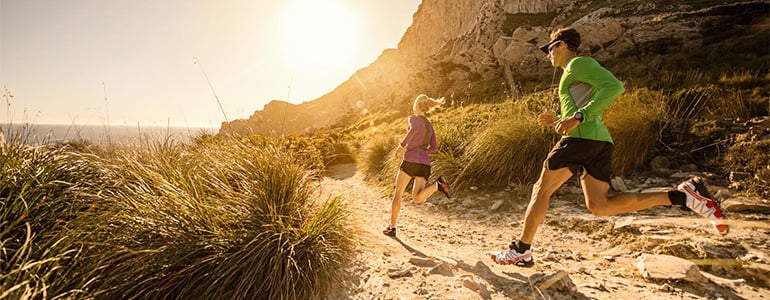

Become a better runner now!
If you would like to improve your running performance, now's the time. Suunto's current How do I run? contest offers you the chance to have your running form analyzed by professional coaches – for free! Whoever shares a clip of themselves running on Instagram and receives an analysis from the coaches goes in a draw to win one of six Suunto Ambit3 Run watches.
So far Carmichael Training Systems coaches Jason Koop and Nick White have analyzed five clips runners have shared on Instagram for the contest. Koop, as he's known in the running world, and Nick offered each runner useful feedback to help him or her make positive changes to their running technique. Watch each of the five clips below and read the feedback given.
Get involved with the How do I run? contest here
To help runners improve their performance, Suunto has also released new features to its Ambit3 watches. The new features were developed in cooperation with Firstbeat Technologies, Suunto’s long term partner in sports sciences, and include running performance level, sleep recovery and quick recovery test functions. Read more about the new features here.
Feedback from the coaches
Click here to read Koop and Nick's 8 general tips to become a better runner
I'm training for my first marathon Salisbury Trail 54321 and would be happy to get some advice about technique @suunto And this video is at our college's field where I usually do speed work #SuuntoRun #running #run
A video posted by Julia A. Russia🇷🇺/Suomi (@asandj) on Jun 30, 2015 at 8:17am PDT
Feedback from Koop: Your overall posture is quite good. You have a slightly forward lean and good head position. Don't change anything there! Your footstrike is slightly forward of your hips. If you focus on your foot striking the ground directly beneath your hips you will be more economical and save some wear and tear on your joints!
#suuntorun
A video posted by Simon Beaulieu (@simonbeaulieu73) on Jul 1, 2015 at 1:30pm PDT
Feedback from Nick: Your body position and footstrike are very good already. Upright body position with a slight forward lean, and your feet are landing midfoot directly beneath your hips. However, your speed would improve with some additional flexibility in your hips, pelvis, and legs. If you are more flexible all around, you'll be able to safely increase your stride length while maintaining your current footstrike. A good stretching or yoga class might be just the thing to get you running faster!
Been spending a lot of time on the track. It's sure paying off on the trails! #speedwork #SuuntoRun #Suunto #runordie #track #trailrunning @suunto
A video posted by Rory Scheffer (@roryscheffer) on Jun 25, 2015 at 10:00am PDT
Feedback from Koop: Looks like some nice speedwork! At these speeds, focus on having a footstrike that is directly under your hips and where your foot is hitting the ground on the midfoot or forefoot. While your flight phase (in air) posture and mechanics are quite good, if you simply focus on changing where and how your foot hits the ground, you will have less stress on your body.
Quick after work run. How is my style looking @suunto? #suuntorun #running #howdoirun
A video posted by Beartastic (@richfrombeartastic) on Jul 2, 2015 at 4:44am PDT
Feedback from Nick: Looks like a great path to put in an after-work run! You would definitely benefit from shortening up your stride slightly, and getting your feet to contact the ground directly beneath your hips. Right now you're landing on your heels just before the rest of your foot, and slightly in front of your center of mass/hips. This results in a "braking" action. Your running will be much more efficient if you can bring that foot strike backwards 6" or so. In the short term that might feel like you're shortening your stride, but in reality you'll just be getting more efficiency out of your effort, and faster overall!
Hey @suunto, analyze my run! #suuntorun #suunto #running #fitness #coaching #technique
A video posted by Josh Gale (@joshagale) on Jul 2, 2015 at 4:37am PDT
Feedback from Koop: Turnover is the key here! Your foot strike and mechanics are very good and I would not change a thing here. However, your running cadence needs to be 10 strides per minute higher. You can correct this by counting the number of strides you take (one foot landing on the ground) for 15 seconds. Multiply by 4 and you should be in the 90 strides per min range. You can also use your Suunto watch to track this metric!
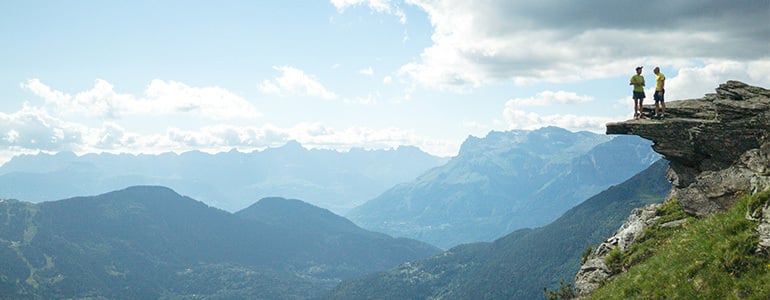

Karl meets Kilian
It’s not everyday that an athlete helps someone break his own records, but then Kilian Jornet is not your regular athlete. He belongs to the spirit of the mountains, where comradeship and camaraderie count more than rivalry and competition.
So when he was contacted by Karl Egloff, a runner who’s broken his speed ascent records on Aconcagua and Kilimanjaro and was looking to meet up, Kilian’s response was, ‘great idea’!
Hit play to see these two mountain athletes meet up for the first time.
© Montaz-Rosset Film “Nothing was set-up,” says the film maker Seb Montaz. “It was really the first time they met. They were both excited to meet and I hope people see them laughing together – there was no rivalry.”
The 34-year-old from Ecuador was in Chamonix with ambitions to break Kilian’s 4h 57m speed record on Mt Blanc. As it happened the attempt was called off as conditions were not ideal but it proved to be a good experience for Karl.
“It was amazing,” he says. “It was really nice to climb with him. We went for a training run and talked, comparing our different experiences. There was no rivalry. He’s so inspiring – just to meet him was an honour.”
Karl and Kilian discuss routes up Mont Blanc. © Sébastien Montaz-Rosset
In February Karl knocked almost an hour off Kilian’s 12h 49m record up and down Aconcagua which he set last December. It follows the record of 6h 42 he set on Kilimanjaro in 2014, beating Kilian’s 7h 14 record from 2010.
But in the unfamiliar ground of Mt Blanc, he says he was happy to learn from Kilian. “He showed me just how fast he is at lower altitudes! My strength is going steeply up to altitude which is why I can make a difference on Aconcagua and Kilimanjaro. Living at altitude helps a lot! But there are no glaciers to cross and Mt Blanc is a very technical mountain.”
“I’ve heard so many stories about Chamonix and it really is an amazing place to be,” he adds.
Karl is returning to Quito, Ecuador for now and has big dreams for 2016. He's hoping to continue with his 7 Summits quest with expeditions to Denali, Elbrus and Antarctica.
© Karl Egloff

How to transition from the flat to off-road
Gediminas Grinius was a road runner from Lithuania – a country without mountains. In a short time, the father of two has become a formidable competitor in the international ultra trail running scene.
Not only did he win the 125 km Trangrancanaria Ultra Race, the 35-year-old broke the race speed record set by fellow Suunto ambassador Ryan Sandes. Most recently he placed fourth at the Western States 100-Mile Endurance Run.
Not bad going for a guy who lives 500 km away from the nearest mountain range. Below, he shares six things that helped him make the leap from road to trail.
Gediminas traveled to the USA two weeks before the Western States 100-Mile Endurance Run to train. © Gediminas Grinius
1. Patience is a virtue
You must be patient. The first two or three years I felt unnatural and really didn't know anything about trail running. It was quite difficult. For example, when you run on the flat your stride is quite different than technical downhill running. You must be patient because learning new things takes time.
2. Hit the gym
Over winter I was in the gym doing all kinds of things to keep my legs in shape. For example, I’ve been doing a lot of squats and step box training, which imitates power hiking.
Want to become a better runner? Then click here to check out Suunto's How do I Run? contest!
3. Make friends with a hill, any hill
There’s one hill near where I live and it’s only 70 m high, but I’ve used it to do hill repetitions, usually 20 or 30 times up and down. It helped me to handle the mountains in the Trangrancanaria race.
He spent time training on the shores of Lake Tahoe. © Gediminas Grinius 4. Avoid injury
When you're doing a lot of training you have to be careful to listen to your body to avoid getting injured. Over the last five years I haven't had any serious injuries so I've been able to sustain my training level and increase it. This has helped me to become a stronger runner.
5. Be prepared to travel
If you want to run in the mountains, then you must spend a lot of time in the mountains. The more time you spend in the mountains on technical trails the better you become. It’s 500 km and a five-hour drive from where I live to the nearest mountains. I usually choose to train in a place which is in the south of Poland and that's 10 hours driving from where I live. I try to do it as often as possible.
6. Take up yoga
Sometimes when you're running in the mountains it becomes stressful. But yoga has taught me how to relax my mind. Sometimes even when I have pain or some other issue, what I’ve learned through yoga has helped me to relax.


