


SUUNTOブログ

オーバートレーニング症候群とは?ランニングで頑張りすぎているサインと休む目安
ランニングを続けていると、「もっと走れば強くなれる」「予定したメニューは必ずこなしたい」と思うことがあります。
目標に向けて努力することは大切です。
しかし、トレーニング量や強度に対して回復が追いつかなくなると、疲労が抜けにくくなったり、パフォーマンスが下がったり、体調を崩しやすくなったりすることがあります。
こうした状態が長く続く場合、「オーバートレーニング症候群」と呼ばれる状態につながることがあります。
本記事は、ランナーがトレーニング量や回復状態を見直すための一般的な情報です。体調不良、痛み、強い疲労感が続く場合は、自己判断せず医師や専門家に相談してください。
オーバートレーニング症候群とは?
オーバートレーニング症候群とは、強いトレーニングを繰り返す一方で十分な回復が取れず、疲労やパフォーマンス低下、睡眠や気分の不調などが続く状態を指します。スポーツ医学の文献でも、十分な回復を伴わない高負荷トレーニングの繰り返しによって、疲労やパフォーマンス低下、けがのリスクが高まる状態として説明されています。
一時的な疲労は、トレーニングをしていれば誰にでも起こります。
大切なのは、疲労が一時的なものなのか、それとも回復しても抜けにくい状態なのかを見極めることです。
数日休んだり、強度を下げたりすることで回復する疲労であれば、通常のトレーニング過程の一部と考えられます。
一方で、休んでも疲労感が続く、いつものペースが極端にきつく感じる、睡眠や気分にも影響が出ている場合は、トレーニングと回復のバランスを見直すサインかもしれません。
休むこともトレーニングの一部
ランニングでは、走っている時間だけがトレーニングではありません。
身体は、負荷をかけた後に休養し、その刺激に適応することで強くなります。つまり、回復はパフォーマンス向上のために欠かせないプロセスです。
SUUNTOのリカバリー記事でも、運動後の感覚、回復時間、睡眠、HRVなどを継続して確認することで、回復状態を把握するヒントになると紹介しています。
「休む=サボる」ではありません。
必要なタイミングで強度を下げたり、休養日を入れたりすることは、長く走り続けるための大切な判断です。
ランニングで頑張りすぎている7つのサイン
ここでは、トレーニング量や強度を見直すきっかけになる7つのサインを紹介します。
ひとつ当てはまるだけで問題があるとは限りません。
ただし、複数のサインが続く場合は、無理にメニューをこなすのではなく、回復を優先することも考えてみましょう。
気分が落ち込み、イライラしやすい
ランニングは気分転換になることが多い一方で、疲労が蓄積すると、走ることへの意欲が落ちたり、イライラしやすくなったりすることがあります。
いつもなら楽しめる練習が負担に感じる。
走る前から気持ちが重い。
小さなことで落ち込みやすい。
こうした変化は、身体だけでなく心にも疲労がたまっているサインかもしれません。
脚が重く、走りに弾みがない
いつものペースなのに脚が重い。
地面を押す感覚がなく、フォームに弾みがない。
ウォームアップしても身体が動き出さない。
こうした状態が続く場合、筋肉や神経系が十分に回復していない可能性があります。
一時的な疲労であれば数日で戻ることもありますが、同じ状態が続くなら、トレーニング量や強度を見直しましょう。
風邪をひきやすい、体調を崩しやすい
強いトレーニングと回復不足が重なると、身体へのストレスが大きくなります。
以前より風邪をひきやすい。
喉の違和感やだるさが続く。
体調を崩して練習を休むことが増えた。
このような変化がある場合は、身体が回復を必要としているサインかもしれません。スポーツ医学系の解説でも、頻繁な体調不良やけがはオーバートレーニングのサインとして挙げられています。
眠れない、日中も疲れている
疲れているのに眠れない。
夜中に目が覚める。
十分寝たはずなのに、日中もだるい。
睡眠は回復に大きく関わります。
睡眠の質が落ちると、トレーニングで受けた刺激に身体が適応しにくくなり、さらに疲労が抜けにくくなることがあります。
睡眠の乱れが続く場合は、トレーニングだけでなく、仕事や生活面のストレスも含めて見直すことが大切です。
小さな痛みや違和感が続く
膝、足首、すね、腰、アキレス腱などに小さな違和感がある。
走り始めだけ痛い。
休むと少し良くなるが、走るとまた戻ってくる。
こうした「小さな違和感」を無視して走り続けると、けがにつながる可能性があります。
痛みが続く場合は、無理に走らず、必要に応じて医師、理学療法士、トレーナーなどの専門家に相談してください。
いつものペースが遅く感じる
同じコース、同じペースなのに、以前よりきつく感じる。
心拍数が高く出る。
頑張っているのにタイムが伸びない。
これは、身体が十分に回復していない状態でトレーニングを続けているサインかもしれません。
パフォーマンスが落ちていると感じると、さらに練習量を増やしたくなるかもしれません。
しかし、疲労が原因であれば、必要なのは追加の負荷ではなく回復です。
食欲が落ちている
食欲がない。
練習後に食べる気が起きない。
体重が意図せず減っている。
トレーニング量が多い時期は、身体が回復するために十分なエネルギーと栄養を必要とします。
食欲が落ちている状態で練習を続けると、回復に必要な栄養が不足しやすくなります。食欲低下や体重減少は、オーバートレーニングに関連するサインとして紹介されることがあります。
疲労が蓄積していないか見直すチェックリスト
以下は、診断のためのチェックリストではありません。
トレーニング量や回復状態を見直すための目安として活用してください。
見直したいサイン
確認
休んでも疲労感が抜けにくい
□
いつものペースがきつく感じる
□
脚が重く、走りに弾みがない
□
気分が落ち込みやすい、イライラしやすい
□
睡眠の質が落ちている
□
風邪をひきやすい、体調を崩しやすい
□
小さな痛みや違和感が続いている
□
食欲が落ちている
□
安静時心拍数が普段より高い
□
HRVが普段の範囲から外れている
□
複数当てはまる場合は、トレーニング量や強度を見直し、休養を取ることも検討しましょう。
症状や痛みが続く場合は、自己判断で練習を続けず、医師や専門家に相談してください。
サインに気づいたら見直したいこと
まずはトレーニング強度を下げる
疲労が抜けないと感じたら、まずは強度を下げることを考えましょう。
予定していたインターバルをイージーランに変える。
距離を短くする。
完全休養日に切り替える。
数日間トレーニングを軽くするだけで、身体の感覚が戻ることもあります。
大切なのは、予定したメニューに固執しすぎないことです。コンディションに合わせて調整することも、継続的なトレーニングには必要です。
▶︎関連記事:「心拍ゾーンとは?トレーニング強度を使い分けて持久力を高める方法」
睡眠と食事を優先する
回復の基本は、睡眠と食事です。
睡眠時間が短い日が続いている。
食事量が少ない。
練習後の補給が不十分。
こうした状態では、トレーニングの刺激を十分に回復へつなげにくくなります。
疲労を感じるときほど、練習内容だけでなく、睡眠、食事、水分補給、日常生活のストレスも見直しましょう。
痛みや不調が続く場合は専門家に相談する
休んでも痛みが引かない。
走るたびに同じ場所が痛む。
強い疲労感や気分の落ち込みが続く。
このような場合は、自己判断で練習を続けず、医師や専門家に相談してください。
特に痛みを抱えたまま走り続けると、回復に時間がかかるけがにつながる可能性があります。
Suuntoウォッチで回復のサインを確認する
SuuntoウォッチとSuuntoアプリは、体調を診断するものではありません。
ただし、睡眠、HRV、安静時心拍数、トレーニング負荷などを継続的に確認することで、普段との変化に気づく手がかりになります。
数字だけで判断するのではなく、脚の重さ、気分、食欲、睡眠の感覚と合わせて見ることが大切です。
睡眠
睡眠時間や睡眠の質は、回復状態を考えるうえで重要な指標です。
Suuntoウォッチでは、睡眠時間や睡眠中の身体の状態を記録できます。
前日より走れているかだけでなく、しっかり眠れているかを確認することで、トレーニングの強度を調整しやすくなります。
HRV
HRVとは、心拍と心拍の間隔に生じるわずかな変化を示す指標です。
HRVは、自律神経の状態や回復の傾向を把握するための参考になります。SUUNTOのHRV解説記事では、睡眠中に計測したHRVを継続して確認することで、回復状態やストレスの傾向を理解する手がかりになると紹介しています。
HRVについて詳しく知りたい方は、こちらの記事をご覧ください。
▶︎関連記事:HRVとは?心拍変動を理解してトレーニングの回復を最適化する方法
安静時心拍数
安静時心拍数が普段より高い状態が続く場合、疲労やストレス、体調変化のサインである可能性があります。
もちろん、1日の数値だけで判断するのではなく、自分の通常の範囲を知り、数日から数週間の傾向を見ることが大切です。
▶︎関連記事:「安静時心拍数と最大心拍数とは?測り方とトレーニングへの活用」
トレーニング負荷
走行距離や時間だけでは、身体にかかった負荷を十分に把握できないことがあります。
Suuntoアプリでは、トレーニング量や負荷の推移を確認できます。
負荷が高い状態が続いている場合は、低強度の日や休養日を入れる目安になります。
運動後の感覚
データだけでなく、「今日の練習がどう感じたか」も重要です。
SUUNTOでは、アクティビティ後の感覚を記録することで、回復状態を把握するヒントになると紹介しています。感覚が下向きの傾向を示している場合は、トレーニング量や回復状態を見直すタイミングかもしれません。
Suuntoで回復状態を確認する方法については、こちらの記事も参考ください。
▶︎関連記事:「Suuntoでリカバリーを確認する4つの方法」
データと体感を組み合わせることが大切
ウォッチの数値は、身体の変化に気づくための手がかりになります。
一方で、数値だけで「休むべき」「走ってよい」と決めるのはおすすめできません。
たとえば、HRVが普段より低く、安静時心拍数が高く、さらに脚も重い。
このように、データと体感の両方が回復不足を示している場合は、強度を下げる判断がしやすくなります。
反対に、数値に大きな変化がなくても、痛みや強い違和感がある場合は無理をしないことが大切です。
データは、身体の声を聞くための補助線です。
自分の感覚と組み合わせて、トレーニングを調整しましょう。
まとめ:強くなるためには、休む判断も必要
オーバートレーニング症候群は、トレーニングと回復のバランスが崩れたときに起こり得る状態です。
ランニングを続ける中で、疲労感、脚の重さ、睡眠の乱れ、気分の変化、パフォーマンス低下、食欲の変化などが続く場合は、トレーニング量や強度を見直すサインかもしれません。
強くなるためには、頑張る日だけでなく、回復する日も必要です。
Suuntoウォッチのデータは、体調を診断するものではありません。
しかし、睡眠、HRV、安静時心拍数、トレーニング負荷などを継続して見ることで、無理を続ける前に立ち止まるきっかけになります。
数字と体感の両方を見ながら、必要なときに休むこと。
それも、長く走り続けるための大切なトレーニングです。
回復を見ながら、次のトレーニングへ
SuuntoウォッチとSuuntoアプリでは、睡眠、HRV、トレーニング負荷、運動後の感覚などを継続して確認できます。
毎回頑張るだけではなく、身体の変化に気づきながら、目的に合ったトレーニングと回復を積み重ねましょう。
▶︎リカバリーが確認できるGPSランニングウォッチを見る
関連記事
Suuntoでリカバリーを確認する4つの方法
HRVとは?心拍変動を理解してトレーニングの回復を最適化する方法


The routes of a pro
Think you can take on one of the world’s top ultra runners? We asked this year’s Ultra Trail World Tour silver medallist Gediminas Grinius for his favorite places to run around the world. Check out his list below.
© Ultra-Trail World Tour
Squaw Valley, California, USA
Distance: 13.22 km (8.2 miles)Elevation: 970 m (3,182ft)Time to beat: 1:49’51Why: If you want to feel the Olympic atmosphere of the resort and at the same time climb the very first and the most beautiful part of the legendary Western States race this trail is for you.Click for Gediminas's tips on transitioning from road to trail running© Pete Forsyth via Wikimedia Commons
Mt Teide, Tenerife, Canary Islands
Distance: 63.95 kmElevation: 4,671 mTime to beat: 10:29’21Why: Long, but an amazing run, especially if you start in the evening. With a bit effort you can see the sunrise from the Volcano, which is the highest peak in Spain.
© Nikodem Nijaki via Wikimedia Commons
Roque Nublo, Gran Canaria, Canary Islands
Distance: 38.23 kmElevation: 2,189 mTime to beat: 5:25’42Why: A nice run from Artenara Cave hostel to the picturesque Roque Nublo from where you have all the island stretched out on your hand. If the sky is clear you can see Mt Teide on Tenerife on the horizon.
© H. Zell via Wikimedia Commons
Piton de la Fournaise, Reunion Island
Distance: 12.01 kmElevation: 544 mTime to beat: 2:18’30Why: It is must to run this trail, as it is in the middle of la Reunion island and part of the Raid de la Reunion race, also known as the Diagonale des Fous – the route of crazies. At the end of the trail you are on the top of a still active volcano. It’s an incredible and very difficult trail. © B. Navez via Wikimedia Commons.
LTU Trail Running People trail, Lithuania
Distance: 28.37 kmElevation: 1,263 mTime to beat: 3:08’45Why: This is what you are forced to do when you don't have real mountains :) But it is home and a place where the (local) LTU trail running community was born, so it’s close to my heart.© Kontis Šatūnas via Wikimedia Commons

Is this the run of the summer?
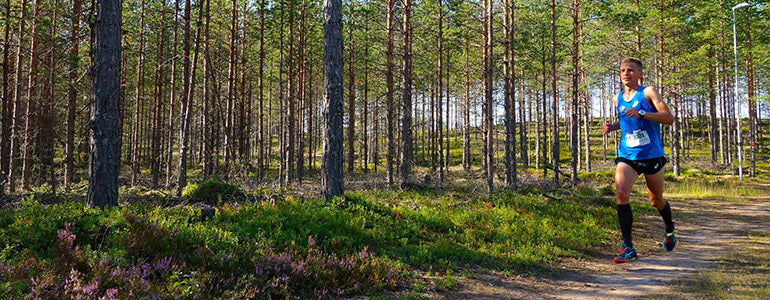
Earlier this year, Jonas Buud, an amateur runner from Sweden, was laid up with a stress fracture in his hip bone. Things weren’t looking good; his recovery meant walking instead of running. But he had his eyes on his local race and decided to do it anyway, despite only two months’ of running on his legs. It was the 90 km Ultravasan, which follows the route of the famous Vasaloppet cross-country ski race. Not only did he win, he did it with some style, averaging a pace of 3’49 per kilometer for 90 km on an off-road course that packed an ascent of 872 m. We had one question:
That’s a 2h 40m marathon time. How did you sustain for 90km!?It’s crazy! I didn’t know my shape as I had not run much. The plan was just to follow others at the start. Max King, the 2014 100 k world champion was also running. The plan was just to follow him for as long as I could.
Talk us through the raceI thought I was running a bit slow in the beginning and I wasn’t checking my speed, but I did the first 5 km in 20 min, which was not so slow – and it was uphill!
“I couldn’t slow down. My legs just continued running.”
When did you realise you were doing well?The first 30 km is not so technical. It’s fast. It’s then a bit hilly at the halfway mark of Evertsberg, the sprint prize is also there, so Max took that one – he was running really fast. He then stopped to fill up some water but I continued through the checkpoint. There’s then a really long descent, the fastest part. I left Max and just continued at the same speed.
And you kept up the same pace? At 25 km to go, I thought, ‘Oh maybe I’m going too fast; I should slow down – I don’t want to run faster than a 4 minute km’, but I couldn’t slow down! It was a really nice run the whole way and I was in the shape of my life. My legs just continued running.
What a turnaround for you! It’s been a strange season. I got a stress fracture in December and could not run for six months. My first run was 1 min walk, 1 min run which I increased every week. My first 30 min run without stops was in late May.
You came late to running as well? Yes, I started really late although I've been orienteering since I was 10. I did my first marathon aged 30 in New York [2:36] where I met some other runners who told me to go on a training camp with them in Portugal. There I heard about the Swiss Alpine Marathon. I thought it would be too tough but I won. [He’s since won it eight times in a row!]
The finish must have been special?The year before was one of my best races ever [6:02 h]. Under six hours can be really tough. I had 5k left and I started to see what time I should have. I thought it can’t be true it’s too fast. It was one of the best moments as a runner because the history of the season, it’s also my hometown and a lot of people were at the finish.
What’s your training secret? I just run!
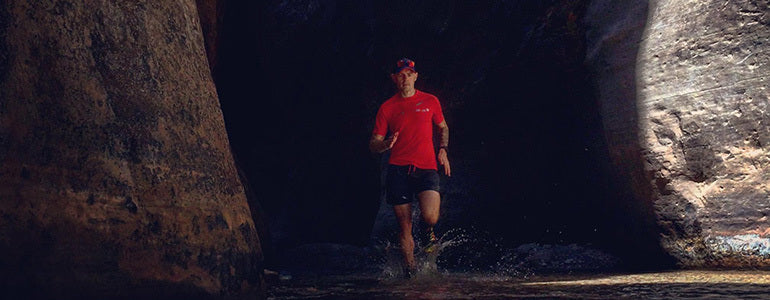

Go Gediminas!
Gediminas Grinius has just finished up the 2015 Ultra Trail World Tour (UTWT) in second place. It’s a gruelling tour in which he took part in 11 ultras of which he won two and placed 4th in another. “I’m still human,” he says. We’re not so sure: his efforts are truly super-human.
© Ultra-Trail World Tour
Many congratulationsThank you very much!
You must be feeling like a champ? Well, my expectations were a bit high this season, which were to compete well in all UTWT 100 milers. My body and mind betrayed me and I wasn’t able to finish the UTMB and Grand Raid Reunion.
The lesson there? I learnt that I am still a human like everyone else. One more lesson is that I must dream responsibly, but ambition and adventurism make me move forward.
“I also get to suffer in various ways, which is what I like!”
© Trans Gran Canaria
Was any race particularly special?All races are kind of beautiful in their own way. I know that probably sounds a bit of a politically correct answer but it is totally true. I really enjoy the diversity of the races. The Western States 100-mile Endurance Run [where he placed 4th] for example was extremely hot while during the Ultra Trail of Mt Fuji [which he won] it was raining all the time. I was very happy and excited to finish first during the Transgrancanaria, but absolutely disappointed with my Ultra Trail de Mont Blanc performance. The Grand Raid Reunion was very technical. So, all these things and the diversity makes the races attractive to me, because I have to train and improve different skills as a runner. I also get to suffer in various ways, which is what I like!
Click here for Gediminas's trail running tips!
Gediminas (third from left) at the Ultra-Trail World Tour award ceremony. © Ultra-Trail World Tour
What was the hardest race?The most painful was the UTMB, as I ran about 100 km with these huge blisters on the soles of my feet and then had killer quads for another 30 km, but it wasn’t the hardest. The most challenging was Grand Raid Reunion (GRR) which is the last race of the series and I was pretty much drained after all the season. In addition to that the GRR is the most technical race, my weakest point in trail running. Also, the first place of Ultra Trail World Tour was at stake and that put some additional psychological pressure on me, which it seems I wasn’t ready to take!
Same again for next year?Absolutely. I will be back for the 2016 world tour events. My goals will not differ from the last year, because I believe that I was on the right course, so my training cycle will remain the same. I will focus on proper recovery, building up strength to prepare for the upcoming season.
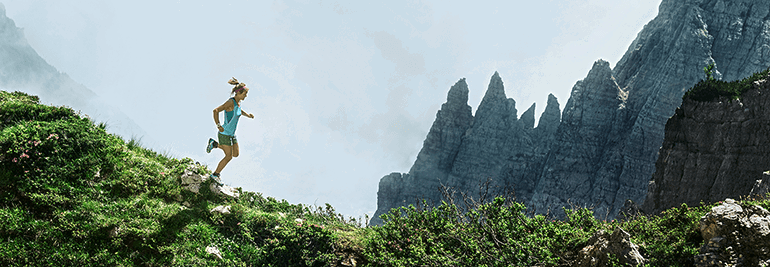

Emelie Forsberg on changing seasons, running and yoga
As the running season ends, Suunto ambassador Emelie Forsberg simply exchanges running shoes for skis. But between the running and ski mountaineering seasons, she finds a little breathing space for herself. November and December are two of skyrunning champion Emelie Forsberg’s favorite months. Her trail running season is over, the ski mountaineering season hasn’t begun so there’s no racing, only training.
Click here to read about a typical week of training for Emelie
Emelie is now training for the ski mountaineering season. © Emelie Forsberg“This year I needed a two week break from running so I attended a yoga camp,” she says. “This was very much needed for my mind. “I think it’s the mind that needs the most rest from racing, not really the body.” Emelie’s 2015 trail running season has been impressive. First place at the Transvulcania Ultra Marathon, first in the Mount Marathon in Alaska, first place in the ultra distance European Skyrunning Championship, first in the Ultra Pirineu – the list goes on. All of that racing demands intense mental focus and energy. “For sure, racing gives something back too, I love it, but you meet so many new people and you give everything you have on the races, and that takes energy,” Emelie says.
Click for Emelie's tips on how to improve your trail running
Emelie takes time to do a little yoga each day. © Emeile ForsbergThe yoga camp was exactly what she needed to unwind and to find her passion for training again. “It was a really calm week, with a lot of time to reflect on the new knowledge about yoga, about my running season, the last few years as a professional runner and my future,” she says. “I did go running each day, but without a watch and just short and very easy runs. “By the end of the week I got so motivated I began training hard again and that was really important because I lost my motivation a little bit in October.” Yoga is an everyday part of Emelie’s life. Most mornings she does a yoga session to tune into her body, find the tired or sore spots and focus on helping them recover.
Emelie Forsberg's six best-loved trail running routes!
© Emelie ForsbergShe says yoga and life in the mountains have something important in common. “I think real yogis are very humble, and real mountain people too,” she says. “I think both yoga and being in the mountains makes you aware of the fact you are very small part of this big, big world.”