




SUUNTOブログ
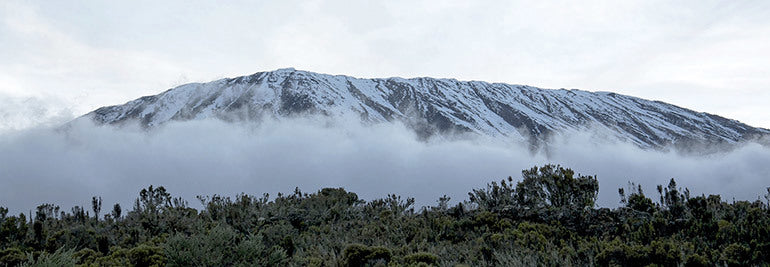

Mt. Kilimanjaro: More to Explore
“Mount Kilimanjaro is more than it’s famed snows, more than it’s iconic, statuesque crater that commands the landscape. It is more than the tallest “trekkable” mountain in the world. To hike Kilimanjaro is to be encapsulated into evolving ecosystems, from tropical rainforest to snow-covered peaks in a few days making for unique experience in our natural world,” describes adventurer Matt Mitchell.
There are seven established climbing routes on Kilimanjaro. To trek a different route to the summit is to live a separate and entirely unique experience. In search of true wilderness, we chose Rongai, the least trafficked route and the only one starting from the North, along the Kenyan border. It is the only trek that includes the entire spectrum of habitats in Kilimanjaro’s vast ecosystem, though you have to go out of your way to find it. After a two-hour drive from the park’s main gate, winding through hectic, dusty villages, we arrived at the trailhead. Our journey began in a wild, tropical rainforest, it was difficult to believe that in a few days we would be immersed in freezing cold and burning sun of arctic conditions.
Before we left for Tanzania we plotted the route to my Suunto Traverse GPS watch, helping us to navigate and identify POIs (camps and highlights) as well as and track our altitude and gain each day.
Kilimanjaro is a busy mountain year round on most routes, so when we found ourselves trekking alone we were surprised, and delighted. We felt like we had the mountain to ourselves, free to move at our pace and simply appreciate our surroundings. The mountain itself was pristine, even at camps debris or evidence of hikers was rarely seen.
Giant, jagged crevasses created by lava flows and home to streams from another time lay hidden behind wild and unwieldy bushes. Throughout the forest and heather our path was enveloped in thick rolling fog. Wide, sloping caves that were once shelter, now help to mark the trail.
Unlike routes from the south, clear views of Kibo are frequent above 3500 m on Rongai. While our previous days were filled with fog and mist, the greyness gave way to clear and intense days in the sun. Our nights got much colder above the clouds and we started to feel the thinning air as we moved toward the alpine desert. Our only company was a pair of white-necked ravens who followed us for two days and nights.
Kilimanjaro is not simply its dominant and easily identifiable volcanic cone (Kibo), with its graceful lines. In fact Kilimanjaro is made up of three volcanoes- Kibo, Mawenzi and Shira. Kibo remains dormant, the others extinct. As we traversed alpine desert in scorching 37 degree sun, the imposing, jagged edifice of Mawenzi appeared. Hans Meyer Peak is its highest point at 5149 m (third highest point in Africa) and is separated from Kibo by 6 km of baron desert known as ‘The Saddle.’
We arrived at Kibo Huts (4700 m) in the afternoon of our forth day, with a world already below us. We were paying for each moment at this altitude and higher, so at midnight under steady snowfall we climbed towards the stars. There was still a mountain above us, and all we could see were bobbing headlamps and utter darkness. We trudged across steep, scree switch-backs (up to 45 degree) for 5 hours, glancing only occasionally at the horizon for the slightest hint of the day to come. Breathing becomes more difficult with each step, relentlessly testing all faculties. Even simple recognition is not a given at this altitude. As we scrambled to the top of Gilman’s Point and beyond the grandeur of Kibo is startling, its glaciers, sheer cliffs and vast expanses are unforgettable.
There is nothing like feeling the day’s first light atop a mountain, invigorates your senses, and brings your body back to life. The streams of clouds and color and light made us feel like we could see all of Africa.
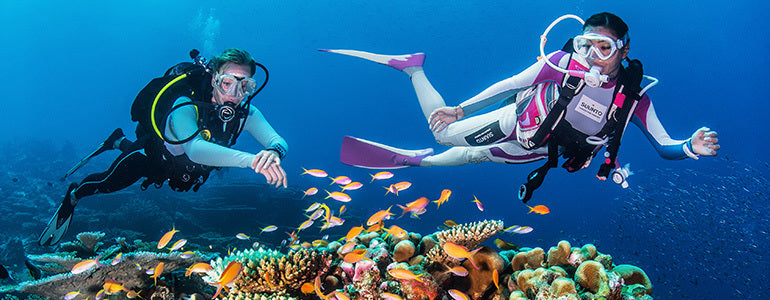

初心者ダイバーが安全に上達する7つの心得|プロが教えるダイビングの基本
ダイビングの認定を取得したものの、「水中でまだ余裕がない」「中性浮力が安定しない」「周りのダイバーについていけるか不安」と感じる人は少なくありません。
初心者のうちは、すべてを一度に完璧にしようとする必要はありません。大切なのは、自分の経験とコンディションに合う環境を選び、信頼できるインストラクターやガイド、バディと一緒に、一つずつ経験を積むことです。
元記事では、ダイビングの楽しさを伝えることに情熱を注ぐプロダイバーのマルコが、初心者へ向けた心得を紹介しています。その内容をもとに、安全に長くダイビングを楽しむための7つのポイントとして再構成しました。
ダイビングの楽しさを教えることに情熱を注ぐマルコ。© atmosphereresorts.com
目次
1. リラックスして、ゆっくり動く
2. 他人と比べず、自分のペースで学ぶ
3. 経験に合った環境とダイブプランを選ぶ
4. 体調と基礎体力を整える
5. 器材は段階的にそろえ、操作を理解する
6. バディやガイドと事前に話し合う
7. 継続して潜り、ログで振り返る
初心者がSuuntoを選ぶときの考え方
まとめ|焦らず経験を積むことが上達への近道
1. リラックスして、ゆっくり動く
ダイビングは、激しく身体を動かすことを目的としたスポーツではありません。水は空気より抵抗が大きいため、急いで手足を動かすほど疲れやすくなり、呼吸も乱れやすくなります。
水中では姿勢を整え、必要な動作をゆっくり行いましょう。呼吸が速くなったり不安を感じたりしたら、無理に先へ進まず、ガイドやバディへ合図して状況を共有します。
水中では、リラックスしてゆっくり動くことが大切です。
2. 他人と比べず、自分のペースで学ぶ
中性浮力を早く身につける人もいれば、マスクに水が入ることへ慣れるまで時間が必要な人もいます。得意なことや不安に感じることは、一人ひとり異なります。
周囲と同じ速さで上達しようとせず、苦手なスキルをインストラクターへ率直に伝えましょう。質問しやすく、焦らせずに練習時間を取ってくれる指導者やダイビングショップを選ぶことも重要です。
© Bo Mancao
3. 経験に合った環境とダイブプランを選ぶ
認定を取得した直後から、深い場所や流れの強い海へ挑戦する必要はありません。水深、流れ、水温、視界、エントリー方法など、環境が変わると難易度も変わります。
ダイビング前のブリーフィングでは、最大深度、潜水時間、残圧の確認方法、折り返し条件、安全停止、はぐれた場合の手順を確認します。少しでも不安があれば、エントリー前に伝えましょう。計画を変更したり、その日のダイビングを見送ったりする判断も、安全なダイバーに必要なスキルです。
新しい環境や高度なダイビングへ進むときは、適切な講習と指導を受け、認定範囲と経験に合う計画を選んでください。
4. 体調と基礎体力を整える
ダイビングに特別な競技力は必要ありませんが、器材の運搬、水面移動、ボートへの乗り降りなどには基礎体力が役立ちます。日常的なウォーキングやスイミングなどで、無理なく身体を動かす習慣をつくりましょう。
寝不足、体調不良、強い疲労、飲酒の影響などがある状態で、無理に潜るべきではありません。健康上の不安や服薬がある場合は、自己判断せず、ダイビング医学に詳しい医師や所属する指導団体の基準に沿って確認してください。
© Bo Mancao
5. 器材は段階的にそろえ、操作を理解する
ダイビングを始めた直後に、すべての器材を購入する必要はありません。まずはレンタルを活用し、自分が続けたいダイビングスタイルや、身体に合う器材を知ることから始められます。
マスクは顔との相性が快適性に大きく影響するため、早い段階で自分に合うものを検討しやすい器材です。その後、使用頻度や目的に応じて、フィン、スーツ、BCD、レギュレーター、ダイブコンピューターなどを段階的に考えます。
自分の器材でもレンタル器材でも、使用前に操作と装着方法を確認してください。生命維持に関わる器材の整備や修理は、メーカーの指示に従い、認定サービスセンターや専門店へ依頼します。
6. バディやガイドと事前に話し合う
ダイビングでは、バディやガイドとの意思疎通が欠かせません。初めて一緒に潜る相手とは、経験本数だけでなく、最近潜った時期、使用する器材、コミュニケーション方法、不安な点を共有します。
基本のハンドシグナル
残圧を伝えるタイミング
適正な距離と位置
エア切れ時に使う器材と手順
はぐれた場合の行動
ダイビングを中止する合図
「初心者だと伝えるのが恥ずかしい」と考える必要はありません。自分の経験や不安を正確に伝えることは、バディチーム全体の安全につながります。
© Bo Mancao
7. 継続して潜り、ログで振り返る
ダイビングスキルは、講習を修了した時点で完成するものではありません。無理のない環境で継続して潜り、毎回一つずつ課題を振り返ることで、少しずつ余裕が生まれます。
ダイブログには、最大深度や潜水時間だけでなく、使用した器材、ウエイト、水温、スーツ、視界、流れ、空気消費、うまくできたこと、次に練習したいことを残しましょう。
ブランクが長くなった場合は、いきなり以前と同じ条件へ戻らず、リフレッシュ講習や穏やかな環境から再開します。
▶︎関連記事:「ダイビングのオフシーズンにやるべき7つのこと|体力・器材・スキルの準備」
▶︎関連記事:「ダイビングログをもっと活用する方法|Suuntoアプリでダイブデータを振り返る」
初心者がSuuntoを選ぶときの考え方
ダイブコンピューターを選ぶときは、見た目や機能数だけでなく、水中で必要な情報を読み取りやすいか、操作を理解しやすいか、自分が目指すダイビングに対応しているかを確認します。
Suunto Nautic Sは、コンパクトな形状で、スキューバダイビングやフリーダイビングに必要な水中機能へ重点を置いたモデルです。
Suunto Oceanは、ダイビングに加えて、GPSスポーツウォッチとして日々の運動や睡眠、回復も記録したい人に適しています。
Suunto Nauticは、大型AMOLEDディスプレイを備え、レクリエーションから将来のテクニカルダイビングまで見据えたい人の選択肢です。
どのモデルを使う場合も、ダイブコンピューターは講習、バディシステム、適切なダイブプランの代わりにはなりません。使用前に取扱説明書を読み、表示、警告、ガス設定、充電、操作方法を陸上で確認してください。
© atmosphereresorts.com
まとめ|焦らず経験を積むことが上達への近道
初心者ダイバーにとって大切なのは、難しい環境へ急いで進むことではありません。ゆっくり動き、自分のペースで練習し、体調や海況に合わせて無理のない判断をすることが、安全な上達につながります。
分からないことや不安なことは、インストラクター、ガイド、バディへ早めに伝えましょう。毎回のダイビングをログで振り返り、一つずつ経験を積み重ねることで、水中を楽しむ余裕が少しずつ広がっていきます。
水中で必要な情報を、分かりやすく手元に
目的や経験に合ったSuuntoのダイブコンピューターを確認し、次のダイビングに備えましょう。
Suuntoのダイビング製品を見る
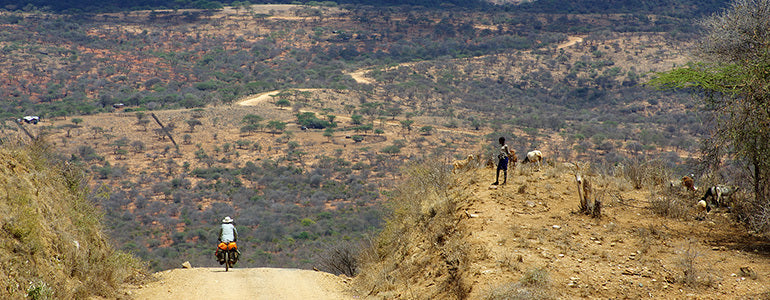

Meet the nomad who has cycled around the globe four times
Pierre Bouchard began cycle touring in 1990 and has since travelled all over the world, covering the distance of four loops of the planet. In this first of three instalments* about the “Nomads” we asked him what he’s learned.
© nomadesxnomades.com
Pierre Bouchard’s life on the road began with sage advice from a philosophy professor; “the ideal would be to travel the world and account for it,” the professor suggested during a lecture. Then a philosophy student, Pierre says as soon as he heard this his “mind flew right out the window”.
Shortly after, he dropped out of university and set out to study what René Descartes called “the great book of the world”. He pedalled more than 71,000 km through 18 countries in the following seven years. His partner Janick Lemieux joined him on the road in 1997 and together they’ve cycled through more than 60 countries in the Americas, Europe, Asia and Oceania – and currently Africa.
Their expeditions are about far more than seeing sites and sampling foreign food, however. The couple approach their journeys as acts to build understanding and solidarity between distant cultures. They are particularly interested in remote and nomadic cultures and have given hundreds of lectures about their findings and experiences.
© nomadesxnomades.com
“By sharing what we learn, and by informing our hosts on the road about our own culture, we contribute to a sense of humanhood which is the basis for genuine solidarity!” Pierre says. “We‘ve learned that we all have the same needs and are all subjected to the same existential conditions, so why not help one another?”
“People are very curious and somehow don’t feel threatened by strangers on loaded bikes. They come close, greet us and inquire about the obvious journey we’re on which often triggers a reflex of human solidarity where invitations for a drink, meal, shower and shelter fuse.”
© nomadesxnomades.com
Through 1999 to 2009, the couple circumnavigated the Pacific Rim, riding along its tectonic faults and ridges, pedalling from one active volcano to the next. Travelling clockwise from Vancouver, they cycled about 60,000 km in six years, using 300 volcanoes to create their itinerary and hiking to, around or to the summit of around 60.
“One of the advantages of having a theme to explore is that they take you to places you would never imagine – you don't usually think of Vanuatu or the Solomon Islands as your typical bike touring destinations, but they rock,” Pierre says. “The Ring of Fire quest took us to some of our planet's wildest spots and warmest people.”
© nomadesxnomades.com
Pierre and Janick are currently cycling through Tanzania, having made it more than half way through their 35,000 km NOMADS² cycle tour. The three-year expedition is focused on deepening their understanding of the nomadic way of life. Starting in Norway, they cycled north to Lapland, and then south down through Eastern Europe, the Middle-East and the east of Africa. Along the way they have contacted various nomadic peoples, such as the Sami in Scandinavia, the Roma in Europe, and other tribes, seasonal herders and hunter-gatherers. After cycling 21,000 km in 21 months, they’re pausing their journey shortly in Tanzania, and will return after a 15 month break to complete the journey north up the west of Africa to Morocco.
© nomadesxnomades.com
“We have learned that being a nomad is becoming more and more difficult because, due to the population explosion, the world is getting crowded,” Pierre says. “The race to exploit natural resources by the more powerful often pushes nomads out of their natural territories to which they often have no legal deeds. There is also development playing a role, with new school-going nomad generations often not willing to continue to live simply like their parents and ancestors. For now, nomadism is fast disappearing.”
“Nomads are in symbiosis with nature and for this reason, it would be good for the planet if more of us were to adopt the way of the nomads. They definitely inspire us to have a lower and sustainable impact on the environment and its resources!”
*Stay tuned for our second and third stories about the Nomads, and find out which countries in the world are the most cycle-friendly!
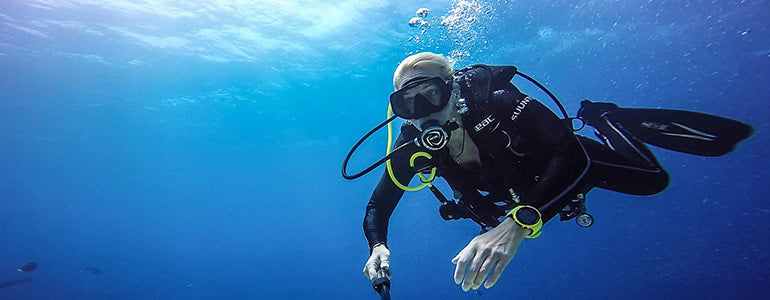

How to start diving
The famous Scuba Diving Girls Margo Sanchez and Stephanie Adamson are long-time champions of exploring the ocean. The Californians constantly share images and clips of themselves diving with playful seals, baby rays, turtles and sharks. Who better to ask how to start scuba diving?
© scubadivergirls.com
What do you say to someone thinking about diving for the first time?Just go for it. There is so much to see and experience with scuba diving. Don’t be afraid of all the gear, you will quickly get used to it and be empowered by it. There is really nothing that compares to this experience and you will not only love scuba diving, but also you will fall in love with a world unknown to you now.
“When you find a connection with the ocean and its inhabitants, it is a feeling you cannot ignore.”
What do you wish every newbie diver knew?
Have fun! Diving will bring so much joy to your life so remember to enjoy it. Make sure you find dive buddies who enjoy the experience and enhance your experience. It is important to follow your instincts and don’t let others intimidate you.
Click to see the new Suunto Zoop Novo Blue*!
© scubadivergirls.comWhat path do you recommend?Depending on your experience in the water, it may be good to try out scuba first. There is a class offered by most dive shops and independent instructors called Discover Scuba. This allows you to get in and get some instruction and try out the equipment before committing to a full certification class. But if you know you are ready, then it is time to sign up for an open water diving course.
“There’s nothing more memorizing than watching a shark glide by silently and unexpectedly or a seal who comes to pull on your fin as you frog kick your way through a kelp forest.”
What are the key steps to becoming a diver?
Finding a good instructor that you feel comfortable and safe with is the first step. Learn the skills and safety procedures during class and practice as often as possible. Even after you are certified, you should continue to practice the skills on a regular basis, as this will make you a better diver. Get as much time in the water as possible. Find buddies who are more advanced than you so that you can learn from their techniques. Don’t be lazy when it comes to your equipment care and maintenance. Your equipment is your lifeline.
© scubadivergirls.comWhat are the important things to remember? Safety should always be your first priority. It takes many dives before you are skilled enough to deal with the many issues you can experience under the surface. Understand your limits and never dive beyond these limits. If you want to do more advanced dives, take the classes to certify in that discipline first and even then be sure the diving is within your physical capabilities. When diving a new place find a local dive expert to guide you. Be sure you understand your gear. Diving should be super fun but always be sure safety is your primary focus.
*Suunto has just released the Zoop Novo Blue, a dive watch perfect for beginner divers or people seeking new adventures. Click here for more info about this simple to use dive computer.
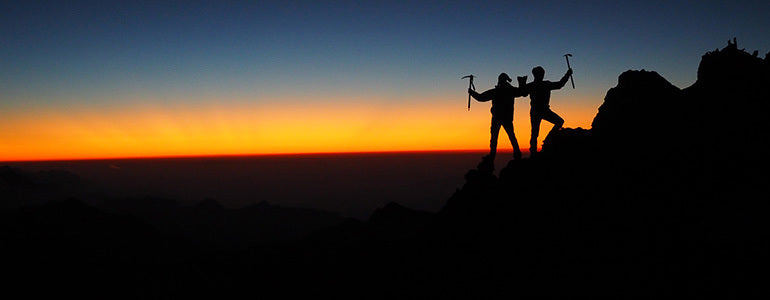

Meet the first guy scaling all the 7 summits – from sea level
High school teacher Dave Williams is attempting to become the first person to scale the highest summits of the seven continents by starting at sea level and running to each mountain.
Dave on his hike from the Black Sea to Mt Elbrus in Russia. © www.sea2summit7.comWhen Dave Williams isn’t teaching at a high school in Auckland, New Zealand, he’s doing one of two things: running or eating. “I run a half marathon in morning and a half marathon in the evening, which has made the necessary training feasible while working full time,” Dave says. “Keeping the weight on has been hard even though I eat eight meals a day.”
On the summit of Kilamanjaro. © www.sea2summit7.comDave has completed sea to summits on the highest mountains of four continents – Aconcagua, Kilimanjaro, Elbrus and Kosciuszko – and is about to set off to Alaska for a five-week expedition to make his attempt on Denali – the highest mountain in North America. Starting on April 19, he will run 350 km from Anchorage to the road end. “It will take five marathons to run to the road end, then a three day trek to the base of the glacier, then a nine day trek up the glacier to the base camp, then another two weeks to the summit,” he says. “One of the biggest challenges I've faced during preparation is to build the required fat and muscle stores while simultaneously increasing my fitness and running over 100 km per week. I predict I will lose up to 10 kg during the five weeks of adventuring.”
On the way to the summit of Aconcagua. © www.sea2summit7.comLater this year he will be heading to Antarctica to make a sea to summit attempt on Mt Vinson. He’s saving the best to last, however. In 2018 he will begin running from Kolkata, India, doing 32 marathons in 30 days, to Everest base camp and then climb the highest mountain in the world. “I enjoy climbing more than the running,” he says. “Running is more repetitive. “When I start running I know I’ve got the best to look forward to. The finale is the climb.” The 30-year-old outdoor education teacher began his Sea2Summit7 project in 2013 after two friends committed suicide due to long battles with depression. The loss got him thinking about depression and what he could do to help. “I had an epiphany while doing a sea to summit adventure in New Zealand,” Dave says. “I thought I could do same thing on the 7 Summits and raise money for the Mental Health Foundation.”
Success at last! © www.sea2summit7.comHe’s raised $5,400USD so far and, incredibly, has paid for most of the project out of his own pocket, investing $50,000NZD ($34,000USD) until now. The first mountain of the project, Aconcagua, was the most difficult. He failed twice. On the first attempt in July 2014, a storm hit on his summit attempt and climbers he had met earlier died on the mountain. On the second attempt his body gave out on the climb and he had to call it off. Finally, in January 2016, everything came together and he summited Aconcagua. “The thing that always keeps me going is receiving personal messages from people who have been following the project and who say I’ve inspired them to get off the couch,” he says. Dave hopes he has to run to Denali only the once. “Sea2Summit7 is all about never giving up and calling on friends to help when you are feeling fragile," Dave says. “This time I have an awesome expedition team of five who will be fulfilling specific roles along this journey so it is feasible and safe.”

Win a diving trip to the Philippines and introduce your non-diving friend to the underwater world
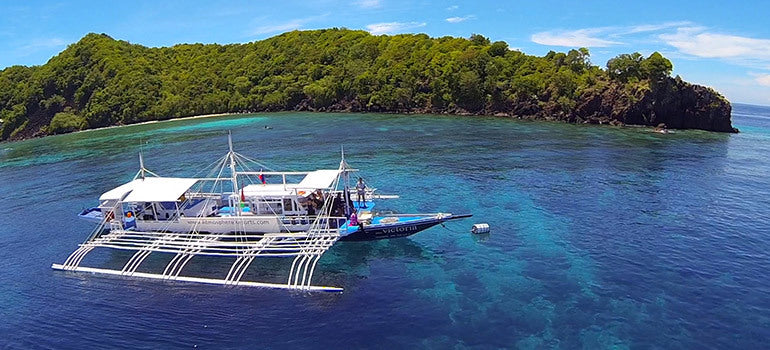
As a diver you have probably seen some pretty amazing places. But have you been able to share your excitement with your non-diving friends? Explaining the experience certainly isn’t always easy. To overcome this you now have a chance to invite your friend, who is not yet familiar with diving, on a diving trip to the Philippines to explore the underwater world with you!
To get a chance to invite your friend on a diving trip post a picture of an unforgettable diving moment and tag your new-to-diving friend to the post. The winner of the contest will win a week-long trip for two to Atmosphere Resorts in the Philippines with flights included. The resort is beautifully situated on a beachfront location on the island of Negros Oriental near Dumaguete. Your friend will have a chance to participate on a four-day open water diving course at the resort.
Share a photo on Facebook or Instagram and tag it with your non-diving friend and #DiveWithMe and @suuntodive. The most inviting entry will be selected as the winner by Suunto and the Scuba Diver Girls. In addition to the main prize five Suunto Zoop Novo dive computers and PADI Open Water Touch e-learning packages will be raffled amongst all participants.
The contest period is March 17th – April 10th 2016.
See the full terms and conditions here


