




SUUNTOブログ


Take the Long Look: How to Plan (Very) Far Ahead in Order to Reach Your Goals
Flying home from the World Masters Championships in Germany some years ago, trapped in a tight seat, surrounded by strangers, I began to think about my next important race—not my next race, but my next important race—one I hoped to win. It was the marathon at the next Worlds in New Zealand, which was still another year and a half away.
If you want to succeed as a long distance runner, you need to take the long look.
By any measure, I had achieved success in Germany, winning bronze and silver medals, but that was less than at the two previous Worlds, when I took home the gold. The bigger problem was that in New Zealand, because of my birthday, I would fall five months short of moving from the M45 age division into M50—which would presumably have easier competition. Almost all my rivals were younger than me—youngsters who had just moved into the division and were ready to take down the old coot. To match my previous record, I would need to train much harder and, more importantly, much smarter.
So I pulled out a sheet of paper and began to plot my training for the next 18 months.
Other than at the elite level where runners look from one Olympic Games to the next, I suspect this is something that few runners do—but maybe they should. Consider the following suggestions as you map your training for the coming year:
1. Plan Far, Far Ahead
Not far ahead, but far, far ahead. Not weeks ahead, or months ahead, but years ahead. What activities should you be doing now to enhance the quality of your life all the way to the end of that life? Today, running sits at the center of your universe, but look to the future. Running scores high when it comes to cardiovascular benefits. Our sport is also a great (not merely good) tool for maintaining weight and strengthening the lower body—but what else should you be doing?
While still in my 20s, I began supplementing my workouts by lifting free weights. Few runners strength-trained back then, but I was thinking ahead. Later, I added cross-country skiing, snowshoeing and even competed in triathlons, adding swimming and cycling to my workout routine. In planning far, far ahead, you should seek total fitness—not just running fitness.
2. Plan Far Ahead
The time for New Year’s resolutions slid past us, but you still can make a running resolution. What will be the theme of your running for the calendar year; not just which specific races, but the motivation leading to those races? Perhaps it is time to get serious about the sport and train extra hard, perhaps aiming for some PRs (Personal Records) or that coveted BQ (Boston Qualifying Time) that has eluded you during your running career.
Or, perhaps you are burned out from the training it took to reach previous goals. Don’t just stop running, but maybe realize that it’s time to cut back on both the quantity and quality of your workouts to refresh yourself psychologically for the next big push.
College-age students often do something similar which they refer to as a “gap year.” They get a job, earn some money, sometimes travel, and, after a break—return to college or to graduate school. After that Worlds in New Zealand, I not only grabbed gold in the marathon, but I also scored a bonus bronze medal in the 10,000 meters. Then, I returned home and did not run a step for two months (I cross-country skied instead).
3. Plan Ahead
Goal-setting (as suggested above in steps one and two) has provided you with a theme for the full year. What about the smaller increments of that year? Often a major race, such as a marathon, attracts our attention. But while having a single major goal for the year, you can also have interim goals. For example, a half marathon or two in the spring leading up to a full marathon in the fall. My half marathon training programs last 12 weeks; my marathon programs, 18 weeks. That allows for several training cycles.
Both my Novice Supreme and Personal Best training plans combine 12- and 18-week programs for a total of 30 weeks.This permits a gentler ramp-up in mileage and—although I can’t offer any research studies to prove it—decreases the risk of illness and injury that comes with overtraining.
When it comes time to achieve success as a runner, proper planning should rate high on your list. Plan ahead. In fact, plan very, very far ahead.
This article by Hal Higdon was originally published on trainingpeaks.com. TrainingPeaks provides you in-depth analysis, planning tools and coaching services to help you reach your goal. Track your workouts with your Suunto watch. Afterwards analyze your heart rate, power, pace and other data with TrainingPeaks on web or in mobile and progress towards your goals.
When you buy a new Suunto watch and connect it with TrainingPeaks via Suunto app you get 30 days of TrainingPeaks Premium and a Suunto training program for free! Learn more.

Passing on love of the outdoors to the next generation
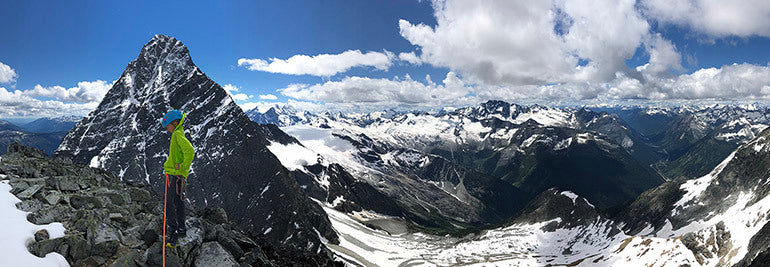
At Suunto we believe the more we appreciate and enjoy the great outdoors, the more we will want to protect it. This means those of us fortunate enough to have been given a love of the outdoors have a special responsibility to do as much as we can to ensure the next generation receive the same.
In the same way as ski mountaineer Greg Hill’s parents instilled in him the spirit of adventure and love for the natural world, we can do the same. Even if we don’t have kids, or if they’ve long left the nest, we can support organizations and events that achieve the same.
Passing on the passion
By Greg Hill
I am always a little conflicted around Christmas, societal norms tell me I should be buying gifts for my children. My wife is great, she gets them the things they need and a few of their wants. When I reflect back to the gifts I received as a child, it was the gifts of adventure that I liked best. The gift of a season’s pass at my local ski resort, and the gifts of the gear to ski with. Or the gifts my parents gave without realizing that they were giving them. I have been following their footsteps in this regard.
Our family home was far up a dirt road in Quebec, Canada. Our nearest neighbor was at least one kilometer away, and our house surrounded by deciduous forests. I have very few memories about the town we lived near, most are centered around backyard adventures. I can remember family moments hiking up Round Top mountain, cooking bannoch bread on a stick over an open fire. My parents facilitated my adventures by showing me what was possible. We canoe camped, hiked a lot, downhill skied, Nordic skied, the activities were endless. I cannot thank my parents enough for bringing me up appreciating the outdoors.
Having sparked this thirst for the outdoors, it was impossible to slow it. As I grew, so did my adventurous spirit. I was encouraged to go camping with friends, and the school I went to had an amazing outdoor education component. Soon, I was introduced to rock climbing and it became my gateway sport to mountaineering.
I was captivated by the rewards that came from overcoming the challenges; the intense feeling of accomplishment that followed any climb completed. This feeling was unparalleled and I began searching for it more and more. The challenges evolved from rock to ice, from cliffs to mountains. Soon my whole life was centered around outdoors and adventures.
These moments brought me a source of happiness and overcoming these challenges taught me a lot about myself. Through training hard, working towards harder and harder goals I developed more and more self-confidence. Time in nature taught me patience and an appreciation for nature.
Yet, I accessed all these wild places in a big truck, from a snowmobile or a helicopter. Solo drives to trailheads had me thinking about my impacts. Raising my kids started my questions on how I was living and what legacy I was passing on to them.
There was no profound “aha” moment, but my “eco-anxiety” grew till all of a sudden I needed to change. I have looked at all the aspects of my life and decided to work on what I can. I eat less meat, consider all my lifestyle choices, and drive an electric car. I fly less, and adventure locally a lot more. All of these choices resonate into a better feeling overall and a knowledge that I am trying to be better.
Raising my kids I have been trying to pass on the passion for adventure, and the appreciation for the outdoors. I know how much I have gained from my experiences and can only hope that they get as much from nature as I have.
While out with my kids I truly try and give them the best experiences, keeping the rewards as a priority, aiming for enjoyment, not exhaustion. Showing them the potential, yet letting them come to it on their own terms. Forcing children can easily turn them off activities so I simply encourage and open the doors, hoping they will follow.

Suuntoアプリでスポーツモードをカスタマイズする方法|競技別の表示項目も紹介
トレーニング中にウォッチを見ても、必要な数字がすぐ見つからない。反対に、表示項目が多すぎて走りへ集中できない。そんなときは、Suuntoウォッチのスポーツモードを自分の目的に合わせて整理してみましょう。
Suuntoアプリでは、同じスポーツでも「普段の練習」「インターバル」「レース」など、用途が異なるカスタムスポーツモードを作成できます。
この記事では、スポーツモードをカスタマイズする基本的な流れと、ランニング、トレイルランニング、サイクリング、登山で表示したいデータの考え方を紹介します。
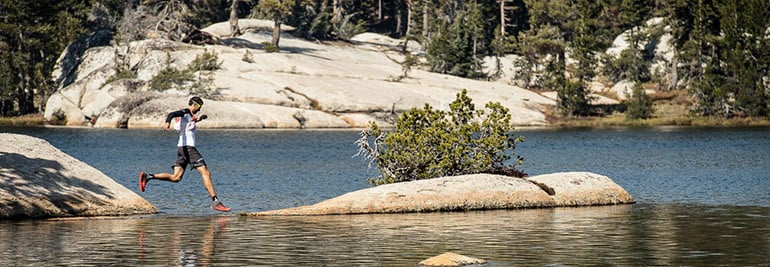
ウルトラランナーのフランソワ・デンヌは、重要な指標に絞ったシンプルな画面を使っています。
目次
カスタムスポーツモードとは
Suuntoアプリで作成する方法
表示項目を選ぶ3つのポイント
ランニングの設定例
トレイルランニングの設定例
サイクリングの設定例
登山・ハイキングの設定例
現行Suuntoウォッチで活用する
よくある質問
まとめ
カスタムスポーツモードとは
スポーツモードは、アクティビティを記録するときに使う設定です。ランニング、サイクリング、ハイキングなど、スポーツごとに適したデータ画面が用意されています。
既定のスポーツモードだけでも記録を始められますが、カスタムスポーツモードを作ると、運動中に表示するデータや画面レイアウトを目的に合わせて調整できます。
たとえば、同じランニングでも必要な情報は毎回同じとは限りません。
イージーラン:時間、心拍数、心拍ゾーン
インターバル:ラップタイム、ラップペース、心拍数
レース:距離、平均ペース、経過時間
用途別にモードを分ければ、トレーニングを始めるたびに画面を組み替える必要がなくなります。
Suuntoアプリで作成する方法
カスタムスポーツモードは、ウォッチとSuuntoアプリを接続した状態で作成します。アプリやウォッチのバージョンにより、画面名や配置が異なる場合があります。
Suuntoアプリでウォッチの画面を開く
「スポーツモードのカスタマイズ」を選ぶ
「スポーツモードを作成」を選び、競技を指定する
画面レイアウトと表示するデータ項目を選ぶ
設定を保存し、ウォッチへ同期する
作成後は、ウォッチ側で目的のスポーツモードを開き、設定した画面が表示されるか確認してください。レース当日に初めて使うのではなく、普段の練習で操作と見え方を試しておくと安心です。
▶︎詳しい操作手順:iOS版Suuntoアプリでスポーツモードをカスタマイズする方法
表示項目を選ぶ3つのポイント
1. その場で判断に使うデータを優先する
ウォッチに表示するのは、運動中の行動を変えるために使うデータです。たとえば、一定の強度で走りたいなら心拍数や心拍ゾーン、目標ペースを守りたいなら現在のペースやラップ平均ペースが判断材料になります。
細かな分析データは、運動後にSuuntoアプリで振り返ることもできます。すべてをウォッチへ表示しようとせず、その場で必要な情報を優先しましょう。
2. 1画面へ詰め込みすぎない
表示項目を増やすほど情報量は多くなりますが、運動中に読み取りにくくなることがあります。ウルトラランナーのフランソワ・デンヌも、トレイルランニングでは高度、上昇量、時間など、重要な指標へ絞ったシンプルな画面を好んでいます。
まずは1画面に2〜4項目程度を目安に試し、視認性や操作回数に合わせて調整してください。
3. 練習・レース・環境でモードを分ける
同じ競技でも、目的が変われば確認したいデータも変わります。「ロードの普段用」「インターバル用」「トレイルのロング用」のように名前を分けると、スタート前に選びやすくなります。
ランニングの設定例
ランニングでは、ペース、心拍数、距離、時間が基本です。ただし、すべてを常に見る必要はありません。練習の目的に合わせて画面を分けます。
イージーラン:経過時間、心拍数、心拍ゾーン、距離
テンポ走:現在のペース、ラップ平均ペース、心拍数、ラップ距離
インターバル:ラップタイム、ラップペース、ラップ回数、心拍数
レース:距離、平均ペース、経過時間、推定フィニッシュタイム(対応する場合)
現在のペースは短時間で変動しやすいため、一定ペースを保ちたい場面ではラップ平均や全体平均も組み合わせると判断しやすくなります。
トレイルランニングの設定例
トレイルでは、平地のペースだけで強度や進み具合を判断しにくいため、上昇量、高度、心拍数、経過時間を重視します。
現在高度
累積上昇量
経過時間と距離
心拍数または心拍ゾーン
ナビゲーション画面
長いレースでは、区間ごとのタイムや残り距離を確認できる画面も役立ちます。ナビゲーションは事前にルートを同期し、出発前に表示と操作を確認してください。ウォッチの地図やナビゲーションは安全を保証するものではないため、天候、装備、現地の案内も併せて判断しましょう。
サイクリングの設定例
サイクリングでは速度、平均速度、距離、時間を基本に、対応するセンサーを使う場合はケイデンスやパワーも候補になります。
通勤・気軽なライド:速度、距離、経過時間
持久走:心拍数、心拍ゾーン、平均速度、距離
パワートレーニング:パワー、ラップ平均パワー、ケイデンス、心拍数
走行中の画面操作は転倒や事故につながるおそれがあります。見やすいレイアウトを事前に用意し、操作が必要な場合は安全な場所へ停止してください。
登山・ハイキングの設定例
登山やハイキングでは、速さよりも現在地、進行状況、標高変化、行動時間を確認できることが重要です。
ナビゲーションまたは地図
現在高度と累積上昇量
経過時間と距離
心拍数
日の入り時刻や気象関連データ(対応する場合)
悪天候や視界不良に備え、予定ルートは事前にウォッチへ同期します。GPSウォッチだけに頼らず、地図、予備電源、適切な装備を準備し、行動計画を家族などへ共有してください。
現行Suuntoウォッチで活用する
Suunto Runは、日々のランニングでペースや心拍数を見やすく整理したい人に適した軽量モデルです。
Suunto Race Sは、コンパクトなサイズで、ランニングからトレイル、日々のトレーニングまで幅広く使いたい人の選択肢です。
Suunto Race 2は、大きなAMOLEDディスプレイで複数のデータを確認し、レースや長時間のトレーニングへ取り組みたい人に向いています。
Suunto Vertical 2は、オフラインマップや長時間のアクティビティを重視する、登山やトレイルランニングのユーザーに適しています。
利用できるデータ項目、レイアウト、機能はモデルやソフトウェアのバージョンによって異なります。購入前や設定前に、各製品ページとユーザーガイドで最新情報を確認してください。
よくある質問
同じスポーツで複数のカスタムモードを作れますか?
はい。たとえばランニングで、イージーラン用、インターバル用、レース用など、目的の異なるモードを作成できます。対応状況はモデルやアプリのバージョンにより異なる場合があります。
既定のスポーツモードは編集できますか?
既定モードを直接変更するのではなく、目的の競技を選んでカスタムスポーツモードを作成します。作成したモードはSuuntoアプリから編集できます。
変更がウォッチに表示されないときは?
ウォッチとスマートフォンのBluetooth接続、Suuntoアプリとの同期、アプリとウォッチのソフトウェア更新を確認してください。改善しない場合は、対応する製品のユーザーガイドまたはサポート情報を確認します。
まとめ|見るデータを減らすと、判断しやすくなる
スポーツモードのカスタマイズで大切なのは、表示できるデータを増やすことではなく、運動中の判断に必要なデータを選ぶことです。
まずは既定のスポーツモードを使い、足りない情報や見にくい画面が分かってから調整しましょう。練習、レース、競技ごとにモードを分け、実際のトレーニングで試しながら、自分に合う表示へ育ててください。
自分のスポーツに合うSuuntoウォッチを選ぶ
必要なデータを見やすく整えて、トレーニングとレースへ集中しましょう。
Suuntoスポーツウォッチを見る

D.I.E.T (disaster imminent every time?), and three unchanging principles of nutrition for athletes
What’s the difference between eating healthy and eating right? For athlete, entrepreneur, coach and nutrition expert Dr. Rick Kattouf II this question cuts right to the heart of the debate on nutrition.
“There is a huge difference between eating healthy and eating right,” Kattouf says. “There is a huge difference between feeding the body and fuelling the body. I tell people to stop eating healthy, and they freak out.”
Rick has designed his own line of nutritional supplements. © Rick Kattouf
An example of what Kattouf calls a healthy meal is grilled chicken on a bed of greens, or a bowl of vegetables, beans with a little tofu. While Kattouf agrees these meals are healthy, he says that doesn’t make them right. Eating right is another matter.
Kattouf has credentials to back up his perspective on nutrition for athletes: during four years of pre medicine study and four years of studying optometry he learned about human physiology, pharmacology and biochemistry. The three-time age group national duathlon champion and all-round fitness freak has the performance experience to back up his approach, too.
“There’s a lot of people out there chasing one diet after the next, and one thing I am is an anti diet guy,” Kattouf says. “I trademarked the acronym for the word diet: disaster imminent every time®. That’s what a diet is. My nutrition principles haven’t changed since I was at college. And now I’m 47. Reason being is that human physiology is human physiology.”
Rick Kattouf’s unchanging principles of nutrition
Photo by Danielle Cerullo on Unsplash
When Kattouf starts coaching a new athlete he always asks the same three questions: what time of day do they get out of bed, what time of day they work out and what time do they go to bed. Being clear about this is where a proper nutrition plan begins.
“But what do most people try to focus on? Calories. It’s not about calories in and calories out. It’s all about three key principles: the proper fuelling frequency, the proper fuelling timing, and the right balance of carbohydrates, protein and fat in every meal and snack.”
Photo by Brian Erickson on Unsplash
1. The right ratio
Whether it’s a pro athlete, an age group runner or a morbidly obese person he’s coaching, Kattouf sticks to the same basic meal principle; each meal should consist of about 50 to 60 percent carbohydrates, around 15 to 25 percent protein and between 15 to 25 percent fat.
“For decades we’ve been living with this concept of a higher protein, lower carb diet,” he says. “The carbs have got the dunce hat on and have been shoved into the corner. But what is the only food that the brain can use as fuel? It’s sugars, glucose, carbs, and when we cut those out we’re going to reduce mental acuity, and not get the results we want.”
He says it’s this proper balance of “C-P-F” that plays an important role in stabilising blood sugar, reducing sharp spikes and drops, and helping the body reload. They also help to assist in repairing muscle damage, building muscle, cartilage and bone. These are “macronutrients”, meaning the body needs a large amount of them (and in the right balance) compared to micronutrients like vitamins and minerals.
“There are three things we are going to ask ourselves before every meal or snack: what is my carb, what is my protein, what is my fat. If we can answer all three of those we are moving in the right direction,” Kattouf says
2 & 3. Fuelling frequency and timing
These two are separate, but closely connected. The proper frequency is about how often to eat throughout the day. For optimal performance Kattouf says every two and a half to three hours upon the first snack at waking.
“Fuel your body immediately upon waking, not 30 minutes after, not 60 minutes after, immediately upon waking and then every two to three hours thereafter throughout the day, depending on your goals,” Kattouf says.
The proper timing is about fuelling before, during and after a workout. Having a well balanced snack immediately before a workout and one immediately after is a good start. Especially for endurance athletes, fuelling during is equally important.
Rick’s quick and easy balanced meal
2/3 cup oats1 slice whole grain bread1 TBSP peanut butter3 egg whites
Breakdown:
457 calories52% carbohydrate23% protein25% fat
READ MORE
FUELLING THE ENGINE: A COMMONSENSE APPROACH TO NUTRITION
FUELLING THE ENGINE: TALKING NUTRITION WITH ULTRA RUNNER LUCY BARTHOLOMEW
FUELLING THE ENGINE: TALKING NUTRITION WITH TRIATHLETE MEL HAUSCHILDT
FUELLING THE ENGINE: TALKING NUTRITION WITH TRAIL RUNNER EMELIE FORSBERG
Lead photos by rawpixel and Eaters Collective on Unsplash


