




SUUNTOブログ
10 must-read Suunto articles from 2020
Just like training, a little reading everyday goes a long way. And reading about training, about adventure, and about how to improve your core skill set keeps the fire of inspiration and discipline burning.
So bookmark this article, and next time you’re in recovery mode and feel like you need a boost, flop on the couch and peruse at your leisure. You’ll find yourself itching for your next big training session or adventure.
Pau Capell (above) went after his own record on the UTMB trail this year.
Welcome to the season of the FKT
It’s been one heck of a year. But despite the disruption and the tragedy caused by the pandemic athletes and adventurers, like most of us, have had to adapt, and find new ways to keep the show on the road. With races cancelled, many have turned to fashioning their own personal adventures, including going after fastest known time (FKT) records on the world’s iconic trails. Read on to find out about the 2020 FKT phenomena.
Professional Xterra triathlete Karsten Madsen on his Everesting attempt. © @matthew.tongue
No races? Conquer your own Everest?
Another way athletes, particularly triathletes, have kept themselves busy and motivated is by scaling their own Everests. We talked to one Suunto athlete about this phenomena and found out how cool it is.
© Kelvin Trautman / Red Bull Content Pool
The benefits of training to music and making your best playlist
This year we’ve spoken to DJs about music and movement, and how they find the balance. Each DJ artist or group put together a playlist on Suunto’s Spotify channel, with each playlist designed to support easy, medium, intense workouts, or to vibe with your mornings, evenings and nights. We also found out about the benefits of working out to music and how to make the pitch perfect playlist.
Get Suunto's playlists to work out to here.
© Philipp Reiter
Start your path to mountain navigation mastery here
Aiming to spend more time in the mountains? Then make sure to study our series on wayfinding in the mountains. Put together by Suunto’s navigator-in-chief, Terho Lahtinen, an elite adventure racer, these articles look at the core skills needed to become a competent navigator in big terrain.
© Kilian Jornet
Finding the balance: Emelie Forsberg’s 7 motherhood tips for running mums
Suunto ambassador and skyrunning champion Emelie Forsberg has transitioned from full time athlete to full time mum. She’s had some trial and error as she’s tried to find a balance between training and performing, and being a totally present and awesome mum. We caught up with her and found out what she’s learned along the way.
William is the first person to swim underwater across a major channel.
5 steps to therapeutic breathing to combat COVID-19
Suunto ambassador and world champion freediver William Trubridge knows a thing or two about breathing techniques and caring for the lungs. Breathing exercises, whether from the yogic pranayama tradition or from physiotherapy, are key aspects of freediving training. Concerned about the impact of COVID-19, William put his considerable research skills to work and discovered therapeutic breathing can go a long way to help with the healing process. Read on for his five steps.
8 tools for tracking the weather with Suunto
Knowing what’s up with the weather is a question of personal responsibility and safety for outdoor people. Even more so if you’re heading out with a group under your care. Fortunately, the days of having to poke around online to put together a picture are gone; now, thanks to smart tech and apps, high definition weather intel gets beamed straight to your device. Read on to make sure you have all the tools at your disposal.
Know your species of cloud
A little like bontanical knowledge, knowing the various species of clouds is more than just a geeky fascination; it can keep you and your group safe. Each species of cloud is telling you something, indicating what’s going on in the environment around you. We talked to Sarvesh Garimella, the chief scientist and COO at MyRadar about cloud identification and what to look out for.
Michael Arend coaches ultra and marathon runners, as well as triathletes and ski mountaineers.
How to adapt your training when the unexpected strikes
This year has been all about doing our best to adapt to the disruption caused by COVID-19. Given humans are creatures of habit, adapting isn’t always that easy. Oftentimes we hold on tight to our previous way of doing things until we have no choice but to let go. We talked to professional running and ultra marathon coach Michael Arend about how to adapt training when life blows up and you find yourself looking at the wreckage of your well laid plans.
Planning a route from scratch is just one of the many route planning options on Suunto app.
Six ways to plan a route for your next adventure
Whether Suunto or via our partners, we have ensured our users have a fist full of ways to plan their adventures. There’s something to be said for carefully planning an unknown route in advance and then going out to explore it. That’s what adventure is all about.
Lead images: Philipp Reiter

Kilian Jornet pushed his limits on 24-hour running attempt
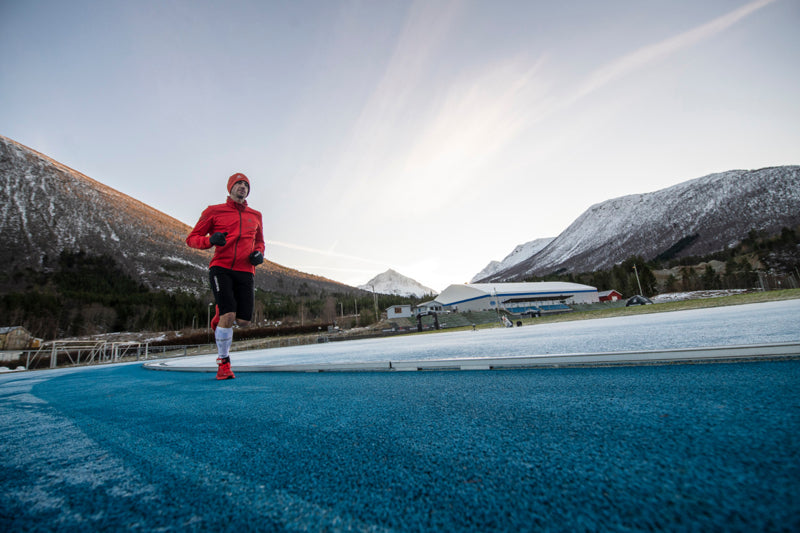
It was an impressive attempt. Kilian ran 134.8 km in 10 hours and 20 minutes on a 400 m track in Måndalen, Norway. He didn’t achieve his goal of running for 24 hours, but he achieved his other goals; to push his limits and learn more about training.
Scroll through the photos below and learn more about Kilian’s attempt.
When Kilian began his Phantasm24 running challenge on November 27, thousands of fans around the world watched Salomon’s live stream of the event on Youtube and expressed astonishment in the chat box that Kilian could run for 24 hours in that kind of cold.
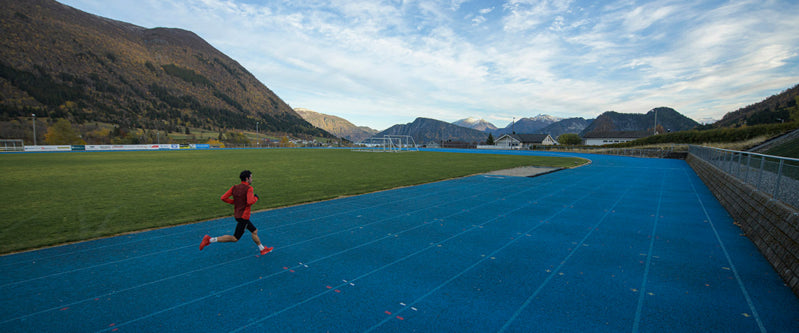
It was -1°C in Måndalen, Norway, the location of the 400 m track, and the steam from the breath of Kilian and five Norweigen ultra runners competing was visible as they ran on a thin strip of blue track, with sparkling white frost covering either side. The track had to be de-iced to make it safe for the runners.
As always, Kilian wanted to test his limits, and to continue to develop his knowledge of endurance training. The main goal of the event was to run for 24 hours, and to see who could run the greatest distance in that time. Despite his impressive split times, it wasn’t to be.
After setting an impressive pace in the first 10 km (4:16 per km), and running the first 42.4 km in 3:02:23, Kilian decided to pull out of the attempt after 10 hours and 20 minutes due to chest pains and dizziness.
“I was feeling pretty good, with the normal ups-and-downs of a long race like this,” Jornet said. “My body felt good, my legs felt good and then, suddenly, I felt two intense pains in my chest and started to get very dizzy and very exhausted. The medical people came to me and checked me out, and said it was best to go to the hospital.”
Earlier in the day, Kilian’s partner Emelie Forsberg and their daughter Maj were there supporting his attempt. The track is located near to their home in Ramsdal.
Norwegian ultra runners Sebastian Conrad Håkansson, Simen Holvik, Jo Inge Norum, Harald Bjerke and Didrik Hermansen also gave strong performances. Seb (Sebastian) kept pace with Kilian (pictured above), and broke the Norwegian records for 100 km, 12 hour running, and 100 miles before stopping. Harald Bjerke completed 232.28 km, Jo Inge Norum 219.45, Simen Holvik 208.13 and Didrik Hermansen 174.8 km. Suunto congratulates them all.
While he’s disappointed he had to withdraw early, Kilian says he learned a lot about training and nutrition in the process, which will help him tackle future challenges.
“I got this idea about a year ago to run for 24 hours on a track so I went to Salomon to help organize the run,” he says. “I wish it went differently, but it’s still fun to explore different things and new projects. So I want to thank Salomon and Suunto for supporting the project and everyone who helped organize the event, from the track volunteers to the community in Måndalen and the people at the track club. I think it was colder for the volunteers than for the runners!”
Read Kilian’s post about his Phantasm24 challenge!
All images: © Vegard Breie
Read more articles
Kilian Jornet starts initiative to protect mountain ecosystems
7 tips for running in the rain
8 tools for tracking the weather with Suunto

雨の日のランニングを安全に楽しむ7つのポイント|服装・シューズ・注意点
雨の日は「今日は走るのをやめよう」と思いやすいものです。しかし、天候と体調に合わせて準備すれば、雨のランニングはレースへの対応力を養い、いつものコースを違った感覚で楽しむ機会にもなります。
一方で、濡れた路面、視界の悪化、体温低下、雷や強風など、晴天時とは異なるリスクがあります。予定を守ることより、安全に走れる状況かを判断することが先です。
この記事では、雨や寒さの中でのアドベンチャーを好むSuuntoアスリート、ベン・ジェームズの体験をもとに、雨の日のランニングを安全かつ快適に楽しむ7つのポイントを紹介します。
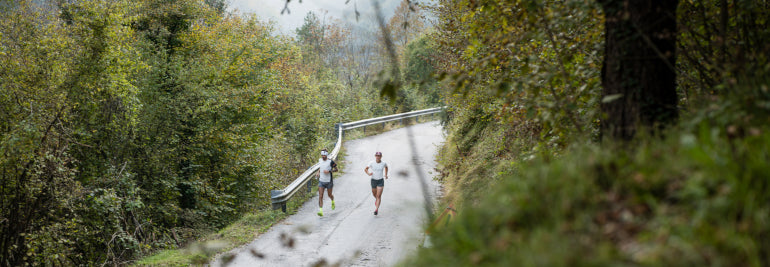
雨の中を走るベン・ジェームズ。© Ben James
目次
天気と中止基準を確認する
濡れても冷えにくい服装を選ぶ
車や自転車から見えるようにする
靴擦れと擦れを予防する
路面に合わせてコースとペースを変える
レースに備えて雨天練習を試す
走り終えたら早めに体を温める
Suuntoウォッチを雨のランニングに活用する
よくある質問
まとめ
1. 天気と中止基準を確認する
雨が降っているだけなら走れることもありますが、雷、強風、洪水、急な増水、視界不良、極端な低温が予想される場合は別です。出発前に天気予報と警報・注意報を確認し、危険がある場合は屋内トレーニングへ変更してください。
特に雷鳴が聞こえる、稲光が見える、道路が冠水している、川や沢が増水している場合は、屋外でのランニングを始めないことが重要です。走っている途中で状況が悪化したら、予定距離にこだわらず、安全な建物へ避難します。
気象情報やウォッチは判断を助ける道具ですが、安全を保証するものではありません。地域の公式情報と現場の状況を優先しましょう。
2. 濡れても冷えにくい服装を選ぶ
雨の日は「濡れないこと」だけでなく、濡れたあとに冷えすぎないことが大切です。気温、風、走る時間、運動強度に合わせ、吸汗速乾性のあるベースレイヤーと、必要に応じて防風・防水性のあるシェルを組み合わせます。
厚着しすぎると汗がこもり、内側から濡れて体温を奪われることがあります。短い市街地ランと、低温下の長時間トレイルでは必要な装備が異なるため、「雨ならこの服」と固定せず、条件ごとに調整してください。
綿素材は濡れると乾きにくいため避ける
つばのあるキャップで顔へ当たる雨を減らす
低温や強風では防水・防風シェルと保温レイヤーを用意する
長時間走る場合は防水袋に予備の手袋やウェアを入れる
3. 車や自転車から見えるようにする
雨の日はドライバーや自転車からの視界も悪くなり、制動距離が延びることがあります。明るい色のウェア、反射材、前後から見えるライトを使用し、自分の存在を早めに知らせましょう。
交差点や駐車場の出入口では、車がこちらを認識していると決めつけないことが大切です。水たまりを避けるため急に車道側へ動かず、周囲を確認してから進路を変えます。
▶︎関連記事:「夜のランニングを安全に楽しむ7つのポイント」
4. 靴擦れと擦れを予防する
シューズやウェアが濡れると摩擦が増え、足、脇、太もも、ウェアの縫い目付近などに擦れが起きやすくなります。
吸湿性とフィット感を確認したランニングソックスを使う
長距離では擦れやすい部分に保護剤を使用する
濡れた状態でずれやすいウェアやザックを事前に試す
レース本番で初めて使うウェアやシューズを避ける
防水シューズは水の侵入を抑える一方、上部から入った水が抜けにくい場合もあります。路面、気温、距離に合わせ、グリップと排水性も含めて選びましょう。
5. 路面に合わせてコースとペースを変える
濡れた白線、金属製のふた、タイル、木道、落ち葉、泥、苔のある岩は滑りやすくなります。晴れの日と同じペースや歩幅を維持しようとせず、足を置く場所を早めに確認してください。
ベン・ジェームズは、雨に強風が加わるような厳しい状況では、ルートを内陸や平坦な場所へ変えたり、短時間のトレーニングへ調整したりすることを勧めています。
増水しやすい河川沿い、沢、アンダーパス、崖沿いのトレイルは避けます。視界や路面が悪いときは、距離を短くする、舗装路へ変更する、トレッドミルを使うことも適切なトレーニング判断です。
雨のランニングが、思いがけない景色につながることもあります。© Ben James
6. レースに備えて雨天練習を試す
レース当日の天候は選べません。安全に走れる程度の雨で、短時間の練習を経験しておくと、ウェアの蒸れ、シューズのグリップ、補給の扱いやすさ、視界、体温の変化を確認できます。
最初は自宅の近くや、途中で切り上げやすいコースを選びましょう。雨のたびに走る必要はありません。目的は無理に耐えることではなく、自分の装備と判断基準を知ることです。
週間目標を決めている場合も、危険な天候で帳尻を合わせようとしないでください。日程や内容を変更して継続することも、長期的なトレーニングの一部です。
7. 走り終えたら早めに体を温める
走っている間は暑く感じても、停止すると濡れたウェアと風で急速に冷えることがあります。走り終えたら、できるだけ早く屋内へ入り、濡れた衣類とソックスを脱いで乾いた服へ着替えましょう。
シューズは中敷きを外し、風通しのよい場所で乾燥させます。強い熱を直接当てると素材を傷める可能性があるため、製品の手入れ方法に従ってください。
震えが止まらない、判断力が低下する、手足がうまく動かないなど体温低下が疑われる場合は、運動を中止して暖かい場所へ移動し、必要に応じて医療機関へ相談してください。
Suuntoウォッチを雨のランニングに活用する
Suunto Runは、日常のランニングを軽快に記録し、ペースや心拍数を確認したい人の選択肢です。
Suunto Race Sは、コンパクトなサイズで、普段のランからレース、ルート確認まで幅広く使いたい人に適しています。
Suunto Race 2は、大きなAMOLEDディスプレイでデータやオフラインマップを確認しながら、長時間のトレーニングへ取り組みたい人の選択肢です。
出発前にウォッチを充電し、必要なルートを同期してください。雨天時はタッチ操作や画面確認へ集中しすぎず、安全な場所で止まって操作します。使用後の手入れと防水性能については、各モデルのユーザーガイドに従ってください。
よくある質問
小雨ならランニングしても大丈夫ですか?
雷、強風、冠水、増水、極端な低温などの危険がなく、体調と装備に問題がなければ、小雨の中を走れる場合があります。ただし、地域の警報・注意報と現場の状況を確認し、不安があれば屋内へ変更してください。
雨の日は防水ジャケットを着るべきですか?
気温、風、運動時間、強度によって異なります。低温や強風、長時間の運動では防水・防風シェルが重要ですが、暖かい環境では蒸れや過熱にも注意が必要です。
雨の日はランニングシューズを変えるべきですか?
濡れた路面で十分なグリップがあり、足に合ったシューズを選びます。トレイルでは路面に対応したアウトソールが重要です。防水性だけでなく、排水性、ソックスとの組み合わせ、擦れにくさも確認してください。
まとめ|雨に耐えるより、状況に適応する
雨の日のランニングは、普段と異なる環境へ対応する練習になります。しかし、走り切ること自体が目的ではありません。
天候を確認し、濡れても冷えにくく見えやすい服装を選び、路面に合わせてペースとコースを調整しましょう。雷や強風、増水などの危険がある場合は中止し、屋内トレーニングへ切り替えてください。
天候に合わせて、ランニングを記録する
Suuntoのランニングウォッチでトレーニングを記録し、走り終えたあとに振り返りましょう。
Suuntoウォッチを見る

Kilian Jornet takes on 24-hour running challenge
Transcendent Spanish mountain athlete Kilian Jornet, who climbed Everest twice in one week, is testing his legendary endurance prowess against an entirely different kind of challenge.
Coming up this November, Kilian will step onto a kind of terrain that he’s unaccustomed to – a pancake flat 400 m (¼ mile) track – and run for 24 consecutive hours in a pair of Salomon’s new S/LAB Phantasm road running shoes. For the 33-year-old, who has won elite races all over the world and in four categories – trail, ultra, vertical, and skimo – the Phantasm24 running challenge will push him out of his comfort zone, something he looks forward to.
“The motivation is to try different things and see what I am able to do, whether that is climbing at high altitude or, in this case, running on flat ground,” Kilian says. “It’s fun to discover different things I can do, and training on the flat is a good test and an opportunity to learn in terms of nutrition and pacing, and then try to apply those things to different activities, like even mountaineering projects.”
Follow the event live starting at 10.30am CET on November 27, 2020
Going up against the Greek
Kilian will track his progress and split times with his Suunto 9 GPS sportwatch to determine how he is performing against the times of Greek ultramarathoner Yiannis Kouros, who holds the record for the greatest distance run in 24 hours (303.506 km / 188.590 miles). While Kilian, true to form, won’t make any bold and brash predictions, we know that whenever he presses “start” on his Suunto 9 GPS watch amazing things tend to happen.
“I’ve seen Yiannis’s split times so I want to keep up with that as long as I can,” Kilian says. “I know the speed I will need to keep every hour, and the pace for every kilometer and every lap. The first 10 hours will be a bit faster and then slowing every hour after. The big thing is to not have any muscle problems and be able to eat without having big down periods.”
Preparing the body
Physically and mentally accustomed to running elite mountain races like Ultra-Trail du Mont Blanc (UTMB), Hardrock 100, and Western States 100, Kilian has sought out expert advice from coaches and physios to prepare his body for the repetitive motion of running on the flat.
“It’s mostly working on the speed because my legs aren’t used to moving this fast,” he says. “To prepare, I’ve been doing three days of speed work each week at the track or on roads. The form you run with on the flat is very different from how you run in the mountains, where you run higher because you pass over obstacles and put your feet in different places as the terrain changes.”
Kilian was forced to delay the 24-hour attempt in recent weeks due to muscle injuries that presented prior to his first 10 km road race, the famed Hytteplanmila race in Norway, which he finished in 29:59 in mid-October.
“The training has been a bit frustrating the last few months going from injury to injury to injury,” Kilian says. “I have had good blocks of training and then I would have an injury and have to rest. After the 10 km race, I had to stop training to rest an injury. Since then, the plan has been to do one good week of training and see how my body feels, then rest the muscle tissues and recover for the attempt.”
In his 24-hour attempt, Kilian will wear Salomon’s new S/LAB Phantasm, a super lightweight road racing shoes that will be released in the spring of 2021. He has been using the shoe for several months during his track and road running training sessions. “I tested the prototypes of the S/LAB Phantasm a year ago and now I’m using the same shoe that will be available in spring to the public,” Kilian says. “It’s a light, very reactive and well-balanced shoe with good cushioning, which is important when you are doing longer training on hard surfaces.”
Add the date
The 24-hour running challenge will be held in Måndalen, Norway, starting on Friday, November 27 at 10.30am CET. Fans will be able to watch the challenge via a live feed at www.Salomon.com/phantasm24. A web series previewing Jornet’s preparation will appear on Suunto and Salomon social media in the days leading up to the event.
Suunto will serve as the official timekeeper of the Phantasm24 challenge.
All images: @vegardphoto
Read more articles
Kilian Jornet starts intitiative to protect mountain ecosystems
Six ways to plan a route for your next adventure
8 tools for tracking the weather with Suunto

Five Adventure Starter Packs up for grabs!
If you love adventure like we do we want you to show it by sharing an awesome image from one of your recent trips on Instagram. Share your adventure pride, and you have a chance to get kitted out for your next trip: we have five Adventure Starter Packs to give away, each worth over 1350 euros!
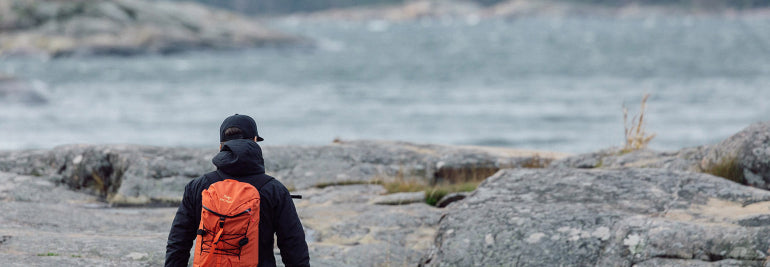
Each starter pack includes a Suunto 9 GPS watch, an Arcteryx Alpha AR 20 backpack, an Insta360 action camera, a Jetboil portable stove and Oakley Clifden sunglasses. You’ll be ready to hit the trail!
How to enter:
1. Post an adventure image with text explaining what your best outdoor adventure has been or what your dream outdoor adventure would be. 2. Tag #adventurestartshere and #suunto, #arcteryx, #insta360, #jetboil, #oakley in your copy text. 3. Follow @suunto We’ll choose the 5 most inspiring posts among those tagged with #adventurestartshere plus #suunto #arcteryx #insta360 #jetboil and #oakley, and send the adventure gear their way soon after. Contest ends on November 23 at 8 am GMT. The most inspiring posts will win. Good luck! Terms and conditions apply. Read them here.

Watch this new adventure film about the folly of building walls
Local runners came and joined the team as they ran through different areas. © Philipp Reiter
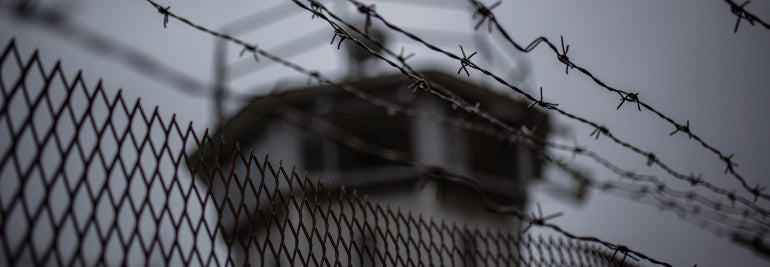
To celebrate the 30th anniversary of the fall of the Berlin Wall, eight runners from Germany and Austria ran the 1400 km barrier that divided east and west Germany for 38 years.
The eight day relay run happened in November 2019 and now the team has released the documentary, which looks at both their journey, and the tragic history surrounding the wall.
They began in the south-east of Germany and ended in the north on the Baltic Sea. All along the way they encountered the still visible remains of the once militarised zone that west Germans once called “the death strip” because so many east Germans were killed while trying to escape across it.
All coming from Germany and Austria, the experience turned what was previously a vague sense of their own history into something real, moving and also rousing. Each runner felt the importance and urgency of defending democratic institutions, freedom and truth.
“There’s not a lot of the wall left, it was taken down,” says organizer, mountaineer, and film maker Philipp Reiter. “This really got me thinking that now it’s about taking down the walls that are in our heads, in everyone’s heads. It’s not about east or west anymore, it’s about all the things that get stuck in our minds and steal our personal freedom. All these things that stop us from being happy and being free.”
Watch their journey below.
Lead images:
© Philipp Reiter & Nicolas Holzmeyer
Read more articles
8 tools for tracking the weather with Suunto
Know your species of cloud
This relay run shows we are stronger together


