




SUUNTOブログ

The road to Kona Ironman, Step One: Planning for Success
What does it take to train for the Ironman World Championship in Kona, Hawaii? Follow our four-part series about Suunto athlete Åsa Lundström as she prepares and find out!
For Swedish triathlete Åsa Lundström the next few weeks are everything.
Over the last month, the 30-year-old medical student and professional athlete has been preparing for the approaching Ironman World Championship in Kona, Hawaii on October 10th, 2015.
It’s the legendary Ironman that every triathlete dreams of competing in. That dream is about to become a reality for Åsa.
“Every sport has tales to tell of battles on the race course,” she says. “And with Ironman, we all hear stories of the legendary clashes of the triathlon titans at Kona.
“The best part is that we now have the opportunity to become one of those stories.”
Click here to read more about Åsa, the unlikely Swedish triathlete
Like all big projects, Åsa's road to Kona begins with the most important step: careful planning. She works closely with her professional triathlete coach, Cliff English, for this. When to intensify, where to train and when to go to Hawaii have all been planned well in advance.
Cliff updates Åsa’s training schedule week-by-week, always trying to find the right balance between the intensity and volume of her training and ensuring she gets enough recovery time.
“I’m constantly monitoring her sessions, looking at objective measurements, such as pace and power, as well as her subjective feedback on each session and on other factors including sleep quality, muscle soreness and freshness,” Cliff says.
During a normal training week, Åsa puts in between 20 and 25 hours. For Kona, that jumps to 35 hours every week. Her life becomes structured around training. In one week, she swims five or six times, cycles four or five times, runs five to six times and does strength and core training three times.
“Åsa typically trains two to three times per day,” Cliff says. “Some of the sessions are separate with a morning session then a midday session and typically a lighter active recovery session later in the day.
“I tend to prescribe one key session per day, however I also include combo sessions that include bike and run that are typically executed at race efforts.”
All this training might sound austere, like Åsa has no life, but she enjoys the process.
“When I have a big goal to work towards, it feels natural to focus on that, and to make choices adjusted to it,” Åsa says. “I don’t believe being disciplined means life cannot be fun at the same time.”
To keep things fun and to plan in a short term training goal, Åsa recently competed in the Tjörn Triathlon in Sweden and won the women’s division.
“It was a great boost,” she says, “and gave me proof that my training is going in the right direction.”
That’s important because she says it’s not always easy to tell if her build up is going well.
“When you are in a big training period, you feel tired and worn, and it’s hard to tell sometimes,” she explains. “However, when you feel tired, and you somehow manage to make the body do what you ask, then this is a good sign, especially if you were able to push yourself to a required pace or effort you didn’t think you could do.”
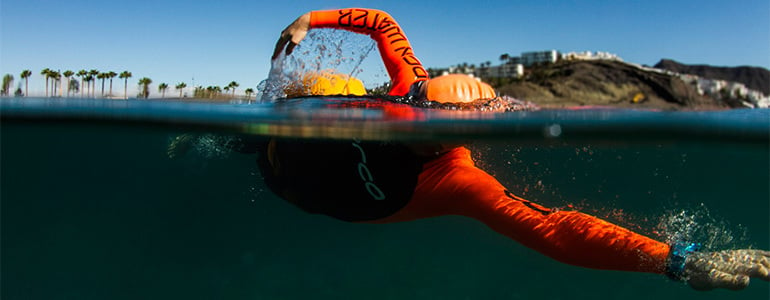
Åsa recently travelled to Fuerteventura in the Canary Islands to begin her final preparations. The warmer conditions are more similar to Hawaii than in Sweden, making it a good training ground.
Check out the second step, progress, of our four part series about Åsa as she continues on the road to the Ironman World Championship in Kona.
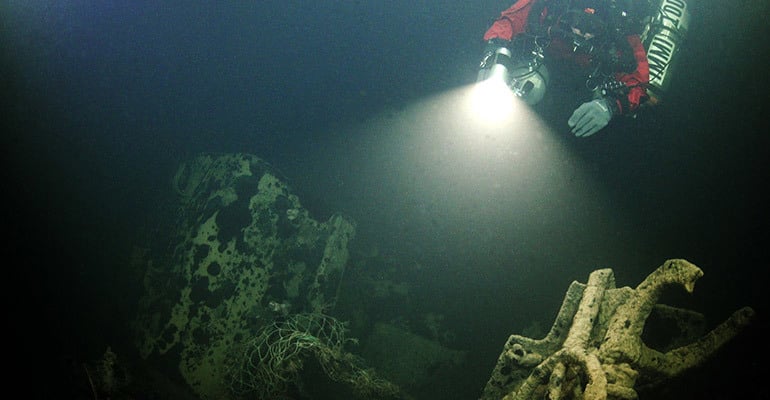

FINDING THE LAST MISSING GERMAN WW2 U-BOAT IN THE GULF OF FINLAND
“For those who love adventure and exploration, the fraction of a second when you realise that you have actually rewritten the history or confirmed something that has only been speculated on before, is an unforgettable moment,” says underwater explorer Immi Wallin.
Immi Wallin and her Subzone team discovered a missing German U-boat off the Estonian coast in August. Here, Wallin tells the story for the first time.
“The secrets of the seas, with its hidden lost ships, do not reveal themselves easily. To find these secrets, you sometimes need perfect weather, plotting information from the archives of sea charts and then checking a mysterious marking on your chart, which you do not remember how and why you put down in the first place.
On August 12th, about a month ago, I went to check a marking on my sea chart with side scan sonar together along with my colleague. The marking had bothered me for some time because I did not remember what it was and it seemed to be next to a mine row and in a patrol area of a still missing German U-boat.
U679’s closed hatch and periscope
U-679 gave a weather report on December 27th 1944 while in the Gulf of Finland. She had rendezvoused at sea with U-637 and U-745 in the evening of December 26th. U-745 had delivered encrypted communication.
On January 9th, Soviet MO-124 detected a submarine four miles northeast of the Pakri lighthouse and dropped eight large and 20 small depth charges. The Germans assumed that MO-124 had sunk U-679, but the Soviets did not believe it because they didn't find any evidence of a destroyed submarine in the area. Nevertheless, the cause for disappearance of U-679 that was recorded in Western literature was depth charge attack by MO-124. The fact that U-679 did not reply to a message sent on January 10th, 1945 supported this theory.
Depth, poor visibility, hydrogen sulphide, hypoxia and trawl nets made the dive a challenge
Back to August 12th 2015. I decided to survey the whole mine row laid in January 1945 that was plotted next to the marking I had on my sea chart. When reaching the marked spot on the chart, something happened on the screen of the side scan sonar. The moment I saw a submarine image appearing on the sonar screen was exactly the fraction of a second that I will remember forever. The image showed a Type 7C German submarine – already recognizable from the image. There was only one that had not been found yet – U-679. That same night the Estonian National Heritage Board was informed about the discovery.
The first dive to U-679 was conducted on September 10th. Due to the depth, 90 m, we needed a flat sea and a team of deep divers, support divers and boat handlers. The aim for the dive was to document the wreck’s condition. The video material was provided to the authorities.
Conditions were good at the surface, but more challenging in the water. There were slight horizontal currents all the way from the surface to the bottom. The most challenging part was the visibility that worsened towards the depths.
We passed several white cloud layers and just about 10 m above the bottom the visibility got very bad and I could smell the hydrogen sulphide typical for a sea bottom with hypoxia. The shape of the submarine’s conning tower became slightly visible in the light we carried with us. The shot line was in the middle of the conning tower, so we decided to shoot video around the conning tower having possibility to find back to the shot line.
U679’s 37mm antiaircraft gun
The video camera, once again, could see much more than our eyes. We could confirm what was visible already on the side scan sonar image. The conning tower was type IV, having 3.7 cm anti-aircraft gun on the lower wintergarten and two 2 cm zwilling anti-aircraft guns on the upper wintergarten. The hatches were closed.
U-679 was lost with all hands, so the wreck is also a war grave for 51 men who lost their lives serving their country. The wreck will be respected as these men’s final resting place and as a historical monument of the war event. U-679 is now under state protection set by Estonian Heritage Board.”


Freedom – The beauty of our underwater world
Experience the beauty of our fragile underwater world with Tomoka Fukuda, Fernando Stalla and others.
Freedom – The beauty of our underwater world


Will Trubridge ready to dive deep in Cyprus
For the last two weeks he’s been adjusting to the different water conditions in Cyprus, the location of the AIDA Depth Diving World Championship happening this weekend. Is world champion freediver William Trubridge now ready to battle his great rival Alexey Molchanov?
When Will Trubridge arrived in Cyprus two weeks ago to prepare for the AIDA Depth Diving World Championship, he got a surprise. He discovered he’s about 300g lighter in the water of Cyprus than in the Caribbean, his home turf.
“The waters of Cyprus are the saltiest in the Mediterranean,” Will explains. Saltier water means denser water, which is made denser again due to the water in Cyprus being cooler than the Caribbean. “This means I am more buoyant than I am in Dean's Blue Hole at the same depth,” Will says. “This makes my descents a lot longer here, 14 seconds longer for the same depth.”During one recent dive, Will was 20 seconds slower than he would have been in the Caribbean and, as a result, he had his first surface blackout since April. But, after some mathematical calculations – something Will enjoys – he worked out that diving with an extra 300g lead weight on his neck balances out his extra buoyancy – problem solved. He’s now ready to battle his great rival, Russian freediver Alexy Molchanov.
Click here to read more about Will Trubridge and his love of the ocean
Alexy has just arrived in Cyprus after training for some time in Croatia where the water condition is similar to Cyprus. “I’m sure Alexy is going to give me a good run for my money,” Will says. “We get on very well, but we definitely want to beat each other.”Despite wishing he had more time to train before the competition this weekend, Will’s confident he will do well in FIM and CNF, the Free Immersion and Constant Weight Without Fins disciplines of freediving.“My fundamental goal is to do three clean dives,” Will says. “If I do that, then I’m guaranteed three medals. I would like to win gold if possible.”
Aside from winning, Will’s most looking forward to seeing how he responds to the extra pressure of diving in a high profile competition. “In training, my dives are discovery of my potential,” he says. “In competition it’s more about staying focused and steady in mind and stepping up to the plate to win under tough psychological conditions. “In most other sports, the adrenalin you get from performing in front of spectators and media can be used to your advantage, whereas in freediving anything that lifts your heart rate isn’t helpful. “That’s the big psychological test of competing at this level.”
The AIDA Depth Diving World Championship is from September 11 to September 20. Stay tuned for the competition results!
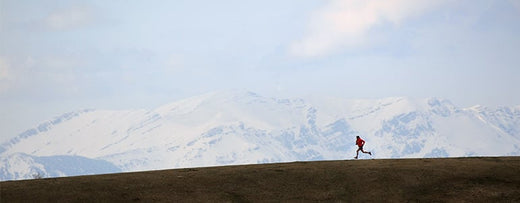

トレイルランニングの練習コースの選び方|登り・下り・距離を組み合わせるポイント
トレイルランニングの練習では、走る距離だけでなく、累積標高、登りの長さ、下りの路面、テクニカル区間の割合によって負荷が大きく変わります。大会に向けて準備するなら、「長く走る日」と「登りを鍛える日」を分け、目的に合うコースを選ぶことが大切です。
この記事では、山岳アスリートのキリアン・ジョルネが紹介した5つのトレーニングルートをヒントに、トレイルランニングの練習コースを組み立てる方法を解説します。海外の高難度ルートをそのまま再現するのではなく、登り、下り、距離、路面、標高という要素を、日本での練習へどう取り入れるかを見ていきましょう。
目次
練習コースを決める5つの要素
キリアン・ジョルネが選んだ5つのルート
目的別にコースを組み立てる方法
Suuntoアプリでルートと標高を確認する
山岳ルートを走る前の安全確認
まとめ
トレイルランニングの練習コースを決める5つの要素
同じ10kmでも、平坦な林道と急峻な山道では、必要な時間も身体への負荷も異なります。コースを比較するときは、距離だけで判断せず、次の5項目を確認しましょう。
確認項目
わかること
練習への活かし方
距離
行動時間と持久力の目安
短時間走とロング走を分ける
累積標高
登り下りの総量
目標レースに近い登坂量へ段階的に近づける
勾配と登りの長さ
走るか歩くか、筋力をどれほど使うか
短い急坂と長い緩斜面を使い分ける
路面と技術難度
足運び、バランス、下りの難しさ
安全に反復できる区間から慣れる
最高標高と環境
気温、風、酸素の薄さ、天候変化
高地は通常の練習と分け、無理に再現しない
とくに累積標高は、コースの厳しさを考える重要な手がかりです。ただし、同じ累積標高でも、長い登りが1本あるコースと、短いアップダウンを何度も繰り返すコースでは疲労の出方が変わります。高度プロファイルを見て、標高差がどこに集中しているかまで確認してください。
キリアン・ジョルネが選んだ5つのトレーニングルート
原文で紹介された5ルートには、それぞれ異なる山岳能力が求められます。以下の距離、時間、累積上昇、最高地点は2015年の記事に掲載された当時の参考値です。現在のコース状況や所要時間を保証するものではありません。
ルート
距離
記録時間
累積上昇
最高地点
練習要素
エルスフィヨルド・トラバース(ノルウェー)
18.09km
4時間49分
2,758m
1,093m
狭い稜線、スクランブリング、急な登り下り
エギーユ・ド・レム(フランス)
17.10km
3時間39分
1,782m
2,844m
ランニングと登攀を組み合わせる高難度ルート
モンブラン(フランス)
24.78km
5時間57分
3,808m
4,815m
長い登り、高所、雪氷を伴うアルパイン環境
ピック・カルリット(フランス・ピレネー)
21.30km
3時間12分
861m
2,633m
比較的走れる区間と持久力
グランド・ティトン(アメリカ)
19.27km
2時間54分
2,264m
4,197m
岩場、急峻な地形、高所での長時間行動
重要:これらのルートには、一般的なトレイルランニングを超える登攀、露出した稜線、雪氷、高所などが含まれます。キリアンの記録時間を目標にしたり、古いルート情報だけを頼りに入山したりしないでください。挑戦する場合は、最新の現地規制、登山道、天候、必要装備を確認し、十分な技術と経験を持つガイドや現地機関の判断に従ってください。
エルスフィヨルド・トラバースから学ぶ:テクニカル区間
狭い稜線とスクランブリングが続くこのルートは、スピードよりも足場を選ぶ力と全身の安定性が重要です。国内で応用するなら、危険な岩稜を選ぶ必要はありません。足元を安全に確認できる短い不整地で、歩幅を小さく保ち、重心を安定させる練習から始めます。
エギーユ・ド・レムから学ぶ:登りと走れる区間の切り替え
走れるトレイルと登攀が組み合わさるコースでは、運動強度が何度も変化します。登りで無理に走り続けず、パワーハイクへ切り替え、傾斜が緩んだら再び走る練習が実践的です。
モンブランから学ぶ:長い登りへの持久力
モンブランのような高所・雪氷ルートは、通常のトレイルランコースではありません。ただし「長い登りで一定の出力を保つ」という要素は、国内の安全な登山道や登坂区間でも練習できます。最初は30~45分程度の連続した登りから始め、疲労を見ながら時間を延ばしましょう。
ピック・カルリットから学ぶ:走れる山道での持久走
比較的走りやすい区間が多いコースは、トレイルで一定のリズムを保つ練習に向いています。急登の多いコースだけでなく、緩やかな林道や起伏のあるトレイルも組み合わせると、長時間動き続ける力を養えます。
グランド・ティトンから学ぶ:岩場と長い下り
岩が多いコースでは、登る力だけでなく、下りで正確に足を置く技術が必要です。疲労した状態の急な下りは転倒リスクが高まるため、練習では短く安全な区間を使い、速度よりフォームとコントロールを優先してください。
目的別にトレイルランニングのコースを組み立てる方法
トップアスリートのルートから取り入れるべきなのは、距離やタイムそのものではなく、コースが持つ練習要素です。週ごとの目的をひとつに絞ると、負荷を管理しやすくなります。
登りを強化する日
一定時間登り続けられる坂、または同じ場所へ戻れる周回・往復コースを選びます。急坂の反復では筋力、長い緩斜面では持久力を意識します。登りの勾配、垂直速度、獲得標高をトレーニングに活かす方法は、トレイルランニングの登りを攻略する方法も参考にしてください。
下りの技術を磨く日
見通しがよく、短時間で反復できる安全な下りを選びます。視線を少し先へ向け、接地を身体の真下へ近づけ、減速しすぎない小さなステップを意識します。雨天や濡れた岩、混雑した登山道では練習を控えましょう。
レースに近い負荷を確認する日
目標大会の距離、累積標高、路面を確認し、その一部を再現できるコースを探します。最初から全距離を走るのではなく、距離または累積標高を抑えたコースから段階的に増やします。週間メニューや大会準備は、初心者向けトレイルランニングの練習方法で詳しく紹介しています。
疲労をためずに動く日
練習のすべてを山岳コースにする必要はありません。会話できる強度で走れる林道や緩やかなトレイルは、フォームを崩さず運動時間を確保する日に向いています。高負荷の日の間には、休養日や軽い運動日を設けてください。
Suuntoアプリでルートと標高を確認する
練習コースを決めるときは、Suuntoアプリのマップで距離と高度プロファイルを確認します。ヒートマップは、多くのユーザーが記録している道をスポーツ別に探す手がかりになります。路面情報も確認し、舗装路、未舗装路、トレイルを目的に合わせて組み合わせましょう。
Suuntoアプリでマップを開き、トレイルランニングのヒートマップを表示します。
スタート地点を決め、ルートを作成します。
距離、累積上昇・下降、高度プロファイルを確認します。
急な登りや下りの位置、折り返し地点、途中で離脱できる場所を確認します。
対応するSuuntoウォッチへルートを保存・同期します。
ルートの作成や取り込みは、GPXルートをSuuntoウォッチに入れる方法、人気ルートの探し方はSuuntoアプリのヒートマップの使い方をご覧ください。
長い山岳ルートやナビゲーションを重視する場合は、オフラインマップと長時間バッテリーを備えたSuunto Vertical 2が、ルートやこの先の登り下りを確認する助けになります。トレーニングとレースでの見やすさを重視するなら、Suunto Race 2も選択肢です。ウォッチ上の地図や案内表示は、SUUNTOの地図・ナビゲーション画面の見方で確認できます。
山岳ルートを走る前に確認したい安全ポイント
GPSウォッチやアプリのルートは便利ですが、通行可能であることや安全を保証するものではありません。出発前には、次の項目を別途確認してください。
登山道の通行止め、工事、季節規制
天気予報、雨量、風、気温、日没時刻
残雪、凍結、増水、落石などの状況
水分、補給食、防寒具、ライト、救急用品
携帯電話の圏外区間と緊急時の連絡方法
予定を短縮できる分岐やエスケープルート
家族や同行者への行程共有
ヒートマップ上で利用が多い道でも、現在通行できるとは限りません。また、登山者が多い道では、追い越しやすれ違いの際に速度を落とし、歩行者と自然環境へ配慮しましょう。初めての山域では、計画に余裕を持ち、単独行を避ける判断も重要です。
まとめ|距離ではなく、目的からコースを選ぼう
キリアン・ジョルネが選んだ5つのルートは、登坂力、テクニカルな足運び、長時間の持久力、高所への対応など、山岳ランニングに必要な要素の違いを示しています。ただし、トップアスリートの距離やタイムをそのまま追う必要はありません。
まずは「今日は登りを鍛える」「安全な下りで足運びを練習する」「走れるトレイルで長く動く」など目的をひとつ決め、現在の体力に合う距離と累積標高から始めましょう。Suuntoアプリで高度プロファイルを確認し、対応するGPSウォッチへルートを同期すれば、計画した登り下りと現在地を行動中にも確認できます。
次のトレイルに合うGPSウォッチを選ぶ
ルートナビゲーション、オフラインマップ、標高データ、長時間バッテリーを活用して、トレーニングとレースの準備を整えましょう。
SUUNTOのランニングウォッチを見る
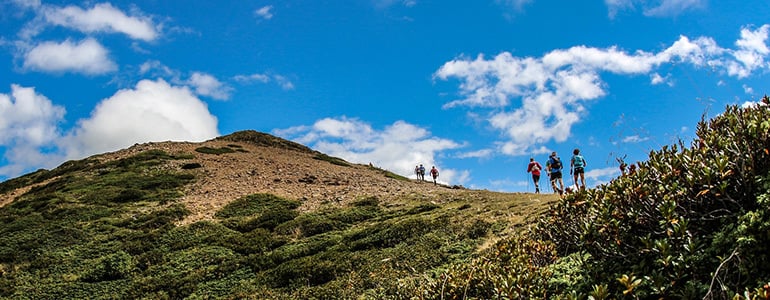

The stage race across the Alps in 8 pictures
The GORE-TEX® TRANSALPINE-RUN is not for the faint hearted. Reaching the finish line of the eight-stage race across the Alps will take every scrap of your being. Get a taste of this epic adventure with the eight images below!
The 11th edition of the GORE-TEX® TRANSALPINE-RUN finished last week and Suunto was the official time sponsor. The eight-stage, 268 km race across the Alps from Germany to Italy is a gruelling test of endurance. Because it crosses exposed and sometimes isolated alpine terrain, competitors must race in two man teams for their own safety. Trail runner and ski mountaineer Philipp Reiter, along with teammate Iker Karrera, won the race in 2012. This year, due to an injury, the 24-year-old German could not compete so instead he photographed each stage of the race.“Crossing the Alps from north to south is a kind of a dream,” he says. “For eight days you’re in your own world.”
Click here to see this year's results.
Stage one: Oberstdorf, Germany to Lech, Austria
Distance: 34.60 kmVertical ascent: 2083 mVertical descent: 1469 m
All good times and smiles on day one. © Philipp Reiter
“This year the first stages were really hot, 36° C, so a lot of people became dehydrated and some collapsed,” Philipp says. “The race medical team had a lot of things to do.”
Stage two: Lech, Austria to St. Anton am Arlberg
Distance: 24.70 kmVertical ascent: 1899 mVertical descent: 2040 m
© Philipp Reiter
“People are used to running, but not everyday for that long,” Philipp says. “You have to make sure your body is able to deal with the distance and vertical gain for eight days.”
Stage three: St. Anton am Arlberg, Austria to Landeck, Austria
Distance: 39.60 kmVertical ascent: 2658 mVertical descent: 3133 m
© Philipp Reiter
“In my experience, stage three is really tough because you are feeling exhausted from the first two days, but know there’s another five days ahead of you,” Philipp says.
Stage four: Landeck, Austria to Samnaun, Switzerland
Distance: 45.70 kmVertical ascent: 2861 mVertical descent: 1829 m
© Philipp Reiter
“It’s funny, because each day when I get up in the morning I don’t know how I can complete the stage because I’m so tired and sore, but once you start, you just keep going and it works,” Philipp says. “It’s interesting to see how much the body can achieve.”
Stage five: Samnaun, Switzerland – vertical sprint
Distance: 06.23 kmVertical ascent: 731 mVertical descent: 60 m
Landie Greyling (above) and husband Christiaan Greyling won second in the mixed category this year. © Philipp Reiter
Stage five is the so-called “rest day” of the Transalpine Run. However, to keep the muscles warm, it includes a 6 km uphill sprint!
“Sometimes you run in the snow and it’s freezing cold,” Philipp says. “Then the next day it might be 36° C. The weather can change quickly. Everyone has to carry mandatory safety gear.”
Stage six: Samnaun, Switzerland to Scuol, Switzerland
Distance: 37.10 kmVertical ascent: 2064 mVertical descent: 2698 m
© Philipp Reiter
“It’s crazy – competitors spend their holidays crossing the Alps,” Philipp says. “These guys pay to run over the mountains and are out for about 10 hours a day and have no real recovery time.”
Stage 7: Scuol, Switzerland to St. Valentin, Austria
Distance: 37.80 kmVertical ascent: 1633 mVertical descent: 1369 m
© Philipp Reiter
“To train for this race you have to keep training everyday for a longer period,” Philipp says. “It’s not just physical fitness but also mental preparation.”
Stage eight: St. Valentin, Austria to Sulden, Italy
Distance: 42.60 kmVertical ascent: 2381 mVertical descent: 1934 m
© Philipp Reiter
“There is a party at the end, but people are so tired and after two beers they’re drunk,” Philipp says. “What’s unique, is only finishers get a finisher’s t-shirt – the rest get destroyed.”
Main image: © Philipp Reiter


