




SUUNTOブログ


Meeting Nepalese trail runner Mira Rai
Meet the former Maoist child soldier turned trail runner who is blazing a trail for Nepalese women.
© Martina ValmassoiYou can be forgiven if you haven’t heard of Mira Rai. But the young Nepalese trail runner is fast making a big impression after turning up on European soil. In June last year she won the Mt Blanc 80 km, 20 minutes ahead of her nearest rival and came second, just four minutes behind Emelie Forsberg, at the 100 km Ultra Pireneu in the Pyrenees last September. Hers is a remarkable story: she grew up in small village with just three families living on top of a hill, escaped aged 14 to join the Maoists and trained as a soldier. Always competitive, she later took up running, was talent-spotted in Kathmandu and switched to trail running, winning her first race, a 50 k, in March 2014 wearing a $4 pair of shoes. During the race, she stopped once to borrow 50 rupees to buy noodles and a carton of orange juice.
© Richard BullIt was tough growing up, she says, but also rewarding. “From a young age I carried water and collected fodder for the animals, and later I did a lot of work carrying heavy bags of rice to the market. It was hard, but now I know it made a difference for me.” It may seem surprising but she volunteered for the Maoists for the opportunities they afforded. “I joined for different reasons,” she says. “We certainly had financial difficulties in home, I wanted an opportunity to learn new things, and I wanted a chance to prove that women can be equal to men. Maoists respected women soldiers also.” Her manager Richard Bull, who arranged for her to compete in Europe, takes up the story. “Mira has told me that it was a choice between being stuck in the village doing the hard work required to keep life going, or taking a chance and seeing where it would lead. It’s a tough life in the village, and especially tough for girls as they are ultimately the workers.”
© Martina ValmassoiBeing competitive is in her blood though. “She and her friends would compete at the daily household chores, like who could cut grass for the animals quicker, who could carry the bigger load or reach the destination faster,” says Bull. Her good fortune was to join the Maoists as Nepal’s 10 year civil was ending and she never saw combat. “We did a lot of training in different sports, and different exercises, drills and skills to be fit. It was also a chance to compete against others in sports which I enjoyed a lot.” Her big opportunity came years later after her Maoist sports coach Dhruba Bikram Malla heard she was thinking of moving to Malaysia to work in a factory. He invited her to Kathmandu to try to run seriously. However, mountain running was unheard of. “Athletics organisations in Nepal focus on track up to marathon distance - IAAF recognised distances,” adds Bull. “The coaches dislike trail running as ‘it makes runners slow’. So all focus is on the track and marathon. In Kathmandu in her early 20s, she was trying for any event that came up – 10 km, 15 km etc.”
And that’s when she had a chance encounter with some runners who invited her to the 50k race that she won. “A week afterwards I met her,” adds Bull. “I told her about this sport and asked if she would like to try it. She looked a little bit incredulous, as if she thought ‘hilly up down running’ as she called it was a ridiculous idea. But slowly she came around to the idea that her potential was not on the track and she could try ‘hilly up down running’.” It’s safe to say there’s now no turning back for the athlete. “My goal is to run for a few years, to run really hard and do the best I can,” adds Rai, “then to help more Mira Rais to run, and to try and support them as best I can!”
Nepal is struggling to recover from a devastating earthquake that struck in 2015. To support the recovery, Suunto created the Ambit3 Nepal Variant. With every watch sold, Suunto will donate €25 to the Nepal earthquake rehabilitation operation. More here.
MAIN IMAGE: Lloyd Belcher


登山の登りペースを把握する方法|登高速度(VAM)の見方と活用法
登山やトレイルランニングで「この登りはあと何分かかるのか」「序盤から飛ばしすぎていないか」を判断したいとき、平地と同じ1kmあたりのペースだけでは負荷をつかみにくいことがあります。急な登りでは、水平距離よりも標高をどれだけ上げたかがペース管理の手がかりになるためです。
そこで役立つのが、1時間あたりに何m登ったかを示す登高速度です。登り区間の平均登高速度はVAMとも呼ばれます。一方、Suuntoウォッチの「バーティカルスピード(Vertical speed)」は、運動中の上下方向の速度をリアルタイムで確認するデータ項目です。
この記事では、登高速度とVAMの意味、登りの所要時間やペース配分への活かし方、Suuntoウォッチでバーティカルスピードを確認するときのポイントを解説します。
目次
登高速度とVAMとは?
登高速度の計算方法
登りのペース管理に活かす方法
トップアスリートの活用例
Suuntoウォッチで確認する方法
トレーニングでの分析方法
数値を見るときの注意点
まとめ
登高速度とVAMとは?登りのペースを標高差で表す指標
登高速度とは、一定時間にどれだけ標高を上げたかを表す指標です。一般的には「m/h(メートル毎時)」で示され、一定区間の平均値はVAM(Velocità Ascensionale Media:平均登高速度)とも呼ばれます。
VAMとバーティカルスピードは、どちらも上下方向の速さを標高差で捉える点では共通しています。ただし、VAMは登り区間の平均値を指すのが基本です。Suuntoウォッチのバーティカルスピードは、m/hまたはm/minで表示されるリアルタイムの垂直速度で、下りでは負の値を含む場合があります。運動後に区間平均を確認すると、VAMに近い使い方ができます。
たとえば登高速度が300m/hなら、同じペースを保った場合、1時間で標高を約300m上げる計算です。平地のランニングペースが水平距離を基準にするのに対し、登高速度は標高差を基準にします。
指標
基準
向いている場面
ランニングペース
1kmにかかった時間
平地や勾配の小さい区間
平均登高速度(VAM)
一定時間に上げた標高
登山道の登り、急登、登坂インターバル
心拍数
身体への内的負荷
運動強度や疲労の把握
登高速度だけで体力や技術を評価するのではなく、心拍数、勾配、路面、荷物の重さ、標高、天候などと組み合わせて見ることが大切です。
平均登高速度(VAM)の計算方法
平均登高速度であるVAMは、登った標高差を所要時間で割って求めます。
VAM(m/h)=登った標高差(m)÷登りの所要時間(時間)
標高差600mの登りに2時間かかった場合は、600m÷2時間=300m/hです。1時間30分なら1.5時間として計算するため、600m÷1.5時間=400m/hになります。
ここで使うのは、スタート地点と到着地点の単純な標高差ではなく、途中の上り下りを含めた上昇量です。小さな下りを挟むルートでは、単純な標高差より累積上昇量が大きくなるため、ルートデータを確認して計算しましょう。
登り区間の上昇量が分かっていれば、自分が無理なく維持できる登高速度から所要時間の目安も逆算できます。ただし、休憩、渋滞、路面状況、気象条件は別に見込む必要があります。
登りのペース管理に活かす3つの方法
1. 登りの所要時間を見積もる
過去の登山やトレイルランニングから、自分が長く維持できる登高速度を把握しておくと、次の登りに必要な時間を見積もりやすくなります。累積上昇量900mの区間を普段450m/hほどで進めるなら、休憩を除いた登り時間の目安は約2時間です。
2. 序盤のオーバーペースを防ぐ
長い登りの序盤は身体が動きやすく、想定以上のペースになりがちです。登高速度と心拍数を一緒に見れば、「速く登れているが心拍も上がりすぎている」といった状態に気づきやすくなります。距離の長い登山やレースでは、後半まで維持できる強度を優先しましょう。
3. 同じ坂で成長を比較する
定期的に同じ登りを使うと、路面や勾配の違いを抑えて変化を比べられます。同程度の心拍数で登高速度が上がった、または同じ登高速度をより低い心拍数で維持できたなら、登りへの適応が進んだ可能性があります。1回の最高値ではなく、数週間から数か月の傾向で判断してください。
キリアン・ジョルネは登高速度をどう使っていた?
原文では、トレイルランナーでスキー登山競技のアスリートでもあるキリアン・ジョルネが、日々のトレーニングで登高速度を使っていると説明しています。慣れた登りで平均より速いか遅いかを確認したり、登りに必要な時間を計算したりするためです。
2016年の記事で紹介された本人の数値は、バーティカルキロメーターのランニングで約2,000m/h、スキー登山競技で約1,700〜1,800m/hでした。これは世界トップレベルの競技者による当時の参考値であり、一般の登山者やトレイルランナーが目標にする基準ではありません。
重要なのは他人の数値と比べることではなく、同じ条件に近い自分の記録を積み重ねることです。勾配、路面、荷物、疲労、気温が変われば登高速度も変わるため、自分なりの基準を複数のコースで持っておくと実践に活かしやすくなります。
Suuntoウォッチで登りのペースを確認する方法
対応するSuuntoウォッチでは、Suuntoアプリでスポーツモードの表示をカスタマイズし、「高度」関連のデータ項目からバーティカルスピードを追加できます。ウォッチやソフトウェアのバージョンによって、利用できるデータ項目、単位、メニュー名、設定手順が異なる場合があります。
Suuntoアプリで接続中のウォッチを開く
スポーツモードのカスタマイズ画面へ進む
登山、トレイルランニングなど使用するスポーツモードを選ぶ
データ画面に「バーティカルスピード」などの高度関連項目を追加する
ウォッチと同期し、運動前に表示を確認する
長い登りでは現在値だけでなく、心拍数、累積上昇量、経過時間も同じ画面や切り替えやすい画面に置くと、ペースを総合的に判断しやすくなります。登り区間の詳細をリアルタイムで確認したい場合は、対応機種でSuuntoPlus™ Climbを利用できることもあります。
登りで役立つSuuntoの高度機能をまとめて確認する
ラップとSuuntoアプリで登りを振り返る
登りの開始地点と終了地点で手動ラップを記録しておくと、その区間だけを後から比較しやすくなります。ヒルリピートや定点コースでは、次の流れで記録を残してみましょう。
登りの開始地点でラップを記録する
頂上または決めた終了地点で再びラップを記録する
運動後にSuuntoアプリへ同期する
高度、上昇量、心拍数、所要時間などを区間ごとに振り返る
短い瞬間の最高値を追うより、登り全体の平均、心拍数の推移、後半の失速などを見るほうが、次回のペース設定に役立ちます。トレーニングコースを組む場合は、登り・下り・距離を組み合わせた練習コースの選び方も参考にしてください。
登高速度の数値を見るときの注意点
瞬間値は変動する:短い区間では高度計測の揺れや地形の変化を受けやすいため、一定時間または1本の登りの平均も確認します。
条件をそろえて比較する:勾配、路面、積雪、荷物、標高、気温、疲労によって同じ人でも数値は変わります。
心拍数と併用する:速さだけでなく、そのペースをどの強度で維持したかを見ると、持久力の変化を判断しやすくなります。
気圧変化の影響を考える:気圧高度計を使うウォッチでは、急な天候変化が高度表示に影響する場合があります。必要に応じて高度の基準値や自動調整機能を確認してください。
安全を優先する:ウォッチの数値は判断材料の一つです。悪天候、体調不良、危険な路面では、目標ペースより安全な行動を優先してください。
まとめ|登りのペースは自分の基準で管理しよう
登高速度は、1時間あたりにどれだけ標高を上げたかを示し、登山やトレイルランニングの登りを把握するのに役立つ指標です。まずは同じ登りを繰り返し記録し、無理なく維持できる自分の数値を知ることから始めましょう。心拍数や累積上昇量と組み合わせれば、所要時間の見積もり、オーバーペースの防止、トレーニングの振り返りに活用できます。
気圧高度計を備えたSuunto Vertical 2は、登山やトレイルランニングで高度や登りのデータを確認しながら、長いルートのペースを管理したい人に適した選択肢です。初代モデルとの違いを知りたい場合は、Suunto VerticalとVertical 2の比較記事もあわせてご覧ください。
登りの記録に適したSuuntoウォッチを探す
高度、心拍数、ルートなどを記録し、自分の登りのペースを継続的に振り返りましょう。
Suuntoスポーツウォッチを見る


7 great things about winter for runners
Winter wonderland
Whether running on a hard frost, snow or just against a sun that’s low on the horizon, wintertime provides some magical landscapes that are a joy to run through. And it usually means fewer people around to spoil the view, so get out there and enjoy.
Kilian Jornet enjoys training in a winter landscape. © zooom.at/bergermarkus.com
Running at night
Running at night brings its own rewards. Arm yourself with a decent headtorch, hit your favorite trails and you’ll be amazed by how different the experience seems. Discover your noctural inner self and enjoy the new view it gives. Running at night is also good for your running. Less reliant on vision for foot placement, it forces you to tune into your other senses.
Eating cake
When you exercise in the cold you burn more calories. Consider it a free ticket to eat more cake – and other calorific goodies. Stuck for inspiration. Check out Emelie Forsberg’s homemade recipes for buns, pancakes and cookies. “The classic saffron bun for Christmas or Lucia is my favorite. I can eat so many of them,” she says. Get the recipe here.
© zooom.at/bergermarkus.com
Getting hot and steamy
Never has the sauna or steam room felt so good as after a winter run. With Suunto’s global HQ situated in Finland – the cultural capital of saunas – we are naturally huge fans of them. Deep sweating has numerous health benefits, from recovery to flushing toxins from your system. And after you just jumped in an ice bath or dived in some snow, you’ll appreciate them as hot as possible.
Focus on strength training
In summer there’s really no excuse for getting outside, which is why winter is such a good opportunity to focus on body conditioning and strength training. Get yourself down to the gym and sign up to some circuit training, pilates or weights – and you’ll feel the benefits in time for spring. Good things to work on for runners include pelvic stability, core strength and stretching.
© zooom.at/bergermarkus.com
Rest
Yes, sometimes the only way to get stronger is to rest. Like really rest and recover from that recurring injury. It’s something Suunto ambassador Ryan Sandes knows about. He’s currently taking some time off training to get back to full strength. “It’s a common worry that if you can't train you will lose your fitness and not be ready for an upcoming race, but I believe often the body knows best, and the time off from training helps it to fully recover and get strong,” he told us recently. Read the full article here.
Focus on technique
Winter is not a time to focus on personal bests, not when the ground’s muddy or there’s snow underfoot. So don’t fight it – embrace it and use the slower pace to focus on your running technique. If you have a good and balanced form you should be able to run on ice, over wet slippery wooden bridges or through mud and broken ground without problem. Try to imagine a straight line between where your foot lands, your hip and shoulder. More important than whether you heel strike or forefoot strike is where the foot lands in relation to the rest of your body. For more technique tips from Carmichael Training Systems, follow this link.
Main image: © zooom.at/bergermarkus.com


7 tips to accelerating your uphill speed
We touched base with Carmichael Training System’s endurance coach Nick White and got 7 gems of wisdom that will turn you into a vertical speed machine.
Emelie Forsberg pushing hard in the Andorra vertical skimo race. © ISMF Press Office
Consistency and volume
Having a solid aerobic fitness base is an important prerequisite to becoming faster on vertical ascents, so consistency and volume should remain central to any training programme. This base makes focused work on your lactate threshold and V02 max possible.
Improve your V02
The goal here is to maximize how much oxygen your body can process and deliver to your working muscles. Doing short, high intensity interval workouts, some of them ascents, are the way we achieve this. Match each interval with an equal recovery time. Here are some ‘go-to’ workouts that should be done two to three times a week with a rest day between each session:
9x 2min at maximum effort/2min easy recovery 6x 3min at maximum effort/3min easy recovery 5x 4min at maximum effort/4min easy recover Easier option: 5x 30s at maximum effort/30s easy recovery
Few athletes have a V02 max as high as Suunto ambassador Kilian Jornet. © ISMF Press Office
Focusing on lactate threshold
If it’s a trail race or a mountain run with big vertical ascents that you’re training for, then it’s also critical to focus on your lactate threshold. Do this through longer duration interval workouts done at a slightly lower intensity than the V02 training outlined above. The goal is to work consistently until you can't work at that intensity anymore. After rest and recovery, your body will become stronger. Intervals should be between 10 to 30 minutes in length, with half the recovery time, and a total training time of around 45 to 60 minutes. For example: 4-5x 12min intervals, with 6min rest between 3-4x 15min intervals, with 8min rest between 2-3x 20min intervals, with 10min rest between Both of the above interval types, V02 and lactate threshold, are necessary, whether you’re doing a vertical kilometer race or a longer mountain run. Each one is specific to a different aspect of vertical speed.
Ryan Sandes training in his local hills in Cape Town. © Craig Kolesky/Red Bull Content Pool
Match your gradient
While it's a good general rule to match the gradients in your training to that of your event, it’s also important to mix it up so you're not hitting the same hill over and over again.
Don’t overdo the hills!
Not all of your interval workouts should be done on hills. Do them once or twice a week on hills and the other days train on rolling or flatter terrain.
© ISMF Press Office
Keep it specific
At least some of your training should be on terrain that’s similar to what your race will be on. If at least some of your training is done on similar trails or hills, then you can be sure you’re developing the necessary muscular strength and technical skills as well.
Watch your weight
Body weight is obviously an important factor in the vertical ascent equation. A heavier runner will require a lot more energy and force to climb a hill at the same speed as a lighter runner. It really is a power-to-weight ratio issue at its core. You go uphill faster either by gaining more power, or becoming lighter, or both. So go easy on the cake!
MAIN IMAGE: © ISMF Press Office

7 vertical races you'll thank us for later
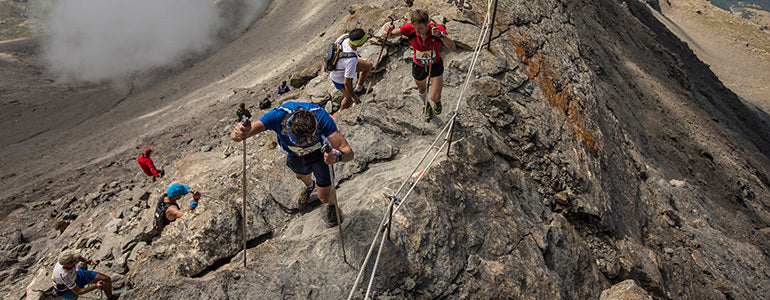
To coincide with the launch of Suunto Ambit3 Vertical we list 7 incredible, awesome and quad-killing vertical races and challenges to sign up to in 2016. Register now, suffer later – you know you’ll be grateful afterwards.
VK Tromsø Skyrace
Why: It goes from sea to summitWhere: NorwayVertical: 1km
“We cannot think of a better place than the mountains of Tromsø for a skyrace: a place to run between the sky and the earth and to feel freedom,” so says the official text for this newcomer to the race calendar. “You start just near the sea and you finish on the top of the mountain with a very technical climb,” says last year’s second place finisher Rémi Bonnet. “It's so fun!” Find out more here.© Kilian Jornet
Red Bull 3 VK
Why: More altitude to climb, therefore more funWhere: ItalyVertical: 3,000 m
Most vertical kilometer races are just that – a race up a mountain for 1,000 m. But unsurprisingly for the ubiquitous energy drinks company, they had to take things one step further, creating a vertical race of 3,000 m up Italy’s Rocciamelone peak, the Red Bull 3 VK. Each vertical km is special, says Rémi Bonnet, who smashed the record to win last year in 2h 1m 57s. “The first is very runable, the second very steep and the last is very technical.” Fancy something shorter? There’s always the Red Bull 400, a straight-up sprint up one of Europe’s ski-jumps.
Norseman
Why: Think of it as an Ironman but with attitude, or should that be altitude?Where: NorwayVertical: 4,600 m
If it’s vertical ascent you like, the legendary Norseman triathlon is for you. “The cycling leg ascends 1,200 m in the beginning and after that it stays high,” says pro triathlete Teemu Lemmettylä who took part last year. In total the cycling stage packs 3,000 m of ascent but the real killer is saved until the last 17 km of the run which rises 1,600 m to the summit of Gaustatoppen. “The Norseman is unique. In addition to the vertical, the coldness, weather and slippery surface challenges every athlete but the landscape is something you never forget,” adds Lemmettylä.
Mt Ventoux
Why: It’s the classic Alpine ascent steeped in historyWhere: FranceVertical: 1,611 m
Few cycling climbs are as steeped in history as the switchback roads leading to the summit of Mt Ventoux. At 21.8 km, the ascent is long and torturous and often into headwinds, as it winds from the town of Bédoin to the 1,912 m high summit. But to ride to the top is to ride alongside cycling’s legends. It’s a classic for the bucket list – and there to be ticked off. This is the mountain that famously claimed the life of British cyclist Tom Simpson. He collapsed with exhaustion during the ascent in the 1967 Tour aged 29. You’ll pass his memorial on the way up, provided you haven’t collapsed yourself.
Patrouille de Glacier
Why: It’s the classic ski-mountaineering challengeWhere: SwitzerlandVertical: 3,994 m
Few events are as well matched for the cumulative altitude-counting capabilities of the Suunto Ambit3 Vertical as the Patrouille de Glacier. Held every two years, the race is one of the ‘Grand Tour’ ski-mountaineering races of the Alps – and with almost 4,000 m to climb, there’s a lot of vertical to log. Originally designed as a test of endurance for Swiss alpine troops, the race is still run by the Swiss military but open to civilians as well. It sees teams race across some of the highest mountains of the Alps from Zermatt to Verbier.© Patrouille des Glaciers via Flickr
Great Himalayan Trail
Why: It crosses the greatest mountain chain of the world. Need another reason?Where: Bhutan, Nepal, India, Pakistan and TibetVertical: 150,000 m
Now if you feel like logging some serious vertical, there’s only one place to go – and that’s the Himalayas. The Great Himalayan Trail is not a set route but rather a loosely defined set of trails that follow the spine of the world’s highest mountains.
Passo dello Stelvio
Why: It offers 48 hairpin bendsWhere: ItalyVertical: 1,808 m
The legendary Fausto Coppi, nicknamed Il Campionissimo (champion of champions), said after cycling the Passo dello Stelvio that he “felt he was going to die” during the climb. It’s easy to understand why. The ride offers 24 km of uphill grind from Prato. The endless switchbacks have been torturing cyclists for decades but like moths to a flame, every year they keep coming back for more, entranced by its allure and sheer vertical challenge. Don’t forget to hit the start button on your watch at the bottom.
© Jussarian via Flickr
Mt Marathon Race
Why: Legendary local characterWhere: AlaskaVertical: 815 m
The Mt Marathon Race in Seward, Alaska is one of those races that have epic status among local fans. It’s not the highest, but it is steep, with those 815 m gained in just 1.4 km. Does it live up to the hype? Last year Suunto ambassadors Kilian Jornet and Emelie Forsberg turned up to give it a go, both setting new records in the process. Afterwards, Kilian said he was not disappointed. “It was fun, so beautiful. It’s technical. It’s fun. It’s difficult.’’ What more could you want from a vertical race?The Suunto Ambit3 Vertical is the multisport GPS watch for planning and tracking your elevation gain. Read more at www.suunto.com/ambit3vertical
MAIN IMAGE: © Damiano Levati/Red Bull Content Pool

How to stay warm this winter
Understand there’s no magic solution
Breathable, waterproof, windproof – remember there’s no magic gear solution that works for everything. It’s possible to go cross-country skiing in -15ºC in just a base layer and shell. Wear that while ice climbing and you’ll start turning blue pretty quickly. Equally, you may need all the layers you can wear in +5ºC if it’s wet and windy. Remember there are always compromises – and you’ll never get it totally right.
Greg Hill pushes through an icy day. © Bruno Long
Experiment with what works
No two people are the same – a big guy with a lot of mass may be quite happy in little more than a t-shirt while if you have the figure of an ironman athlete, you may need an insulated jacket and mittens to enjoy the same level of warmth. Experiment between synthetic and wool base layers. If you’re a copious sweater, you may lean towards the former. If you need the warmth, go for wool.
Bring spares - of everything!
There’s nothing better after a strenuous hike to a summit peak than ripping off a sweat-soaked base layer and putting on a fresh one. OK, the stripping-off part is not so fun – especially if it’s windy! – but we promise it’s worth it. On longer days, taking your boots off and swopping socks will also make your smiles last longer. Change your gloves regularly, see below…
© Bruno Long
How many gloves is ok?
How many pairs of heels is it ok for a girl to have – probably not as many as the number of gloves it’s ok for the winter sports athlete to have. Have a look in any winter climber’s closet and you will find dozens and dozens of pairs. Take two to three with you on the hill. Cheap fleece gloves are awesome for when you’re moving and in between technical sections. Switch gloves between stages, depending on your activity. Keep the spare pair inside your jacket to keep warm. Still have cold hands? See #6 & #7.
Dress for 15 minutes into your activity
Remember that overheating and sweat in particular is the #1 enemy. The best way to chill a bottle of white wine is to stick it in a bucket of iced water and let the breeze do the rest. Dress for how you’ll be in 15 minutes time not how you’ll start. Better to begin a bit chilled and then warm up, than start pouring with sweat after a few minutes and have to stop and shed layers.
Put a hat (or anything) on
Since scientists debunked the myth that 70% of your body heat is lost through your head, the old adage that ‘if you’ve got cold hands you should put a hat on’ seems out of date. But it’s still a valid reminder that you should think ‘big picture’ when it comes to cold hands. Hands and feet get cold because the rest of your body’s cold; so putting on a warm layer, wearing a hat and pulling up your hood is still a case of old school is best. Remember also there’s no magic pair of gloves out there.
Cure your cold hands for good!
Always get cold hands or feet? If you’ve suffered from a cold weather injury (such as frostnip) chances are you’ll battle cold hands the next time the mercury drops, but contrary to conventional wisdom, there is something you can do about it (provided it’s not something else like Raynaud’s disease, in which case check with your physician). Doctors at Britain’s Institute of Naval Medicine discovered that rewarming your hands or feet in a warm bath over a course of several weeks can completely reverse the effects of a cold weather injury. Fill a foot bath with water at 40ºC, have a slug of your favorite tipple (alcohol opens up the blood vessels) then soak your feet or hands for 20 minutes. Repeat every night for several weeks.
MAIN IMAGE: © Bruno Long


