


SUUNTOブログ


VO2maxを高めるインターバルトレーニング|具体的なメニューと実践方法
VO2maxを高めたいと考えていても、「どのくらいの強度で、何分走ればよいのか」が分からない方は多いでしょう。VO2maxインターバルでは、短い高強度区間と回復区間を交互に繰り返し、連続走では維持しにくい強度で質の高い運動時間を積み重ねます。
この記事では、XTERRA世界王者でコーチでもあるジョサイア・ミドーの考え方をもとに、ランニングで実践しやすい2〜3分のVO2maxインターバル、ペースの決め方、回復時間、頻度を解説します。VO2maxの意味や年齢別目安を先に確認したい方は「VO2maxとは?年齢別の目安と上げる方法」をご覧ください。
目次
VO2maxインターバルとは
基本メニュー:2〜3分の高強度走
ペース配分で最も大切なこと
強度をどう決めるか
本数と頻度の目安
Suuntoでワークアウトを管理する
実施前に確認したい注意点
まとめ
VO2maxインターバルとは
VO2maxは、運動中に身体が取り込み、利用できる酸素量の最大値を示す指標です。VO2maxインターバルでは、VO2maxに近い酸素摂取量へ到達する強度を繰り返し、心肺機能と持久系パフォーマンスへ刺激を与えます。
ポイントは、最初から全力疾走することではありません。1本の高強度区間を最後まで大きく失速せず、複数本にわたって同程度の質を保つことが目的です。
VO2maxインターバルは短距離の全力スプリントとは異なります。速く走り始めすぎると無酸素運動への依存が大きくなり、後半に失速して、VO2max付近で運動する時間を十分に確保できない場合があります。
基本メニュー:2〜3分の高強度走
原文でジョサイア・ミドーが推奨している基本形は、2〜3分の高強度区間と、ほぼ同じ長さの回復区間を組み合わせる方法です。
パート
内容
意識すること
ウォームアップ
15〜20分の軽いラン+短い流し
身体を徐々に温める
高強度区間
2〜3分
最後まで維持できる速さ
回復区間
高強度区間と同程度
軽いジョグまたは歩行
本数
まずは4〜5本から
フォームとペースを維持できる範囲
クールダウン
10〜15分の軽いラン
呼吸と心拍を徐々に落ち着かせる
経験を積んだランナーは、2分を8〜10本、または3分を5〜7本とし、高強度区間の合計を15〜21分程度にする方法があります。ただし、これは上限を目指す数字ではありません。後半に大きく失速するなら、本数を減らすか回復を30秒延ばしましょう。
ペース配分で最も大切なこと
VO2maxインターバルの質を左右するのがペース配分です。1本目の序盤をスプリントのように飛ばすと、その後に失速しやすくなります。平均ペースだけを見ると目標どおりでも、各区間の中で速度差が大きければ、狙った刺激を得にくくなります。
悪いペース配分の例。各区間の序盤で出力を上げすぎ、その後に低下しています。
改善された例。各区間内の出力は安定していますが、後半の数本では低下が見られます。
高強度区間を通して出力が比較的安定した例。心拍数のピークは後半の本数で現れています。
目標は、すべての本でほぼ同じ距離またはペースを保つことです。最初の1本は少し抑え、最後の30秒までフォームを崩さず走れる強度を探してください。
強度をどう決めるか
ランニングでは5kmレースペースを目安にする
原文では、ランニングの場合は5kmのレースペース、またはそれよりわずかに速いペースが目安とされています。ただし、走力や5kmの所要時間によって適切な強度は変わります。最初は数値に固執せず、「2〜3分は維持できるが、楽ではない」強度から始めましょう。
心拍数は遅れて上がる
短い高強度区間では、運動を始めてから心拍数が反応するまで時間差があります。開始直後に目標心拍へ届かせようとして飛ばすと、オーバーペースになりがちです。実施中はペースやランニングパワー、フォームを中心に確認し、心拍数は区間後半やセッション全体の振り返りに使います。
心拍ゾーンの設定方法は「心拍ゾーンの計算・設定方法|Suuntoウォッチで強度管理を始める」も参考にしてください。
坂道では到達地点を目安にする
一定した登りで行う場合は、最初の高強度区間で1分地点と終了地点を覚えておき、次の本でも同じ地点まで到達できるか確認します。序盤だけ速くならず、各本で同程度の距離を走ることを優先しましょう。下りでは安全を優先し、十分に回復できる速さで戻ります。
本数と頻度の目安
VO2maxインターバルは負荷が高いため、量より質が重要です。初めて取り入れる場合は週1回、4〜5本程度から始め、間に軽いランや休養日を入れます。継続的にトレーニングしている人でも、高強度セッションを連日に詰め込まないようにしてください。
各本のペースが大きく落ちたら、その日のセットを終了する
高強度日の前後は、低強度のランまたは休養を組み合わせる
脚の痛み、強い疲労、睡眠不足がある日は延期する
同じメニューを続ける場合も、常に本数を増やそうとしない
原文では、重点的なVO2maxトレーニングを続けると約6週間で伸びが停滞しやすいというコーチング上の見解も紹介されています。年間を通じて追い込み続けるのではなく、重要なレースに向けた期間へ計画的に取り入れる考え方が大切です。
Suuntoでワークアウトを管理する
Suunto Race 2などの対応ウォッチでは、Suuntoアプリで運動区間、回復区間、繰り返し回数を設定した構造化ワークアウトを作成し、ウォッチへ同期できます。実施中に残り時間や次の区間を確認できるため、時計を見ながら手動で時間を計る負担を減らせます。
詳しい作成手順は「インターバルトレーニングのやり方|ランニング向けワークアウトをSuuntoアプリで作成する方法」で解説しています。
トレーニング後は、各ラップのペース、心拍数、ランニングパワーなどを確認します。最後の本だけではなく、1本目から最終本までのばらつきを見て、次回のペース、本数、回復時間を調整しましょう。VO2maxや閾値をSuuntoPlusで確認する方法は「VO2max・閾値・FTPを確認してトレーニングに活かす方法」をご覧ください。
実施前に確認したい注意点
VO2maxインターバルは身体への負荷が高いトレーニングです。普段の運動習慣がない方は、まず低強度のランニングを継続し、運動の土台をつくってから取り入れてください。
十分なウォームアップとクールダウンを行う
交通量が少なく、路面が安定した場所を選ぶ
暑さや湿度が高い日は強度を下げ、水分補給を優先する
胸の痛み、めまい、普段と異なる息苦しさを感じたら中止する
持病や健康上の不安がある場合は、事前に医療従事者へ相談する
ウォッチが表示するVO2max、心拍数、回復などの数値は、トレーニング判断を支える参考情報です。体調や痛みを無視して数値だけを追わないようにしましょう。
まとめ|同じ質を保てるペースから始めよう
VO2maxインターバルでは、2〜3分の高強度区間と同程度の回復区間を繰り返し、VO2max付近で運動する時間を積み重ねます。最初から全力で飛ばすのではなく、各本を通して同程度のペースや出力を保つことが重要です。
まずは週1回、4〜5本程度から始め、後半までフォームとペースを維持できるか確認しましょう。Suuntoアプリでワークアウトを作成し、実施後に各区間のデータを振り返ると、自分に合う強度と回復時間を調整しやすくなります。
トレーニングを計画的に記録する
インターバル、心拍数、ペース、回復を確認できるSuuntoのランニングウォッチをチェック。
ランニングウォッチを見る

Suunto Summit 2017
Watch the video and experience the first ever Suunto Summit that was held in October, 2016.
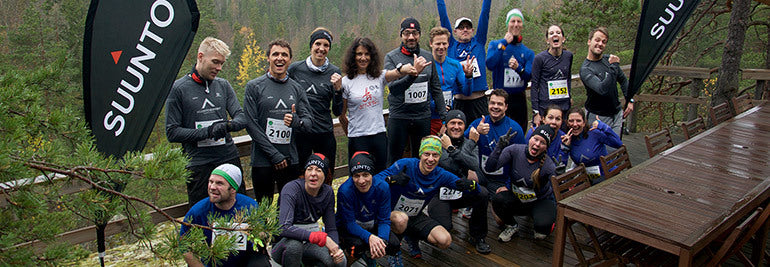
We are thrilled to share the selections for the Suunto Summit 2017. After hosting an open, public application process, we received inspiring motivation letters and stories from all around the world.
Within our final group we have authors, awarding- winning photographers, influential bloggers; we have XTERRA world-champions, and winners of major ultra-trail races. Balancing these inspiring experiences and accomplishments was a challenge, but we are thrilled to have had so many inspiring applications that shared a synonymous passion for being a part of the Suunto community.
Stats:
6 female, 9 male
9 from Europe (2 France, 1 Spain, 1 Finland, 2 Sweden, 1 Norway, 1 Latvia, 1 UK, 1 Switzerland)
2 from USA, 1 from New Zealand, 1 China, 1 Malaysia.
Suunto Summit 2017 participants:
Arnau - Spain
Diane-Perle - Switzerland
Marta - Latvia
Marit - Norway
Mia - USA
Barbara - USA
Petra - New Zealand
Ramon - Malaysia
Sebastien - China
Pelle - Sweden
Jean-François - France
Tim - United Kingdom (UK)
Mathias - France
Sante - Finland
Oskar - Sweden
Congratulations to all selected, and a huge thank you to all who applied and shared their passion with us!
- Suunto Team

Hollie, Sami and Christoph are the Vertical Week photo contest winners
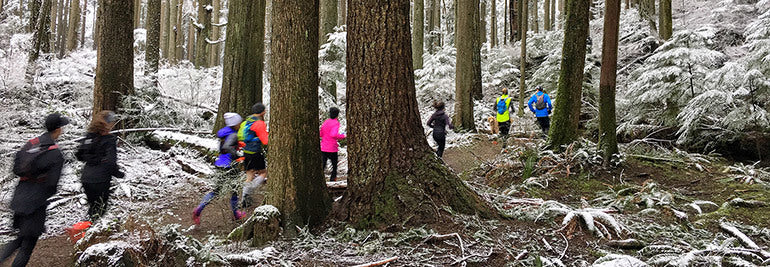
World Vertical Week was held last week and the hundreds of pictures tagged with #verticalweek on Instagram give a great overall look into what people have been up to during the week. Three of the most inspirational photos were taken by Hollie Holden, Sami Renner and Christoph Oberschneider. Each one of the winners will receive a new Suunto Spartan Ultra to accompany them on their future adventures.
🌲// Legs/entire body felt like an 🐘 at this weeks @vanrunco trail ✈️ crew BUT I managed to hit my @suunto #VerticalWeek goal of 4000m (1k more than my 1st goal! 🙌) of climbing and we were blessed with a pretty layer of 'convenient snow', right @coralie2700 ? 😉🤣❄️
A post shared by Hollie Holden (@holholden) on Mar 5, 2017 at 12:59pm PST
“The Vertical Week was a great opportunity for me to start building my strength and climbing skills ahead of my upcoming training season for my 1st 50 mile Ultra Marathon - the Squamish 50 in August which is a tough, mountainous course with 11,000 feet (3350m) of climbing!
I set myself the goal of covering a similar amount of climbing during Vertical Week so I spent a lot of time on a local trail called the BCMC which starts at the base of Grouse Mountain climbing to the top. This trail has 850m of elevation gain in just 3km of climbing! I ended up doing this trail 4 times in the week (3 times within one 24hr period!) then finished off the week running trails with my local run crew, Vancouver Running Company Flight Crew, surpassing my 3k goal and hit 4000m for the week instead!
The weather in Vancouver has been unseasonably cold, with lots of snow & wet rain and I wouldn't have done anywhere near as much climbing last week if it wasn't for the awesome community of friends that I have here who are willing to come climb mountains in a snow storm with me!”
–Hollie Holden, BC, Canada
Cause she asked so friendly... 🐦 #lovemountains #skimo #verticalweek #collectingmoments #mountaineering #watzmann
A post shared by Sami (@samirenner) on Mar 5, 2017 at 10:10am PST
“The photo was taken on the last of three summits at the “Watzmann-überschreitung”, a famous summer tour in my hometown with over 24km and 2500m of climbing. The goal for me was to do this very technical tour with skis. As I reached the third summit, I shared my last Powerbar with a bird.
A few days earlier during the Vertical Week I was in Zermatt, reaching Breithorn’s (4164m) west and east summits on skis, and on two more skitours. All in all, my Vertical Week was about 7500m of elevation gain over 65km.”
–Sami Renner, Germany
Welcome back, #winter! Yesterday was a great #powderday in @visitgastein. Can't wait for more!
A post shared by Christoph Oberschneider (@coberschneider) on Mar 2, 2017 at 3:09am PST
“I work as a backcountry skiing photographer in Austria, so my goal each winter season is to capture the beauty of backcountry skiing & ski touring, to share my passion for the sport with as many people as possible and ultimately to get more people to enjoy life in the outdoors.
So far we have had a very dry winter here in the Alps, so getting good shots has not been an easy task. So when it finally started snowing 10 days ago, I headed out to Sportgastein (a freeride spot close to Salzburg) with two good friends. We found some beautiful lines in the backcountry with lift-supported ski touring and I managed to get some good shots. And that's how I also spent the rest of the Vertical Week, ski touring in the mountains around Salzburg and trying to capture the beauty of the winter landscape and some more skiing action before the snow starts melting again.”
–Christophe Oberschneider, Austria
Congratulations to our three winners and thank you very much everyone for sharing your Vertical Week moments!
Uphill talk with Emelie Forsberg
Emelie Forsberg is not originally from the mountains – she’s from the hills. She was born in a hilly area on the east coast of Sweden called Höga Kusten. “There are no mountains, but the terrain is really playful with 300-meter-high hills,” Emelie says. Still she has become one of the world’s top mountain runners and ski mountaineers. How to do that?
Do you actually need mountains to train for the climbs?
Actually, not at all! If you have an uphill that is just 100 or 200 meters high – or even only 30 meters high – that’s ok. You just need to do more repetitions. But if you like mountains, I think it is important to also go to the mountains to train in the long climbs.
Do you prefer more mellow or steep ascents?
I like them both, because they are so different. I am quite powerful so the steeper climbs normally are a little better for me. But I have improved on the less intense climbs, too.
When setting a skin track, do you head straight up or…?
I did go really steep in the beginning! I was strong but didn’t really have the proper technique then. But now I like to set the track in a more mellow, comfortable angle.
How do you pace yourself in the long uphills?
First of all, I listen to my body because I think it is interesting to learn about my body. In training I always have my heart rate and analyse the data afterwards. That also helps me to understand my performance.
But in some races, that are not so technical, I may have a more mathematical approach and use heart rate also while racing. I can just look at my heart rate I say: “No, this is not enough. I need to speed up!”
Is training for uphill running and skimo the same?
It’s more or less the same interval training that works for both. Maybe I train little shorter intervals in the winter. But all intervals are important for me; from one minute efforts, where I can really feel the lactic acid coming, to more manageable four minute efforts and up to ten minutes where it is like race pace. Interval training can be super fun.
When you feel that you are in a good running form does that mean you are fast on skis, too?
If I am in good shape for running, I think it is easier to transition to skiing. Going from skiing to running feels harder.
Tips for increasing uphill speed?
My tips are really basic, and more mental than physical: You need to like what you are doing and have continuation in what you are doing. Not to train super hard one week and then have three weeks without any training.
Even if you only have time to run for ten minutes one day, go for that! It’s going to make you want to go out the other day, too. And try to make training a pleasure.
For me interval training has really worked. It’s an easy way to improve because the sessions are manageable. The workout can be like one, one and a half hours, and you really feel like you have done something really good when you finish.
READ MORE
World Vertical Week 2017
7 tips to keep a balanced training load
How to run a sub-3h marathon

Going back for a beating: Gary Robbins on his second attempt at the world’s toughest footrace
There’s about 67,000 feet (over 20,000m) of ascent
Which you cover over the course of two and a half days– if you can keep going that long, of course. And for better or worse, the course isn’t an A-to-B – it’s a loop that you do 5 times. Thus, the ‘Barkley Marathons’.
Gary at the yellow gate that marks the start and the finish of the Barkley Marathons course.
The race is one hundred and thirty something miles
No one knows for sure – the route evolves every year at the whim of the race organizer. If there are no finishers the course stays the same, if there is a finisher the course is made more difficult by adding another checkpoint that involves an additional climb and descent. Most think the loop, done 5 times, is a bit longer than an actual marathon , and there’s no question the terrain is absolutely brutal. Only 14 people have finished the race in nearly thirty years And what’s worse – every time there’s a finisher, they make the course harder but not necessarily and longer.
Oh, there’s no trail markers
A huge part of the challenge is to navigate the race course. To prove you’ve completed the whole course, you tear a page out of books you find hidden at various points along the race route. After every lap, the organizer will count your pages.
You have no idea when the race will start
Anytime between midnight Friday and noon on Saturday! So it’s tough to plan your rest before the race.
The race takes two and a half days.
How do you train? You go up
I live in Vancouver, BC, and we’ve got three peaks right in town, each of them claiming about 3,000 feet of prominence. I do a couple laps at a time for 20k vert training session about once every seven days – that takes about twelve hours. The other days of the week I go out for a few thousand a day. In the final three weeks of training I'll likely do a 15,000ft workout, and maybe 2x 20,000ft. The 20k workout can take up to 12hrs. Other than that I do at least one near daily lap and attempt to get my overall weekly vertical up to at least 30k ft.
What’s in the pack for a 20k climb?
The way the race is set up, racers can return to a campground (where their cars are parked) at the start line at the finish of every loop. So that’s how I do my training – I can access my vehicle twice during a long training session a day. I’ll bring a water for three hours, food for 12 hours, and gear like a waterproof breathable kit, shirt, gloves, micro spikes for snow.
I need 250 calories an hour
Running is a calorie deficient sport and you can only digest so many calories while moving. 250 per hour is the formula for success. With that, you should be able to move forward, so that’s what I’ll do during the race. After each lap (about 8 - 10 hours, I’ll quickly down about 500 calories go for a full meal, then reset, then get going again. Liquid intake is totally dependent on weather – if it’s hot, more water. Cold, less.
You need two pairs of shoes
I do most hundred-milers in one pair of shoes, but the brush and briars on the Barkley is so brutal that it just can tear shoes apart.
Navigation skills are crucial to success in The Barkley.
And you absolutely need a compass
Having a map, compass, and the skills to use them is an absolute necessity. It also helps if you have a course veteran to glean knowledge from. Getting lost can mean the difference between finishing and not finishing. You have 60 hours, and clock doesn’t stop if you get lost.
I love the weekly vertical totals on my Suunto
My goal is to get as much vertical as possible. It’s the only way to prepare for this event. The watch shows you your daily and weekly vertical totals. My workout ENDS when I get as much vertical as I need – so my watch makes it easy. The weekly graph that is a great reference point I can’t get away from. It’s a daily reminder that if I don’t get out of my door, I’m not getting my vertical in, and I’m not training hard enough!
Stay tuned during Suunto Vertical Week 2017, as Gary plans to put up over 60k vertical in just a two week stretch – and make sure to check out the Barkley Marathons documentary, now showing on Netflix.
All images: © Matt Trappe / Trappephoto.com