




SUUNTOブログ


Alex Lindbloom takes over @SuuntoDive Instagram
Tell us about yourself:
My name is Alex and I'm an American underwater photographer who's been working in Indonesia for the last four years. I live on a boat that splits seasons between Komodo, Raja Ampat, and the Banda Sea. I dive every day with my camera in the ocean's most diverse reefs and I love my job!
Where do you like to dive?
My work keeps me diving year round in Indonesia and you could say that I like Indonesia quite a bit. The diversity of species/subjects and of types of diving are endless. If you are feeling a bit burnt out on macro for example, it's not hard to find some wide-angle subjects like mantas, mangroves, or stunning reefscapes. It's where I've learned to take pictures and can't imagine a better training ground.
What inspires you in the underwater world?
I find myself most inspired by the underwater world by the fact that there is no experience on land where you can be so incredibly immersed in nature as you can be underwater. On land, not even the boldest photographer would be caught running around as a pride of lions hunts a heard of wildebeest. They'd be destroyed, either by the lions or by the stampede. Yet, underwater you can quite literally be in the middle of a feeding frenzy of the oceans top predators and come out without a scratch, and some pretty incredible images. As a photographer, those types of encounters are what you live for.
How would you describe your photography style?
Until I find that subject that I really want to focus my attention and time on, I'm sort of like a golden retriever who's found a ball, a stick and a cat at the same time. I want it all but can only choose one at a time. I'd say that my style is a bit eclectic, which I think also has a lot to do with the wide range of subjects in Indonesia. I love wide-angle and playing with natural light but I do love the hunt for those funny little benthic critters.
Is there a story you wish to tell with your images?
There's always a story to tell with your images, though I believe that story may be read differently depending on the viewer despite what I had intended to say with that image. I always want my images to reflect the beauty and fragility of nature. Hopefully some of that is getting though and maybe it even inspires some change in people’s perspective of the natural world and the need to preserve it.
Follow @suuntodive and @alexlindbloomphoto to see more of Alex’s work!
Check out also Alex Lindbloom Film and Photography on Facebook and www.alexlindbloom.com. On his website Alex hosts underwater photo tutorials.
READ MORE
10 tips to take amazing underwater photos
William Trubridge talks record attempts and the art of freediving

Watch these divers explore the Abaco Blue Holes –?live!
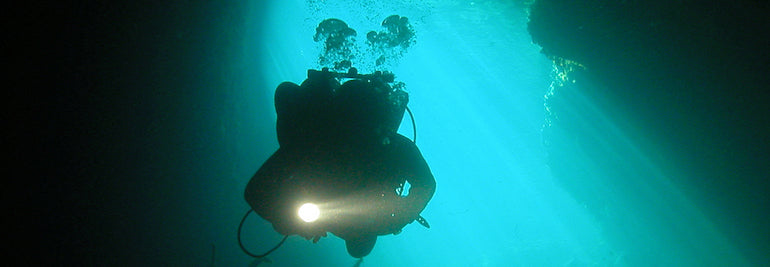
Even if you’re just a casual diver, you’ve heard of Dean’s Blue Hole in the Bahamas. The deepest saltwater blue hole in the world, at over 200m, it’s a mecca for underwater adventures of any sort – from scuba divers to free divers.
But what many don’t realize is the island nation is home to not only this natural wonder, but many more as well. The caves are referred to as the Abaco Blue Holes, it’s one of the most diverse and vast cave diving areas in the world – with many caves still unmapped.
That’s precisely why Suunto diver Jill Heinerth will join an elite crew of divers in the Bahamas for a massive survey and documentation push on the Abaco Blue Holes.
"I will be joining an elite crew of some of the finest cave diving explorers on the planet, lead by Dr. Kenny Broad, we will be joining Brian Kakuk of Bahamas Underground, and the Friends of the Environment in Abaco,” says Jill.
The area is rich in dive history – her partners on the project have been exploring these caves for over two decades. You can make legendary dives through areas like Fangorn’s Forest in Dan’s Cave, or see artifacts such as 3,000-year-old crocodile skeletons in Sawmill Sink. Of course, diving here is with no small risk – as always with cave diving, the right equipment and a wealth of experience from at least someone on your team are absolute necessities.
What’s the occasion for the study? "After over a decade of hard work, these blue holes have recently become protected within a newly designated national preserve,” Jill tells us. What’s even more interesting is that while this project is an underground operation, it isn’t undercover. They’ll be broadcasting almost live. “The team also has an aggressive outreach initiative that will include satellite transmissions to classrooms from the field and advanced 3D imaging efforts that will help to develop interactive resources that will help topside visitors get a sense of the beauty that resides beneath their feet.”
Things they’ll see in the caves include stalactites and stalagmites formed by deposited calcium. They can be rich environments for marine life – Bahamas-based diver Brian Kakuk calls them ‘overstocked aquariums’ – and they hold unknown potential for research – and it’s big win for research. These caves have been important laboratories for climate change science and biological studies and their new added protection will undoubtedly offer many more opportunities for science.
Follow along to see the Abaco Blue Holes project in action!
Watch Jill Heinerth’s Expedition files on Youtube.
Get ready for hangouts by satellite: Virtual Field Trips to the Bahamas!
This week a new BGAN unit (textbook sized device that allows video Google Hangouts from pretty much anywhere on the planet) will head by boat to Abaco in the Bahamas on a National Geographic Expedition with Kenny Broad and Jill Heinerth.
The next hangout, an EBTSOYP Hangout, will be on December 8th @ 11am EST. Lots of camera spots available and you can check out a background hangout with Kenny and Jill here. >>Watch a replay of the Virtual Field Trip here<<
Read more about the project at intotheplanet.com
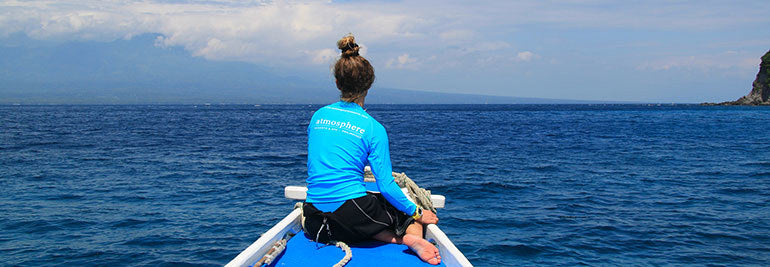

This is what the perfect dive trip looks like
Last month, we sent Suunto #DiveWithMe winners Anna Starup and Theresa Thorp to the Philippines for a little dive adventure in paradise at Atmosphere Dive Resort – suffice it to say the girls enjoyed themselves. Now that they are answering e-mails again (because let’s be honest, we wouldn’t be answering e-mails on a dive vacation either) we pinged them with a few questions about the trip – and of course, got some pics.
Anna, this was a learning experience for you.
Anna: Yeah – I did my final certification in the Philippines after preparing at home in Denmark using online courses. Diving just caught me right away. In retrospect I’ve thought about why I didn’t take my open water earlier. Diving is definitely going to take me (and Theresa) to places in the world I’d never considered before.
Best single dive of the trip?
Anna & Theresa: That’s actually quite a hard question! The dive sites differed a lot and each had amazing aspects about them. Perhaps a dive at Apo Island where we saw a dozen turtles that played around with us. Or a dive where a blue-ringed octopus saw its reflection in Anna’s dive instructor’s camera and attacked it! At the same dive we saw 4 species of Octopus’ and a lot of cool frogfishes.
Of course, you didn’t spend every moment on the boat…
Anna & Theresa: Atmosphere quite is a little piece of paradise. Rooms, dining area, dive shop, beach – just amazing. We’ll have to mention the food here as well. Besides diving, eating was definitely a highlight every day! The people at Atmosphere were a huge part of the amazing experience we had. Everyone seemed like a little family, joking around, stopping for a chat, taking interest in each other’s (and our) lives.
You made such good friends, you even got a nickname…
Anna & Theresa: Someone from the dive crew, jealous of our cool Suunto D4i, nicknamed us “The Suunto Girls”, which kind of stuck to us for the whole trip. Not the worst nickname, right? We also have to send a special “thanks” to Ulrika, Marco and Daniel from the Atmosphere family, who were the main reasons why this trip became such an irreplaceable and spectacular adventure. We’re still feeling completely and utterly high on life, thank you!
And you even got into the jungle!
Anna & Theresa: On our way to the resort we met up with Theresa's brother and friend who is currently backpacking their way around Asia. We woke up at 5AM for a short jungle hike which led us to the most stunningly beautiful, lagoon called Kawasan Falls. Being there early meant having the waterfall all to ourselves for hours! A ton of fun swimming, cliff jumping and playing around in the lagoon before we continued on our journey to Atmosphere Resort. We also got to explore the Chocolate Hills, joined a dinner cruise at Loboc River, saw the Tarsier Sanctuary at Bohol Island, and visited Osmena Peak, the highest peak at Cebu Island. All spectacular sights and irreplaceable small adventures.
Do you feel more confident underwater?
Theresa: Getting to share the incredible underwater world with Anna for the first time was magical! We had so much fun during her Open Water Course, and later during our fun dives.
Anna: I had studied quite a lot of theory, but all of it made sense when I got to try it in the water. I wasn’t sure how much I was going to remember if a situation occurred where I actually needed it, but during my very first dive for instance, my mouthpiece came off. Without knowing exactly what was going on, I just grabbed my reserve. So I think some of the exercises “internalizes” pretty fast.
Can you name some of your favorite spots for future visitors?
Anna & Theresa: The "turtle" divesite at Apo Island was called Rockpoint West. The divesite where we met the blue-ringed octopus was called Secret Garden although we called it Octopus' garden, as we saw a lot of octopus there. The whaleshark spot was called Oslob.
Are the Philippines as a must-go dive destination? Theresa: Absolutely – especially if you're into muck and micro diving. It caught me right away, and I'm still in awe that critters, like the one we met, actually exist in real life! I was especially fascinated by the many different species of frogfish, nudibranch and mantis shrimp.
Would you go back?
Theresa: Definitely! The amazing dive sites and spectacular nature are sure to drag us back, and besides, we need to reunite with the amazing crew at Atmosphere Resort.
What other spots in the world are next on your must-dive list?
Theresa: Since this was my first time diving in Asia, I'll have to get back to explore some more! Right now places like Komodo, the Gili islands and the Maldives is on the top of my must-dive list. Galapagos has also been on the top of my list for quite some time now.


Marc Casanovas takes over @suuntodive Instagram
Spaniard Marc Casanovas began diving in 1996 and was so inspired by what he saw he immediately began underwater photography. He’s hosting our @suuntodive Instagram account this week. Follow along to see his incredible images from dives in the Mediterranean!© Marc Casanovas
Tell us about yourself?
My name is Marc Casanovas, I live in Vilassar de Mar, near Barcelona, and I have been an underwater photographer for 20 years. Where do you like to dive?I regard myself as a Mediterranean photographer, because 95% of my work is concentrated a few kilometres from my home. I firmly believe that a photographer’s best photos are taken near where they live.© Marc CasanovasWhat inspires you in the underwater world?The fact that it never ceases to surprise me. What gets me hooked is observing nature. You always encounter different animals in a dive, or capture a new kind of behaviour.
The advantage of photography is that it is virtually infinite, even if you hardly move away from where you live. Nevertheless, I am thinking about taking a trip somewhere – we can never stop!© Marc CasanovasHow would you describe your photography style?I would say that I am a nature photographer. What I mean is that I do documentary photography, without ever losing sight of the fact that photography is based on aesthetic concepts. Is there a story you wish to tell with your images?Any photograph that tells a story at a glance, without the need for any explanation, is very likely to be a good photo. And that is what I try to do when I dive with my camera. Where to follow your adventures?
People can follow me on my Flickr page, on Facebook or on my website.
Follow @suuntodive on Instagram
Read more
10 tips to take amazing underwater photos
7 tips to help you make outstanding underwater videos
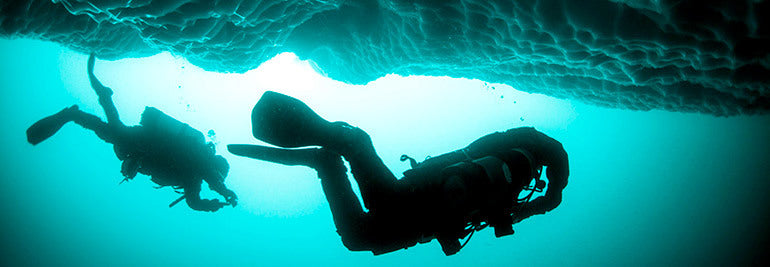

アイスダイビングとは?氷の下に広がる世界と必要な安全対策・装備
水面に浮かぶ巨大な氷山。その水中部分には、長い年月をかけて圧縮された氷の壁と、青く透き通る幻想的な景色が広がっています。一方で、氷山は常に動き、割れ、回転する可能性がある危険な環境でもあります。
2002年に氷山の内部を潜った先駆的なダイバーの一人、ジル・ハイナースは、こうした極地の水中世界を探検してきました。本記事では彼女の経験をもとに、アイスバーグダイビングの魅力、一般的なアイスダイビングとの違い、必要な訓練・装備・安全体制を紹介します。
氷山の水中部分は美しい一方、流れや氷の動きによる重大なリスクがあります。
目次
ジル・ハイナースが見た氷の世界
アイスダイビングと氷山ダイビングの違い
氷山特有のリスク
初心者向けではない理由
必要となる装備とチーム体制
冷水環境で注意したいこと
ダイブコンピューターの役割
まとめ
ジル・ハイナースが見た氷の世界
カナダ出身の探検家・ダイバーであるジル・ハイナースは、洞窟や極地など、通常は到達することが難しい水中環境を探検してきました。原文で彼女は、南極の氷山内部で見た光景を「水中で見た最も印象的なものの一つ」と振り返っています。
氷の壁は、何千年も前の雪が圧縮されて生まれたものです。水中では、氷に閉じ込められていた古い空気が泡となって現れることもあります。地球の歴史を目の前で見るような体験が、極地ダイビングの大きな魅力です。
アイスダイビングと氷山ダイビングの違い
「アイスダイビング」は、凍結した湖や海など、頭上が氷で覆われた環境で行うダイビングを指すことが一般的です。氷に開けた出入口が限られるため、オーバーヘッド環境として専用の訓練、ライン、地上支援チームが必要です。
一方、ジルが紹介するアイスバーグダイビングは、海を漂う氷山の壁面付近を潜る活動です。氷山内部の亀裂へ入ることもありますが、氷山そのものが移動・回転・崩壊する可能性があり、固定された氷の下とは異なるリスクがあります。
本記事は、実践手順を案内するものではありません。アイスダイビングや氷山ダイビングは、専門訓練を受けた経験豊富なダイバーが、現地を熟知したオペレーターと適切なチーム体制で行う活動です。
洞窟とも違う、氷山特有のリスク
ジルは、氷山ダイビングを洞窟ダイビングと同じように捉えてはいけないと説明しています。異なる水温の水が混ざることで複雑な流れが生じ、波によって巨大な氷が上下することもあります。
崩壊:氷の一部が突然割れ、落下する可能性がある
回転:重心が変わると、氷山全体が予告なく回転する場合がある
圧迫・衝突:移動する氷と水面・海底の間に挟まれる危険がある
複雑な流れ:下降・浮上や安全停止の位置を維持しにくい
出口の喪失:亀裂内部では氷の動きによって戻る経路が変わる可能性がある
そのため、見た目が安定している氷でも、安全だと自己判断することはできません。氷の状態、海況、天候、回収手段を評価できる専門家が必要です。
氷山は固定された構造物ではなく、割れ、動き、回転する可能性があります。
アイスダイビングが初心者向けではない理由
氷山や極地でのダイビングには、一般的なオープンウォーターダイビングを超える経験が求められます。原文でジルは、中性浮力、コンパス、DSMB(遅延式水面マーカーブイ)の使用、流れの中での安全停止などを確実に行える能力が必要だと述べています。
さらに、ドライスーツ、冷水環境、オーバーヘッド環境など、実施するダイビングに応じた専門講習と経験が必要です。資格を持っているだけで十分とは限りません。最近の潜水経験、器材への習熟、緊急時の対応能力も含め、オペレーターによる適切な評価を受けてください。
必要となる装備とチーム体制
具体的な装備構成は環境とオペレーターの計画によって異なりますが、冷水と氷の危険を想定した冗長性が必要です。
水温と潜水時間に適したドライスーツ、防寒インナー、フード、グローブ
冷水対応のレギュレーターとバックアップ呼吸源
頭上の氷や落下物から保護するヘルメット
環境に応じたライン、リール、DSMB、コンパス
視認性の高いライトとバックアップライト
冷水対応のダイブコンピューター
水面監視、ライン管理、緊急対応、迅速な回収を担う支援チーム
器材は、持っているだけでは安全につながりません。厚いグローブを着けた状態で操作できるか、低温時にどう動作するか、故障時にどの手順へ移るかまで訓練する必要があります。
冷水環境で注意したいこと
冷水は身体と器材の両方に影響します。手指の動きが鈍くなると、バルブ、バックル、インフレーターなどの操作が難しくなります。判断力の低下や低体温症だけでなく、ドライスーツへの浸水、レギュレーターのフリーフローなども想定しなければなりません。
ジルは、問題が起きても安全に帰還できるだけの余裕を持った保守的な計画が重要だと述べています。水面で長時間救助を待つことが難しい環境では、潜水計画だけでなく、回収、保温、酸素供給、医療機関への搬送まで含む緊急計画が不可欠です。
アイスダイビングにおけるダイブコンピューターの役割
明るいAMOLED画面とボタン操作を備えたSuunto Nautic S
ダイブコンピューターは、深度、潜水時間、浮上速度、減圧情報などを確認する重要な装備です。冷水環境では、厚いグローブでも操作できること、画面を読み取りやすいこと、使用するガスやダイビング計画に対応していることを確認します。
Suunto NauticとNautic Sは、単一ガス・マルチガスなどに対応する現行ダイブコンピューターです。ダイビングと陸上のスポーツ記録を一台にまとめたい場合は、Suunto Oceanも選択肢になります。製品の対応範囲を確認し、受講した訓練、使用ガス、潜水計画に合うモデルを専門家と選んでください。
ダイブログの振り返り方は、ダイビングログをもっと活用する方法で解説しています。
まとめ:氷の世界へは、敬意と慎重な準備を
氷山の水中世界は、地球の歴史を感じられるほど美しく、稀有な環境です。同時に、氷の崩壊や回転、複雑な流れ、冷水、限られた退避経路など、通常のダイビングとは異なる重大なリスクがあります。
ジル・ハイナースの体験が教えてくれるのは、危険を恐れないことではなく、危険を正しく認識し、問題が起きても帰還できるだけの余裕を計画に持たせることです。極地の水中へ挑戦するなら、専門訓練、経験豊富なオペレーター、適切なチームと装備を必ず整えてください。
水中で必要な情報を、見やすく確実に
SUUNTOの現行ダイブコンピューターとダイブウォッチをチェックしてください。
SUUNTOダイブ製品を見る


