




SUUNTOブログ


GUIDING STAR – A YEAR OF UNDERWATER ADVENTURES
“There is something special about the connection between women that cannot be explained with words alone. It is that deep feeling of affinity we have that brings us close and sets a common understanding of what we experience in our life’s triumphs and tribulations. It is a connection only a woman can truly understand. That is what makes the Suunto Jewel so special. The very essence of its existence and what it represents, expresses that unspeakable bond that brings us together,” the Scuba Diver Girls say.
Last February, Suunto sent three Suunto Guiding Star pendants on a journey around the globe. The pendants were passed from one adventure-minded woman to the next, travelling from the Alps to the Arctic Lapland and onwards, and from the Pacific Ocean to icy waters in upstate New York and back under the Caribbean Sun.
We have been following the journey of one pendant in particular, as it was passed on among some of the world’s most inspirational female divers. Here is an account of that journey, told by the divers themselves. While the list of adventures and places the jewel has seen is impressive, what strikes as most extraordinary, is the invisible bond of sisterhood the jewel has created between these women.
The journey took off in the Maldives, where Scuba Diver Girls Margo Sanchez and Stephanie Adamson were the first women to wear the jewel. The jewel spent some memorable moments diving in the crystal blue waters around Maguhdhuvaa Island and later on travelled with Margo and Stephanie back home to San Diego, United States.
“The jewel came with us into our beautiful backyard, an ocean full of kelp, sharks, turtles and a myriad of other amazing sea creatures,” Margo describes. “After a few weeks of enjoying our precious piece of art, it was time to pass it along.”
Scuba Diver Girls chose to give the jewel to Becky Kagan Schott, the Emmy Award winning underwater videographer, photographer and tech dive instructor.
“Becky embodies an amazing spirit that every woman should embrace. We passed our jewel on, holding it tight as to pass on our energy with it. By now it has traveled the world and laid over so many strong women’s hearts. The energy it possesses is most certainly magical,” Margo writes now, looking back to that moment in February.
One of the strong women to hold the Guiding Star next was Jill Heinerth, the underwater photographer and film-maker specialized on demanding cave exploration and 3D imaging. She took the jewel on a National Geographic cave diving expedition in Cuba, where she conducted exploration and survey dives, working with climate scientists and paleontologists:
“My job was to photograph and video our work and also deploy an exciting 3D imaging technology. I was able to take numerous calibrated photographs that were assembled into a 3D model of some of the paleo animal artifacts inside the cave,” she explains. “These files were merged into an accurate model that could be printed in 3D so that scientists could examine and work with a model rather than disturbing the artifact underwater where is remains well preserved and untouched.”
During the months that followed, the Guiding Star traveled onwards to technical diver Renata Rojas, who in turn gave it to scuba diver and submersible pilot Erika Bergman, who handed the jewel to marine biologist, researcher and deep ocean explorer Megan Cook. In August, the jewel landed in the hands of the explorer, teacher and instructor Cristina Zenato, world renowned for her work with shark awareness and conservation. At the time she was in the Bahamas, hosting the Our World Underwater Scholarship Society’s scholar, teaching sustainable shark diving and shark conservation. Her work aims to change the economic situation of the Bahamians, enabling them to move from traditional fishing to different forms of work and income, including professional scuba diving.
During her time with the Guiding Star, Cristina also continued her long term project and conducted cave diving exploration in the area, successfully mapping and connecting previously undiscovered caves and water systems. “It has been a solo expedition and work and the jewel happened to be with me on the day I did the two most important ones. I consider it my luck charm,” Cristina concludes.
Cristina passed the Guiding Star on to technical diver Gemma Smith, the first woman ever to dive at the world famous Antikythera Shipwreck. Gemma took the jewel to Central France, to the Lot/Dordogne region, where she completed her internship and became an Introductory Cave Diving Instructor on Open and Closed Circuit and managed to log some long-awaited cave dives.
“I was also fortunate enough to complete a major cave diving personal ‘bucket list’ goal during the trip. I wore the Suunto Guiding Star to guide me 2.2 kilometers through the earth, reaching depths of up to 80m to finally reach the stunning cathedral-like Bivouac Chamber in the Emergence de Ressel,“ Gemma says.
The journey of the Suunto Guiding Star still continues and we wish every future woman to hold the jewel to get a spark of that energy and courage these women have passed on with the pendant.
“It has been an honor to carry the Star on such big moments in my diving journey, and I really hope I've inspired other women to follow their own diving dreams, and show that size and gender should never hold you back,” Gemma Smith summarizes.
To learn more about the Guiding Star – or to get it for an adventurous woman who inspires you – visit suunto.com

オーバートレーニング症候群とは?ランニングで頑張りすぎているサインと休む目安
ランニングを続けていると、「もっと走れば強くなれる」「予定したメニューは必ずこなしたい」と思うことがあります。
目標に向けて努力することは大切です。
しかし、トレーニング量や強度に対して回復が追いつかなくなると、疲労が抜けにくくなったり、パフォーマンスが下がったり、体調を崩しやすくなったりすることがあります。
こうした状態が長く続く場合、「オーバートレーニング症候群」と呼ばれる状態につながることがあります。
本記事は、ランナーがトレーニング量や回復状態を見直すための一般的な情報です。体調不良、痛み、強い疲労感が続く場合は、自己判断せず医師や専門家に相談してください。
オーバートレーニング症候群とは?
オーバートレーニング症候群とは、強いトレーニングを繰り返す一方で十分な回復が取れず、疲労やパフォーマンス低下、睡眠や気分の不調などが続く状態を指します。スポーツ医学の文献でも、十分な回復を伴わない高負荷トレーニングの繰り返しによって、疲労やパフォーマンス低下、けがのリスクが高まる状態として説明されています。
一時的な疲労は、トレーニングをしていれば誰にでも起こります。
大切なのは、疲労が一時的なものなのか、それとも回復しても抜けにくい状態なのかを見極めることです。
数日休んだり、強度を下げたりすることで回復する疲労であれば、通常のトレーニング過程の一部と考えられます。
一方で、休んでも疲労感が続く、いつものペースが極端にきつく感じる、睡眠や気分にも影響が出ている場合は、トレーニングと回復のバランスを見直すサインかもしれません。
休むこともトレーニングの一部
ランニングでは、走っている時間だけがトレーニングではありません。
身体は、負荷をかけた後に休養し、その刺激に適応することで強くなります。つまり、回復はパフォーマンス向上のために欠かせないプロセスです。
SUUNTOのリカバリー記事でも、運動後の感覚、回復時間、睡眠、HRVなどを継続して確認することで、回復状態を把握するヒントになると紹介しています。
「休む=サボる」ではありません。
必要なタイミングで強度を下げたり、休養日を入れたりすることは、長く走り続けるための大切な判断です。
ランニングで頑張りすぎている7つのサイン
ここでは、トレーニング量や強度を見直すきっかけになる7つのサインを紹介します。
ひとつ当てはまるだけで問題があるとは限りません。
ただし、複数のサインが続く場合は、無理にメニューをこなすのではなく、回復を優先することも考えてみましょう。
気分が落ち込み、イライラしやすい
ランニングは気分転換になることが多い一方で、疲労が蓄積すると、走ることへの意欲が落ちたり、イライラしやすくなったりすることがあります。
いつもなら楽しめる練習が負担に感じる。
走る前から気持ちが重い。
小さなことで落ち込みやすい。
こうした変化は、身体だけでなく心にも疲労がたまっているサインかもしれません。
脚が重く、走りに弾みがない
いつものペースなのに脚が重い。
地面を押す感覚がなく、フォームに弾みがない。
ウォームアップしても身体が動き出さない。
こうした状態が続く場合、筋肉や神経系が十分に回復していない可能性があります。
一時的な疲労であれば数日で戻ることもありますが、同じ状態が続くなら、トレーニング量や強度を見直しましょう。
風邪をひきやすい、体調を崩しやすい
強いトレーニングと回復不足が重なると、身体へのストレスが大きくなります。
以前より風邪をひきやすい。
喉の違和感やだるさが続く。
体調を崩して練習を休むことが増えた。
このような変化がある場合は、身体が回復を必要としているサインかもしれません。スポーツ医学系の解説でも、頻繁な体調不良やけがはオーバートレーニングのサインとして挙げられています。
眠れない、日中も疲れている
疲れているのに眠れない。
夜中に目が覚める。
十分寝たはずなのに、日中もだるい。
睡眠は回復に大きく関わります。
睡眠の質が落ちると、トレーニングで受けた刺激に身体が適応しにくくなり、さらに疲労が抜けにくくなることがあります。
睡眠の乱れが続く場合は、トレーニングだけでなく、仕事や生活面のストレスも含めて見直すことが大切です。
小さな痛みや違和感が続く
膝、足首、すね、腰、アキレス腱などに小さな違和感がある。
走り始めだけ痛い。
休むと少し良くなるが、走るとまた戻ってくる。
こうした「小さな違和感」を無視して走り続けると、けがにつながる可能性があります。
痛みが続く場合は、無理に走らず、必要に応じて医師、理学療法士、トレーナーなどの専門家に相談してください。
いつものペースが遅く感じる
同じコース、同じペースなのに、以前よりきつく感じる。
心拍数が高く出る。
頑張っているのにタイムが伸びない。
これは、身体が十分に回復していない状態でトレーニングを続けているサインかもしれません。
パフォーマンスが落ちていると感じると、さらに練習量を増やしたくなるかもしれません。
しかし、疲労が原因であれば、必要なのは追加の負荷ではなく回復です。
食欲が落ちている
食欲がない。
練習後に食べる気が起きない。
体重が意図せず減っている。
トレーニング量が多い時期は、身体が回復するために十分なエネルギーと栄養を必要とします。
食欲が落ちている状態で練習を続けると、回復に必要な栄養が不足しやすくなります。食欲低下や体重減少は、オーバートレーニングに関連するサインとして紹介されることがあります。
疲労が蓄積していないか見直すチェックリスト
以下は、診断のためのチェックリストではありません。
トレーニング量や回復状態を見直すための目安として活用してください。
見直したいサイン
確認
休んでも疲労感が抜けにくい
□
いつものペースがきつく感じる
□
脚が重く、走りに弾みがない
□
気分が落ち込みやすい、イライラしやすい
□
睡眠の質が落ちている
□
風邪をひきやすい、体調を崩しやすい
□
小さな痛みや違和感が続いている
□
食欲が落ちている
□
安静時心拍数が普段より高い
□
HRVが普段の範囲から外れている
□
複数当てはまる場合は、トレーニング量や強度を見直し、休養を取ることも検討しましょう。
症状や痛みが続く場合は、自己判断で練習を続けず、医師や専門家に相談してください。
サインに気づいたら見直したいこと
まずはトレーニング強度を下げる
疲労が抜けないと感じたら、まずは強度を下げることを考えましょう。
予定していたインターバルをイージーランに変える。
距離を短くする。
完全休養日に切り替える。
数日間トレーニングを軽くするだけで、身体の感覚が戻ることもあります。
大切なのは、予定したメニューに固執しすぎないことです。コンディションに合わせて調整することも、継続的なトレーニングには必要です。
▶︎関連記事:「心拍ゾーンとは?トレーニング強度を使い分けて持久力を高める方法」
睡眠と食事を優先する
回復の基本は、睡眠と食事です。
睡眠時間が短い日が続いている。
食事量が少ない。
練習後の補給が不十分。
こうした状態では、トレーニングの刺激を十分に回復へつなげにくくなります。
疲労を感じるときほど、練習内容だけでなく、睡眠、食事、水分補給、日常生活のストレスも見直しましょう。
痛みや不調が続く場合は専門家に相談する
休んでも痛みが引かない。
走るたびに同じ場所が痛む。
強い疲労感や気分の落ち込みが続く。
このような場合は、自己判断で練習を続けず、医師や専門家に相談してください。
特に痛みを抱えたまま走り続けると、回復に時間がかかるけがにつながる可能性があります。
Suuntoウォッチで回復のサインを確認する
SuuntoウォッチとSuuntoアプリは、体調を診断するものではありません。
ただし、睡眠、HRV、安静時心拍数、トレーニング負荷などを継続的に確認することで、普段との変化に気づく手がかりになります。
数字だけで判断するのではなく、脚の重さ、気分、食欲、睡眠の感覚と合わせて見ることが大切です。
睡眠
睡眠時間や睡眠の質は、回復状態を考えるうえで重要な指標です。
Suuntoウォッチでは、睡眠時間や睡眠中の身体の状態を記録できます。
前日より走れているかだけでなく、しっかり眠れているかを確認することで、トレーニングの強度を調整しやすくなります。
HRV
HRVとは、心拍と心拍の間隔に生じるわずかな変化を示す指標です。
HRVは、自律神経の状態や回復の傾向を把握するための参考になります。SUUNTOのHRV解説記事では、睡眠中に計測したHRVを継続して確認することで、回復状態やストレスの傾向を理解する手がかりになると紹介しています。
HRVについて詳しく知りたい方は、こちらの記事をご覧ください。
▶︎関連記事:HRVとは?心拍変動を理解してトレーニングの回復を最適化する方法
安静時心拍数
安静時心拍数が普段より高い状態が続く場合、疲労やストレス、体調変化のサインである可能性があります。
もちろん、1日の数値だけで判断するのではなく、自分の通常の範囲を知り、数日から数週間の傾向を見ることが大切です。
▶︎関連記事:「安静時心拍数と最大心拍数とは?測り方とトレーニングへの活用」
トレーニング負荷
走行距離や時間だけでは、身体にかかった負荷を十分に把握できないことがあります。
Suuntoアプリでは、トレーニング量や負荷の推移を確認できます。
負荷が高い状態が続いている場合は、低強度の日や休養日を入れる目安になります。
運動後の感覚
データだけでなく、「今日の練習がどう感じたか」も重要です。
SUUNTOでは、アクティビティ後の感覚を記録することで、回復状態を把握するヒントになると紹介しています。感覚が下向きの傾向を示している場合は、トレーニング量や回復状態を見直すタイミングかもしれません。
Suuntoで回復状態を確認する方法については、こちらの記事も参考ください。
▶︎関連記事:「Suuntoでリカバリーを確認する4つの方法」
データと体感を組み合わせることが大切
ウォッチの数値は、身体の変化に気づくための手がかりになります。
一方で、数値だけで「休むべき」「走ってよい」と決めるのはおすすめできません。
たとえば、HRVが普段より低く、安静時心拍数が高く、さらに脚も重い。
このように、データと体感の両方が回復不足を示している場合は、強度を下げる判断がしやすくなります。
反対に、数値に大きな変化がなくても、痛みや強い違和感がある場合は無理をしないことが大切です。
データは、身体の声を聞くための補助線です。
自分の感覚と組み合わせて、トレーニングを調整しましょう。
まとめ:強くなるためには、休む判断も必要
オーバートレーニング症候群は、トレーニングと回復のバランスが崩れたときに起こり得る状態です。
ランニングを続ける中で、疲労感、脚の重さ、睡眠の乱れ、気分の変化、パフォーマンス低下、食欲の変化などが続く場合は、トレーニング量や強度を見直すサインかもしれません。
強くなるためには、頑張る日だけでなく、回復する日も必要です。
Suuntoウォッチのデータは、体調を診断するものではありません。
しかし、睡眠、HRV、安静時心拍数、トレーニング負荷などを継続して見ることで、無理を続ける前に立ち止まるきっかけになります。
数字と体感の両方を見ながら、必要なときに休むこと。
それも、長く走り続けるための大切なトレーニングです。
回復を見ながら、次のトレーニングへ
SuuntoウォッチとSuuntoアプリでは、睡眠、HRV、トレーニング負荷、運動後の感覚などを継続して確認できます。
毎回頑張るだけではなく、身体の変化に気づきながら、目的に合ったトレーニングと回復を積み重ねましょう。
▶︎リカバリーが確認できるGPSランニングウォッチを見る
関連記事
Suuntoでリカバリーを確認する4つの方法
HRVとは?心拍変動を理解してトレーニングの回復を最適化する方法


The routes of a pro
Think you can take on one of the world’s top ultra runners? We asked this year’s Ultra Trail World Tour silver medallist Gediminas Grinius for his favorite places to run around the world. Check out his list below.
© Ultra-Trail World Tour
Squaw Valley, California, USA
Distance: 13.22 km (8.2 miles)Elevation: 970 m (3,182ft)Time to beat: 1:49’51Why: If you want to feel the Olympic atmosphere of the resort and at the same time climb the very first and the most beautiful part of the legendary Western States race this trail is for you.Click for Gediminas's tips on transitioning from road to trail running© Pete Forsyth via Wikimedia Commons
Mt Teide, Tenerife, Canary Islands
Distance: 63.95 kmElevation: 4,671 mTime to beat: 10:29’21Why: Long, but an amazing run, especially if you start in the evening. With a bit effort you can see the sunrise from the Volcano, which is the highest peak in Spain.
© Nikodem Nijaki via Wikimedia Commons
Roque Nublo, Gran Canaria, Canary Islands
Distance: 38.23 kmElevation: 2,189 mTime to beat: 5:25’42Why: A nice run from Artenara Cave hostel to the picturesque Roque Nublo from where you have all the island stretched out on your hand. If the sky is clear you can see Mt Teide on Tenerife on the horizon.
© H. Zell via Wikimedia Commons
Piton de la Fournaise, Reunion Island
Distance: 12.01 kmElevation: 544 mTime to beat: 2:18’30Why: It is must to run this trail, as it is in the middle of la Reunion island and part of the Raid de la Reunion race, also known as the Diagonale des Fous – the route of crazies. At the end of the trail you are on the top of a still active volcano. It’s an incredible and very difficult trail. © B. Navez via Wikimedia Commons.
LTU Trail Running People trail, Lithuania
Distance: 28.37 kmElevation: 1,263 mTime to beat: 3:08’45Why: This is what you are forced to do when you don't have real mountains :) But it is home and a place where the (local) LTU trail running community was born, so it’s close to my heart.© Kontis Šatūnas via Wikimedia Commons
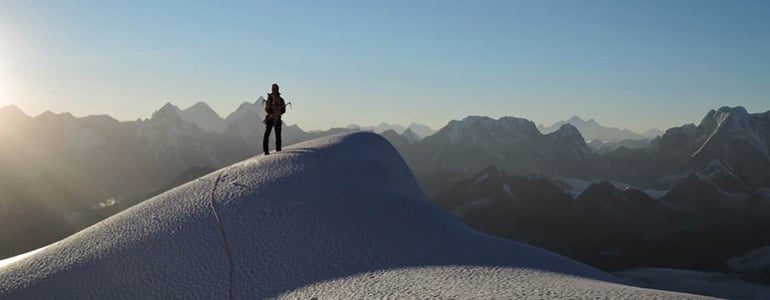

Ueli Steck sets new speed record on Eiger
Suunto ambassador Ueli Steck has set a new speed record on Eiger for the third time, beating his previous record by 25 minutes and the 2011 record set by Daniel Arnold. Ueli Steck, the Swiss Machine, took advantage of good climbing conditions this week and clocked a lightning fast 2h22m summit of Eiger via the classic Heckmair Route.
The Eiger (3970 m), a mountain in Switzerland’s Bernese Alps, has long been an iconic testing ground for alpinists because of its severe north face and accessibility. The Heckmair Route boasts 1800 m of vertical gain. In 2008, Steck smashed his own record by over an hour, clocking an impressive 2h47m summit. This week he broke Daniel Arnold’s 2011 record of 2h28m.
“I didn’t push myself as hard as in 2008.”
“This time I had a good track, good conditions and I was pulling some gear that made it quite safe and I believe it makes much more sense this way,” Ueli says. “I didn‘t push myself as hard as in 2008 and I felt very comfortable. This made this ascent a beautiful experience and a great day.”
He adds: “We can never compare ascents on a face like the Eiger because the conditions and weather are always different. This is what makes alpinism interesting and unique. For me it’s the personal challenge and your own experience that really matter.”
The record breaking accent was a finale for Steck after spending the last few weeks taking advantage of good conditions to attemp a number of routes on the Eiger with fellow climbers and trail runners Nicolas Hojac and Killian Jornet.
More about legendary climber Ueli Steck
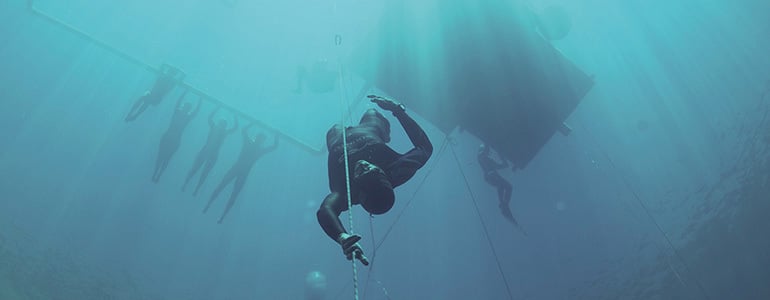

What freedivers can learn from the top of the world
Suunto ambassador and freediver William Trubridge has given his life to the sport of diving as deep into the ocean’s depths as any human can without scuba equipment. But he recently decided to explore the other end of the planet – the heights of the Himayalas. He trekked 300 km, with 10,000 m of vertical ascent. The longest day was 13 hours of hiking. We asked him what he learned at the top of the world.
Why did you go trekking in Nepal? It was mainly to do something together with my father David and brother Sam, as we live in separate parts of the world. We chose the Himalayas, as my father loves the mountains, and neither Sam nor myself have seen those kinds of mountains.
"I think freediving training definitely has a crossover effect to mountain climbing."
Where were you?We trekked to Kanchenjunga base camp in eastern Nepal. Kanchenjunga is the third highest mountain in the world, and one of the holiest. The remoteness of this area means there are few trekkers and even fewer amenities. This is exactly what we wanted.
At 5163 m, the atmosphere is half as dense as at sea level, meaning half the volume of oxygen per breath.Vastly different environment than you’re used to – how was it? It was humbling. I realised just how un-adapted my body is to that kind of world. After 12 years of only freediving training in the water my knees were unacquainted with any kind of impact, and the first day's gruelling descent paid its toll. In fact, all the descents were tough for me. I really enjoyed going uphill because I was able to push myself. You’re used to having a lack of oxygen – how was the higher altitude for you? The altitude wasn't a factor. Our ascent was very gradual, which allowed the body time to adapt. I think freediving training definitely has a crossover effect to mountain climbing by developing haemoglobin oxygen storage in the blood. Freediving training stimulates erythropoiesis, which is the generation of new red blood cells, in order to store and transfer more oxygen. This benefits all hypoxic activities, whether apnea or trekking at altitude. What did you learn? It gave me an appreciation of volumes, and the vastness of the mountains, but also the seas. When looking up at a towering 7,000 m peak and thinking that huge mass could disappear in the huge well that is our planet's oceans it made me marvel at the scale of these environments. What can freedivers learn from trekking or the mountains? Trekking can be a kind of meditation, as the slow pace of changing scenery lulls your mind. It also gives you an appreciation for the 'other end of the spectrum' of our planet's ecosystem, and for the many other various forms that water can take: snow, rain, mist, waterfalls and rivers.
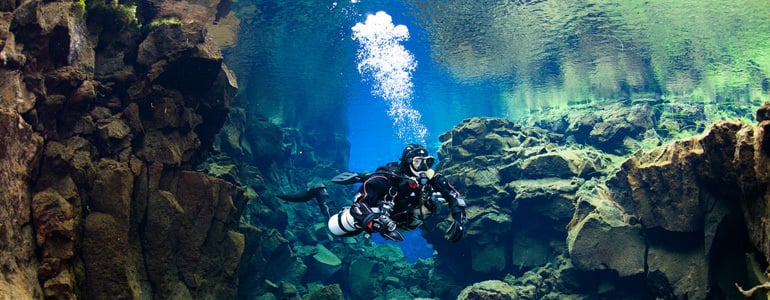

Diving the Shipwrecks of Bell Island
Suunto ambassador and underwater explorer Jill Heinerth dives the world's most incredible locations. Bell Island, Newfoundland is one such site. The video below shows why it's a diver's paradise.
Tell us about the Bell Island and its wrecks.
Bell Island is one of the few locations in North America that was under attack by German forces during the Second World War. In 1942, U-boats raided the island twice, sinking four iron ore carriers and destroying a loading wharf, killing more than 60 men. During the war, the mines on Bell Island, Newfoundland supplied iron ore that accounted for one-third of Canada's steel production. Germany knew that they could interrupt the flow of ore, even temporarily, and Canada's war output could be seriously affected.
Click here to find out more about Jill Heinerth
What drew you to dive there?
I was part of a team documenting the recovery of a sextant from the wreck of the Rose Castle. Rick Stanley, owner of Ocean Quest Adventure Resort, worked for over a year to secure the correct permits and line up provincial conservators to preserve the important artifact that will be eventually be displayed in an extensive museum on Bell Island.
Why is it such an amazing dive location?
Newfoundland is a great destination for the adventurous divers. Today, divers visiting Newfoundland’s rich waters, can dive these remarkable wrecks that have transformed into stunning and colorful reef structures.
Is there more to explore there?
In the summer, divers can also enjoy diving on icebergs and swimming with whales that gather in the area to feed on capelin. I’ve been recently working with other cave divers to document the submerged mines which cover over 100 square kms. This coming season, mine operators hope to open diving activities to qualified cave divers visiting the area. The mine is still filled with all the equipment and artifacts of operations there. Seeing the large equipment, miner’s graffiti and personal items is an interesting opportunity.


