




SUUNTOブログ


7 tips to accelerating your uphill speed
We touched base with Carmichael Training System’s endurance coach Nick White and got 7 gems of wisdom that will turn you into a vertical speed machine.
Emelie Forsberg pushing hard in the Andorra vertical skimo race. © ISMF Press Office
Consistency and volume
Having a solid aerobic fitness base is an important prerequisite to becoming faster on vertical ascents, so consistency and volume should remain central to any training programme. This base makes focused work on your lactate threshold and V02 max possible.
Improve your V02
The goal here is to maximize how much oxygen your body can process and deliver to your working muscles. Doing short, high intensity interval workouts, some of them ascents, are the way we achieve this. Match each interval with an equal recovery time. Here are some ‘go-to’ workouts that should be done two to three times a week with a rest day between each session:
9x 2min at maximum effort/2min easy recovery 6x 3min at maximum effort/3min easy recovery 5x 4min at maximum effort/4min easy recover Easier option: 5x 30s at maximum effort/30s easy recovery
Few athletes have a V02 max as high as Suunto ambassador Kilian Jornet. © ISMF Press Office
Focusing on lactate threshold
If it’s a trail race or a mountain run with big vertical ascents that you’re training for, then it’s also critical to focus on your lactate threshold. Do this through longer duration interval workouts done at a slightly lower intensity than the V02 training outlined above. The goal is to work consistently until you can't work at that intensity anymore. After rest and recovery, your body will become stronger. Intervals should be between 10 to 30 minutes in length, with half the recovery time, and a total training time of around 45 to 60 minutes. For example: 4-5x 12min intervals, with 6min rest between 3-4x 15min intervals, with 8min rest between 2-3x 20min intervals, with 10min rest between Both of the above interval types, V02 and lactate threshold, are necessary, whether you’re doing a vertical kilometer race or a longer mountain run. Each one is specific to a different aspect of vertical speed.
Ryan Sandes training in his local hills in Cape Town. © Craig Kolesky/Red Bull Content Pool
Match your gradient
While it's a good general rule to match the gradients in your training to that of your event, it’s also important to mix it up so you're not hitting the same hill over and over again.
Don’t overdo the hills!
Not all of your interval workouts should be done on hills. Do them once or twice a week on hills and the other days train on rolling or flatter terrain.
© ISMF Press Office
Keep it specific
At least some of your training should be on terrain that’s similar to what your race will be on. If at least some of your training is done on similar trails or hills, then you can be sure you’re developing the necessary muscular strength and technical skills as well.
Watch your weight
Body weight is obviously an important factor in the vertical ascent equation. A heavier runner will require a lot more energy and force to climb a hill at the same speed as a lighter runner. It really is a power-to-weight ratio issue at its core. You go uphill faster either by gaining more power, or becoming lighter, or both. So go easy on the cake!
MAIN IMAGE: © ISMF Press Office


New software 1.5.9 for Suunto D-series dive computers
Suunto, the world’s leading dive computer brand, introduces an optional software update bringing usability and performance improvements to the Suunto DX, Suunto D6i, Suunto D6i Novo, Suunto D4i and Suunto D4i Novo.
Suunto's D-series dive computers are known for their refined design and solid functionality. The new software update 1.5.9 builds on consumer feedback and makes the devices even more user-friendly whether you're an experienced technical diver, freediver or an adventurous spirit new to the diving world.
The new enhancements include:
The dive mode selection is moved to sub menu ”General Settings” to make it easier to change and dive with the desired mode.
Easier and quicker digital compass calibration brought to D6i (similar to the DX) adds the possibility to calibrate the compass also underwater.
Stopwatch usage simplified.
Enhanced battery and pressure sensor checking.
This optional software update is available to existing Suunto DX, D6i and D4i owners via Authorized Suunto Service Centers. Please note, Suunto authorized battery change points are not able to offer this software update. When you send your dive computer for servicing or a battery change, the software will be updated at the same time without an additional cost. Without a battery change or other service procedure the cost is a handling fee that varies from country to country. D4, D6, D9 and D9tx can not be updated – you can identify the model on the backplate of your dive computer.
Please contact your local Suunto Dealer or Suunto Contact Center for more information. For contact details and updated user guides check out support. You can also check out the D-series learning tool or visit the Suunto YouTube channel for how-to-use videos.

7 vertical races you'll thank us for later
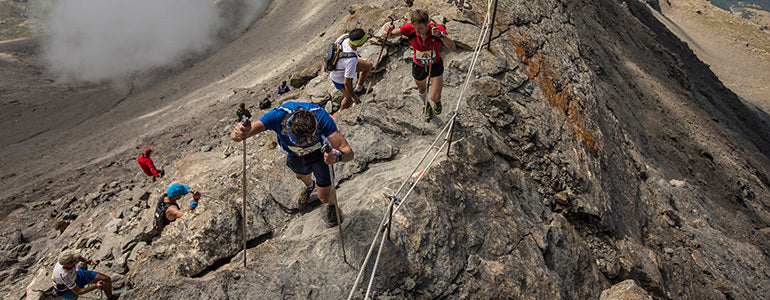
To coincide with the launch of Suunto Ambit3 Vertical we list 7 incredible, awesome and quad-killing vertical races and challenges to sign up to in 2016. Register now, suffer later – you know you’ll be grateful afterwards.
VK Tromsø Skyrace
Why: It goes from sea to summitWhere: NorwayVertical: 1km
“We cannot think of a better place than the mountains of Tromsø for a skyrace: a place to run between the sky and the earth and to feel freedom,” so says the official text for this newcomer to the race calendar. “You start just near the sea and you finish on the top of the mountain with a very technical climb,” says last year’s second place finisher Rémi Bonnet. “It's so fun!” Find out more here.© Kilian Jornet
Red Bull 3 VK
Why: More altitude to climb, therefore more funWhere: ItalyVertical: 3,000 m
Most vertical kilometer races are just that – a race up a mountain for 1,000 m. But unsurprisingly for the ubiquitous energy drinks company, they had to take things one step further, creating a vertical race of 3,000 m up Italy’s Rocciamelone peak, the Red Bull 3 VK. Each vertical km is special, says Rémi Bonnet, who smashed the record to win last year in 2h 1m 57s. “The first is very runable, the second very steep and the last is very technical.” Fancy something shorter? There’s always the Red Bull 400, a straight-up sprint up one of Europe’s ski-jumps.
Norseman
Why: Think of it as an Ironman but with attitude, or should that be altitude?Where: NorwayVertical: 4,600 m
If it’s vertical ascent you like, the legendary Norseman triathlon is for you. “The cycling leg ascends 1,200 m in the beginning and after that it stays high,” says pro triathlete Teemu Lemmettylä who took part last year. In total the cycling stage packs 3,000 m of ascent but the real killer is saved until the last 17 km of the run which rises 1,600 m to the summit of Gaustatoppen. “The Norseman is unique. In addition to the vertical, the coldness, weather and slippery surface challenges every athlete but the landscape is something you never forget,” adds Lemmettylä.
Mt Ventoux
Why: It’s the classic Alpine ascent steeped in historyWhere: FranceVertical: 1,611 m
Few cycling climbs are as steeped in history as the switchback roads leading to the summit of Mt Ventoux. At 21.8 km, the ascent is long and torturous and often into headwinds, as it winds from the town of Bédoin to the 1,912 m high summit. But to ride to the top is to ride alongside cycling’s legends. It’s a classic for the bucket list – and there to be ticked off. This is the mountain that famously claimed the life of British cyclist Tom Simpson. He collapsed with exhaustion during the ascent in the 1967 Tour aged 29. You’ll pass his memorial on the way up, provided you haven’t collapsed yourself.
Patrouille de Glacier
Why: It’s the classic ski-mountaineering challengeWhere: SwitzerlandVertical: 3,994 m
Few events are as well matched for the cumulative altitude-counting capabilities of the Suunto Ambit3 Vertical as the Patrouille de Glacier. Held every two years, the race is one of the ‘Grand Tour’ ski-mountaineering races of the Alps – and with almost 4,000 m to climb, there’s a lot of vertical to log. Originally designed as a test of endurance for Swiss alpine troops, the race is still run by the Swiss military but open to civilians as well. It sees teams race across some of the highest mountains of the Alps from Zermatt to Verbier.© Patrouille des Glaciers via Flickr
Great Himalayan Trail
Why: It crosses the greatest mountain chain of the world. Need another reason?Where: Bhutan, Nepal, India, Pakistan and TibetVertical: 150,000 m
Now if you feel like logging some serious vertical, there’s only one place to go – and that’s the Himalayas. The Great Himalayan Trail is not a set route but rather a loosely defined set of trails that follow the spine of the world’s highest mountains.
Passo dello Stelvio
Why: It offers 48 hairpin bendsWhere: ItalyVertical: 1,808 m
The legendary Fausto Coppi, nicknamed Il Campionissimo (champion of champions), said after cycling the Passo dello Stelvio that he “felt he was going to die” during the climb. It’s easy to understand why. The ride offers 24 km of uphill grind from Prato. The endless switchbacks have been torturing cyclists for decades but like moths to a flame, every year they keep coming back for more, entranced by its allure and sheer vertical challenge. Don’t forget to hit the start button on your watch at the bottom.
© Jussarian via Flickr
Mt Marathon Race
Why: Legendary local characterWhere: AlaskaVertical: 815 m
The Mt Marathon Race in Seward, Alaska is one of those races that have epic status among local fans. It’s not the highest, but it is steep, with those 815 m gained in just 1.4 km. Does it live up to the hype? Last year Suunto ambassadors Kilian Jornet and Emelie Forsberg turned up to give it a go, both setting new records in the process. Afterwards, Kilian said he was not disappointed. “It was fun, so beautiful. It’s technical. It’s fun. It’s difficult.’’ What more could you want from a vertical race?The Suunto Ambit3 Vertical is the multisport GPS watch for planning and tracking your elevation gain. Read more at www.suunto.com/ambit3vertical
MAIN IMAGE: © Damiano Levati/Red Bull Content Pool


Diving between tectonic plates
Underwater explorer and Suunto ambassador Jill Heinerth has dived in breathtaking locations all over the world so when she says one place has the clearest water and is the most inviting it’s worth sitting up and paying attention. It’s time to update your bucketlist. Located in Iceland’s Thingvellir National Park is the most impressive meeting place of the North American and Eurasian tectonic plates – the Silfra fissure. The two plates drift apart about 2 cm every year and snorkelers and divers can swim between them in the fissure and even touch the two continents at the same time – the only place in the world this is possible.
Intrepid underwater explorer, photographer and film maker Jill Heinerth dived there in 2014 with scientist Jónína Herdís Ólafsdóttir who is researching the unique bacterial colonies that live in the Silfra and in other fissure cracks around Iceland. The research may offer insights into early life on Earth and possibly about life on other planets. While exploring there, Jill captured some amazing images of Jónína swimming in the fissure. Prepare to be amazed.
The Silfra fissure from above. © IntoThePlanet.com – Jill Heinerth
100 m visibility
The underwater visibility in the Silfra fissure is over 100 m. This is because it’s cold (2°C – 4°C year round) glacial water that's filtered through lava for 30 to 100 years before seeping from underground wells into Thingvellir Lake. It’s so pure it’s fit to drink. “Diving or snorkeling in Silfra should be on everyone's bucket list,” Jill says. “There’s simply no other water on this planet that is as clear and inviting.” © IntoThePlanet.com – Jill Heinerth
Diving into creation
The Silfra fissure has four sections that can be explored: the Silfra Big Crack, the Silfra Hall, Silfra Cathedral, and Silfra Lagoon. “Drifting through the gap in the tectonic plates in the middle of this gusty, raw and primordial environment makes you feel like you are diving into creation itself,” Jill says.
© IntoThePlanet.com – Jill Heinerth
The home of adventure
“Iceland is a stunning and unique environment,” Jill says. “The people are warm and the geography is absolutely incredible. For those that love the wildness of outdoor adventure, there is nothing like it.”© IntoThePlanet.com – Jill Heinerth
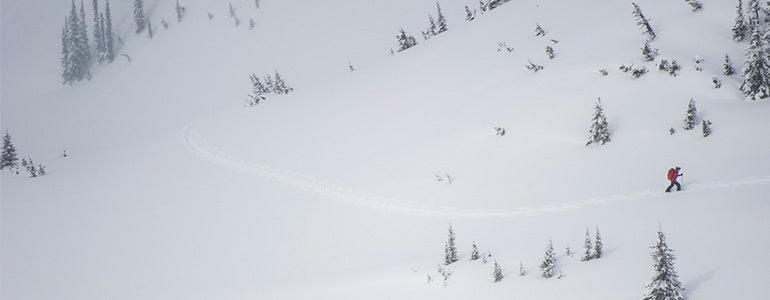

How to stay warm this winter
Understand there’s no magic solution
Breathable, waterproof, windproof – remember there’s no magic gear solution that works for everything. It’s possible to go cross-country skiing in -15ºC in just a base layer and shell. Wear that while ice climbing and you’ll start turning blue pretty quickly. Equally, you may need all the layers you can wear in +5ºC if it’s wet and windy. Remember there are always compromises – and you’ll never get it totally right.
Greg Hill pushes through an icy day. © Bruno Long
Experiment with what works
No two people are the same – a big guy with a lot of mass may be quite happy in little more than a t-shirt while if you have the figure of an ironman athlete, you may need an insulated jacket and mittens to enjoy the same level of warmth. Experiment between synthetic and wool base layers. If you’re a copious sweater, you may lean towards the former. If you need the warmth, go for wool.
Bring spares - of everything!
There’s nothing better after a strenuous hike to a summit peak than ripping off a sweat-soaked base layer and putting on a fresh one. OK, the stripping-off part is not so fun – especially if it’s windy! – but we promise it’s worth it. On longer days, taking your boots off and swopping socks will also make your smiles last longer. Change your gloves regularly, see below…
© Bruno Long
How many gloves is ok?
How many pairs of heels is it ok for a girl to have – probably not as many as the number of gloves it’s ok for the winter sports athlete to have. Have a look in any winter climber’s closet and you will find dozens and dozens of pairs. Take two to three with you on the hill. Cheap fleece gloves are awesome for when you’re moving and in between technical sections. Switch gloves between stages, depending on your activity. Keep the spare pair inside your jacket to keep warm. Still have cold hands? See #6 & #7.
Dress for 15 minutes into your activity
Remember that overheating and sweat in particular is the #1 enemy. The best way to chill a bottle of white wine is to stick it in a bucket of iced water and let the breeze do the rest. Dress for how you’ll be in 15 minutes time not how you’ll start. Better to begin a bit chilled and then warm up, than start pouring with sweat after a few minutes and have to stop and shed layers.
Put a hat (or anything) on
Since scientists debunked the myth that 70% of your body heat is lost through your head, the old adage that ‘if you’ve got cold hands you should put a hat on’ seems out of date. But it’s still a valid reminder that you should think ‘big picture’ when it comes to cold hands. Hands and feet get cold because the rest of your body’s cold; so putting on a warm layer, wearing a hat and pulling up your hood is still a case of old school is best. Remember also there’s no magic pair of gloves out there.
Cure your cold hands for good!
Always get cold hands or feet? If you’ve suffered from a cold weather injury (such as frostnip) chances are you’ll battle cold hands the next time the mercury drops, but contrary to conventional wisdom, there is something you can do about it (provided it’s not something else like Raynaud’s disease, in which case check with your physician). Doctors at Britain’s Institute of Naval Medicine discovered that rewarming your hands or feet in a warm bath over a course of several weeks can completely reverse the effects of a cold weather injury. Fill a foot bath with water at 40ºC, have a slug of your favorite tipple (alcohol opens up the blood vessels) then soak your feet or hands for 20 minutes. Repeat every night for several weeks.
MAIN IMAGE: © Bruno Long
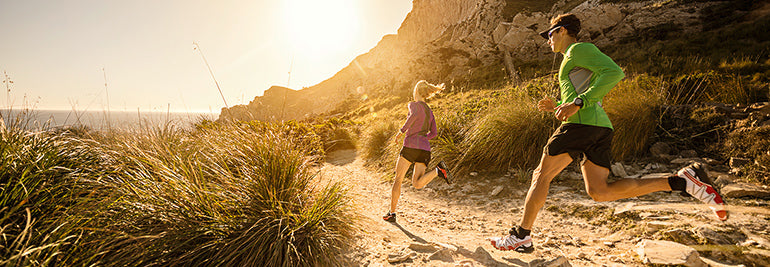

ランニングパワーとは?心拍・ペースとの違いとトレーニングでの使い方
ランニング中の強度を把握する方法として、ペースや心拍数に加えて注目されているのが「ランニングパワー」です。
同じペースで走っていても、上り坂や向かい風では身体へかかる負荷が大きくなります。反対に下り坂では、ペースが速くても必要な出力が低い場合があります。ランニングパワーは、こうした速度だけでは分かりにくい運動強度を、ワット(W)で捉えるための指標です。
この記事では、ランニングパワーの意味、心拍数・ペースとの違い、トレーニングやレースでの使い方、数値を見るときの注意点を解説します。
目次
ランニングパワーとは?
パワー・ペース・心拍数の違い
ランニングパワーを使う3つのメリット
トレーニングでの使い方
パワーゾーンは自分の基準で設定する
レースのペース配分に活用する
ランニング効率を振り返る
数値を見るときの注意点
現在のSuuntoでランニングパワーを活用する
まとめ|パワーを強度管理の一つとして使う
ランニングパワーとは?
ランニングパワーは、走っているときの運動強度をワットで表す指標です。一般的には、速度、加速、勾配、身体の動きなどをもとに、ウォッチや対応する外部センサーが推定します。
パワーの値が高いほど、その瞬間に大きな出力で走っていることを示します。ただし、測定・推定方法は機器によって異なるため、異なるデバイスの数値をそのまま比較するのではなく、同じ機器と条件で自分自身の変化を見るのが基本です。
パワー・ペース・心拍数の違い
ペース
ペースは、1kmを何分で走ったかという速度の指標です。理解しやすい一方、坂道、風、路面などによって、同じペースでも必要な努力は変わります。
心拍数
心拍数は、運動に対して身体がどのように反応しているかを見る指標です。暑さ、疲労、睡眠、脱水、ストレスなどの影響を受けるほか、運動強度を上げてから数値が変化するまでに時間差があります。
ランニングパワー
ランニングパワーは、出力の変化へ比較的素早く反応するため、上り坂や短いインターバルなど、ペースや心拍数だけでは強度を判断しにくい場面で役立ちます。
どれか一つが常に優れているわけではありません。ペースは実際の移動速度、心拍数は身体の反応、パワーは出力の目安として、目的に応じて組み合わせます。
▶︎関連記事:「心拍ゾーンとは?トレーニング強度を使い分けて持久力を高める方法」
ランニングパワーを使う3つのメリット
1. 強度の変化をすぐに確認しやすい
坂道へ入った直後やインターバルを開始した直後でも、パワーは出力の変化を捉えやすい指標です。序盤に力を使いすぎていないか、狙った強度を維持できているかを確認できます。
2. 起伏のあるコースで強度をそろえやすい
上り坂で平地と同じペースを守ろうとすると、必要以上に強度が上がることがあります。ペースを落としてもパワーを一定範囲に保つことで、コースの起伏に合わせて出力を調整しやすくなります。
3. 同じ条件での変化を振り返りやすい
似た条件のコースを同じペースで走ったとき、以前より低いパワーで走れるようになっていれば、効率が改善した可能性があります。ただし、風、路面、気温、疲労、機器の違いも影響するため、単日の数値だけで判断しません。
トレーニングでの使い方
最初からパワーだけで練習を管理する必要はありません。まずは普段どおり走りながら、自分のパワーがどのように変化するかを観察しましょう。
楽なジョグで安定しやすい範囲
上り坂に入ったときの変化
短いインターバルで維持できる値
ロング走の後半に起きる変化
同じコース・同じペースでの違い
データが蓄積したら、ジョグ、テンポ走、坂道、インターバルなど、それぞれの目的に合う範囲を考えます。高い数値を出すこと自体を目標にせず、予定した強度をコントロールするために使うことが大切です。
▶︎関連記事:「インターバルトレーニングのやり方|ランニング向けワークアウトの作成方法」
パワーゾーンは自分の基準で設定する
ランニングパワーは、体重、走力、フォーム、測定機器などによって個人差があります。他人と絶対値を比べるのではなく、自分の閾値や通常範囲を基準にゾーンを設定します。
閾値を確認するテストは負荷が高くなる場合があります。十分なウォームアップを行い、体調が良い日に、使用する機器やサービスの手順へ従って実施してください。初心者や健康上の不安がある人は、コーチや医療従事者へ相談しましょう。
▶︎関連記事:「VO2max・閾値・FTPを確認してトレーニングに活かす方法」
レースのペース配分に活用する
起伏のあるレースでは、ペースだけを基準にすると上りで出力を使いすぎ、後半に失速することがあります。上りではペースが落ちてもパワーの上限を意識し、下りや平地では路面と技術に合わせて調整します。
レース本番で初めてパワーを使うのではなく、事前のロング走や似たコースで試しましょう。数値だけを追って周囲の安全や補給、身体の感覚を見失わないことも重要です。
ランニング効率を振り返る
効率を見るときは、パワーだけではなく、ペースと心拍数を並べて確認します。同じコースと似た条件で、同程度のパワーから速いペースを出せるようになった、または同じペースを低いパワーや心拍数で走れるようになった場合、走りの効率が改善している可能性があります。
ただし、風向き、路面、シューズ、気温、荷物、疲労状態が違えば数値も変わります。長期的な傾向を見て、複数の指標から判断しましょう。
▶︎関連記事:「ランニングエコノミーとは?走りを効率化する5つの改善方法」
数値を見るときの注意点
ランニングパワーは直接測定ではなく、機器ごとの方法で推定される場合がある
異なるメーカーやデバイスの絶対値を単純に比較しない
体重や設定を変更したときは数値の変化に注意する
トレッドミル、トレイル、急勾配などでは条件の違いを考慮する
痛み、強い疲労、体調不良があるときは数値より身体の状態を優先する
パワーは診断結果ではなく、トレーニングを考える材料の一つです。心拍数、ペース、主観的なきつさ、睡眠、回復状態と合わせて活用します。
現在のSuuntoでランニングパワーを活用する
元記事ではAmbit3と外部パワーメーターの接続方法を紹介していましたが、現在の製品とアプリでは、トレーニングデータを継続的に振り返る考え方が中心です。
Suunto Race 2は、レースへ向けたトレーニングや長期的な進捗を詳しく確認したいランナーの選択肢です。
Suunto Race Sは、コンパクトなサイズで、さまざまなトレーニング指標を振り返りたい人に適しています。
Suunto Runは、軽量なウォッチで、日々のランニングをシンプルに記録したい人の選択肢です。
ランニングパワーを利用する場合は、使用するウォッチ、ソフトウェアバージョン、スポーツモード、外部センサーの対応状況を、購入前および使用前に各製品ページとサポート情報で確認してください。
まとめ|パワーを強度管理の一つとして使う
ランニングパワーは、坂道やインターバルで変化する出力を素早く確認し、ペースだけでは分かりにくい強度を捉えるための指標です。
絶対値の高さを競うのではなく、自分の通常範囲と長期的な変化を見ましょう。パワー、ペース、心拍数、身体の感覚を組み合わせることで、トレーニングやレースの強度をより立体的に理解できます。
走りの強度と変化を、データで振り返る
目的に合ったSuuntoウォッチで、ペース、心拍数、トレーニング負荷などを記録し、自分の走りを理解しましょう。
Suuntoウォッチを見る


