




SUUNTOブログ


Exploring wrecks in the Gulf of Finland
It’s been a busy summer for the Badewanne diving team. The Finnish group of underwater explorers have dived a number of deep wrecks in the Gulf of Finland from the first and second world wars and also discovered an unnamed wreck from the 19th century. In this team report they give the lowdown on their finds so far: Operating from the Estonian and Finnish side, we have made dives during which history has again revealed itself before our eyes.Near Osmussaar Island, Estonia we visited the wreck of Russian mineship Yenisei, another victim of victorious U26 from summer of 1915. The mighty ironclad rests on the seabed at 45 m listing to port, with the Obuhov cannons in their casemate stations defiantly pointing towards the green light above.
U 479 lies at a depth of 95 m. ©Badewanne.fi
Next we headed out further into central Gulf of Finland and revisited the wreck of WW2 era wreck U 479. She rests on the seabed at 95 m after hitting a mine in the late fall of 1944. Dropping down through the water, we can see that the water is very layered, and eventually pass through the halocline at 75 m. There is a distinct boundary layer where water is optically distorted as we enter the more saline deepwater. Visibility at the wreck is good, and we utilize our short bottom time to shoot video of this uniquely well preserved WW2 U-boat wreck. Continuing our journey through time, we dived another deep wreck, a WW2 “Torpedoboot” T18. It wasn’t a small “motor torpedo boat”, as many would think about, but in German classification it’s a 900 ton small destroyer of “Torpedoboot 37” class. The wreck is broken in the middle, laying at almost 100 m. Visibility is very good, and we obtain a good series of still images before undertaking the ascent, and the subsequent and inevitable almost three hours of decompression.
The Torpedo boat T18. ©badewanne.fiNext we move back to Finnish side, and establish our base on Hanko peninsula at Tvärminne Zoological Station, a scientific facility operated by University of Helsinki. From Tvärminne we again head out to the mouth of Gulf of Finland. We visit the wreck of U26, vanquisher of Pallada and Yenisei before her own fate in the fall of 1915. This wreck is very tricky to dive as it’s in a very busy location on the westbound shipping lane. Cooperation with maritime traffic controllers, Helsinki Traffic and Tallin Traffic is essential for safe and successful diving. We shoot video and stills for our documentary purposes, before we leave the U26 to her rest, which has lasted for 100 years this year.
The wreck of the Yenisei, sunk by U26. ©badewanne.fi Next target is something we don’t know – something that according to sonar images could be even a submarine. However, when we drop through 75 m of water, we arrive at a wreck of a mail ship from the 19thcentury. Her bows are buried in the glacial clay, and deck cabins have suffered from inevitable trawl damage, but it can be clearly seen that this ship has transported mail – and people. Fancy cast-iron lattice in railings, beautifully crafted wooden benches can be seen on upper deck, together with the ships’ wheel still standing, and the engine telegram and compass bowl on the deck. The identity of the ship is yet unknown.
Further out, during a lucky weather break, we again drop down to wreck at 80 m looking for a real “motor torpedo boat”. This turned out to be German Kriegsmarine Schnellboot S106 from the WW2 era, as we hoped. She’s broken in two by a mine explosion, but in very good condition. This is another new discovery, which adds a significant piece into the puzzle of naval warfare in the Gulf of Finland during WW2. After shooting images we again undertake the long ascent towards the green light.
Kriegsmarine Schnellboot S106 ©badewanne.fi These are some impressions from our expedition this summer. However, there are still many weekends left of the diving season. Stay tuned, we may bring you more interesting stuff before the winter closes in! For more info on the Badewanne team, head over to their website.

How were the 82 summits, Ueli Steck?
How many of 82 peaks had you climbed before?
Not sure, but not too many. I had never climbed the easier mountains before.
Climbing Les Droites. © Ueli SteckWhat did the #82Summits project teach you?
That it’s all about motivation. I was surprised how long I could keep going without stopping or having rest days. It’s different to an expedition because I was moving almost everyday. That was great. I was so motivated that even on rest days I went for a run!
What three words would you use to describe #82summits?
Passion. Friendship. Fun.
What were some of the most unforgettable moments of the summer?
There were many great moments. The last one was on Barre des Écrins, in the French Alps. I ran up the wrong valley in the morning. Instead of taking the trail to Glacier Blanc, I went to Glacier Noir. There was a sign I read and I was sure the trail to Glacier Blanc was on the left. It felt strange, but I kept going. I ran for another two hours before reaching the end of the valley. By then it was daylight and I realized I wasn’t where I should be. I checked Google Maps and figured out I was on the wrong side on the mountain. I ran back down and after 3h40 minutes I was back in the valley from where I started my ascent again. So I did a little extra to warm up!
Ueli and wife Nicole on Fiescherhorn. © Ueli Steck
When was the project at its hardest?
Mentally, it was the hardest in the beginning. You start and there are still so many peaks to climb!
You started the project with Michi Wohlleben, but didn’t finish with him. What happened?
Michi crashed his paraglider descending from the Schreckhorn Hut in Switzerland. Afterwards he tried his best, but couldn’t continue.
Aiguille Blanche de Peuterey. © Ueli Steck
How did losing your partner early on change things?
It was a difficult moment. What could I do? I didn’t want to give up so easily. That’s not my personality. I would never forgive myself. So I kept going and it turned out great. It was so much fun to climb with different partners and to do solo climbs. I still have very great memories of climbing with Andreas Steindel, a mountain guide and member of the Swiss Ski Mountaineering Team. Climbing with my best friend and supporter Daniel Mader and, of course, also the summits I climbed with my wife, were all great experiences. I also enjoyed solo climbing some peaks.
How were the cycling stages of the project?
This was something new to me. On the last part down from Massif des Écrins, I really felt the magic of cycling. Going over Col du Galibier, an iconic section on the Tour de France, is a great memory. And after so many kilometres your butt doesn’t hurt anymore!
A rainy day didn't stop Ueli having fun cycling over Col du Galibier. © Ueli Steck
If you had to choose, what were some of your favourite peaks?
1. Red Pillar of Brouillard, on the Brouillard flank of Mont Blanc, in Italy
2. Dent du Geant-Grandes Jorasses Traverse: multiple 4000 m peaks on the border between France and Italy
3. Monte Rosa Traverse: 18 peaks in one day
4. Finsteraarhorn, Switzerland with my wife
5. Aiguille blanche de Peuterey, Mont Blanc massif, Italy with Jonathan Griffith
In some of your Facebook posts you refer to the pioneers who did the first ascents on these peaks. Was there a historical side to your project as well?
It was great to be on all of these routes. Sometimes you think about the people who did the first ascents and you realize that what these guys achieved was just incredible!
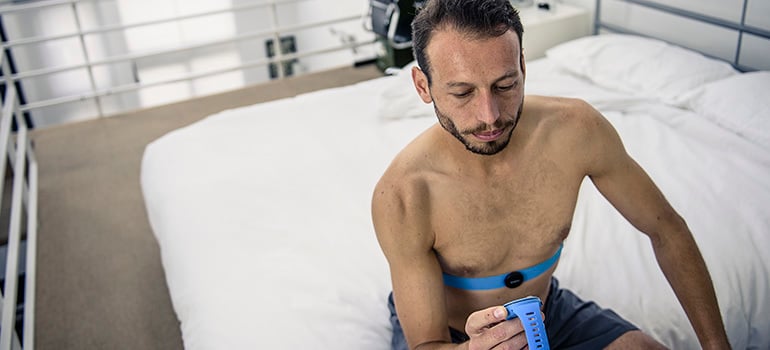

トレーニングで強くなるのは休んでいるとき|回復と適応の仕組み
トレーニングで強くなるには、走る、登る、泳ぐといった運動そのものが欠かせません。しかし、身体がトレーニングの刺激を受け止め、次の負荷に対応できるよう変化していくのは、運動を終えたあとの時間です。
つまり、休息はトレーニングの反対ではなく、その一部です。負荷と回復が適切に組み合わさって初めて、持久力や筋力、動作の効率といった能力の向上につながります。
この記事では、スポーツウォッチで回復をどう測るかではなく、回復中の身体で何が起きているのかを中心に解説します。
目次
身体は一定の状態を保とうとする
「疲労が抜けること」と「適応」は同じではない
睡眠は適応を支える土台
自律神経の変化は回復を知る手がかりになる
データが良くても休むべき日はある
回復を「判定」ではなく「判断材料」として使う
日々の変化を、現在のSuuntoで振り返る
まとめ|休息まで含めてトレーニングを設計する
身体は一定の状態を保とうとする
人の身体には、体温や血糖値など、体内の環境を一定の範囲に保とうとする働きがあります。これはホメオスタシス(恒常性)と呼ばれます。
トレーニングは、この安定した状態へ意図的に刺激を与える行為です。運動中はエネルギーを消費し、筋肉や心肺機能、自律神経系に負荷がかかります。身体はその刺激から回復する過程で、同じような負荷へ以前より対応しやすくなるよう適応を進めます。
ただし、刺激が強ければ強いほど効果が高まるわけではありません。回復できる範囲を超えて負荷が続けば、質の高い練習を積み重ねにくくなります。
「疲労が抜けること」と「適応」は同じではない
回復という言葉からは、筋肉痛がなくなる、疲労感が軽くなるといった変化を想像しがちです。しかし、身体が元の状態へ戻ることと、トレーニング刺激に適応することは、厳密には同じではありません。
エネルギーの補充、損傷した組織の修復、神経系の落ち着き、運動動作の学習などは、それぞれ異なる時間軸で進みます。朝の数値が良好でも脚に強い張りが残ることがあり、反対に身体は軽く感じても、睡眠不足によって集中力が落ちている場合があります。
回復を一つの数字で表し切れないのは、このように複数の仕組みが同時に関わっているためです。
睡眠は適応を支える土台
睡眠は、身体と脳が日中の刺激から回復するための重要な時間です。トレーニングだけでなく、仕事、移動、暑さ、精神的な緊張なども身体にとってはストレスになります。運動量だけを見ていても、実際の回復状態を捉えられないことがあります。
睡眠を振り返るときは、一晩の長さだけでなく、就寝・起床時刻の規則性、夜間の目覚め、起床時の感覚、日中の眠気にも目を向けましょう。完璧な睡眠を一晩だけ目指すより、無理なく続けられる生活リズムを整えることが大切です。
自律神経の変化は回復を知る手がかりになる
心拍数やHRV(心拍変動)は、自律神経の状態を間接的に捉える手がかりです。睡眠中の変化を継続して見ると、普段の自分と比べて身体が落ち着いているか、ストレスの影響が残っているかを考える材料になります。
大切なのは、他人の値や一般的な基準と競うのではなく、自分自身の通常範囲からの変化を見ることです。また、単日の上下だけで結論を出さず、睡眠や主観的な疲労と合わせて傾向を確認します。
▶︎関連記事:「HRVとは?心拍変動を理解してトレーニングの回復を最適化する方法」
データが良くても休むべき日はある
自律神経に基づく指標は便利ですが、筋肉や腱、関節の局所的な負担、感染症、栄養不足など、すべての状態を検出できるわけではありません。ウォッチの数値が通常どおりでも、強い筋肉痛や痛み、発熱、息苦しさがあれば、数値を優先して運動を続けるべきではありません。
回復を判断するときは、データに加えて次のような感覚も確認します。
起床時に疲労が残っていないか
筋肉や関節に普段とは異なる痛みがないか
食欲や気分が普段どおりか
ウォームアップで身体がいつものように動くか
練習に集中できる状態か
回復を「判定」ではなく「判断材料」として使う
回復データの目的は、その日のトレーニングを自動的に決めてもらうことではありません。予定していた練習と現在の状態を照らし合わせ、負荷を調整するための判断材料として使うことに価値があります。
状態が安定していれば予定どおり取り組み、疲労の兆候が重なっていれば、強度を下げる、時間を短くする、軽い運動へ切り替える、休養日にするといった選択ができます。こうした小さな調整は、長期的にトレーニングを継続する助けになります。
▶︎関連記事:「Suuntoでリカバリーを確認する4つの方法」
▶︎関連記事:「ランニングのトレーニング負荷を管理する方法」
日々の変化を、現在のSuuntoで振り返る
元記事で紹介されていた旧世代ウォッチの単発テストに代わり、現在は睡眠、HRV、心拍数、トレーニング負荷などを継続して振り返る考え方が中心です。Suunto Race 2、Suunto Race S、Suunto Run、Suunto Vertical 2などの現行モデルとSuuntoアプリを活用すれば、トレーニングと日常生活の変化を長期的な傾向として確認できます。
大切なのは、その日の数値だけで良し悪しを決めるのではなく、自分の通常状態を知り、負荷や生活習慣との関係を振り返ることです。具体的な確認方法は、上記の関連記事で詳しく紹介しています。
まとめ|休息まで含めてトレーニングを設計する
身体は、トレーニングの刺激を受けたあと、休息中に修復と適応を進めます。だからこそ、負荷をかける日だけでなく、回復する時間まで含めてトレーニングを考える必要があります。
一つの数値だけで「回復した」と判断するのではなく、睡眠、自律神経の傾向、筋肉や関節の状態、気分、実際に動いたときの感覚を組み合わせましょう。自分の通常状態を知り、その変化に合わせて負荷を調整することが、継続的な成長につながります。
トレーニングと回復を、一つの流れとして振り返る
SuuntoのスポーツウォッチとSuuntoアプリで、睡眠、HRV、心拍数、トレーニング負荷の傾向を確認し、自分に合ったトレーニングリズムを見つけましょう。
Suuntoウォッチを見る


The world champion free-diver’s plastic obsession
When you imagine Caribbean islands, images of unsullied golden beaches come to mind. But out-of-control plastic pollution means this isn’t always the reality. Suunto ambassador and world champion free diver William Trubridge is on a mission to change this.
When William Trubridge first moved to the Bahamas for free diving, he found himself developing an unexpected obsession. To his surprise a near carpet of plastic pollution covered some of the beaches on Long Island, the location of Dean’s Blue Hole where Will regularly trains.
Will tries to keep one or two beaches clean. © Willian Trubridge“I just couldn't help myself from at least collecting a few bags of it and then once I started doing that it almost became an obsession or an OCD (Obsession Compulsive Disorder) thing,” Will says. “It's difficult to find time to clean the beach regularly, but we do organize clean ups to keep at least one or two beaches tidy.” Will teaches free diving on the island at his Vertical Blue School and does plastic clean ups with his students. He says they are always shocked by the huge amount of plastic on the beaches.
Will's students always fill bags and bags with plastic. © Willian Trubridge“It's impossible to be a person who really enjoys free diving and not be affected by the sight of all the plastic,” he says. “One of the reasons I promote free diving and enjoy teaching people is because I know strengthening their contact and bond with the sea will change their behavior and make them more aware of this issue.” However, clean ups barely scratch the surface of the problem, Will says, so he began researching the issue more closely. During the clean ups he noticed one of the most common types of plastic trash he was collecting were small plastic sachets. They are used to hold 250 to 300 ml of drinking water and are sold in poorer countries such as Haiti and the Dominican Republic. “People chew off a corner from the bag and slurp the water into their mouths,” Will says. “They then get thrown on the road or off a boat and one way or another they end up in the sea. “Probably more than half of the plastic washing up is these little bags. There's millions and millions of them.”
It's impossible to be a free diver and not care about this issue, says Will. © Willian TrubridgeWill began looking into solutions and tried to find alternatives. He found companies that manufacture biodegradable plastic substitutes, but none can hold drinking water without biodegrading. “My latest idea is to try and crowd source enough money to supply most families in Haiti with one big five gallon jug each so they can then refill them with water rather than buying sachets,” Will says. “The problem is these families don't have the free cash to even put a deposit down on one so they just go for the easy option and buy the sachets for a few cents.” The next step, Will says, is to find people within Haiti and the Dominican Republic who could help organize the project once funds have been raised.

Caveman's awesome fatbike adventures
Seven-time world triathlon champion Conrad Stoltz, aka Caveman, says having a lot of hobbies has helped him stay mentally fresh as an athlete.
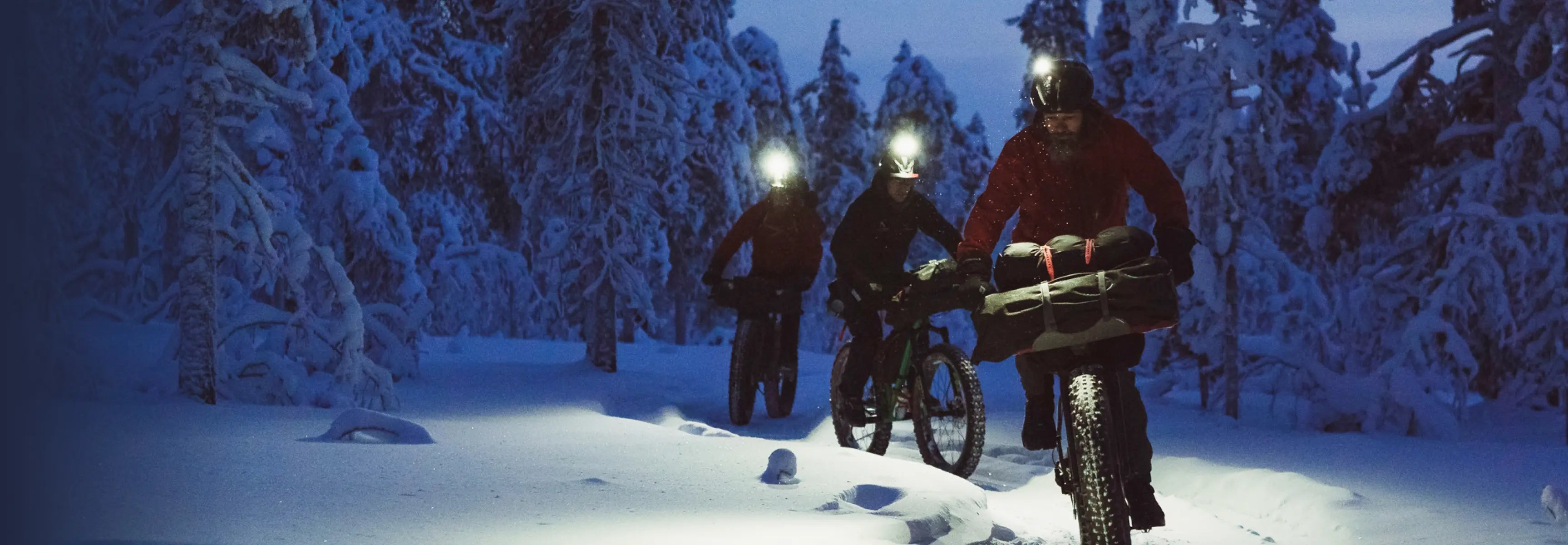
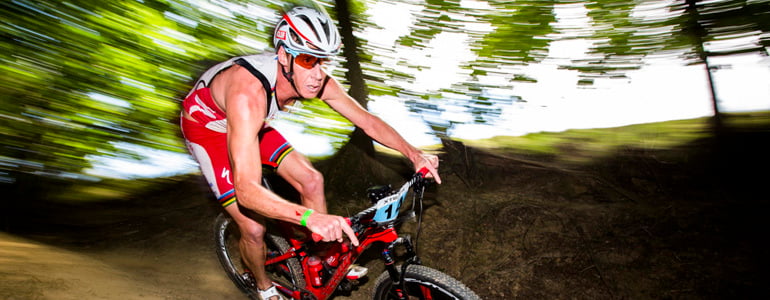
One of those hobbies is riding his Fatboy fatbike to hard-to-get-to places. A fatbike is a bicycle with over-sized tires designed for riding on soft, unstable terrain, such as snow and sand. Conrad's fatbike is a Specialized Fatboy Pro with 4.6inch (12cm) wide tyres, at super low pressure so he can ride just about wherever he likes!
Conrad tearing up dust on his fatbike. © Conrad Stoltz“A fatbike is so amazingly capable, you don't need a road or a path to ride,” Conrad says. “As long as there’s not too much vegetation, you can ride almost anywhere.
"Whether it's rocks or sand or gravel or whatever it is, you can just ride. “I love it because it satisfies my sense of adventure and being the Caveman wanting to see what's around the next corner and wanting to see if I can ride over big rocks, domes and dunes and find really cool places.”
Conrad likes his fatbike so much that he sometimes struggles to make himself train on his standard mountain bike “Once I'm less focused on training for performance and more just making it a lifestyle, I will definitely be doing more fatbiking,” he says.
Check out Conrad’s video of a fatbike adventure he did while attending a sporting festival on South Africa’s south coast.
Main image: ©lighttrapper.co.uk

Training and recovery wisdom from the Caveman
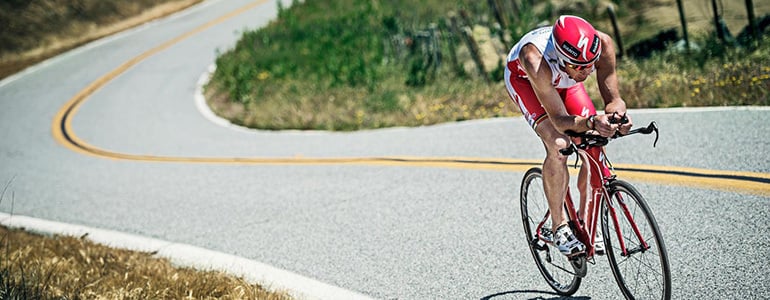
As you might expect from someone with the nickname of ‘caveman’, Conrad Stoltz is not into fads when it comes to recovery. Not for him ice baths and compression socks. He prefers to do what’s proven. Train right, eat right and rest properly. So why don’t you like ice baths? I've reverted back to old school! I used to do the ice bath thing or jumping in a cold river after training. But getting in a freezing river after training is not worth it to me! Science hasn't really proven that ice baths help.What about compression? There is a lot of evidence there...?I've done the compression socks thing but they don’t fit well and there's no real definite proof that compression socks make a big enough difference.
Warning: don't refuel properly and you'll never recover. ©zooom.at/Markus Berger
So what do you do? The things that are proven to make a difference – fueling and rehydrating properly. Within the first half an hour of training you need to have so many grams of carbs and so much protein to start the recovery. [Advice varies but many sports nutrionists recommend following the for 3:1 carbs to protein ratio.]
From pancakes to paragliding. See how the rest of Suunto's athletes recover.
Anything else?Massage is key. It’s not only for recovery, but also injury prevention. It’s crucial. The other big thing many athletes overlook is that they need to leave enough time between workouts to be able to complete those workouts at the required intensity.
Take your off-season seriously and do other activities, like go fishing. ©Conrad StoltzYou mean rest? A lot of athletes just want to log as many hours as possible in the logbook and then tally the hours to feel like they did a good job. For me and my coach, what's more important is that when I do the big quality workouts, I hit the numbers. Did I do the right amount of watts? And to be able to do that you need to be able to get to the session fresh, which means the day or two or three before you need to train very little so when the big session comes you can go hard. Recovery between key sessions is important. What’s the key to your long career? It's the fact I'm able to keep it fresh by having hobbies and activities. If I had to ride on the road every single time like the Ironman guys do I would never be able to make it! Stay mentally fresh by changing the environment where you are. Mental freshness is key.
Conrad Stoltz has been an elite pro athlete for over 20 years. He must be doing something right. ©Nils Nilsen
What about off season? It's key. Don't think about triathlon, you're not going to lose all your fitness. Go surfing, go jogging, or go hiking or even ride a motorbike, just keep active! By the time you start training again you're eager to train because you really want to do it not because you feel you have to. When you wake up in the morning and you're not looking forward to training it's one of the first pointers towards over-training. So training should be fun? Training is not always fun. Sometimes you have to hurt yourself. But in terms of the big picture, it needs to be enjoyable, rather than seeing how much you can punish yourself.
Take your recovery more seriously and improve your performance. Find out how the Suunto Ambit3 can help.
Main image: ©zooom.at/Markus Berger


