




SUUNTOブログ


Dream Traverse Video Contest Finalists: Kingdom Traverse and Patagonia Dreaming
Get to know the first two Dream Traverse Video Contest finalists and vote for your favorite to make its creator's dream come true! View all six videos and choose your winner at traversecollection
Three Suunto Traverse outdoor watches will be raffled among all voters.
KINGDOM TRAVERSE
The first candidate, Grobler Basson, comes from Cape Town, South Africa. Grobler and some of his friends actually had their adventure dream long before the contest.
“We have been planning our adventure for the better part of this year, we even called it the Kingdom Traverse long before we knew of Suunto's plans and the launch of your new Traverse watch,” Grobler says.
“We will traverse Lesotho from one side to the other. We will do this the only way we know possible – high altitude trail running, some off-the-grid mountain biking, cold water swimming and breath-taking kayaking coupled with some off-the-chart camping spots and difficult navigation!”
The Kingdom of Lesotho is a land locked mountain kingdom located inside South Africa. It is the country with the highest lowest point on Earth of 1400 m (4600 ft).
“The Kingdom Traverse would serve two goals; firstly to stimulate and temporarily satisfy our need for adventure and exploration, secondly, we see Lesotho as an amazing jewel yet to be discovered by international adventure tourism. We believe that the Kingdom Traverse would bring some amazing exposure to what Lesotho has to offer, and possible boost their tourism!”
PATAGONIA DREAMING
Candidate number two is Kellen Witschen from northern Minnesota in the United States.
“The outdoors is a place I can go to and feel free from a schedule and from responsibilities, even if it’s only a quick bike ride at the end of the day. It is a place to test your knowledge and skills, where the consequence of failure is very real and very apparent,” Kellen says.
Kellen’s Dream Traverse is far from an evening ride: he wants to ride the Carretera Austral, a 770 mile dirt road that runs from Puerto Montt to the start of the Patagonian ice cap.
“Ever since visiting Patagonia in 2012, I have dreamed about going back. While doing research there, I only got to see a small section of the area and the group traveled exclusively by motor vehicle. I want to go back and bike the entire 770 miles of the Carretera Austral.”
“The road travels through many different types of landscape and vegetation, ranging from closely woven coastal canals and Patagonian Steppe to high mountain peaks.”
Go to traversecollection, watch the six videos and vote for your favorite. Three Suunto Traverse outdoor watches will be raffled among all voters.

ランニングのモチベーションを維持する10の方法|走りたくない日の対処法
「今日は走りたくない」「目標のレースが終わって、次に何をすればよいか分からない」。ランニングを続けていれば、モチベーションが下がる時期は誰にでもあります。
やる気は、毎日同じ強さで続くものではありません。だからこそ、気分だけに頼らず、走り始めやすい環境や習慣をつくることが大切です。
この記事では、コーチやアスリートによる元記事のアドバイスをもとに、ランニングのモチベーションを維持する10の方法を紹介します。
目次
1. 走り始めるハードルを下げる
2. 小さく具体的な目標をつくる
3. 仲間と走る予定を入れる
4. コースや時間帯を変える
5. 距離ではなくフォームを課題にする
6. 別の運動を取り入れる
7. 記録から小さな進歩を見つける
8. 苦手な要素を一つだけ練習する
9. 前日に走る準備を済ませる
10. 休む日を失敗にしない
Suuntoで走る習慣を振り返る
まとめ|やる気を待つより、走りやすい仕組みをつくる
1. 走り始めるハードルを下げる
モチベーションが低い日に「いつもどおり10km走ろう」と考えると、着替える前から負担に感じることがあります。そんな日は、「シューズを履いて外へ出る」「10分だけ歩く」「1kmだけゆっくり走る」と、最初の行動を小さくしましょう。
動き始めて調子が上がれば少し延ばし、身体が重ければ短く終えて構いません。短いランでも、習慣を途切れさせずに次へつなげる価値があります。
2. 小さく具体的な目標をつくる
大きな大会だけを目標にすると、本番が終わったあとや、開催日まで遠い時期に走る理由を見失いやすくなります。
「今週は2回走る」「30分を会話できるペースで走る」「新しい公園まで行く」など、数日から数週間で達成できる目標を設定しましょう。連続走行チャレンジを行う場合も、疲労や生活に合わせて無理のない条件にします。
3. 仲間と走る予定を入れる
グループラン、ランニングクラブ、友人、家族など、誰かと走る約束があると、自分一人で毎回判断する必要がなくなります。会話を楽しむラン、練習会、オンラインでの記録共有など、自分が心地よく続けられる形を選びましょう。
ただし、仲間のペースや距離に無理に合わせる必要はありません。目的と走力を事前に共有し、お互いが安全に楽しめる内容にします。
4. コースや時間帯を変える
いつも同じ道に飽きたら、走る目的を「トレーニング」から「小さな探索」へ変えてみましょう。公園、川沿い、海辺、知らない路地、近郊のトレイルなど、景色が変わるだけでも新鮮さが生まれます。
早朝、昼休み、夕方など、生活の中で走りやすい時間帯を試すのも一つの方法です。暗い時間帯は、反射材やライトを使用し、交通量や足元、地域の安全性を確認してください。
アメリカ大陸を走ったパトリック・スウィーニー。© Patrick Sweeney
5. 距離ではなくフォームを課題にする
距離やタイムを追うことに疲れたら、姿勢、腕振り、接地、リズムなど、一つの動きに意識を向けてみましょう。普段と違う目的ができると、短いランにも取り組む理由が生まれます。
フォームを大きく変えると別の部位へ負担がかかる場合があります。痛みがあるときは無理に修正せず、必要に応じて資格を持つコーチや専門家へ相談してください。
▶︎関連記事:「ランニングエコノミーとは?走りを効率化する5つの改善方法」
6. 別の運動を取り入れる
ランニングだけを続けることに気持ちが向かない時期は、サイクリング、スイミング、ハイキング、筋力トレーニングなどを取り入れます。
別の運動は、身体へ異なる刺激を与えながら気分転換できます。ただし、慣れていない運動を急に高い強度で行うと疲労や痛みにつながるため、少しずつ始めましょう。
7. 記録から小さな進歩を見つける
自己ベストだけが進歩ではありません。同じコースを以前より楽に走れた、低い心拍数で同じペースを保てた、坂道でも歩かず進めた、忙しい週にも短いランを続けられたことも成果です。
1回の良し悪しで判断せず、数週間から数か月の記録を振り返りましょう。距離、時間、ペース、心拍数、トレーニング負荷に加えて、その日の気分や体調を残すと、自分が走りやすい条件を見つけやすくなります。
▶︎関連記事:「ランニングのトレーニング負荷を管理する方法」
8. 苦手な要素を一つだけ練習する
長い距離ばかり走っているなら短い坂を、速い練習が中心なら余裕のあるペースで長く動く時間を取り入れるなど、普段と違う刺激を試してみましょう。
一度にすべてを改善しようとせず、その日のテーマは一つに絞ります。強度の高い練習は連日行わず、現在の体力や回復状態に合わせて調整してください。
9. 前日に走る準備を済ませる
走る直前にウェアやシューズを探し、コースを決め、ウォッチを充電していると、その間に気持ちが変わってしまうことがあります。
前日のうちにウェアを用意し、開始時刻とコースを決め、必要な機器を充電しておきましょう。「朝7時に玄関から20分走る」のように、いつ、どこで、何をするかまで決めると行動へ移りやすくなります。
10. 休む日を失敗にしない
走りたくない理由が、単なる気分ではなく、睡眠不足、強い疲労、痛み、体調不良である場合もあります。そんな日は、休養や軽い運動へ変更することもトレーニングの一部です。
予定を一度変えたことと、ランニングをやめることは同じではありません。「今日は休み、次はいつ走るか」を決めれば、習慣へ戻りやすくなります。痛みや体調不良が続く場合は、医療従事者へ相談してください。
Suuntoで走る習慣を振り返る
Suunto Runは、軽量なランニングウォッチで、日々のランを無理なく記録したい人の選択肢です。
Suunto Race Sは、コンパクトなサイズで、トレーニングの進捗や回復をより詳しく振り返りたい人に適しています。
Suunto Race 2は、目標レースへ向けた継続的なトレーニングや、地図を活用した新しいルートの探索を楽しみたい人の選択肢です。
数字を毎回の評価に使うのではなく、続けてきた過程を確認するために活用しましょう。短いランも含めて記録が積み重なると、自分が前へ進んでいることを実感しやすくなります。
まとめ|やる気を待つより、走りやすい仕組みをつくる
ランニングのモチベーションは、常に高く保つ必要はありません。走るハードルを下げ、小さな目標を設定し、仲間や新しいコース、記録の振り返りを活用することで、気分に左右されにくい習慣をつくれます。
それでも身体が疲れている日は、安心して休みましょう。大切なのは一日も欠かさないことではなく、自分に合う形で何度でもランニングへ戻ってくることです。
今日の一歩を、次の習慣へ
Suuntoのランニングウォッチで、距離やタイムだけでなく、続けてきた過程を振り返りましょう。
Suuntoウォッチを見る


The legend of Kona
Last year marked the 25th anniversary of an event remembered only by hardcore Ironman fans but it’s one that symbolizes much about the epic race – the struggle, the glory and the pain involved.
It was the year of the so-called ‘Iron War’, an epic duel between arch rivals Mark Allen and Dave Scott at the 1989 Ironman World Championship in which they fought neck and neck over the 226.2km course to finish just 58 seconds apart. The fierce rivalry and incredible endurance of the two athletes set the stage for the race to become one of the most popular challenges to feature on anyone’s ticklist. “The spirit of Kona is really special,” says Suunto 9 product manager Markus Kemetter, who has competed in the race three times. “It’s the legendary place where Ironman triathlon was born and the race where the best-of the-best in long distance triathlon are competing every year.
"It’s also one of a few races where most of the competitors are present at the location for a whole week before the race so you can see the world’s best triathletes walking around the village.”The fact that it’s been nearly the same course over the years adds to its attraction, says pro athlete Åsa Lundström. “That means that all the legends of my sport have been racing on the same circuit. Every corner has stories to tell of legendary clashes of triathlon titans. And the best part is that you have the opportunity to be a part of those stories in the future.”
The race was famously the brainchild of a Naval officer John Collins, whose idea was to combine the three toughest endurance races on Hawaii into one race. What followed was a challenge to endurance athletes to see who was the toughest: swimmers, bikers or runners? On February 18, 1978, 15 competitors took part in the first ever Ironman. It is now one of the most highly sought after – and difficult to enter races on the planet. A victim of its own popularity, competitors have to qualify to enter and it’s intensely competitive – 80,000 will vie for just 2,000 slots.
“It’s so competitive now,” says triathlon coach and ex-pro Richard Hobson, who competed in 1994, 1995 and then again in 2010. “To win my age group I’d have to race as fast as I was as a pro.” The experience of taking part can vary hugely for athletes, he adds. “When you race as a pro it’s all about doing well but it can be a pretty miserable experience. It was only having coached people who'd had such amazing experiences that I realised it’s not just about the race, but everything around it.” Mainstays of Ironman tradition now include the Underpants Run, a 2.4km pre-race fundraiser. What started out as a protest against athletes wearing speedos around town is now an established pre-race event.
Apart from the atmosphere the one thing that makes Kona unique is the location itself and the course. It’s famed for its heat, humidity and wind. The swim is relatively straightforward provided the sea is calm but the bike leg can be brutal. “The ocean is impressive, but not the big challenge of the race,” Suunto's Kemetter says. “The challenge starts on the cycling leg where strong side and head winds are common and can be strong enough to throw you off your bike. The black volcanic landscape is beautiful and the wide open views from ‘Queen K’, the famous highway leading to the turn point at Havi, are just amazing.
“On the run the countdown starts. This is when your ability to withstand the heat, control your energy and hydration is truly tested. The run starts at the hottest time of the day and sucks everything out of you by the time you finish.
“Crossing the finish line at Ali'i Drive in Kona is one of the greatest moments in a triathlete’s life.”
For pro athletes such as Lundström taking part, there’s only one thing on her her mind – and that’s to do well. “I raced last year but the saying is that it takes one tri run to get to know the race. That means that this year will be the first time I can really hit it and don't have to hold back! I know that I have the potential of top 10.” For other athletes, Hobson advises not to go with the goal of doing well. “Go out to have a fun experience and enjoy the whole thing. So often people spend so long trying to qualify and they have a bad race and wonder what it was all about. You have to enjoy being out there and chances are, if you do that, you will have a good race.”
Images © Donald Miralle

Good times in the Himalaya for Ueli Steck
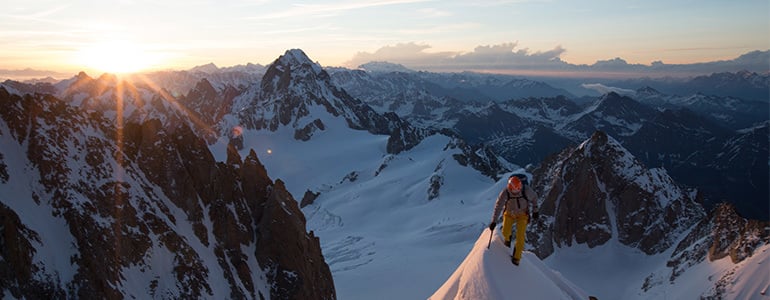
For the last two weeks, Suunto ambassador and alpinist Ueli Steck has been in Nepal acclimatizing to the higher altitude to prepare to climb the notoriously difficult south face of 7861 m Nuptse. After recently running up a 6000 m mountain there in his running shoes, it's clear things are going well so far for the Swiss Machine. Here's part two of our four part series on Ueli's Nuptse expedition.
Ueli climbing Lobuche Peak. © Ueli SteckAfter arriving in Nepal’s Khumbu Valley two weeks ago, Ueli Steck has been having a blast running, climbing, bouldering and camping out while acclimatizing to the higher altitude. He and his climbing partner Colin Haley are preparing to climb Nuptse, a 7861 m mountain only 2 km away from Everest. No one has successfully climbed Nuptse via its highly technical south face since Valeri Babanov and Yuri Koshelenko first did it in 2003.
Click here to read more about why Ueli wants to climb Nuptse via its difficult south face
After completing his #82Summits project over summer, Ueli is "super motivated". © Ueli Steck
Ueli and Colin intend to climb it in the far more challenging alpine style, which means a one-time single push climb, without leaving fixed ropes. Ueli says he has acclimatized and is ready to climb. “Yesterday, I ran up Lobuche Peak from Dzongla,” he says. “It was pretty nice exercise. Summiting a 6000m peak in running shoes is quite fun!”
Click here to read about how Ueli has progressed as an alpinist
The view from Lobuche east where Ueli camped for two nights. © Ueli Steck
Ueli is waiting for Colin to get acclimated. The well known American climber experienced some altitude sickness and went down to Deboche village to recover. While he waits, Ueli has been having a good time in Dzongla. He also camped for two nights on Lobuche Peak. “It’s very nice to be back in the Khumbu Valley,” he says. “It’s great to see that life is going on for the Sherpas [after the earthquake]. “There are only a few tourists in the area so it’s quite calm.”
Stay tuned for the third part of our series on Ueli's Nuptse expedition: climbing Nuptse's south face

Learning the joy of freediving
You don’t need to be able to hold your breath for minutes to enjoy freediving. Below the Scuba Diver Girls’s Margo Sanchez explains why diving without gear can lead to the best underwater experiences.
Scuba Diver Girls Stephanie Adamson & Margo Sanchez are based in California. © Scuba Diver Girls
Why freedive? There is something very freeing about diving without heavy gear. It is a magical experience when you drop down into the silence of the ocean, but hear the distant chirp of a dolphin or crackling of shrimp. The sport gives myriad benefits over time. Learning the breathing and relaxation techniques teaches you how to relax your mind and body in many situations, both in and out of the water. After practicing, you get more proficient at using those techniques and can challenge yourself to extend the amount of time you can stay under the water.
Press play and watch a harbour seal play with the Scuba Diver Girls How did you get into it? I started out scuba diving and gained my passion for the underwater world with a tank on my back. But it wasn’t until I started diving with sharks that I realized I was not able to get close while I was blowing bubbles loudly on open circuit. I decided to try taking off my tank and diving down with them while holding my breath instead. Once I realized that this brought a whole new dimension to my diving, I decided to take the beginner freediving training with SSI (Scuba Schools International).
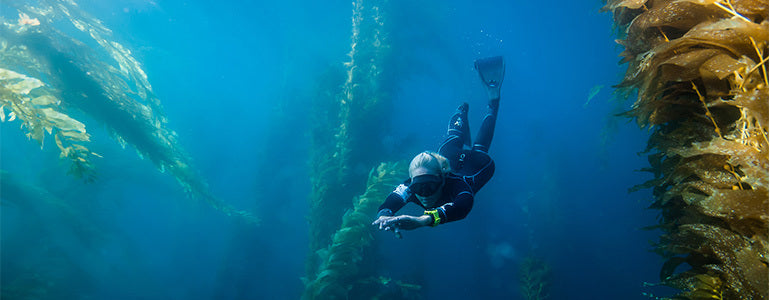
“As you swim through the forest, the sun streams through the kelp canopy like stained glass.”
Best freediving experiences? We have been all over the world both scuba and freediving. There are beautiful coral reefs in remote locations of the world that are breathtaking as you skim along the top checking out the little critters that flit in and out. Waking up at dawn in tropical locations to silently slip into the water and then skimming across the surface, looking for what the location has to offer, before finally gliding through its depths is one of the most exciting experiences a diver can have. Click play to see the beauty of our underewater world and the freedom found in exploring itStop, you’re making us jealous! But go on anyway… Probably my favorite place to freedive is right in our back yard in La Jolla California. Dropping down beneath the surface into a thriving kelp forest is an ethereal experience. As you swim through the forest, the sun streams through the kelp canopy like stained glass and a multitude of fish congregate while you swim by. Sometimes you get a visit from a frisky sea lion or a harbor seal tugging on your long fins while other times you swim gracefully alongside a sleek grey shark while it looks into your eye and you hold a common respect for each other through that connection. Most of these sea life encounters can only be experienced on a breath hold and a dive.
“Most of these sea life encounters can only be experienced on a breath hold and a dive.”
© Lesley Grey Alstrand
How do I learn?
Starting out by snorkeling is a great first step. Finding an instructor is next. There will be some out of the water training first for the diver to better understand how freediving impacts the body. For example, what the ‘mammalian diving reflex’ does once in the water, what a diaphragm spasm is and how you should react to it and what the importance of clearing the ears and how often is etc. These principles are important as a foundation so that when you get into the water, you understand what is happening with your body as you dive. Golden safety rules? The most important is always dive with a partner. Understanding your body’s limitations and physical reactions to breath hold is also important. Which is why this is a progressive sport. It is important to learn about your body before progressing to the next depth or time threshold.
© Ashley HauckGreatest challenges? There are two big challenges that may come as a surprise when a new diver begins. First, freediving is very mentally challenging. It’s natural to feel anxiety when holding your breath under water. Learning how to calm your mind is important. The second big challenge that many people face is ear trouble. Your ears are very sensitive and when you dive under the water it’s important to learn and understand not only the technique to clear them effectively, but how often.
“Since I started freediving, I am more relaxed, happy and in shape than I have ever been.”
Anything else? The first goal is to have fun! A freediver should first enjoy the experience. This means taking the training at your own pace and not setting unrealistic goals for yourself in holding your breath or going to greater depths.
© Ashley HauckWhat else do you get from freediving? Not only do the techniques and breath hold skills assist me in enjoying some of the most amazing sea life, but they also help me in my everyday life with stress management. Since I started freediving, I am more relaxed, happy and in shape than I have ever been. The sport brings peace to your life through the silence of the underwater world.

The road to Kona Ironman: Step three: Recovering for race day
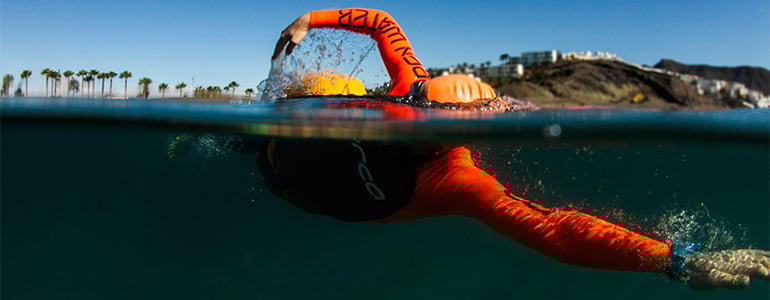
The legendary Kona Ironman is just around the corner and Suunto triathlete Åsa Lundström is getting excited. We continue following her steps towards race day in our four part series. Step one was planning, step two was progress and, in this instalment, we look at her recovery or tapering time before the big day. The Kona Ironman is unforgiving. If a competitor gets to the start line not 100 per cent, the 226.27 km course can exact a heavy toll. Champion Swedish triathlete Åsa Lundström has been living in the Canary Islands for over a month, preparing for the race which will be the greatest test of her mind, body and spirit. The heat, humidity and volcanic terrain are similar to the conditions in Kona, Hawaii, making the island a better training place than her home in Scandinavia.
Click here to read about how Åsa became an elite triathlete
After an intense training cycle over the last months, for the last two of weeks Åsa has been fine-tuning her body and mind for the race. During the first week of her two week tapering period, she reduced her training volume from 35 to 20 hours. In the week immediately before the race, she cuts it from 20 to between eight and 10 hours. “This stage involves easing off the volume of training and sleeping and eating properly, and making sure to rest between the sessions to ensure quality training that feels really good,” Åsa says. “This is usually the first time when I can start sensing whether I am in good shape.” The big danger is getting to the start line over-trained. Avoiding this is crucial.
Click here to read about how to use your Ambit3's recovery features
“It’s important to pay close attention to the body’s signals,” Åsa says. “It comes down to having the experience of knowing the different signs of fatigue from hard training, and accumulated fatigue leading to overtraining. “Sleeping enough, eating enough – and frequently enough – are important for recovery.”
Åsa also writes a detailed training diary for her coach Cliff English to read for an objective perspective. Cliff looks out for negative signs and patterns that can sometimes be difficult for her to see herself. “Three weeks of hard work, good fun and nice company in this lovely place has come to an end,” Åsa says. “The journey continues and the countdown has begun! Bring it!”
Tune in next week for the final instalment of four part series about Åsa – her ideal race day in the Ironman World Championship in Kona.


