




SUUNTOブログ
誰もがアウトドアを楽しめる場所へ|「アライシップ」から考える4つの行動
山、トレイル、ランニング、キャンプ。アウトドアは誰にでも開かれているように見えますが、すべての人が同じように「ここにいていい」「安心して楽しめる」と感じているとは限りません。アウトドアをより多くの人が楽しめる場所にするために、私たち一人ひとりにできることがあります。
その考え方のひとつが、「アライシップ(Allyship)」です。
アライシップという言葉は、日本では企業や職場におけるDE&I、多様性やインクルージョンの文脈で耳にすることが増えてきました。
しかし、その考え方はオフィスの中だけのものではありません。
同じ山を歩く人。同じトレイルを走る人。同じ岩場を登る人。同じアウトドアコミュニティに参加する人。
自分とは異なる経験を持つ人にも、その場所を楽しめる機会があるか。そう考えることも、アライシップの第一歩です。
SuuntoアスリートでウルトラランナーのRyan Montgomeryは、アウトドアにおける多様性について発信を続けています。この記事では、Ryanの言葉をもとに、アライシップとは何か、そしてアウトドアで私たちに何ができるのかを考えます。
目次
アライシップとは?
なぜアウトドアにもアライシップが必要なのか
1. 気づいたことに声を上げる
2. 自分以外の人に「マイクを渡す」
3. 分かったつもりにならず、学び続ける
4. コミュニティを支える
特別な活動をしなくても、できることはある
誰もがアウトドアを楽しめる場所へ
Photo by Brave Trails, taken at Camp Brave Trails.
アライシップとは?
「アライ(Ally)」は、もともと「味方」「協力者」を意味する言葉です。
アライシップとは、自分とは異なる背景や経験を持つ人が直面している課題を知り、その人たちの声や活動を支えるために行動することを指します。
Ryanは、アライシップを一度何かをして終わるものではなく、「学び、行動し、さらに学び、また行動する」という継続的なプロセスとして捉えています。
そして、そのために使えるものは人によって異なります。
知識
経験
時間
お金
発信力
人とのつながり
道具や場所
大きな影響力を持つ人だけがアライになれるわけではありません。
自分がすでに持っているものを使って、誰かが参加しやすくなるように行動する。
それもアライシップです。
Photo by Latino Outdoors.
なぜアウトドアにもアライシップが必要なのか
自然そのものは、誰かを選んで受け入れたり拒んだりするわけではありません。
しかし、そこへアクセスするまでの環境や、アウトドアコミュニティの中で得られる経験は、人によって異なります。
Ryanは、クィアやLGBTQ+の人々、人種的マイノリティ、障がいのある人などが、アウトドアへ参加するうえでさまざまな壁に直面することがあると指摘しています。
トレイルですれ違った人に「こんにちは」と声をかける。
笑顔を返してもらう。
一人で山へ行っても、その場所で不安を感じない。
多くの人にとっては当たり前に思える体験でも、すべての人にとって同じとは限りません。
外見、肌の色、身体的特徴、性別表現、性的指向、障がいなどを理由に、じろじろ見られたり、不必要なコメントを受けたり、ときには差別的な言動に遭遇したりすることもあります。
「自然が好きなら、誰でも同じように楽しめるはず」と思い込まず、人によって経験が違うことを知る。
そこからアライシップは始まります。
Photo by Brave Trails, taken at Camp Brave Trails.
アウトドアで良いアライになるための4つの行動
「アライシップが大切なのは分かった。でも、実際に何をすればいい?」
Ryanがよく受けるというこの質問に対して、彼は4つの具体的な行動を提案しています。
1. 気づいたことに声を上げる
Speak Up.
問題のある言動を見たり聞いたりしたとき、何も言わずに通り過ぎるのではなく、必要であれば声を上げること。
差別的な発言や誰かを排除するような言動を、その場の「冗談」として終わらせないこともそのひとつです。
もちろん、いつでも大きな議論を始める必要があるわけではありません。
自分が学んだことを友人と話す。
アウトドアにおける多様性についての記事を共有する。
コミュニティの中で「こういう見方もある」と伝える。
小さな声でも、それまで話題になっていなかったことを言葉にすることで、次の会話が始まることがあります。
2. 自分以外の人に「マイクを渡す」
Pass the Microphone.
自分が話すことだけが支援ではありません。
ときには、自分とは異なる経験を持つ人の話を聞き、その声が届く場所を増やす方が重要です。
アウトドアの世界にも、さまざまなアスリート、ガイド、ランナー、登山者、コミュニティリーダーがいます。
いつも同じような人だけが紹介され、同じような人だけがイベントで話しているなら、まだ知られていない人の活動に目を向けてみる。
Ryanはこれを「マイクを渡す」と表現しています。
実際のマイクを持っていなくても構いません。
席をひとつ増やす。誰かを紹介する。発言するスペースを作る。
それも同じ考え方です。
3. 分かったつもりにならず、学び続ける
Learn, Don’t Assume You Know Everything.
Ryanが特に大切だと考えているのが、「学ぶこと」です。
自分とは違う経験について、すべて理解していると思わない。
質問する。
好奇心を持つ。
そして、まず相手の話を聞く。
誰かの経験を理解しようとするとき、自分自身の経験だけを基準にしてしまうと、見えないことがあります。
本を読むこともできます。
当事者が発信している記事やSNSを見ることもできます。
アウトドアコミュニティがどんな活動をしているのか知ることもできます。
Ryanは、自身の学びに役立った資料や発信者として、Carolyn Finneyの『Black Faces, White Spaces』、Robin Wall Kimmererの『Braiding Sweetgrass』、ランナーでエクイティ・アドボケイトのAlison Désirなどを紹介しています。
アライシップに「全部理解した」というゴールはありません。
学んだことによって考えが変わることも、そのプロセスの一部です。
4. コミュニティを支える
Donate to Support Community Groups.
時間や資金に余裕があるなら、アウトドアへのアクセスを広げる活動をしている団体やコミュニティを支援する方法もあります。
Ryanは、若いLGBTQ+の人々にアウトドア体験を提供するBrave Trails、黒人コミュニティと自然とのつながりを広げるOutdoor Afro、ラテン系コミュニティのアウトドア活動を支えるLatino Outdoorsなどを紹介しています。
支援は寄付だけではありません。
イベントに参加する。
活動を知る。
発信をフォローする。
周囲の人へ紹介する。
ボランティアとして時間を使う。
自分にできる形でコミュニティとつながることができます。
Photo by Brave Trails, taken at Camp Brave Trails.
特別な活動をしなくても、できることはある
「アライシップ」と聞くと、社会運動に参加したり、大きな発信をしたりしなければならないように感じる人もいるかもしれません。
しかし、Ryanが伝えているのはもっと日常的なことです。
例えば、アウトドアの場でもこんな行動が考えられます。
初めて参加した人が一人になっていたら声をかける
コミュニティ内で差別的な発言があれば、そのままにしない
自分と違う背景を持つアウトドア愛好家の話を聞く
イベントを企画するとき、誰が参加しやすく、誰が参加しにくいかを考える
自分が知らないことについて、決めつける前に尋ねる
さまざまな人がアウトドアを楽しんでいる姿を紹介する
どれも、小さなことに見えるかもしれません。
しかし、アウトドアコミュニティは、そこにいる一人ひとりによって作られています。
誰かが「ここなら参加しても大丈夫」と感じられるかどうかは、設備やルールだけでなく、その場にいる人の言葉や態度によっても変わります。
誰もがアウトドアを楽しめる場所へ
Ryanは自然界そのものを例に挙げ、多様性が生態系を豊かにすると話しています。
アウトドアコミュニティも同じかもしれません。
山を速く走る人。
ゆっくり歩く人。
初めてキャンプをする人。
何十年も山に通っている人。
異なる文化や背景、経験を持つ人。
アウトドアを楽しむ理由も、そこで感じることも、人それぞれです。
だからこそ、誰か一人の経験を「アウトドアとはこういうもの」と決めつける必要はありません。
自分が楽しんでいるこの場所を、ほかの人も楽しめる場所にするために何ができるだろう。
声を上げること。
場所を譲ること。
話を聞くこと。
学び続けること。
誰かの活動を支えること。
その一つひとつが、アウトドアをより開かれた場所にしていきます。
アライシップは、誰かの代わりに話すことではありません。
同じ場所を楽しむ仲間として、必要なときに隣に立ち、声が届くように支えること。
アウトドアを愛する私たち一人ひとりに、できることがあります。
By Ryan MontgomeryLead images by Latino Outdoors. Additional images courtesy of Brave Trails and Latino Outdoors.

Celebrate Earth Day with us!
Starting this Earth Day, we have partnered with Hammerhead and Komoot to challenge you to #SeeTheAdventureAhead and share your natural wonder, however you explore.
Use the hashtag #SeeTheAdventureAhead when you share on Instagram, Facebook, and/or Komoot* before May 11th and we’ll plant a tree for every post, with the goal of planting 10,000 trees with Tree Nation.
Trees are key pillars of the world for both humans and the environment. They benefit us by purifying water, air and creating better social conditions. They benefit the environment by providing homes for various forms of life, cooling our climate and improving our soil.
To celebrate the wonders of our natural world, get out there and share your natural wonder. We'll plant trees through the VCS certified Eden project in Mozambique for each share!
*tag Suunto and Hammerhead when you share on Komoot
Find places to explore with Suunto heatmaps
Learn more about Tree Nation
Learn more about Suunto compatible cycling computer Hammerhead Karoo 2
Main image: @runningphotograph
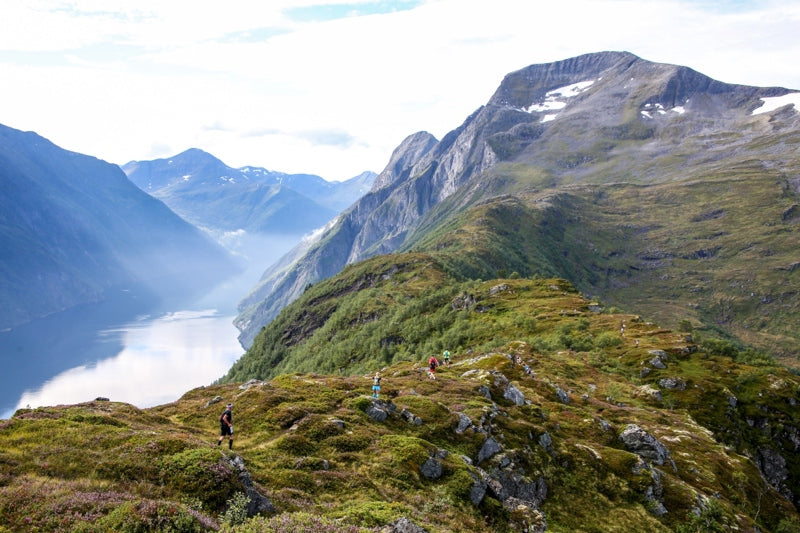

Suunto joins the Golden Trail World Series
👉🏼 Follow Sierre-Zinal, the fourth race of the GTWS 2022 season, on Saturday 13th of August from 08:30am CET here or at goldentrailseries.com/gttv/
👉🏼 Follow Stranda Fjord Trail Race, the third race of the GTWS 2022 season, on Saturday 6th of August from 11:00am CET here or at goldentrailseries.com/gttv/
👉🏼 Follow Marathon du Mont Blanc, the second race of the GTWS 2022 season, on Sunday 26th of June from 7:00am CET here or at goldentrailseries.com/gttv/
👉🏼 Follow Zegama, the first race of the GTWS 2022 season, on Sunday 29th of May from 8:30am CET here or at goldentrailseries.com/gttv/
Suunto is proud to be an official partner of the Golden World Trail Series 2022 that’s kicking off on May 29 with the legendary Zegama-Aizkorri trail marathon in Spain, and is followed by five more high profile races around Europe and the US that culminate in a grand finale on the island of Madeira.
“We are thrilled to partner with the Golden Trail World Series and be part of the most exciting trail races of the summer,” says Antti Laiho, Suunto global brand marketing manager. “With the new SuuntoPlus Race guides we can also support the competitors in a new, helpful way.”
What makes it special
These iconic races are the ones every runner wants to experience. This, and a clear and simple format where each runner’s best three results from the six races count, make the series easier for the public to follow and get behind. Each year the Golden Trail World Series will choose a very special race for the Grand Final In 2022, the top 30 men and women from the overall ranking after the sixth race will be invited to the Madeira Ocean Trails stage race grand final. This guarantees epic action until the very last finish line.
Supported by Salomon, the series is special in many other ways. “In trail running nowadays there are many series, world championships, the European championship and so on so nobody really knows what is going on,” says Philipp Reiter, the Global Community Manager Salomon - Trailrunning.
“The Golden Trail World Series is different because it has the best athlete field in the world and supports athletes regardless of brand sponsor to join the competition, it pays travel expenses to get them to the races and there is equality between men and women in terms of prize money, visibility, media coverage, which is pretty unique. And the prize money is really high. The goal of the series is to bring trail running to a larger audience and to grow the sport, not just promoting it to the core community as is the case so often.”
The seven races
Tune in or sign up for the world’s biggest trail running show!
29th May: Zegama-Aizkorri, Spain
26th June: Marathon du Mont-Blanc, France
6th August: Stranda Fjord Trail Race, Norway
13th August: Sierre-Zinal, Switzerland
17th September: Pikes Peak Ascent, USA
25th September: Flagstaff Sky Peaks, USA
26th to 30 October: Grand Final, Madeira Ocean Trails®, Madeira.
Sign up and follow real-time race guidance during the GTWS races!
With the help of SuuntoPlus Guides, we will guide you through your Golden Trail World Series race. Before starting a trail running sport mode on the start line of the race, go down to exercise options and select the correct Race Guide in the SuuntoPlus Guides menu. Start the workout and you will see race course information like climbs, feed zones, control points and more in real-time during the race. Swipe left to see the guidance screen.
Learn more about SuuntoPlus Guides here.
All images: © Jordi Saragossa

7 nations, 7 highest summits, 5 days
Watch how Philipp and Adrian's project unfolded!
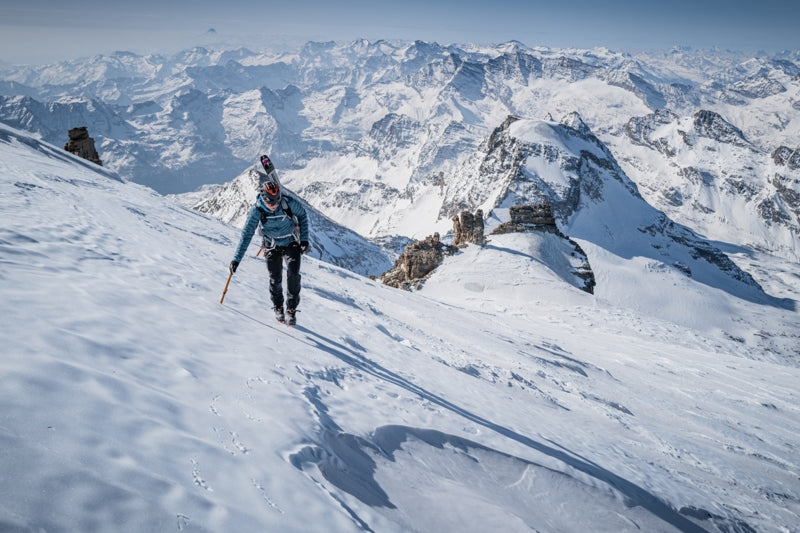
Reaching the summit of Mont Blanc took everything Philipp and Adrian had in the tank. They began their climb of the highest mountain in the European Alps at 01:30 AM and, even though they had worked on acclimatization, they suffered on their way up and faced icy conditions. The ski down, involving crossing crevasses, took a brutal three hours.
“When we arrived back at the car 11 hours and 30 minutes after we had set out we were both super done,” Philipp says. “We both had headaches and had to travel by car for two and a half hours to Zermatt, sleep for two to three hours and get up at 2 AM to start over again to climb Dufourspitze.
“It was crazy, because for many mountaineers just doing one of the highest summits in the Alps is a big achievement, but we climbed seven in five days. For me, it’s still unbelievable because it happened so quickly that it hasn’t really sunk in yet.”
The 7 summits project
They started their adventure on March 26 at 06:00 AM, first climbing Italy’s Gran Paradiso. The goal was to climb the highest summit in each of the seven alpine nations - Italy, France, Switzerland, Liechtenstein, Germany, Austria and Slovenia - in seven days. However, weather forecasts predicted snow and harsh conditions on the last two peaks, leaving Philipp and Adrian no choice but to do all seven summits in five days, in this order:
March 26: Gran Paradiso (4061 m), Italy. March 27: Mont Blanc (4807 m), France.March 28: Dufourspitze (4634 m), Switzerland.March 29: Vorder Grauspitz (2599 m), Liechtenstein.March 29: Zugspitze (2962 m), Germany.March 30: Grossglockner (3798 m), Austria.March 30: Triglav (2864 m), Slovenia.
The project was a year in the making and originally involved a team of four, but a sickness and a death in one of the team’s families meant two of the four had to withdraw at the last minute, leaving Philipp and Adrian to scramble to keep the project from collapsing. To avoid piling pressure on themselves, they decided to keep their goal quiet until they reached the summit of Liechtenstein’s Vorderer Grauspitz.
Battling the conditions and sleep deprivation
They realized they needed to climb all seven summits in five days rather than seven after climbing Vorder Grauspitz and seeing a weather forecast predicting snow in the Alps. At that point, it was full steam ahead, with little time for rest and recovery. They only slept 14 hours over the five days, which included napping in the car - with damp clothes and cold bones - while driving from one mountain to the next.
“We had to be really focused because of the route navigation,” Philipp says. “We followed the tracks on our Suunto watches. This helped a lot because it gave us confidence and saved time.”
The stats
187 km17,001 m 111h40m
All images: © Philipp Reiter
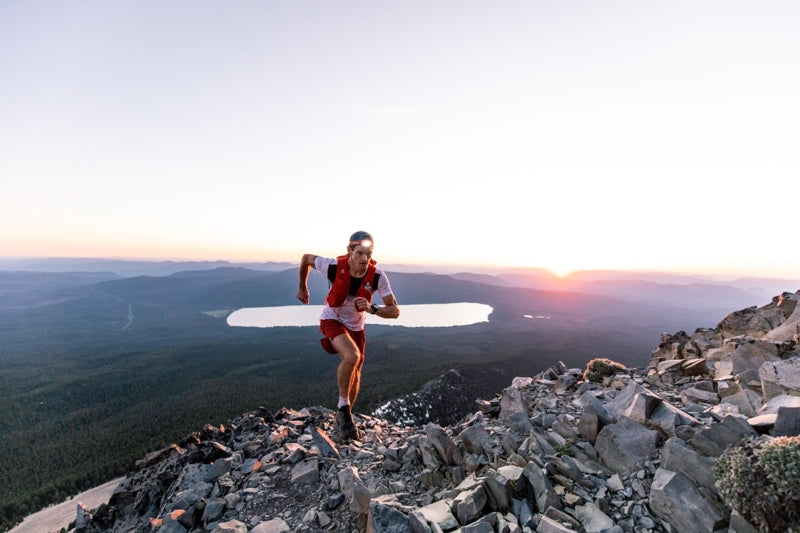

Follow this mountain race training program
Available for free on Training Peaks, a Suunto training plan designed by former world champion mountain runner Max King is designed to prepare trail runners for a 20 to 50 km race with 1500 m+ of vertical ascent.
Trail runners at any level can benefit from it, but it’s best suited to those with some trail experience who are looking for the next challenge. With the help of SuuntoPlus Guides, you can now follow this training plan on your Suunto watch. When your Suunto app and Training Peaks accounts are connected, the workouts planned in TrainingPeaks will appear automatically in your watch, ready for real-time guidance. This is especially useful with structured workouts, like the hill workout in this program that has uphill intervals of various durations. Learn more about SuuntoPlus Guides here.
“A moderate level trail athlete with some base fitness will be able to handle the challenge of the increasing vertical and volume,” says Max, the winner of the 2011 World Mountain Running Championships. “The important thing with this training program, like any program, is to listen to your body. It’s easy to overdo the amount of vertical gain if you’re a fit athlete, but your body isn’t used to how hard it has to work to go uphill or the increased pounding it takes on the downhill. Be careful of small injuries that creep in. Take care of them with self massage and rolling so they don’t become a bigger issue.”
Max, 42, is a professional coach and organizes trail running camps in the US. He’s currently preparing for his own busy racing season, including the Breakneck Point Trail Marathon in New York in April to try to qualify for the US National Mountain Running Team. Then he’s heading to Spain to compete in the Zegama Marathon in Spain to kick off the Golden Trail Series.
“My philosophy in training is that running is running and as long as you lay a good foundation of base work then you’ll be able to accomplish anything with a little specific work,” Max says. “Hard work and smart decisions result in accomplished goals. This plan is meant to take that good base fitness and apply specific mountain skills to round out an athlete to be able to accomplish a mountain race.”
Get going with Max’s training plan here!
All images: © Luke Webster
Learn how to get started with SuuntoPlus Guides from TrainingPeaks
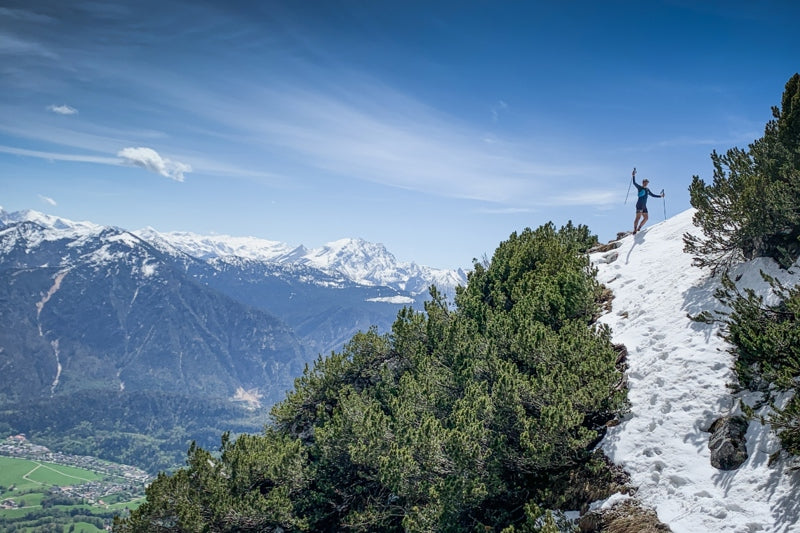

Vertical Week competition winners
One of the reasons we’ve continued pushing World Vertical Week every year since its inauguration in 2016 is because it brings out the best in our Suunto community. People get outside more and push themselves, and many do some truly big days.
The World Vertical Week competition captures some of the best of it. We look forward to scrolling through all the images the community shares and tags via #verticalweek. Thanks to everyone who participated in this spring 2022 edition.
As always, we selected three winners who will each receive a Suunto 9 Peak. Congratulations!
And the winners are …
Everesting the Bastille in Grenoble
You can’t get a much bigger day than what @danielott_atalps pulled off in Grenoble, France. He competed in the second edition of the Everstille 2022 and was one of four people who climbed the Bastille hill above the city 33 times, adding to 8848 m, the height of Mt Everest.
“I read about Suunto vertical week last year and was fascinated by the concept of trying to accumulate as much elevation as possible,” Daniel says. “I wanted to participate then, but it always fell on the week of my exams, so I couldn't participate. This year, I was thrilled that the Everstille, the everesting race I did, fell in the time frame of the vertical week, so I signed up immediately.
“Everestille is a race organized by Tri-Haut, an association based in Grenoble that aims to improve the waste management in the Khumbu Region below Everest. The goal of the race is to run the Bastille, as many times as possible.”
Love in the Swedish mountains
Mother Nature turned it on for @josefintrogen on a ski trip in the Sälen ski resort in Sweden. It was the first time she participated in World Vertical Week and probably won’t be her last.
“We went cross-country skiing and downhill-skiing and it was a perfect weekend with sunshine, snow and what we call ‘Sweden’s fifth season’ or ‘spring-winter’,” Josefin explains. “It basically means there’s still enough snow to go skiing without problems, but warm enough to ski in a base layer only (this weekend it was about +10°C). Every day we bought soup for lunch and made a couch in the snow to enjoy it out in the sun before continuing our tour.”
Passionate mum and daughter skimo team
Her first Vertical Week, @monivieregg took her six-year-old daughter out into the Bavarian mountains on a skimo tour. The ascent is always challenging because Monika has a small frame and pulling her 20 kg daughter up the mountain behind takes everything she’s got.
“We life very close to the Alps and the tour in the pic was at a former ski slope, called Blickner Alm at the Hochfelln,” Monika says. “My daughter really loves skiing uphill and she did a very, very good job downhill. At every carve she did I could hear a ‘hui’, ‘nice’ and ‘yipee’. She had a few falls, but after every one she got up and told me nothing happened, ‘keep going faster I want to ski on’. We both are really satisfied after a tour and we look forward to the next one.”


