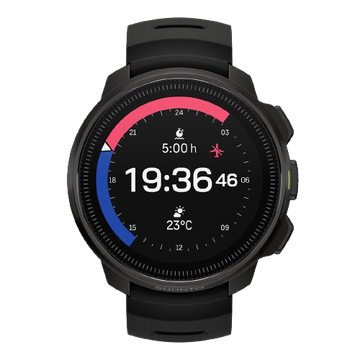
10 reasons to enjoy open water swimming with Suunto

SuuntoSwimJune 09 2020

Every cloud has its silver lining, and the upside to the COVID-19 related pool closures is it challenges swimmers to suit up and go open water swimming. If you’re looking for adventure, look no further than swimming in the majesty of nature.

“Getting out of the swimming pools, and getting out into nature gives a completely different perspective to swimming,” says Dag Oliver, triathlete and general manager of the notorious Norseman Xtreme Triathlon. “It’s like the difference between track running and trail running. It gives a new dimension to the swimming experience.”


Stay safe and warm

Before taking the plunge, read through the Norseman Xtreme Triathlon swim code to make sure you stay and warm. The first rule is never swim alone.


10 reasons to swim with a Suunto watch


They are watertight

All Suunto watches are waterproof. And when our watches say waterproof to 100 m, they really mean it. Our products are tested in extreme conditions in Finland. If it can survive Finland, it can survive anything.


They tell you the temperature

Suunto watches with a pressure sensor, such as the Suunto 9 Peak and Suunto 9 Baro also tell you the temperature.

To get an accurate reading on the water temperature, hold your watch by its strap underwater for a minute or two before beginning your swim. Knowing the temperature will give you an idea of how long you would like to stay in the water. Post swim, you can also see the temperature in your activity data.


Suunto Heatmaps show you the popular openwater swimming spots all over the world.


You can find swimming spots with Suunto Heatmaps

Suunto App Heatmaps makes it easy to find popular open water swimming spots. And popular spots are likely to be safe spots.

Based on millions of workouts, Heatmaps show where the Suunto community loves to train across the planet. You can filter the map by activity, like swimming, running, cycling etc. Check out our Heatmaps in Suunto App or directly in our smart Suunto 7 watch.

Heatmaps is especially helpful if you are new to an area or just visiting; it’s not always apparent where the water quality is good, where there are strong currents or where there is marine traffic.

It also shows you where local swimmers enter the water. Sometimes it isn’t easy finding the safest entry point. You can identify where they swam to, and where swimmers don’t go, and where they exit.


GPS tracks your swims

With GPS you can look back at your swim and see where you went, and whether you zigzagged like a drunk driver, or followed the straightest line between points A and B. Learning to swim straight is important for conserving energy and time.

Tracking with GPS while swimming with your watch on your wrist is challenging because as soon as it’s submerged the signal is lost. This means GPS works with freestyle, backstroke and butterfly because the watch is raised out of the water with each stroke. It doesn’t work with breaststroke.

One way to ensure a better GPS signal is to stash your watch underneath your swim cap at the back of your head. But to ensure perfect tracking, stow your watch in your swimming tow float.


They record your heart rate

The best way to record your heart rate while swimming is by wearing a Suunto Smart Sensor heart rate belt around your chest. However, the BLE signal between the heart rate monitor and your watch cannot be transmitted underwater. The Smart Sensor instead stores the data and automatically transmits it to the watch once you are out of the water.

Suunto watches also have optical heart rate sensing functionality, but this doesn’t work if the watch is on the outside of your wetsuit. Even against your skin, it’s not as reliable as a Smart Sensor strap.


They capture important metrics

Suunto technology provides real-time training intelligence. When you’re in the water you can see what’s happening and adjust your stroke, pace, intervals and breaks accordingly.

A key open water swimming metric is duration. Your watch will tell you how long you’ve been in the water. This is important to keep an eye on, especially in cold water.


Photo by Todd Quackenbush on Unsplash


You can see when you’re slacking off

A common mistake for novice open water swimmers is to do a long swim session without any breaks. Whereas when they’re in the pool, it’s common to break down the session into shorter intervals. This ensures you maintain good technique as it helps you stay fresh throughout the session. Follow the same logic for open water swimming. Don’t just cruise for miles/kilometres, but break up your session with intervals and rest periods.

Your Suunto watch can help you with interval training. For example, do hard two minute intervals with 30 second rests between them. Your Suunto watch will vibrate and beep when each interval and rest period is over.


You can see when your technique is getting sloppy

Your Suunto watch captures the number of strokes you are doing per minute. Out on an open water swim, this useful metric tells you when your stroke technique is deteriorating as you become more fatigued. Then you can concentrate on correcting it.


Photo by Jon Del Rivero on Unsplash


They tell you your SWOLF

Improving your stroke mechanics is essential for competitive sport. Suunto watches analyze your sessions, identify the swim style, stroke rates and calculate your SWOLF score.

Swim-Golf, or SWOLF, is a score based on a combination of stroke rate and time in water, giving an indication of how efficient you are as a swimmer. The reference to golf comes from the fact that, like with golf, the lower your score the better you are. The fewer strokes and the less time you take in the water, the more efficient you are. As your swimming technique improves, you will be able to swim faster with the same stroke rate, which means each stroke is propelling you further forward.


They connect with Swim.com

Suunto can be synced with Swim.com, the world’s most advanced swimming dedicated platform and community. You will get in-depth swim specific analysis, helping you to improve. Another cool feature at Swim.com is they select the workout of the week, encouraging its community members to try to climb the swim team leaderboards.


Read more articles

Blaze fresh routes

The benefits of training to music and making your best playlist

How to improve your walking technique


おすすめのSuunto製品

あなたへのおすすめ

Suunto Race S vs Race 2: Size, Weight, and Battery Life Compared

Suunto Race SとRace 2を比較。サイズ・重さ・バッテリーで選ぶならどっち?

Suuntoのスポーツウォッチを検討している人にとって、迷いやすいのが「Suunto Race S」と「Suunto Race 2」の違いです。 どちらもAMOLEDディスプレイ、オフラインマップ、115以上のスポーツモード、トレーニング分析機能を備えた、ランニングやトレイルランニング、レース、日々のトレーニングに活用できる高性能モデルです。Suunto Race Sは「小さく、軽く、日常に...
Suunto Vertical vs. Vertical 2: Key Differences Explained

Suunto Vertical vs Vertical 2|どちらを選ぶべき?5つの違いを徹底比較

「Suunto Verticalを買おうと思っていたら、Vertical 2が出ていた」「初代とどこが変わったのか、値段差に見合う進化があるのか知りたい」——そんな疑問を持つ方に向けて、この記事では2モデルの違いを5つのポイントに絞って整理します。 どちらを選ぶべきかの判断基準も最後に明確にまとめていますので、ぜひ最後まで読んでみてください。 Suunto Vertical と Vertic...
How to play music on a running watch | Run without your phone with Suunto Run × Spark

ランニングウォッチで音楽再生する方法|スマホなしで走れるSuunto Run × Sparkの使い方

ランニング中に音楽を聴きたいけれど、スマートフォンを持って走るのは重い。ポケットやランニングポーチの中で揺れるのが気になる。そんな悩みを感じたことはありませんか? 音楽再生に対応したランニングウォッチを使えば、スマートフォンを持たずに、より身軽に走ることができます。 Suunto Runは、ウォッチ本体に音楽を保存できるオフライン音楽機能を搭載したランニングウォッチです。Suunto ...
How to use HRV to optimize your recovery

HRVとは?心拍変動を理解してトレーニングの回復を最適化する方法

「練習しているのになかなか記録が伸びない」「疲れが取れない」と感じたことはありませんか?その原因は、回復の質にあるかもしれません。近年、アスリートから健康意識の高いビジネスパーソンまで幅広い層で注目されているのが HRV(心拍変動) という指標です。 この記事では、HRVとは何か、正常値の考え方、HRVが低いときに体に何が起きているのか、そしてSUUNTOのスマートウォッチを使ってHRVを日...