





SUUNTOブログ

Around the world in the slow lane
Staying in one place for long doesn’t come naturally to Suunto-supported adventurer Denis Katzer. He’s used to being on the move in far flung places, which he’s been doing for 30 years, covering 444,000 km by camel, elephant, horse, bicycle, e-bike, on foot, or with local transport. That’s the equivalent of traveling around the planet 11 times.
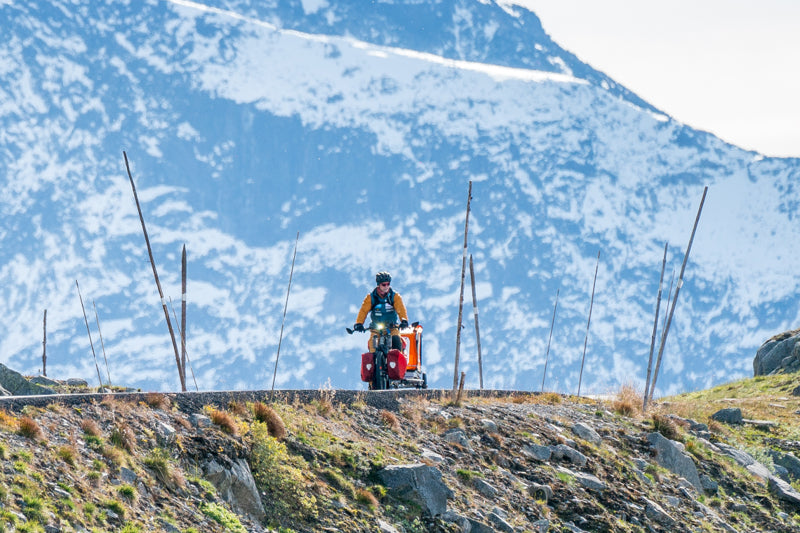
Denis and Tanja on their recent journey in Norway.
The COVID-19 pandemic might have momentarily slowed down Denis and his partner Tanja, but it hasn’t stopped them from continuing what they say is the “longest documented expedition in human history”. Moving slowly across continents, through diverse cultures, isn’t about sharing pretty pictures on Instagram for them. The motivation is much deeper.
“As ambassadors of our mother earth, it is our goal to build bridges of understanding and acceptance between different cultures and religions with our experiences,” Denis says. “We want to be the eyes and ears of today’s society, in order to leave humanity a piece of contemporary history, but also tell future generations what state our mother earth is in. That is why we travel by bike, horse, camel, elephant and local transport. A way of traveling that allows and encourages precise and sensitive observation.”
Denis and Tanja have just released a new book about their most recent adventures up through Norway to its North Cape. Once the pandemic is behind us, their plan is to continue stage two of their epic e-bike expedition.
Denis and Tanja took the Trans-Siberian train to Lake Baikal and then cycled 17, 000 km across Siberia, Mongolia, China, Vietnam, Cambodia and Thailand.
Bavarian beginnings
Denis had an unconventional start to life. He lived with his parents in a small wooden forest hut with no electricity, running water or central heating on the edge of a forest. Life was simple, and Denis discovered early he was happiest wandering and climbing trees. Even then he had the spark for adventure.
His father blew on this smouldering ember by sharing his ideas on environmentalism, colonial history and the value of indigenious wisdom. “He was a nature man, and was always for indigenious people and protecting the natural world,” Denis says.
Special training
By his own admission Denis wasn’t a happy kid. He struggled at school and didn’t want to conform to society’s expectations. After making up his mind to focus, he eventually aced his school exams and did an apprenticeship.
However, as a sporty and athletic guy, it was when he entered the German army in 1979 that the foundation for a life of adventure really began to get laid. “Since I had graduated with top marks in all areas, I had the choice in which form I wanted to serve in the military,” Denis says. “I decided on the special paratrooper unit. Adventure, action and freedom were finally ahead of me.”
But it wasn’t to last because Denis, a pacifist at heart, realised his training as an elite soldier, and his training of younger soldiers, was incongruent with his deeper values. Staying true to himself he left in 1981.
Denis and his friend Bilgee cross steep slopes on a 3000 km horse expedition to northern Mongolia to meet reindeer nomads.
The expeditions begin
It all began with an unplanned journey into the heart of the jungle. Denis was on a trip to the Galapagos Islands in 1987 and met someone with connections to indigenous people living deep in the Amazon jungle. He had the opportunity to travel there and meet the feared Auka tribe.
“The encounter with the Aukas changed my life and opened my eyes,” Denis says. “I came to the conclusion I had to save money to leave my home for a couple of years. I wanted to live with indigenous peoples, get into their world, understand them. I wanted to know what it means to be able to travel without time pressure.”
The grand journey
The 40-year slow travel odyssey around the world really began in earnest in 1991, just after the fall of the Berlin Wall and the collapse of the Soviet Union. Starting in Germany, travelling through Austria to Italy, they went by ferry to Greece and Egypt where they had their first encounter with camels and crossed the Sinai desert with them.
“Camels are fantastic, intelligent and persistent pack and riding animals,” Denis says. “Also, they are for me a combination of horse and lion. They can be extremely dangerous, but if they are trained with love, they can be your best friend. For me they are the true kings of the desert. Without them we would not have survived many expeditions.”
In 1992, they travelled by a smugglers train from Iran to Pakistan, where they again acquired camels and rode them the country, along the border of Afghanistan and through the Peshawar tribal area, at one point escaping gunfire.
Since then, they have travelled through 72 countries, from Germany, through Europe, Central Asia, Asian, through to the Americas. They travelled by camel, horse, elephant, bike, local trains, ferries, and avoiding air travel wherever possible.
Denis and Tanja travelled 7000 km by foot with a camel caravan across Australia north to south, and west to east.
Around the world by e-bike
Between 2015 and 2017, they completed the first stage of what they say will be the longest unsupported e-bike expedition in the world. The four stage adventure will take them through South East Asia, down through Malaysia, Indonesia, across to Australia, New Zealand, through the South Pacific and on to South America.
“We obtained the required energy, among other things, from solar panels mounted on wheel trailers and charged a second battery while driving,” Denis says. “We decided to use the e-bike as a means of transport because we want to show the world what can be done with alternative energy.”
Denis’ challenge: go slow & log out
Since Denis’ early days of globetrotting adventure, the world has radically changed. Once upon a time, when Denis went on an expedition the only way to communicate with people back home was by post or telephone, when they were available. A three minute phone call could cost $3USD.
Now, with the internet, smartphones and social media, Denis says the experience of solitude, of being alone on an adventure, is almost unheard of. We are always connected. This, along with cheap air travel, has resulted in a hyper connected, fast travel world.
Denis’ challenge to adventure lovers is to go against the stream, and to disconnect and slow down whenever possible. Mother earth is in decline, he says, and when we slow down and disconnect from all of our devices we will be better able to pay attention to what really matters.
“Slow travel for me means to enter the depth of a country,” Denis says. “Those who travel slowly, look more, hear more, smell more, live more intensely and feel more and for longer.”
All images: © Denis Katzer

Peak Creator Series –The Photographer
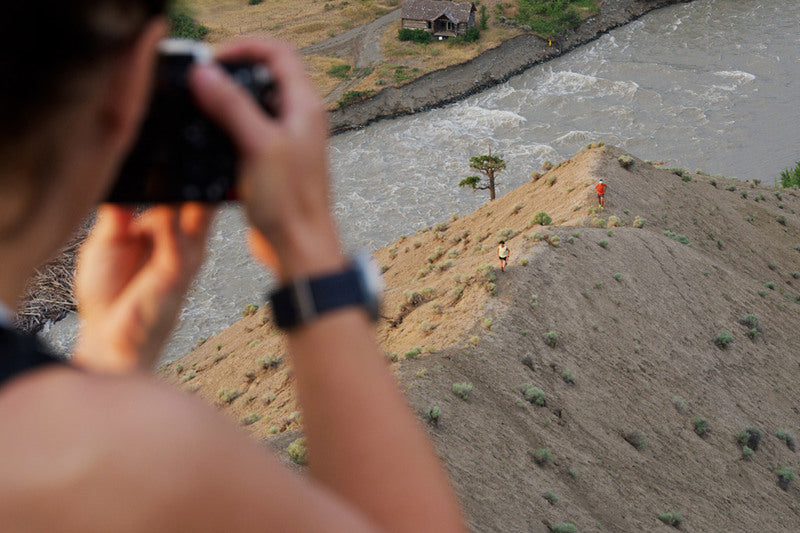
Originally a graphic designer, once Angela Percival got a taste of outdoor adventure photography there was no going back - she decided to focus on creation.
This is the second in our Peak Creator film series, which celebrates creative people inspired by the great outdoors. We talk to four creators and find out what inspires their creative work.
Now Arc’teryx’s senior outdoor photographer, she had to work hard to break into a profession dominated by men and now her work speaks for itself.
“What inspires me creatively is just being outside, period,” Angela says. “Being in the mountains, yes, being in the alpine even more, but I just need to be outside.”
Click play below and watch Angela share her creative inspiration.

Peak Creator Series – The Trailbuilder
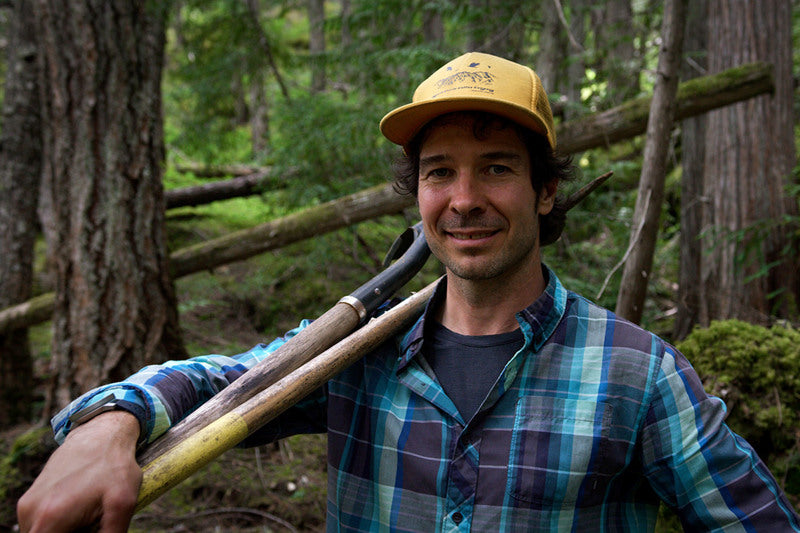
In the first of our Peak Creator film series, we present Dan Raymond and his work building and repairing mountain bike tracks in Whistler.
The Peak Creator film series celebrates creative people inspired by the great outdoors. We talk to four creators and find out what inspires their creative work.
In Dan’s case, his passion for designing and building trails started as a kid when he and his buddies followed one another’s tire marks down hills. He’s been at it ever since.
When building a trail, Dan follows an important principle: “The driving force of building a trail is it has to look like it was always there,” he says.
Click play below and watch Dan share his creative inspiration!

Suunto celebrates peak creators
Since forever, the great outdoors and its misty forests, silhouetted mountain ranges, and craggy peaks have inspired creatives of all ilk, whether poet, painter, musician or photographer. The awe nature strikes in us gets the creative energy flowing. The resulting work has, in some cases, inspired the masses and shapes how we see and protect the natural world.
At Suunto we believe this is worth celebrating. So we initiated our Peak Creator film series, in which we met four creators - a trail builder, a photographer, an architect and an artist - and found out how the natural world inspires what they do. We’ll publish a short film about each of them in the coming weeks.
Meet photographer Angela Percival, architect Ryley Thiessen, artist Jessa Gilbert and trailbuilder Dan Raymond in the Peak Creator Series.
The first film up, the trailbuilder sees his work more as uncovering what’s already there; next up, the photographer admits she’d rather be out shooting than indoors editing; then the architect explains how his mountain resorts bring people closer to nature; finally, we meet the artist who packs her painting kit and heads out for epic free rides.
Stay tuned for each film as it drops. And get your own creative juices flowing!
Watch Peak Creator Series episode 1 – The Trailbuilder
Watch Peak Creator Series episode 2 – The Photographer
Watch Peak Creator Series episode 3 – The Architect
Watch Peak Creator Series episode 4 – The Artist

Running El Camino
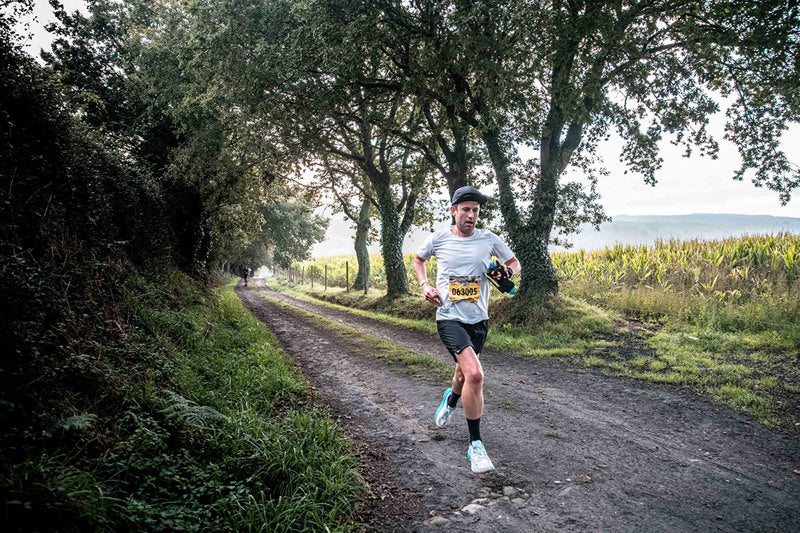
At the end of September, a group of athletes in Spain came together and as a Suunto team ran the Red Bull Buen Camino in northern Spain. Meaning “good way” in English, buen camino is the traditional way locals greet pilgrims walking the Camino de Santiago.
Red Bull Buen Camino relay run follows the original path of the Camino de Santiago - the 314 km Camino Primitivo, which has the reputation as the toughest of all the El Camino routes because it starts in Oviedo, the capital of Asturias, and passes through mountainous country before reaching Santiago de Compostela.
Press play to see the Suunto team’s epic Camino run
The race consisted of 33 teams of roughly six people and included elite athletes. Over the 314 km, the teams gained more than 8565 vertical meters, and reached Santiago in three days.
All the members of the Suunto relay team live in Girona, Spain and came together to complete the challenge. “The must to be part of the team was that none of them had been to Santiago’s cathedral before,” says Nuria Carrera, in Suunto’s Spanish marketing team. “Most of them knew each other but not the whole group so we organised a meeting a few weeks before the run to create the team spirit that we had.
“Overall our team was extremely happy to be part of this adventure, some of them weren’t in this kind of challenge in a long time because of COVID,” Nurria continues. “Each member pushed themselves to their maximum and gave it their all.”
The team was a mix of local athletes and expats:
Emma Snowsill: A former Australian triathlete. She won the gold medal in triathlon at the 2008 Olympics.
Christian Meier: A former Canadian racing cyclist who rode professionally between 2005 and 2016.
Tom Austen: business man; founder of Pelotan. Cyclist but recently discovered the trail running world.
Deena Blacking: lives between Girona and London and has a strong passion for outdoor sports and adventure.
Aleix Ferrer: the youngest in the team. Entrepreneur and sports lover, he started with orienteering and is now focused on cycling and running.
Adrià Canimas: a fireman with a strong passion for the outdoors and the mountains.
Images: Roger Salanova

The AlpsFrontTrail - the aftermath
It’s been a year since a group of German, Austrian and Italian athletes completed a relay run along what was the frontline between Italy and Austria during the First World War.
They did the AlpFrontTrail run to explore their own history and to remind the public what can happen when divisions fester and walls go up. As they ran the 850 km frontline, they visited former military forts and met local guides who explained the events of that dark time. Each athlete was personally touched, and went home with a newfound appreciation for the importance of remembering history.
Watch the just released film about AlpFrontTrail
“There are stories from that time that we find unimaginable today,” says Harald Wisthaler, a professional photographer who captured the journey. “There’s no one who’s still alive who lived at that time. But we met a lot of older people who said their family was in the war.”
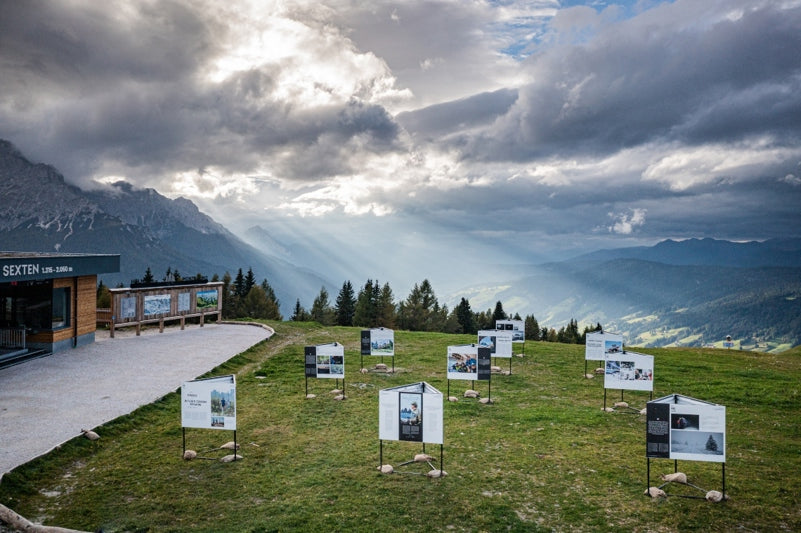
Harald combined his photography, bits of history and personal experiences from the project to create the AlpFrontTrail exhibition, which travelled through six towns in the Alps over summer. It’s not too late to see the exhibition, which is now being exhibited in Monte Elmo, Italy, next to the largest sundial in the world.
The exhibition has been well received as it has travelled through the Alps, reminding many younger people about the war in the mountains that happened 101 years before. “Many people realised, especially after everything that happened with COVID, that borders are still here, and they can be closed. Now, the border is just a line on a map. But 101 years ago it was much more.”
All images by Harald Wisthaler


