




SUUNTOブログ
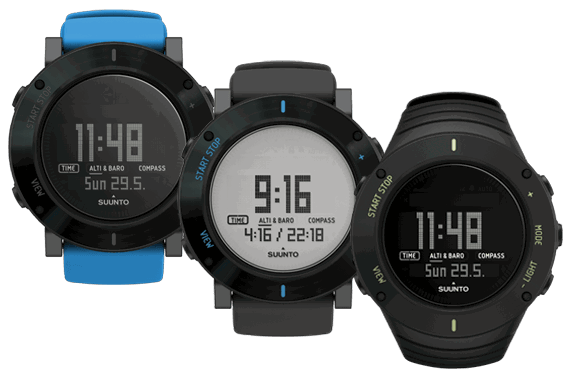

The Suunto Core range just got stronger
Suunto Core Ultimate Black and new Suunto Core Crush colors spice up your adventures
The renowned Suunto Core Classic series gains a new member with Suunto Core Ultimate Black. Its black steel top ring breathes durability while the streamlined design brings out the key functionalities. Fluorescent bezel graphics illuminate in the dark, making the watch even more versatile in tough conditions.
Comments Ewa Pulkkinen, Product Manager for Suunto Core: “The inspiration for the new Core Ultimate Black draws from the original Core All Black, which has been one of our most sought after watches since its introduction in 2007. The new rugged steel bezel construction of the Ultimate Black features diamond-like carbon coating, reinforcing Core’s legacy as the outdoor watch.”
The Suunto Core Crush line-up will be joined by two new variants – Blue and Graphite. Both have a coated steel bezel for increased robustness and an elegant look. The contemporary colored straps are a statement of your style and blend well both with colorful outdoor apparel and as well as more subtle every day wear. Users can choose between the negative display of the Graphite Crush and the positive display of the Blue Crush.
The award-winning Suunto Core packs all the essential features you need for the great outdoors. Keep an eye on the weather with its barometer, see how much you have left to the summit with the altimeter, or use the compass to quickly orientate yourself in the backcountry. The Suunto Core also features a depth meter for snorkeling.
Top freedivers descend for Suunto Vertical Blue 2015
One breath, a hundred meters into the depths and back again.
That’s the kind of incredible mental and physical mastery you can expect to see between April 27 and May 07 at Suunto Vertical Blue 2015, a free diving competition held in the world's deepest blue hole.
Dean's Blue Hole is 202 m deep. ©zooom.at/ Agustin Munoz
Suunto Vertical Blue is one of the world’s top freediving events where competitors aim to push the boundaries of human aquatic potential, diving vertically for minutes on one breath.
The first of 23 divers from 12 countries take the plunge on April 27, day one of the nine-day competition. They’ll be competing in three disciplines (see below), with some aiming to break world and national records or personal bests.
Japanese freediver Tomoka Fukada is competing again at this year's event. ©Daan Verhoeven
To deepen your understanding on freediving, jump into this article.
Located on Long Island in the Bahamas, the mysterious Dean’s Blue Hole is a postcard perfect tropical cove from above. But past the sandy shores it drops off abruptly, falling 202 m before hitting the sea floor below.
The depth, warmth and clarity of its waters make Dean’s Blue Hole to free diving what Maui is to surfing. It’s a magnet for the best, including multiple record holder William Trubridge who founded the Vertical Blue competition back in 2006.
Event organizer Will Trubridge holds world records for freediving. ©zooom.at/ Samo Vidic
Will Trubridge has won the overall title five years straight and aims to continue his streak. With his main rival Alexey Molchanov not competing this year, there will be less standing in his way.
But with back-to-back competitions in the next few months and world championships in September, Will isn’t promising to break any records this time around.
“I'm just looking to build depth and confidence in this phase of the year,” he says. “If I’m at a level where I feel comfortable going for a world record in one of the disciplines then I will definitely do that.”
Dean's Blue Hole's warm, clear waters attracts the best freedivers. ©zooom.at/ Samo Vidic
For the first time in four years, the event is being held in April to take advantage of favorable spring weather conditions.
“It’s been a while since we’ve competed in Dean’s Blue Hole during spring, when weather and water clarity tend to be better, so I’m looking forward to that,” Will says.
Stay tuned for more updates on Suunto Vertical Blue 2015.
Three disciplines:
Constant weight (CWT): descending and ascending using fins and arms only.
Free immersion (FIM): descending and ascending by pulling on the rope.
Constant no-fins (CNF): considered the purist freediving discipline – descending and ascending without fins or other artificial means.


7 tips for road runners moving to trail
Jonathan Wyatt needs no introduction in mountain running circles. He's the eight time winner of the world mountain running grand prix series. Below, he offers seven tips to help road runners transition to trail.
Running on changing, uneven terrain develops muscles that road running doesn’t really reach. The body responds to the terrain by using stabilizing muscles, balance and core. But transitioning from road to trail requires care. These seven tips will help you make the change.
1. Start progressively
Following Killian Jornet up the Matterhorn might look like fun, but you’ll enjoy it more when you move up the technical scale over time, adding more technical and longer runs as your confidence and trail fitness increase. If a normal run for you is one hour on city streets then start by running 30 minutes road and 30 minutes trail to make a gradual transition.
Start on easier trails before hitting the mountains, Wyatt says. ©Jonathan Wyatt
2. Shorter stride
A soft and slippery trail will give a greater workout sometimes resulting in fatigue or strain in the hamstring area. Don’t fight against a slippery uphill or downhill, instead reduce your stride length and increase your leg speed (turnover) so you’re putting less power down through your feet on each step. This reduces slipping. Running on sand is a good way to train this.
3. Scan ahead
Read the trail ahead and don’t just react to what’s immediately below you. With road running you can look at your feet, but not so out on the trails. You want to scan ahead rather than looking down at where your feet are going to land. By instead reading the terrain ahead, your feet will follow where your eyes are leading.
4. Learn to play the trail
Look for good lines to find the most efficient part of the trail and use banking on corners for smooth, fast entry and exit speeds – especially downhill. Learn to play on the trail where you can use terrain features to slingshot out of corners, accelerate from downhill into ascents and, most importantly, to have fun!
Trail running reduces overuse injuries common with roadrunners. ©Droz Photo
5. Care for your ankles
Roadrunners often twist an ankle when they take on more technical running terrain. To improve ankle proprioception – eye-foot coordination – trying using a wobble board or practice standing on one foot, making sure the knee is centered over your second toe as you look down. Tendons and foot muscles can take a pounding if you’re not used to uneven terrain and these exercises strengthen them. Close your eyes and do slow knee bends to spice it up too.
6. Find local trails for your level
Finding the best trails is not always easy so if you’re new to off-road running, talk to trail runners, go online or find popular routes in your area on Suunto App's heat maps to find suitable running trails. Remember safety is first, so you’ll need more equipment, preparation and common sense when running in the great outdoors.
Jono Wyatt is an eight time winner of the world mountain running grand prix series. ©zooom.at/Markus Berger
7. Remember, hills are your friends
The changing terrain will help you avoid overuse injuries that can occur when running on repetitive flat surfaces. Add more hills as you grow stronger off road. Remember too, the softer ground and grass on many trails also help to reduce the impact of downhill running on joints and muscles.


Face to Face with Greg Hill – #SuuntoAdventure Video Series, Episode 2
In the second episode of #SuuntoAdventure Video Series you will meet Canadian ski mountaineer Greg Hill.
As one of the world’s leading ski mountaineers, Greg has pioneered first descents, summited over 190 mountains and climbed and skied millions of meters. Along the way he has broken records, like skied two million vertical feet in a calendar year and 100.000 meters in a month. Read Greg's profile here.
Next episode of #SuuntoAdventure Video Series will be out in two weeks. Stay tuned!Watch also:
Face to Face with Emelie Forsberg – #SuuntoAdventure Video Series, Episode 1
Face to Face with Kilian Jornet – #SuuntoAdventure Video Series, Episode 3
Face to Face with William Trubridge – #SuuntoAdventure Video Series, Episode 4
Face to Face with Conrad Stoltz – #SuuntoAdventure Video Series, Episode 5
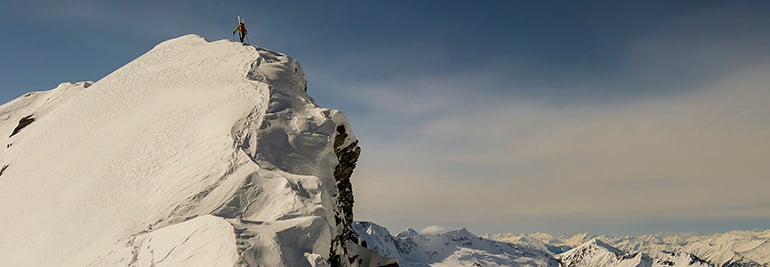

Hills to Climb
Make no mistake, Greg Hill is fit. Super-human fit. As one of the world’s leading ski mountaineers, he has pioneered first descents, summited over 190 mountains and climbed and skied millions of meters.
For Greg, winter isn’t complete without pushing himself. Which is why he spent March 2014 tackling 100,000 m of vertical in deep in his native Canada’s backcountry Why? “I've always been curious about my human potential and to see what I can do,” says Greg.
The March Madness campaign saw him skiing for up to 10 hours a day to cover between 3,000m to 4,000m of vertical. And if that wasn’t tricky enough, he never skied the same place twice and summited 11 mountains on the way. “It was as hard as anything I've done, waking up every morning and getting out there,” says Greg, but the long climbs were rewarded with stunning powder runs: “It was the best human-powered powder month ever! It was ridiculous. This was 97% great skiing!”
Believe it or not, that’s not Revelstoke-based Greg’s biggest vertical achievement. Back in 2010 he dedicated a year of his life to climbing and skiing two million feet (609,600 m). The challenge took him to four different countries and saw him climb 114 km and ski 1,039 days. 77 of those days saw him tackle over 3,000 meters of vertical, and his toughest day involved a 7,000m climb and ski. After reaching his target, Greg celebrated the way he knows best; by putting his skins back on and doing one more lap. “My legs felt light, my pace free and the turns great of course,” blogged Greg afterwards.
He’s clocked in a few records over the years as well. He was the first North American to climb and ski 40,000 ft (12,200m) in 24 hours, set the Spearhead traverse record in an impressive four hours one minute and was once climbed and skied Mont Blanc in a day. No wonder he was labeled one of the Top 25 fittest men in the world by Men’s Fitness in 2011.
What led Greg to these super-human feats? Trees! One million of them. His former summer job was planting spruce and pine trees. As he was paid per tree, he pushed himself to plant around 1,500 a day and discovered a talent for logging hours in the backcountry. “It taught me a lot about how to persevere,” says Greg.


一呼吸で水深100mへ。フリーダイビングで身体に何が起こる?【図解】
たった一度の呼吸で、水深100mの世界へ。
酸素ボンベを使わず、自分の呼吸だけで水中へ潜るフリーダイビングは、一見すると人間の限界に挑む特殊なスポーツに見えるかもしれません。
しかし、人間の身体にはもともと、水中に入ると自動的に働くさまざまな生理反応があります。
心拍数が下がる。身体の中心部へ血流が集まる。深くなるほど肺が圧縮される。
こうした変化を理解すると、フリーダイバーがなぜ一呼吸で深い海へ潜れるのか、その仕組みが少しずつ見えてきます。
この記事では、フリーダイビング中に身体で何が起きているのかを、Suuntoのインフォグラフィックとともに解説します。
目次
フリーダイビングとは?
【図解】深く潜ると身体はどう変化する?
人間に備わる「ダイブ反射」とは
約25mを超えると起こる変化
力を抜いて沈む「フリーフォール」
水深100mで肺はどうなる?
最も注意が必要なのは浮上の終盤
フリーダイビングは深さを競うだけではない
Suuntoでフリーダイビングを記録する
まとめ|自分の身体を知ることから始まる
フリーダイビングとは?
フリーダイビングとは、スキューバダイビングのような呼吸用タンクを使わず、一呼吸で水中へ潜るダイビングです。
競技としては近年注目を集めていますが、人間が息を止めて水中へ潜る行為そのものには非常に長い歴史があります。
魚や貝などを採るために潜る文化は、世界各地で古くから存在してきました。
現在のフリーダイビングには、深さや距離、息を止めている時間を競う競技だけでなく、海の中を静かに探索したり、仲間と水中世界を楽しんだりするスタイルもあります。
そして興味深いのは、私たち人間の身体にも、水中環境へ適応するための反応が備わっていることです。
【図解】深く潜ると身体はどう変化する?
まずは、フリーダイバーが水面から深い海へ潜っていくとき、身体にどのような変化が起きるのかを見てみましょう。
Graphic: © zooom.at / Adi Sumic
この図を見ると、水深が増すにつれて水圧が高まり、肺の容量が小さくなり、心拍数にも変化が起きることがわかります。
こうした一連の身体反応の中心にあるのが「ダイブ反射」です。
人間に備わる「ダイブ反射」とは
フリーダイビングを可能にしている重要な身体反応のひとつが、ダイブ反射(潜水反射)です。
顔が水に浸かると、身体は水中にいることを認識し、酸素の消費を抑えようとします。
その代表的な変化が心拍数の低下です。
心臓の拍動を遅くすることで酸素の消費量を抑え、限られた酸素をより長く使おうとします。
この反応は人間だけのものではなく、水中で生活する哺乳類などにも見られる生理的な仕組みです。
フリーダイバーは、こうした身体の反応を利用しながら、できるだけ無駄な酸素を使わずに水中へ潜っていきます。
約25mを超えると起こる変化
元記事では、約25m付近からダイブ反射がさらに強まり、心拍数が大きく低下すると説明されています。
同時に起きるのが、末梢血管収縮(vasoconstriction)です。
これは腕や脚など身体の末端への血流を減らし、心臓や脳など生命維持に重要な臓器へ血液を優先的に送る反応です。
つまり身体は、限られた酸素をできるだけ重要な場所へ残そうとします。
フリーダイビングでは「筋力で押し切る」よりも、こうした身体の自然な反応を妨げないよう、余計な力を抜くことが重要になります。
力を抜いて沈む「フリーフォール」
ある程度の深さまで潜ると、浮力の変化によって、ダイバーは大きく泳がなくても自然に沈んでいける状態になります。
この状態はフリーフォールと呼ばれます。
ここでは積極的に泳ぐのではなく、身体の力を抜きながら深い場所へ沈んでいきます。
世界トップレベルのフリーダイバーの中には、この時間を非常に心地よく感じる人もいます。
身体の動きを最小限にし、呼吸もなく、音の少ない水中をゆっくりと沈んでいく。
フリーダイビングならではの感覚を象徴する場面でもあります。
William Trubridge competing at Suunto Vertical Blue 2014 © Daan Verhoeven
水深100mで肺はどうなる?
水深が深くなるほど、水圧は高くなります。
インフォグラフィックでは、水面で約6Lあった肺容量が、水深100m付近では大きく圧縮される様子が示されています。
これは肺そのものが失われるわけではなく、周囲から受ける水圧によって、内部の空気が圧縮されるためです。
世界トップクラスのフリーダイバーでは、潜降速度が1秒あたり約1mに達することもあり、100m付近まで約1分30秒ほどで到達するケースもあります。
しかし、深く潜れば終わりではありません。
そこから同じ距離を水面まで戻る必要があります。
最も注意が必要なのは浮上の終盤
フリーダイビングで特に注意が必要なのが、浮上の最後の10mほどです。
深い場所では圧縮されていた空気が、水面に近づくにつれて急速に膨張します。
同時に、長時間息を止めていることで、身体の酸素量は少なくなっています。
そのため水面付近では、意識を失うブラックアウトのリスクが高まります。
深度を追求する競技では、安全管理を行うダイバーやスタッフが配置され、選手をサポートします。
フリーダイビングは、決して一人で限界を試すスポーツではありません。
実際に取り組む場合は、専門的な講習を受け、安全管理された環境で、必ずバディとともに行うことが重要です。
フリーダイビングは深さを競うだけではない
フリーダイビングというと、「何mまで潜れるか」という世界記録のイメージが強いかもしれません。
しかし、フリーダイビングの楽しみ方は競技だけではありません。
仲間と一緒に海へ入り、水中の景色を楽しむ。
静かな水中で、自分の呼吸や身体の感覚に集中する。
魚や地形を眺めながら、水中世界を探索する。
深さを追求しなくても、一呼吸で水の中に入るという体験そのものに魅力があります。
世界最高峰の選手たちが深度へ挑戦するフリーダイビング大会については、こちらの記事で詳しく紹介しています。
▶︎ 水深100mの世界へ。世界最高峰のフリーダイビング大会「Vertical Blue」
Suuntoでフリーダイビングを記録する
フリーダイビングでは、自分自身の感覚と同じくらい、ダイブを振り返るためのデータも役立ちます。
どのくらいの深さまで潜ったのか。
ダイブ時間はどのくらいだったのか。
どのくらいの速度で潜降・浮上したのか。
こうした情報を記録しておくことで、自分のダイブを後から確認しやすくなります。
ダイビングもスポーツも楽しむなら「Suunto Ocean」
Suunto Oceanは、ダイブコンピューターとGPSスポーツウォッチの機能をひとつにまとめたモデルです。
フリーダイブモードでは、水中ビューと水面ビューを使ってダイブを確認でき、深度、ダイブタイム、上昇・下降速度に関するアラートにも対応しています。
さらに、ダイビング以外のスポーツや日常のアクティビティも記録できるため、海の中と陸上の両方を楽しみたい人に適しています。
Suunto Oceanを見る
Suuntoには、ダイビングに特化したSuunto Nautic / Nautic Sなどのダイブコンピューターもあります。
用途やダイビングスタイルに合わせて選びたい方はこちらをご覧ください。
▶︎ Suuntoのダイブコンピューターを見る
まとめ|自分の身体を知ることから始まる
フリーダイビングは、一呼吸で水中へ潜るというシンプルなアクティビティです。
しかしその裏では、心拍数の低下、血流の変化、水圧による肺の圧縮など、人間の身体に備わったさまざまな反応が働いています。
そして深く潜るために必要なのは、単純に「頑張ること」ではありません。
身体の反応を理解し、余計な力を抜き、自分自身の状態をコントロールすること。
記録を競う人も、水中世界を楽しむ人も、フリーダイビングの入口にあるのは、自分の身体を知ることです。
次に海へ入るときは、水面の下で自分の身体にどんな変化が起きているのか、少し意識してみてはいかがでしょうか。
Suuntoのダイビング製品を見る
Main image © zooom.at / Agustin Munoz


