




SUUNTOブログ

Introducing Alex Kydd
Suunto Dive are super excited to announce Alex Kydd is joining the Suunto Ambassador family. Photographer, marine biologist and diver originally from Melbourne, Australia, Alex now proclaims to being “based on” Ningaloo Reef Western Australia honoring the number of hours that he spends exploring underwater capturing his breath-taking images.
A rare shot of Alex Kydd in front of the camera taken photographer Alfred Minnaarr. ©
Alex trains like an athlete in his discipline. Practising every day, editing all the time and descending beneath the surface has led him to achieve artistry in his images. Alex's photos stand out above the rest with his dedication and passion aiding his continued development as a photographer enabling him to produce his unique shots.
“The ocean is my happy place. Every time you enter the water you never know what you might see and it's such a misunderstood ecosystem. Everything is connected and the more time you spend in it, the more you appreciate.”
Alex Kydd by photographer Alfred Minnaarr ©
Beginning his diving journey with snorkelling at 16 in the cool waters off Melbourne where he grew up, he later began scuba diving on a trip to Thailand in 2009 where he firmly solidified his love and respect for the ocean. Exploring his passion further Alex studied Marine Biology at university and four years ago he started his journey into the world of underwater photography and has had not had a chance to look back.
“At age 16 I first started taking photos. I had a very basic 2m waterproof camera for snorkelling in Melbourne. I progressed slowly to more upgraded cameras over the next few years. Eventually I had enough savings and I got myself a DSLR and housing. I was going out taking 500-1000 photos per day and editing them every night. This I believe, fast tracked me to learn. The best advice I can give for underwater photography is to find a mentor or like-minded people to learn from.”
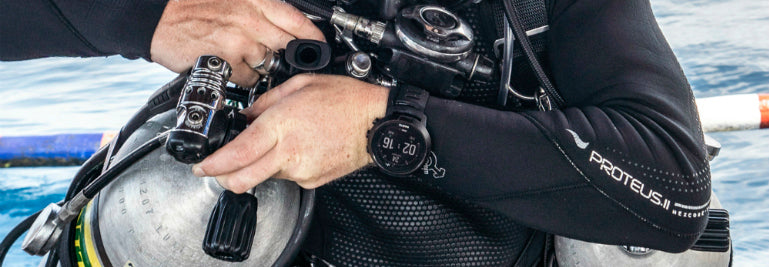
Alex’s next stops on his extensive adventuring are Raja Ampat, West Papua, French Polynesia and Fiji where he will be exploring with his new dive computers including the Suunto EON Core, Suunto D5 and Suunto Tank POD. Alex’s favourite device at the moment is the Suunto D5. He also represents Fourth Element and Ocean Positive as a team diver.
Alex Kydd:
Instagram
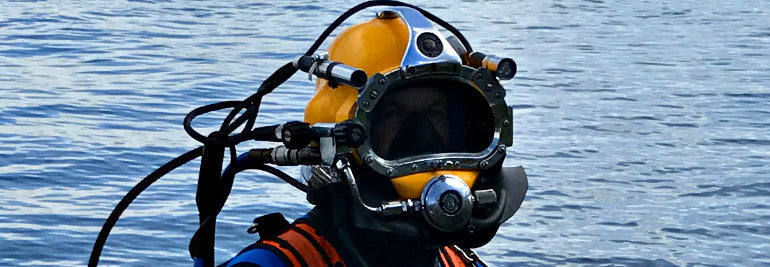

Tested by Real World Divers
Well known now for his higher-level training of professional and technical divers, along with a wealth of experience Johan began life in Netherlands and completed his first dive in Tunisia with CMAS in 1996.
Immediately impressed he purchased all his own equipment and rose to instructor level in a short time. He concentrated on specialising so he could broaden his knowledge which is where Johan developed his passion. After divng on the wrecks in the North Sea he found his calling and continued training in wreck diving and Trimix so he could explore deeper sites that hadn’t had their treasures pillaged like the wrecks at shallower depths.
“At greater depths I found the wrecks were more intact. I am talking about wrecks 80 meters and these wrecks are less exposed and also in better condition because they are not so exposed as those at shallower depths.”
Johan de With selfie.
To help him explore even more depth, his dive training led him onto rebreathers. He realised the limitation of many of his open circuit dives was the number of cylinders he could carry it seemed only natural for him to transition from open circuit.
“In 2015, together with Markku Diedrich, I dived a world record mixed team in Lake Thun, Switzerland (fresh, cold water) I was on OC and Markku on CCR where we travelled to a depth of 166.5m.”
Recording of the team’s deepest dive in a book of records.
Johan’s deep accolades do not end there.
“On the rebreather I dived into caves to a depth of 14m.
On open system in the caves up to 103m.
On the rebreather in open water up to 183m.
Open water on open system 166.4m.”
Johan now works as commercial diver and an instructor at the only private institute of commercial professional diving in the Netherlands. He also teaches deep technical diving and has his own gas filling station, Techduikschool Nederlands.
An important part of his diving is communicating information to the dedicated team of Dive Engineers at Suunto HQ as he puts computers to the test in the field and ensures they meet strict performance targets.
The infomation Johan feeds back allows the engineers to improve and fine tune devices allowing for the best user experience and in turn lets divers focus on the action and rely on their robust companions in the toughest conditions.
In action training professional divers in the Netherlands.
“I dive and test a lot for Suunto and share as much information as possible and give feedback about these computers both positively and negatively. I currently dive with the EON Steel and the EON Core and with the also since its release, the Suunto D5.
I use this during all my dives both OC in open water and caves and CCR in open water and in caves. As a backup I have my bottom timers with wet-note, and a spare computer in my pocket.
Everywhere and always, even with commercial diving I take the Suunto D5 into the water. I do this so that I also have a digital log of all my commercial dives.”
Suunto Dive computers stand the test of these extreme adventures alongside Johan.
Johan is not just an Ambassador for Suunto Dive, he represents brands including Ursuit and Bare drysuits, Tecline, Ammonite for lighting and Paralenz to capture the action on camera also with great satisfaction and pride.
"Regardless of environment depth or length of the dive or type of dive OC or CCR, technical diving must be feasible for everyone regardless of their financial status. These are brands that certainly think of the customer with price quality. I notice these companies listen and do a lot with the feedback given by us as Brand Ambassadors and testers of these materials.”
Jyri Vehmaskoski, Suunto EON Steel product team: "You don't dive if you don't trust your equipment. Everything we build is tested by real-world divers like us. Our gear is functional, accurate, and built to take a beating – and has hundreds of test dives to prove it."
Learn more about Suunto Dive products at suunto.com
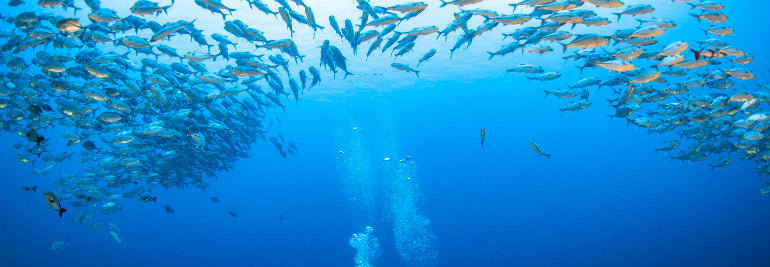

一枚の写真は海を守れるか?水中写真家が伝え続ける、海洋環境のリアル
美しいサンゴ礁。青い海を泳ぐ魚たち。悠然と進むサメやマンタ。
水中写真には、私たちが普段見ることのできない世界を一瞬で伝える力があります。
しかし、水中写真家スティーブ・ウッズ(Steve Woods)がカメラを向けてきたのは、美しい海だけではありません。
漁業による影響、プラスチックごみ、減少する魚、そしてサメを取り巻く環境。
彼が撮り続けているのは、「海で今、何が起きているのか」を伝えるための写真でもあります。
一枚の写真を見ることで、これまで知らなかった問題に気づく。その気づきが、行動を変えるきっかけになる。
今回はスティーブの歩みから、写真が海洋保全に果たせる役割と、海を楽しむ私たちにできることを考えます。
目次
始まりは、サメへの憧れ
「世界を変えたい」からジャーナリストへ
海の問題を、水中から見る
写真で伝えるため、インドネシアへ
サメを撮ることが、サメを守る活動へ
海を守るには、地域と一緒に取り組む
写真は「知るきっかけ」をつくれる
ダイバーが海を守るためにできること
海での体験を記録し、振り返る
まとめ|海を知ることが、守ることの始まり
始まりは、サメへの憧れ
スティーブが海の世界に魅了されたのは、まだ子どもの頃でした。
彼の両親は、息子がサメを見たいという願いを叶えるため、英国各地の展示会へ何時間も車を走らせてくれたといいます。
あるとき「本物のサメが展示される」と聞いて会場へ向かったものの、そこにあったのは張り子の模型。
それでも、スティーブのサメへの興味が消えることはありませんでした。
古いVHSの自然ドキュメンタリーを何度も見返し、近くの水族館ではサメが水槽を泳ぐ姿を何時間も眺めていたそうです。
9歳でダイビングを始め、12歳になる頃には両親や姉妹と一緒にダイビング資格を取得しました。:contentReference[oaicite:1]{index=1}
© Steve Woods Photography
「世界を変えたい」からジャーナリストへ
スティーブのキャリアは、最初から水中写真家として始まったわけではありません。
英国でジャーナリストとして働きながら、社会が抱える問題を伝える仕事に携わっていました。
彼が関心を持ったテーマのひとつが、漁業や養殖による環境への影響です。
問題について文章で伝えるだけでなく、実際に水中へ入り、その現場で何が起きているのかを見ていきました。
人間の日常的な選択が、海の中ではどんな変化として現れるのか。
「知られていない問題を、どうすれば理解してもらえるか」という問いは、その後の写真家としての活動にもつながっていきます。:contentReference[oaicite:2]{index=2}
海の問題を、水中から見る
海洋環境の問題は、水面から眺めているだけでは見えにくいものがあります。
魚の数の変化。
海底に流れ着いたプラスチック。
漁業による生態系への影響。
そして、サメをはじめとする海洋生物を取り巻く状況。
ダイバーは、その変化を自分の目で直接見ることができます。
スティーブにとって水中撮影は、美しい景色を作品として残すだけではありません。
見えにくい海の変化を、水の上にいる人へ伝える手段になっていきました。
写真で伝えるため、インドネシアへ
2008年、インドネシアで経験したサメとの出会いが、スティーブの人生を大きく変えました。
彼は貯金をカメラ機材につぎ込み、インドネシア行きの片道航空券を購入。
英国でのジャーナリスト生活を離れ、水中写真を通じて海洋保全に関わる道を選びました。
最初に拠点としたロンボクでは、ダイブセンターでゲストの水中写真を撮影。
日々撮影を続ける中で、水中での光の扱い方や、海中で鮮明な写真を撮るための技術を身につけていきます。:contentReference[oaicite:3]{index=3}
しかし、彼の目的は単に「上手な水中写真家になること」ではありませんでした。
海で見た現実を、より多くの人に伝えられる写真を撮ること。
そのための技術だったのです。
サメを撮ることが、サメを守る活動へ
その後スティーブは、地域の団体や保全プロジェクトとともにGili Shark Foundationの立ち上げに関わります。
活動のひとつが、サメの写真を撮影して個体を識別し、数を記録することでした。
最初は同じように見えていたサメも、身体の模様などを比較すると、それぞれ別の個体であることがわかります。
写真が単なる記念写真ではなく、生物を識別し、データを集めるための手段になったのです。
地域の人々もサメのカウントやイベント、データ収集に参加し、島全体で活動へ関わるようになりました。:contentReference[oaicite:4]{index=4}
© Steve Woods Photography
海を守るには、地域と一緒に取り組む
ギリ諸島での活動の後、スティーブはラジャ・アンパットへ移り、さらに海洋保全活動を続けました。
世界有数の海洋生物多様性を持つ地域でも、プラスチックごみや魚資源の減少といった問題があります。
そこで彼が重要だと考えたのが、外部の人間が一方的に「こうするべきだ」と決めないことでした。
地域の人々自身も、プラスチックごみの増加や魚が減っていることを認識していました。
だからこそ、現地の生活を無視して規則を押しつけるのではなく、地域と一緒に持続可能な方法を考える。
環境を守ることと、そこで暮らす人々の生活を両立させる仕組みが必要です。
スティーブは、長く続く保全活動には地域の人が主体的に関われることと、将来まで続けられる明確な計画が欠かせないと考えています。:contentReference[oaicite:5]{index=5}
写真は「知るきっかけ」をつくれる
スティーブが写真にこだわる理由のひとつが、視覚情報の力です。
環境問題について長い説明を読むことはなくても、一枚の写真を目にした瞬間に「これは何だろう」と立ち止まることがあります。
美しい海の写真。
傷ついた生態系の写真。
人間の活動によって変化した水中環境の写真。
どれも、その背景を知る入口になります。
スティーブは、人はまず知ることで、考え方を変えることができると考えています。:contentReference[oaicite:6]{index=6}
© Steve Woods Photography
ダイバーが海を守るためにできること
海洋保全と聞くと、大きな団体や研究者だけが取り組むものに思えるかもしれません。
しかし、日常的に海へ入るダイバーだからこそできることもあります。
サンゴや海洋生物に触れない
中性浮力を身につけ、海底やサンゴへの接触を減らす
ゴミを残さず、見つけた海洋ごみについて地域のルールに沿って行動する
野生生物を追いかけたり、撮影のために行動を妨げたりしない
地域のダイビングルールや保全活動について知る
撮った写真や経験を通じて、海の現状を周囲の人と共有する
写真家でなくても、「この海で何を見たか」を伝えることはできます。
大切なのは、海へ遊びに行くことと、海を大切にすることを別々に考えないことです。
海での体験を記録し、振り返る
水中写真が「その瞬間に見たもの」を残す記録だとすれば、ダイビングログはそのとき自分がどんなダイブをしていたのかを残す記録です。
深度、潜水時間、水温、ダイブプロファイルなどを記録しておくことで、潜水後にその日のダイビングを振り返ることができます。
Suuntoアプリでは、対応するダイブコンピューターで記録したデータをスマートフォンで確認でき、ダイビングログとして残すだけでなく、次のダイブ計画やスキルの振り返りにも活用できます。:contentReference[oaicite:7]{index=7}
▶︎ ダイビングログをもっと活用する方法|Suuntoアプリでダイビングデータを振り返る
ダイビングと陸上でのスポーツをひとつのデバイスで記録したい場合は、Suunto Oceanも選択肢です。Suunto Oceanはダイビング機能とGPSスポーツウォッチ機能をひとつにまとめたモデルとしてラインアップされています。:contentReference[oaicite:8]{index=8}
この記事では商品を主役にはしません。まずは海へ入り、目の前の環境を知り、その体験を大切に記録すること。
その積み重ねが、海との付き合い方を考えるきっかけになります。
Suuntoのダイビング製品を見る
まとめ|海を知ることが、守ることの始まり
スティーブ・ウッズは、「世界を変えたい」という思いからジャーナリストになり、その後カメラを持って海の中へ入りました。
そこで見たのは、美しい水中世界だけではありません。
漁業、プラスチック、生態系の変化、そして保全に取り組む地域の人々。
彼はそれらを写真として記録し、人々が海で起きていることを知るためのきっかけをつくってきました。
知らなければ、変えようとも思えない。
だからこそ、一枚の写真にも意味があります。
次に海へ潜ったときは、美しい景色を楽しむだけでなく、その場所にどんな生き物がいて、どんな変化が起きているのかにも少し目を向けてみてください。
海を知ること。
記録すること。
そして誰かに伝えること。
世界を変える一歩は、そんな小さな行動から始まるのかもしれません。
Images © Steve Woods Photography
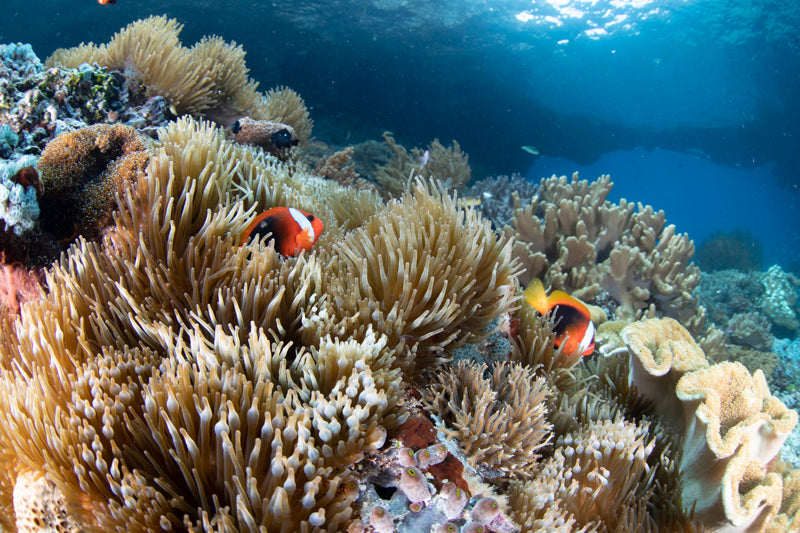

ラジャアンパットのダイビング|豊かなサンゴ礁を守るマックス・アマーの挑戦
インドネシア・西パプアのラジャアンパットは、色鮮やかなサンゴ礁と多様な海洋生物で知られる、世界有数のダイビングエリアです。
しかし、この海の豊かさは偶然に守られてきたわけではありません。ラジャアンパットのクリ島でダイビングリゾートを築いたマックス・アマーは、地域の人々の仕事と自然保護を結び付け、サンゴ礁を未来へ残す仕組みづくりに取り組んできました。
この記事では、沈没した戦時車両を探して島へ渡ったマックスが、なぜエコリゾートをつくり、地域の仲間と海を守るようになったのか、その歩みを紹介します。
映像:Janne Kasperi Suhonen
© Steve Woods Photography
目次
ラジャアンパットとは
マックス・アマーと海との出会い
2匹のウミガメから始まった物語
まだ存在しないリゾートを売る
地域の仕事が海を守る力になる
豊かなサンゴ礁を未来へ残す
ダイバーができること
Suuntoでダイビングを記録する
まとめ
ラジャアンパットとは
ラジャアンパットは、インドネシア東部の西パプアに広がる島々です。暖かい海、複雑な島の地形、マングローブや海草藻場、栄養豊富な潮流などが、多様な海洋生物を支えています。
サンゴ礁、マンタ、ウミガメ、魚の群れなどを目当てに世界中からダイバーが訪れますが、豊かな自然ほど繊細です。ダイビング観光、廃棄物、プラスチック、沿岸開発などの影響を抑えながら、地域の暮らしと自然保護を両立させることが重要になります。
ラジャアンパットは2023年にユネスコ世界ジオパークへ認定されました。これは美しい景観だけでなく、地域の地質、生態系、文化を守りながら持続可能な発展を目指す場所であることも示しています。
マックス・アマーと海との出会い
マックス・アマーは、動物の保護に取り組む両親のもと、ナイジェリアで自然に囲まれて育ちました。家族は傷ついた鳥、ワニ、チンパンジーなどを保護し、可能であれば野生へ戻していたといいます。
1982年、マックスは軍でダイビングを学びました。当時の訓練は楽しい経験ではありませんでしたが、そこで「諦めないこと」を学んだと振り返っています。
その後、第二次世界大戦後に海へ廃棄された航空機や車両の情報を手掛かりにインドネシアへ渡り、沈没物を探すようになりました。島々を訪ねるうちに、マックスは海だけでなく、地域の人々の温かさにも引かれていきます。
マックス・アマー。© Steve Woods Photography
2匹のウミガメから始まった物語
元記事には、マックスの考え方を象徴するエピソードが紹介されています。
ある日、海辺に立つ若い漁師のカヌーには、捕まえた2匹のウミガメが載っていました。マックスは漁師と話し、代金を支払うと、2匹を海へ逃がしました。驚く漁師へ伝えたのは、シンプルな言葉でした。
「私はウミガメが好きなんだ」
やがて、その漁師はマックスが運営するリゾートで最初のダイブガイドになりました。自然を守ることと、地域で安定した仕事をつくることがつながった瞬間です。
まだ存在しないリゾートを売る
マックスが考えたのは、地域の人々と働きながら、海を守ることを事業の中心に置くダイビングリゾートでした。
彼はまだ建物が完成していない段階でダイビングショーへ出展し、植物や地域の品々を使ったブースで構想を紹介しました。「3組の予約が入れば計画を進めよう」と考えていたところ、結果は2年分に相当する予約だったといいます。
マックスは急いで島へ戻り、地域の仲間へ建設を始める必要があると伝えました。最初のゲストが到着したとき、建設チームが裏口から出るのと入れ替わるほど、完成は直前だったそうです。
© Steve Woods Photography
地域の仕事が海を守る力になる
リゾートで働くようになった人々の中には、かつて伐採、漁業、サメのひれを目的とした漁、密猟などに関わっていた人もいました。教育や安定した仕事へアクセスしにくい、遠隔地ならではの事情が背景にありました。
ダイブガイド、ボートスタッフ、リゾート運営などの仕事が生まれることで、自然を消費する以外の収入が得られ、家族の生活と教育を支えられるようになります。そして、海の状態が地域の仕事へ直接つながるため、サンゴ礁や魚を守ることが自分たちの未来を守ることになります。
自然保護を外部から押し付けるのではなく、地域の人々が中心となって続けられる仕組みにする。この考え方が、マックスのプロジェクトを支えてきました。
© Steve Woods Photography
豊かなサンゴ礁を未来へ残す
マックスとチームは、事業の初期からサンゴ礁の保護を優先してきました。元記事では、研究者による調査でハウスリーフの魚種が記録され、その後の再調査で同じ海域の確認種数が増えていたことが紹介されています。
ただし、1回のダイビングで確認できる魚の数は、季節、潮流、観察方法、調査範囲などにも左右されます。重要なのは「世界一」という称号だけではなく、長期的な観察を続け、保護の結果を確かめながら管理を改善することです。
島の自然を守りながら観光を続けるには、廃棄物の管理、再生可能エネルギーの活用、自然への負荷を抑えた施設計画、地域や行政との協力、ゲストへの教育が欠かせません。
マックスは、環境への影響を完全にゼロにはできないからこそ、その影響を把握し、できることを積み重ねる姿勢が大切だと語っています。
ラジャアンパットの海を守るためにダイバーができること
遠くの海を訪れるダイバーも、その場所の未来に関わる一人です。ラジャアンパットに限らず、自然豊かなダイビングエリアでは次の行動を意識しましょう。
サンゴへ触れたり、フィンで蹴ったりしないよう中性浮力を整える
野生生物を追い回さず、餌付けや接触をしない
地域のルール、海洋保護区、ダイビング事業者の指示を守る
使い捨てプラスチックを減らし、ごみを適切に持ち帰る
日焼け止めを含め、海へ持ち込む製品の成分と使用方法に配慮する
地域雇用と自然保護に取り組む事業者を選ぶ
自分の経験と体調に合わない海況では無理に潜らない
写真を撮ることやログを残すことも、その海への関心を長く保つきっかけになります。ただし、撮影や機器の操作へ集中しすぎず、浮力、残圧、深度、潜水時間、バディの状態を優先してください。
© Steve Woods Photography
Suuntoでダイビングを記録する
Suunto Oceanは、ダイビングと日常のスポーツを1台で記録したい人のためのダイブコンピュータ&GPSスポーツウォッチです。
Suunto Nauticは、大きなAMOLEDディスプレイと長時間のダイビングを重視する人に向けたダイブコンピュータです。
Suunto Nautic Sは、コンパクトなサイズで、ダイビングから日常まで使いたい人の選択肢です。
ダイブコンピュータは、安全なダイビングを支える重要な道具ですが、認定講習、適切な潜水計画、バディとの確認、現地ガイドの指示に代わるものではありません。使用前に対応するユーザーガイドを読み、表示と操作を理解してください。
▶︎関連記事:「初心者ダイバーが安全に上達するための7つのポイント」
まとめ|豊かな海は、地域とダイバーが一緒に守る
ラジャアンパットの魅力は、魚やサンゴの多さだけではありません。自然を守ることが地域の仕事と教育につながり、海の豊かさが次の世代の暮らしを支える。その循環こそ、マックス・アマーと仲間たちが築いてきた価値です。
ダイバーは海を訪れるゲストです。美しい景色を記録するだけでなく、現地のルールを守り、自然への負荷を減らし、保全へ取り組む地域や事業者を選ぶことが、海を未来へ残す力になります。
海で過ごした時間を、次のダイビングへつなげる
Suuntoのダイブコンピュータで潜水データを記録し、一つひとつのダイビングを振り返りましょう。
Suuntoのダイビング製品を見る
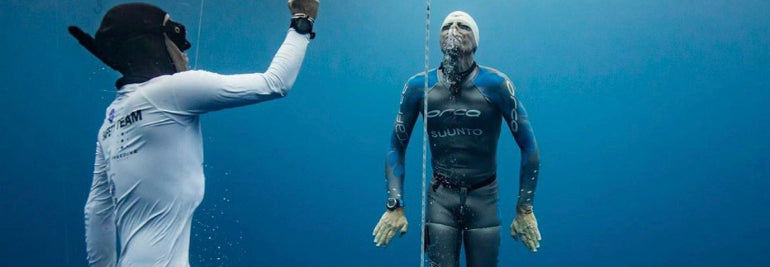

The Lowdown: CMAS 4th Outdoor Freediving World Championships 2019
On the white sun drenched shores of Roatan Island the gentle sound of the Caribbean Sea’s crystal clear water tentatively exploring the sand is lost behind the dissonance of diving activity coming from a dive platform located not far from the beach.
Divers are descending, safety protocols are being fine tuned, Alex St-Jean the official event photographer is testing his underwater camera equipment while the final training rehearsals are being observed in preparation for the CMAS World Championships that fin-kick off with an almighty duck dive on 6thAugust 2019 lasting five days. The event has been organized by Esteban Darhanpé at the Roatan Freediving School and Training Centre.
Chilling in the warm waters of the Caribbean Sea, Roatan Island is situated alongside a part of the 1000km of Mesoamerica Barrier Reef, the second largest reef system in the world.
The best of the best from around the globe are gathered to compete at the event. They compete not only to win but to be to a part of the freediving community.
A common misapprehension of freediving is that it is all about gaining the depth and in competitions this may be the case. Competition diving and its many disciplines are only one aspect of the sport. For most freedivers, the sport is just about hanging out with friends and exploring the underwater world.
“To the observer, freediving is all about serenity and calmness – a peaceful interaction with the underwater world. It is exactly all these things, which is why competition freediving presents such a unique challenge.” says Will Trubridge, Suunto Ambassador and World Champion.
“The conditions of a competition are slightly different to a world record attempt. In a competition you have an official pre-set time and there's a lot more people around – spectators and media. It's not as controllable as with a world record attempt,” says Will.
William Trubridge captured by photographer and freediver Alex St-Jean ©
Organizations
CMAS- The World Underwater Federation/Confédération Mondiale des Activités Subaquatiques founded in 1959 and is an international federation that organises underwater activities and events and is amongst the leaders in the scientific and technical research and development. It also acts as a training standards agency in snorkel and scuba training.
AIDA- International Association for the development of Apnea was created in 1992 after the film release for Big Blue. The rise in training freedivers and record breakers was developing at a vast rate and the AIDA was founded to keep track on the growing interests. The largest organization world wide of freediving event organizers, it also actively participates in scientific and technical research and development to help the world see freediving not as a thrill seekers sport, AIDA wants the recognition that “freediving is safe, fun, challenging and a fantastic blend of inner peace, concentration, technique, training, friends and team work”.
Disciplines
CNF- constant weight no fins is often talked about as being the purest form of freediving unassisted
CWT- Constant Weight with Fins discipline means the diver can wear fins, however they are only allowed to touch the rope to stop their descent and start their ascent. This discipline tends to give the deepest performances.
CWB- Constant Weight with Bi Fins. More monofins than you can shake a pair of bi fins at.
FIM- Free Immersion is a more relaxed dive where the diver can use the rope to pull themselves along using the rope, the diver is not allowed to wear fins on the dive.
Competition Terms
Safety Teams/Safety Diver- the Dive Safety Team is headed up by Italian Freediver Marco Cosentino and is currently holding the position of Chief of AIDA Safety Committee. He has a team of twelve safety divers there for support including Suunto Ambassador Sofia Gomez’s coach, freediver Johnathan Sunnex aka Johnny Deep.
Announced Dive Time- the official target time the diver will take to complete the dive, must be announced pre-dive. “You announce your dive on that day. If something goes wrong, then you don't have a second chance. It creates more of an element of chance. There is also a lot of sleuthing and spying to find out what other freedivers have done in their training to gauge how they're performing, and using that information to make pronouncements.” Says William Trubridge.
Official TOP- Time of Performance, as during the competition the organisers will be sticking to strict scheduling and the divers are assigned a time the dive must commence so all pre-dive preparation must be completed by the official TOP.
Duck Dive- the way a free diver ‘enters’ the water is by this type of dive as it gets the diver in a good position for descending and helps them along to few meters deep very quickly.
Freefall- once the diver reaches the point of negative buoyancy on their descent and begins to sink in a state of complete relaxation without finning down. This year we have spotted the athletes with strings tied around their thighs, Will Trubridge uses his to slide his thumbs in place so his arms stay positioned during freefall in order to conserve every bit of energy. It is this part of the dive that can induce the most pleasant feelings. Many freedivers feel euphoric as they enter an almost trance-like state.
Tag- a marker the diver must grab and bring back up to the surface when competing in depth competitions.
PB- personal best is the athletes, longest or deepest dive they have achieved. Can also be measured by distance.
Surface Protocol- the sequence a freediver must completion upon reaching the surface after a dive in a competition to convince the judges that the diver is lucid and not unconscious. The diver must face the judge’s direction remove googles and nose clip, give the OK signal and say in English “I am OK”/I’m OK” with a 15 second time limit.
Hypoxic- where the body is in a state of inadequate oxygen at tissue level. If the diver doesn’t get to the surface with enough oxygen to be lucid enough to complete the surface protocol they will be disqualified.
Cards- white, yellow or red. The judges will show a card at the end of each competition dive to signal whether the diver has had a fine performance with no penalties, yellow means the dive was completed with penalties and red signals disqualification from the dive.
World Championships Schedule
AUGUST 6th OPENING CEREMONY
Much like the opening ceremony of the Olympics we hope to see the atheletes parading around Roatan wielding flags, looking strong and generally building the hype, however it may be more of a technical meeting!
AUGUST 7th CNF COMPETITION DAY
Suunto Ambassador William Trubridge holds the world record in this natural discipline. Will set a new world record in freediving by diving to 101m with no fins in Dean's Blue Hole in the Bahamas. The new world record was set mere three days after he established an astounding new world record dive of one hectometre. Will's record-setting and mind-boggling constant no fins dive to 101 meters took 4 minutes and :08 seconds to complete.
Watch it here:
AUGUST 8th CWT COMPETITION DAY
Constant weight APNEA. This discipline means the diver can wear fins, however they are only allowed to touch the rope to stop their descent and start their ascent.
AUGUST 9th REST DAY
Rest day for re-ups on oxygen and rest.
AUGUST 10th CWB COMPETITION DAY
More monofins than you can shake a pair of bi fins at.
AUGUST 11th FIM COMPETITION DAY / AWARD CEREMONY / CLOSING PARTY
The winners get to take home a magnificent Suunto D5 dive computer and also collect a cash prize.
Sofía Gómez Uribe taken by freediver Johnny Sunnex @johnnydeep110 ©
Follow on Instagram @Suunto Dive to keep up with Sofía Gomez Uribe as she takes over for all latest news from the dvie platform.
Click here to see the offical Facebook page for the comptition.
5 inspiring coral reef restoration projects
Diving rich, rainbow colored coral reefs is every diver’s dream. We travel the planet to experience them, leaving us in awe of how staggeringly beautiful they are. Imagining our oceans without them is simply heartbreaking.
Yet, mass coral bleaching events – due to a rise in global surface temperature – could cause all 29 reef containing World Heritage sites to cease to exist by the end of the century. The stakes have never been higher.
To stop this from happening, divers, scientists and ocean conservationists are teaming up to find solutions. We look at five inspiring initiatives to save the coral, and also what you can do to help.
Reef Rescuers, Cousin Island, Seychelles
In a way, every diver should identify as a reef rescuer, and do what he or she can, even if only make donations, to support one of these initiatives. Starting in 2010, this huge and impressive restoration project has raised 40,000 corals in underwater nurseries, with 24,000 of these being successfully transplanted onto reefs, covering an area of a football field. The project utilised the coral gardening technique of retrieving fragments of healthy coral, growing it in protected nurseries and then transplanting it onto degraded reef to help rejuvenate it. Based on its learning, the project created a Coral Reef Restoration Toolkit for other initiatives to benefit from.
Secore Coral, Yucatan Peninsula, Mexico
Starting in 2015, this pilot project researched and tested new techniques to use coral grown in land-based or ocean nurseries for restoration, waiting until they are old enough to plant out on reefs where they are then monitored. This inspiring documentary below shows what’s possible.
Pur Coral, Indonesia
Coral reefs across the world need all the help they can get, including financial support from the corporate sector for restoration projects. French dermo-cosmetics brand EAU THERMALE AVÈNE partnered with Pur Projet to create Pur Coral, a project to preserve and regenerate marine ecosystems in Pejarakan, Bali. The corals had been destroyed mostly by cyanide and dynamite fishing, which are now banned there. Since its start in 2016, the project immersed 24 artificial reef structures underwater, then planted 1855 corals, from more than 15 species, on them. For several years Avène has engaged in an eco-responsible initiative called "Skin Protect Ocean Respect" to raise awareness about the impact of sun protection on the environment, and particularly on the marine life and corals. Avène has also been a leader in redesigning its sunscreen product range, minimizing the impact on the environment without compromising on optimal UVB-UVA protection for the skin.
RangerBot, Great Barrier Reef, Australia
Like a Swiss army knife, a state-of-the-art robo reef protector developed by researchers at Queensland University of Technology in Australia – RangerBot – has a number of functions, all designed to protect one of the wonders of the world, the Great Barrier Reef. It’s first function is to search and destroy; its incredible cameras identify invasive Crown-of-Thorns Starfish and injects them with a lethal dose of poison. It also monitors the health of the coral and water quality. It can also map vast areas underwater at scales not previously possible.
World’s largest 3D printed reef, MARS, Summer Island, Maldives
The Modular Artificial Reef Structure (MARS) is an ongoing project developed by industrial designer Alex Goad. It utilises 3D printing to provide a rigid skeleton on which corals can be implanted and grown. In August 2018, they submerged the first reef off the coast of Summer Island, in an area where there has never been a coral reef, and where locals have been growing corals. Alex says the ease, affordability, flexibility of 3D printing can play an amazing role in preserving coral around the world.
6 ways you can make a small difference
Conscious travel
Air and vehicle travel are major contributors to the rising greenhouse emissions driving the climate crisis. Consider trying to reduce both. For example, use public transport or ride a bicycle whenever you can. And when you do fly, offset the carbon emissions from your flight by using a carbon calculator, and compensating a green cause of your choice.
Hands off
When you’re out diving, don’t touch coral or any marine animals. Keep a respectful distance. Don’t pursue animals to get that trophy photo. And don’t collect shells and so forth as souvenirs – remember that hundreds of people dive the same site, and if every diver took a souvenir it would create a big problem.
Use eco-friendly sunscreen
Use sunscreens based on eco-designed, biodegradable formulas. Avoid products that have the following ingredients in them: Octocrylène, Benzophenone, Methoxycinnamate. Take a look at Avène’s sunscreen range – they are brand of choice for divers at Suunto head office.
Be a tidy diver
Single use plastics really are an abomination. Divers should lead the way and quit using them. Be sure to clean up any plastic trash after your dive when you’re back on land.
Start “strawkling”
Strawkling is a new recreation that combines snorkeling and collecting litter. Take a net-cloth bag on your next dive, and collect any plastic litter you find. Imagine if we all did this!
Change your business practices
If you own, manage or work for an organisation in the global dive community, join Suunto in getting onboard with Mission 2020 and changing your business practices so they help protect and preserve our oceans for the future.


