


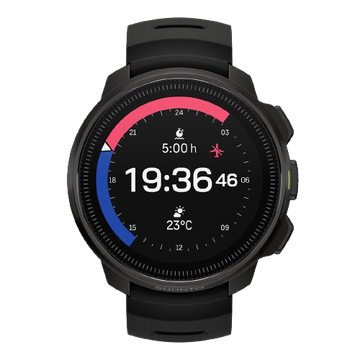


Knowledge is power – and having an understanding of what's going on inside your dive computer will help you dive more safely and with peace of mind. Here's what you need to know on Suunto's algorithm that keeps you safe:
Think of dive algorithms as you do the Internet: Few of us can actually explain how email works, but we all agree that life is infinitely better with it. The algorithms powering your dive computer are much the same: You need only appreciate how you benefit. Algorithms are ever-adapting formulas that constantly measure how much nitrogen is accumulating in your body as you remain underwater.

© Janne Suhonen
When you first started diving, relying on the tables was fine because, most likely, your air consumption wasn’t efficient for you to stay down long enough to complicate things. Then, at some point, you noticed everyone with a dive computer was enjoying longer dives. They could duck down a few meters to swim nearer a shark or turtle, and this didn’t significantly shorten that dive or subsequent dives. Simply put, they were carefree. They knew their computers were factoring in these depth changes to keep them safe.
When we dive, inert gases—such as nitrogen, which our body doesn’t need—are dissolving into the bloodstream. At any given point, even when you’re on dry land, your veins and arteries have microbubbles filled with these inert gases. When small, they’re of no consequence. But when they expand, say, from time at depth, they begin to limit off-gassing—that is, your body’s ability to expel nitrogen.
Only Suunto factors microbubbles into their algorithms. The deeper you dive, the greater a risk factor they potentially become. Their dive computers will force you to decrease your ascent rate when microbubbles are starting to become an issue.
Suunto’s Reduced Gradient Bubble Model, or RGBM, is the industry’s most accurate representation of what’s happening in your body when you dive. It automatically adjusts to what you’re doing underwater. After you’ve told it you are diving air or a particular Nitrox blend, it requires no further manual input, leaving you free to enjoy your dive.


