






SUUNTOブログ

Top freedivers prepare for Suunto Vertical Blue 2014
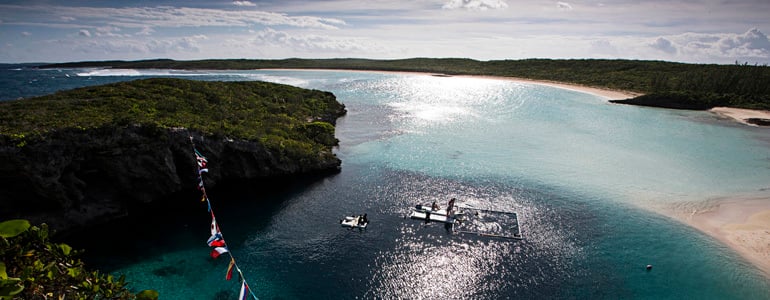
Freediving is a sport that pushes the limits of human possibility. Divers descend to incredible depths of the ocean – all in a single breath. From November 27th to December 5th, the world’s top freedivers will gather in the Bahamas for one of the largest freediving competitions – the Suunto Vertical Blue. Founded and organized by record-breaking freediver William Trubridge, the invitational competition will see 35 divers from 19 countries compete at Dean’s Blue Hole in the Bahamas. Plunging to a depth of more than 200 meters, Dean’s Blue Hole has a reputation for being one of the greatest freediving locations on the planet. Its deep, warm and calm waters provide freedivers with the perfect environment to attempt to break national and world records, or exceed their own personal bests.
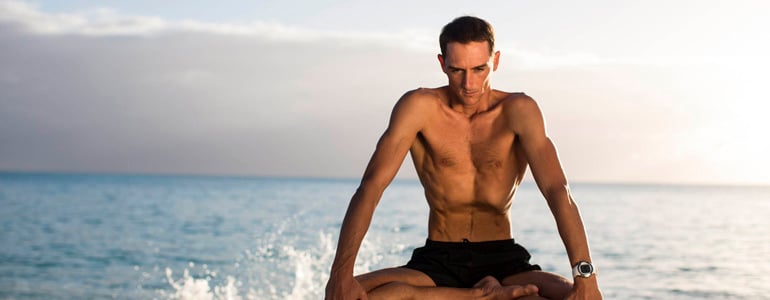
This year, Alexey Molchanov and William Trubridge will renew a rivalry that has intensified over the last couple of years. Between them they hold the current world records in the sport’s most popular depth disciplines. Trubridge is looking to improve on his world record 2010 CNF dive to 101 m. “It's the purest discipline,” he says.As for the ladies, the competition between Misuzu "Mimi" Okamoto and Tomoka Fukuda will be one to watch – they were both on the Japanese national team along with Hanako Rose – who took gold at this year's World Championships in Italy.
Says organizer William Trubridge: “This year's Suunto Vertical Blue promises to be another gripping event. The beauty of the event is that every athlete gets up to six attempts, so they can build up to huge performances and record attempts, or try to consolidate across all three disciplines for the overall prize. This is a recipe for nail-biting finishes and monster performances in the world's best freediving location.”Says Joan Sola, global sports and community marketing manager for Suunto: “We are pleased once again to be a partner of Suunto Vertical Blue, which brings together the world's top freedivers. Whether pushing the boundaries of human possibility or their own potential, it is an amazing festival of freediving. Suunto has worked with William for a number of years and we are proud to support him in his many record-breaking dives.”
We will be updating these pages regularly with the latest news from Dean's Blue Hole. You can also follow live on the official Vertical Blue Facebook page.

Infographic: What happens when you go deep?
What happens to the body when you go deep? This infographic explains some of the physiological changes that the body goes through on a dive. But one thing it can't explain – and that's the feeling.
Says Will Trubridge: “I love freediving because it's an opportunity to escape from gravity, sound, light (if you go deep) and even the sensation of time passing. A deep freedive can be like a dream, in that all the rules of reality seem changed.”
Dive in below to discover more about the sport, the physiology and the different disciplines...
infographic created by: zooom.at/Adi Sumic
The Dive Reflex
It is often said that humans are perfectly adapted for diving underwater thanks to the 'mammalian or dive reflex' – something we share with other aquatic mammals such as whales and dolphins. The main feature of this is the way the heart rate automatically slows once the face is submerged in water to reduce oxygen consumption. The dive reflex kicks in again after approximately 25 m: the heart rate slows by as much as 50% and vasoconstriction takes place. This is where warm blood retreats from the body's extremities to protect core organs.
At this depth most divers can stop swimming. “Here I have lost enough buoyancy from lung shrinkage under pressure that I can stop swimming and freefall for the rest of the descent,” says Will.
Freediving Disciplines:
There are three main depth disciplines in competition freediving: Constant Weight No Fins (CNF): The freediver descends and ascends without any assistance (only using arms and legs without fins).Constant Weight with Fins (CWT): The freediver descends and ascends using fins/monofin and the use of arms.Free Immersion (FIM): The freediver dives without the use of fins/monofin, but pulls a rope during descent and ascent.Says Trubridge: “CNF and CWT are the two most popular disciplines. CWT gives the deepest performances, while CNF is seen as the purest expression of human aquatic potential. FIM is more of a relaxed discipline, but there are definitely some very serious practitioners there as well!”


Suunto introduces new colors for D4i
The all-round dive computer comes out in two new editions
The Suunto D4i is now available in two new colors to guide divers on their underwater adventures.
With four dive modes – including freediving – Suunto RGBM algorithm, and the option of wireless integration, the Suunto D4i is the dive computer of choice for all divers looking for a lightweight, reliable and stylish dive computer.
With the pink edition, it gets a splash of color. It's the perfect fit, whether blending in with a coral reef or your style out of the water. The gray Suunto D4i makes for a modern and streetwise alternative to black.
The Suunto D4i is already available in black, white, blue and lime. It features a soft silicone strap, ensuring maximum comfort as well as a superb fit and is designed to suit the needs of all divers – for every diving occasion.
The Suunto D4i Novo Pink and Gray will become available in January.


Suunto releases the Suunto DM5 dive planner
Suunto is rolling out its latest dive planner, Suunto DM5. The Suunto DM5 (Windows/Mac compatible) allows you to download your dive logs for advanced analysis and create dive plans.
DM5 offers a quick and easy way to plan your profile and gases. You can also plan a series of dives. Transfer planned gases and settings to your compatible dive computer with a single click.
For the upcoming Suunto EON Steel, the fully customizable dive computer with a bright color screen, DM5 provides display customization and firmware updates.
DM5 supports the following Suunto dive computers: D4, D6, D9, D4i, D4i Novo, D6i, D9tx, DX, Zoop, Vyper, Vytec, Vytec DS, Cobra, Vyper2, Vyper Air, Cobra2, Cobra3, HelO2, EON Steel. Once installed, DM5 automatically recognizes your Suunto dive computer.
For further information about DM5, please click here.
Instructions for new users and current DM4 users:Download Suunto DM5 for free here:FOR WINDOWSFOR MAC
Current DM4 users will automatically receive a notification to update to DM5.

Suunto EON Steel: tested in the tropics to the Arctic
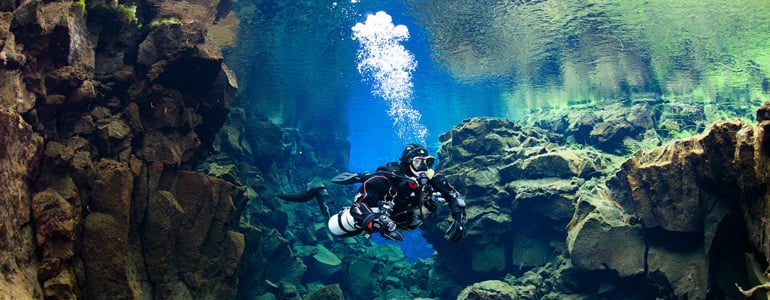
The Suunto EON Steel was created with the feedback of active divers from all over the world. Among them was our own ambassador Jill Heinerth. In case you don't know Jill, she's a renowned underwater explorer and 2013 recipient of the Sir Christopher Ondaatje Medal for exploration from the Royal Canadian Geographical Society. She's dived inside caves, underneath icebergs and in some deep waters all over the world – the ideal person to put the Suunto EON Steel through its paces. Here's what she had to say about Suunto's new launch: We're guessing you gave it a good testing! I first took the EON Steel to Christmas Island on a unique cave and deep ocean exploration project sponsored by National Geographic. The device was in its earliest form, but I could already understand the potential of the product. I wasn't really supposed to show it to anyone, so I had to quietly hide it in my pocket until we could snap a few photos! I finally had the chance to dive a fully functional device in France when other Suunto Global Distributors got to see it for the first time. The boat was buzzing with excitement form everyone that used it. And you also used in the Arctic right? Later, I took a unit to Newfoundland and on the Sedna Epic Expedition to the Arctic this summer. It was on these trips that I had the full opportunity to appreciate its full potential and functionality. I realize now that I have taken it from the warmest to the coldest conditions on the planet in the last year. I'm never very kind to my gear but it doesn't need to be handled with kid gloves. It is well built and simply works!
Jill Heinerth tested the Suunto EON Steel in both warm and cold climates. ©Jill Heinerth
What was the feedback you gave Suunto?What I saw in the Suunto EON was far beyond a typical diving computer. The EON is capable of taking a diver from their first dives, through technical and eventually CCR diving. The beauty is that the diver can customize their display and won't be mired in unnecessary features that they are not ready to use. As they progress, they can move to new modes of diving and use additional features. Furthermore, I envision the EON as more of a platform than a singular device that will need to be replaced. How do you like the product?I love the quality build and easy readability of the EON. I also love being able to plug it in for recharge or downloading.How is it different to previous dive computers you've used. The EON feels fully modern and fresh – more like my iPhone than a tired old diving computer display that looks like a relic of Windows 98. The EON interface is simple and intuitive and although it came with excellent instructions, there was no need to refer to them. The three button operation was obvious and features were easily found and activated. The audible alerts are also intuitive with unique, well designed sounds that make sense. The alarms alone can guide the diver to correct their behavior. Anything else? I was using the EON with a cave survey class recently and should add that the compass feature on the computer is extremely easy to access, very accurate and quick to respond. This feature can be used easily without losing other critical display information.
Jill Heinerth is a Suunto ambassador. Discover more about her exploits and photography here.
All images ©Jill Heinerth
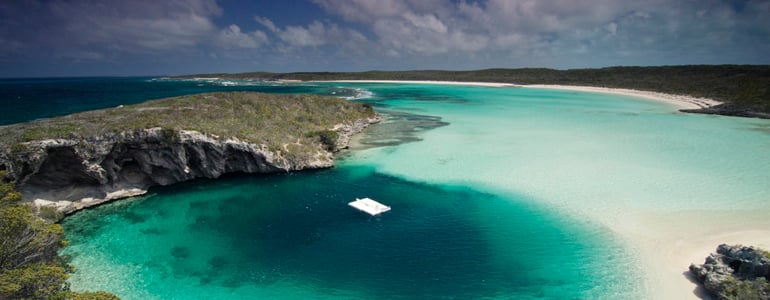

Suunto Vertical Blue: the venue that makes it so unique
The location for the Suunto Vertical Blue could not be more conducive to diving deep. Dean's Blue Hole is a natural wonder and is the deepest known blue hole in the world. Situated off Long Island in the Bahamas, it opens up approximately 10 m beneath the surface before plunging to 202 m. “It has a reputation for being the greatest freediving location on the planet,” says multiple record holder and Vertical Blue organiser Will Trubridge. “Its deep, warm and calm waters which are literally a step off the beach, provide the best environment for freedivers to attempt to break national or world records, or just to exceed their own personal bests.
Spectators on the beach. Photo ©zooom.at/Samo Vidic
“Spectators can watch the whole event from the warm Caribbean water, while feasting on local seafood salad that is prepared on the beach,” he adds. “It is an event like no other, not just in freediving, but in all sport.”One of the area's attractions is also its remoteness. Long Island, Bahamas is not as developed as many Caribbean destinations – just getting there is an adventure. Hotels and bars are laid back and you're unlikely to bump into lots of other tourists. In fact, during the nine days of Suunto Vertical Blue, probably every hotel guest will be a fellow freediver, which adds to the familiar atmosphere that makes the event so special. Dean's Blue Hole, the view from 15m. Photo: zooom.at/Agustin Munoz


