




Suunto Blog


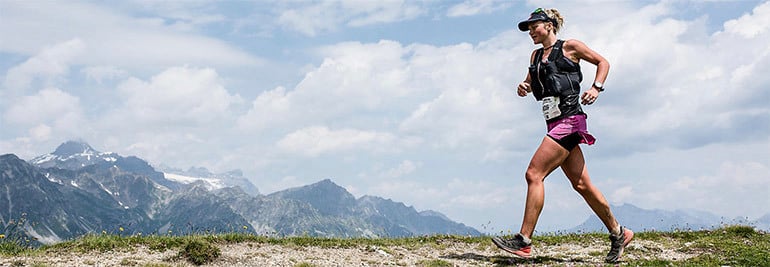
The benefits of the long run and how to do it right
With a stellar cross-tri career, including being the 2015 XTERRA World Champion, Josiah Middaugh combines his elite competition experience with his university education in sports science to provide cutting-edge coaching to his clients.
Josiah Middaugh is both an endurance coach and a pro athlete.
For endurance athletes, a central component of their training programme is the long run. “Running aerobically past the hour mark, the magic starts to happen at the cellular level, primarily increased capillary density and an increase in the size and number of mitochondria, the aerobic powerhouse of the cell,” Josiah explains. “This lays the foundation so you can achieve better adaptation from your specific race pace training and interval training.”
Long run benefits
Josiah says the list of benefits and adaptations coming from regular long runs is long. Here are his top three.
Efficiency improves as your body more efficiently burns fat at low to moderate intensity
Running economy improves so you are running faster at sub max heart rates.
The strength of your heart also improves resulting in a larger stroke volume and lower resting heart rate.
Common mistake
Athletes commonly believe unless they’re pushing hard, there are no benefits. It’s the “no pain, no gain” mentality. With the long run, slowing down is key. “Most people start too fast and fade,” Josiah says. “Most of your long runs should be easy and it might feel painfully slow if you are new to them.”
7 tips to help you do them right
Keep it aerobic
Aerobic refers to light exercise you can sustain over a long time. “Keep your long runs at least two minutes per mile slower than your current 10k race pace,” Josiah says.
Set a heart rate
“Set a heart rate ceiling for your run,” Josiah says. “Start with a low heart rate and watch it gradually tick up one beat at a time until you are in your target range.” Keep it there.
However, and this is important, don’t base your heart rate on the common age based calculation: heart rate zone minus age. “Age predicted equations will only work for about 20 percent of the population and the margin of error is plus or minus 20 beats,” Josiah says. “That's a 40 beat range!”
Instead, perform a four mile field test to find your functional threshold (FT) heart rate. Find your average heart rate for your best four mile (6.5 km) effort or use a 10k race pace. Check out Josiah’s spreadsheet to help determine heart rate and pace zones.
Consistency over frequency
Many athletes believe they need to do multiple long runs per week. This isn’t the case, Josiah says. Once a week is enough. “It's the consistency over time that makes the difference,” he says. “Results from incorporating a consistent long run can be noticed after about four weeks.”
Increase gradually
The duration and distance of your long run depends on what you are training for. “Progress your long run gradually adding only 10-15 percent per week until you approach your target long run distance,” Josiah says. “If you are training for a marathon or beyond, it might be necessary to undulate the distance of your long run if you are approaching 20 miles and/or three hours.”
5k/10k runners: there is no need to run for more than two hours.Half marathon runners: keep it race distance or less.Marathon runners: gradually build long run distance to just over two-thirds of the race distance, no more than 18-20 miles (29-32 km).
“For most athletes I have a rule of the longest run being no more than around three hours or 20 miles, whichever comes first,” Josiah says. “You have to weigh up the increased risk of injury and length of recovery needed when one runs over about 20 miles.”
Stay fuelled
For the best recovery and adaptations, fuelling before, during and after is important. Start fuelling early into your long run and ensure you’re also getting enough fluids. Fuelling during is especially important for runs 90 min or longer. “Fueling during a workout can improve the performance of that workout, help you recover faster from it, and boost your immunity,” Josiah says. “Shoot for about 200 calories per hour, or about one energy gel every 30 minutes with adequate water – roughly one 20 ounce water bottle (600 ml) per hour.”
Fuel well post run
“Your post-run nutrition is equally important,” Josiah continues. “Attempt to take in a quick 300 calories within 30 minutes of completing your long run with a focus on carbohydrates along with some protein and of course water. The primary goal of recovery nutrition is to restore your muscle and liver glycogen so you can recover faster. Do more with more, not more with less.”
Run in the morning
Morning is almost always a better time of day for your long run. “Elite running coach Joe Vigil advocates a long run early in the morning because you have more fluid in your intervertebral discs,” Josiah says. “Also, you are not yet fatigued from the days activities or from a long day at work. Most races are contested in the morning so it is ideal to set your biorhythms to the time of your next event.”
More running related articles:
7 tips for running hot weather
Learn how sleep can make you a better running
Improve your running with high intensity hill repeats
The lazy runner's guide to a marathon

Dancing across the landscape: the bliss of flow states
© Martina Valmassoi
Running for nearly a full revolution of the Earth brings up a whole palette of emotions and experiences. Elation, pain, resistance, boredom, wonder, blankness – repeat.
Suunto ambassador and Australian ultra runner Lucy Bartholomew has experienced the full range. One of the things that keeps her going are the incredible flow states she has experienced while running against the sun.
“The best way I can describe this feeling is like meditation,” she says. “It’s a state where there is no energy being exhausted and it’s a state of flow where you move, but time feels like it stands still. It’s hard to explain until you find it yourself.”
Lucy is currently preparing for the Western States 100 Mile Endurance Run. In last year's race, she unconsciously entered into a flow state, losing track of time. At one point she thought she had a very long way to go, and then in what seemed like moments later, most of the course was behind her. “It was like I was watching myself dance over the terrain and all I could think was, ‘I could do this all day’,” she says.
© Martina Valmassoi
Lucy’s three rules of flow
You can’t control it
As seductive and blissful as flow states are, Lucy doesn’t expect to experience them. She has no control of when they come and go. When they come, great, when they go, she remains detached. “They are part of the beautiful adventure of running and I just let them come and go as they do; like good moments and bad moments, you realise that nothing last forever,” she says.
Don’t chase it
Having a detached attitude is important because chasing flow states simply chases them away, Lucy says. Being present, happy and calm is her focus, which is the right mental state for a flow state to emerge from. And while she doesn’t chase them, they do support her running performance. “Especially in the longer stuff I think they provide a time where it feels effortless and wonderful,” she explains. “They give you confidence and reassurance that body and mind are comfortable”
Flow is not an excuse to space out
One potential downside of flow states is becoming so thoroughly immersed in the moment that you forget to take care of the basics. “During these moments I tend to forget about fuelling and pacing,” Lucy explains. “I run with blissful unawareness of what’s ahead because it’s all about focusing on the ‘now’. But when that moment passes, the reality of what you have got yourself into can hit you really hard.” While tasting the bliss of flow, make sure you remember to take care of the basics.
Lead images:
© Damien Rosso / Droz Photo
© Martina Valmassoi
Click below to read the articles in our series on flow:
Finding the flow
7 principles to help you find the flow


Follow Red Bull X-Alps 2019 live here!
And they're off! The ninth edition of the world's toughest adventure race, Red Bull X-Alps, has begun! After months of training and preparations, 32 athletes from 20 nations have set off from historic Mozartplatz in Salzburg, Austria, beginning a 1138 km race across the European Alps to the finisher's float in Monaco.
Fans around the world are getting comfortable and locking into the action. Anyone who has followed the previous editions of the race via its state-of-the-art live tracking system knows once you start watching it's difficult to stop; the drama, the obstacles, set backs, competition and break throughs make it almost addictive.
Red Bull X-Alps is a one of a kind race. If it's new to you, you might assume that because it involves paragliding it can't be too tough. Think again. This isn't sunny Saturday afternoon paragliding – it's alpine paragliding; it involves navigating huge mountain chains, glaciers, commericial flight paths. For this reason, only the very best pilots can enter the race.
It also demands next level endurance. The athletes are attempting to hike and fly across the length and breadth of the Alps, checking in at 13 turnpoints along the way. If the weather folds, they will have to hike insane daily distances with massive vertical gain. Each one of them will depend on seasoned outdoor skills.
The live tracking system makes it easy for fans to follow their favorite athletes. With many of the athletes coming from alpine nations, local fans will come out and cheer them on as they pass through their towns and villages. With this edition's route being considered the toughest race yet, this is one race worth tuning into.
Lead image by zooom.at/Red Bull Content Pool
READ MORE
THE SHEER AUDACITY OF RED BULL X-ALPS
CHASING THE EAGLE ACROSS THE ALPS


Learn how sleep can make you a better runner
Sleep and recovery are essential parts of training. Photo by Gregory Pappas on Unsplash There was little public interest in how to sleep well when Henri Tuomilehto first began working as a sleep doctor. “It was, ‘put your head on pillow and close your eyes’,” he says. “I think that attitude is changing, slowly and surely. The reason is that people aren’t doing well. I do a lot of research, and workers feel tired during most of the week. To be constantly tired is not normal.”
Henri is the head of Coronaria Sleep Clinic in Finland, which has six clinics across the country. He began working as a sleep doctor 10 years ago, after transitioning from working as an ears, nose and throat doctor. He participated in a course on sleep, and realised how little he understood the topic. “Sleep is not included in medical school,” he explains. “The body of knowledge amongst doctors is very low.
“There are not many people in the world who don’t feel pushed to work hard,” Henri continues. “On the other hand, our personal lives have also become more demanding, with a drive for travel, hobbies, and a strong goal orientation. It’s not only the work, it’s life itself. Whether you have a demanding job, or you’re a top athlete, it’s up to us to take care of ourselves.”
Henri has been working with athletes for eight years. He says learning to sleep well offers many positive benefits, and no negative effects. “If you aren’t sleeping well, bad things start happening,” he says. “I could write a book about what bad sleep does to you. Sleep decides what kind of person you are. It affects mood and behaviour.
“The tougher the times get, the better your recovery must be. When times are tough you have to respect rest and recovery. That is the only way you can stay balanced. Sleeping well is essential for this.”
Respect yourself
You have to accept this simple, obvious point, Henri says, otherwise the following tips are useless. The benefits will never come. “The tougher your life is, the more you need to concentrate on sleep and recovery,” he says. Begin making lifestyle choices that respect your need for rest and recovery. Henri says that might mean finding a new job.
Increase the quantity of sleep
Sleep at least 30 minutes to an hour more each night. “You will quickly notice the difference the next day,” Henri says. “You will feel much better. Athletes will see that they recover much faster. There is no easier way to improve your health and performance than with sleep. Keep your head on the pillow for one more hour. No need to sweat at all!”
Know when to back off
“Know your body and do not train if you’re not well recovered,” Henri says. “Many top athletes know and can sense how their body is doing. This is an important skill. If you’re not well recovered from training the day before, consider lightening the training or skipping it, and doing more recovery training, instead of pushing hard.”
Make the right choices
“Maintain a healthy lifestyle, and exercise regularly. There is no miracle cure, it comes out of what you do everyday, week after week.
Find a good rhythm
“Sleep is all about rhythm and pace, and alertness should be high in the morning, and low in the evening,” Henri says. “This is the right balance – try to master your alertness.” Avoid working late on computers, or doing sport in the evenings. Try to relax in the evening.
Get support
If you do lots of good things, and you still don’t feel good, then you might have a sleep disorder. “When people are tired, there is a reason,” Henri says. “Many people just give up. Never give up! Visit your local sleep doctor!”

7 principles to help you find the flow
If there’s one way to get athletes talking, it’s to ask them about their flow experiences. They sit up, smile, and recall incredibly vivid experiences they will cherish for the rest of the lives. In many ways, flow states are the big reward that keep us going. Kind of like the panoramic view at the top of a mountain that makes the arduous climb worthwhile.
Flow states are a basic human potential. They are available to all of us, not only elite athletes, musicians and artists. With a little knowledge, dedication and practice, we can increase the likelihood of having a flow state experience.
According to mental coach Markus Arvaja, flow states are thoroughly immersive experiences. In his work with top ice hockey, football and tennis players, he tries to put in place the conditions that make flow states, when performance becomes almost effortless, more likely. Markus is a certified sports psychology consultant and senior lecturer in coaching at Finland’s Haaga-Helia University of Applied Sciences.
Click here to read our article explaining the science flow states!
No challenge, no flow
“First,” Markus says, “you need to have a feeling of being challenged, but that you have the competency and self confidence to handle it.” It’s a delicate balance. If the challenge is too great, and you feel out of your depth, lacking the skills for an activity, then it’s unlikely you will experience a flow state. There’s simply too much mental activity happening.
On the other hand, if the task is too easy, and the challenge is too low, then you are likely to be bored, also making flow state unlikely. The sweet spot is somewhere in the middle. So consider what might be a reasonable challenge for you, one that you feel confident in your skills and ability to take on.
Feel positive
The next essential condition for flow state experiences is motivation. “It helps if you can achieve your optimal arousal,” Markus explains. “You need to feel that you are really into the activity.” There’s another balance here. One extreme is boredom, the other is being too excited, almost nervous with anticipation. In the middle is relaxed enthusiasm. One way to achieve this is to remember the reasons you love your sport, what it gives you, a few minutes before you perform. Or maybe listening to music motivates you.
Automate the skill set
The reason top athletes and musicians experience flow is because they have put in the countless hours necessary to master their chosen activities. Whatever your sport, you need to have automated the skills required to experience flow. The action should come naturally from the body without any need for thinking or assesment. “If you don’t trust your technique, it’s hard to achieve the flow,” Markus says. “It’s important you train so much that you are well prepared and can get let go and let it happen. The moment you start to think too much, it’s hard to be in the flow.”
One thought at a time
Did we mention that thinking too much might obstruct a flow state? In the mindfulness movement, teachers talk about the “monkey mind”. Like we often jump from one thought to another, a monkey jumps from branch to branch incessantly. Constant thinking is tiring and distracting. “One good thing to do is to shift your focus to the activity at hand,” Markus says. “For example, if you are a tennis player, you could totally concentrate on moving your feet. It helps to concentrate on one or two things only. If you can do that, you might start to notice the flow. Just play the game and enjoy!”
Have a plan
Having a plan is very helpful, Markus says. For example, if you’re going to run a trail race, the plan might include having your own guidelines for pace, fuelling and heart rate. Well before the race, you might study the course, even train on it to get familiar, so on race day you know when to push and when to take it easy. “Make a plan at home,” Markus says. “That’s what we do in team sports. The less you think on the day, the better you perform.”
Practice mindfulness
“Mindfulness certainly helps,” Markus says. “If your mind is free of worry, and unnecessary thoughts, you can stay in the present moment. It’s good to learn to quiet the mind, to turn off the inner critic. Learn to simplify and focus on one thing.”
Play!
Yes, it’s important to have goals, to have a plan, to automate skills, and to be motivated. But if we get too serious, we risk getting too severe with ourselves and then the sport we once loved can feel like a strain. “Just play!” Markus always tells his clients. “It helps when you are positive and having fun. You can’t force the flow!”


The sheer audacity of Red Bull X-Alps
Race organizer Ulrich Grill explains the 2019 route at a press conference. © zooom.at / Red Bull Content Pool
When the race organizers of Red Bull X-Alps announced the 1138 km route for the ninth edition of the race, many athletes felt it is the most challenging yet. Race veteran Paul Guschlbauer, for example, said crossing the Alps from Germany to Italy, while facing strong winds, will demand every bit of his skill and strength.
“We still have so much snow in the Alps and there’s only four weeks to go,” Paul says. “It was snowing down in the city a couple of days ago, and we have to go up to 2500 m, crossing it by foot if we can’t fly. When there is so much snow in the high mountains the thermal uplifts we need to fly don’t develop. It could be tricky up there!”
Click here to read about Paul and his quest to catch the Eagle!
There are only 1138 Suunto 9 Baro Red Bull X-Alps Limited Edition pieces. One for every kilometer of the race!
The Red Bull X-Alps is an adventure race unlike any other. In the 2019 edition of the race, starting June 16, 32 athletes from 20 nations around the world will attempt to hike and fly across the length and breadth of the Alps, checking in at 13 turnpoints along the way. If the weather doesn’t play ball, they must hike insane daily distances with massive vertical gain.
With nearly double the number of turnpoints than in previous editions, and five zigzag crossings of the Alps, the athletes are going to be pushed to their ultimate potential. And fans are in for a treat.
For adventure sports fans, this race is almost addictive to follow. The live tracking system allows fans to follow their favourite athletes in real time. The race crosses through five alpine nations – Austria, Germany, Italy, Switzerland and France – and whole villages come out and cheer the athletes as soon as they see via live tracking they are passing through.
To give you a sense of the sheer audacity and scale of this race, here’s a preview of the route!
Salzburg to Gaisberg
Distance covered: 5 km
It’s race tradition to start in Mozartplatz in Salzburg, Austria, surrounded by the classical and natural beauty of this historic alpine city. The first turnpoint is only five kilometers away, but don’t let that fool you. Athletes must race up Gaisberg (1288 m) carrying their paragliding packs. It’s important athletes pace themselves well here, and catch a good thermal to carry them onwards. Every race, fans assemble at the top of Gaisberg and wait for the athletes to cheer them on.
Gaisberg to Wagrain-Kleinarl
Distance covered: 59 km
It might not seem like a long way, but remember the numbers alone don’t show the skill and precision this race demands. In this section, the athletes must navigate through a small flight path across a mountain range, while avoiding the Salzburg airport restricted airzone. At most turnpoints, athletes must sign their names on a signboard. The second turnpoint signboard is located right in town.
Wagrain-Kleinarl to Aschau
Distance covered: 148 km
One a clear day some of the best competitors might reach this third turnpoint in Aschau (615 m), Germany on the first day. Most will reach it on the second, after crossing the Hochkonig mountain group. Consider this leg the quiet before the storm; next they must make their first crossing of the Alps, from Germany south to Italy.
Aschau to Kronplatz
Distance covered: 268 km
Snow covered peaks, glaciers, the Italian Dolomites, fierce winds all put the pressure on in this leg. The fourth turnpoint is located at the top of Kronplatz, a 2275 m mountain, making careful flying incredibly important. Misjudge, and the athletes might land in a valley, and have to slog up to the top.
Land in the wrong place, and athletes have to hike to a launch spot. © Felix Woelk / Red Bull Content Pool
Kronplatz to Lermoos-Tiroler Zugspitz Arena
Distance covered: 381 km
After one epic crossing of the Alps, athletes must turn back, and cross north again. Strong northern winds are common, making for challenging flying. Adding to the challenge is the restricted airspace zone around Innsbruck, Austria, requiring a diversion north into Germany. The fifth turnpoint is reachable only after circumnavigating Zugspitze (2962 m), Germany’s highest peak!
Lermoos-Tiroler Zugspitz Arena to Davos
Distance covered: 483 km
The meeting place of the world’s tremendously wealthy, Davos, Switzerland, gets tremendously exciting as the athletes fly through, landing by the lake to sign the sixth turnpoint signboard. From this point on, the weather begins to play an even bigger role.
Red Bull X-Alps demands precision piloting. © Felix Woelk / Red Bull Content Pool
Davos to Titlis
Distance covered: 592 km
Bad weather is every athlete’s worst nightmare in this leg. Unflyable, and they have to hike to the top of Titlis mountain (3238 km) to sign the board at the seventh turnpoint. Restrictions put in place by the race organizers make accessing the top even more challenging. There is only one village that athletes are permitted to climb to the summit by foot from. And that village is way off course from the most efficient flight path.
Titlis to Eiger
Distance covered: 630 km
Famous for its intimidating north faces, Eiger (3970 m) is an icon of European alpinism. The good news for the athletes is there is no turnpoint to sign in at on the summit! Instead, they must prove they passed within a 1500 m radius of the virtual cylinder.
Eiger to Mont Blanc
Distance covered: 751 km
In this leg, athletes must travel north from Switzerland into France, past Europe’s highest peak, Mont Blanc (4810 m). Like the previous leg, there is no signboard at the summit. Instead, they must traverse the northern side, keeping the mountain at their left.
Mont Blanc to St. Hilaire
Distance covered: 847 km
One of the paragliding meccas of Europe, St. Hilaire in France offers easy take off conditions. The athletes can sail in quickly and sign the board at turnpoint 10, before launching again and setting off to cross the Alps again!
Paul Guschlbauer power hikes to his next take off spot during Red Bull X-Alps 2017. © Sebastian Marko / Red Bull Content Pool
St. Hilaire to Monte Viso
Distance covered: 965 km
Crossing from the north to the south-east, athletes head to Italy’s Monte Viso (3841 m), where they must again prove by GPS tracking that they passed through a 2250 m virtual cylinder. While not as famous as previous peaks, race organizers say turnpoint 11 might be the toughest because of the mountains and valleys athletes must navigate through to get there.
Monte Viso to Cheval Blanc
Distance covered: 1045 km
This is a new, unexplored area to Red Bull X-Alps. By this point, the remaining athletes that haven’t dropped out will be exhausted. Cheval Blanc, a 2323 m peak in the French Alps, will be one of their last obstacles to navigate past. This time, they are required to pass on the west, either by foot or wing.
Cheval Blanc to Peille
Distance covered: 1136 km
Here, at last, the clock stops. The ceremonial end is 2 km below on a float on the shore of Monaco. The Peille turnpoint (13) is located at a mere 709 m, a pimp squeak compared to the massive peaks the athletes have already endured. However, it’s small size is deceiving; because of the many hills preceding it, it’s all too easy to pick a bad thermal and wind up landing, and being forced to continue on by foot, losing precious time.
Peille to Monaco
Distance covered: 1138 km
The landing float in the glistening Mediterranean Sea will be sight for the tired eyes of the courageous athletes that made it through the gauntlet. It’s time to pop the champagne!
Red Bull X-Alps 2019 begins on June 16. Stay tuned for more of the action!
Lead image: © Felix Woelk / Red Bull Content Pool


