




Suunto Blog


How to use HRV to optimize your recovery
Have you ever felt that your results are not improving despite consistent training, or that fatigue is not going away? The reason may be the quality of your recovery. In recent years, HRV (heart rate variability) has gained attention from elite athletes to everyday fitness enthusiasts.
This article explains what HRV is, how to interpret normal values, what may be happening in the body when HRV is low, and how to use HRV in daily life with a SUUNTO watch.
What is HRV? Understanding the basics of heart rate variability
HRV (Heart Rate Variability) is a numerical measure of the variation in time between consecutive heartbeats, known as RR intervals.
It is easy to assume that if your heart rate is 60 bpm, your heart beats exactly once every second. In reality, there are small differences in timing from one beat to the next. The size of these variations is HRV.
The difference between HRV and heart rate
Metric
What it means
Heart rate (HR)
The number of heartbeats per minute, for example 60 bpm
HRV (heart rate variability)
The amount of variation between one heartbeat and the next
HRV is important because it is about more than the heart alone. HRV works as an indicator that reflects the balance of the autonomic nervous system.
When the parasympathetic nervous system, responsible for relaxation and recovery, is dominant → HRV tends to be higher
When the sympathetic nervous system, associated with tension and stress, is dominant → HRV tends to be lower
By monitoring HRV over time, you can gain a more objective view of your recovery status and stress level.
How to check HRV with SUUNTO | Connecting your watch and app
SUUNTO watches automatically measure HRV during sleep. During sleep, the body is at rest, allowing the watch to collect reliable data that is less affected by daytime activity.
The measurement uses a metric called RMSSD (Root Mean Square of Successive Differences), which calculates the root mean square of differences between consecutive heartbeat intervals. This is a scientifically established method for quantifying HRV.
How to check your HRV data
Wear your SUUNTO watch while sleeping and turn on sleep tracking
Sync with the Suunto app after waking up, either manually or automatically via Bluetooth
Check your HRV data in the app’s Training Zone or mini widget
Continue tracking daily so your personal baseline can develop over time
SUUNTO calculates your personal “normal range” based on 60 days of data. At least 14 measurements are needed to define the normal range, and at least 3 measurements are needed for the 7-day average. Data appears soon after you start using the feature, but accuracy improves the longer you continue tracking.
What is HRV status? Understand recovery at a glance with color
In the SUUNTO app, HRV condition is displayed visually as HRV status. Your current 7-day average HRV is compared with your personal normal range and shown as a bar indicator, with colors that make it easy to understand your recovery status at a glance.
Display color
General status
Green
Good recovery, ready for training
Yellow
Recovering, moderate training load recommended
Red
Insufficient recovery, rest or reduced load needed
If HRV rises far above a certain standard deviation, it may also be displayed in yellow or red. This can indicate that the body is mounting a strong recovery response, through parasympathetic activity, to accumulated stress.
Interpreting your HRV baseline and normal range
HRV varies greatly from person to person, and there is no absolute value that is “normal” for everyone. Because HRV differs depending on age, fitness, physiology, and other factors, it is more important to track your own changes than to compare yourself with others.
General tendencies include:
Younger people and fit athletes → HRV tends to be higher
Older age or high-stress environments → HRV tends to be lower
SUUNTO uses an approach based on comparison with your personal normal range, calculated from 60 days of data. This helps you understand whether your current status is above, within, or below your own baseline.
What happens when HRV is low?
If HRV stays below your normal range, it may be a sign that your body has not recovered sufficiently. Possible effects include:
Lower performance, with the same pace feeling more tiring
Reduced immune resilience, making you more prone to catching a cold
Lower concentration and decision-making ability
Loss of motivation
A temporary drop in HRV after an intense race or high-intensity training session is a normal response. The concern is when HRV does not recover for several days or more.
Main reasons HRV may decrease
Training load is not the only reason HRV may drop. Many everyday factors can affect it:
Overtraining: Continuing high-intensity training without enough rest
Lack of sleep: Both sleep duration and sleep quality are closely linked to autonomic recovery
Mental stress: Pressure from work or relationships
Poor physical condition: HRV may decrease in the early stages of infections such as colds or influenza
Alcohol and irregular eating habits: Alcohol is especially likely to affect nighttime HRV
Is higher HRV always better?
The idea that “higher HRV is always better” is partly true, but it also needs context.
If HRV rises far above the upper end of your normal range, it may indicate that your body is using significant recovery resources in response to strong stress. This does not always mean you are in good condition. What matters most is that HRV is stable within your personal normal range.
How to use HRV in daily training
By adding HRV data to your training plan, you can train more intelligently and more effectively.
Seven practical steps for using HRV:
Wear your watch every night and turn on sleep tracking: Continuous measurement helps build your baseline
Make morning syncing a habit: Sync with the app and check your HRV status before planning the day. When combined with the SUUNTO Coach training plan, training sessions can be suggested automatically based on your HRV status.
Compare HRV with training load: Learn how your HRV changes after high-intensity workouts
Use it together with resting heart rate: Higher HRV plus lower resting heart rate is a sign of good recovery
Reduce training intensity when HRV is low: When the numbers are low, switch to an easy session or a rest day
Schedule regular recovery days: Look at HRV trends and intentionally rest 1 to 2 days per week
Track sleep, nutrition, and stress as well: HRV is most useful when viewed as part of your overall lifestyle
Tip: HRV works as a barometer for your condition. Rather than reacting to each individual number, focus on weekly and monthly trends.
SUUNTO watch models that support HRV
The following SUUNTO models currently support HRV measurement, meaning HRV tracking during sleep:
Model
Features
Suunto Vertical 2
Latest flagship model. A long-distance adventure watch with up to 65 hours of GPS and an LED light
Suunto Vertical
Up to 60 days of battery life. A long-distance model with offline maps
Suunto Race 2
Latest flagship model. A race-focused watch with high-accuracy sensors and a 1.5-inch AMOLED display
Suunto Race S
Compact and advanced. Training plans can be automatically optimized through integration with Suunto Coach
Suunto Race
Previous-generation Race 2 model. Fully supports HRV measurement and coaching features
Suunto Run
Lightweight runner-focused model at 36 g. Supports HRV measurement and sleep tracking
Suunto Ocean
A multisport watch built for both diving and sports, designed to perform underwater as well
Suunto 9 Peak Pro
Built tough. A durability-focused model popular with outdoor users
All models connect with the Suunto app to automatically record and analyze HRV data. Based on accumulated data, they provide personalized feedback on your recovery status.
Optimize your recovery with data
SUUNTO watches automatically handle everything from nightly HRV measurement to calculating your personal normal range and comparing it with training load. Move from “I feel tired” to understanding recovery through data, and improve the quality of your training with a more scientific approach.
▶ Check SUUNTO watches that support HRV
Summary
HRV is a metric that quantifies the variation between consecutive heartbeats. It is an important biomarker for objectively understanding the state of the autonomic nervous system and the body’s recovery status.
To recap the key points:
HRV is the variation between heartbeats. A higher value generally indicates stronger parasympathetic, or recovery-related, activity
Normal values vary greatly by individual, so comparison with your own baseline is important
Persistently low HRV can be a sign of overtraining, lack of sleep, stress, or other strain
Unusually high HRV may also be a body alert that needs attention
SUUNTO watches measure HRV automatically during sleep and show it as HRV status in the app
Tracking HRV as a daily habit helps you build smarter training plans
Using HRV is not only about improving performance. It is also an important habit for improving performance while maintaining long-term health. With a SUUNTO watch, you can read your body’s rhythm through data.
Start by understanding your body
HRV measurement is useful for everyday health management, even if you are not following a dedicated training plan. With a SUUNTO watch that measures automatically while you sleep, you can start making recovery visible from today.
▶ See the full SUUNTO watch lineup
Heart rate variability (HRV) measurement is available on Suunto Vertical 2, Suunto Vertical, Suunto Race 2, Suunto Race, Suunto Race S, Suunto Run, Suunto Ocean, and Suunto 9 Peak Pro GPS watches.
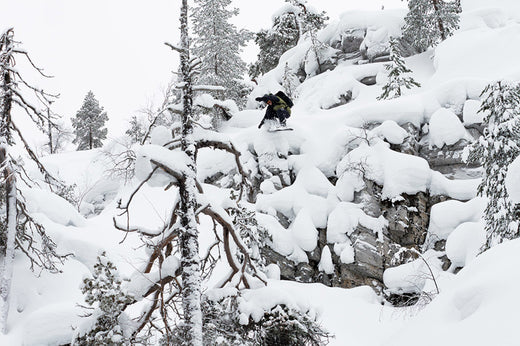

Arctic Lines with Antti Autti
New season, new adventures: Antti Autti continues his search of epic, unique and unridden lines in the frigid reaches of the Nordic north.
Arctic Lines is already in its fourth season! Get a sneak peek of the upcoming episodes in the season trailer, featuring Antti and his crew—including Jeremy Jones, Elena Hight, Tailer Gray Spinney, Miikka Hast and Fredrik Aspö. The series is filmed by Jaakko Posti, Markus Kumpula and Mikko-Pekka Karlin. Mikko-Pekka also edits the videos.
Freeride snowboarding in Finnish Lapland
In the first Arctic Lines episode of the new season, Antti Autti invites you to explore the incredible freeriding opportunities near his hometown of Rovaniemi, Finland, located right on the Arctic Circle.
Join him on a journey through the breathtaking landscapes of Finnish Lapland, featuring nearby fells, national parks, and boulder fields—hidden gems for freeriding adventures when the conditions are just right.
Exploring the untouched freeriding terrain of Nuvsvåg, Norway
In the second episode of the Arctic Lines season, Antti and his crew discover some of the most pristine freeriding lines we've ever seen—perfect snow, great access straight from the road, and a touch of problem-solving to make it all the more rewarding. Enjoy!
Stay tuned for the third episode of the Arctic Lines season!
Lead image by Simo Vilhunen
More content with Antti Autti
How to use avalanche terrain maps
8 steps for planning trips in the mountains
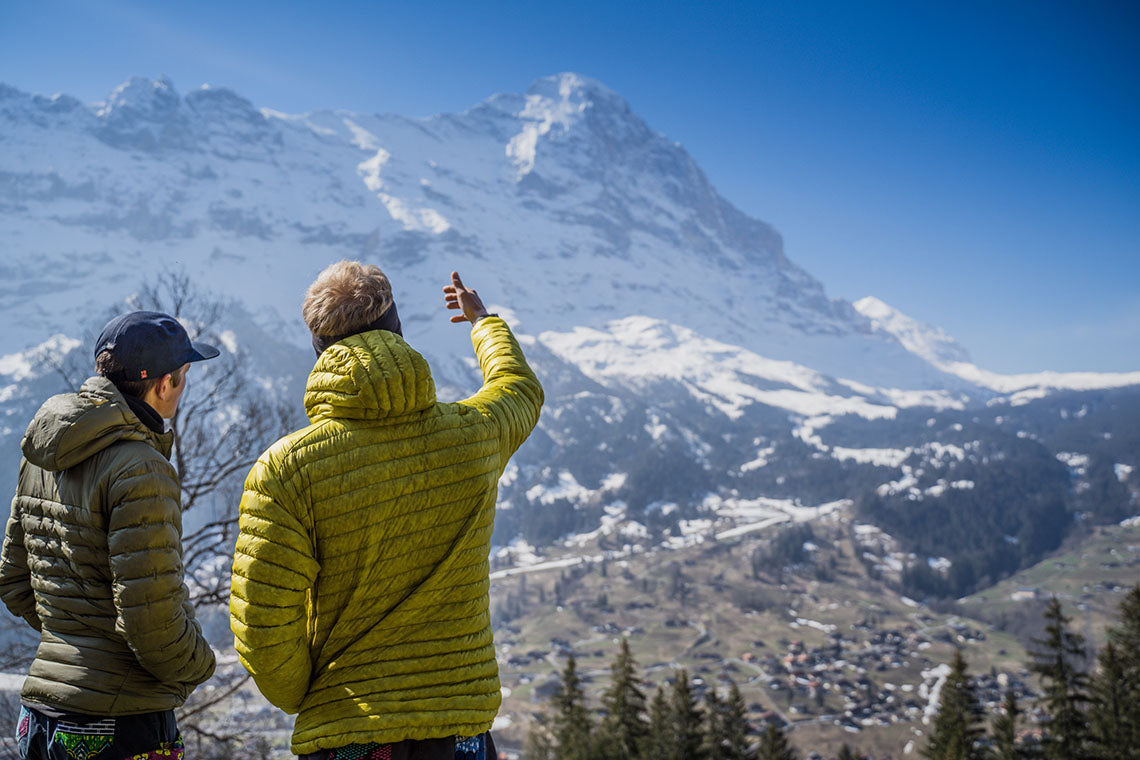

From Bikes to Peaks: The Historic Quest of Bike2Eiger
Join Suunto ambassador Philipp Reiter and his friend Martin Schidlowski as they retrace a historic journey to the Eiger North Face in their film, Bike2Eiger.
Suunto ambassador Philipp Reiter invited his childhood friend and climber Martin Schidlowski on an adventure that combined history with the modern-day challenges of mountaineering. Riding 600 km from their home in Berchtesgadener Land, Germany, to Grindelwald, the base of the Eiger in Switzerland, and attempting to climb its notorious north face was merely the backdrop for something more meaningful and thought-provoking.
We caught up with Philipp to discuss his film, Bike2Eiger. The film has been touring mountain film festivals for the past winter and is now released online. Read on – and watch the film below!
Philipp Reiter and Martin Schidlowski are friends since childhood.
You were following in the footsteps of some true Alpinist legends. Who were they and what was their story?
Anderl Hinterstoisser and Toni Kurz were two alpinists from the Berchtesgadener Land, where Martin and I also grew up. In the 1930s, they wanted to solve the last unclimbed problem of the Alps - the Eiger North Face. As they had no money to travel by train, they went from Bad Reichenhall to Grindelwald by bike. (Read more about them here.)
What is your connection with your adventure buddy Martin?
Martin Schidlowski is my kindergarten buddy. We have done many alpine adventures together, running, climbing, and mountaineering. Since the beginning, we have had the same mindset and passion for the mountains. He is a super good climber and alpinist, and I am more of the endurance athlete in our team.
Not the conditions the duo was hoping for.
The adventure started with three long days in the saddle. How did that go?
Haha, not very well! 1.5 hours after we started, we were stuck and had to push the bikes through 30–40 cm of fresh snow. Generally, it was super cold, and we underestimated the weight of the bags. We carried in all our gear – alpinism by fair means. The first night, the police also kicked us out of our little wood cabin as in Austria sleeping somewhere out counts as illegal camping.
Did you start to question why you didn’t simply drive to the mountain?
We wanted to experience the same as the two pioneers in the 1930s, which is why we also took the bikes.
Studying the route and the weather are part of any adventure.
Do you think Martin will ever again go on a bikepacking trip?
No, never! He had never ridden more than 100 km before, and on day one we had to do around 220 km! He did not like it.
And what about you…?
Well, generally, I like cycling a lot as to me it’s the perfect way to explore new areas at a decent speed. But on this ride, my leg warmers were too tight, and I got an inflammation around the knee, which was super painful.
First attempt on the Eiger: too much snow.
The weather conditions and the amount of snow made the first Eiger attempt hard. Is there anything you could have done differently?
At one point, there were just too many people with busy schedules involved in the project, and we couldn’t keep shifting the dates all the time. So, we had only a few time slots planned, and basically, only this one was left. That’s why we started in okay conditions, knowing that it might become too tricky to climb the face. And then there was too much snow.
Mountaineering has a lot to do with conditions. Usually, you need to be patient and wait for the right conditions. It’s never a good idea to rush it in the mountains.
Before the second attempt, the atmosphere was different. Can you explain a bit about what was happening?
When we came back one year later for the second try, we knew that the conditions were very good and that it was just a matter of us making it happen. Also, we didn’t do the bike approach again, which made it easier. When we went up to Eigergletscher to sleep, there was so much positive energy. I remember this situation well.
Second try, better conditions – but different route.
Could part of the mood be that you were so sure that with the right timing and team, you could just show up and finish the project?
Yes, exactly. It was almost like: We just need to climb it now, and that’s it!
Is it possible that the slower approach and early difficulties set you up differently?
Martin and I had done some more training together, like the Matterhorn North Face. We felt more ready than the first time and were more relaxed as we did not have heavy legs from three long days of riding.
Summit of the Eiger!
Did the adventure teach you something?
Most of the time, things come out very differently than we have planned, and we always need to keep the capacity to adapt.
Watch now: Bike to Eiger
Watch now: Philipp Reiter and Martin Schidlowski follow the footsteps of their local mountaineering heroes from the 1930s on a multisport adventure to the "Eigernordwand“.


Italy dominates the Vertical Week 2024
Suunto World Vertical Week, the thrilling celebration of the uphill challenge, united outdoor enthusiasts from around the globe in a collective pursuit of elevation gain on March 18–24. All human-powered activities by the participants were counted and every hill was turned into an opportunity to conquer new heights.
We have now analyzed the data to see which country and activity type climbed the most!
The usual suspects were on top of the country rankings
In the country rankings, the usual suspects – countries in the mountainous regions of Europe – were once again on top. This time Italy dethroned Austria for the number one spot with over 400 meters of ascent per activity on average. Switzerland also broke its way to the top three.
The only non-European nation in the top 10 was South Africa in ninth place. Greece made it to the top 10 for the first time.
Average ascent meters by country
When looking at the total ascent, meaning adding up the ascent in all the activities in a nation for the Vertical Week, France took the top spot from Spain and Italy climbed past Austria on the third spot.
Top 10 for total ascent meters
France
Spain
Italy
Austria
Germany
Switzerland
USA
Poland
United Kingdom
Czech Republic
Skiers – and the Japanese trail runners – were above the rest
In the activity type rankings, there weren’t any major changes: ski touring activities had the biggest average ascent, followed by mountaineering and trail running. The average ascent for all the ski touring activities came close to the magical 1000-meter mark but was still a bit below the summit. Maybe next time!
Average ascent meters by activity type
While the skiers had the biggest days on average, when looking at individual activities with over 1000 meters of ascent, trail runners were in the lead. In 2023 the order was the other way round.
In the individual performances, four people really stood out: They all had tracked over 20.000 meters of human-powered ascent during the Vertical Week. Impressive!
And while looking at the big picture, many people seemed to push it more than last year: For a top 10% placing, you needed to climb 2275 meters during this year’s Vertical Week. That’s almost 373 meters more than in 2023.
The same change is visible in the top of the top: To make it to the top 3% of the Vertical Week participants, you needed to climb 4062 meters, 472 meters more than in 2023.
The country rankings winner Italy is very strong also in different activity type rankings. They earned a podium spot in six out of ten different categories!
Ski touring
Slovakia 1160m
Switzerland 1062m
Poland 1051m(Average for all countries 953 m)
Whoop whoop, we have a new winner in the ski touring category! The Slovakian skiers ascended more than any other nation in any of the categories. It’s also clear that the 1000-meter mark is a clear goal for skiers, and the entire top 3 broke that limit.
Trail running
Japan 1076m
Italy 674m
Greece 600m(Average for all countries 457 m)
This is amazing: The Japanese trail runners were the only ones breaking the 1000-meter mark in any other category than ski touring. They kept their well-deserved top spot in trail running for another year. Congratulations!
Mountaineering
Italy 865m
Finland 838m
France 799m(Average for all countries 633 m)
Italy continued their dominancy, but the second place was a surprise: How did such a flat country as Finland make its way to second place?
Mountain biking
South Africa 645m
Italy 547m
Slovenia 540m(Average for all countries 393 m)
The South Africans were active on the bike, climbed more than any other nation and ensured that also the African continent was presented in the rankings.
Gravel cycling
United Kingdom 656m
United States 440m
Italy 421m(Average for all countries 298 m)
Gravel cycling was a new addition on the list this time. And, not surprisingly, the ascent meters for gravel cycling fell somewhere between mountain biking and cycling. The UK took the top spot in the activity ranking clearly.
Cycling
Spain 435m
Italy 335m
Slovenia 286m(Average for all countries 210 m)
Everyone knows that cycling in Spain in the spring is great. And they seem to know it themselves, too!
Trekking
Japan 850m
Switzerland 575m
Austria 541m(Average for all countries 351 m)
The Japanese took the top spot in two categories, trekking and trail running. Two category wins was only matched by Italy (number one in mountaineering and hiking).
Hiking
Italy 438m
Slovakia 386m
Slovenia 351m(Average for all countries 240 m)
Yet another category with a strong Italian performance. Forza!
Nordic skiing
Switzerland 363m
Austria 324m
Norway 305m(Average for all countries 216 m)
While the top three countries in the cross country skiing category were expected, what was surprising was the change in the podium lineup from the previous year: None of these three were on the podium last year.
Running
Czech Republic 152m
Switzerland 138m
South Africa 130m(Average for all countries 95 m)
Running, the most popular Suunto activity in general, is not focused on the vert. Despite the smaller numbers, there still is a winner: Czech Republic took the number one spot!

Let's celebrate Suunto and BOKAMI partnership!
We are happy to announce our cooperation with the Boky Západných Tatier organized in Slovakia on March 14-16, of which Suunto is the main partner!
Celebrate this great partnership with us and take advantage of an exclusive 20% promo code on select Suunto products by entering the following in your shopping cart: SUUNTOxBOKAMI.
More details below.
Learn more about the BOKAMI event: Bokami Západných Tatier is a three-day team race held under the auspices of the Slovak Mountaineering Association JAMES. The race follows a long tradition of ski mountaineering races in the Western Tatras that dates back to the early 1990s. It is the only multi-day and at the same time the most demanding ski race in Central Europe, which has gained a reputation in the wider European context.
"BOKAMI" in numbers: 3 days - 3 stages - 3 valleys = 60 km / about 6600 m of elevation gain.
Promotion details:This promotion is active from 14 - 28.03.2024 on Suunto Vertical and Suunto Race products. The promo code is active for the first 1000 users. One user can buy a maximum of 3 products. The promo code can be combined with other discount already displayed at apac.suunto.com. Not cumulative with any other promo code. The promotion cannot be applied to refurbished products and customized products.


Celebrate the uphills during the 10th annual Suunto World Vertical Week!
Welcome to Suunto World Vertical Week – a thrilling celebration of the uphill challenge! From March 18 to March 24, outdoor enthusiasts from around the globe will unite in a collective pursuit of elevation gain, turning every hill into an opportunity to conquer new heights. The beauty of Suunto Vertical Week lies in its accessibility, taking place everywhere, and embracing all human-powered activities.
Whether you're a trail runner, skier, hiker, mountaineer, cyclist, or any other adventurer, the Vertical Week invites you to climb as much as you can. The ultimate goal? To determine which nation and activity type emerges victorious, boasting the most elevation gain.
Joining the Vertical Week is simple – just open the Suunto app and click 'join' in the Vertical Week message. All your human-powered activities during the week count.
Join now and elevate your adventure!
Follow your progress in real-time
The Vertical Week sport app shows the current activity ascent (top), total ascent (bottom) and your total compared to Vertical Week participants in 2023.
You can follow your total ascent for the Vertical Week with the new SuuntoPlus Vertical Week sport app: The Vertical Week sport app will count every meter you climb and show your cumulative ascent for both the current activity and the entire week. You can also see how high you would be ranked in the previous Vertical Week challenge. Are you already in the top 30% or perhaps even the top 5% of participants?
Go to the SuuntoPlus Store in Suunto app and sync the Vertical Week sport app to your watch. Before starting your first activity of the Vertical Week, select the sport app in the activity settings.
Learn more about SuuntoPlus sport apps.
Join our community events in Innsbruck and Girona
If you are spending your Vertical Week in or around Innsbruck, Austria, or Girona, Spain, you should check out our community events: In Innsbruck we will be running with BASEFIVE on March 18 and skiing on March 20 and 23. In Girona we will go on a community run together with the Overland crew on Saturday, March 23.
Learn more about Suunto x BASEFIVE Vertical Week events in Innsbruck and join!
Learn more about Suunto x OVERLAND Vertical Week events in Girona and join!
Data from previous years
Check out which sports and nations have captured the podium places during the past years. Will this year bring changes to the top places? Now is your chance to affect on this year's results by collecting as many vertical meters as possible.
2023 - 2022 - Summer 2021 - Winter 2021 - 2020 - 2019 - 2018 - 2017 - 2016
Read more
How to use the terrain maps in your Suunto Vertical
10 Suunto features for vertical gain
Suunto World Vertical Week 2023 Big Data


