




Suunto Blog


15 tips for beginners to fall in love with snorkeling
Learn everything you need to know to confidently explore the underwater world with just a mask, snorkel and fins.
Dipping beneath the surface of the ocean opens up an incredible new world. It can expand our minds and bring us closer to our blue planet. With snorkeling, there’s no need for dive training or to carry heavy dive equipment. All you need is a good mask and snorkel, fins, a rash guard, reef-safe sunscreen, basic knowledge, and the new Suunto 9 Peak Pro so you can use the “snorkeling mode”.
Are you planning on trying snorkeling for the first time? Or maybe looking for the best snorkeling locations for kids so you can share the experience with the whole family? Then before you go, read our 15 tips and keep everyone safe and ensure you all fall in love with snorkeling.
Become a good swimmer
This tip seems obvious and easy to overlook. But the better swimmer you are, the more enjoyable and relaxing your snorkeling trip will be. And being a good open water swimmer isn’t as straightforward as it sounds. It requires training and practice.
If you live far away from the ocean, or rarely go swimming in open water, then we recommend spending some time working on your swimming before your family snorkeling trip. Otherwise, you might find it strenuous rather than fun. Consider getting swimming lessons, and practice open water swimming. It’ll go a long way.
Read more about open water swimming!
Learn to relax in the water
This tip is really a continuation of the previous one. Being a good swimmer isn’t only about fitness, strength and technique. Though those are important for snorkeling in open water. It’s also about a kind of trust and relaxation. That’s also why it’s valuable to get lessons and spend time in open water before your snorkeling holiday.
The upshot is when we trust that our body can float, we no longer flail around in the water trying to keep ourselves from sinking. Instead, we can relax, let the water hold us and conserve our energy. This is another aspect of swimming we need to practice. It takes time to gain that trust.
Learn to breathe through the mouth
This is something you’ll start to learn when you get swimming lessons. It feels unnatural to begin with. It’s helpful to become familiar with before going on your snorkeling trip. While snorkeling, you’ll breathe in air through the snorkel above the surface into your mouth, and out through your mouth.
You can begin getting a feel for this before your trip by visiting your local pool and practicing with a mask and snorkel. Hold on to the edge of the pool with your face down in the water and your body and legs stretched out. Kick your legs to keep your body close to the surface and smoothly breathe in through the snorkel. By breathing calmly and deeply, you avoid building up C02 in the body. Breathe out through the snorkel slowly, too.
Start at your own level, but try to work up to extending your in and out breath to around four to five seconds.
Get snorkeling lessons
You’ve arrived at your snorkeling destination and the whole family is eager to get started. Slow your roll, and see if there’s somewhere you can get snorkeling lessons or get a guided session. You’ll learn more that way about gear, technique and what to look for. You’ll feel more confident and have more fun.
Get good gear
Invest in good quality snorkeling gear and learn to fit it properly. This will reduce annoying interruptions and obstacles when you and the family are out in the water. If you’re renting gear at your snorkeling destination, try to rent newish gear that’s the right size.
Position your snorkel properly
This is another thing you can practice in a pool. While snorkeling, the back of your head should be above the surface. Your snorkel should be on a 45 degree angle with roughly half the tube above the surface. Keep your head down and look a little ahead. This will prevent you from accidentally sucking in and swallowing water.
Make sure your mask and snorkel fit you and are positioned properly.
Expel water this way
It’s normal for a little water to get caught in the snorkel’s reservoir. It’s annoying because it interferes with having a smooth breath. If that happens you need to clear it. To do that, take a full breath and exhale forcefully to blow all the water out. Inhale slowly and gently. All clear!
Prevent mask fogging
Next to having water in your snorkel, a foggy mask is the most annoying thing. It stops you from really relaxing and taking it all in. There’s tons of blog article explaining how to prevent this, but it comes down to this:
Clean your new mask with dishwashing liquid before going snorkeling.
Apply a defogging solution before your sessions.
Rinse your mask once you’re back on land.
Go with a group or a buddy
We don’t recommend going snorkeling alone. Ever. It’s safer and more fun to go with a group or at least with a buddy. That way you can keep an eye out for each other. And make sure you tell someone onshore when and where you’ll be going and when you’ll be back by.
Track your snorkeling session with a Suunto 9 Peak Pro
The new Suunto 9 Peak Pro GPS sport watch is the fastest, most powerful watch we’ve ever made. It has a best in-class battery life and is the first Suunto watch to include a snorkeling - or mermaid sport mode.
You can track your snorkeling session, including your dives down to -10 m, with this watch and it will tell you your depth while you’re out there. Back on land, you’ll be able to see more info about your dive in Suunto app, including a map of where you swam, distance, duration, heart rate and depth.
Read more about how to use the snorkeling mode here!
How to dive down
This is a skill worth learning because it will allow you to see marine life more closely and in detail. Just remember, don’t push it. The big risk of breath holds is they can lead to blackouts and having one underwater is dangerous. So consider getting professional lessons and start with shallow dives and follow your max depths and time it on your watch. Then gradually extend the times and depths as your capacity increases.
Here’s how to dive down: take a deep breath (but do not hyperventilate) and roll forward by bending your upper body to a 90 degree angle. Your feet will be vertical above the surface and once they hit the water start kicking and swimming down. Make sure you equalize by pinching your nose to avoid any discomfort in your ears as the pressure changes. Always do this with a buddy who stays at the surface while you dive.
Keep it calm and sheltered your first time
This tip is especially important if it’s your first time and you’re not familiar with swimming in open water. Choose a time that’s calm — you’ll get better underwater visibility that way too — and in an area that is sheltered from wind and swell. Then you won’t get pushed around as much and use less energy. Use MyRadar to keep track of the weather.
Learn to read the ocean
This is another thing that takes time. It’s especially hard to learn if you have never lived close to the sea. One of the best ways to learn this is to talk to an informed local and ask them about the currents, tides, dominant wind directions and other things to look out for. With this local knowledge, you’ll be better able to choose your time and locations.
Prepare your body before taking the plunge
You know your location and time, you have all the gear and are set to go. One last thing — get your body ready. Here is how:
Make sure you are well hydrated. Drink plenty of water in the hours before your session.
Don’t go out with a full or empty stomach. Have a snack shortly before you go.
When you get to the beach, spend 15 minutes stretching and doing mobility exercises to warm up your body.
Know your limits
You want to have a snorkeling experience that’s pleasurable and makes you and the family love it and want more. So know your limits and the limits of everyone you’re going snorkeling with and respect them. This specifically relates to depth, conditions and duration.
If you or someone else in your group isn’t confident in deeper water, don’t push it. Stay in shallower water where they feel comfortable and will have a good time. Same principle for conditions; if a wind whips up while you’re out there and it makes it more challenging for your kids, then don’t be afraid to call it a day. There’s always tomorrow.

7 adventure films to watch over the holidays
Over the course of 2021 we’ve had the pleasure of being involved with some excellent adventure films. Now the holiday season is upon us, we decided to curate our favorite short films for you so when you have some downtime soon you can kick back and watch them. Scroll down for our seven favorites!
From Rails to Trails
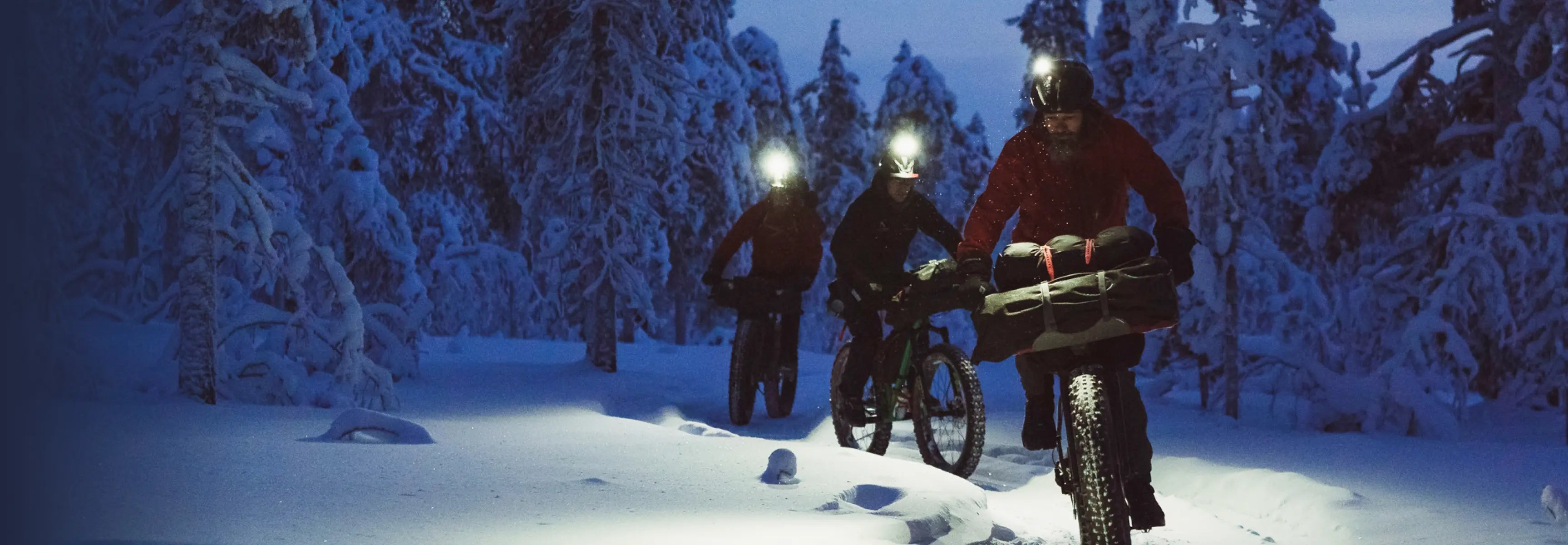
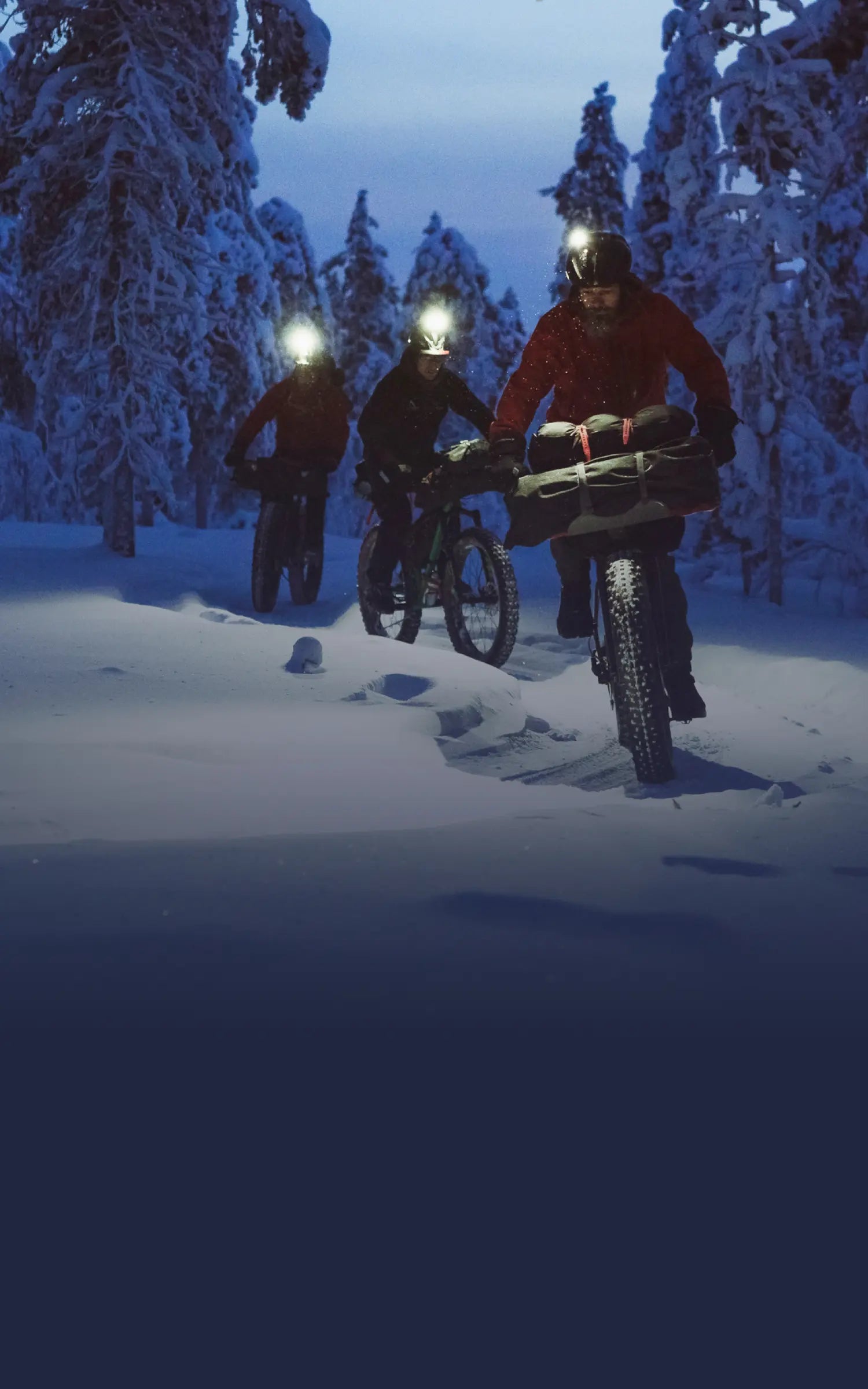
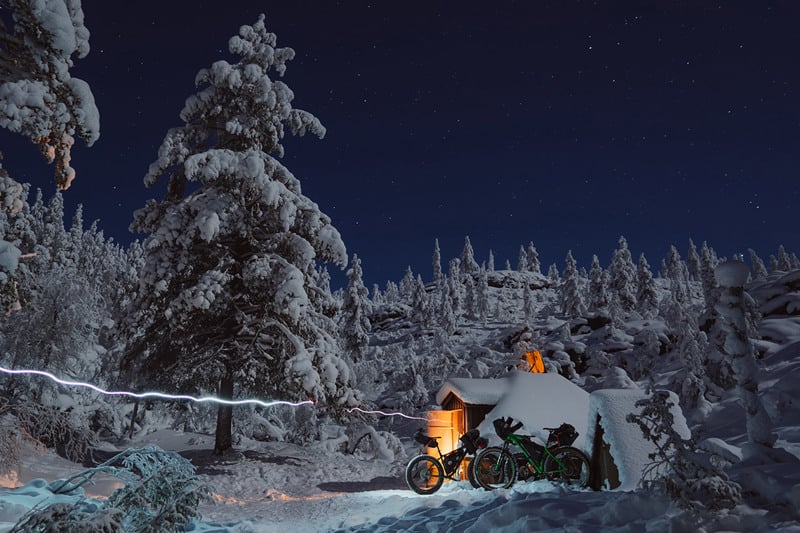
Just watching this will make you shiver. Our very own bike lover Antti Laiho and his buddies Timo Veijalainen and Erkki Punttila went on an overnight bikepacking tour in the Finnish Lapland in the middle of winter. The landscapes look like something from a fairytale. Truly magical.
Rails to Trails from Kona Bikes on Vimeo.
Peak creators
Since forever there’s been a connection between creativity and the great outdoors. In this series of films we talk to an artist, a photographer, an architect and a trail builder about their creative process and how the outdoors inspires them.
Canary in the coalmine
Decorated technical diver, explorer and filmmaker Jill Heinerth explores the veins of the Earth. She sees close up how the impacts of humanity are affecting our planet so considers herself a canary in the coalmine.
How fast can Kilian run a vertical k?
This film shows just how much the Kilian pushes himself during his lightning fast ascents. He might be the GOAT mountain athlete, but that doesn’t mean it’s a walk in the park for him. Watch him attempt to break the fastest vertical k record and push his lungs to their limit.
Immersed
Swedish slopestyle mountain biker Emil Johansson won the 2021 world championship and is now the most successive slopestyle rider in history. But it very nearly wasn’t to be. A mysterious autoimmune disease came close to derailing his dreams. This film is about his journey.
Finding myself
Suunto ambassador Sami Sauri fell in love with cycling as a teen and says it gave her a new purpose in life. Since then she has done epic bikepacking tours across the US, and elsewhere. When she’s not riding, she might be out surfing or trail running.
Arctic Lines season two
Finnish freerider Antti Autti has embarked on the second season of his Arctic Lines project, the goal of which is to ride 30 lines above the Arctic Circle. He and his team document each trip and release a film about the experience. Watch as they face brutal cold, the polar night and their physical limits in the pursuit of sweet, sweet rides.
Lead images by Jaakko Posti Photography

Vertical Blue 2021 takes off
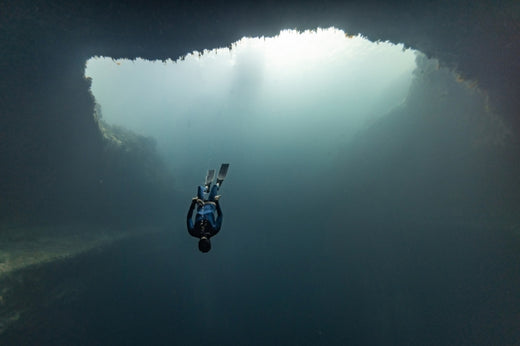
William Trubridge prepares for a depth dive.
It’s the first international freediving competition since the start of the COVID-19 pandemic so a lot of excited freedivers are arriving at Dean’s Blue Hole pumped to dive deep at Vertical Blue 2021. Running between 13 to 23 July, it’s likely to be the most celebratory edition in the event’s 11 year history.
The first Vertical Blue since 2018, organiser and Suunto ambassador William Trubridge has been working around the clock to make it happen. The ongoing travel and health restrictions due to the pandemic have increased his work load 100 fold. But knowing how much it means to the freediving community makes it all worthwhile.
“In these last 18 months a lot of people have been trapped and locked down, not able to travel or go to the sea, but everyone has been continuing to train and they are all amped to get back into the water,” William says. “It's the first big freediving event since COVID hit so we will get a chance to see where all the top athletes are with their training, and what they have been able to improve on, or whether they are behind now because of a lack of depth training. First indications are that everyone has been training really hard and there are going to be some epic performances.”
Follow the action at Vertical Blue via YouTube live!
All the top athletes in depth freediving, in all three disciplines, are attending this edition. “All the current record holders will be in attendance and most of the people who are within reach of world records,” William says. “At the last Vertical Blue in 2018, there were some days when the average depth amongst men and women across all disciplines, including no fins, was deeper than 80 m. This year I think it could be even deeper. In training at the moment the dive line is rarely less than 100 m. We're going to see some mind blowing performances.”
Check out our visual guide to freediving
William and his arch freediving rival Alexey Molchanov will be competing – a now longstanding tradition – for the top spot in Constant Weight without Fins (CNF). The stress of organizing the event isn’t giving William the dedicated training and recovery time he needs to be at his very best. Moreover, he isn’t sure he’ll be anywhere near his best. Depth freediving is a sport where being in a relaxed state is essential for success.
“My training was going very well up until about a month ago,” William says. “I was making steady progress towards attempting a world record in Free Immersion. I'd gotten within a couple of meters of achieving it. I was doing beautiful, comfortable, relaxed dives to that depth. That's when stuff started to go downhill with the organisation work and the stress ramped up.
“Hopefully if I can get everything resolved, then take a few days rest, and then build my training back up again, maybe by the end of the event I might be able to do some kind of a dive,” William continues. “I doubt it will be a world record dive. But never say never, fingers crossed, let’s see what happens.”
All images: © Daan Verhoeven

The canary in the coal mine
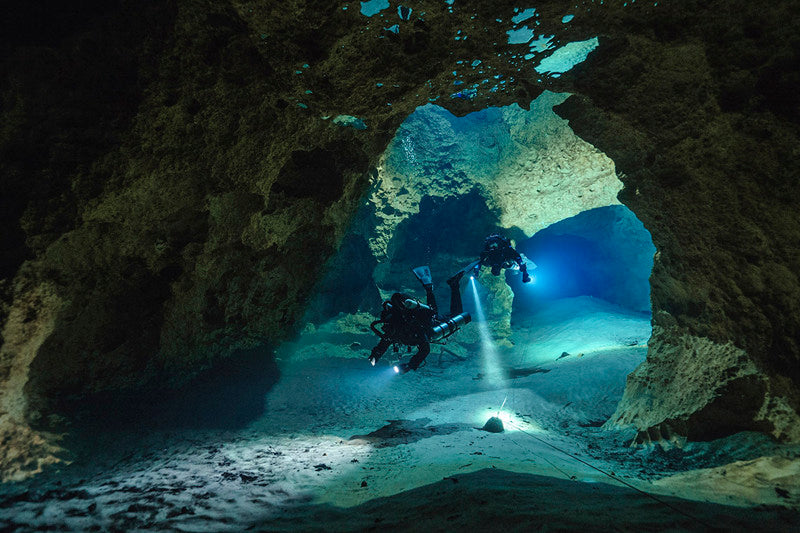
Suunto ambassador, pioneering underwater explorer and film maker, Jill Heinerth has dived in icebergs, explored deep underwater caves, and more recently documented the impacts of climate change in the Arctic Circle.
Capturing our changing planet and educating the public about the growing threat of climate change is what is increasingly moving her to dive and explore our blue planet. On World Ocean Day 2021, Jill shares insights from her 20 year career.
Press play to watch her incredible journey!
Where are you now and how has the pandemic treated you?
I live in a 200-year-old mill in a small town near Ottawa, Canada. It has actually been a bit of a gift to be home with my husband for a prolonged stretch, but I am certainly eager to get back to some of my travels. This has been a good time for rest, learning, and incubating new ideas.What’s been inspiring you lately?
I wrote the foreword for a new book by Frauke Bagusche. The book is called: The Blue Wonder: Why the Sea Glows, Fish Sing, and Other Astonishing Insights from the Ocean. I found it fascinating and quite inspirational.
What are you working on at the moment?
I'm exploring Canada's longest underwater cave system and documenting some of the endangered species I have found there. I am also actively involved in a documentary and educational initiative about the Great Lakes Watershed. With many of my projects on hold from COVID, it has been great to be involved in important projects close to home.It’s mind blowing how many incredible expeditions you’ve been on – how have they changed you?
Absolutely! As I get older, I feel more urgency to work on projects that really matter and that will leave a lasting educational legacy. I am drawn to work that communicates about water literacy and climate change. I think that motivational stories from the natural world and exploration can connect people to critical global issues.Is the underwater exploration and expedition scene attracting more women now?It is not happening quickly enough for my liking, but I am seeing more women involved in exploration. I think there are a lot of women that face serious roadblocks; difficulty getting career positions and opportunities.
You say you’re the canary in the coal mine – what are you seeing right now in terms of alarm bells?
Oh gosh, where should I begin? I'm 56 years old and I am truly shocked by the magnitude of change that I have seen in the natural world in my lifetime. The coral reefs I dived on 30+ years ago are dead and devoid of fish. The sea ice in the north sets up later and thaws earlier each year. The lakes that I learned to dive in have been grossly affected by invasive species. We are living in a rapidly transforming world. It frightens me, but I do not give up hope.What does humanity need to do to avoid crossing the tipping point?
I hope we have not already crossed the threshold, but I would say that we all need to stay optimistic. We might not have the big answers to the world's most pressing issues, but we all know small actions and changes that we can make in our lives that help move humanity in a positive direction. We need to urgently address the warming planet and water quality issues. They are all connected. Our actions against COVID-19 are a good example. We are delivering a vaccine that might have previously taken a decade to develop and test. We have the brain trust and the explorers that can solve big problems when we all work together.How has the development of Suunto dive tech aided your journeys?
I've been diving Suunto products for my entire career. They have always been innovative, well-built, and reliable. When somebody opens a box with a brand new Suunto product, they likely feel as I do... that this tool is going to accompany me on some of life's greatest adventures! One of the Suunto computers I used for record-breaking dives in 1998 is now on the wrist of a young whale researcher in Patagonia. I've passed on my older devices to others that are still using them today. That is quite an endorsement!Do you have any dream explorations you’d like to do?
I have not yet visited the Galapagos or Cocos Islands. I sure hope to make that possible one day. In the interim, I will have lots to keep me busy!
All images and video by Janne Suhonen, Divers of the dark


How pressure affect scuba divers - an introduction to diving
We've conquered all the territories above 0m and under. In this article, we set out to show you and explain what happens in your body as you descend into the big blue world.
Diving is an excellent activity with the potential for one-of-a-kind experiences you can only get in an aquatic environment. Our land-loving bodies, however, can react negatively to diving if we are not careful. We are drilling down the essential know-how of diving so you can enjoy it to the fullest.;
Pressure changes: your body needs to adapt.
There are constant fluctuations in the surrounding pressure while we hike or dive into the ocean. Pressure changes 1bar/14.7 PSI for every 10 meters and it increases much faster underwater because water is denser than air. The pressure we face underwater, also called ambient pressure, is caused by the water's weight. The deeper we dive, the greater the ambient pressure will become. Ten meters down is already twice the pressure at the surface.
Discomfort in the ears when taking off in an airplane is also felt just diving down to the bottom of a pool that is three meters deep. When a diver descends, the surrounding water pressure grows. The pressure change underwater will affect spaces that contain air, such as your ears, sinuses, BCD, and mask. But the most significant impact is on your circulatory and respiratory systems and the latter need to be taken seriously because they can lead to major health risks.
What happens after you immerse into water or hike up a mountain?
Our bodies are full of dissolved gases from the air we breathe. Our bodies actively use oxygen for us to function. Other gases, the so-called inert gases like nitrogen, are not used by our bodies but are stored in blood and tissues. While diving, the pressure increases, and our body is exposed to a higher absorption rate of nitrogen stored in our tissues. The amount of inert gas dissolved in our bodies depends on the ambient pressure. Why is it that e don't feel this effect? Because our body is mainly made up of liquids, we are not exposed to pressure. Nevertheless, we feel it in our ears and sinuses because of the air trapped in them.
When we ascend from a dive, the ambient pressure is reduced and the dissolved nitrogen needs to come out (off-gas). We have no problems as long as nitrogen comes out slowly and in a controlled manner without significant pressure differences. If thepressure is released too fast; the nitrogen will come out too fast and cause DCS, also known as decompression sickness, or "the bends."
The amount of gases dissolved in our bodies depends on the ambient pressure around us. That means that every gas has a specific partial pressure, and the combined pressures of the gases in our bodies stay in equilibrium with our environment. Your body is fully saturated with gases at the elevation where you can be found for an extended time. Here are two scenarios that will explain the changes in your body:
If you hike up a mountain, air pressure drops, making your body hold less gas. Your tissues are at this point supersaturated relative to the new ambient pressure. Our bodies release gas through diffusion and breathing to get back to equilibrium, also known as off-gassing.
When you go down to sea level and then underwater, you increase your bodies' pressure, allowing more gas to be carried by blood and tissues. Again, to equalize the pressures, your body takes on more dissolved gas from the air you breathe. This is called on-gassing.
Does the same thing happen when you ascend from a dive?
If we come up from a dive too quickly (therefore, dropping ambient pressure), the natural off-gassing mechanisms are overloaded. The dissolved gas in our bodies comes out of the solution too fast, forming bubbles that can cause decompression sickness or DCS. There are different stages and forms of DCS, and symptoms can range from minor joint pain and skin irritation to severe nerve damage and death. For a diver with DCS, the symptoms may already start while still underwater, or it may take several hours after surfacing. In some cases, the symptoms may not show for several days. Nevertheless, most cases are treatable with, for example, recompression chamber treatment (hyperbaric oxygen treatment).
Diving is made easy to understand and more accessible.
Over the decades, dive algorithms were incorporated into dive computers to calculate how long we can stay underwater with a limited risk of getting DCS. A dive computer knows your dive history and calculates the safety limits in real-time by considering the following metrics: depth, time, gas mix, and personal factors (if applicable).
What is a dive algorithm?
A dive algorithm is a theoretical mathematical formula and does not measure your body's actual physical state while diving. Everybody is different and no dive computer (to this day) can measure the amount of inert gas in every body tissue. Every dive computer has a level of conservatism built in to minimize the risk of DCS and by changing your personal settings, you can add or remove safety margins to your dive algorithm.
What does a dive algorithm do?
Algorithms are designed to give you a safe estimate of how long you can stay at different depths without developing the risk of DCS by considering time/depth/dissolved gas. Some algorithms provide longer dive times at the cost of a higher likelihood of DCS, while others limit the dive time to add a safety margin to your dive.They are used in dive computers based on how inert gases are absorbed and dissolved into and from the diver’s tissues. There are two decompression models most commonly used: the gas model, or the Haldane model, and then the bubble model, known as VPM and RGBM.
The first one is based on J.S Haldane's work and according to his theory, the body is grouped into theoretical tissue compartments, absorbing and releasing inert gas at different rates. This theory is based on avoiding bubble formation by controlling the absorption and release in different theoretical tissue compartments. One commonly used algorithm following the principles of the gas model is the Bühlmann ZHL- 16C.
The second commonly used decompression model is based on the assumption that bubble formation will always be present and the key is to control the size of the formed bubbles. Suunto Fused™ RGBM 2 has been developed with Dr. Bruce Wienke to combine the benefits of the VPM model with Dr. Wienke’s latest full RGBM work.
What should you do?
The important takeaway of this introduction is that every diver and dive are different, so are the underlying assumptions for this incredible sport. In the end, you as a diver will decide what your safety margins are and what theoretical model you want to use for your dives, and those choices will be based on your training, your experience, and eventually, your preferences. Take your time to discover the underworld safely and you will not be disappointed.


World Champion, World Record Holding, World Renowned Freediver Alenka Artnik Joins Team Suunto
In 2020 Alenka Artnik dived to 114m, deep beneath the surface of the Red Sea on a single breath, her mind and body working seamlessly together. Arriving on the surface fully aware and in control, Alenka claimed the title as the deepest female in freediving discipline CWT, Constant Weight, diving with a monofin.
Discovering the sport at a time in life when she needed inspiration and was ready for a change, Alenka was 30 and living in Slovenia when she hit the water running! Following a freediving session with friends, she quickly blew the other divers out of the water with her unearthly natural talent for apnea.
Alenka’s potential was identified early on by both her fellow divers and later her first instructor. Seizing the day, she packed her fins and moved to the vibrant diving hub of Dahab. Immersing herself in its freediving community, she found the bottom of the Blue Hole at about 100m on a breath-hold in her first season of training!
The new Suunto ambassador and freediving world champion Alenka Artnik summed up her passion for the sport with these words:
“We come from the sea and so it feels natural... It isn't just physical, it is mental, spiritual, and mind-blowing. I use the tool of freediving to explore my spirituality and carry it through into each part of my life.”
Eat, sleep, break dive record, repeat!
In 2016 Alenka celebrated her first World Record at the CMAS World Championships diving to 92m CWT wearing bi fins. The following year the record-breaking freediver won gold again at the same championships and graduated to the 100m club (CWT) at the Caribbean Cup, making her only the fourth female freediver to be crowned in the club.
Alenka, like so many other freedivers, has always dived with Suunto. Her Suunto D4i Novo was her first freediving computer, and now she dives with a Suunto D6i Novo, but soon she will be going deep with the D5. It is fair to say Suunto dive computers have always been at the centre of Alenka's training.
World Champion Alenka explained that she currently uses multiple Suunto devices when diving, "At the moment I'm using my two Suunto D6i Novo devices. One is for notifications of my depth that I wear on my neck weight close to my ear and the other I wear on my wrist so I can check my dives during training." She went on to say that analysing her dives afterwards is a key part of her dynamic training schedule and Suunto’s high performance in this area is one of the many reasons she chooses Suunto every dive, “I record all my dives in my training logbook with the help of the MEM Logbook function. I always rely on the logbook function of my Suunto dive computers to study my dives.”
Finding her flow
In recent years Alenk has continued to win competitions and break records but her focus has shifted from “winning” to a quest to optimize her performance, she summed it by saying “getting better motivates me.” The gains from this new approach are evident in her calm and collected surface protocols, something she attributes to entering the flow state, the world champion describes what she means by this:
“In the end, I think that it is all about the flow state. You put yourself in a mental state of flow. It is the peak performance, the maximum performance- but effortlessly.” summarises Alenka "For me, it is about how to do the best performance with the least effort possible. More with the mind and less with the physical effort. Good awareness, being super present the whole dive and less with the physical effort.”
100% commitment
Ten years on since Alenka discovered freediving, as she approaches 40 and with future hopes of freediving being billed at the Olympics, she is continuing with her hard push to dominate the depths with ease. Alenka is also part of a growing number of athletes in this discipline that are trying to demystify the sport, increase its popularity and ultimately help save our oceans.
“Freediving promotes a healthy lifestyle, but best of all more freedivers promotes more Ocean Ambassadors to protect our water planet.” Alenka Artnik
All images from Alenka Artnik ©


