




Suunto Blog

When to use your watch to get you home? Whenever you need it
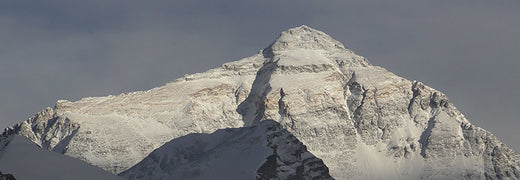
The entire mountaineering world knows Kilian Jornet had not one summit this year on Everest without oxygen, but two. The first of them was record-breaking – a mere 26 hours after leaving the Everest Base Camp at 5,100m. The second was ‘just for fun’ – he was there, he felt good, so, why not do it again?
A lot of things are different at 8,000 m and above. It’s politely referred to as ‘the death zone’ with good reason – people die there, simply because they are there. In the death zone, the human body simply can’t survive for long periods of time. An extended stay without supplementary oxygen will result in deterioration of bodily functions, loss of consciousness, and, ultimately, death.
Getting into it is not a decision to be taken lightly – and getting out of it is imperative. So when record-holding Kilian Jornet lost his way while descending from 8848 m on Everest, his next few decisions would be crucial – his life would literally depend on them.
“Going down from my second ascent on Everest I got lost. It was a heavy snowfall and in the middle of the night and around 8300 m and I was traversing on technical terrain. My brain wasn’t working really well, and I had no clue where I was. Visibility was poor – I could sometimes only see about five meters in front of me – sometimes just two.”
He had left the normal route around 8300 m – and in fact, he is not even sure why. “I have a sort of "black moment" where I can't remember anything. In that time I left the normal route, but I can't remember exactly when or why.” He was clearly suffering the effects of high altitude. And of course, it was snowing: a half a meter during the night, further increasing the difficulty of navigation.
Lucky for him, he had a tool, and the presence of mind to use it: his Suunto GPS watch, which had been recording his path since he left Advanced Base Camp at 6400 m 23 hours ago. Accessing the trackback feature, he realized that he’d made a 90º degree turn to the left, and continued to traverse for one kilometer off of the normal route, and leaving him in the middle of the North Face. It was clear: he had to move in the entirely opposite direction. He did so, until he got back to the normal ridge.
In the new era of fast, light alpinism, going solo has its benefits: you’re quicker, and often, quicker is safer. "I use it about a dozen times in a year,” says Jornet. “When it’s really bad weather or really foggy, if I’m going somewhere with a lot of ridges and cornices – often, it’s really about reducing risk as much as it is about finding the way home.” This brings us to a curious realization – it’s not a last-ditch, all-odds-are-against us survival tool – it’s something to keep you from getting into that situation entirely.
That said, Jornet recognizes clearly the severe potential consequences of his situation on Everest. Without Trackback, he likely would have hunkered down in the cold for four or five more hours until daylight – and the consequences of that could have been severe. “There’s no question for me,” he says. “This feature saves lives. For sure.”
Learn how to navigate with Suunto Spartan watches or how to use Trackback on Suunto Ambit watches.

Yes, you can use your Suunto in the mountains for ten straight days
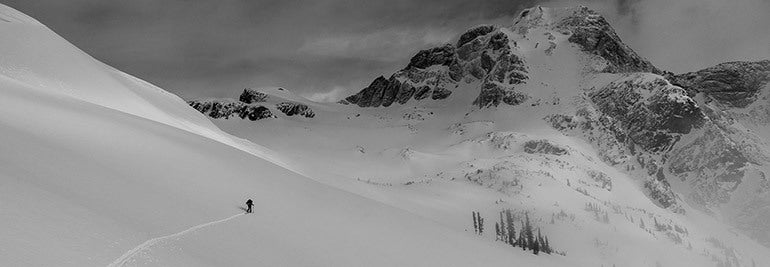
It’s no secret that for years I have been addicted to recording my adventures. It started out in the pre-tech era with my first ski traverse in 2001. A 5-day loop through the mountains where we skinned and skied our way around the Hurley Horseshoe traverse. Afterwards, I remember taking a pencil and reliving our traverse by drawing in our up and downs, our summits and creek crossings.
The habit grew on me. It got to the point where I had maps tacked up on my walls with lines drawn all over them. My documentation led me to go to where there were no lines and I would explore all day and return to fill in the blanks.
When Suunto came out with the Ambit my addiction evolved. All of the sudden my pencil lines on flat maps became 3D lines laid over satellite images. I could go on a wild excursion, come home and place a line onto mountaintops and down steep ski descents. My adventures became more interactive and ‘lived’ online. Since then I have always imported all my lines, from Norway to Pakistan to remote Canadian mountaintops – and now I can see all my efforts overlaying the world. It’s truly amazing.
Since that first ski traverse in 2001, I have done 10 multi-day traverses – up to 21 days long – but my last was in 2009.
This year as we prepared for a 10-day trip I wondered: would I be able to use my watch to log every day? We hoped to be completely self-sufficient – every gram added to the 20+ kilos of weight on our backs. I would not bring anything extra. Which meant that I did not want to bring a solar charger or battery pack for my Suunto Spartan Ultra.
Of course, I wanted to have this entire expedition logged – but would the watch really last long enough? With a few tweaks to settings, I could theoretically give the watch enough battery for 65 hours of skinning and shredding. Well… maybe not shredding, since our bags did weight a lot.
We started the trip on April 16th and hitchhiked our way to the start. I woke up sick, with low energy, but the wheels were in motion and I felt like I could not let the team down.
The Monashee traverse is a ski tour through the rugged Columbia mountains that sit to the west of Revelstoke. Once you get it, there are no ski lifts, no towns – just one cabin and a 100 km of skiing from South to North. It is not particularly remote, but it is challenging. With mountains peaking around 3000m, huge granite walls and heavily glaciated terrain, success was never guaranteed.
For the first four days the weather was stormy, and the avalanche hazard went really high. This was the most challenging terrain to negotiate but as luck would have it our bigger descents, and more committing ascents, had already slid – the only reason we were able to move through this complex terrain.
Ski traverses have a simplicity to them that is very rewarding. Each day the challenges are simple, eat, travel through complex unknown terrain, stay safe, eat, drop the big bags and ski a little, find a great place to camp, eat, sleep and repeat. Daily new views are seen and appreciated.
We fell into a routine and moved endlessly north. Most of our challenges were weather based and we persevered forwards. On the day of our lowest morale, we also experienced our best sunset and northern lights, which rejuvenated our excitement and desire to dig deep and push forward.
7 days in and my watch was still recording each day. But with 3 days to go and 30% battery power I wondered – would it last?
Finally, the weather got better and we managed a couple of great ski lines. Chris Rubens got a great line in the alpenglow on Mt Mulvahill.
10 days of touring finally had us boot packing up Mt Begbie, Revelstoke’s signature mountain. The watch was still going and we were all exhausted and excited to be finishing off with this summit.
All-in-all we ski toured 100km, including 10,000m of ups and downs, and over 68 hours of logged lines. The watch made it through. Was it all worth it? I think Chris’s last turns answer that question.
All images © Greg Hill and Chris Rubens

During a 3,380km ride you don’t know what will hurt the most
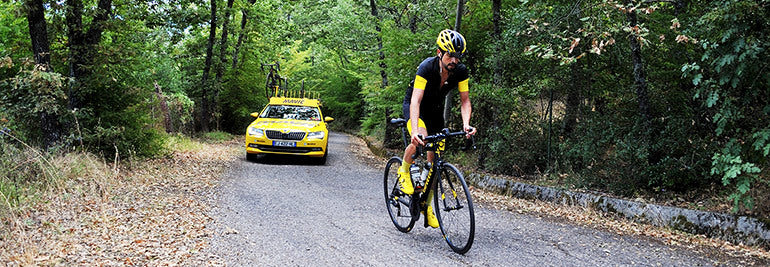
When Omar di Felice planned his little bike ride around Italy, he knew a lot of it would not be easy. After all, he planned to barely sleep while pedaling over 3,000km, leaving clockwise from Rome, and returned just over a week later. Of course, a trip like this takes meticulous planning – every road, every hill, every kilometer.
So that’s why the surprise was a surprise: “The toughest part was the south of Italy. I didn’t know the route very well, and I found tough, short climbs and hard asphalt! It was a real surprise considering the fact that the toughest part in my idea would be the Alps segment of my race.”
After a rough start, Sicily and Sardinia were easy going – “Peaceful landscapes, hills, and perfect weather,” says Omar. “Seeing the dawn from the top of Etna mountain was on of my favourite moments.” In Genoa, he found a welcome surprise: crowds from his hometown out to greet him and show their support – including the mother of Marco Pantani, a legend of Italian cycling.
Over the eight days, di Felice used three different bikes – a Wilier 110 Air – an aero bike to push fast during the flat parts – a Wilier 110 NDR with disc brakes systems for comfortable riding, and a Wilier Zero.6 for minimal weight during the toughest climbs. The funniest bit? In 3380km, he didn’t have a single flat.
Omar’s sleep schedule was extremely sporadic – he’d grab about grab about an hour a and half of sleep every 15 hours, in addition to other short breaks, before a luxurious three-hour nap before his last push to the finish. But this unrelenting regime allowed him to complete the massive ride in just 8 days and 21 hours. Since the route was one of his own choosing, it’s unquestionably a world record for that particular route, but hard to place in the canon world cycling records, where others have gone further in less time – albeit with significantly less climbing than di Felice.
The end was the most glorious: “The last two days were the best part of my ride,” says Omar. “I felt great, and really happy that everything had gone well until that moment, and I really enjoyed the route back to the finish line.” He enjoyed it so much he’s already planning the next one. “Of course it was really tough and now I need a long rest period but I’m sure I will do something similar in the future. Why not!”

Lucy Bartholomew on how to almost quit... then not
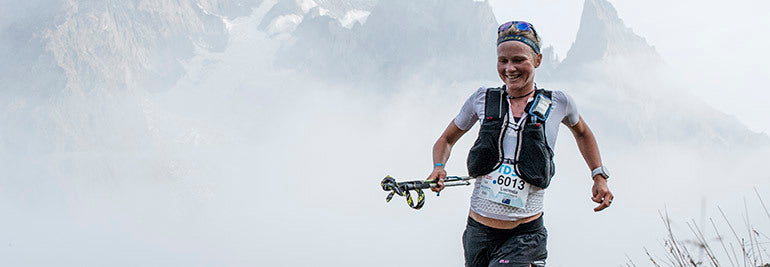
Ultra-runner Lucy Bartholomew is known for a few things: being an up-and-coming young gun on the distance scene, her constant grin, and of course, “bein’ ‘Strayan”. (That’s ‘being Australian’, in case you couldn’t figure it out.) After this year’s UTMB weekend, she’ll be known for another thing: comebacks. After contemplating a voluntary DNF just 30kms into the 120km TDS race at UTMB weekend, Lucy found a spark and picked up 25 female places, finishing the last 7km at a blazing 4:00/km pace, and taking 5th place overall for women.
“I was having some tummy issues early one in the race – and I just couldn’t get anything down. Water, food, gels – the second I brought it up to my lips I felt nauseous, and anything I forced down was just coming back up,” she says. Not long after the six A.M. start, Bartholomew was forced to walk a 15km downhill – which, as any runner can tell you, is a poor place to be losing time. “I think the extra jolting of the downhill just upset my stomach even more,” she said.
It was a shame – Bartholomew had been in Chamonix training and doing reccy for four weeks prior to the race, and she was coming off an impressive finish in the Mont Blanc 80, taking an unexpected 2nd place. The TDS route – more remote, with fewer aid stations, and more vertical per kilometer than UTMB – was to her liking. So coming off the downhill, she was going slowly and just waiting for her support – in fact, her dad who was also in the race – to catch her. “He probably would have told me to stop,” she says. What kept her going? Knowing what was coming – she’d done a proper three-day reccy before the race, giving her a solid overview of the entire course. “I think that helped – knowing what was ahead, no surprises.” And now? “Now I’m kind of glad he never drove by – it was something I needed to get through myself – and I learned a lot about myself out there.”
Nine hours into the race, she managed to get a shot block down her throat, and it stuck. “I’ve never been hit so hard by the sugar in my life,” says Bartholomew. “I think it was because I was just so empty. It really gave me a jolt and let me get back in the race.” She started passing racers, eventually roaring into town at the afore-mentioned speed, passing her last female competitor just 400 yards before the finish line.
While Bartholomew was still ‘disappointed’, the rest of us can agree: it was impressive display of resilience for the young runner. Now that it’s over, what’s in the plans? Lucy is happy to be home – and of course – more running. “It feels like I never left Australia – pretty happy to get back to my routine.” Potential upcoming races include the Ultra Trail Ning Hai in China – she’s not sure if she’ll do the 50 or the 100 – and the Capetown 100 in South Africa.
Next year, she might venture on to American soil. “I’d love to do the Hard Rock,” she says, “but I know people who have waited to get in [via lottery] for eight years!” Definitely not on the list? The Barkley Marathons or anything like it – navigation is not her game. “If it’s not on my Suunto watch, I’m not running – I’m not tough enough for that!”
Images by Damien Rosso / Droz Photo

How to ride the Giro d’Italia in the hardest way possible
Any serious cyclist knows that the Tour de France isn’t necessarily the best bike race on the planet, just the most well-known. Those in the know would are that the Giro d’Italia – aka just ‘The Giro’ is harder, steeper, and in a more beautiful location. And guess what? 2017 is the event’s hundredth birthday.
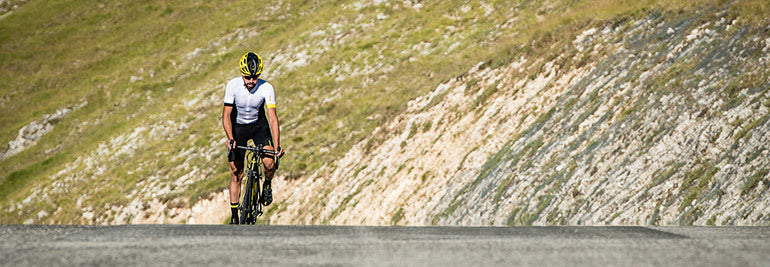
As such, it’s natural that Italian long-distance endurance cyclist Omar di Felice wants to take it on, in a unique way never done before, for his new project #ITALYUNLIMITED3500. He’ll do a variation of the route, starting and ending in Rome. He won’t follow the exact route (it changes every year). But what’s impressive? The race normally takes place over three weeks. He aims to do it in just 9 days, starting Wednesday, September 20th. Sleep? That will come mostly in 40-minute power naps, approximately every ten hours.
3500km with almost 60,000m of climbing. Here’s how he’ll do it, section by section.
Part 1: Rome to Calexia
Distance:1073.2km
Vertical: 17346m
Omar will start in classic style: at the Olympic Stadium in Rome. The climbs begin quick – he’ll have his first 1000m climb within the first 100k. Says Omar: "The biggest challenge in the south part of Italy will be road conditions: there won’t be flat parts but a continuous up and down and the asphalt isn’t so good. So the first 1000km will be very tough!” His first push will be his longest – he’ll try to go 30 hours before taking his first nap.
Part 2: Sicily
Distance: 380.8km
Vertical: 6329m
After getting on to Sicily, Omar will rack up 380km on the way to Palermo. With one big climb (and we do mean big – over 1800m!) it will be challenging.
Part 3: Sardinia
Distance: 283.6km
Vertical: 3039m
After Siciliy, Sardinia will be a breeze – 100km less distance and half the climbing.
Part 4: The Alps and back to Rome
Distance: 2075.5km
Vertical: 31556m
Now the battle begins – already exhausted of mind and body, Omar will take 2075km of rolling hills and high mountain passes – including one mega climb that will take him up nearly 3,000m, all the way from sea level. Highlights include many of the most famous parts of the Giro d’Italia.
Just to put this all in perspective, let’s look at another record in cycling. RAAM (Race across America) record holder Christoph Strasser completed the approximately 4,800km course in seven days and fifteen hours. Faster than Omar intends to finish – but that longer course had only 36,500 height meters, compared to di Felice’s upcoming 58,270. While it’s tough to compare the two, there’s no question the steeper and more frequent climbs are a huge part of what makes this upcoming ride so difficult. Bad weather and lack of sleep are likely to be some of biggest factors, Omar has faced such challenges before – but this is another level.
“This ride is simply “different”. A nonstop ride is toughest in terms of mental effort and because you can’t sleep too much. During the winter ride, instead, you have to consider a tough weather and slippery road conditions. But, at the end, I really love both the nonstop rides and the winter rides!”
Where he stops every night will be up to his body. "It’s impossible to set a real plan because it will depends on my physical conditions and weather but, for sure, I predict to stop the first time after 30 hours of ride, then to have a 40 minutes powernap every 10 hours of ride,” says Omar. He’ll consume about 500kcal/hr, so fueling is going to be important!
How will he do? We highly suggest following him on Instagram to get the highlights of his ride – no matter what happens when he starts pedaling, you have to admire him for even dreaming up such a ride. Good luck, Omar!
All images © Luigi Sestili

Ryan Sandes achieved his dream. How? He worked (and raced) smart
It was Ryan's third attempt at the legendary race in California, but after getting blown off the line by upstart Jim Walmsley, Sandes’ persistent pace put him on track to grab first place. Now that he’s had eight weeks to recover, run a few more fun ones, and start thinking about next year, we caught up to learn what we could – though we highly recommend watching the video below to hear some of Ryan’s story in his own words.
Sandes went faster by slowing down. (Image by Kelvin Trautman, Red Bull Content Pool)What was different this year? In some ways – Sandes went faster by slowing down. 2015 was rough – he contracted Glandular Fever, a viral infection known for lingering. He later realized that illness was part of the beginning stages of overtraining. As he began working back in 2016, there was something else: Ryan became Papa Ryan. You don’t need to be a family man yourself to know what kind of toll that takes on serious athletic training. In other words: it was hardly the perfect scenario to make a big push at one of the hardest races in the world. But long ago – back before he’d ever run his first Western States – South African running legend Bruce Fordyce sent Ryan a note, and addressed it: “To a future Western States champion”. Suffice it to say Ryan had a goal. How to approach it? “I did a little less training than before,” says Ryan. “More focused and more specific.” His Suunto Spartan Ultra was an important training partner – running trail, it’s tough to keep track of effort using just distance and time, so elevation gain and loss was one of the most important things he paid attention too. Going into the event, much of the pre-race hype was about upstart Jim Walmsley – who’s enjoyed a meteoric (and boastful) rise to ultra-running elite status. Jim thought he could set a course record in 2016 – and famously made a wrong turn at mile 92. He was back again in 2017. “Heading out on to the course, I asked Jim if he was still going to go for under 14,” says Ryan. “He said, ‘yeah baby!’ and took off. At that point I held back.” Sandes was at one point almost an hour behind Walmsley, ‘running his own race’ as he puts it. But as Sandes kept going through checkpoints, word began to trickle back: Walmsley was slowing down. “I respect him for trying it!” says Ryan. “It takes balls to even make an attempt like that.”
A dream comes true. (Image by Corinna Halloran, Red Bull Content Pool)Then he got reports that Jim had even sat down early in the race. Then Ryan made up 17 minutes over just eight kilometers. At the next station he was right on his heels. Finally, he passed Walmsley, and held on for a win at Western States, the grand-daddy of all ultra-marathons.
Since then he’s had some fun – he took part in the Burro Racing World Championships – and also entered a serious race, the CCC at UTMB weekend in Chamonix. Legs still tired, he finished, but in a disappointing-to-him 21st place – although to anyone in the know, finishing at all is pretty impressive. Up next: a project he doesn’t want to talk too much about – stating only that it’s high altitude and far away – and next year’s big goal: UTMB, a race that’s only been won once by a non-European (and that winner came from Nepal.) Can he win it? He’ll have to train smart again – “I think you really need to spend time in that environment, so you’re used to racing in that environment” – but in ultra-running, the human body itself proves anything is possible. In the meantime? Rest, rest and more rest – because rest works.
Main image © Kelvin Trautman / Red Bull Content Pool
Watch this video about Ryan's Western States 100 experience


