




Suunto Blog

Caveman Conrad conquers England
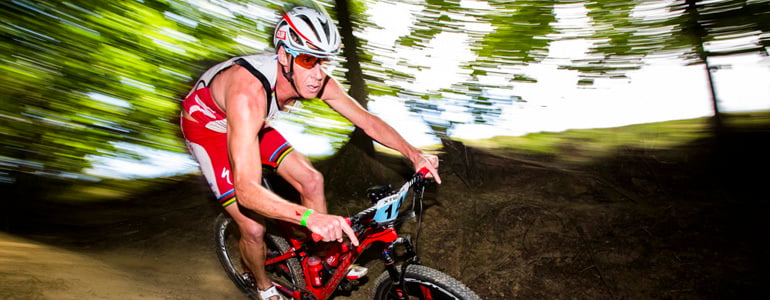
After winning XTERRA UK, the Suunto ambassador Conrad Stoltz now has Denmark in his sights. Is there any stopping him? It's been a bit of a disappointing season for Conrad Stoltz so far. “It's been a bit of a roller coaster with unfortunate injuries, sickness and mechanicals,” he tells us. But the so-called 'caveman' put all that behind him after triumphing at the UK course. “I finally did my form justice and put together a phenomenal race. It's what I love best!” he says. “XTERRA UK is a race with real mountain biking and trail running – true XTERRA terrain, so I was super excited to race this course. This year I have been really disappointed with a lot of the courses which weren't technical. They were 'roadie courses’ – mostly fire roads which has been super frustrating.”
“XTERRA UK put up a great event with very technical bike and run courses,” he adds. The running course saw athletes having to leap across ditches and jump over trees, for example. Check out this video to see Conrad running the route.“I was out of the swim 1min behind the leader and came off the bike with a 5 minute lead and a silly grin on my face,” adds Conrad. “It was adventurous and fun. I hope other organisers take note and make sure their routes include actual mountain bike trails!”Next on the calendar is Denmark this weekend and Conrad is as focused as he's ever been. “I hope to repeat my performance here,” he says.
All images ©lighttrapper.co.uk
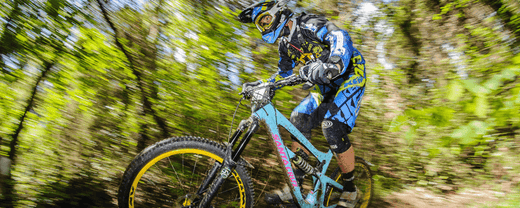

CEDRIC GRACIA SHARES HIS LOVE OF MOUNTAIN BIKING
The French mountain bike legend Cedric Gracia took part in the Enduro World Series round 6 in Whistler, British Columbia. Gracia is a multi-talented bike racer and entertainer who has competed on the top level since the mid-90s. We got in touch with him to find out how he’s doing.
When did you make the shift from downhill mountain biking to enduro?I made the shift two years ago, but feel like I’ve been riding enduro all my life. For me enduro is real mountain biking. I did it because waiting for my DH practice everyday wasn’t just enough. I wanted to ride more.
I still love racing for sure but more and more I like to ride different trails around the world and bring people with me to share the experience. I also like to share my life with Through My Eyes video series.
You had a few bad accidents in your last years as a downhill racer. Did those have anything to do with this change?I definitely have been thinking about things but in a good way. The answer to why I ride bikes was easy: because I love riding, it’s my life! The fear of ending up in a wooden box will never stop me from riding. I live to ride and ride to live. This is my spirit.
What do you love about racing enduro?Now I am able to ride all day instead of waiting for practice.
How have the courses at the Enduro World Series been this season?Some courses have been really good but some have been really XC and way too long for enduro. Also the connection between stages has been too long.
La Thuile in Italy was real enduro riding. I loved it. Whistler was too long, the trails were really destroyed and some of the secret trails weren’t that secret.
Is enduro still the little brother of downhill racing?I think enduro is real mountain biking. Downhill is the poster image of the sport, but the sells are in enduro.
How have you changed your training since focusing on enduro?Longer rides and shorter fitness hours at the gym. I love it. I do more outside exercises now.
What do you think are your strengths as a rider?I don’t know if I have any, but I love pushing my limits and never give up.
What are the aspects you’re trying to improve?I try to share my love for biking with more people through my Facebook page and my own video series.
How do you use your Suunto Ambit2 in training?I record my training and share it with my followers. I can see what I have done during the year and my trainer can help me improve points where I am not the best.
You’ve been racing on an international level for 20 years and you are not known for taking it easy. How have you been able to pull it of in a risky sport like this?I love the sport and am ready to give it all.

Recover like a 'Caveman'
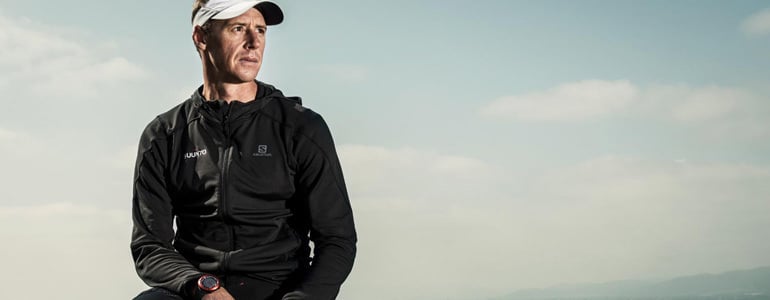
Getting your recovery right is almost as important as the training itself – especially if you have a packed race diary. It’s also particularly true as you get older when the body is less forgiving of strains, bruises and stiffness. So what’s the approach of the pros? Triathlete and XTERRA champion Conrad Stoltz is known as ‘the Caveman’ for his warrior spirit and ability to take hits – just the man in other words to offer some advice. He is famous for being hard on himself and his gear and in his younger days used to sleep on benches and once (willingly) in a police station before races. These days, looking after his body is the number one priority. “I believe in a good warm up and cool down after racing,” he says. “Plus regular massage and self massage on the foam roller.”Gone are the days when Conrad would blast through injuries. These days he listens to his body. “If I have even a small injury, I’ll try to get it resolved as quickly as possible,” he says.He adds that one of the most important things after a hard ride, run or swim is to take on fluids right away. “When I get back from a hard training session I’ll have a drink with carbs and some protein right away to get the recovery process started.”This is in line with the latest advice from sports nutritionists who recommend taking on fuel and fluids during a 30 minute window after exercise, or even within 15 minutes. “Within 30-40 mins I will sit down to a good meal,” says Conrad. “Caveman style – meat, potatoes, vegetables and maybe some chocolate or ice cream.”But some habits die hard. There’s no cross-training for Conrad. “I’d like to say I ride my enduro motorbike for cross training in the off-season,” he adds, “but I race all year round!”


Tutorial Tuesday: Find a GPS signal more quickly
To receive a GPS signal your Suunto watch needs to locate satellites that are orbiting the Earth. The better the watch knows where the satellites are located, the quicker it will receive the signal.
Since the satellites are moving constantly, the new locations of the satellites need to be synced to your watch. Simply put, to find the satellites quicker, sync your watch regularly with Suunto app.
Suunto app sync the latest, seven-day satellite orbit forecast to your watch so it knows where to look. If you want to optimize and find the signal quickly, sync the watch as close to your activity as possible.
The data that is synced to your watch is global. So even if you sync your watch in New York and start your run 12 hours later in Chamonix, there is no need to re-sync.
Image: © Bruno LongGet support for your Suunto product at support

How to win races when you're over 40
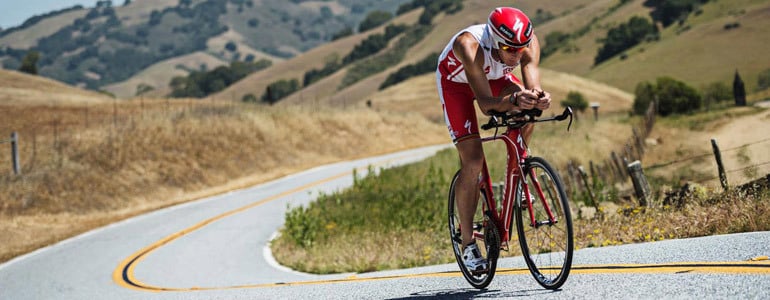
Conrad Stoltz is the proof that you don't have to slow-up as you get older. In fact, the XTERRA athlete and former pro triathlete says he's just as fit as he was 20 years ago – and he's regularly beating guys half his age. What's his secret?
“I think it's part scientific training and part experience,” Conrad tells us. “At age 40 my power on the bike is as good, if not better than ever.”
He says this is partly due to the rigorous training program and partnership he has with his coach, Ian Rodger.
“He comes from a Sport Science background where he has done a lot of research and testing on athletes in the lab,” says Conrad. “He lives in Cape Town so we only see each other a handful of times a year but we spend hours and hours communicating via email, skype and text. All of the coaching gets done over the internet. After training I share my workout, and accompany it with a thorough description of how I felt before during and after the session. Ian analyses the data and fine-tunes my training for the next day. So every day is custom made for me.”
“It's very effective,” he adds. “Thanks to that I haven't had any stints of overtraining, under training, or unnecessary injury or sickness.”
It's all a far cry from when Conrad started out as an athlete. “Back then I wanted to train super hard every day, I wanted to race every weekend, and I wanted to win every race! It's simply impossible – I made every mistake in the book, and learned all the lessons first hand. Also, 26 years of triathlon racing – 22 as a pro – has given me a lot of experience and confidence to draw from.”


Pedaling to volcanic peaks
Brody Leven recently cycled from Portland, Oregon to Seattle, Washington, with the goal of climbing and skiing huge volcanoes that were 'on the way'. Surprisingly, he tells us the downhills were harder than the ascents...
What the idea behind this trip? The goal was for two college friends, who hadn't had an adventure together in years, to ride bikes from Portland to Seattle...the long, hard, and painful way – effectively tripling the typical route's distance – in order to climb and ski Mt. Adams, Mt. St. Helens, and Mt. Rainier, three huge Washington volcanoes. Personally, I wanted to combine two activities that I love, ski mountaineering and bike touring. We also wanted to remind ourselves that we don't need big budgets, helicopters, worldly knowledge, or even a passport to have a good, old-fashioned adventure. What bike were you riding? It's a hybrid cyclocross/touring bike – a triple-ring, aluminum frame, with a carbon fork, fenders, comfortable touring seat, racks, five panniers, and customized single-axle trailer. I've only ridden the bike three times in four years: solo across the United States in six weeks, around the coastline of Hawaii in two weeks, and now the hard way from Portland to Seattle in two weeks. I'd never put a trailer on it before this trip.How hard is it to cycle with all that gear? It isn't even like riding a bicycle. It feels as though you're riding something different, something other than a bike, some sort of vehicle. If you look over your shoulder and swerve, you're going in the ditch (which I learnt the hard way). You can't just throw your leg over the top and start peddling – instead, you need to do this weird running push-start. The weight made it incredibly difficult to ever get out of the granny gear.How much did it all weigh? 150-200 pounds (68 kg - 90 kg) without me. Weight fluctuated with water and food supplies.
How were the downhills?I wasn't comfortable enough to really get moving fast down hills until ten days into the trip, when I started to use my body as a sail to slow down. This is noteworthy because going downhill was often much more difficult than going uphill, since my brakes were almost worthless with that much weight moving the bike. You had to keep it perfectly upright in order for it not to fall over, and the trailer was constantly in danger of jack-knifing. Road or off-road? Maybe 75 miles (120 km) we biked were on loose dirt, gravel, or sandy roads. But they accounted for about 90% of the trip's overall effort, as they were often on the biggest hills.Did you have to push? Not uphill! But descending hills was so hard that I occasionally had to step off and walk my bike for a while, allowing my brakepads and rims to cool off (they were very hot to the touch, noisy, and ineffective). Even walking it down hills was difficult, because balancing it perfectly upright was essential or all of the weight would topple it over.
Click here to see Brody's 120km ride from Portland to Hood River – and here to see his ski tour on Mt Adams. Biggest challenge of the trip? Riding the 15-mile, 3,500-foot, dirt, gravel, and sand Mt. Adams approach road after biking 40 miles that morning was so hard. Also, not eating every cinnamon roll and huckleberry shake in a 400-mile radius tested my self-control! All images ©Brody Leven. Check out more of his adventures on Brodyleven.com


