


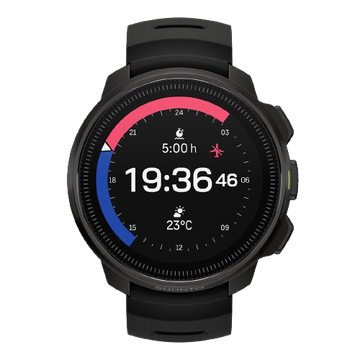


If you’re considering a Suunto Vertical 2, you might also be curious about how it compares to the original Suunto Vertical.
Both watches are designed for outdoor adventures and multisport activities, but there are some key differences worth knowing—especially when it comes to display, charging, heart rate tracking, and built-in features.
In this guide, we’ll break down these differences clearly, so you can understand what sets each model apart and decide which one fits your needs best.
1. Display: MIP vs. LTPO AMOLED
Suunto Vertical comes with a 1.4-inch memory-in-pixel (MIP) display at 280 × 280 pixels. This screen is designed for outdoor readability and low power consumption, making it ideal for long hikes or extended outdoor adventures. While the colors are more muted than AMOLED, clarity under bright sunlight is excellent.
In comparison, Suunto Vertical 2 features a 1.5-inch LTPO AMOLED display with 466 × 466 pixels. The larger, higher-resolution screen offers sharper details and more vivid colors, making menus, maps, and notifications easier to read. LTPO technology also adjusts the refresh rate based on the content, which keeps animations smooth while conserving battery.
Overall, Vertical’s display focuses on endurance and sunlight visibility, whereas Vertical 2 provides a more dynamic and responsive viewing experience. Both are suitable for outdoor use, but the choice depends on whether you prioritize simplicity and long-lasting visibility or vibrant visuals and interactivity.
2. Charging: USB-A vs. USB-C
Suunto Vertical uses a magnetic charging cable with a USB-A connector, a tried-and-true design for reliable power. The cable works well, but some users may find it less convenient with today’s USB-C devices.
Suunto Vertical 2 updates the system with a USB-C connector and a stronger magnetic attachment. This makes the cable easier to align, keeps it firmly in place during charging, and matches the connectors on most modern devices.

3. Heart Rate Tracking
Both watches feature optical heart rate monitoring, designed to support training and outdoor activities. Suunto Vertical uses a proven optical heart rate sensor that delivers reliable readings across everyday training and long outdoor sessions.
Suunto Vertical 2 builds on this foundation with a redesigned glass back panel for better light transmission, a 4PD sensor layout to reduce interference, and updated algorithms that enhance heart rate performance. These improvements also support more consistent blood oxygen readings, HRV measurements, and sleep tracking.
4. Built-in LED Flashlight
Suunto Vertical uses a screen-based flashlight mode that turns the display white to provide on-demand illumination. This approach keeps the design streamlined while covering occasional low-light needs during outdoor activities or everyday use.
Suunto Vertical 2, by comparison, adds a built-in LED flashlight with multiple brightness levels and a red light mode to help preserve night vision. It also supports practical flashing modes such as pulse, SOS, and strobe, offering additional options in low-light conditions.

Which One Should You Choose?
Suunto Vertical and Vertical 2 are both built on our trusted multisport platform, each offering unique features and technology to support your adventures. Whether you’re training, exploring outdoors, or going about your day, both watches help you perform and track your progress with confidence.
Depending on your needs, you can choose the model that best fits your lifestyle and activities. If you’re looking for the latest in Suunto’s lineup, Vertical 2 is our newest release, featuring the most up-to-date technology and enhancements.


