


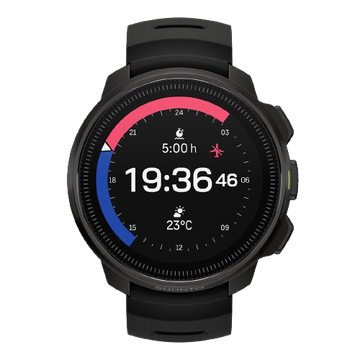


“I want to buy a running watch, but I’m not sure which one to choose.” With more GPS watch options available than ever, many runners face this same dilemma.
In the Suunto lineup, Suunto Run and Suunto Race S are both advanced GPS watches designed for runners. However, they are built with different priorities to suit different running styles.
In short, Suunto Run is the go-to choice for road running and daily training, while Suunto Race S is ideal if you prioritize trail running, endurance races, and offline maps.
This guide explains the key factors to consider when choosing a running watch and compares the core differences between these two models to help you find your perfect fit.
First, determine your running profile
Before picking a watch, it helps to understand your specific needs. Even within the world of “running,” the features you require vary depending on where you run, your distance, and your performance goals.
Ideal for road runners and daily training
- You primarily run on paved routes like city streets, parks, or riverside paths.
- You are training for road races such as 10Ks, half marathons, or full marathons.
- You want a lightweight, unobtrusive watch.
- You prefer running with music without carrying a smartphone.
- You want quick, simple access to your most-used running features.
Ideal for trail runners and endurance athletes
- You often run off-road, on technical mountain paths, or natural trails.
- You tackle ultramarathons or long-distance endurance events.
- You frequently require on-wrist maps and navigation features.
- You use your watch for various outdoor activities beyond just running.
- You prioritize maximum battery life and deep training data analysis.
Identifying these habits is the most important step in choosing between Suunto Run and Suunto Race S.
Specs at a Glance: Suunto Run vs. Suunto Race S

Here is a breakdown of the primary technical differences:
| Feature | Suunto Run | Suunto Race S |
|---|---|---|
| Primary Use | Road running, daily training | Racing, trail running, multisport |
| Weight | 36 g | 60 g (Stainless Steel) / 53 g (Titanium) |
| Case Size | 46 × 46 × 11.5 mm | 45 × 45 × 11.4 mm |
| Display | AMOLED | AMOLED |
| GPS / GNSS | Dual-band GNSS | Dual-band GNSS |
| Battery (Performance Mode) | Up to 20 hours | Up to 30 hours |
| Battery (Tour Mode) | Up to 40 hours | Up to 120 hours |
| Battery (Daily Use) | Up to 12 days | Up to 9 days |
| Standby Mode | Up to 20 days | Up to 13 days |
| Sport Modes | 34+ | 115+ |
| Navigation | Route & breadcrumb navigation, heatmaps | Offline maps, route & breadcrumb navigation, heatmaps |
| Music | 4 GB internal storage, music control | Music control (Smartphone) |
| Suunto Coach AI | Not supported | Supported |
| Price | Refer to product page | Refer to product page |
Note: Specifications and pricing are subject to change. Please refer to the official product pages for the most up-to-date information.
Seven Key Comparison Points
1. Terrain and Intent: Road vs. Trail
Suunto Run is a featherlight GPS watch optimized for road running and daily consistency. It streamlines the essential features needed for everything from 5Ks to full marathons into an intuitive, easy-to-use interface.
It is perfect for runners who want to focus purely on the run, prefer a "barely-there" feel, or are buying their first dedicated running watch.
In contrast, Suunto Race S is a high-performance tool built for versatility—ranging from structured training and road racing to technical trail running and multisport. With offline maps and advanced metrics, it’s designed for athletes looking to push their limits.
2. Design and Weight: 36g Lightness vs. Premium Durability

Weight is a critical factor often overlooked. During long-distance efforts, even a few grams can make a noticeable difference in fatigue and comfort.
At just 36g, Suunto Run is designed for maximum comfort during high-cadence daily runs. If lightness is your priority, this is the winner.
Suunto Race S (60g/53g) is slightly heavier but offers a more robust, premium feel. It is a sophisticated sport watch that transitions perfectly from the office to the trails.
3. Battery Life: From Marathons to Ultras

Suunto Run offers up to 20 hours of battery in multiband GNSS mode (the most accurate setting). This is more than enough for marathons, long weekend runs, and daily training cycles.
Suunto Race S extends this to 30 hours in high-accuracy mode and a massive 120 hours in power-saving mode, making it the better choice for ultra-endurance events and multi-day adventures.
4. Training Insights: Simplicity vs. Deep Analysis
While both watches track heart rate, pace, sleep, and HRV (Heart Rate Variability) recovery, their depth of analysis differs.
Suunto Run focuses on the essentials: interval training, ghost runner, track mode, and marathon time predictions. It’s everything a road runner needs without the clutter.
Suunto Race S adds Suunto Coach, providing personalized feedback on your training load and progress. With 115+ sport modes, it’s the superior choice for multisport athletes who cycle, swim, or hike alongside running.
5. Navigation: City Streets vs. Wild Trails
Suunto Run uses high-contrast breadcrumb navigation and heatmaps to keep you on track in urban environments or familiar parks.
Suunto Race S features full offline maps. This is a game-changer for trail runners and explorers who need to navigate technical terrain without a cellular signal.
6. Ecosystem: The Suunto App Experience
Both watches sync seamlessly with the Suunto app and third-party platforms like Strava, TrainingPeaks, and ASICS Runkeeper. However, Race S users get full access to the SuuntoPlus™ store, which offers specialized apps and tools to customize your racing experience.
7. Music: Run Phone-Free with Suunto Run
If you love running to a beat, Suunto Run has a distinct advantage: 4 GB of offline music storage. You can leave your phone at home and connect Bluetooth headphones directly to your watch. Suunto Race S can control music playing on your phone, but cannot store files locally.
Conclusion: Which should you choose?
Choose Suunto Run if:
- Your primary focus is road running and daily fitness.
- You are training for a 10K, half, or full marathon.
- You want the lightest watch possible (36g).
- You want to listen to music phone-free.
- You prefer a simple, streamlined user experience.
Choose Suunto Race S if:
- You are an avid trail runner or ultra-endurance athlete.
- You need built-in offline maps for navigation.
- You require longer battery life for multi-day use.
- You want a premium watch for multisport and outdoor activities.
- You want the most advanced AI training insights available.
Summary

The right choice depends on where you run and how much data you crave. Suunto Run is the ultimate lightweight companion for the road, while Suunto Race S is the powerhouse built for every trail and every race.
Pick the one that matches your stride and hit your next run with total confidence.


