





Suunto Blog
Ueli Steck's incredible summer adventure
Most alpinists are happy when they summit two or three peaks during a trip. But then Ueli Steck is not your average mountaineer. Yesterday, the Suunto ambassador embarked on an epic summer challenge – to climb 82 4,000 m peaks in the Alps in 80 days with the German guide, Michi Wohlleben. Even more challenging, the pair plan to cycle between each stage. In all, they'll cycle 1,000 km and climb 100,000 m of altitude.
www.82summits.com
Amazingly, Steck says the trip is all about calming down, taking his foot off the pedal and not pushing records but just doing what he loves. “It’s about a message I want to send, to myself as well,” he told Swiss newspaper NZZ. “The message is that striving for records bears risks. If I stay in this routine of always going faster, higher, further I know that it will at some point have a deadly ending.”
The pair reached the first summit, Piz Bernina, yesterday. 4049-meter high Piz Bernina is the most easterly 4000-meter peak in the Alps.
Stay tuned for more updates!Main image by Jon Griffith Photography


FACE TO FACE WITH KILIAN JORNET – #SUUNTOADVENTURE VIDEO SERIES, EPISODE 3
In the third episode of #SuuntoAdventure Video Series you will meet a lightning fast mountain man, Kilian Jornet.
Kilian is more than a record-breaking trail runner and a world champion ski mountaineer. He has also set speed ascents on the Matterhorn, Mt Blanc and Denali among others, and redefined what it means to be a mountain athlete, moving into territory once the preserve of elite alpinists. Read also Kilian's profile here.
Watch also the other episodes in the series:
Face to Face with Emelie Forsberg – #SuuntoAdventure Video Series, Episode 1
Face to Face with Greg Hill – #SuuntoAdventure Video Series, Episode 2
Face to Face with William Trubridge – #SuuntoAdventure Video Series, Episode 4
Face to Face with Conrad Stoltz – #SuuntoAdventure Video Series, Episode 5


Lightning fast mountain man
What makes ski mountaineer and trail runner Kilian Jornet tick? It’s not winning races or setting speed records, although he does excel at both. For him, it’s all about the mountains.
“I am just a person who loves the mountains. I spend every day in the mountains,” says Kilian, “I love them because the landscape is amazing and full of challenges but I think the mountains gives a lot back. When you are in the mountains, you feel that you are nothing. When you have nothing you have everything to discover.”
That passion stems from his childhood – Kilian grew up in a mountain hut in the Spanish Pyrenees where his father worked as a hut keeper and mountain guide. From a young age, Kilian was living and breathing mountain life. “The first time I walked for five hours alone in the mountains I was two years old!” says Kilian. He went on to climb his first 3,000er aged three. “I have conditioned my body to long distances from an early age!” he says.
It clearly paid off. These days Kilian is known for dominating not one, but two mountain sports; ski mountaineering in winter and trail running in summer. As a trail runner he’s proved himself to be one of the world’s best – dominating ultras and setting a slew of records from the Ultra Trail du Mont Blanc to the Hardrock 100 and dozens of races
In 2012 Athletics Weekly argued that he was the ‘world’s best runner’ and he has one of the highest Vo2 levels recorded of an athlete (85-90).
When the snow comes Kilian switches over to ski mountaineering where he has been world champion four years out of five since 2010. “Ski mountaineering is hard because you want to go fast. You have to push, you have to power through every step,” says Kilian.
But again, it’s the lure of the mountains that ultimately win Kilian over, not the battle of competition: “Sometimes it’s in the forest, sometimes in couloirs. You can go wherever you want. You don’t have to follow a trail. You make your own track. It’s this feeling of freedom you get from ski mountaineering.”
Yet Kilian is more than a record-breaking trail runner, a world champion ski mountaineer. With his Summits of My Life Project, in which he has set speed ascents on the Matterhorn, Mt Blanc and Denali among others, he has redefined what it means to be a mountain athlete, moving into territory once the preserve of elite alpinists.
What beckons next for the athlete is never certain, but one thing is for sure – it will take place somewhere in the mountains. “The day I stop winning I’ll continue to go the mountains,” says Kilian, “I don’t run for victory. I don’t practice sport for competition. The reason I ski or run every day is to be in the mountains.”


The Suunto Core range just got stronger
Suunto Core Ultimate Black and new Suunto Core Crush colors spice up your adventures
The renowned Suunto Core Classic series gains a new member with Suunto Core Ultimate Black. Its black steel top ring breathes durability while the streamlined design brings out the key functionalities. Fluorescent bezel graphics illuminate in the dark, making the watch even more versatile in tough conditions.
Comments Ewa Pulkkinen, Product Manager for Suunto Core: “The inspiration for the new Core Ultimate Black draws from the original Core All Black, which has been one of our most sought after watches since its introduction in 2007. The new rugged steel bezel construction of the Ultimate Black features diamond-like carbon coating, reinforcing Core’s legacy as the outdoor watch.”
The Suunto Core Crush line-up will be joined by two new variants – Blue and Graphite. Both have a coated steel bezel for increased robustness and an elegant look. The contemporary colored straps are a statement of your style and blend well both with colorful outdoor apparel and as well as more subtle every day wear. Users can choose between the negative display of the Graphite Crush and the positive display of the Blue Crush.
The award-winning Suunto Core packs all the essential features you need for the great outdoors. Keep an eye on the weather with its barometer, see how much you have left to the summit with the altimeter, or use the compass to quickly orientate yourself in the backcountry. The Suunto Core also features a depth meter for snorkeling.


Face to Face with Greg Hill – #SuuntoAdventure Video Series, Episode 2
In the second episode of #SuuntoAdventure Video Series you will meet Canadian ski mountaineer Greg Hill.
As one of the world’s leading ski mountaineers, Greg has pioneered first descents, summited over 190 mountains and climbed and skied millions of meters. Along the way he has broken records, like skied two million vertical feet in a calendar year and 100.000 meters in a month. Read Greg's profile here.
Next episode of #SuuntoAdventure Video Series will be out in two weeks. Stay tuned!Watch also:
Face to Face with Emelie Forsberg – #SuuntoAdventure Video Series, Episode 1
Face to Face with Kilian Jornet – #SuuntoAdventure Video Series, Episode 3
Face to Face with William Trubridge – #SuuntoAdventure Video Series, Episode 4
Face to Face with Conrad Stoltz – #SuuntoAdventure Video Series, Episode 5
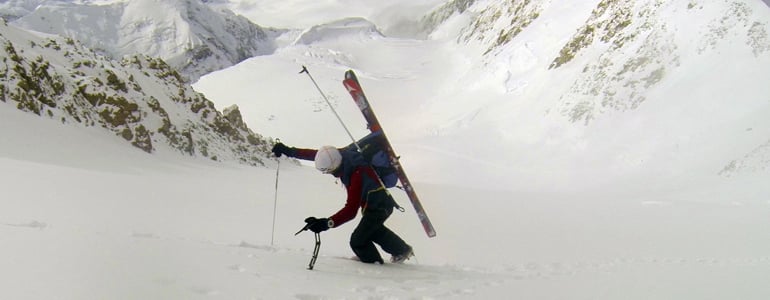

Kilian turns his gaze to the mother of mountains
As the skimo season comes to a close, Kilian Jornet is hanging up his skis and turning his attention to the big adventures ahead for the 2015 summer season. Quite literally, one stands out above all the rest: Everest.
As part of his Summits of My Life project, which has seen him set speed records on seven mountains around world, Everest will be the project’s tallest order yet.Jornet is heading to Everest for his first time during the Himalayan climbing season, this spring, to begin what he says will be a long, patient process of preparation and discovery.“I conceive of this trip to Everest as a chance to learn,” Jornet says. “To really get to know the mountain and its surroundings and to learn everything my colleagues can teach me.
And which photographer took this shot? Kilian himself!
“I don’t know when we will be able to attempt the challenge as that will depend very much on the weather, acclimatization and the conditions we find there. I’m taking this first trip as an opportunity to learn.”His first visit to the highest mountain in the world will be focused on becoming familiar with the area, the planned route and, crucially, the effects of altitude. Everest will be Jornet’s first 8,000m mountain. Completing a rapid ascent on his first expedition is not something he says is on the cards. “We know we have a long way ahead of us,” he says. “I think this will be a long-term project that we hope to complete in the coming years.”
Depending on weather conditions, Jornet will attempt the ascent either via Norton Pass or Hornbein Couloir – both rarely climbed routes. After he’s returned from the roof of the world, Jornet's plan is to hit the trail running scene in Europe and the US. He is not joining any fixed competitive circuit, but will run the races that most inspire him.His first race of the season will be the Mount Marathon in Alaska, one of the oldest in the world. It’s a vertical race to the top of the race’s namesake, Mount Marathon (922m), on US Independence Day. Next, he’s running in the Hardrock (USA), followed by the Tromsö Skyrace (Norway), the Sierre Zinal (Switzerland), the Skaala Uphill (Norway) and then finally, back on his home turf, the Ultra Pirineu in the Pyrenees.
Main image shows Kilian on Denali. ©Summits of my Life


