






Suunto Blog


Suunto Nautic S vs Ocean: Which One Fits Your Adventures?
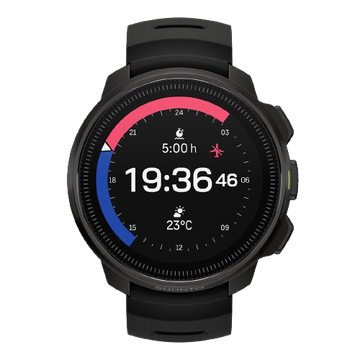
Suunto's Nautic S and Ocean share the same modern dive platform, but they are designed for different lifestyles. Nautic S is purpose-built for diving, delivering a focused underwater experience with the essential tools divers rely on. Ocean takes a broader approach, combining diving with sports, wellness, and smart daily features.
If you're deciding between them, the question is not which one dives better—both are highly capable underwater—but whether you want a dedicated dive computer or a device that combines diving with a broader range of sports, wellness, and everyday features.
Shared Dive Foundation
At their core, both Nautic S and Ocean are built on the same modern dive platform, sharing many of the features divers rely on before, during, and after a dive. Both combine advanced dive capabilities, intuitive operation, and connected features that help divers plan, track, and relive their underwater adventures.
Scuba and Freedive Capabilities
Both Nautic S and Ocean are designed to support a wide range of underwater activities, from recreational scuba diving to freediving. They include advanced dive tools such as wireless air integration, decompression planning, customizable dive views, dive alarms, and Suunto's Bühlmann 16 GF-based decompression algorithm.
For freedivers, both devices include a dedicated freedive mode with separate underwater and surface views, along with customizable alarms for depth, dive time, and surface time.
Both devices feature bright AMOLED displays, making critical information easy to read in a wide range of underwater conditions.
Suunto App Integration
Both Nautic S and Ocean connect seamlessly with the Suunto App, helping divers get more from every dive.
Dive logs can be automatically synced for detailed analysis after the dive. Users can review dive routes, track dive conditions, and build a complete history of their underwater experiences. The app also makes it easy to share and relive memorable dives with friends and dive buddies.
Offline Maps and Navigation
Beyond diving, both devices support offline maps and route navigation. Whether exploring a new destination, hiking to a remote dive site, or navigating outdoor adventures between dives, they provide reliable guidance when needed.
While the diving foundation is largely shared, the biggest difference between the two models lies in how they are designed to be used above the surface.
Key Differences at a Glance
Feature
Nautic S
Ocean
Primary focus
Dive-first experience
Diving, sports, and wellness
Scuba diving
✔
✔
Freediving
✔
✔
Wireless air integration
✔
✔
Offline maps & navigation
✔
✔
AMOLED display
✔
✔
Dive planning & decompression tracking
✔
✔
Smart notifications
✔
✔
Activity tracking
—
✔
Sleep & recovery tracking
—
✔
HRV insights
—
✔
Music controls
—
✔
Stand-up reminders
—
✔
Water resistance
100 m
100 m
Dive depth rating
80 m
60 m
Best suited for
Divers who want a streamlined dive-focused computer
Divers who want diving, training, and daily wellness tracking in one device
Nautic S: Focused, Compact, and Dive-First
Nautic S is designed with diving as its primary focus. Rather than trying to be everything at once, it emphasizes a streamlined experience that keeps important dive information front and center.
Its compact round AMOLED display and lightweight design help keep it comfortable to wear while maintaining a clear focus on underwater performance. Divers who prefer a simpler interface and a more dedicated dive experience may appreciate its focused approach.
The Nautic S supports advanced dive features including customizable dive views, dive alarms, wireless tank pressure integration, and full decompression tracking. Real-time tank pressure readings can be viewed directly on the wrist, helping divers stay informed throughout every stage of the dive.
For sidemount divers, dual transmitter support allows monitoring of two tanks simultaneously. Clear, color-coded visuals make critical information easy to interpret at a glance, helping maintain awareness even in demanding underwater conditions.
With a 100 m water resistance rating and an 80 m dive depth rating, Nautic S is built for divers who want a purpose-designed tool that prioritizes underwater performance and simplicity.
Ocean: Multisport, Wellness, and Dive Combined
Ocean takes a broader approach. It combines dive computer functionality with sports, wellness, and smart daily features, making it ideal for users who want a single watch for training, recovery, outdoor adventures, and diving.
In addition to scuba diving and freediving features, Ocean provides a full suite of daily activity tracking tools. Users can monitor steps, calories burned, activity targets, activity history, and heart-rate trends throughout the day.
Ocean also supports sleep and recovery tracking. It tracks sleep quality, including sleep stages, and provides heart rate variability (HRV) insights for a more holistic view of recovery and overall wellbeing.
Beyond fitness and recovery tracking, Ocean includes additional daily features designed to support an active lifestyle. Users can control music directly from the watch and use convenient tools such as stand-up reminders throughout the day.
For people who regularly run, cycle, hike, train in the gym, or participate in multiple sports, Ocean delivers a more comprehensive all-day experience while still providing the same core diving foundation.
Other Considerations
1. Display and Usability
Both devices use AMOLED displays, providing excellent readability underwater and during everyday use.
The biggest difference is not display quality but overall user experience. Nautic S prioritizes simplicity and a dive-first interface, helping divers access critical information quickly underwater. Ocean is designed to support a broader range of activities, so its interface balances diving, sports tracking, navigation, and daily smartwatch functions.
Despite their different focus areas, both devices share the same intuitive Suunto user experience. Menus, settings, and key functions are designed to be easy to navigate, allowing users to quickly access the information they need both underwater and on land.
Neither approach is better; the right choice simply depends on how you plan to use it.
2. Waterproof Rating and Dive Depth
Both devices are rated to 100 m water resistance, but their maximum dive depths differ. Nautic S supports dives up to 80 m, while Ocean is rated for depths of up to 60 m.
For the vast majority of recreational divers, both ratings provide more than enough capability. However, divers who prefer a higher depth rating may appreciate the Nautic S specification.
3. Strap System and Charging
Both Nautic S and Ocean support Suunto's 22 mm quick-release strap system, offering a variety of strap options for different environments and preferences.
Whether you're diving in a wetsuit, exploring colder waters in a dry suit, or looking for a comfortable option for everyday wear, there is a strap option designed to provide a secure and comfortable fit. The quick-release design also makes it easy to switch straps as your activities change.
Both devices use Suunto's rechargeable battery platform, providing a familiar and convenient charging experience.
Which One Should You Choose?
Choose Nautic S if You Want:
A dedicated dive computer designed around underwater use.
A compact and lightweight design.
A simpler dive-first interface.
Wireless air integration and advanced dive functionality.
Dual transmitter support for sidemount diving.
A computer where diving is the main priority.
Choose Ocean if You Want:
A dive computer and multisport watch in one device.
Daily activity tracking, including steps, calories, and heart-rate trends.
Sleep and recovery insights with HRV tracking.
Wellness-focused tools such as resource tracking and recovery insights.
Music controls and stand-up reminders.
A watch designed for both underwater and everyday activities.
Final Take
Both Nautic S and Ocean share a strong diving foundation, including scuba diving, freediving, air integration, offline maps, route navigation, Suunto App connectivity, and modern AMOLED displays.
The difference comes down to focus. Nautic S is purpose-built for diving, offering a streamlined experience centered on underwater performance. Ocean builds on that same diving foundation by adding sports tracking, wellness insights, and smart daily features.
If diving is your main priority, Nautic S is the more focused choice. If you want one device that supports diving, training, recovery, and everyday life, Ocean offers greater versatility.


Recovery and Rest: The Key to Optimising Your Scuba Diving Performance
When it comes to maximising your diving performance, recovery is just as important as training.
Every training session pushes your body out of balance, disrupting homeostasis and temporarily lowering performance. With proper recovery, your body not only returns to baseline but adapts and improves, increasing your stamina and strength over time. Understanding how recovery works and learning how to track it can help you train smarter, dive better, and stay energised for repetitive diving and the adventures ahead.
The Role of Sleep in Recovery
Sleep is your body’s most powerful recovery tool. During deep sleep, the body releases growth hormones that repair tissues, restore energy, and support immune function. It’s when your system resets physically and mentally. Quality sleep is the foundation of recovery, performance, and overall well-being. By understanding your sleep patterns, you can better gauge your readiness for your next dive or workout and perhaps adjust accordingly.
With Suunto Ocean, tracking your sleep is effortless; just wear your watch to bed, and it does the rest. Each morning, you’ll receive a sleep summary: total sleep time, estimated time awake, and periods of deep sleep. Over time, these nightly snapshots evolve into trends and you will see a bigger picture of how well you're resting and recovering.
To view your sleep trend, swipe up from the watch face to open the Sleep widget. You’ll see your most recent sleep at a glance, along with a rolling 7-day graph that helps you recognise patterns whether you're consistently well-rested or starting to fall behind.
Tracking your sleep consistency is just as important as tracking duration. Regular sleep and wake times help support your body’s natural rhythm, making recovery more effective and energy levels more stable.
For deeper insight track your HRV during sleep to better help you understand how your body responds to training, stress, and environment, even while you rest. Read more about how to use HRV to optimize recovery.
Sleep isn’t just downtime it’s your body’s chance to reset, repair, and prepare. And now, with Suunto, it’s something you can understand better than ever.
Using HRV to Optimize Your Training
The Suunto Ocean tracks over 95 activity types, including diving, swimming, strength training, and more. Combined with HRV insights, it shows you when it’s time to push forward or pull back, ensuring a sustainable training rhythm that supports long-term performance.
HRV measures the tiny fluctuations in time between your heartbeats. It's one of the most reliable indicators of recovery and nervous system balance. A high HRV often signals that you are well rested and ready to perform. HRV isn't just a stat it’s a decision-making tool. By keeping an eye on it daily, you can tailor your training intensity, prevent overtraining, and improve overall resilience.
High HRV: Your system is adaptable and recovered. Green light for more intensity.
Low HRV: Your body is still under stress. Time to scale back or rest.Suunto Ocean monitors your HRV during sleep and after workouts, offering key insights into how your body is responding to stress and recovery.
Balancing Stress and Recovery
Peak performance comes from balance. The Suunto Ocean helps you understand your training load versus your recovery status. If your load is high and recovery is low, that’s your cue to rest before fatigue turns into burnout or injury. Technology is powerful, but your body’s signals are just as important. If you're feeling unusually sore, fatigued, or mentally drained, listen to those cues. Use the Suunto Ocean as a guide, but always tune into how you feel after your dive or your workout. Your body knows when it needs rest, and you just need to listen.
Conclusion: Rest Smarter, Dive Stronger
Recovery isn’t downtime it’s a performance tool. With the Suunto Ocean, you gain access to powerful recovery metrics like HRV, sleep quality, and training load all in one device. Prioritize rest, train with intention, and give your body what it needs to reach new depths. Because the better you recover, the better you dive.


How to Find Your Training Zones and Supercharge Your Scuba Diving Fitness
Training intensity plays a crucial role in preparing for scuba diving. It’s not just about hitting the gym or logging endless cardio, but finding the right workout intensity is the key to getting the best results, whether you want to improve your diving fitness, breath hold or boost your endurance.
What Are Training Zones?
Training zones are intensity levels that help you follow a training plan and reach progress. Each zone targets different physiological systems, helping you build the endurance, power, and control you need for scuba diving. Here’s a breakdown of the most important zones for divers:
Zone 1 – Recovery
Used for warm-ups and active recovery. It promotes blood flow, aids in muscle repair, and helps ensure you’re not overtraining before a dive. Exercising in zone 1 is relatively easy on your body. When it comes to fitness training, intensity this low is significant mainly in restorative training and improving your basic fitness when you are just beginning to exercise, or after a long break. Every day exercises like walking, climbing stairs, and cycling to work are usually performed within this intensity zone.
Zone 2 – Endurance
This is your base-building zone. It improves aerobic efficiency and stamina, perfect to prepare you for long dives or extended underwater activity. Exercising at this intensity feels easy, but workouts with a long duration can have a very high training effect. The majority of cardiovascular conditioning training should be performed within this zone. Long duration workouts in this zone consume a lot of energy, especially from your body’s stored fat. Think steady swims or long-distance walking.
Zone 3 – Tempo / Steady Effort
Exercising in zone 3 begins to be quite energetic and feels pretty hard going. It will improve your ability to move quickly and economically, ideal for when you want to improve your finning, buoyancy control, and dive longer dives. This zone boosts moderate-intensity endurance that you rely on for continuous underwater movement.
Zone 4 – High Intensity
This is where power is built and limits are tested. Training in Zone 4 pushes your anaerobic system, improving your ability to perform in high-stress, physically demanding situations like hauling gear or responding to emergencies underwater.
It’s fast, hard, and effective: a zone that rapidly boosts performance and resilience. But it’s not for every day, as too much intensity without recovery can lead to burnout or injury. Use it wisely, and Zone 4 becomes your edge when the pressure’s on.
Zone 5 – Maximum Effort
This is your redline, the zone of short, explosive bursts where you're pushing at full capacity. Training here targets your VO₂ max and anaerobic threshold, sharpening your body’s ability to respond quickly and powerfully under pressure, giving an edge in critical dive scenarios.
Zone 5 efforts are intense and brief, lasting only minutes. They demand full focus and come with a high recovery cost, which is why elite athletes use them sparingly and strategically. For most fitness enthusiasts, this zone is optional as they are not required, but if you are chasing peak performance, include maximum-intensity workouts in your training program.
How to Calculate and find your heart rate zones
It is important to know your zones to be able to follow a training plan and to keep structure in your training. Use the classic formula (220 – your age) to estimate your max heart rate. You can build your zones off this baseline, but refine it as you get more experience. Once you know your zones, you can focus on gradual progression, tailoring each session to meet your diving goals.
The Suunto Ocean makes zone-based training easy. Use its built-in heart rate monitor and analytics to track how your body is responding to each workout. Start with a basic estimate, then refine as you go with data from your training sessions or tests. Suunto’s tools help you track it all so your training stays intentional, efficient, and aligned with your underwater ambitions.
Why Zone-Based Training Matters for Divers
Each zone develops different capabilities from long-haul endurance to explosive power. By mixing the right training intensity with purpose, you’ll condition your body for more efficient movement, better recovery, and improved control underwater. As Suunto expert Janne Kallio says:
“Training doesn’t need to be complicated.”


Diving Deeper Into Your Dive Data in the Suunto App
Diving is about more than just exploring the depths, it's a journey of continuous improvement and mastery. Learn how to use Suunto app throughout that process.
Technology has become our trusted companion in the digital age, guiding us through the underwater world and empowering us to explore our limits. With the Suunto app at our fingertips, divers unite to share insights, harness cutting-edge features, and elevate their diving skills to new heights.
Join us as we delve into the depths of data analysis, uncovering the secrets that will make you a better diver with every plunge.
Dive profiles, dive logs and trends
One of the most critical pieces of data for any diver is their dive profile. The Suunto app provides detailed dive profiles, including:
Dive time
Start and stop times
Average and max depth
An algorithm deviation alert if present during the dive
Maximum and average temperature
Gas list of active and enabled gases
Start and end pressure if linked with Suunto Tank POD
Avg gas consumption for each gas if linked with Suunto Tank POD
Current Gradient Factors
CNS and OTU values
Average heart rate if enabled
Surface time
Analysing your dive profiles helps you understand your diving patterns, identify areas for improvement, and adhere to safer diving practices. Paying attention to events such as alarms, nearing no decompression limits, safety stops, ascent speed penalties, and extra time allows you to refine your practice and enhance your overall experience.
The app's comprehensive dive logs enable you to track your progress over time, identify trends, and set goals for future dives, whether aiming to increase dive time, extend gas usage, improve buoyancy control, or explore new sites confidently.
Gas consumption
Connecting with the Suunto Tank POD before a dive makes it easy to monitor your gas consumption during the dive. The Suunto app logs your gas usage over time, providing insights into your efficiency. Analyzing your consumption rate can help identify areas for optimising breathing techniques, such as improving buoyancy or learning better breathing strategies like pre-dive visualisation to help you relax more. This can aid in more effective planning for future dives. Factors such as depth, dive duration, current strength, equipment efficiency, proper weighting, individual physiology, water temperature, and appropriate dressing significantly influence your breathing rate. Understanding how these factors impact your dives helps form better habits and enables improved dive planning in the future.
Environmental conditions
Dive planning and safety get a whole lot more exciting when you truly understand the environmental conditions. The Suunto app lets you dive into a treasure trove of data, recording everything from real-time water temperatures at various depths while visibility, current strength, and weather conditions can be recorded in the notes. Imagine being able to anticipate the perfect dive site or tweak your plans based on a detailed history of your past dives. With this info at your fingertips, you're not just diving, you're mastering the underwater world, ready to adapt and conquer whatever the ocean throws your way!
Daily well-being
Track your steps, sleep, and calories with the Suunto app to keep a perfect balance between training and rest, ensuring you're always at your best. Use the feeling monitor at the end of each dive to see how your daily well-being compares to your dive experience. The Suunto app keeps all your activities—sports, adventures, and dives—in one place, with a home screen view that makes tracking your key activities a breeze.
Training load is a standout feature in the Suunto app, quantifying your training stress using Training Peaks’ Training Stress Score (TSS). Suunto app uses TSS to quantify training load. TSS is calculated based on duration and intensity. The intensity can be based on heart rate, pace or power.
To get a better understanding of the TSS values, it is good to know that a one-hour time trial effort equals 100 TSS. At the same time, a three-hour easy bike ride can accumulate the same amount of training stress. The value always depends on the intensity and duration of the effort.
Get your anaerobic threshold settings right for accurate TSS calculations, with adjustable intensity zones on Suunto devices. Track your long-term training load through the app's Diary ‘Progress’ view, monitoring Cumulative Training Load (CTL), Acute Training Load (ATL), and Training Stress Balance (TSB) to stay fit and avoid over-training.
Check out your daily activity levels or dive into your sleep patterns with the sleep tracking feature. Boosting your sleep quality today can make you a better diver tomorrow. Only time (and tracking) will tell!
Be the first to know
Get notified about the latest news, software updates, and improvements for your dive computer. With the Suunto app, divers have a powerful tool to enhance their skills, monitor their progress, and make informed decisions underwater and beyond.
From analyzing dive profiles and tracking gas consumption to understanding environmental conditions and maintaining daily well-being, every aspect of your diving journey is covered. The app not only empowers you to dive safer and smarter but also encourages continuous improvement with its comprehensive data insights and user-friendly interface.
So whether you're a seasoned diver looking to refine your technique or a beginner eager to explore new depths, the Suunto app is your ultimate companion.
Dive deeper, explore further, and enjoy the underwater world with confidence, knowing that Suunto is with you every step of the way.


