




Suunto Blog

How to pace your triathlon right
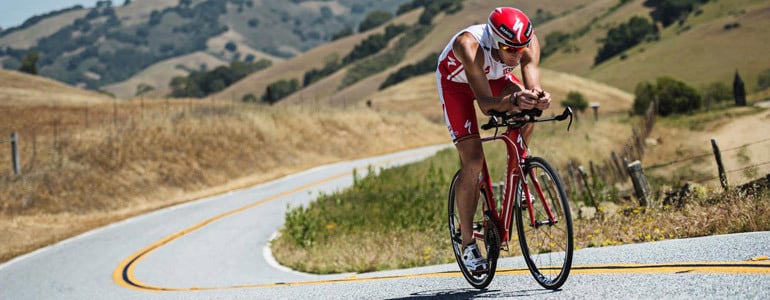
Triathlete and triathlon coach Brett Blankner says that pacing a triathlon successfully has three critical components: you should know how long the race will take you, understand the difference between aerobic and anaerobic capacity and be smart on the bike.
”People forget that a triathlon isn't three individual sports with a big break in between. Instead, you should look at it as one long aerobic event,” Blankner says.
“If this race will take you at least three hours, are you fit enough to keep moving forward for three whole hours? Have you trained three hours non-stop before? Should you be going this fast at the start when you have three hours left to go? Probably not.”
Going too hard has a very limited time-span and will end your race quickly
For pacing your triathlon right it is also crucial to learn the difference between aerobic and anaerobic energy systems and fuel accordingly.
“Once your heart rate goes above a certain level – the aerobic threshold – you are no longer aerobic and have to start borrowing energy against your anaerobic system. This is where heart rate can help you tremendously.”
“Going too hard has a very limited time-span and will end your race quickly. Your stomach shuts down so you can't digest fuel and your breathing becomes forced as your lungs try to ram air into your bloodstream.”
Blankner suggests using a method by Dr Phil Maffetone, the coach behind legendary triathlete Mark Allen.
“The heart rate limit for this is about 180 minus your age. If you stay under this number, you can breathe and digest fuel just fine and go all day. You can play with getting closer to and even well over this threshold number based on how short the race is and how close you are to the finish line. With some practice, it becomes the best tool available for great pacing.”
When you see somebody running well in a triathlon, you're not seeing a great runner. You're seeing a great cyclist.
The third critical component Blankner talks about is being smart on a bike. The bike portion of the race is so damaging to your running legs, that you need to make sure you train to limit that damage as much as possible.
“You can take a world-class marathoner and turn him into a slow walker in a triathlon if he can't bike well. If you end up walking on the run, your speed just dropped to near-zero.”
“When you see somebody running well in a triathlon, you're not seeing a great runner. You're seeing a great cyclist who can now run because the bike ride didn't hurt.”
Brett Blankner is an American ultra-endurance athlete and a coach, who also produces Zen & the Art of Triathlon podcast.
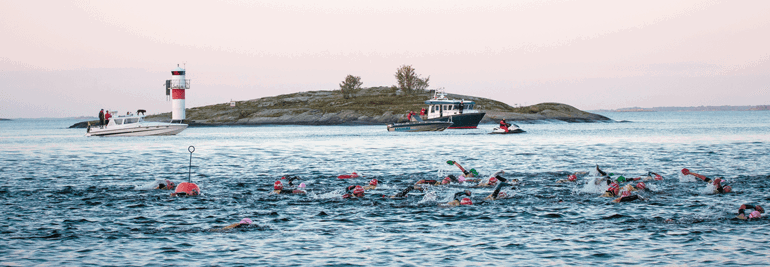

Record breaking conditions at ? till ? swim run championships
One of the most exotic and exciting adventure races in the world recently took place in the Stockholm archipelago. In the Ö till Ö Swim Run Championships the racers faced a grueling 75-kilometer course on island trails, slippery rocks and in cold waters.
In calm conditions the race winners Lelle Moberg and Daniel Hansson of Team Milebreaker of Sweden crushed last year’s course record by 19 minutes with a winning time of 8 hours 16 minutes and 19 seconds.
The Baltic Sea Action Group Swim Run Team, who were previously featured on the Suunto Sport pages managed to break their record in their second Ö till Ö race.
“We were much better prepared and also the equipment we had was improved thanks to the experience from last year. It really made a big difference,” says BSAG team member Armin Hummel.
“The Suunto Ambit2s that we had really helped us to keep track about what was ahead of us and how we were doing. Overall this helped in pushing harder when needed and planning the next stages of the race.”
The Baltic Sea Action Group’s Hummel and his teammate Juha Lindfors finished in 12th place overall and were very happy with their time of 9:49:10.
“This was even slightly better than we expected. We also have to admit that the weather was on our side. The conditions were ideal.”
With the race Hummel and Lindfors wanted to raise awareness over the state of the Baltic Sea and get more people and organizations to commit on actions to save it. You can learn more about Baltic Sea Action Group here.
All images: Nadja Odenhage / ÖTILLÖ14

Mountains, volcanoes and ultras
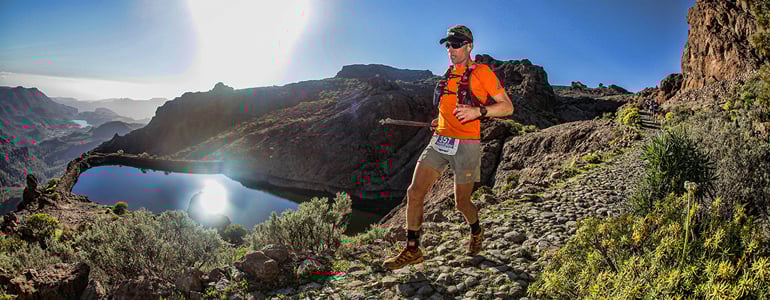
Mountains, volcanoes and ultras: they're what Patrick Müller Suárez lives for. A winner of our #SuuntoAdventure selfie contest on Instagram, he tells us about his love of exploring new trails.
How does it feel to win?I feel very fortunate. I am a faithful Suunto user and have had my Suunto Ambit for about two years now. It has been with me on all my training sessions, races and adventures. When the new Suunto Ambit3 Sport arrives, it will be my new companion in future adventures. I can't wait.
Patrick's winning selfieTell about the photo: The photo (above) was taken in the mountains of Sierra Nevada in Granada, Spain. It was during a tough training session conquering the mountains Veleta 3,396m and Mulhacen 3,478m. It was 9pm in a stunning, spectacular sunset. This was part of my training sessions in preparations for the 2014 Ultra Trail du Mont Blanc in Chamonix.What are your sports?I enjoy running in general – trailrunning and ultras, preferably in the mountains or the volcanoes of the Canary Islands. I also like to swim in open waters, mountainbike, windsurf and ski & snow board.
What adventures are you most proud of? Since January 2014 all my training and adventures have been towards completing the Ultra Trail du Mont Blanc. Preparations have been everything from Transgrancanaria (126 km), sessions in Sierra Nevada, different Canary Islands, different climates, terrains and altitudes.
The two finishing lines I am most proud of are Transgrancanaria in March 2014 and of course recently, the UTMB (168 km) August 2014. In all my training sessions I like to explore and discover new routes. Where I really enjoyed this was in the mountains of Sierra Nevada and there it was great to trust my Suunto Ambit, which was a faithful companion.What Ambit3 features are you looking forward to? I can't wait to try out the new features such as Bluetooth and mobile communication. Now I will be able to update my moves without cables and computers. Besides this, I look forward to measuring cadence and the multisport function, features that the original Ambit doesn't have.
What’s Next?At this instant moment I am enjoying my recent finish at UTMB. But in the pipeline I have exciting projects like filming the best trail and mountain routes in all eight Canary Islands. Maybe I'll give the next Tenerife Blue Trail (101 km) a go, climbing mountain Teide 3,800 m above sea level. In November I'm planning on doing the Ultratrail de Corsellola in Barcelona. Of course I am looking forward to all adventures with my new Suunto Ambit 3 Sport.
Follow Patrick's adventures on Instagram.
All images ©Patrick Müller Suárez

Run downhill like Kilian Jornet
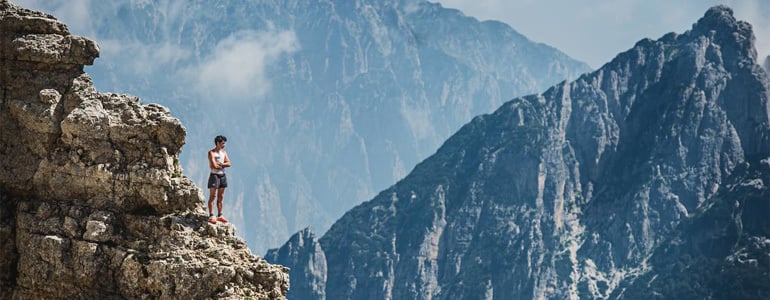
Want to descend mountains with the speed and finesse of Kilian Jornet? Follow his downhill running tips here. To watch Kilian Jornet charge down a mountain is to see something that is almost beyond possible. Like a squirrel down a tree, his downhill running seems to defy the laws of gravity. How does he do it? Here, in his own words, Kilian explains:
Go to the mountain
For technique, for training, you need to spend hours in the mountain. You can go to the gym and get big quads but for the downhills, it doesn't work. You need to run downhills and downhills and downhills and then you learn the technique!
Close your eyes
It's not just about the legs and muscles, but more about the vision, about the anticipation of the trail, the obstacles. Like skiing, you need to pick your line. When you run fast you don’t see where to put your feet but you see the next four to five steps ahead and you need to know where your body and feet are on the ground. Close your eyes and run for 15 meters blind to try to remember the terrain. This is also good for balance.
Relax
The two main things in downhill are vision and the need to be relaxed. When we run downhill we tense all the muscles and this causes tiredness. If we run relaxed we can run faster and with less energy. For relaxation, practice descending like you’re dancing. For example, run down with your arms completely relaxed and every two steps do a little jump and kick your legs together.
Stretch
For running in the mountains the most important thing is to be flexible – to be able to adapt to every different situation. The perfect technique doesn’t exist for hill running! You need to be really elastic to adapt for all kinds of terrains.
Don't think about the pain
When you run for long distances it’s impossible to avoid pain — it’s for everyone. When it comes you need to think of other things — the landscape, you talk with the racers, listen to music. I think about stories, like I’m a warrior being chased by an army. To not think about pain, you need to be in another world.
Don't forget the uphill
For uphill it’s important to practise walking. A lot of people come from road running and as soon as it gets steep they don’t know how to walk. For walking it’s important to use all the body so the hands are pushing on the knees. This is a good exercise.
Kilian Jornet is a Suunto ambassador. Get to know him here.
All images ©zooom.at/Markus Berger

Suunto's next generation dive computer
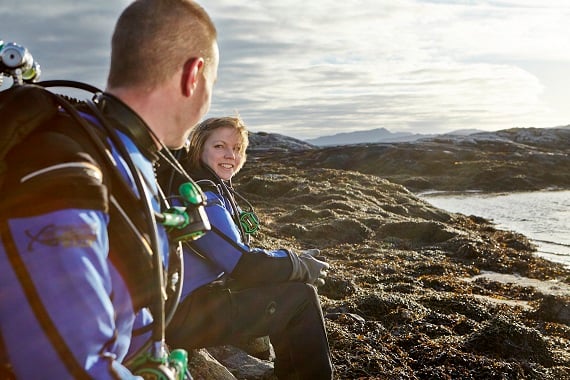
What’s next for Suunto dive computers? That question will be answered this fall when we unveil our latest creation for divers seeking the best. This advanced, large display dive computer with a bright color screen grows with you.
Suunto has developed many diving innovations in the last 50 years together with divers - including the first dive compasses and early dive computers. Our next dive computer continues this tradition of co-creation with you - our diving family - and we thank you all for your valuable feedback.Creating reliable products designed for the harshest of elements is a part our near 80-year heritage. The next great Suunto dive computer adds another chapter to the extraordinary Suunto story.
Want to know more? Sign up here and you'll be the first to receive additional details about this exciting new product.


Selfie winner Ross Lovell on his love of adventure
Cyclist and mountain biker Ross Lovell is one of the four winners from our Instagram selfie contest. Here the 30-year-old Briton tells us about his passion for endurance sports and adventure...
Riding the cobbles in the Alps. How does it feel to win? Incredible! I’ve been using an original Ambit for a couple of years and it has revolutionalised how I train. The depth of information is invaluable for enabling me to hit my targets, so I can’t wait to explore and challenge myself with the Ambit3 Sport. Just as importantly though, it’s really nice to have my photo picked by such a dedicated athlete as Conrad Stoltz. Tell us about the shot.The photo was taken on the second day of eight-days riding through the Alps. The day before we had ridden the 211km Salzkammergut Mountain Bike Trophy (with 7,000 m of ascent!), and as a shorter recovery ride we decided to take on the Kitzbuheler Horn. Wow, it was such a ferocious climb – relentless all the way to the top. On tired legs it was quite a fight. The last few switchbacks really get the burn going, with the gradient pitching to around 23%. Fighting the gradient, and whilst also trying to hold the bike in a straight line one-handed (not easy!) I quickly snapped the shot of our struggle.
Ross after completing the 211km (7,000 m) Salzkammergut Trophy
What are your sports? Cycling, mountain biking, running, climbing, although I wouldn’t say I’m great at any of them, I just like a good challenge and an adventure.
Tell us about your adventures. I’ll have a go at anything really, so have quite a varied list of previous challenges. I’ve raced the Cape Epic and Transportugal mountain bike races, climbed in the Alps and Pyrenees, swum up rivers in Sweden, kayaked non-stop for 26-hours, run ultra marathons like The North Face 100 in the Blue Mountains and Dusk til Dawn in the UK, twice finished the Norseman Xtreme Triathlon, ridden the Tour du Mont Blanc 3-times, cycled from London to Alpe d’Huez…Anything else? My first big adventure was when I was just 18 and spent six months cycling and climbing around Europe. We were completely spontaneous – just looking at maps and deciding where to go next, sleeping on beaches and on mountains. It was total freedom. We even ran the Swiss Alpine Marathon in Davos while we were there. A couple of years ago we cycled from London, through Holland, Belgium, Luxembourg, France, Germany, Lichtenstein, Switzerland, mountain biked across the Alps to Lake Geneva and then ran the GR20 across Corsica, all in just 14-days.
Ross's winning selfie, climbing the Kitzbuheler Horn, Austria.
A recent adventure you're really proud of?On the final day of our eight-day cycling tour of the Alps, we finished with the 330km Tour du Mont Blanc, with its eight climbs and 8,000 m of ascent. The weather had one final sting in the tail. As we came over the penultimate pass – the Cormet de Roselend – we were hit by an almighty storm which caused trees to come down, lightning all around us, big hail stones, landslides. Only 50% of the riders who started the day made it to the finish, which made the accomplishment all the more special, especially after the full-on week we had already tackled.
What's next? Over the weekend of September 28th/29th I will be running 120-miles non-stop across my home county of Devon in the south west of the UK – from Coast-to-Coast. www.lighthouse2lookout.co.uk.
Follow Ross via Twitter and Instagram.
All images ©Ross Lovell


