


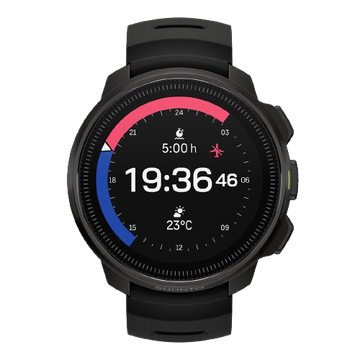


A tempo run looks simple from the outside: run a little faster than your easy pace. What it actually tests is your control of intensity. The effort has to be hard enough to create a real training stimulus and restrained enough to stay clear of an all-out effort that costs you days of recovery. Placed well in a training plan, tempo work becomes the bridge between everyday running and race day, teaching you to hold your breathing, your form, and your pace together as the effort builds.
At a Glance
- A tempo run is a sustained effort at a moderately hard intensity.
- Judge tempo intensity using pace, RPE, and heart rate together.
- Runners at different fitness levels need different approaches to tempo training.
- Plan your tempo runs around your overall training load and recovery.
- Suunto helps you plan, track, and analyze your tempo training over time.
Table of Contents
- What Is a Tempo Run?
- Why Should You Do Tempo Runs?
- How to Find Your Tempo Run Intensity?
- Example Tempo Run Workouts for Different Levels
- How Suunto Helps You Track and Improve Your Tempo Runs
- FAQ
What Is a Tempo Run?
A tempo run is a sustained effort at a moderately hard intensity. Next to an easy run it is faster and carries a higher heart rate. Next to interval training it sits below maximal intensity and runs continuously rather than in short repeats.
You can run it as one continuous block or break it into several long tempo segments with short periods of easy running between them. What defines it is a steady, challenging effort, not a specific pace or a specific duration.
Typically:
- Intensity: Close to lactate threshold
- Duration: Around 20–60 minutes, depending on fitness level
- Perceived effort (RPE): 7–8/10
Simply put, a tempo run should feel comfortably hard. The effort is clearly challenging, but you can still maintain a steady pace and good running form without pushing yourself close to exhaustion.
Why Should You Do Tempo Runs?
The main benefit of tempo running is that it trains your body to hold a steady effort at higher intensities.
1. Improve Lactate Threshold
Tempo runs are a mainstay of lactate threshold training and one of the most effective ways to raise your threshold and your ability to sustain higher intensities.
Lactate threshold is the intensity at which blood lactate starts rising more rapidly as exercise intensity increases. Consistent tempo training improves your body’s ability to process lactate, which lets you hold a steady effort at a faster pace.

2. Improve Running Economy
Tempo runs can also improve running economy, which describes how efficiently your body uses energy at a given pace. Regular higher-intensity running helps your body adapt to faster speeds and hold efficient form and steady pacing once fatigue arrives.
3. Improve Race-Specific Endurance
Tempo runs get you familiar with the intensity and pace that racing demands. For longer events such as the half marathon and marathon, they prepare your body for sustained work at higher intensity and build your ability to hold pace and effort when tired. Depending on your training plan, tempo work can sit alongside race-pace training, though the two are not identical.
4. Build Mental Resilience
Tempo runs train more than your legs. They also build your tolerance for fatigue and discomfort. Holding a higher intensity for an extended period means keeping your pace and effort under control while fatigue steadily builds.
How to Find Your Tempo Run Intensity?
Getting the intensity right is what makes a tempo run work. Too easy and the session lacks enough stimulus to drive adaptation. Too hard and it becomes interval training, with the fatigue and recovery cost that comes with it.
The three common ways to judge it are pace, rate of perceived exertion (RPE), and heart rate zones. Use them together rather than trusting any one on its own.
1. Pace
Pace helps you control your speed during a tempo run, but no single tempo pace works for everyone.
Your tempo pace shifts with fitness level, race performance, terrain, weather, and how you feel on the day. Two runners will have different tempo paces, and the same runner will need different paces under different conditions.
Treat pace as an external measure of output, read alongside RPE and heart rate, to confirm you are training at the intensity you intended.
2. Rate of Perceived Exertion (RPE)
RPE uses how the effort feels to judge exercise intensity.

In the commonly used 0–10 scale:
- 0: No effort at all
- 1–2: Very easy, with almost no strain
- 3–4: Easy, with comfortable conversation
- 5–6: Moderate effort, with a noticeable training load
- 7–8: Hard effort, requiring focus to maintain your pace
- 9: Very hard, close to maximal effort
- 10: Maximal effort, impossible to sustain for long
Tempo runs typically land at RPE 7 to 8 out of 10. Breathing is noticeably faster at that intensity. You can still exchange a few words, though holding a normal conversation is difficult.
3. Heart Rate Zone
Heart rate gives you a more direct read on the load your body is carrying than pace alone, which makes it a useful reference through a tempo run.
Some training systems place tempo intensity at around 85% to 90% of maximum heart rate, though the exact range varies by system and by individual. Because zone models draw their boundaries differently, defining a tempo run simply as zone 3 or zone 4 is unreliable.
Percentages of maximum heart rate are a general reference, and different zone models produce different training zones. Suunto lets you set heart rate zones from your own data, so you can use real-time heart rate to gauge your intensity through a tempo run.

Example Tempo Run Workouts for Different Levels
The workouts below are examples. Set your actual tempo intensity from your own pace, RPE, or target heart rate zone.
1. Beginner: Short Tempo Intervals
For runners new to tempo training, breaking the work into shorter efforts with easy running between them is a good place to start.
Example:
- 5 minutes of easy running to warm up
- 3 minutes of tempo running, followed by 1 minute of easy running; repeat twice
- 5 to 10 minutes of easy running to cool down
This structure gets beginners familiar with tempo intensity. As they adapt, they can gradually add repetitions.
2. Intermediate: Longer Tempo Efforts
Once shorter tempo efforts feel comfortable, extend the length of each tempo segment.
Example:
- 15 to 20 minutes of easy running to warm up
- 15 to 30 minutes of tempo running
- 10 to 15 minutes of easy running to cool down
Compared with shorter intervals, this asks you to hold a steady intensity for longer, which puts the emphasis on sustained effort.
3. Advanced: Continuous Tempo Run
Runners with a solid endurance base and experience of tempo training can focus on holding a steady effort through one longer continuous block.
Example:
- 15 minutes of easy running to warm up
- 30 to 40 minutes of continuous tempo running
- 10 to 15 minutes of easy running to cool down
For half marathon and marathon training, longer tempo runs work as race-specific sessions that prepare you for sustained higher intensity. McMillan also lists 15 to 40 minutes of continuous tempo running as a form of lactate threshold training in its half marathon training guide.
Tip: Progress your tempo runs gradually. As the effort becomes more manageable, extend the tempo duration, shorten the recovery between intervals, or build toward a longer continuous block. If you struggle to maintain the target intensity or your pace drops noticeably in the second half, reduce the tempo duration or allow more recovery before progressing further.
How Suunto Helps You Track and Improve Your Tempo Runs
Suunto sports watches support tempo training from end to end: planning the workout, following it through the run, and reviewing it afterward.
1. Before Running
Create a Workout & Set Target Zones
On Suunto watches that support structured workouts, you can build a session in the Suunto app and sync it to your watch. Some models also let you create simple structured workouts on the watch itself. For example:
- 15 minutes of warm-up
- 30 minutes of tempo running with a target heart rate zone
- Repetitions and workout steps set as needed
- 10 minutes of cool-down
During the session, your watch guides you through each step and helps you hold your target intensity.

2. During Running
Through a tempo run, Suunto tracks your training in real time:
Heart Rate
Check that you are holding your target training zone. It keeps the intensity high enough to create a real stimulus and controlled enough to stay clear of interval territory.

Pace and Distance
Watch that your pace stays steady while the session meets its intended goal. A tempo run is built on consistent effort, so steady pacing matters. The aim is to finish the workout as planned rather than let fatigue cut it short.

3. After Running
Afterward, Suunto helps you review:
Training Load
See what the tempo run contributed to your overall training load, so you can keep the stimulus meaningful and spot a sudden jump before it disrupts the sessions ahead.
Progress Over Time
Tracking CTL, ATL, TSB, and VO₂ max shows how your training load, training status, and aerobic fitness are moving over time.
The Suunto app and compatible watches let you review long-term training data, including training history and training trends.

Recovery Needs
Recovery after a tempo run depends on sleep, HRV, training fatigue, and your daily condition. The Suunto app and your watch help you read your recovery status and decide whether to run the next session as planned or ease the intensity and give yourself more time.

Learn more about Recovery here.
Finding the right intensity, and adjusting your volume as your fitness changes, is what makes every tempo run serve your long-term goals. Read training intensity, body feedback, and long-term data together and a tempo run becomes more than a faster session. It becomes a deliberate, adaptable part of your training plan.
FAQ
What Is a Tempo Run for 5K?
For 5K runners, tempo pace usually sits slower than 5K race pace but hard enough to create a training stimulus, typically held for 20 to 40 minutes. Set the exact pace from your fitness level, using RPE 7 to 8 out of 10 as a reference alongside heart rate and perceived effort.
Is a 20-Minute Tempo Run Good?
Yes.
A 20-minute tempo run is a classic workout format. For beginners, 20 minutes already delivers an effective training stimulus. More advanced runners can extend it to 30 to 40 minutes or move to longer tempo intervals.
What Is a 3:2:1 Tempo Run?
A 3:2:1 tempo run is a progressive tempo workout built from segments of different lengths, typically 3 minutes, 2 minutes, and 1 minute, with intensity rising through each one. It is good practice for pace control and for holding a higher effort as fatigue builds.
Do Tempo Runs Increase VO₂ Max?
Tempo runs can contribute to VO₂ max, though they are not the primary type of training used to develop maximum oxygen uptake. Those gains come mainly from high-intensity interval training and repeated efforts close to VO₂ max intensity.
Tempo runs primarily improve lactate threshold, aerobic endurance, and your ability to sustain higher intensities.


