




Suunto Blog


Why training intensity matters in endurance training
Endurance training is more than just logging hours or kilometers; it’s about training smart. One of the most critical factors in effective endurance training is intensity.
Training intensity determines the type of adaptations your body makes, how efficiently you improve, and even how well you recover. Whether you’re preparing for a marathon, a cycling event, or simply aiming to improve your fitness, understanding and managing training intensity can be a game-changer. Let’s dive into why training intensity matters and how to use it to maximize your performance.
Stimulating the right physiological adaptations
Every workout you do triggers specific physiological changes in your body. The key to endurance training success is to target these changes effectively by working at the right intensity:
Low intensity (Zones 1-2)
This is the foundation of endurance training. Low-intensity workouts improve aerobic capacity, boost your body’s ability to use fat as fuel, and enhance overall cardiovascular efficiency. These sessions are often referred to as “base training.”
Moderate intensity (Zone 3)
Training in this zone focuses on improving your ability to sustain effort over long periods. It’s ideal for tempo or threshold workouts, which help build endurance for race-pace efforts.
High intensity (Zones 4-5)
High-intensity sessions, like intervals or hill sprints, target anaerobic capacity and increase your VO2 max (the maximum amount of oxygen your body can use during intense exercise). These efforts are shorter but crucial for building speed and power.
Each intensity level serves a purpose, and balancing them ensures that you’re building all the systems needed for peak performance.
Avoiding the "Gray Zone"
One common mistake among endurance athletes is spending too much time in the “gray zone”—a moderate intensity that’s too hard to be easy and too easy to be truly effective. While these sessions might feel productive, they don’t provide the distinct benefits of low- or high-intensity training.
For example, too much moderate-intensity training can leave you fatigued without significantly improving aerobic capacity or speed. This is why many elite endurance athletes follow the 80/20 rule: 80% of their training is low intensity, and 20% is high intensity. This polarized approach maximizes gains while minimizing the risk of overtraining.
Balancing stress and recovery
Training intensity isn’t just about pushing hard; it’s also about knowing when to back off. Low-intensity sessions play a crucial role in recovery, allowing your body to repair and adapt while still maintaining movement and circulation.
High-intensity workouts are effective but stressful. Without sufficient recovery, they can lead to burnout, injuries, or overtraining. A well-designed plan alternates between different intensity levels to ensure that you’re challenging yourself without breaking down.
Periodization and progression
Endurance training isn’t static; it evolves over time. Periodization—the systematic planning of training—relies heavily on varying intensity to achieve peak performance at the right time.
Base phase
Focuses on low-intensity workouts to build aerobic endurance and lay the foundation for harder efforts later.
Build phase
Introduces moderate and high-intensity sessions to develop specific fitness qualities like speed, power, and endurance.
Peak phase
Prioritizes high-intensity efforts to fine-tune your performance for race day.
By manipulating intensity throughout your training cycles, you can ensure steady progress without hitting a plateau or risking overtraining.
Mental benefits of intensity variation
Training intensity doesn’t just impact your body; it also affects your mind. Low-intensity sessions can be meditative, helping you relax and build mental resilience. On the other hand, high-intensity workouts teach you how to push through discomfort and develop mental toughness.
This variation keeps training engaging and prevents monotony. Knowing that each session has a specific purpose can also boost motivation and focus, making it easier to stick to your plan.
Tracking intensity: tools and techniques
To train effectively, you need to measure and monitor your intensity. Here are the most common methods:
Heart rate
Heart rate monitors are a reliable way to track intensity. Zones are typically calculated based on your lactate threshold. Low-intensity efforts should feel easy and keep your heart rate in Zones 1-2, while high-intensity efforts will push you into Zones 4-5.
Pace
Runners and swimmers often use pace as a guide, especially for interval or tempo workouts. Knowing your lactate threshold pace and training at different percentages of that pace can help fine-tune your efforts.
Power
Power meters are popular among cyclists and increasingly among runners. Power provides an objective measure of effort, regardless of terrain or conditions. It’s especially useful for maintaining consistent intensity during intervals or long efforts.
Suunto ZoneSense
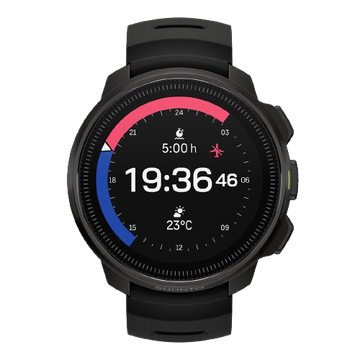
Suunto ZoneSense measures heart stress through heart rate variability (HRV), offering real-time insight into training intensity. ZoneSense is driven by the advanced DDFA index, which tracks changes in metabolic state, and provides accurate feedback on whether your intensity is aerobic, anaerobic, or reaching VO2 max levels. This helps you to stay in the optimal training zone regardless of the activity type or the day.
Learn more about Suunto ZoneSense here.
Perceived exertion
The Rate of Perceived Exertion (RPE) scale is a subjective but valuable tool. On a scale of 1-10, low-intensity efforts feel like 2-3, moderate efforts like 5-6, and high-intensity efforts like 8-10. RPE can be used alongside other metrics or when technology isn’t available.
Combination of metrics
For the most accurate picture, combine multiple methods. For example, use heart rate and perceived exertion during a long run to ensure you’re not pushing too hard, or pair power or pace with heart rate to track fitness gains over time. If your heart rate is lower with the same power or pace as before, it can indicate improvements in your fitness.
Conclusion: train smarter, not just harder
Training intensity is the cornerstone of effective endurance training. By understanding how different intensity levels impact your body and incorporating a mix of low, moderate, and high-intensity sessions, you can optimize your training, avoid plateaus, and achieve your goals. Tracking intensity with your Suunto watch and utilizing tools like Suunto ZoneSense you can ensure that every workout meets its purpose.
Remember, endurance training isn’t just about working hard; it’s about working smart. Prioritize intensity, listen to your body, and watch as your performance soars.
Read more:
Suunto ZoneSense revolutionizes intensity insights with heart stress measurement
Figure out your training zones and supercharge your fitness
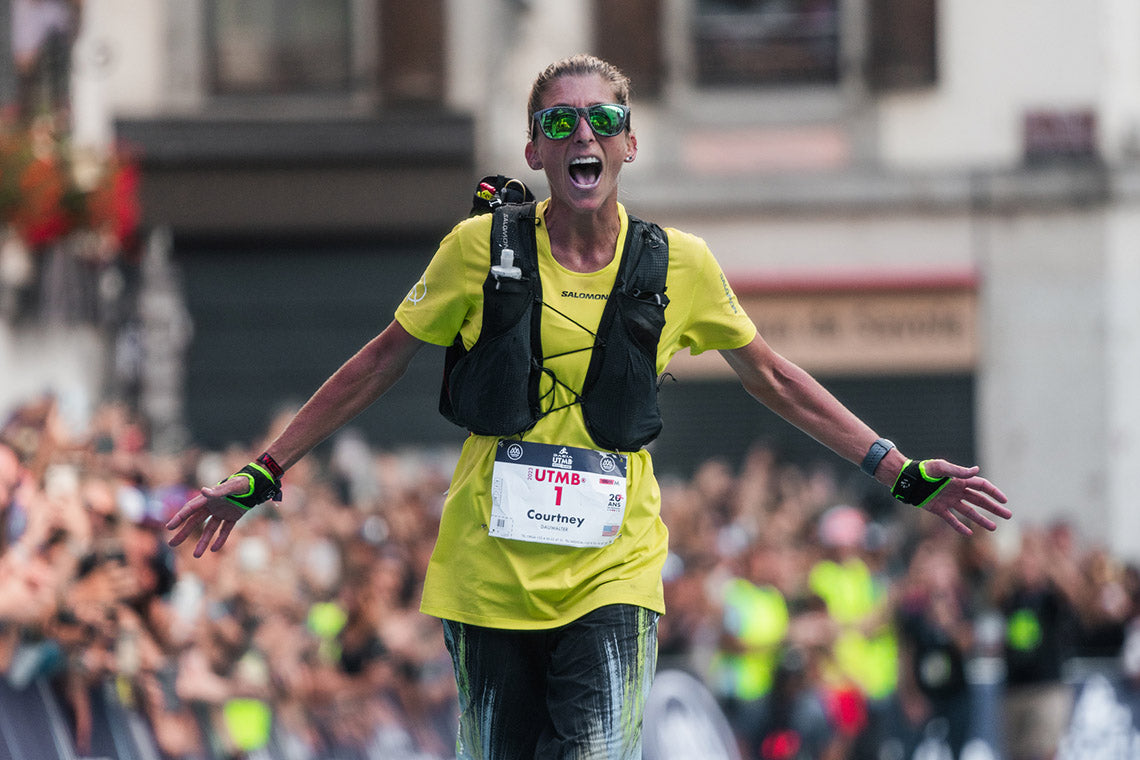

Run Your Own Virtual UTMB with Suunto
The 171-km race around the Mont Blanc massif is the most prestigious trail ultra in the world. With the new SuuntoPlus sports app, you can test the challenge wherever you are!
The Ultra-Trail du Mont-Blanc (UTMB) is one of the most prestigious and challenging trail running races globally. Its origins are rooted in the desire to create a race that encapsulates the grandeur and difficulty of running through the mountainous terrain surrounding Mont Blanc.
The first race was held in 2003. This year, runners will line up for the start at Place du Triangle de l'Amitié in the heart of Chamonix on August 30.
It can be hard to grasp how long the race actually is. To give you a feeling of the challenge, we have created the Virtual UTMB SuuntoPlus sports app that tracks your cumulative progress towards completing the legendary route.
Whether you are looking for a fun way to motivate yourself or aiming to one day run the race yourself, this sports app is for you!
The Virtual UTMB sports app shows your progress towards running the distance of the 171 km Ultra Trail du Mont Blanc: the top row shows your total distance and progress towards the goal, below you see your current activity distance and duration.
Here’s how it works:
Go to the SuuntoPlus Store in the Suunto app and sync the Virtual UTMB sports app on your watch.
Before starting your next run, go to ‘exercise settings’ and select the Virtual UTMB sports app in the SuuntoPlus section.
Start your activity. The Virtual UTMB sports app will be added as an extra screen. You will be notified as your reach the distance to various aid stations on the course.
The next time you use the same sport mode, the Virtual UTMB sports app will be there by default and keep adding distance towards your cumulative total of 171 km – the distance of the Ultra-Trail du Mont-Blanc.
Suunto is the official technical partner of the UTMB World Series. Learn about the races at utmb.world.

Suunto's Climb Guidance prepares you for the terrain ahead
The route altitude profile in the Suunto app and as part of route navigation in Suunto watches has taken a major step forward. With the release of Suunto Race S, we brought the new Climb Guidance also to Suunto Race, Suunto Vertical, Suunto Ocean and Suunto 9 Peak Pro GPS watches (software version 2.35.34 or later).
It will help you both in the route planning phase and out on the trails. Use it to optimize your pacing, make your race-winning moves, or simply enhance your outdoor experience.
Learn the climbs while planning
The elevation profile grows in real-time as you plan your route. Color codes on the elevation profile match the colors on the map.
When planning a route in the Suunto app, the route is split into sections – climbs, uphills, downhills, descents, and flats. These sections are visualized with color coding both on the map and in the altitude profile below. A climb is marked in red, uphill in orange, downhill in lime, and descent in green. Flats are marked in blue.
The section categories consider the length and steepness of the ascent (or descent). In the categorization, climbs are harder than uphills and descents are bigger than downhills.
The elevation profile of your route keeps growing in real-time as you plan your route. Already in the planning phase, you can scrub the altitude profile and see where each point is on the map. This is a useful way to get to know the route you are planning to navigate.
Get alerts and zoom in on the details during activity
Overview of the elevation profile (left) and a zoomed in climb section (right).
The Climb Guidance sections are synced to your watch along with the route you planned. When you start navigating the route, by default you will see the route on one screen and an overview of the elevation profile on the next.
You can zoom in on the elevation profile using the digital crown on the Suunto Race and Race S watches. On the Suunto Vertical and Suunto 9 Peak Pro, press the upper button to zoom in and long press it to zoom out. (Tip: Similarly, you can zoom in and out on the map view. The zoom-out level was updated to 20km in this latest software update.)
When you zoom in from the elevation profile overview, you will see the current section in more detail. You will, for example, see the ascent covered and ascent remaining on that section along with your position on the elevation profile.
A notification 100 meters before the start of a new section (left) and a full-screen notification with details as the section starts (right).
When you are approaching a climb, a notification is given to you 100 meters in advance. As the section starts, you will get a full-screen notification with section details (vertical, distance, gradient). You will get a similar notification before a descent. Notifications are not triggered for uphill, downhill or flat sections of the route.
Climbs are categorized on a scale of 1–4 and HC (hors categorie) based on their difficulty.
The section notifications can be turned off in the exercise settings. Before starting an activity, go down to exercise settings and select ‘Climb Guidance’. You can then toggle the notifications off and on. You can also select whether you want to see the gradients in percentages or degrees. By default, the gradient is shown in percentages.
The climb notification and grade settings are persistent per activity type; they are automatically remembered the next time you start the same activity.


Italy dominates the Vertical Week 2024
Suunto World Vertical Week, the thrilling celebration of the uphill challenge, united outdoor enthusiasts from around the globe in a collective pursuit of elevation gain on March 18–24. All human-powered activities by the participants were counted and every hill was turned into an opportunity to conquer new heights.
We have now analyzed the data to see which country and activity type climbed the most!
The usual suspects were on top of the country rankings
In the country rankings, the usual suspects – countries in the mountainous regions of Europe – were once again on top. This time Italy dethroned Austria for the number one spot with over 400 meters of ascent per activity on average. Switzerland also broke its way to the top three.
The only non-European nation in the top 10 was South Africa in ninth place. Greece made it to the top 10 for the first time.
Average ascent meters by country
When looking at the total ascent, meaning adding up the ascent in all the activities in a nation for the Vertical Week, France took the top spot from Spain and Italy climbed past Austria on the third spot.
Top 10 for total ascent meters
France
Spain
Italy
Austria
Germany
Switzerland
USA
Poland
United Kingdom
Czech Republic
Skiers – and the Japanese trail runners – were above the rest
In the activity type rankings, there weren’t any major changes: ski touring activities had the biggest average ascent, followed by mountaineering and trail running. The average ascent for all the ski touring activities came close to the magical 1000-meter mark but was still a bit below the summit. Maybe next time!
Average ascent meters by activity type
While the skiers had the biggest days on average, when looking at individual activities with over 1000 meters of ascent, trail runners were in the lead. In 2023 the order was the other way round.
In the individual performances, four people really stood out: They all had tracked over 20.000 meters of human-powered ascent during the Vertical Week. Impressive!
And while looking at the big picture, many people seemed to push it more than last year: For a top 10% placing, you needed to climb 2275 meters during this year’s Vertical Week. That’s almost 373 meters more than in 2023.
The same change is visible in the top of the top: To make it to the top 3% of the Vertical Week participants, you needed to climb 4062 meters, 472 meters more than in 2023.
The country rankings winner Italy is very strong also in different activity type rankings. They earned a podium spot in six out of ten different categories!
Ski touring
Slovakia 1160m
Switzerland 1062m
Poland 1051m(Average for all countries 953 m)
Whoop whoop, we have a new winner in the ski touring category! The Slovakian skiers ascended more than any other nation in any of the categories. It’s also clear that the 1000-meter mark is a clear goal for skiers, and the entire top 3 broke that limit.
Trail running
Japan 1076m
Italy 674m
Greece 600m(Average for all countries 457 m)
This is amazing: The Japanese trail runners were the only ones breaking the 1000-meter mark in any other category than ski touring. They kept their well-deserved top spot in trail running for another year. Congratulations!
Mountaineering
Italy 865m
Finland 838m
France 799m(Average for all countries 633 m)
Italy continued their dominancy, but the second place was a surprise: How did such a flat country as Finland make its way to second place?
Mountain biking
South Africa 645m
Italy 547m
Slovenia 540m(Average for all countries 393 m)
The South Africans were active on the bike, climbed more than any other nation and ensured that also the African continent was presented in the rankings.
Gravel cycling
United Kingdom 656m
United States 440m
Italy 421m(Average for all countries 298 m)
Gravel cycling was a new addition on the list this time. And, not surprisingly, the ascent meters for gravel cycling fell somewhere between mountain biking and cycling. The UK took the top spot in the activity ranking clearly.
Cycling
Spain 435m
Italy 335m
Slovenia 286m(Average for all countries 210 m)
Everyone knows that cycling in Spain in the spring is great. And they seem to know it themselves, too!
Trekking
Japan 850m
Switzerland 575m
Austria 541m(Average for all countries 351 m)
The Japanese took the top spot in two categories, trekking and trail running. Two category wins was only matched by Italy (number one in mountaineering and hiking).
Hiking
Italy 438m
Slovakia 386m
Slovenia 351m(Average for all countries 240 m)
Yet another category with a strong Italian performance. Forza!
Nordic skiing
Switzerland 363m
Austria 324m
Norway 305m(Average for all countries 216 m)
While the top three countries in the cross country skiing category were expected, what was surprising was the change in the podium lineup from the previous year: None of these three were on the podium last year.
Running
Czech Republic 152m
Switzerland 138m
South Africa 130m(Average for all countries 95 m)
Running, the most popular Suunto activity in general, is not focused on the vert. Despite the smaller numbers, there still is a winner: Czech Republic took the number one spot!


Celebrate the uphills during the 10th annual Suunto World Vertical Week!
Welcome to Suunto World Vertical Week – a thrilling celebration of the uphill challenge! From March 18 to March 24, outdoor enthusiasts from around the globe will unite in a collective pursuit of elevation gain, turning every hill into an opportunity to conquer new heights. The beauty of Suunto Vertical Week lies in its accessibility, taking place everywhere, and embracing all human-powered activities.
Whether you're a trail runner, skier, hiker, mountaineer, cyclist, or any other adventurer, the Vertical Week invites you to climb as much as you can. The ultimate goal? To determine which nation and activity type emerges victorious, boasting the most elevation gain.
Joining the Vertical Week is simple – just open the Suunto app and click 'join' in the Vertical Week message. All your human-powered activities during the week count.
Join now and elevate your adventure!
Follow your progress in real-time
The Vertical Week sport app shows the current activity ascent (top), total ascent (bottom) and your total compared to Vertical Week participants in 2023.
You can follow your total ascent for the Vertical Week with the new SuuntoPlus Vertical Week sport app: The Vertical Week sport app will count every meter you climb and show your cumulative ascent for both the current activity and the entire week. You can also see how high you would be ranked in the previous Vertical Week challenge. Are you already in the top 30% or perhaps even the top 5% of participants?
Go to the SuuntoPlus Store in Suunto app and sync the Vertical Week sport app to your watch. Before starting your first activity of the Vertical Week, select the sport app in the activity settings.
Learn more about SuuntoPlus sport apps.
Join our community events in Innsbruck and Girona
If you are spending your Vertical Week in or around Innsbruck, Austria, or Girona, Spain, you should check out our community events: In Innsbruck we will be running with BASEFIVE on March 18 and skiing on March 20 and 23. In Girona we will go on a community run together with the Overland crew on Saturday, March 23.
Learn more about Suunto x BASEFIVE Vertical Week events in Innsbruck and join!
Learn more about Suunto x OVERLAND Vertical Week events in Girona and join!
Data from previous years
Check out which sports and nations have captured the podium places during the past years. Will this year bring changes to the top places? Now is your chance to affect on this year's results by collecting as many vertical meters as possible.
2023 - 2022 - Summer 2021 - Winter 2021 - 2020 - 2019 - 2018 - 2017 - 2016
Read more
How to use the terrain maps in your Suunto Vertical
10 Suunto features for vertical gain
Suunto World Vertical Week 2023 Big Data

7 adventure films to watch during the holidays
Race to the Summit
Two years ago, Dani Arnold completed the biggest project of his life: climbing the six large Alpine north faces – alone and in record time. The project occupied, accompanied and shaped him over a period of 10 years. Now the Netflix is devoting a 90-minute report to three of these climbs.
Race to the Summit features the dizzying feats of Dani Arnold and the late Ueli Steck, two great Swiss alpinists and long-time Suunto ambassadors. Experienced mountaineers need a day or more to climb the infamous north faces of the Eiger or Matterhorn. But Dani and Ueli climbed them alone in less than three hours. The duel thrilled the climbing world and electrified the media.
Watch the trailer above and the full film on Netflix.
Lost Then Found
TDS winning athlete Christian Meier shares his inspiring story in Lost Then Found. Christian started his athletic career as a cyclist and has since made a transition from the pro peloton to the top of ultra-running.
”Life is a constant evolution of who you are as a person and Lost Then Found marks an important turning point in my life not only as an athlete but as an individual. From losing cycling to finding trail running this is a story of self-discovery and I am happy to be able to share that journey,” says Christian.
Arctic Lines – Sunny Car Center
In the Arctic Lines video series, backcountry snowboarder Antti Autti explores the vast wilderness of northern Finland, Sweden, and Norway. The series is now in its third season, and in the latest episode, 'Sunny Car Center,' Antti seeks—and finds—a new special zone in Northern Norway.
”Exploring expands your horizons and finding new locations is one of the most important aspects of freeriding,” says Antti.
Balkan Express
Ski mountaineers Jochen Mesle and Max Kroneck rode 2500 km from Greece to Germany – and stopped to ski along the way. Balkan Express, their film about the adventure, has won acclaim at international film festivals.
“We really wanted to experience some mountains, cultures, people we didn't know. We looked at a map of Europe and saw that the Balkans are pretty interesting. The sport side wasn’t the main focus of the project. It was about getting to know the culture and people,” says Max.
Nomadland – Bikepacking in Mongolia
Alba Xandri and Erreka Calmet found beautiful landscapes, friendly people and an epic adventure while bikepacking in in the Mongolian grasslands – and made a film about it.
”Mongolia far exceeded our expectations. It is a backcountry bikepacker’s paradise,” says Alba.
Ride to Ski – Bikepacking adventure through the Dolomites
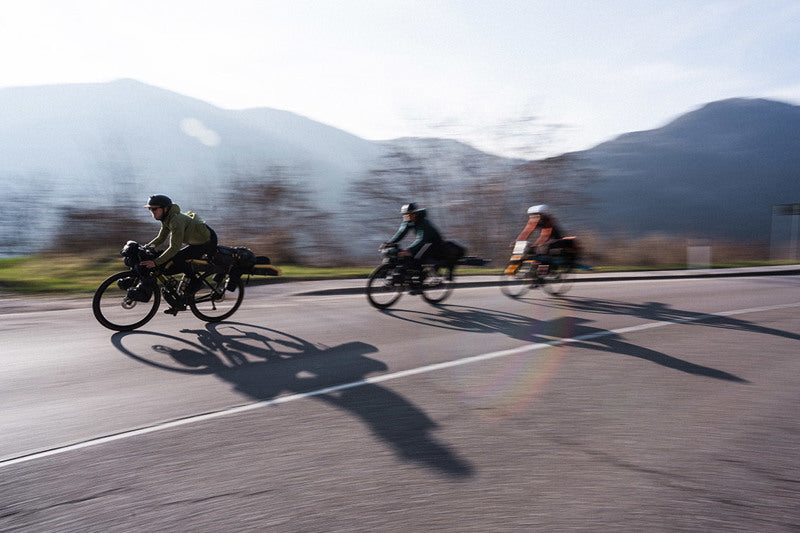
Lack of snow forced Henna Palosaari to think outside the box and led her to invite two of her friends, Sami Sauri and Malva Björkman, on a bike & ski adventure. The 9-day journey that combined two of her favorite sports, turned out to be a beautiful mix of sweat, laughs, ice, snow, and friendship.
”It wasn’t a pure sufferfest,” Henna laughs.
Max Ammer, Raja Ampat and the richest reefs in the world
This is an oldie but goldie: Max Ammer, founder of Papua Diving and two Eco Resorts, Sorido Bay and Kri Eco Resort, shows us why these incredible projects are more than just places to stay, dive and enjoy the unique ecosystems.
Over the past 30 years, a remarkable conservation project has unfolded. The local team, with unwavering dedication, has prioritized the protection of the flourishing ecosystem. This strategic focus has proven to be wise, as the tangible outcomes of their hard work, long-term planning, and precise execution are evident in the thriving fish and coral counts. This stands as a rare case where the reefs are experiencing unprecedented richness – and gives hope for other areas as well.
Lead image by Richard Bucher / Ride to Ski


